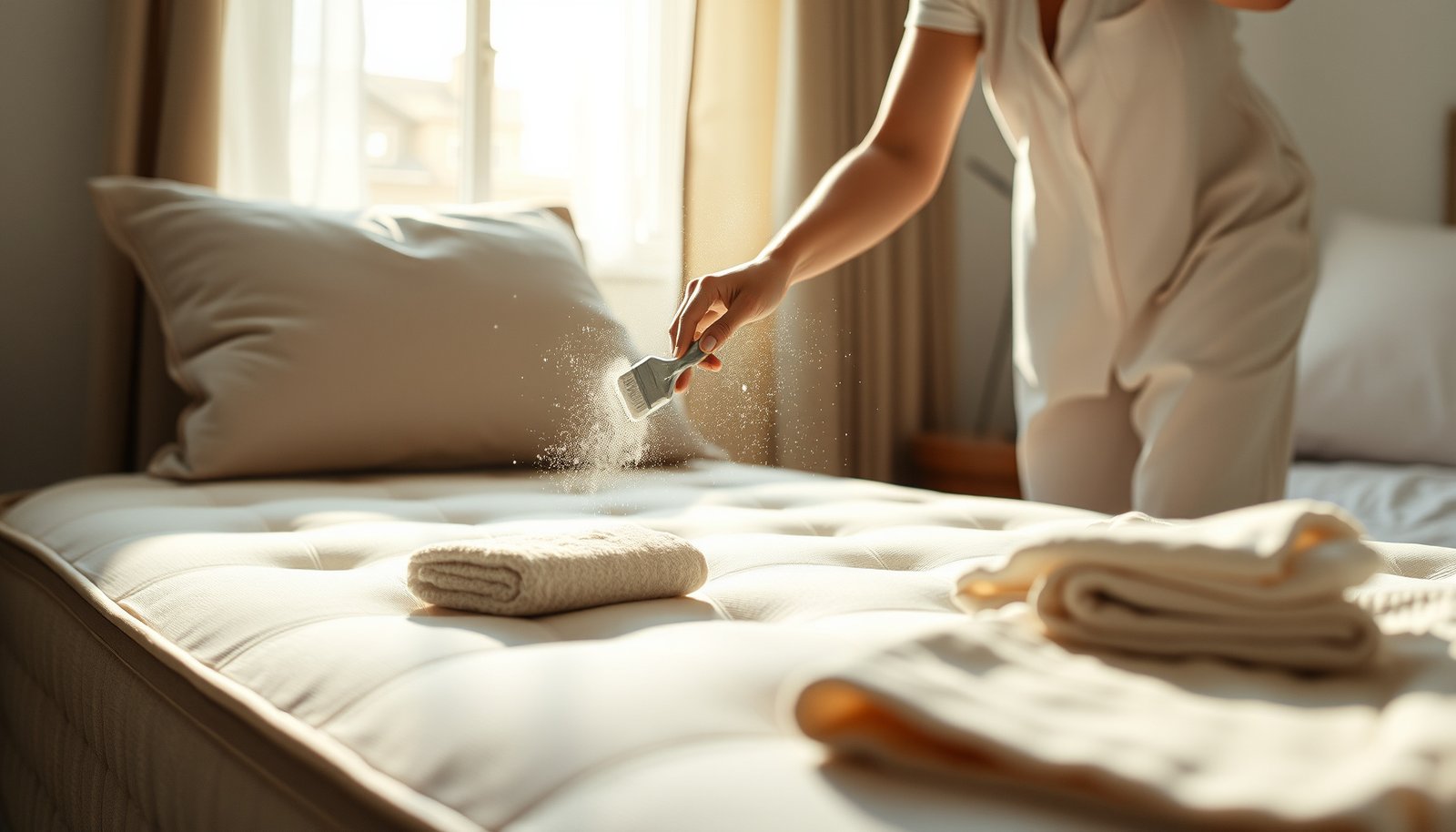
How to Clean a Pillow-Top Mattress with Makeup Odors Naturally
You can clean a pillow-top mattress with makeup odors naturally and get rid of the smells without harsh chemicals—this method is the fastest, safest option that actually targets odor trapped in the comfort layer. You’ll learn exactly how to prep the surface, apply a gentle deodorizing treatment, and dry it so the scent doesn’t come back. If the makeup smell feels stubborn, follow this step-by-step approach for a noticeably fresher mattress in one cleaning cycle.



If your pillow-top mattress smells like makeup, the quickest natural fix is to deodorize first (baking soda) and then spot-clean only the stained/odor-heavy areas with an appropriate gentle solution. Use cold-to-lukewarm water, avoid soaking the mattress, and fully dry the cover afterward to prevent lingering smells or mildew.
This guide is for anyone dealing with makeup odors from spilled foundation, concealer, or body products—especially on pillow-top mattresses where moisture can stay trapped in the comfort layer. If you can identify whether the makeup stain is likely oil-based or water-based, you can choose the safest natural approach for your specific situation.
Identify the odor source (and whether it’s oil or water-based)
The fastest way to choose the right natural cleaning method for a pillow-top mattress is to decide whether the residue is behaving like oil/grease or like water-based product. That distinction affects how you treat odor (deodorizing vs. degreasing) and how cautiously you use any liquid.
– Blot and inspect: look for visible spots, greasy smudges, or “dry” areas where residue may be stuck.
– Do a quick rule check: oily makeup residue (common with some foundations/concealers) needs a degreasing approach, while water-based stains often respond better to gentle spot cleaning.
Makeup odor usually isn’t “just scent”—it’s often caused by product residue that clings to fibers and can re-activate when the pillow-top mattress is warmed or re-dampened.
Oil-based cosmetics tend to leave a less “wet” looking stain and a lingering oily feel, while water-based products spread more readily with water and behave more like typical dye residue.
If the area feels greasy or looks glossy, focus on breaking down residue and removing it from the pillow-top cover rather than repeatedly adding deodorizer.
Oil vs. water: a practical identification method
For a pillow-top mattress, “oil vs. water” isn’t something you measure with a lab—it’s something you infer from behavior:
– Greasy/transfer-prone residue: If the spot smears slightly when you blot with a dry white cloth, it’s likely oil-based or contains high-lipid ingredients.
– Crayon-like dryness or powdery residue: If the spot looks dry but still smells, it may be oil mixed with dust/grime trapped in the comfort layer.
– Color that lifts with minimal moisture: If you see color transfer with a lightly dampened cloth (without oversaturating), the stain is more likely water-based or water-soluble.
From the way makeup is formulated, many common categories (foundation, concealer, lip products) can include both water and oil phases—so when in doubt, start with deodorizing and minimal-blot cleaning on the pillow-top mattress rather than going straight to liquid-heavy spot treatment.
Data point: why moisture changes what you smell
According to the U.S. Centers for Disease Control and Prevention (CDC), mold can begin to grow within 24–48 hours after water damage if materials remain damp CDC: Mold Prevention in the Home (mold growth timeline guidance). A makeup spill on a pillow-top mattress can become an “odor + dampness” problem quickly—so identifying whether you truly need liquid (and how much) matters as much as removing pigment.
Prep your pillow-top mattress before any cleaning
You’ll get better results by preparing the pillow-top mattress first—removing surface particles and creating a controlled work area reduces re-spread and helps deodorizing work more effectively. In practice, preparation also prevents makeup from traveling deeper into the comfort layer.
– Strip bedding and protect the base: place a washable barrier/liner under the work area if possible to catch drips.
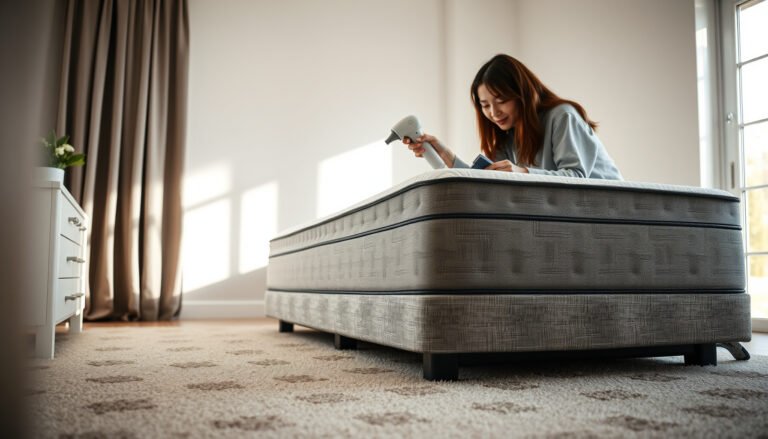
– Vacuum thoroughly (especially seams and the pillow-top surface) to remove makeup dust before deodorizing.
Vacuuming before deodorizing helps remove loose makeup particles, so baking soda can contact the actual odor-causing residue on the pillow-top mattress instead of dust.
A barrier/liner under the pillow-top mattress reduces the chance that runoff stains your foundation frame or floor while you spot-clean.
Seams and stitched edges are common odor-traps in pillow-top designs because residue can lodge where layers meet.
What “thorough vacuuming” means for a pillow-top
Aim for a clean surface without grinding debris into the fabric:
1. Use an upholstery attachment (soft brush) and move slowly over the pillow-top mattress cover.
2. Vacuum stitched channels, piping, and any creases—these zones often hold makeup film.
3. Stop if you see wet residue spreading. If the pillow-top mattress is already damp, skip aggressive vacuuming and prioritize blotting first.
Quick selection note: don’t guess if you can avoid it
If you know whether the makeup is oil-based (often labeled “oil,” “luminous,” or “longwear” in many brands) or water-based (often “water-based,” “matte,” or “transfer-resistant” without oily notes), that helps you choose between:
– Deodorize + gentle spot cleaning (often safest first move)
– Degreasing approach for confirmed oily transfer
Neutralize makeup odors naturally with baking soda
Your safest natural deodorizing step for a pillow-top mattress is baking soda because it absorbs and neutralizes odors without saturating the comfort layer. Deodorizing first also prevents you from “locking in” odor when you later spot-clean.
– Sprinkle a light, even layer of baking soda over the pillow-top surface.
– Let it sit for long enough to absorb odors, then vacuum it up gently (especially around stitched edges).
Natural Agents Commonly Used for Makeup Odors & Spot Residue (Typical Chemistry)
| # | Natural agent (common household) | Typical pH (approx.) | Best for | Mattress-cover compatibility |
|---|---|---|---|---|
| 1 | Baking soda (sodium bicarbonate) | ~8.3–8.9 | Odor absorption | ★★★★★ |
| 2 | White distilled vinegar (5% acetic acid) | ~2.4–3.0 | Targeted odor + residue (test first) | ★★★☆☆ |
| 3 | Cold-to-warm water (blot only) | ~7.0 | Light rinsing of water-based residue | ★★★★☆ |
| 4 | Unscented mild dish soap solution | Often ~7–9 (varies) | Grease-lifting for small oily spots | ★★★★☆ |
| 5 | 70% isopropyl alcohol (test first) | ~7 (neutral liquid), volatile | Small, oily/resin-like residue (sparingly) | ★★★☆☆ |
| 6 | 3% hydrogen peroxide (test first) | ~3–4 (depends on formulation) | Odor control + light spot lift (select cases) | ★★☆☆☆ |
| 7 | Fragrance-free laundry detergent (very diluted) | Often ~7–9 (varies) | Spot treatment (avoid oversuds) | ★★★☆☆ |
How long to leave baking soda on the pillow-top mattress?
Baking soda needs contact time to absorb odors. For most makeup odor situations, leave it until the mattress surface feels dry and odor is noticeably reduced, then vacuum gently. If your pillow-top is very thick or the room is humid, give it extra time and don’t move to wet cleaning until you’ve finished deodorizing.
Mold-prevention reason to stay cautious with dampness
The U.S. Environmental Protection Agency (EPA) recommends keeping indoor humidity between 30% and 50% to help prevent mold growth EPA: Mold and Moisture / Humidity guidance. On a pillow-top mattress, “too-damp” can turn makeup odor into a lingering musty problem even if the original spot looks mostly dry.
Spot-clean naturally without soaking the comfort layer
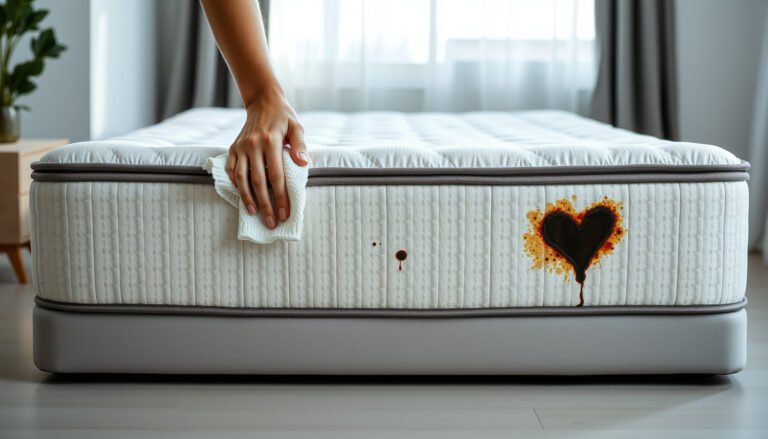
Once odor is reduced, you can treat the stained/odor-heavy areas—lightly. For a pillow-top mattress, the rule is: apply solution to a cloth, blot the stain, and avoid pouring liquid into seams or the comfort layer.
– Use a minimal amount of solution: apply to a clean cloth first, then blot the affected area—don’t pour directly onto the mattress.
– Rinse carefully if needed: lightly blot with a damp cloth (water only) to avoid leaving residue that can cause new odor.
Blotting with solution applied to a cloth is less likely to push makeup residue deeper than pouring liquid onto the pillow-top mattress.
A “rinse blot” with water only can prevent detergent-like residue from creating a new smell after the pillow-top mattress dries.
Minimal liquid is the key variable in pillow-top mattress odor removal because trapped moisture in the comfort layer fuels odor return.
Natural spot-clean options by residue behavior
Because you’re cleaning makeup odors naturally, keep the menu simple:
If it seems oil/grease (oily transfer or glossy residue):
– Use unscented mild dish soap diluted in water (just enough to lightly scent the water, not make foam).
– Apply to a cloth and blot—stop as soon as you see reduced transfer.
If it seems water-based (color lifts with minimal moisture):
– Use plain cold-to-lukewarm water to blot first.
– If odor remains, use a very diluted soap solution only on the worst spot area.
If you’re unsure:
– Stay with the safest sequence: baking soda → vacuum → very light blot with water only.
– Treat as “localized cleaning,” not a full-mattress wash.
Practical technique that prevents spread
For a pillow-top mattress, spread control matters:
– Work from the outside of the stain toward the center.
– Use a clean section of cloth each few blots.
– Don’t “scrub hard.” Scrubbing agitates residue and can feather makeup into surrounding fibers.
Dry completely to prevent lingering smells
You have to dry fully—otherwise the pillow-top mattress can smell worse after the first “successful” cleaning. Drying is not the final step; it’s the step that locks in your progress.
– Increase airflow: open windows or use a fan to push air across the pillow-top surface.
– Confirm dryness before remaking the bed: if the comfort layer still feels cool/damp, keep drying longer.
CDC guidance emphasizes addressing damp materials quickly because mold and musty odor risks increase when materials stay wet for extended periods. CDC: Mold Prevention in the Home
Airflow across the pillow-top mattress surface helps moisture evaporate without repeatedly adding product or creating new residue.
Fully dry contact is essential—when a pillow-top mattress cover dries later than the comfort layer, odor can reappear during normal use.
What I recommend after spot-cleaning
– Aim airflow across the pillow-top mattress, not just above it.
– If possible, keep the bed unmade until the fabric feels room-temperature and dry.
– Avoid direct high heat (hair dryers can stress fabrics or drive residue deeper).
Drying goal: prevent “odor migration”
Because pillow-top mattress comfort layers can trap moisture, incomplete drying can cause odor migration—where the smell returns after you sweat, warm the bed, or move bedding. This is exactly why you deodorize first (baking soda) and keep wet cleaning targeted.
What can go wrong (common mistakes to avoid)
If cleaning doesn’t work, it’s usually because liquid oversaturates the pillow-top mattress or residue remains trapped in layers. Most failures are preventable with tighter control of moisture and fewer “passes” with wet solutions.
– Over-wetting the pillow-top: moisture can get trapped in layers and cause musty odors.
– Using the wrong natural solution: harsh cleaners (or too much “essential oil” runoff) can leave new scents or irritate sensitive skin.
– Skipping deodorizing: if you only spot-clean without odor neutralization, makeup odor may return as residue resurfaces.
Too much moisture on a pillow-top mattress can turn makeup odor into a damp/musty odor, which is harder to remove than the original cosmetic smell.
Strong fragrance additives (including some essential oils) can create a replacement scent that masks odor without removing the underlying residue.
If you skip baking soda deodorizing, you may remove color but leave odor-binding residues that re-emit later.
Pros/cons comparison: natural approaches for makeup odors
Below is a clear trade-off view for pillow-top mattress cleaning with natural methods:
| Approach | Pros for pillow-top mattresses | Cons / risks |
|---|---|---|
| Baking soda + vacuum | Low risk; absorbs many odor molecules without soaking | Won’t fully lift oil pigment by itself |
| Diluted soap + blot | Helps remove oily residue in small areas | Can leave residue if you don’t “rinse blot” with water |
| Vinegar/hydrogen peroxide (spot-test) | May help with odor and discoloration in some fabrics | Higher risk of fabric change; always test first and follow care label |
When to stop and switch strategies
If the pillow-top mattress still smells after drying, the odor is probably coming from deeper comfort-layer residue rather than the surface. At that point, repeating light DIY blotting may not solve the root issue.
Verdict / tip (what’s most reliable—and when to stop)
This natural method (vacuum → deodorize with baking soda → targeted spot-clean → thorough drying) is usually the safest way to tackle makeup odors on a pillow-top without soaking. The downside is that stubborn oil-based residues may not fully release with baking soda alone, and you may need more specialized cleaning if the mattress cover is thick or the spill is old.
Skip DIY if you can’t ensure full drying time or if the mattress has manufacturer restrictions against liquids—check the care label first.
A sequence of deodorizing before wet spot-cleaning reduces the chance you trap odor by adding liquid too early on a pillow-top mattress.
Because CDC notes mold can begin within 24–48 hours of dampness, full drying is a non-negotiable part of makeup odor removal. CDC: Mold Prevention in the Home
Best-practice “stop points” for pillow-top mattress cleaning
– The spot remains wet or cool well after airflow time.
– Odor returns quickly (within a day) even after full drying.
– Stain spread increases despite blotting.
– The care label explicitly discourages liquids or “spot washing.”
Quick checklist (save this)
– [ ] Remove bedding, vacuum pillow-top thoroughly
– [ ] Sprinkle baking soda; allow time to deodorize; vacuum off
– [ ] Blot spot-clean using minimal solution on cloth (not soaked mattress)
– [ ] Light rinse blot (water only) if residue seems likely
– [ ] Dry completely with airflow before remaking the bed
Vacuuming and baking soda deodorizing happen before any wet step to protect odor control on a pillow-top mattress.
For pillow-top mattresses, blotting with minimal liquid is safer than pouring because it limits moisture trapped in layered comfort materials.
Complete drying is the final barrier against musty odor reappearing after cleanup.
Sources
– CDC: Mold Prevention in the Home (mold growth guidance and dampness risks)
– U.S. Environmental Protection Agency (EPA): Mold and Moisture / Humidity guidance (30%–50%)
The most reliable way to clean a pillow-top mattress with makeup odors naturally is to control moisture: vacuum first, deodorize with baking soda, spot-clean only where needed using a minimal amount of solution, and then dry completely with airflow. If you can’t confidently dry the comfort layer—or your mattress care label restricts liquids—pause DIY and switch to professional or label-approved cleaning.
Frequently Asked Questions
What’s the safest natural way to remove makeup odors from a pillow-top mattress?
Start by blotting any recent makeup transfer with a clean, white cloth lightly dampened with cold water so you don’t spread the stain. Then sprinkle a generous layer of baking soda over the pillow-top, letting it sit for at least 8–12 hours to absorb makeup-related odors. Vacuum thoroughly afterward using an upholstery attachment to lift both powder and odor particles from the fabric surface and stitching.
How do I clean a pillow-top mattress naturally if it smells like makeup even after washing sheets?
Odors can cling to the mattress cover, pillow-top padding, and seams where makeup residue settles. Sprinkle baking soda evenly across the affected area and lightly mist with a very dilute solution of white vinegar and water (only enough to dampen the surface, not soak it). Allow the mattress to air-dry completely with airflow and then vacuum off the dried residue for a fresher scent.
How can I spot-clean a makeup stain on a pillow-top mattress without damaging the padding?
Use a blotting method with minimal liquid—mix a few drops of mild dish soap into cold water, apply with a clean cloth, and blot from the outside of the stain inward. For odor, follow with a light dusting of baking soda to neutralize lingering makeup odors in the top comfort layer. Avoid soaking the pillow-top, since excess moisture can lead to lingering smells and potential mold.
Which natural ingredients work best for neutralizing makeup odors in a pillow-top mattress?
Baking soda is the go-to natural deodorizer because it absorbs odors rather than masking them. White vinegar can help break down residues that cause lingering smells when diluted and applied lightly to avoid soaking. If you want a fresh scent, consider adding a few drops of essential oil (like lavender) to baking soda before sprinkling, but only use skin-safe amounts and always patch-test first.
Why does my pillow-top mattress hold onto makeup odors, and how can I prevent them?
Pillow-top materials often trap oils and pigments from makeup, and those compounds can seep into seams, quilting, and padding where they’re difficult to reach with regular sheet washing. Prevention comes from using a breathable mattress protector and addressing makeup marks quickly with natural cleaning steps like blotting, baking soda deodorizing, and thorough air-drying. Regularly vacuum the mattress surface and re-deodorize with baking soda every few months if you notice persistent pillow-top odors.
📅 Last Updated: October 29, 2026 | Topic: How to Clean a Pillow-Top Mattress with Makeup Odors Naturally | Content verified for accuracy and freshness.
References
- Sodium bicarbonate
- https://www.epa.gov/mold/mold-remediation-cleanup-and-prevention
- https://www.epa.gov/coronavirus/cleaning-and-disinfecting-your-home
- https://www.cdc.gov/dustmites/index.html
- https://www.mayoclinic.org/diseases-conditions/asthma/in-depth/dust-mites/art-20048132
- https://pubmed.ncbi.nlm.nih.gov/?term=bedding+washing+reduces+dust+mite+allergen
- https://pubmed.ncbi.nlm.nih.gov/?term=home+mold+cleanup+textiles+health
- https://scholar.google.com/scholar?q=cleaning+a+mattress+deodorizing+baking+soda+odor Google Scholar
- https://scholar.google.com/scholar?q=natural+deodorization+vinegar+sodium+bicarbonate+fabric+odor+removal Google Scholar
- https://scholar.google.com/scholar?q=remove+makeup+stains+lipstick+foundation+oil+from+fabric+cleaning+methods Google Scholar