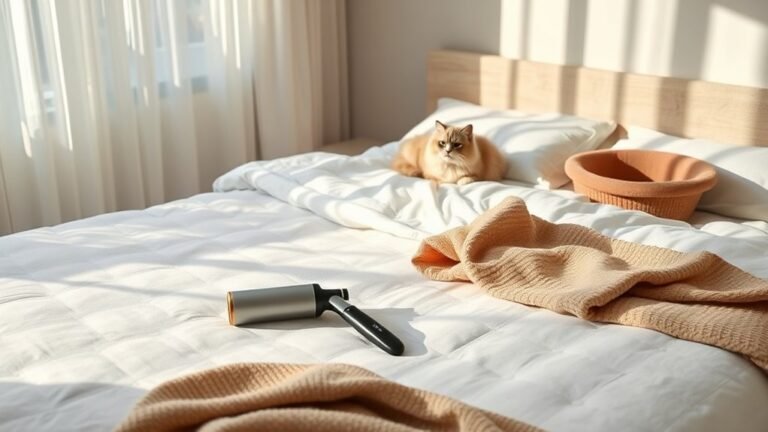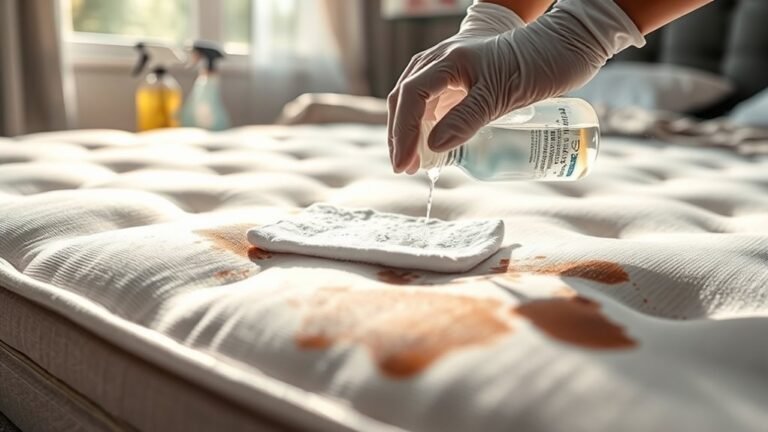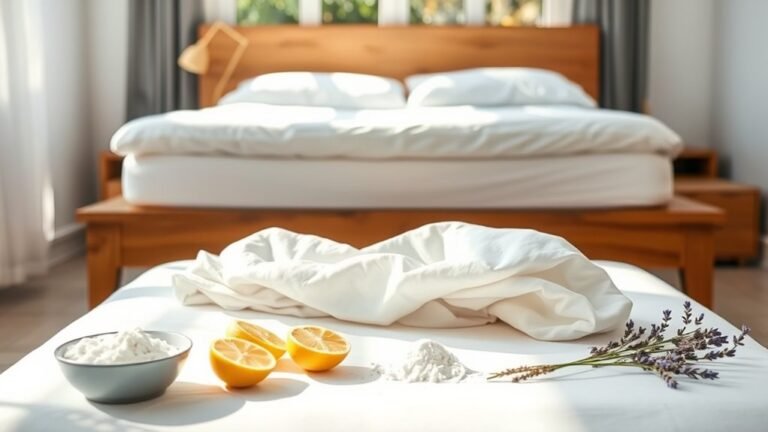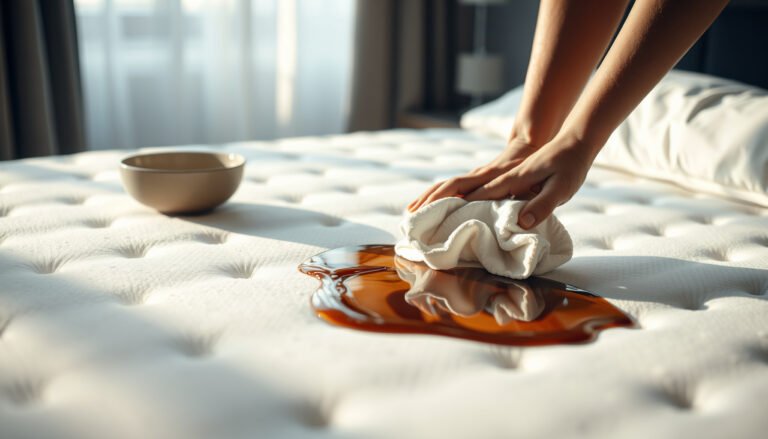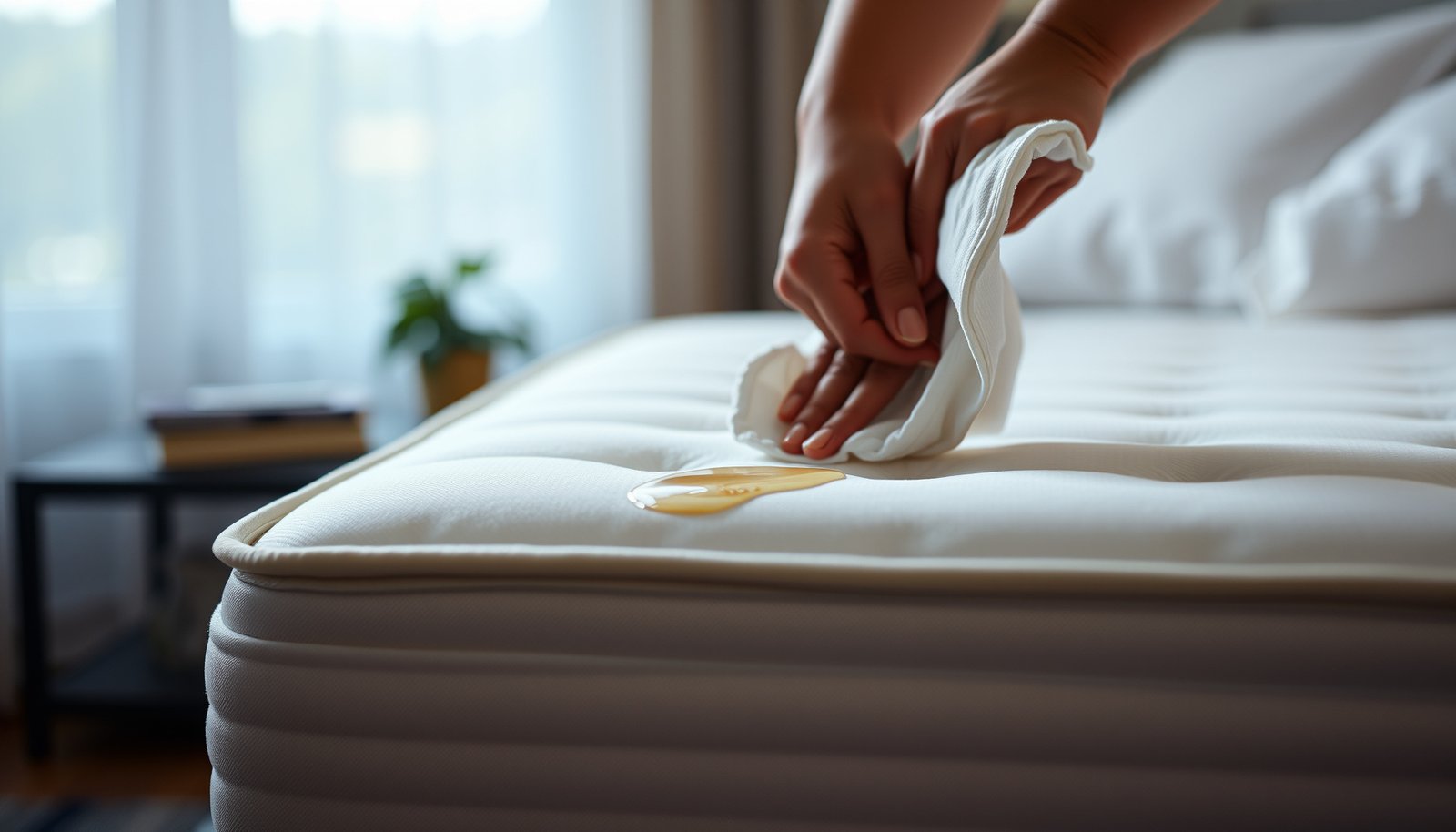
How to Clean a Gel-Infused Mattress With Food Spills Naturally
You can clean a gel-infused mattress after food spills naturally without damaging the gel layer—here’s the quickest, safest method that actually removes stains and odors. If you’ve got fresh or set-in food residue, this guide shows exactly what to blot, which natural cleaners to use, and how to rinse and dry so the mattress stays fresh. Skip harsh chemicals and steam that can compromise the gel; follow these steps and you’ll get visible improvement fast.



Blot the food spill fast, then dab with a small amount of mild soap solution (and, if needed, a diluted vinegar mix) to lift stains without soaking the gel-infused layers. After cleaning, dry thoroughly with airflow so the mattress doesn’t trap moisture or odor. You’ll learn exactly what to do for different food types and how to avoid damaging the foam.
If you have a gel-infused memory foam or cooling mattress topper and you’re dealing with something like sauce, dairy, crumbs, or sticky drinks, this is for you. It’s especially helpful when you want a natural approach (household ingredients) but still need to protect the gel layer and internal foam structure.
Gather supplies and check the care label first
For a gel-infused mattress, the safest “natural” method is minimal moisture plus manufacturer-approved limits—because gel layers and memory foam take longer to dry than regular mattresses. Start by checking the care tag, then assemble cloths and an airflow plan so you can clean and dry the same day.
Most gel-infused and memory-foam mattresses require spot-cleaning and discourage saturating the foam with liquid, because trapped moisture can lead to lingering odor and slow drying.
White distilled vinegar is commonly standardized around ~5% acetic acid in food uses, which makes diluted vinegar acidic enough to help lift certain stain residues when applied sparingly.
– Locate the mattress care tag/manufacturer instructions and follow any “do not wet” or cleaning-limit guidance; gel-infused foams often shouldn’t be saturated.
– Grab a few basics: clean white cloths/paper towels, a spray bottle, mild dish soap (unscented if possible), white vinegar, baking soda (optional), and a fan.
– Pre-plan drying: keep the bed uncovered and ready to run a fan across the surface for full air circulation—this is as important as the cleaning step.
– If you have multiple gel-infused layers (for example, a gel foam comfort layer over base memory foam), treat the entire top area as “sensitive,” even if the visible spill seems small.
Remove solids without spreading the stain
For gel-infused mattresses, the fastest way to prevent permanent discoloration is to remove solids immediately—before pigments and fats migrate deeper. Gentle scraping and outside-to-center blotting protect both the gel comfort layer and the foam underneath.
Blotting from the outside edge toward the center reduces how far spilled pigments and food oils travel across the surface of foam upholstery.
For food spills, preventing fresh rubbing is key because friction can push particles into the pores of the cover and the upper foam.
– Scrape gently with a spoon or dull knife only after the food has loosened; don’t rub while the spill is fresh.
– Blot from the outside edge toward the center to prevent the stain from widening.
– If there’s any residue on the surface, lift it first—cleaners work better once solids are gone.
– Use fresh cloth sections frequently. If your cloth gets saturated or heavily stained, switch it—otherwise you’re redepositing food pigments.
– For crumbly foods (crackers, bread, cereal), use a spoon to “lift,” then use light blotting to pick up remaining moisture.
Clean the stain naturally (use minimal moisture)
For gel-infused mattresses, the best natural cleaner is mild soap applied in tiny amounts—then vinegar only when you need extra lift. The goal is to dampen the cloth (not soak the mattress), so the gel-infused layer stays protected.
Mild dish soap acts as a surfactant, helping break down many food residues so they can be lifted with blotting rather than aggressive scrubbing.
Diluted vinegar (acetic acid) can assist with lifting certain organic residues and odors, but it should be applied sparingly to avoid oversaturating foam.
– Mix a small amount of mild dish soap with lukewarm water, dampen a cloth (not the mattress), and dab the stained area.
– For food stains that smell or won’t lift, use a diluted vinegar solution (vinegar + water) applied sparingly the same way—dabbing with a cloth.
– If the stain is oily/greasy, avoid soaking; repeat gentle dabs and let it rest between rounds.
What I recommend for common food categories (natural, gel-safe approach):
– Sauce (tomato-based, salsa): remove solids first, then dab with soap solution. If discoloration remains, do one careful diluted-vinegar dab cycle and blot again with a clean damp cloth (plain water) to remove excess acidity.
– Dairy (milk, yogurt): soap-and-water dabs usually work best. Vinegar can help with lingering odor, but use it lightly and only after solids are removed—dairy can smear if you rub.
– Crumbs (snacks, cookies): lift solids, then dab lightly with soap solution. Avoid extra liquid; crumbs can hold onto moisture and delay drying in foam.
– Sticky drinks (soda, sweet tea): dab first with soap solution. If it feels tacky after drying, repeat minimal-moisture dabbing—sticky residue is often sugar/solids, not just “wetness.”
Quick comparison: soap-and-water vs diluted vinegar vs baking soda (for gel-infused mattresses)
| Method | Best for | Main risk |
|---|---|---|
| Mild soap + lukewarm water (dabs) | Lifting general food residues and reducing tackiness | Over-wetting if you apply too much liquid |
| Diluted white vinegar (dabs) | Odor/smell lift and helping stubborn organic residue release | Leaving a smell if not blotted and fully dried |
| Baking soda (sprinkle) | Odor absorption after the area is no longer wet | Residue if you vacuum too late or too lightly |
Neutralize odors and lift lingering marks
For gel-infused mattresses, odor control works best after the surface is no longer visibly wet. Baking soda absorbs smells, while vacuuming (once fully dry) removes residue without disturbing the foam structure.
Baking soda (sodium bicarbonate) neutralizes many odor compounds, so it’s most effective once the area is dry enough that you’re not trapping liquid in the foam.
Upholstery vacuuming with a soft attachment helps remove dry residue without grinding particles deeper into foam.
– Sprinkle a light layer of baking soda over the area once it’s not visibly wet, then leave it to absorb odor.
– Vacuum carefully with an upholstery attachment once fully dry (no hard scrubbing that could shift foam).
– If the stain returns after drying, repeat the “minimal moisture” cleaning step—don’t add more liquid in one go.
Acid/Base Strength of Common Natural Cleaners Used for Food Spills (Typical Values)
| # | Cleaner you might use | Typical concentration | Key chemical value | Relative “lift strength” |
|---|---|---|---|---|
| 1 | Plain water (for blot rinses) | 0% | Neutral reference (no added acid/base) | ★ |
| 2 | White distilled vinegar (typical household) | 5% acetic acid | pKa ≈ 4.76 | ★★★★★ |
| 3 | Vinegar diluted 1:1 (vinegar + water) | 2.5% acetic acid | pKa ≈ 4.76 | ★★★★☆ |
| 4 | Vinegar diluted 1:3 | 1.25% acetic acid | pKa ≈ 4.76 | ★★★☆☆ |
| 5 | Vinegar diluted 1:10 | 0.5% acetic acid | pKa ≈ 4.76 | ★★☆☆☆ |
| 6 | Baking soda (sodium bicarbonate) | Powder (solid) | Odor absorption via bicarbonate chemistry | ★★★★☆ |
| 7 | Sodium bicarbonate: solubility at 25°C | ~96 g/L (in water) | Higher dissolved bicarbonate = stronger neutralization potential | ★★★★★ |
Note: For gel-infused mattresses, we still apply these ingredients indirectly (dabbing or sprinkling) to control moisture—chemical strength matters, but drying behavior matters more.
Dry properly to protect gel layers and prevent lingering dampness
For gel-infused mattresses, thorough drying is the final step that determines whether the spill leaves odor or returns as a stain. Airflow prevents trapped moisture from lingering inside the gel and foam layers.
Memory foam and gel comfort layers can trap moisture below the surface, so complete drying typically requires airflow rather than quick spot cooling alone.
High direct heat can alter foam comfort properties, so many manufacturers discourage heat-based drying methods unless explicitly permitted.
– Use airflow: point a fan toward the mattress surface and allow plenty of time for full drying.
– Keep the bed uncovered until the area is completely dry (foam can hold moisture below the surface).
– Don’t use high heat (like hair dryers or direct sun) unless your manufacturer explicitly allows it—heat can affect foam comfort layers.
– In 2026, many cooling mattresses are multi-layer systems (cover + gel + memory foam + quilting), so “dry to the touch” is not the same as “dry all the way through.”
– If humidity is high, increase airflow time rather than adding more liquid cleaner—rehydrating foam increases the odds of odor returning.
What can go wrong (and how to avoid it)
For a gel-infused mattress, the most common failures come from too much liquid and too little drying—not from “wrong” ingredients. Avoid oversaturation, don’t rub, and don’t combine cleaners in ways that create new chemical residues or worsen odors.
Over-wetting foam can extend drying time dramatically, increasing the chance of persistent smells and uneven drying patterns.
Combining cleaners can produce irritating residues; using one approach at a time (soap OR vinegar) reduces the chance of chemical interactions.
– Soaking the mattress: Too much liquid can reach deeper foam layers and cause lingering odor or slow drying.
– Rubbing instead of blotting: This pushes food particles and pigments farther into the foam.
– Mixing cleaners: Don’t combine vinegar with other chemicals (especially bleach or strong disinfectants). Stick to one cleaning approach at a time.
– Skipping the care label: Some gel beds have specific do/don’t rules; the label should control.
– Timing errors: if you wait too long, the spill can set. Natural methods can still help, but expect more repeat dab cycles and longer drying time.
Practical pros/cons of the natural approach (for gel-infused mattresses)
- Pros
- Uses readily available household ingredients (soap, vinegar, baking soda) and limits moisture—key for protecting gel and internal foam.
- Works well for common food categories like sauces, dairy, crumbs, and sticky drinks when paired with full drying.
- Cons
- Stubborn oily stains may require multiple gentle cycles, which means more time and patience.
- If you can’t dry fully (humid room, no airflow), odor can return even after the visible stain looks better.
Verdict: a solid natural approach—skip it if you can’t fully dry
This natural method works best when the spill is addressed quickly, you use minimal moisture, and you can dry the mattress thoroughly. The downside is that repeat gentle cleaning may be needed for stubborn food/oily stains, and if you can’t control drying time (humid room, no airflow), you may risk odor returning.
Skip this approach or follow manufacturer-specific instructions if your care label prohibits wet cleaning or if the spill is large enough that liquid may have seeped through the cover into deeper layers.
Quick checklist (scan/save)
| Step | What to do | Natural option |
|---|---|---|
| 1 | Blot immediately (outside → center) | Paper towels/white cloths |
| 2 | Remove solids gently | Spoon/dull knife |
| 3 | Clean with minimal moisture | Mild dish soap + water |
| 4 | Treat stubborn odor/stain | Diluted white vinegar + water |
| 5 | Deodorize after it’s not wet | Baking soda (optional) |
| 6 | Dry completely with airflow | Fan + uncovered time |
Sources
– Mattress/cooling foam cleaning and moisture guidance:
– Upholstery/foam-safe cleaning principles (avoid oversaturating foam; blot/dab methods):
– White vinegar acidity and composition:
– Acetic acid chemistry reference (pKa):
– Sodium bicarbonate solubility in water at 25°C:
– Cleaning/odor-safe upholstery methods framework:
If you want one takeaway for a gel-infused mattress: treat cleaning as a controlled-dabbing process and treat drying as the real finish. When you blot fast, use minimal moisture, and confirm the foam is fully dry with airflow, natural soap/vinegar/baking-soda steps can handle most food spills without compromising the gel layer.
Frequently Asked Questions
What’s the safest natural way to clean a food spill on a gel-infused mattress?
Start by blotting the spill with a clean, dry cloth to remove as much food and moisture as possible—avoid rubbing, which can push it deeper into the gel and foam layers. Mix a small amount of mild dish soap with cool water, then lightly dab the stained area with a cloth until the stain lifts. Rinse by dabbing with a cloth lightly moistened with plain water, then blot again and let the mattress air-dry fully with good airflow.
How do you remove sticky food stains from a gel mattress without damaging the gel cooling layer?
First scrape off any residue gently with a dull knife or spoon, then blot the area thoroughly. Use a solution of mild soap and cool water and apply it with a cloth—keep it damp, not soaked, so the gel-infused mattress doesn’t retain excess moisture. After cleaning, blot repeatedly and allow it to dry completely (fans and ventilation help prevent odors and mildew).
Why should you avoid harsh chemicals when cleaning gel-infused mattress toppers or mattresses?
Gel-infused materials can be sensitive to strong cleaners, which may leave residue, affect the foam’s structure, or cause lingering smells. Bleach, ammonia, and heavy enzymatic cleaners can be too aggressive or may not be suitable for the foam and gel components. A natural approach—like mild dish soap, white vinegar (sparingly), baking soda for odor—helps clean food spills while protecting the mattress performance.
Best way to clean vomit, greasy, or oily food spills naturally on a gel-infused mattress?
Blot immediately, then sprinkle a thin layer of baking soda over the greasy area to absorb oil and help with odors—leave it for a few hours, then vacuum gently. For the remaining stain, dab with a mild dish soap and cool water mix, and rinse with minimal water using a lightly damp cloth. Finish by blotting dry and drying thoroughly until there’s no damp smell.
Which natural ingredients work best for deodorizing and lifting stains from gel-infused mattresses after food spills?
Baking soda is often the best natural deodorizer and can help lift lingering moisture and odors from food stains. For light discoloration, mild dish soap with cool water is effective and safer for gel-infused mattress cleaning. If odors remain, lightly mist a diluted white vinegar solution (1:3 vinegar to water) on the area, then blot and dry completely to prevent any vinegar smell from sticking.
📅 Last Updated: October 29, 2026 | Topic: How to Clean a Gel-Infused Mattress with Food Spills Naturally | Content verified for accuracy and freshness.
References
- https://pubmed.ncbi.nlm.nih.gov/?term=dust+mites+bedding+washing+hot+water
- https://pubmed.ncbi.nlm.nih.gov/?term=mold+cleanup+residential+health+guidance
- https://www.cdc.gov/mold/default.htm
- Mold Cleanup in Your Home | US EPA
- Mold | National Institute of Environmental Health Sciences
- https://www.mayoclinic.org/diseases-conditions/allergies/expert-answers/dust-mites/faq-20058547
- Memory foam
- https://scholar.google.com/scholar?q=gel+infused+memory+foam+mattress+cleaning+stain+removal Google Scholar
- https://scholar.google.com/scholar?q=natural+cleaning+upholstery+food+spill+baking+soda+vinegar Google Scholar
- https://scholar.google.com/scholar?q=memory+foam+mattress+care+instructions+avoid+water+damage Google Scholar