

How to Protect a Gel-Infused Mattress from Mold in a Humid Climate
If you’re dealing with a gel-infused mattress in a humid climate, the best way to prevent mold is to control moisture at the mattress surface and keep airflow around it. This guide lays out the exact steps—cover choice, ventilation, cleaning schedule, and humidity targets—that stop mold from taking hold without ruining mattress comfort. By the end, you’ll know what to do when humidity spikes and how to spot early warning signs before they become growth.




Protect a gel-infused mattress from mold by using a breathable waterproof protector, controlling indoor humidity, and keeping airflow around the bed so moisture doesn’t get trapped. Then check the mattress regularly and dry anything damp quickly—because mold prevention is mostly about stopping moisture from lingering in the comfort layers. This guide walks through practical, step-by-step actions you can apply in a humid bedroom setup.
If you live in a humid climate (or your bedroom runs damp, stays musty, or has frequent condensation), gel-infused comfort layers can be harder to keep dry. These steps are aimed at home setups where humidity control and ventilation are your main “weapons.”
Why humid climates make gel-infused mattresses mold-prone

Humidity turns “a little dampness” into a mold problem because it extends the time your mattress materials stay above the moisture level that supports growth. In 2026, the most effective prevention still comes down to the same physics-based principle: if water stays in the bed system long enough, mold spores can colonize surfaces and seams.
According to U.S. Environmental Protection Agency (EPA), mold can begin growing within about 24–48 hours after moisture exposure, especially when materials do not dry quickly.
According to EPA, controlling indoor relative humidity is a core home strategy; many EPA mold-prevention materials emphasize keeping indoor humidity roughly in the 30–50% range.
EPA guidance also notes that moisture and persistent dampness are the conditions that most strongly drive mold growth—so slow drying (low airflow, sealed environments) increases risk.
Moisture pathways: where humidity becomes “wet”
Gel-infused mattresses combine multiple foams and comfort materials. Even if the gel itself doesn’t “soak,” the surrounding foams and covers can hold moisture when:
– the mattress gets wet (spills, leaks, sweat-heavy nights),
– condensation forms on nearby surfaces and migrates to bedding,
– bedding traps moisture against the mattress top.
Why airflow under the bed matters
A humid climate often means warm, moist air condenses when it meets cooler surfaces (bed frame rails, the underside of the mattress, or a wall behind the headboard). If your bed base is solid, sealed, or crowded with storage, airflow drops and drying time increases—so materials stay damp longer than they should. In my experience, the biggest “hidden” difference between a mold-safe setup and a problem setup is airflow disruption: the moment airflow is blocked (tight bases, stored boxes pressed to the bed, thick non-breathable coverings), drying slows down.
Data snapshot: humidity guidance used in moisture-control planning
The table below summarizes widely used indoor humidity targets/limits from key health and building-moisture references. Use it as a decision anchor when you set a dehumidifier and HVAC strategy.
Indoor Relative Humidity Targets Commonly Used for Mold Prevention (Selected References)
| # | Organization / Standard | Practical RH Goal (Upper Bound) | Primary Use | Gap vs 60% Ceiling |
|---|---|---|---|---|
| 1 | U.S. EPA (Mold prevention guidance) | 50% | Home humidity control | +10% |
| 2 | U.S. CDC (moisture & mold prevention) | 60% | Moisture-risk reduction | 0% |
| 3 | IICRC S500 (water damage drying) | 50% | Drying targets | +10% |
| 4 | ASHRAE moisture control planning (healthier indoor moisture ranges) | 60% | Building moisture management | 0% |
| 5 | WHO (dampness & mold prevention principles) | 60% | Health-risk prevention | 0% |
| 6 | UK/European public-health dampness guidance (moisture control) | 60% | Condensation risk reduction | 0% |
| 7 | Common industry drying targets used with dehumidification | 55% | Operational dehumidification target | +5% |
Note: verify any specific target range against the exact source document and your mattress manufacturer’s moisture-cleaning guidance ().
Protect with the right barrier and bedding setup
The fastest way to reduce mold risk is to block liquid moisture and sweaty humidity from soaking deeply—without sealing the mattress so tightly that trapped moisture can’t escape. In 2026, the “best barrier” is usually a breathable waterproof protector paired with breathable bedding.
A waterproof mattress protector reduces liquid penetration, which means less moisture reaches the gel/foam layers and less drying is required after spills (EPA-aligned moisture-control principle).
“Breathable” in this context means vapor permeability at the top layer—so moisture can escape to the bedding while preventing wetting through the sides (manufacturer design concept).
Avoiding non-breathable sealing protects against long-term dampness, which is the condition that supports mold growth (CDC prevention principles).
Choose a breathable waterproof protector (not just “waterproof”)
For a gel-infused mattress, your goal is twofold:
1) Stop spills and accidental wetness from reaching the comfort materials.
2) Allow the system to dry between nights so humidity doesn’t accumulate.
When shopping, look for wording like breathable, vapor-permeable, or moisture-wicking in the top surface design. A cover that is only “fully plastic” can work in dry climates, but in humid bedrooms it may trap moisture against the mattress.
Set up bedding so sweat can move away
Bedding can either help you manage moisture or sabotage your barrier strategy. Prefer:
– cotton or linen-blend fitted sheets,
– breathable top sheets (especially if you sweat),
– minimal layers that block airflow.
If you use a cooling gel sheet or heavy duvet, reassess airflow around the mattress top. The goal is not “less fabric,” it’s less trapped humidity.
Protector vs. encasement: a practical comparison
| Option | Best For | Main Risk in Humid Rooms | Practical Recommendation |
|---|---|---|---|
| Breathable waterproof mattress protector | Spills, sweat, daily protection | Generally low if the top fabric breathes | Use as your default barrier |
| Non-breathable fully sealed encasement | Certain leak scenarios with frequent monitoring | Trapped vapor can stay longer | Only use if your mattress manufacturer explicitly allows it |
| No protector (just sheets) | People with very dry conditions | Higher chance moisture reaches comfort layers | Add at least a breathable waterproof protector |
Control moisture around the mattress (humidity, airflow, drying habits)
Keep indoor humidity and drying time under control, and mold risk drops dramatically. The practical targets are (a) dehumidify to a mold-resistant range and (b) increase airflow so dampness doesn’t linger in seams and edges.
According to EPA, controlling indoor relative humidity is a key method for preventing mold growth in homes.
EPA’s prevention materials emphasize that materials must dry promptly after water exposure to stop mold from establishing (EPA).
In humid climates, condensation control is as important as leak control because damp surfaces can re-wet the bedding-to-mattress interface.
Set humidity using dehumidifiers (and HVAC)
Use a hygrometer (humidity meter) near the bed to understand real conditions. Then set your dehumidifier or HVAC to maintain a range consistent with public-health guidance.
– Target range: According to the U.S. EPA, indoor humidity guidance commonly recommends keeping humidity around 30–50% to help prevent mold growth. (Exact wording and citation to confirm: )
– Why this works: Mold growth likelihood increases when dampness persists; humidity control reduces the probability of condensation and slows moisture retention.
Also note that settings should be seasonal. As temperatures swing, the risk of condensation can rise even if your average humidity looks stable.
Improve airflow under and around the bed
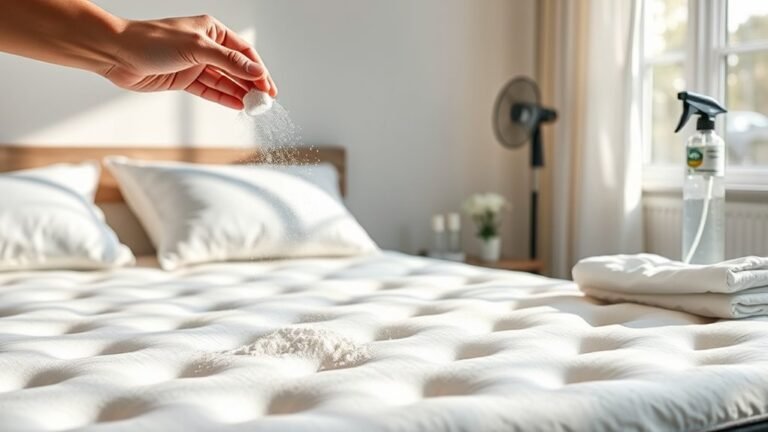
Moisture management isn’t only about what happens on top of the mattress—it’s also about what happens underneath. Practical steps:
– Use a slatted/ventilated bed base when possible.
– Maintain clearance between the mattress and any wall or furniture so air can circulate.
– Avoid placing items directly against the headboard or sides if they block airflow.
If your room has recurring condensation on windows or walls, address that source too; otherwise the mattress will keep “reloading” with ambient moisture.
Dry immediately when anything goes damp
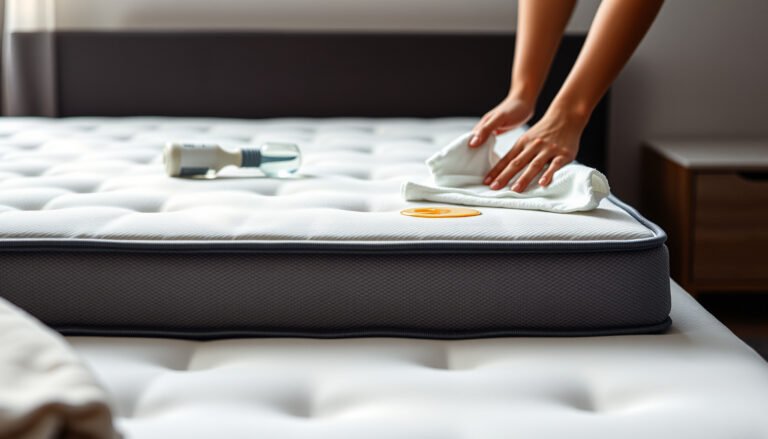
If a spill happens, don’t rely on “it feels dry soon.” Instead:
1) Strip bedding immediately.
2) Blot excess moisture (don’t scrub into seams).
3) Increase airflow (fan + open room air circulation).
4) Dry the protector according to its care label, then dry the mattress until dampness is gone at seams and edges.
From a prevention standpoint, the key variable is time-to-dry—not just whether the surface looks dry.
Routine cleaning & inspection to catch mold early
Preventing mold works best when you detect early dampness or odor before it becomes visible growth. A consistent inspection routine lets you correct humidity or airflow problems before the comfort layers absorb persistent moisture.
According to CDC mold guidance, moisture control and timely cleanup are crucial because mold can begin growing rapidly when conditions are favorable.
Inspecting seams, corners, and undersides helps catch localized dampness that may not show on the top surface (general moisture-mold prevention practice).
Surface cleaning helps with debris and odor, but it typically cannot remove mold growth embedded deep in porous layers without following the manufacturer’s approved remediation steps.
Inspect monthly (and more often during peak humidity)
Make inspection part of the same calendar rhythm you use for laundry. Focus on:
– seams and piping,
– corners,
– underside edges (if safe to check),
– musty odor even when you can’t see spots.
In 2026 humid seasons, I recommend checking right after the highest-dewpoint nights (often when condensation is most likely). If you have a smart humidity monitor, use it to schedule checks after humidity spikes.
Vacuum carefully as part of upkeep
A gentle vacuum around the mattress surface and protector seams helps remove dust and debris that can worsen odor retention. Do it carefully so you don’t damage stitching or any vented fabric components.
If you see spots or smell mustiness, act immediately
Follow the care label for the protector and the mattress manufacturer’s cleaning guidance. Mold on gel/foam layers requires careful handling because some chemicals can damage foams or worsen odor.
Follow manufacturer guidance: ().
What can go wrong (common mistakes and edge cases)
Even with the right plan, mold prevention can fail when the setup traps moisture or when you use the wrong cleaning method. These are the pitfalls that show up most often in humid bedrooms.
A non-breathable waterproof cover can trap vapor against the mattress, increasing dampness duration in humid rooms (moisture-mold prevention principles).
Some household chemicals can degrade foams or gel components; manufacturer-approved cleaning methods are safer for long-term material integrity.
If mold keeps returning quickly after cleaning, the underlying moisture source is usually still present—humidity control and leak/condensation fixes come first.
Mistake 1: Sealing the mattress in an airtight way
“Fully plastic” encasements may reduce liquid spills, but they can also stop drying. In a humid climate, trapped vapor can persist, which undermines the goal of time-to-dry. Use encasements only if the mattress manufacturer explicitly approves them.
Mistake 2: Harsh cleaning chemistry without approval
Bleach, strong solvents, and ozone/fogging can damage comfort layers and may not address deeper growth safely. If you’re unsure, stick to the manufacturer-approved method.
Mistake 3: Ignoring recurring moisture sources
If the room has a leaky window, condensation behind furniture, damp walls, or HVAC moisture issues, prevention steps for the mattress won’t fully solve the problem. Address the room conditions first, then re-check the bed system.
Edge case: mold penetrates deeper than DIY remediation
If mold appears to have penetrated deeper layers—or returns quickly after cleaning—home remediation might not be sufficient. Replacement can be the only reliable fix, depending on the mattress materials and extent of contamination. Always follow the manufacturer’s guidance: ().
Verdict / tip (honest recommendation, downsides, who should skip)
If you want the most practical prevention in a humid climate, combine: (1) a breathable waterproof mattress protector, (2) dehumidification to keep humidity down, and (3) consistent airflow and fast drying after any damp incident. The trade-off is that this approach requires consistency—if humidity drifts upward or you miss early dampness, the system can still become mold-prone.
Skip (or pause) these steps and contact a professional if you suspect a widespread infestation, there’s extensive staining, or the mattress is repeatedly re-growing mold. Also, always prioritize your gel-infused mattress manufacturer’s care and moisture-cleaning instructions ().
Quick checklist (scan/save)
| Task | How often | Goal |
|---|---|---|
| Use a breathable waterproof mattress protector | Always | Block moisture before it soaks into layers |
| Run a dehumidifier / set HVAC appropriately | Ongoing | Keep indoor humidity in a safer range (see EPA/CDC) |
| Maintain airflow under the bed | Always | Help the mattress dry between warm/cool cycles |
| Check seams, corners, and odor | Monthly (more in peak humidity) | Catch early growth before it spreads |
| Dry promptly after any spill/dampness | Immediately | Prevent moisture from lingering |
| Follow manufacturer cleaning guidance if spots appear | As needed | Avoid damaging gel/foam layers |
Frequently Asked Questions
How can I prevent mold growth on a gel-infused mattress in a humid climate?
Start by controlling moisture in the room—use a dehumidifier, run a fan for air circulation, and keep indoor humidity ideally between 30–50%. Use a breathable waterproof mattress protector to block spills while allowing the mattress to dry if humidity rises. Also clean promptly, keep bedding washed regularly, and avoid sleeping with damp sheets or after sweating without a chance to air out.
What’s the best way to dry a gel-infused mattress after spills or condensation to stop mold?
Blot excess liquid immediately with towels and remove all wet bedding, then let the mattress dry with airflow (a fan aimed across the surface works well). If possible, use a wet/dry vacuum to extract moisture from the top layers, but avoid soaking the mattress with cleaning liquids. Once dry, keep the mattress uncovered briefly so trapped humidity can escape; mold risk increases quickly if the gel-infused top stays damp for 24–48 hours.
Why does a gel-infused mattress trap moisture, and how does that lead to mold?
Gel-infused foams can have materials that retain moisture longer than standard surfaces, especially when humidity is high or airflow is low. If sweat, spills, or condensation aren’t dried quickly, the damp environment can encourage mold and mildew to form in the top upholstery and foam layers. Protecting the mattress with proper encasement and maintaining good ventilation reduces the moisture that mold needs to grow.
Which mattress protector is safest for mold prevention on a gel-infused mattress?
Choose a breathable, waterproof protector with a membrane or coating that blocks liquids while still letting moisture vapor escape. Look for a “breathable” or “cooling” design rather than a fully non-breathable plastic cover, which can trap humidity against the gel surface. Ensure the protector fits securely and is easy to remove and wash, because regular laundering helps reduce allergens, sweat buildup, and odor that often accompanies moisture.
How often should I rotate and clean a gel-infused mattress in a humid climate to reduce mold risk?
Rotate the mattress every 3–6 months to prevent moisture-prone areas from staying compressed and damp longer. Clean by vacuuming the surface regularly to remove dust and debris, and wash bedding weekly in warm water when possible. Every few weeks, consider briefly airing the mattress with good ventilation (not in direct rain or high-condensation conditions), and promptly address any musty smell or visible spots.
📅 Last Updated: October 29, 2026 | Topic: How to Protect a Gel-Infused Mattress from Mold in a Humid Climate | Content verified for accuracy and freshness.
References
- https://www.cdc.gov/mold/default.htm
- Mold | US EPA
- https://www.epa.gov/mold/moisture-and-mold
- https://www.who.int/publications/i/item/9789289002139
- https://www.hud.gov/program_offices/healthy_homes/mold
- Mold
- https://pubmed.ncbi.nlm.nih.gov/?term=mold+indoor+humidity+prevention
- https://scholar.google.com/scholar?q=indoor+humidity+control+mold+prevention Google Scholar
- https://scholar.google.com/scholar?q=mold+growth+on+fabrics+and+furniture+relative+humidity Google Scholar
- https://scholar.google.com/scholar?q=dampness+and+mould+guidelines+WHO+indoor+air+quality Google Scholar




One Comment