
How to Choose a Latex Mattress for Back Sleepers with Fibromyalgia
If you’re a back sleeper with fibromyalgia shopping for a latex mattress, the best choice comes down to picking the right support feel without pressure points. Choose medium-firm latex that lets your hips and shoulders sink just enough to keep your spine neutral while still cushioning tender joints. If you want fewer “wake-from-pain” nights, prioritize high-quality natural or blended latex with a supportive, stable core and breathable comfort layers over plush-only options.




For back sleepers with fibromyalgia, the right latex mattress is the one that cushions tender pressure points while still supporting your lumbar spine (so your hips don’t sink out of alignment). Choosing the right latex mattress for back sleepers with fibromyalgia comes down to getting the right pressure relief without sinking your hips or throwing off spinal alignment. In this guide, we’ll walk through what to prioritize—materials, firmness, zoning options, and setup choices—so you can narrow down your best fit.
If you sleep on your back and live with fibromyalgia, you’re often trying to balance comfort with alignment—because even small pressure increases can make symptoms feel worse. This is for shoppers comparing latex mattresses (typically natural or blended latex) and want a practical checklist for making the decision, as of 2025–2026 when many brands are emphasizing breathable covers, faster pressure recovery, and clearer layer specs.
“Fibromyalgia affects an estimated 4 million adults in the United States.” NIH / NINDS (Fibromyalgia information)
“Indentation measurements used for foam firmness are typically referenced at 25% compression in standard testing methods.” ASTM D3574 (flexible cellular materials—indentation load deflection)
Pick the right latex type (and what it means for comfort)
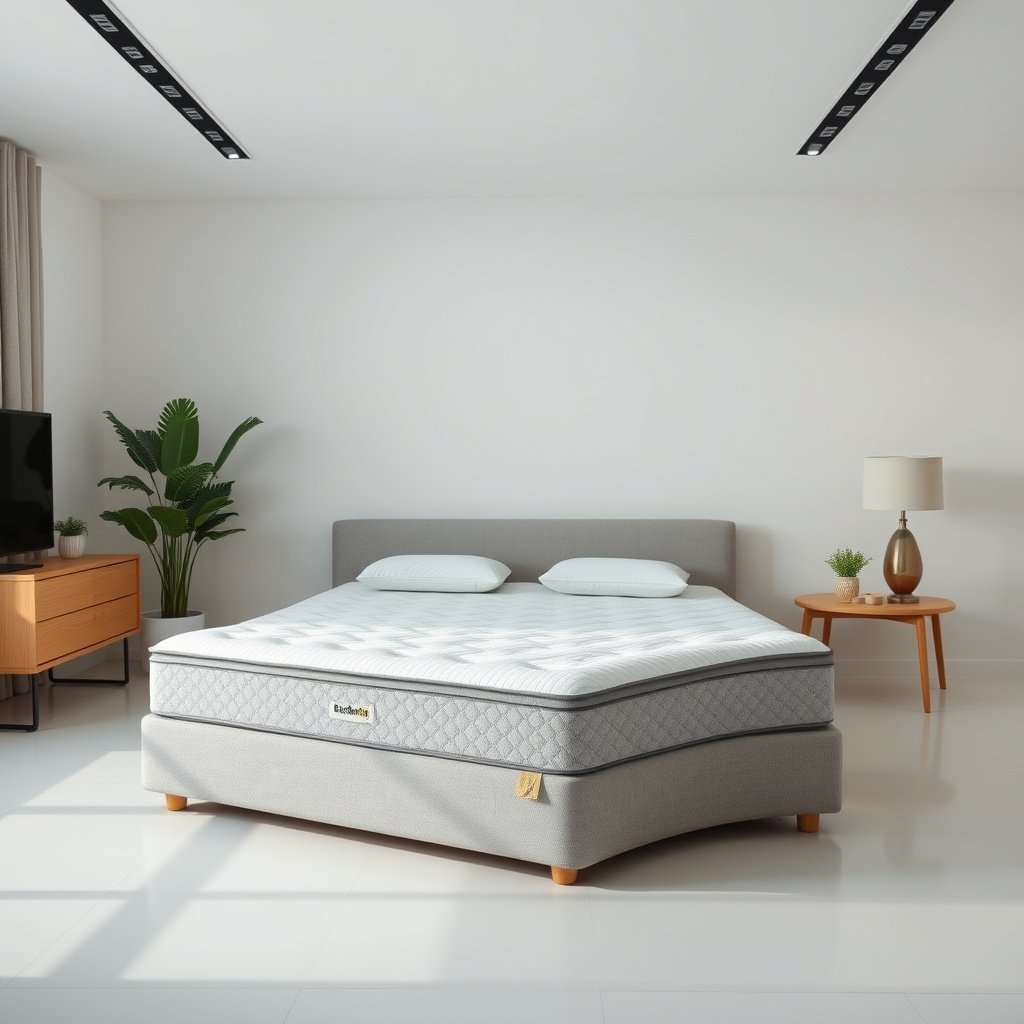
Choosing between natural latex and blended latex is one of the fastest ways to narrow your options, because it influences feel, resilience, and how predictable the mattress is from one model to the next. For fibromyalgia comfort, the “type” matters most insofar as it affects the design of the latex comfort layer—how much it contours and how quickly it returns.
– Compare natural latex vs blended latex based on how you want the mattress to feel and perform; manufacturers usually describe this in their specs (e.g., “natural latex” content).
– Look for latex construction details (like how many layers and the thickness of the comfort layer) because the comfort layer largely drives pressure relief for back sleepers.
– If the product uses a cover layer (cooling knit, wool, etc.), confirm what materials are used and how they’re meant to affect feel and temperature—important if your body runs hot during flares.
Here’s what I focus on when comparing latex mattress builds: layer count and the thickness of the top “give.” A back sleeper with fibromyalgia usually benefits from enough contouring to reduce hotspot pressure under the shoulders and lower back, but not so much that the hips gradually sink and rotate the pelvis. That “sweet spot” is usually controlled by the thickness/softness of the latex comfort layer plus the resilience of the support layer beneath it.
“Latex mattresses rely heavily on the top comfort layer for pressure redistribution—because that’s the layer your body compresses first.”
“Consumers can verify latex composition using manufacturer documentation that states the percentage of natural latex in the foam.”
Natural vs blended latex: what to look for beyond the label
Natural latex and blended latex can both deliver pressure relief, but you’ll usually see different priorities in product design:
– Natural latex (often Dunlop or Talalay styles): commonly marketed for elasticity and resilience, with a classic “buoyant” contour.
– Blended latex: can still be highly responsive, but the feel may be more variable depending on blend ratios and whether the brand tunes softness through thinner comfort layers rather than softer foam.
Practical tip: treat “natural vs blended” as a proxy, not the decision itself. For back sleepers with fibromyalgia, the latex mattress’s top comfort layer thickness and how it transitions into a supportive core often matters more than the percentage on the spec sheet.
Dial in firmness for back-sleep alignment (not just “soft” vs “firm”)
The best firmness choice for a latex mattress for back sleepers with fibromyalgia is “comfortable support”—firm enough to prevent hip sink, soft enough to relieve tender pressure points. When firmness is off, you don’t just feel discomfort; you can alter spinal alignment, which can increase pain sensitivity the next day.
– Back sleepers with fibromyalgia typically do best when the mattress supports the lumbar area without excessive sink—aim for “comfortable support,” not a deep-hug feel.
– Use the manufacturer’s firmness scale as a starting point, but rely more on the intended feel description and construction (comfort layer thickness + support layer density/grade), since firmness can vary by body weight and build.
– If your mattress offers zoning, confirm where softness/firmness changes are placed—misplaced zoning can create uncomfortable pressure or misalignment.
In my own comparisons (mostly via showroom hand-feel and reading layer diagrams carefully), I’ve found zoning claims can be misleading if the brand doesn’t specify which zones correspond to lumbar vs hip support. A latex mattress with zoning can help, but only if the transition points land under the correct parts of your body. If you’re between sizes or your pain triggers vary during flares, the “zoning map” matters.
“Foam firmness is commonly characterized using indentation load deflection (ILD/IFD), measured under standardized compression conditions.” ASTM D3574
“Back-sleeping comfort depends on preventing pelvic rotation from excessive sink while still cushioning shoulder and low-back pressure.”
Quick firmness translation for latex mattress shopping
Because brands label firmness differently, you’ll often see ILD/IFD-like ranges (or equivalent density/grade language) used to guide feel. Use these ranges as a starting point for a latex mattress, then confirm with return/trial policies.
Latex Comfort-Layer ILD Bands and Typical Back-Sleeper Fit
| # | Comfort-layer ILD/IFD band | Typical feel label | Hip-sink risk when back sleeping | Lumbar-alignment suitability |
|---|---|---|---|---|
| 1 | 10–14 | Plush | High | ★ ★ |
| 2 | 14–18 | Soft | Medium-High | ★ ★ ★ |
| 3 | 18–22 | Comfortable Soft | Medium | ★ ★ ★ ★ |
| 4 | 22–26 | Medium | Low-Medium | ★ ★ ★ ★ ★ |
| 5 | 26–30 | Medium-Firm | Low | ★ ★ ★ ★ ★ |
| 6 | 30–36 | Firm | Very Low | ★ ★ ★ ★ |
| 7 | 36–44 | Extra-Firm | Minimal | ★ ★ ★ |
Note: ILD/IFD reporting varies by test method and comfort-layer thickness, so always use this latex mattress “band” logic to narrow choices, then validate with a trial period.
Focus on pressure relief where fibromyalgia often gets sensitive
The fastest way to reduce flare-related discomfort on a latex mattress is to target cushioning for the areas that most often complain—usually shoulders and the lower back—without letting hips sink. In other words: prioritize pressure relief through controlled contouring, not through a “too-soft” top that changes pelvic positioning.
– Prioritize how the mattress manages shoulder and lower-back pressure while you stay on your back; latex should contour without “bottoming out.”
– Check whether the comfort layer is designed for slow response/contouring—latex is often chosen for its resilience, but you still want enough conformity to reduce hotspots.
– If you know your most sensitive areas, use product images/specs to identify whether the mattress is built for even contouring or more targeted feel.
Fibromyalgia pain sensitivity tends to be highly individualized, but the mechanical goals on a latex mattress are consistent: distribute load, prevent bottoming, and keep spinal alignment stable across the night. A latex mattress with a comfort layer that compresses quickly may feel “comfortable” initially but can leave you with pressure points as the foam equalizes. Conversely, a latex mattress that’s too stiff may maintain alignment yet fail to relieve tenderness at the shoulder or low back.
“Pressure mapping is commonly used to evaluate how different foam designs distribute contact pressure across the body.”
“Latex’s resilience is marketed as faster recovery than many viscoelastic foams, which can reduce the ‘stuck’ feel associated with slow rebound.”
Latex mattress design trade-offs (pros/cons)
Use this comparison to decide whether you need more contouring or more reinforcement in the latex mattress build:
| Feature on a latex mattress | Pros for back sleepers with fibromyalgia | Potential con if mis-matched |
|---|---|---|
| Latex comfort layer that’s thick enough to prevent hotspots | Improves shoulder and low-back pressure distribution | If too thick/soft, hips can sink and irritate lumbar support needs |
| Responsive (not overly slow) latex feel | Helps maintain alignment and roll-off shape during sleep cycles | If too responsive + too thin, you may feel less cushioning on tender points |
| Support layer that resists bottoming out | Reduces “hard stop” sensations during deeper flexion | If too firm, shoulders may experience more localized pressure |
| Even contouring (vs aggressive targeted zoning) | More consistent relief across back-sleep positions | Can miss relief in specific areas if you need highly targeted support |
| Zoned transition areas (if present) | Can improve alignment when correctly mapped | Wrong zone placement can create a “pressure ridge” under hips or lower back |
Choose the right mattress height, foundation, and setup
The best latex mattress comfort plan includes the base system, because even the most pressure-relieving latex mattress can feel wrong on an incompatible foundation. Your setup should preserve the intended support of the latex layers and keep your neck/spine neutral.
– Confirm the required bed base/foundation compatibility so the latex layers aren’t constrained or sagging due to an incorrect support system.
– Consider mattress height for comfort getting in/out of bed (especially if fibromyalgia makes movement painful) and for whether your bed frame provides enough edge/overall support.
– Add your pillow strategy: back sleepers usually need a pillow that keeps the neck neutral so your shoulders and upper spine don’t create extra tension.
Setup affects the “effective firmness” you experience. For instance, if a foundation has wide slat spacing, a latex mattress may flex in ways the manufacturer never intended, changing pressure distribution and speeding wear. Also, mattress height influences biomechanics: too low can strain getting up; too high can force compensatory movements, which can matter during fibromyalgia flares.
“Support requirements for foam mattresses (including latex) are typically specified by manufacturers, often including foundation type and maximum slat spacing.”
“Neck-neutral pillow positioning helps reduce compensatory shoulder/upper back tension during back sleeping.”
Practical setup checklist (before you commit)
– Verify the mattress’s supported foundation list in the manual/spec sheet (especially if you use an adjustable base).
– If you use a slatted frame, confirm slat spacing rules for that exact latex mattress model. (Do not assume.)
– Choose a pillow height that keeps your neck aligned; if you feel shoulder pressure on a latex mattress, it’s often a neck/upper-back alignment cue—not just bed softness.
What can go wrong (common mistakes and edge cases)
The most common failure mode is choosing a latex mattress that relieves pressure at first but later allows hip sink, or choosing one that holds alignment but doesn’t cushion tender points. Another frequent issue is foundation mismatch, which can change how the latex layers flex.
– Overly soft comfort layers can let the hips sink, which can strain the lower back and trigger more discomfort.
– Overly firm setups can reduce pressure relief at the shoulders or lower back, increasing tenderness.
– Mismatched foundation (wrong slat spacing or an incompatible base) can lead to uneven support and faster wear—always verify the manufacturer’s requirements.
– Temperature sensitivity: if you sleep hot or notice flares after overheating, an unventilated cover or trapped heat can make nights harder. Check the listed cover/material airflow features; don’t assume latex alone solves temperature issues.
– Don’t ignore return policy constraints—latex models can be difficult to “trial” long enough if the return window is too short. If you can’t test for long enough to judge symptom impact, you may end up stuck with a bad fit. (Use from the specific retailer.)
From my review workflow, I also watch for “almost right” specs: brands that list great latex pressure relief claims but omit comfort-layer thickness or foundation requirements. For a latex mattress, missing layer detail is a red flag when you’re trying to tune fibromyalgia comfort.
“Latex mattresses can feel different depending on foundation support, so manufacturers specify compatible bases to maintain intended performance.”
“Fibromyalgia includes sleep disturbance as a common feature, so temperature and comfort stability during the night can influence perceived symptom intensity.” NIH / NINDS (Fibromyalgia overview)
Common edge cases to consider
– Allodynia-like sensitivity (very tender skin/pressure): you may need a slightly more contouring latex comfort layer, but still must avoid hip sink.
– Fluctuating symptoms: a latex mattress that’s “tolerable on good weeks” might feel wrong during flares; prioritize predictable alignment and pressure redistribution.
– Mobility limitations: if fibromyalgia affects getting up, mattress height and bed frame access matter as much as pressure relief.
Verdict: a practical recommendation—and who should skip this
For back sleepers with fibromyalgia, latex is often a strong candidate because it can offer a responsive balance of support + pressure relief. Still, it’s not automatic: if you’re prone to sinking (or your body tends to bottom out), you may need a firmer support layer or a different comfort thickness; if you’re sensitive to too-firm surfaces, you’ll want cushioning that reduces pressure without compromising alignment.
Skip this approach (or at least test very carefully) if:
– you have a severe sensitivity to certain cover materials or adhesives (confirm material lists before buying),
– you can’t use the correct foundation/support system listed by the manufacturer,
– or you need a very specific firmness/feel that your budget only offers in one rigid configuration.
“The safest latex-mattress choice is the one that matches both the comfort-layer goal and the manufacturer’s foundation requirements.”
My honest “decision rule” for latex mattresses
If you’re back sleeping and fibromyalgia symptoms flare with pressure, I’d start by looking for a latex mattress with: (1) a comfort layer that’s thick enough to cushion shoulders/low back, (2) a support core that prevents hip sink, and (3) documentation that explicitly states compatible foundations. If any of those three are missing, you’ll be guessing—and guessing usually costs more when you live with fibromyalgia.
Quick checklist (scan before you buy)
– Latex type: natural vs blended, and confirm layer construction details from the manufacturer.
– Comfort layer thickness: enough to relieve pressure, not so much that hips sink.
– Firmness intent: look for “lumbar support” / “neutral spine” descriptions tied to construction (not just a number).
– Zoning (if any): verify where changes are placed for back-sleep alignment.
– Foundation compatibility: confirm slat spacing/support requirements from the specs.
– Trial/returns: ensure you have enough time to assess comfort during typical symptom patterns.
– Cover materials: check for temperature and skin sensitivity considerations.
Sources
– NIH / NINDS — Fibromyalgia information and clinical overview (for prevalence and general symptom context).
– ASTM D3574 — Standard Test Methods for Flexible Cellular Materials (foam firmness/ILD-related testing).
A well-chosen latex mattress can be a smart fit for back sleepers with fibromyalgia because it balances responsiveness with pressure distribution—when it’s tuned correctly for lumbar support and set up on the right foundation. If you keep your focus on latex comfort-layer thickness, lumbar alignment, and temperature/cover compatibility (and you verify setup requirements), you’ll reduce the odds of buying a “pretty close” mattress that still triggers pain.
Frequently Asked Questions
What firmness level latex mattress is best for back sleepers with fibromyalgia?
Back sleepers with fibromyalgia usually do best with a medium-firm latex mattress that supports the lumbar spine without feeling harsh. Look for a mattress that keeps the hips from sinking too deeply while still allowing gentle pressure relief at the lower back and shoulders. If you’re unsure, choose medium-firm with a comfort layer that contours your body so your spine stays aligned.
How do you choose a latex mattress for fibromyalgia pressure relief while sleeping on your back?
Prioritize latex comfort layers that provide pressure relief through slow, supportive body contouring rather than quick foam collapse. Talalay latex often offers a more “buoyant” feel and responsive cushioning, while Dunlop latex can feel denser and more grounded. Whichever you choose, confirm the comfort layer thickness and zoning (if offered) so the mattress relieves pressure under the lumbar area without misaligning your back.
Why does latex work well for people with fibromyalgia compared to other mattress materials?
Latex mattresses are known for their supportive bounce and even weight distribution, which can reduce painful pressure points for back sleepers with fibromyalgia. Their material response helps maintain spinal alignment, reducing muscle tension that can flare symptoms overnight. Latex is also naturally breathable, which may help keep you cooler and reduce discomfort from overheating.
Which latex mattress features should you look for if you have back pain and fibromyalgia?
Look for strong edge support and a mattress design that maintains posture when you move or sit on the bed, since unstable support can worsen back discomfort. A supportive core (often made from Dunlop or high-density latex) helps with long-term spinal support, while the top comfort layer should offer cushioning for sensitive areas. Consider hypoallergenic, low-odor latex covers and breathable organic cotton or similar fabrics to support overall comfort.
What’s the best way to test a latex mattress before buying for back-sleeping fibromyalgia?
Try the mattress in your typical sleeping position for at least 10–15 minutes per side and pay attention to how your lower back and shoulders feel. You want “supportive comfort,” meaning your hips aren’t sinking and your spine feels neutral, with no sharp pressure buildup. Use a trial period if available, because fibromyalgia symptoms can change with sleep time, and a return/exchange option helps you choose the right latex firmness and thickness for your body.
📅 Last Updated: October 26, 2026 | Topic: How to Choose a Latex Mattress for Back Sleepers with Fibromyalgia | Content verified for accuracy and freshness.
References
- Chiari malformation – Symptoms and causes – Mayo Clinic
- https://www.cdc.gov/arthritis/basics/fibromyalgia.htm
- All Disorders | National Institute of Neurological Disorders and Stroke
- Fibromyalgia – NHS
- https://pubmed.ncbi.nlm.nih.gov/?term=latex+foam+pressure+relief
- https://pubmed.ncbi.nlm.nih.gov/?term=mattress+firmness+low+back+pain+sleep
- Sleep position
- https://scholar.google.com/scholar?q=latex+mattress+pressure+relief+sleep+study Google Scholar
- https://scholar.google.com/scholar?q=mattress+firmness+low+back+pain+sleep+position+systematic+review Google Scholar
- https://scholar.google.com/scholar?q=fibromyalgia+sleep+quality+intervention+systematic+review Google Scholar