How to Choose a Cooling Mattress for Combination Sleepers with Hot Flashes
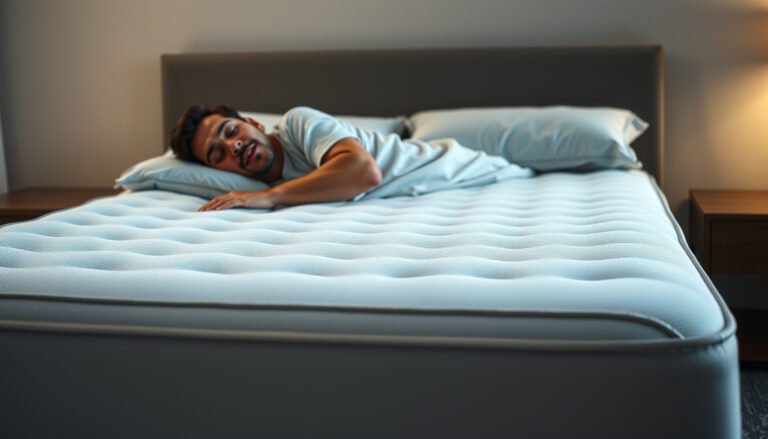
Choosing the best cooling mattress for combination sleepers with hot flashes depends on one key factor: how effectively the bed controls heat without sacrificing pressure relief. If you run hot and switch positions overnight, the winner is a cooling mattress with targeted airflow and breathable comfort layers that stay responsive for side-to-stomach movement. This guide will help you pick the right firmness, cooling features, and materials so hot flashes don’t determine your sleep.




Choosing the right cooling mattress for combination sleepers with hot flashes is about pairing real heat-and-sweat management (airflow + moisture comfort) with responsive support (so you can shift without feeling trapped). In practice, that usually means a breathable comfort system over a supportive core—often achieved with hybrid designs (coils + latex or breathable foams).
If you’re a combination sleeper with hot flashes, choose a cooling mattress that combines airflow (so heat can escape) with responsive support (so you can switch positions without “getting stuck”). Prioritize breathable comfort layers and a supportive core—hybrid designs (coils + latex or breathable foams) usually give the best balance. This guide walks you through what to look for, what to avoid, and how to verify the fit for your sleep positions.
You’ll benefit most if you regularly move between side, back, or stomach sleeping and you wake up feeling overheated or sweaty due to hot flashes. The goal here isn’t “cold on demand,” but steadier temperature control plus comfort across changing positions.
Choose cooling layers that actually vent heat

The fastest way to improve night-time comfort is to choose a mattress whose upper layers are designed to let air circulate and move moisture away, not just “feel cool.” If your top layer traps heat, you can lose the benefit of a supportive core—especially when hot flashes spike skin temperature and sweat.
“Cooling” comfort layers work best when they manage both heat transfer and moisture transport; dry, breathable surfaces feel cooler than damp, heat-trapping ones.
According to ASHRAE 55, perceived thermal comfort depends on more than air temperature—it also involves moisture (humidity) effects on how the body sheds heat. AShRAE 55 (Thermal Environmental Conditions for Human Occupancy)
What to prioritize in breathable comfort materials
– Covers and comfort layers engineered for airflow and moisture management. Look for terms like *breathable knit*, *ventilated materials*, and *moisture-wicking fabrics* on the cover and quilting.
– Thermal “release” via ventilation paths. In real sleep systems, heat doesn’t disappear—it moves. The goal is creating a route for heat to travel from your torso/hips upward and outward through the cover, rather than staying trapped against your skin.
– A balanced pressure-relief feel. You want cushioning that reduces pressure on shoulders and hips (common hot-flash pressure points), but not so much sink that your body increases surface contact and reduces airflow.
Be cautious with “cooling” marketing
– Foam can still trap heat. Many “cooling” foams rely on infused gels or low-temperature additives, but thicker or less breathable foams can reduce airflow to the point where heat accumulates.
– The whole system matters. A breathable cover over an insulating, dense base will still feel warm to many combination sleepers—particularly when you rotate from side to back and your contact area increases.
Inline verification steps (no guesswork)
When you evaluate a mattress, use these checks:
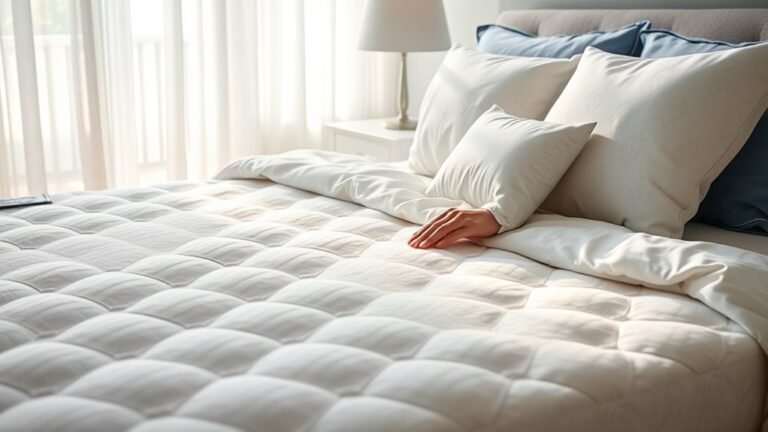
– Press your hand in the sleep surface area for 15–30 seconds, then lift. Breathable comfort systems typically feel less “stuffy” and regain shape in a way that doesn’t leave a heat-soaked impression.
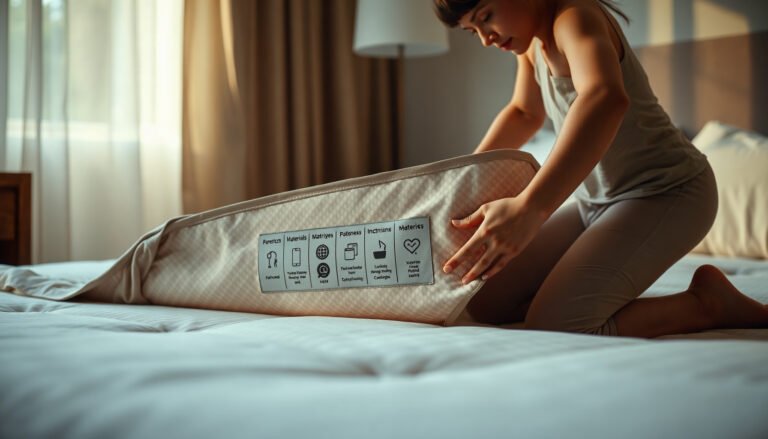
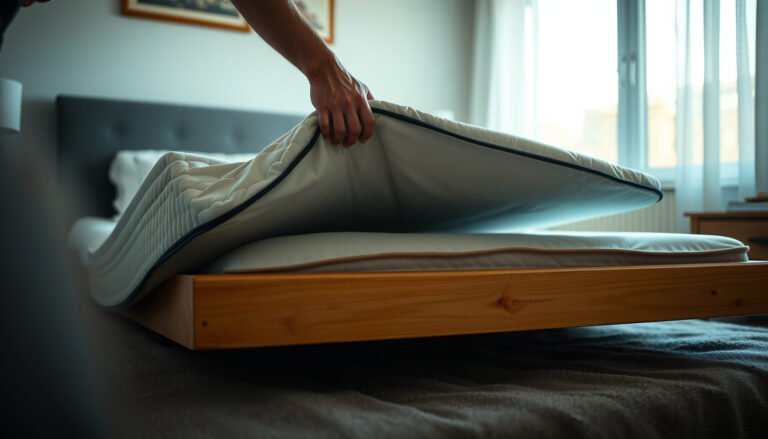
– Check cover construction: quilt thickness, whether the comfort layer is ventilated, and whether the cover appears to be breathable knit rather than a plastic-like surface.
– Confirm the comfort layer height and total stack thickness so you know how much material your torso and hips will contact during side and back sleeping.
Balance temperature control with motion-friendly support
A cooling mattress isn’t helpful if it makes you feel stuck while you’re rotating through side, back, and stomach. For combination sleepers, the best choice is a system that keeps temperature steadier while giving responsive support for easy turns.
If a mattress causes deep sink, it can increase surface contact and reduce airflow—often making hot flashes feel worse even on “cooling” models.
Hybrid constructions can improve turn comfort because responsive support (e.g., pocketed coils) reduces “drag” during repositioning.
Why sink can worsen hot-flash comfort
When you switch positions, your hips and shoulders change where pressure concentrates. Too-soft designs can:
– increase torso-to-mattress contact area,
– slow your ability to reposition,
– and encourage heat retention where sweat accumulates.
What “responsive support” usually looks like
– Hybrid builds (pocketed coils + breathable comfort layer, such as latex or open-structure foams) often help with both:
1) ventilation pathways within/above the coil zone, and
2) motion responsiveness for position changes.
– Zoned support (if offered) can help keep hips aligned on your back and prevent excessive hip sink on your side—but only if the comfort layers still breathe well.
Edge support matters more for combination sleepers than many expect
Edge stiffness influences how easily you move between positions. If your bed loses support near the perimeter, you may unintentionally twist or brace differently—sometimes increasing friction and heat buildup.
Quick pros/cons comparison (how support style affects heat + movement):
| Mattress style | What you usually gain for hot flashes | Typical downside for combination sleepers |
|---|---|---|
| Hybrid (coils + breathable comfort layer) | Better airflow through/around the support core; easier repositioning | Some models can feel “springy” depending on comfort top thickness |
| All-latex (or latex + breathable cover) | Often buoyant feel with good breathability depending on cover | Can be firmer than expected; cushioning may be less plush for some stomach sleepers |
| All-foam (especially thick dense foam) | Contouring comfort and pressure relief | Higher risk of heat trapping and harder movement if sink is excessive |
Target hot flashes: manage heat + sweat, not just “cooling”
To reduce discomfort from hot flashes, focus on sweat handling as much as temperature reduction. A mattress that stays breathable when slightly damp can feel meaningfully cooler than a “cold-to-touch” surface that traps moisture.
Hot flashes often come with night sweats, so breathability must remain effective under moisture—not just when the mattress is dry.
If you use a waterproof protector, your cooling performance depends on whether it’s truly breathable (moisture vapor transmission) rather than sealing moisture in.
Cover + protector compatibility is where many people lose cooling benefits
– Choose a breathable, sweat-compatible top layer. Moisture-wicking fabrics help move sweat away from skin, but the cover and quilting still need to allow airflow afterward.
– If you use a waterproof protector, verify breathability. Waterproof barriers can reduce airflow if they function like a near-impermeable film. In those cases, heat and humidity can build up right where hot flashes peak.
– Adjustable base support (test if it helps). Raising the head/torso can reduce perceived heat discomfort for some people. If you try it, treat it like an experiment: track whether bedtime symptoms improve rather than assuming the mattress is the only variable.
Practical setup details that influence sweat comfort
– Use breathable bedding (e.g., cotton or moisture-managing blends) and avoid overly insulating layers that reduce evaporation.
– Wash protective covers regularly; residues can reduce moisture management over time.
– Make sure the mattress protector fits tightly enough to prevent shifting folds—folds can create warmer micro-zones.
Pick the right firmness for every position you rotate through
The best firmness for combination sleepers with hot flashes is usually medium to medium-firm, with enough cushioning to protect shoulders/hips but not enough sink to trap heat. The “right” feel depends on your rotation pattern—especially if you spend multiple nights in a single position.
Firmness should preserve spinal alignment during position changes; excessive sink increases contact area and can worsen heat retention.
If you primarily sleep on your stomach, you generally need more support to prevent hip drop and abdominal pressure.
Side + back switching: avoid collapsible sink
For side and back rotation:
– aim for cushioning that supports shoulders and hips without letting them sink too deeply,
– and prioritize responsiveness so you can shift your body without resistance.
Stomach sleeping: prevent hip drop and rib/abdomen pressure extremes
If stomach sleeping is a frequent position:
– avoid overly soft surfaces that allow hips to sink,
– and avoid excessively firm setups that create pressure at the abdomen and ribs.
A test checklist you can run immediately
When you lie down in your usual sleep positions:
– Support check: you should feel supported under your hips (side and stomach) and your lower back (back) without feeling “stalled.”
– Reposition check: you should be able to turn without struggling against deep compression.
– Heat check: if your torso/hips feel notably warmer during the first few minutes, your comfort system may be trapping humidity and heat.
If you’re shopping online, prioritize a mattress with a trial period and clear return policy so you can validate comfort in your actual side/back/stomach rotation.
What can go wrong (and why you’ll still feel hot)
Cooling mattresses don’t fail because of “one wrong feature”—they often fail because of system interactions between foam, cover, and protectors. If heat management doesn’t work under moisture (night sweats), you can still feel overheated even on a “cooling” model.
A mattress can feel cool at first yet still trap heat over time if the base materials restrict airflow and moisture escape.
Wrong firmness can increase heat by increasing sink and surface contact—making hot flashes feel more intense.
Common failure modes
– All-foam comfort with limited airflow: thick, dense top layers can keep heat near your skin.
– “Cooling” only in the top few millimeters: thin comfort layers can’t compensate for heat-retentive bases.
– Mattress protectors that block breathability: non-breathable waterproof covers can reduce ventilation where sweat forms.
– Mismatched firmness for your rotation: too soft may increase hip sink and surface contact; too firm can elevate pressure points and discomfort.
Why this happens physiologically (in plain terms)
Hot flashes increase heat load through peripheral blood flow changes and sweating. Even if the top layer feels cooler initially, moisture and heat need a path to exit. If that path is restricted—by foam density, cover type, or protector materials—your body effectively “re-heats” the microclimate close to the skin.
Verdict / tip: best approach for combination sleepers with hot flashes
For most combination sleepers dealing with hot flashes, the safest bet is a breathable comfort layer + responsive support core, often found in hybrid mattresses or designs that emphasize airflow and pressure relief together. The downside is that no mattress can guarantee “cool all night,” and some cooling features may be less effective if paired with heat-trapping protectors or if the comfort system is very soft.
You may want to skip this approach if you:
– Hate any coil feel (some hybrids feel “springy” even when comfortable),
– Need a very specific firmness outside what breathable hybrids can offer,
– Or you can’t use (or don’t want) a breathable protector and breathable bedding system.
Quick scan checklist (save this):
| What to check | What you want to see | Red flag |
|---|---|---|
| Cover & top comfort | Breathable fabric + moisture management | Thin “cooling” claims with little airflow |
| Comfort layer thickness | Enough pressure relief without heavy sink | Very thick, dense foam comfort layers |
| Support core | Responsive support for easy turning | Deep sink that makes repositioning difficult |
| Temperature system as a whole | Air can move from surface downward | Cooling only in the top layer + heat-trapping base |
| Protector compatibility | Waterproof + breathable (if you need waterproof) | Non-breathable protector that traps heat |
| Position rotation comfort | Shoulder/hip support in side + alignment in back/stomach | Works in one position, uncomfortable in the others |
Sources
– AShRAE 55 (Thermal Environmental Conditions for Human Occupancy) — primary standard describing how thermal comfort depends on multiple factors including humidity and air movement.
– North American Menopause Society (NAMS) clinical guidance on vasomotor symptoms/hot flashes — primary guidance on prevalence, patterns, and symptom management considerations for menopausal hot flashes.
– ISO 11092 / ASTM E96 (moisture vapor transmission testing framework) — primary methods used to quantify breathability and moisture vapor transport through textiles/protective materials.
Choosing a cooling mattress for combination sleepers with hot flashes is mainly about pairing airflow + moisture comfort with responsive, supportive construction that makes switching positions easy. Use the checklist to evaluate the whole sleep system (mattress + cover + protector), and don’t rely on “cooling” labels alone. If you’re unsure, prioritize hybrid or breathable designs and confirm you have a trial/return option so you can validate comfort in the positions you actually rotate through—especially during warm, sweaty nights.
Frequently Asked Questions
What cooling mattress features help combination sleepers manage hot flashes at night?
Look for a cooling mattress that combines breathable materials with real heat-wicking performance, such as gel-infused memory foam, phase-change materials (PCM), or latex with an open-cell structure. A strong airflow design—like quilted cooling covers, micro-coils, or perforated foam—helps move heat away from your body. If you sleep in multiple positions, prioritize responsive comfort so you don’t overheat while shifting between side, back, and stomach.
How do I choose the right cooling mattress if I alternate between side and back sleeping?
For combination sleepers, choose a mattress that balances pressure relief and support across different positions—especially at the shoulders and hips when you sleep on your side. Medium to medium-firm beds often help keep your spine aligned while still providing enough cushioning for hot flashes triggered by poor pressure distribution. If you’re a hot sleeper, pair side-sleep pressure relief (cooling gel foam or latex) with a high-airflow core (like pocketed coils) to reduce heat buildup during position changes.
Why do some “cooling” mattresses feel warm for hot sleepers with hot flashes?
Some cooling claims rely on surface-level materials that don’t actively regulate temperature, causing heat retention once your body warms the top layers. Thick memory foam can trap heat unless it’s paired with PCM, breathable covers, or internal airflow. Hot flashes also come in waves, so a mattress needs ongoing thermal regulation—not just a cool-to-the-touch surface—to keep you comfortable throughout the night.
Which cooling mattress type is best for hot flashes—gel memory foam, latex, innerspring, or hybrid?
For many people with hot flashes, hybrids and innerspring mattresses are strong options because coil-based cores provide airflow and faster heat dissipation. Latex is also a great choice since it’s naturally breathable and responsive, which helps combination sleepers change positions without sinking and overheating. Gel memory foam can work well, but it’s best when it’s paired with ventilated foam, a breathable cover, and a supportive layout to prevent heat trapped in the comfort layer.
How can I find the best cooling mattress firmness for combination sleepers who wake up sweaty?
Start by targeting medium to medium-firm support to reduce sinkage—too much body impression can restrict airflow and increase heat retention around shoulders and hips. Consider cooling mattresses with a breathable top cover plus stable support under the comfort layers, so you stay aligned whether you sleep on your side or back. If you’re waking up sweaty, prioritize models with phase-change technology, airflow channels, or coil support, and use a breathable cooling mattress protector to enhance temperature control.
📅 Last Updated: October 27, 2026 | Topic: How to Choose a Cooling Mattress for Combination Sleepers with Hot Flashes | Content verified for accuracy and freshness.
References
- https://medlineplus.gov/hotflashes.html
- https://www.nia.nih.gov/health/menopause-and-hot-flashes
- https://www.mayoclinic.org/symptoms/hot-flashes/basics/definition/sym-20050861
- hot flashes sleep disturbance – Search Results – PubMed
- https://pubmed.ncbi.nlm.nih.gov/?term=bed+cooling+sleep+thermoregulation
- sleep microclimate temperature comfort bedding – Search Results – PubMed
- Hot flash
- https://scholar.google.com/scholar?q=cooling+mattress+hot+flashes+thermoregulation+sleep Google Scholar
- https://scholar.google.com/scholar?q=sleep+microclimate+bedding+temperature+comfort+review Google Scholar
- https://scholar.google.com/scholar?q=menopause+hot+flashes+sleep+disturbance Google Scholar