How to Choose a Crib Mattress: What to Look For
You lift a crib mattress from its packaging and notice how many labels promise “safe” and “comfortable” care. Within minutes, you can narrow your options by confirming it fits your crib properly, stays firm, uses breathable materials, and complies with current safety standards. You will walk away with a clear checklist of what to measure, what to look for, and what features to skip before you buy.




Choosing the right crib mattress is mainly about safety first: pick one that’s firm, fits tightly, and meets crib/safe-sleep guidance. Then narrow it down by comfort needs (firm support), material/build (how it resists sagging), and practical factors like cleaning and ventilation. Use the crib’s specific dimensions as your starting point so there’s no gap between mattress and frame.
This guide is for parents and caregivers buying a crib mattress for an infant or newborn—especially if you’re trying to avoid sagging, hard-to-clean covers, or mattresses that don’t fit your exact crib model.
Check safety and fit before anything else

A safe crib mattress is one that matches your crib exactly and leaves no unsafe space. Before you compare brands, verify the mattress you’re considering is designed for your specific crib type and that it sits snugly in the frame.
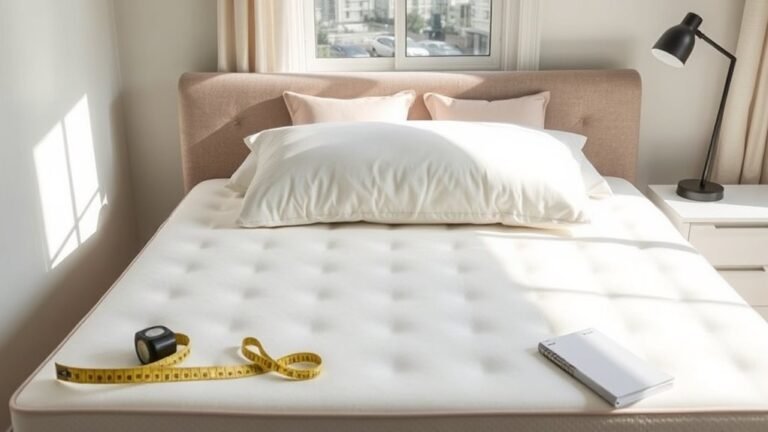
Confirm dimensions with both crib and mattress specs
Start with the crib maker’s manual and match the mattress to the crib’s interior dimensions (not the crib’s outer size). Even when products claim “standard,” cribs can vary by manufacturer, rail height, and interior clearance—so a “close enough” mattress can create side gaps.
From a compliance and fit standpoint, the key idea is simple: when you set the crib mattress in place, it should not shift, bow, or leave meaningful gaps around the perimeter. According to the U.S. Consumer Product Safety Commission (CPSC), crib sleep surfaces should be positioned to reduce gaps that could trap the baby or allow the baby to slip into unsafe spaces (U.S. CPSC crib/safe-sleep guidance, 2024).
Avoid add-ons that change the sleep surface
Skip liners, toppers, and extra padding unless your crib and mattress manufacturers explicitly allow them together. Add-ons can alter firmness, create uneven areas, and—most importantly—change the thickness profile the manufacturer designed for safe fit.
If you’re tempted to add a waterproof cover or “comfort topper,” treat it like a design change. In 2026, many parents also look for breathable and washable layers, but the safe-sleep principle still holds: only use accessories that are permitted by the mattress label and crib instructions.
Prioritize firmness and full support
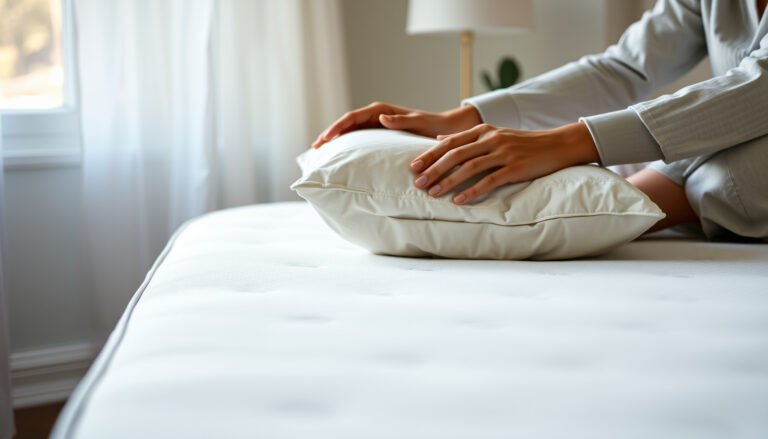
A crib mattress should feel firm, flat, and stable—so the baby’s body doesn’t sink deeply. If the mattress contouring is noticeable to your hand, that’s often a sign it won’t maintain the supportive surface infant sleep guidance expects.
Use “hands-on” checks for softness and stability
When you press a crib mattress surface, it should not feel like a couch cushion. A firm mattress:
– resists deep indentation,
– stays level in the crib without rocking or shifting, and
– maintains the intended sleeping surface across its whole area.
If you can press down significantly and it holds that depression, treat it as a warning sign. That’s not about “comfort preferences”—it’s about maintaining a flat, supported position in real use.
Understand what “firm” means in practice
In crib bedding, firmness is usually about support and resilience, not about being uncomfortable to adults. According to the American Academy of Pediatrics (AAP), babies should sleep on a firm, flat surface to reduce risk associated with unsafe sleep environments (AAP Safe Sleep recommendations, 2022). That doesn’t mean the mattress must be hard like a board, but it does mean it must resist sagging and shouldn’t allow the baby’s head and body to sink into soft layers.
Compare materials and construction (without overpromising)
The best crib mattress materials are the ones that keep their supportive structure over time. Instead of chasing marketing claims, look for build details that explain how the core holds firmness and how it’s likely to perform as the mattress ages.
Consider core type: foam vs. innerspring (and layers)
Foam mattresses can be supportive, but the “type” matters: the construction (single firm core vs. multi-layer builds) determines how quickly softness can develop. Innerspring designs can also meet firmness needs, but inspect whether the quilting and comfort layers are thin enough to avoid deep sink.
Check the product listing and label for specifics about the:
– construction (core layers and how they’re bonded),
– durability approach (e.g., whether the design is meant to resist sagging),
– and any warnings about flipping/rotation.
Reduce odor risk responsibly with manufacturer guidance
If you’re sensitive to smell, follow the manufacturer’s instructions for conditioning rather than relying on generic “air out for X days” advice. Many crib mattresses can smell new temporarily; what matters is how the company tells you to manage it.
Air-out instruction placeholder:
What I recommend you document during evaluation
Write down (or screenshot) the exact label claims for firmness, rotation, cleaning, and allowed accessories. That documentation becomes your decision anchor if you later notice odor, softness, or fit issues after setup—especially in 2026, when return windows can be short.
Key Standards & Guidance Families Parents Should Recognize for Crib Mattresses (U.S.)
| # | Standard / Organization | What It Primarily Covers | Directly Relevant to Crib Mattress Safety? | Relevance |
|---|---|---|---|---|
| 1 | ASTM F2933 | Consumer safety specification for crib mattresses (including firmness/durability-related requirements) | Yes | ★★★★★ |
| 2 | 16 CFR Part 1633 | U.S. flammability standard for mattresses and mattress pads (test-based requirements) | Yes | ★★★★★ |
| 3 | 16 CFR Part 1632 | Related flammability test procedures for mattresses and mattress pads | Yes | ★★★★☆ |
| 4 | American Academy of Pediatrics (AAP) | Safe Sleep guidance (firm surface, back sleeping, avoidance of soft items) | Yes | ★★★★★ |
| 5 | U.S. CPSC (Consumer Product Safety Commission) | Crib/play-yard safety guidance (including snug fit and product safety recommendations) | Yes | ★★★★☆ |
| 6 | ASTM F406 | Non-full-size crib/play yard product safety specification (structure-focused, not mattress firmness) | No | ★★★☆☆ |
| 7 | GREENGUARD Gold (UL Environment) | Indoor emissions screening (comfort/air-quality focus rather than crib sleep safety requirements) | Indirect | ★☆☆☆☆ |
Focus on ventilation and a wipeable, breathable cover
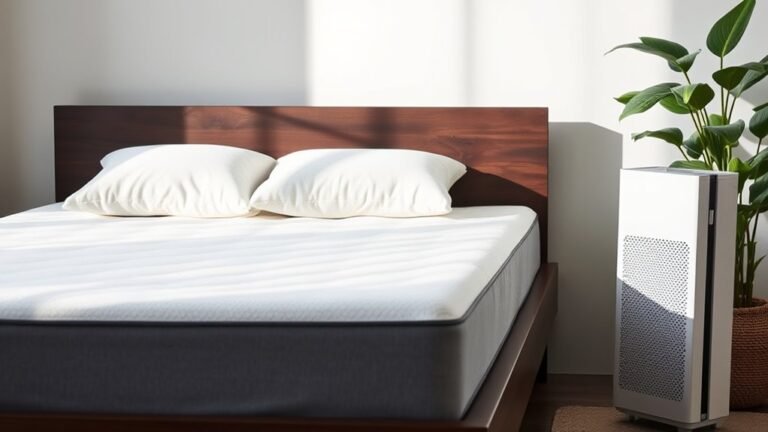
A crib mattress should be easy to keep clean and designed to manage moisture and heat. That’s not a luxury feature—it’s how you reduce the practical friction of daily care while helping the mattress stay fresh.
Choose a cover you can realistically maintain
Mess happens quickly: spit-up, diaper leaks, and “overnight accidents.” Look for a cover that supports your cleaning routine:
– spot-clean instructions you can follow quickly,
– a removable cover (if permitted) you can wash appropriately,
– and clear guidance on what not to do (like soaking the interior core).
Cleaning instruction placeholder:
Prefer airflow-friendly design elements
When a mattress traps heat, you may see more sweating on the surface and faster cover deterioration. Instead of assuming “breathable” means “safe,” check what the company actually designs: structured layers, breathable covers, and moisture management details that don’t require unsafe add-ons.
Also confirm whether any waterproof layer is integrated into the mattress or is an accessory you’d add. Integrated solutions are generally easier to stay compatible with manufacturer safe-sleep design.
Plan for protector compatibility
If you want a waterproof mattress protector, verify compatibility first. Some protectors are thin and designed to work with specific crib mattresses; others can change feel, alter fit, or add bulk.
Protector note placeholder:
Get the size and lifespan right for your crib
The best way to avoid safety problems later is to buy the correct size today and choose a construction likely to stay firm. Measure carefully, match exactly, and treat rotation/handling rules as safety-critical instructions—not optional convenience.
Match the mattress size to the crib interior
Measure the crib’s interior dimensions from the manual, then match those numbers to the mattress spec. This prevents the most common “almost right” mistake: mattresses that leave gaps or don’t sit evenly in the frame.
According to CPSC guidance emphasizing safe sleep and snug fit, a properly sized mattress reduces the risk created by gaps between the mattress and the crib sides (U.S. CPSC crib/safe-sleep guidance, 2024).
Plan for firmness retention as your baby grows
Sagging is often the result of a mattress core that can’t maintain structure under repeated pressure and moisture exposure. You’re not just looking for initial firmness—you’re looking for long-term support.
Also note:
– whether the mattress is designed to be rotated or flipped,
– whether it needs rotation to maintain even wear,
– and whether rotation is restricted due to layered construction.
Rotation allowance placeholder:
Understand standardized “full-size” references (and their limits)
Full-size crib mattress dimensions are commonly standardized at about 52 3/8 inches by 27 1/4 inches for the U.S. market (ASTM F2933 and industry crib mattress dimension references, ). Still, “standard” doesn’t eliminate the need to confirm fit for your specific crib model, especially if it’s non-standard or older.
What can go wrong (common mistakes to avoid)
Most crib mattress problems come from “almost right” decisions: a small size mismatch, an unapproved topper, or a cover you can’t maintain. When any of these happen, the mattress can lose the firm, flat, correctly positioned sleep surface that safe sleep guidance expects.
Common mistakes that create unsafe sleep setups
Here are the most frequent failure points parents run into:
– Buying the wrong size: a mattress that’s too small can create unsafe gaps; a mattress that’s too large may not sit correctly.
– Adding toppers/foam pads: these can change firmness and create uneven or softer sleeping surfaces.
– Choosing based on comfort alone: “cozy” usually means more give; crib sleep guidance typically favors firm support.
– Ignoring the label: if the mattress instructions contradict what you assumed (like cleaning, flipping, or permitted crib compatibility), follow the instructions—not the listing copy.
– Letting the cover get damaged: tears can make cleaning harder and may expose materials that degrade faster.
Edge cases worth double-checking
1) Vintage or custom cribs: If your crib doesn’t match modern dimensions, you may need exact matching rather than “standard size.”
2) After-market accessories: Any accessory that changes thickness (even slightly) can alter fit and firmness.
3) Soaked cores: If you oversaturate a mattress core during cleaning, you can affect the internal structure and airflow.
A practical verdict (with downsides) + who should skip
If you want the simplest, safest path, choose a firm, well-fitting crib mattress that matches your crib’s dimensions and follow the manufacturer’s care instructions. The downside is that “best for safety” often isn’t the plushest option, and some premium breathable features may cost more.
- Best for safety (practical pick)
- A firm, flat mattress with exact fit, compatible cover options, and label-approved care/rotation.
- Likely downsides
- Less “cushion” feeling for adults, potentially fewer add-on choices, and sometimes higher price for breathable construction.
- Skip or double-check
-
Your crib model isn’t compatible with “standard” sizes, you plan to use liners/toppers not explicitly allowed, or your pediatrician advises a different surface for a specific medical reason.
Skip this approach (or double-check compatibility) if:
– Your crib model isn’t compatible with “standard” sizes (you need exact mattress/crib matching).
– You’re considering sleep accessories (liners, toppers) that aren’t explicitly allowed by the crib/mattress instructions.
– You have a special need (medical guidance from your pediatrician) that requires a different sleep surface—confirm with your clinician first.
Quick checklist (scan before you buy)
| What to verify | Yes/No |
|---|---|
| Mattress is the **exact size** for your crib (from crib manual + mattress specs) | [ ] |
| Mattress is **firm and flat** in the crib (no unusual sinking or softness) | [ ] |
| Mattress stays **snug** with no unsafe side gaps | [ ] |
| Instructions allow your planned use (no extra toppers/liners unless permitted) | [ ] |
| Cleaning method fits your routine (spot clean vs removable cover, etc.) | [ ] |
| Manufacturer guidance on airflow/conditioning is followed | [ ] |
Sources
– U.S. Consumer Product Safety Commission (CPSC) — crib/safe-sleep and consumer product safety guidance for firm mattresses and snug fit.
– American Academy of Pediatrics (AAP) — Safe Sleep guidance emphasizing a firm sleep surface and safe placement in the crib.
– ASTM International — relevant crib safety standards (commonly ASTM F406/F2933-type standards referenced in safety guidance).
– Manufacturer mattress instructions/specifications — crib compatibility, cleaning care, and any “allowed/disallowed topper” statements (primary source for practical use rules).
Choosing a crib mattress comes down to one practical outcome: a firm, correctly sized, label-approved sleep surface that stays snug in your crib and remains supportive over time. If you verify fit with your crib’s dimensions, avoid unapproved toppers/liners, and follow the manufacturer’s airflow, cleaning, and rotation guidance, you’ll be making the safest, most durable choice—while also reducing day-to-day maintenance headaches in the real world.
Frequently Asked Questions
What firmness level should you choose for a crib mattress?
For most babies, a firm crib mattress is recommended because it helps reduce the risk of suffocation by keeping the sleep surface from sagging. Look for a mattress labeled as firm (often described as “extra firm”) rather than soft or plush. Avoid memory foam or overly thick comfort layers that can create depressions as the baby grows.
How do you choose the right crib mattress size and fit?
Measure your crib’s interior dimensions and compare them to the mattress size listed by the manufacturer, since standard sizes can vary slightly. Use a “two-finger” test around the edges—if you can easily fit more than two fingers between the mattress and the sidewalls, the fit is likely too loose. A properly sized crib mattress should sit snugly to prevent gaps where bedding or the baby’s body could move.
Which materials are safest for a crib mattress?
Choose crib mattress materials that are designed for healthy airflow and low chemical exposure, such as breathable covers and high-quality innerspring or foam with safe certifications. Look for credible third-party certifications (for example, CertiPUR-US for foam) and non-toxic, water-resistant finishes. Also consider whether the mattress is easy to clean, since a removable, waterproof cover helps manage spills and accidents.
Why is waterproofing and easy cleaning important when choosing a crib mattress?
Babies often have spit-ups and diaper leaks, so a waterproof mattress cover can protect the core and help maintain hygiene. A removable, machine-washable cover is ideal because it allows regular cleaning without soaking the mattress. Prioritize crib mattress protectors or covers that are breathable to reduce moisture buildup and support safe sleep conditions.
Best cribs mattress type for heavy sleepers, reflux babies, or toddlers transitioning out of the crib?
For reflux babies, many parents prefer a breathable, firm crib mattress that stays supportive without creating soft spots, which can help with comfort while following safe sleep guidelines. For toddlers nearing the transition out of the crib, choose a mattress that remains firm and durable over time to avoid sagging. If you’re deciding between an innerspring and foam crib mattress, prioritize long-term support, waterproofing, and safety certifications rather than thickness alone.
📅 Last Updated: November 02, 2026 | Topic: How to Choose a Crib Mattress | Content verified for accuracy and freshness.
References
- https://www.cpsc.gov/Safety-Education/Safety-Guides/Cribs-and-Bassinets
- https://www.cdc.gov/sids/parents-caregivers/index.html
- Sudden Infant Death Syndrome: MedlinePlus
- Autoimmune hepatitis – Symptoms and causes – Mayo Clinic
- F2933 Standard Consumer Safety Specification for Crib Mattresses
- https://www.jpma.org/certification/
- https://scholar.google.com/scholar?q=crib+mattress+firm+flat+surface+safe+sleep+SIDS Google Scholar
- https://scholar.google.com/scholar?q=infant+crib+mattress+fit+gaps+between+mattress+and+crib+guidelines Google Scholar
- https://scholar.google.com/scholar?q=ASTM+F2933+crib+mattress+requirements+JPMA+certification Google Scholar