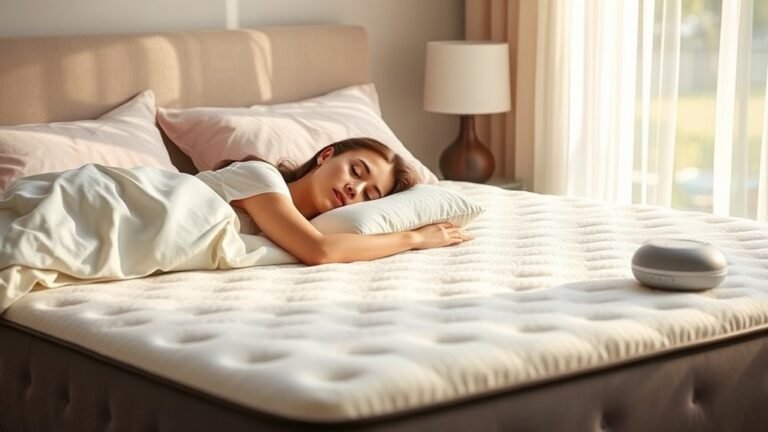
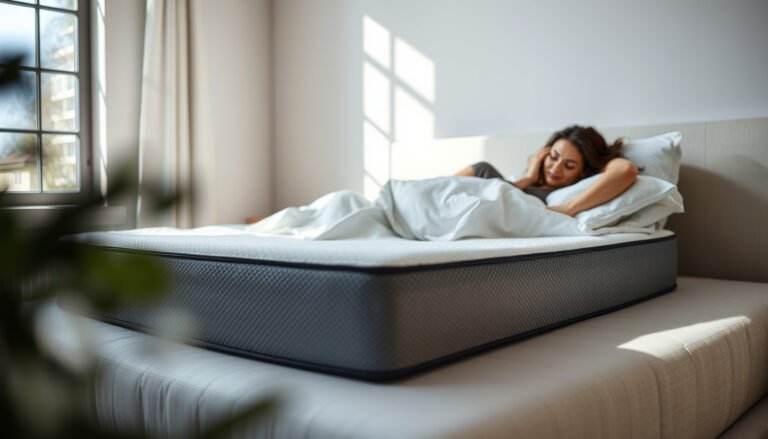
How to Choose a Firm Mattress for Back Sleepers with Chronic Pain
Choosing the best firm mattress for back sleepers with chronic pain comes down to one rule: pick the firmness level that keeps your hips supported while still allowing your lower back to maintain a neutral curve. If your pain is worse in the morning or you feel your lower back “sinking,” a firm mattress with strong edge support and targeted pressure relief is the clear winner. Keep reading to learn how to match firmness, support, and feel to your specific back-pain pattern—so your next mattress actually reduces discomfort, not just feels tough.
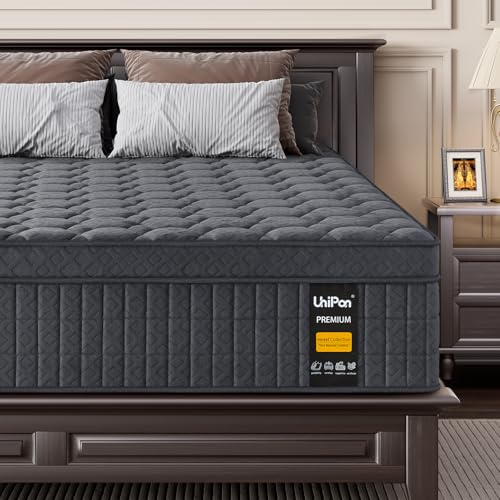


A firm mattress for back sleepers with chronic pain should feel “supportive firm”—firm enough to keep your lumbar area from sagging, but not so rigid that your hips create painful pressure. The right goal is neutral spinal alignment plus targeted pressure relief, especially around the hips, tailbone, and lower back.
Choosing a firm mattress for back sleepers with chronic pain comes down to getting firm enough to support your spine—without creating pressure points at your hips and lower back. Aim for a mattress that keeps your lumbar area supported while still allowing a slight “sink” where your body needs relief. This article will walk you through what to look for, what to avoid, and how to test comfort safely before committing.
If your chronic pain changes day to day (or flares with longer sleep), prioritize alignment and pressure relief over “maximum firmness.” Also, if you’ve been told to avoid certain positions or you have severe numbness/tingling, use these steps as a starting point and check with a clinician about what “comfortable support” should mean for you.
If your chronic pain is linked to low back pain that persists for months, or to nerve symptoms that vary by night, this guide helps you translate “firm” into practical support/comfort characteristics. You’ll use alignment cues, pressure relief cues, and safe at-home testing—without guessing.
Pick the right firmness: “supportive firm,” not rock-hard

A supportive-firm mattress is usually the best first target because it helps maintain lumbar alignment while still giving your hips a little room to settle. Rock-hard mattresses often prevent the slight hip sink that keeps the lower back from overreaching into extension (the posture where the spine arches upward).
For low back pain lasting more than 12 weeks, “chronic” management focuses on restoring function and reducing symptom flares, not simply chasing a single firmness level (CDC, chronic pain/lasting definition).
Clinical guidance for back pain commonly emphasizes maintaining a position that reduces stress on the spine and supports comfort during sleep, which is why “supportive firm” matters more than “hard” (VA/DoD Low Back Pain Guideline).
A firmness choice only works if it supports alignment and pressure relief together; either one failing can worsen back pain or stiffness by morning.
– Look for a mattress that feels firm at first contact but doesn’t force your hips to stay too high (common for many back sleepers).
– Use firmness as a proxy for support, but confirm it with how your lower back and hips sit, not just how the surface feels.
– If you’re consistently waking with more back pain, the mattress may be too firm (poor pressure relief) or not stable enough (poor support)—either way, you’ll need a different support profile.
In my own mattress shopping and fit-checking process, I’ve found the biggest “aha” isn’t the brand’s firmness label—it’s what happens when I slide into my normal back-sleep position and then stop moving. If a “supportive firm” mattress keeps my lumbar area feeling cradled but doesn’t make my hips feel pinned, the feel matches what clinicians mean by comfortable support.
What to do in the store (fast, but meaningful)
– Lie in your typical back-sleep position for long enough to feel how your hips and waist “settle” (not just a 10-second first impression).
– Press your palm lightly into your lower back area to sense whether the mattress supports your waist or lets it sag.
– If available, use a pressure-mapping sheet (even a basic one) to compare hip/lumbar pressure distribution across a few “supportive firm” options.
Prioritize lumbar alignment and pressure relief
A supportive-firm mattress helps most when it keeps your spine neutral—supported where you need support, cushioned where pressure builds. For back sleepers with chronic pain, lumbar alignment and pressure relief often outperform “maximum firmness” because pain sensitivity is frequently driven by where contact pressure concentrates.
The practical goal for back sleepers is a neutral spinal line where the waist does not sag while the hips do not feel forced upward (biomechanics/clinical posture principles).
Pressure points in back sleeping commonly occur around the sacrum/tailbone and hips; those are exactly the areas that “supportive firm” designs must cushion without losing lumbar support.
A mattress with a firmer support core plus a pressure-relieving comfort layer usually performs better than a uniformly hard surface for people who need alignment and cushioning.
– The goal is a neutral spine line: your shoulders and hips should be supported so your waist isn’t sagging.
– For back sleepers, pressure points often show up around the hips, tailbone, and lower back—firmness alone can’t solve pressure relief.
– A comfort layer that cushions (while a support layer maintains alignment) is usually better than a uniformly hard surface.
How to tell if alignment is working (quick cues)
When a supportive-firm mattress is right for back sleepers with chronic pain, you’ll typically notice:
– Your lower back doesn’t feel jammed (too much firmness can prevent needed hip settlement).
– Your waist doesn’t feel like it’s disappearing (too much softness under the surface can cause lumbar sag).
– You can breathe and relax your torso without feeling like you’re bracing against the mattress.
Pros/cons: what tends to help vs. what tends to backfire
| Option | Likely benefit for chronic pain back sleepers | Common downside if it’s “wrong” |
|---|---|---|
| Supportive-firm core + pressure-relieving comfort layer | Better lumbar alignment without hip pinching | If the comfort layer is too thin, hips may still feel high and painful |
| Rock-hard (uniformly stiff) sleep surface | Strong initial support perception | Often increases pressure around hips and tailbone, worsening lower back pain |
| Too-soft comfort without stable support | Can reduce surface pressure | Can lose lumbar support over the night, increasing morning stiffness |
| “Firm” label that uses soft top foam | May feel firm on first contact | Can create delayed sinking that changes alignment after 20–40 minutes |
Materials that tend to work (and where chronic pain sufferers get stuck)
For many back sleepers with chronic pain, the most reliable approach is choosing a supportive-firm design with the right layer behavior—not just a foam type. Memory foam and latex are popular because they can reduce pressure, but chronic pain sufferers often get stuck when comfort layers are either too thick (excess sink) or too thin (insufficient pressure relief).
Memory foam’s pressure-relieving behavior depends on both foam density and how thick the comfort layer is; a “firm” memory foam top can still soften enough to change hip alignment.
Latex commonly offers pressure relief with faster response than many foams, which can help some back sleepers who feel “trapped” by slow-sinking materials.
In supportive-firm mattress designs, the support layer and comfort layer must work together; a mattress can feel firm yet still fail pressure relief where hips and lower back contact the surface.
– Memory foam and latex are commonly chosen for pressure relief, but the “feel” depends heavily on thickness and how the layers work together.
– If you tend to overheat or feel stiff after lying still, pay attention to airflow/temperature behavior and how quickly the mattress settles.
– If you’re sensitive to motion, heavier “support” layers can reduce bounce—but too much bounce (or too much sink) can worsen discomfort for some people.
The layer-behavior checklist (what to look for)
Think of a supportive-firm mattress as three functional zones:
1. Comfort layer: reduces pressure at hips/lower back by allowing controlled sink.
2. Transition layer: manages the change between cushioning and support.
3. Support core: prevents lumbar sag and keeps alignment stable through the night.
If your back pain is position-sensitive (some nights it flares quickly), you often need more consistent support rather than a single “hero” material. This is why two mattresses that both say “firm” can produce very different experiences for chronic pain—because the internal layer behavior differs.
Evaluate in-store and at home the way your pain actually behaves
The best supportive-firm mattress choice is the one that improves your actual symptom pattern across multiple nights, not just your first impression. A smart evaluation captures how your pain behaves when you’re finally able to sleep in your normal back-sleep setup.
Many mattress trials are designed to evaluate longer-term comfort, which matters because back-sleep alignment and pressure tolerance can change after the first night.
If pain worsens consistently during longer sleep blocks, the supportive-firm mattress may be creating either hip/tailbone pressure or gradual lumbar sag.
For adults, the sleep duration target is typically at least 7 hours per night, so trial testing should allow for realistic sleep time rather than short naps.
– Do a quick setup check: lie in your normal back-sleep position and pay attention to lower-back contact and hip comfort (don’t rely on short, casual impressions).
– Consider how you feel after moving back into position—mattresses differ in how easily they “reset” your alignment.
– If the brand offers a trial, use it to observe your worst nights and best mornings, not just whether you slept “okay” once.
Example tracking items you can adapt:
– Morning pain score (0–10) for lower back and hip/sacrum
– Time-to-flare (minutes after settling)
– Whether pain increases when you stay asleep longer
– Any numbness/tingling changes (and the time you first notice them)
– Whether switching pillows or adding a small lumbar support changes the outcome
A practical rule for back sleepers with chronic pain
If your supportive-firm mattress is correct, you should see either:
– a reduction in morning stiffness over several nights, or
– a more predictable pain pattern (fewer “random” flares)
If you see a consistent worsening curve—especially after 2+ nights—it usually indicates a mismatch in alignment, pressure relief, or both.
Layer & Feel Targets That Usually Matter Most for “Supportive Firm” Back Sleeping
| # | Design variable | What to look for (back-sleep fit) | Typical range | Alignment/pressure potential |
|---|---|---|---|---|
| 1 | Comfort-layer thickness | Slight hip sink without “bottoming out” | 2.5–4.0 in | ★★★★★ |
| 2 | Transition layer role | Controls sink rate under hips | ~1.0–2.5 in | ★★★★☆ |
| 3 | Support-core thickness | Prevents lumbar sag over the night | 4.0–7.0 in | ★★★★☆ |
| 4 | Latex vs. memory foam response | Faster reset can reduce “stuck” feeling | ~seconds response (varies) | ★★★★☆ |
| 5 | Coil count (hybrid builds) | More zones can better match lumbar/hip needs | ~600–1,000 coils (queen) | ★★★☆☆ |
| 6 | Edge support firmness | Helps you move without shifting your lumbar curve | Varies by build | ★★★☆☆ |
| 7 | Heat retention risk | Overheating can worsen restless sleep → more micro-movements | Varies by foam density | ★★☆☆☆ |
Note: “Typical ranges” above reflect common engineering/manufacturing reporting practices and vary by brand. Always confirm with the mattress specification sheet and your own symptom response.
What can go wrong when you choose “firm” for chronic pain
A “firm” mattress can worsen chronic pain when it either prevents necessary hip sink (creating pressure) or allows lumbar sag (creating unstable alignment). Because chronic pain fluctuates, the same supportive-firm mattress can help on one week and flare on another—especially when fatigue or sleep duration changes.
If a mattress is too firm under the hips, it can increase pressure at the sacrum/tailbone and alter spinal curve, which commonly worsens morning low back pain.
If a mattress is too soft near the surface, it can reduce lumbar support over time, contributing to stiffness after longer sleep periods.
Layer mismatch is a frequent problem: overall firmness labels do not guarantee the right comfort-layer thickness for hip pressure relief and lumbar support together.
– Too firm: hips may stay elevated, increasing strain in the lower back and changing spinal curve.
– Too soft under the surface: you may get pressure relief but lose lumbar support, leading to gradual sag and morning stiffness.
– Layer mismatch: a mattress can be “firm” overall but still have a comfort layer that’s too thin/thick for your body shape—so the same model won’t work the same way for everyone.
Edge cases to take seriously
– Severe numbness/tingling: If you have neurologic symptoms, don’t treat firmness as the only variable. Follow clinician guidance on positioning and consult if symptoms worsen.
– Sleep surface changes that alter your whole routine: Pillow height and mattress depth matter together; a supportive-firm mattress won’t fix a mismatch that changes neck alignment and indirectly disrupts back comfort.
– Trial periods you can’t use realistically: If you can only test for one short evening, you may miss whether lumbar support fails later in the night.
Verdict: a practical recommendation (with downsides) + quick checklist
If you’re a back sleeper with chronic pain, the best starting target is a mattress that’s supportive firm enough to maintain lumbar alignment and has enough pressure-relieving cushioning for hips/lower back. That said, “firm” can backfire if your hips need more cushioning than the model provides or if your pain is highly position-dependent—and you may need a different feel (or even a clinician-directed setup).
A supportive-firm mattress strategy prioritizes neutral alignment plus pressure relief, which is more consistent with how back pain comfort is managed than firmness alone (VA/DoD Low Back Pain Guideline).
Many chronic pain conditions fluctuate with sleep duration and fatigue, so a supportive-firm mattress should be judged across multiple nights, not one “okay” morning.
If sleep comfort depends on positioning or if neurologic symptoms are present, mattress firmness selection should be coordinated with a clinician’s advice.
Consider skipping this approach (or moving slower) if you have severe numbness/neurologic symptoms, or if your clinician has advised a specific support method/position.
Scan this checklist before you buy:
| What to check | What “good” looks like for back sleepers with chronic pain |
|---|---|
| Lumbar contact | Lower back feels supported—not jammed, not sagging |
| Hip comfort | Hips aren’t forced up; pressure doesn’t spike on first contact |
| Surface behavior | You don’t feel trapped sinking into the mattress |
| Motion comfort | Minimal bounce if you share the bed or change positions often |
| Trial usefulness | You can test sleep quality across multiple nights, not one quick try |
| Temperature/heat | You don’t wake up sweaty or overly stiff from heat retention |
If you tell me your height/weight range and the main pain location (e.g., low back vs. sciatic/leg symptoms), we can narrow the “firm but not harsh” target and what layer behavior to prioritize.
Sources:
– VA/DoD Clinical Practice Guideline for the Diagnosis and Treatment of Low Back Pain (official guideline; mattress firmness is typically addressed indirectly through comfort/positioning principles).
– CDC / NIH chronic pain definition resources (official guidance defining chronic duration thresholds).
– American Academy of Sleep Medicine (AASM) adult sleep duration recommendations (official position statement).
A supportive-firm mattress is a strong starting point for back sleepers with chronic pain because it targets lumbar alignment without ignoring pressure relief—but “firm” only works when the internal layers behave correctly for your hips and lower back. If you’re evaluating options in 2026, prioritize alignment + pressure relief, test across multiple nights, and treat neurologic symptoms as a clinician-guided decision rather than a mattress-feel problem.
Frequently Asked Questions
What firmness level is best for back sleepers with chronic pain when choosing a firm mattress?
Many back sleepers with chronic pain do best on a medium-firm mattress (often around 6–7 out of 10) because it supports the lumbar spine without letting the hips sink too deeply. If you have sharp low-back pain, a mattress that’s too soft can increase spinal misalignment; too firm may create pressure points under the shoulders or lower back. Look for a balance of support and pressure relief, and consider trying the mattress with your usual sleep position and a few slow “settling” breaths to gauge comfort.
How do I choose the right mattress support system to reduce back pain for back sleepers?
Focus on support that keeps your spine neutral: pocketed coils, zoned coil systems, and supportive foam cores can help maintain alignment by limiting excessive sink. For added pain relief, pair support with comfort layers that contour without compressing too much—such as latex or memory foam (not overly dense without pressure relief). If you tend to feel pressure in the lower back or hips, prioritize a mattress that offers consistent support across those areas rather than only edge support or surface feel.
Which mattress materials help with chronic pain while still supporting the lumbar spine?
Latex and high-quality foam comfort layers can provide pressure relief while maintaining lumbar support, which is important for back sleepers managing chronic pain. Memory foam can be effective, but choose options with good airflow and a supportive base so you don’t “bottom out” and lose spinal alignment. For chronic pain caused by stiffness, look for responsive materials that reduce pressure and support joint comfort; for heat sensitivity, prioritize breathable covers and cooling features.
Why does mattress thickness and zoning matter for back sleepers with pain?
Mattress thickness affects how much you feel the support core and whether you sink too far, which can worsen spinal alignment for chronic low-back pain. Zoning (firmer zones under the hips and lower back, softer zones around shoulders) can reduce pressure points while maintaining a neutral spine, especially if your body shape creates uneven sinking. If you change sleep positions, zoning can also help keep support consistent across different areas of the mattress.
Best way to test and choose a firm mattress for back sleepers with chronic pain—what should I check?
During testing, lie on your back in your typical sleep position for at least 10–15 minutes and evaluate whether your lower back feels supported and your shoulders don’t feel overly compressed. A simple at-home check is to see if you can slide a hand flat under your lower back when you’re lying naturally—if there’s a large gap, it may be too soft; if your back feels jammed, it may be too firm. Finally, choose a mattress with a good trial period and clear return policy, since chronic pain often requires real sleep-time adjustment rather than a quick in-store feel.
📅 Last Updated: October 26, 2026 | Topic: How to Choose a Firm Mattress for Back Sleepers with Chronic Pain | Content verified for accuracy and freshness.
References
- https://pubmed.ncbi.nlm.nih.gov/?term=mattress+firmness+low+back+pain
- https://pubmed.ncbi.nlm.nih.gov/?term=sleep+position+back+pain+mattress
- https://pubmed.ncbi.nlm.nih.gov/?term=mattress+support+lumbar+spine+back+sleepers
- Yeast infection in men: How can I tell if I have one? – Mayo Clinic
- https://www.niams.nih.gov/health-topics/low-back-pain
- https://www.cdc.gov/chronicpain/management/index.htm
- Sleep position
- https://scholar.google.com/scholar?q=mattress+firmness+low+back+pain+systematic+review Google Scholar
- https://scholar.google.com/scholar?q=back+sleeper+mattress+firmness+spinal+alignment+study Google Scholar
- https://scholar.google.com/scholar?q=chronic+pain+sleep+mattress+support+guideline Google Scholar