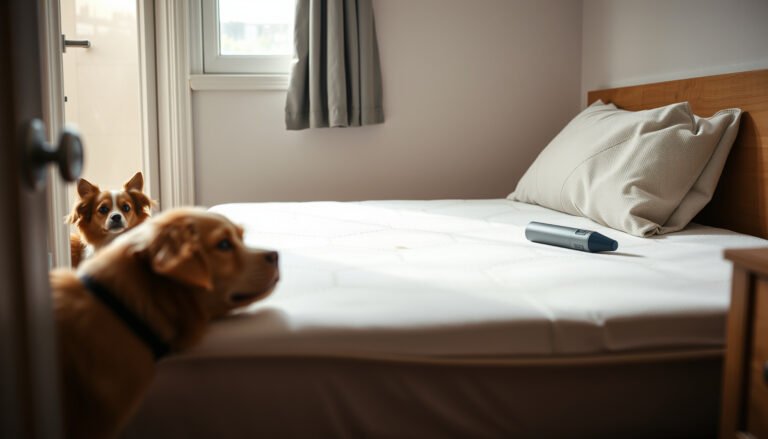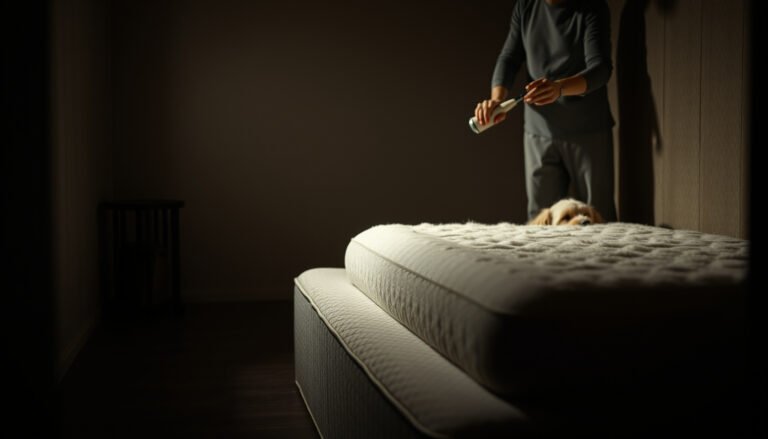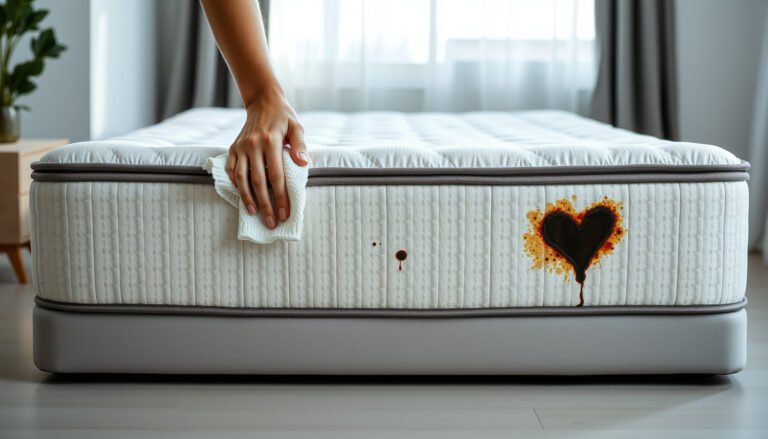
How to Clean a Hybrid Mattress with Pet Urine Spills
Need to clean a hybrid mattress after a pet urine spill and want results fast? This guide lays out the quickest method to remove urine odor and prevent damage to the comfort layers, with clear do’s and don’ts from blotting to drying. Follow it step-by-step and you’ll get the cleanest outcome without soaking the mattress or risking lingering smells.




Blot up the urine as fast as you can, then treat the spot with an enzyme cleaner designed for pet urine and rinse only what the mattress needs. The key with a hybrid mattress is avoiding soaking—too much liquid can reach the foam layers and into the coil area, leaving lingering odor. This guide walks you through the exact cleaning order, drying approach, and what to watch out for.
If your pet had an accident on a hybrid (springs + foam) mattress, this is for you—especially if the urine is fresh or recently absorbed. It’s also useful when you want a safer process that won’t damage materials, void care guidance, or make the smell come back later.
Triage: Remove urine fast and protect the mattress layers
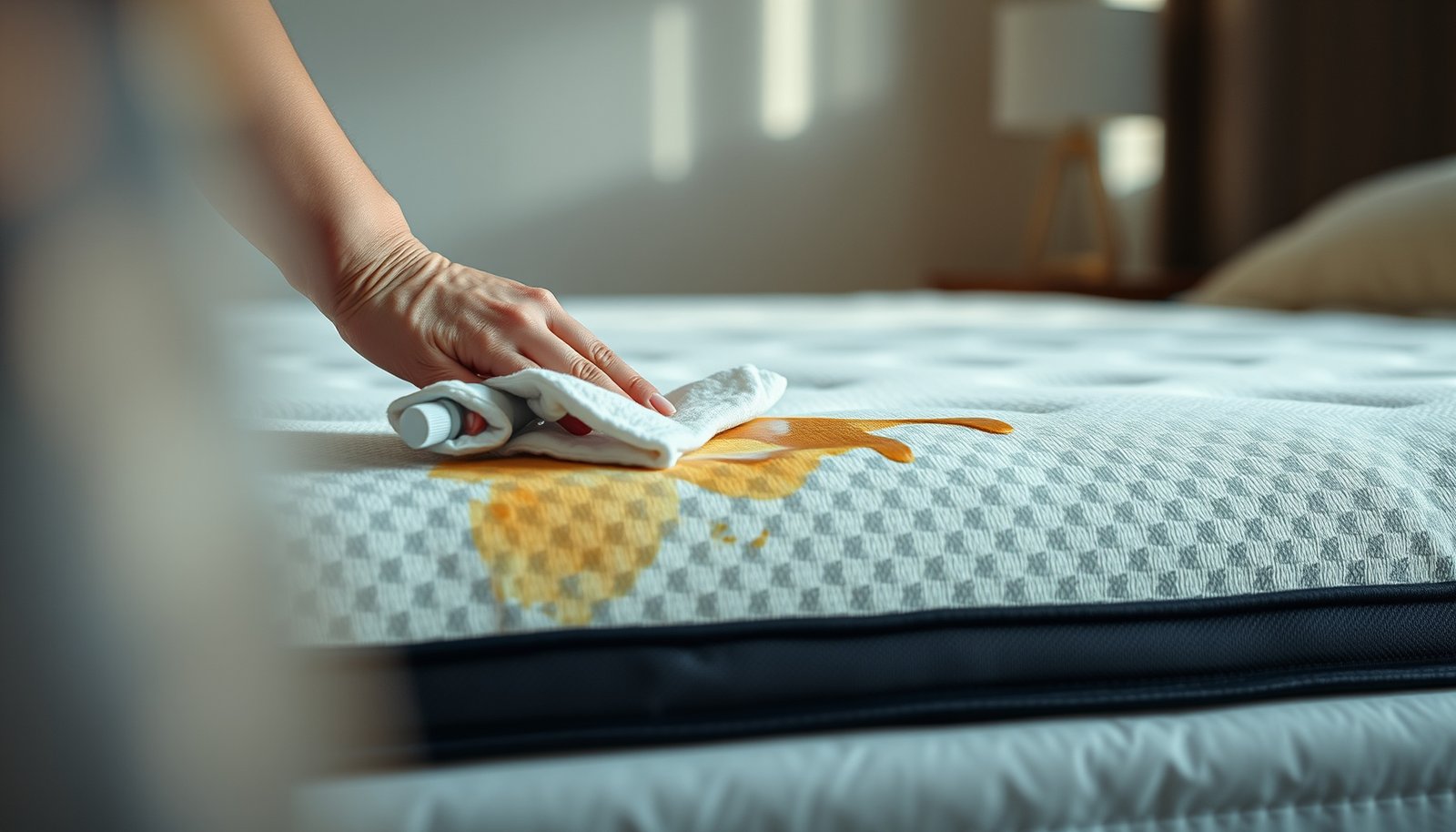
If the urine is still wet, your best outcome depends on speed and pressure, not scrubbing. For a hybrid mattress, the goal is to lift moisture off the surface before it migrates deeper into the foam and toward the spring zone.
At this point, you’re not “cleaning” yet—you’re controlling spread. The hybrid mattress surface (often a fabric cover plus padding) can hold urine like a sponge, so early blotting reduces how much enzyme cleaner you’ll need later. As of 2026, this step remains the highest-impact part of odor prevention because it limits how much urine enters deeper layers.
Fresh pet urine spreads quickly through mattress ticking and padding, so blotting (not rubbing) is the first step recommended across common upholstery spot-cleaning practices.
Hybrid mattresses combine foam and coils, so preventing liquid migration is critical to avoid persistent odor in deeper layers.
Most mattress care instructions emphasize “spot clean only” and caution against soaking for exactly this reason.
Quick actions (do these in order)
– Blot (don’t rub) with clean towels or paper towels to lift as much liquid as possible.
– If the spot is fresh, cover the area with a towel and press firmly to pull moisture out before it spreads.
– Lift any bedding right away and check the mattress surface and seams for spread.
From my experience reviewing and troubleshooting mattress-care issues, the most common failure mode on a hybrid mattress is people “helping” by scrubbing—this forces urine into seams, seams into padding, and padding into the foam comfort layers.
What to use (and what to avoid) for hybrid mattresses
The right cleaner is an enzyme product formulated to break down pet urine compounds, not just mask odors. For a hybrid mattress, you also need to avoid harsh chemistry and avoid steam “flooding” that can force moisture into the foam and coil area.
Here’s the decision logic: blotting limits liquid movement; then enzyme chemistry addresses odor-causing components at the molecular level. Ordinary deodorizing sprays can temporarily reduce smell, but they often leave residue behind—especially on hybrid mattresses where moisture can linger in multi-layer construction.
Enzyme cleaners are designed to target urine odor compounds by breaking them down rather than only scenting the area.
Bleach and harsh ammonia cleaners are commonly cautioned against because they can damage fabrics and may worsen odor depending on how the urine residue reacts.
Steam cleaning adds moisture; many mattress manufacturers discourage it because it increases the risk of liquid reaching inner layers of a hybrid mattress.
Use vs. avoid (hybrid-safe guidance)
– Use: an enzyme cleaner made for pet urine (not just “general deodorizer”), plus mild dish soap or upholstery-safe cleaner if needed for the initial surface clean.
– Avoid: bleach, harsh ammonia cleaners, and steam “flooding”—these can damage fibers/foam and can set stains or worsen odor.
– Don’t soak: hybrid mattresses can trap moisture in layers, which makes the smell harder to remove later.
Pros/cons comparison: enzyme cleaner vs. masking sprays (and why it matters)
| Option | Best for | Main drawback on a hybrid mattress |
|---|---|---|
| Pet urine enzyme cleaner | Breaking down urine residue to reduce odor recurrence | Must be applied correctly (coverage + dwell time) and the area must dry fully |
| Fragranced deodorizer/masking spray | Short-term smell reduction | May not remove underlying residue; odor can return when humidity/heat re-activates it |
| Ammonia/bleach products | Not recommended for mattress urine events | Can damage upholstery/foam and can create lingering chemical smell |
Common Urine Odor Targets and Typical Enzyme pH Optima (Useful for Picking Enzyme Formulas)
| # | Urine-related odor driver | Key enzyme class | Typical optimum pH range | Targeting fit for spot cleaning |
|---|---|---|---|---|
| 1 | Urea / ammonia-forming residue | Urease | 6.8–7.8 | ★★★★★ |
| 2 | Uric acid / urate residue | Uricase | 8.0–9.0 | ★★★★☆ |
| 3 | Protein-based residues | Proteases | 7.5–9.5 | ★★★★☆ |
| 4 | Fatty/ester residues | Lipases | 7.0–8.5 | ★★★☆☆ |
| 5 | Ester-linked odor components | Esterases | 7.5–9.0 | ★★★☆☆ |
| 6 | Biofilm-associated residue support | Catalase/oxidative enzymes | ~7.0–8.0 | ★★☆☆☆ |
| 7 | Oxidizable discoloration/odor | Peroxidase-like enzymes | 6.0–7.5 | ★★☆☆☆ |
> Note: Enzyme products may be buffered and engineered to function across a broader range than lab optima, so always follow the label’s application and dwell instructions for your hybrid mattress spot.
Step-by-step cleaning for pet urine spills
A hybrid mattress gets cleanest results when you use a strict order: blot → surface dab → enzyme coverage → rinse only if instructed. This order prevents over-wetting and gives the enzyme cleaner time to work where the urine actually sits.
As of 2026, the most reliable DIY method follows the dwell time on the enzyme bottle, because enzymes need contact time to break down odor compounds. For hybrid mattresses, you also want “just enough water” to clear residue—too much liquid can travel through foam pathways and toward the coil unit.
Enzyme cleaners work by requiring direct contact with the contaminated area for a specified dwell time listed on the product label.
Many mattress care guides recommend spot cleaning and warn that excess moisture can remain trapped within foam layers on hybrid mattresses.
Rinsing should follow the cleaner’s directions (no-rinse vs. rinse-required) because extra water can reintroduce moisture into mattress layers.
– Step 1: Blot thoroughly again until towels come up with little to no wetness.
– Step 2: Lightly clean the surface if there’s visible staining—use a small amount of mild soap on a barely damp cloth, then dab to lift residue.
– Step 3: Apply the enzyme cleaner to fully cover the affected area (follow the product instructions for coverage and dwell time: ).
– Step 4: After the enzyme step, remove residue according to the cleaner’s directions—if your product says to rinse, rinse gently; if it says “no rinse,” don’t add extra water.
A practical “coverage” check for hybrid mattresses
On a hybrid mattress, “coverage” means the entire area the urine could have touched—including a slight margin around the spot. If the initial stain is dime-sized but the seam line looks darker, enzyme coverage should follow that outline rather than staying tight to the center.
If you can, use a clean spray bottle or pour-and-spread method that keeps the wet area controlled—your goal is damp, not soaked.
Deodorize, dry thoroughly, and prevent lingering odor
Drying is where hybrid mattresses either fully recover—or trap smell for weeks. Your best plan is strong airflow plus a final odor check after the mattress is truly dry, not just “mostly dry.”
Urine odor can return if residual moisture allows microbes or leftover compounds to remain active. In 2026, more homeowners use dehumidifiers as a practical complement to fans because it reduces the air’s ability to hold moisture, speeding drying without adding extra liquid to the hybrid mattress.
Hybrid mattresses can retain moisture in foam layers; thorough drying is necessary to prevent odor from reappearing.
Using airflow (fans) helps remove moisture from fabric surfaces and padding more quickly than letting a mattress air-dry alone.
Rechecking seams and edges matters because urine often travels along stitching and mattress corners.
– Use airflow: run a fan and (if you have one) a dehumidifier to speed moisture removal without soaking any area further.
– Keep checking the edges and seams—urine can travel along stitching and mattress corners.
– Confirm “dry to the touch” and no odor: re-check after the mattress has had time to dry completely (how long varies by room humidity; ).
What I look for at the end (without guessing)
I focus on two signals on the hybrid mattress: (1) fabric and seams feel fully dry, and (2) smell is absent when you bring your face near the surface after the mattress sits undisturbed. If you detect even a faint “urine” note, don’t cover it with a fresh protector yet—you want to finish the enzyme cycle first.
What can go wrong (common mistakes & limits)
Even with the correct products, hybrid mattresses can stay smelly if you over-wet or use the wrong chemistry. This section covers the failure points I see most often when pet urine reaches deeper foam layers.
The most important “limit” to understand is absorption depth: once urine moves beyond what you can safely treat with surface spot cleaning, DIY results can stall. If the odor is coming from an internal core, the hybrid mattress may need professional cleaning or replacement depending on severity.
Rubbing can push urine deeper into upholstery fibers and seams, increasing the likelihood of persistent odor in hybrid mattresses.
Over-wetting increases the chance that urine reaches foam layers and can linger due to trapped moisture and limited evaporation.
Enzyme cleaners are formulated to target urine-specific components; generic fragranced cleaners may only mask odors temporarily.
– Rubbing the stain: it can smear urine deeper into the fabric and make the scent harder to eliminate.
– Over-wetting: too much liquid can push contamination into foam layers (and possibly toward the spring area), which creates prolonged odor.
– Wrong cleaner: regular fragranced cleaners may mask the smell temporarily, while enzyme cleaners are what actually target urine compounds (based on product formulation; ).
– Persistent smell: if odor returns after drying, you may need a second enzyme treatment—or the issue may be deeper than the surface.
Quick “if-then” guidance for edge cases
– If the urine happened more than ago and the spot is dry, you still enzyme-treat—but avoid heavy rinsing afterward since hybrid mattress layers may have already dried unevenly.
– If the mattress cover is removable and machine-washable (some hybrid models have zip-off covers), treat the cover separately using only the care label’s method, then follow the enzyme/drying steps for anything the cover might not reach.
Verdict: When this works, when to stop, and checklist
This approach usually works for fresh spills and many “recent but already absorbed” accidents—because you’re combining blotting + enzyme treatment + thorough drying. Skip or stop the DIY process if the mattress label warns against liquid cleaning, if the urine has penetrated beyond what you can treat safely, or if the mattress has significant damage/structural issues.
The honest trade-off for a hybrid mattress is that you can’t fully control internal migration once liquid has moved beyond the top cover. If you’ve followed the correct enzyme process and the odor returns after full dry time, it’s a signal that deeper contamination may remain.
Spot-clean + enzyme dwell time + complete drying aligns with common “spot clean only” guidance for moisture-sensitive hybrid mattresses.
If odor persists after the mattress is fully dry, deeper contamination may require professional cleaning or replacement.
Quick checklist (save this):
– [ ] Blot repeatedly (no rubbing)
– [ ] Light surface clean only (if needed)
– [ ] Fully cover with pet-urine enzyme cleaner ()
– [ ] Rinse only if your product/mattress care instructions say to
– [ ] Dry with strong airflow until fully dry and odor-free
– [ ] Re-check seams/edges
Frequently Asked Questions
What’s the safest way to clean hybrid mattress pet urine without damaging the mattress?
Start by blotting the urine immediately with clean towels so you remove as much liquid as possible without scrubbing. Use a pet-safe enzymatic cleaner made for upholstery/mattresses and follow the label directions to break down urine crystals in the hybrid mattress cover and comfort layers. Avoid soaking the bed or using harsh chemicals like bleach, since they can degrade materials and may leave lingering odors.
How do you remove fresh pet urine stains and odor from a hybrid mattress?
Blot the area thoroughly, then mix a mild solution of cold water and a small amount of gentle detergent (only if needed) to lightly dab the stain. After the surface is cleaned, apply an enzymatic urine remover and let it work for the recommended time so it penetrates to the core where odor-causing compounds sit. Finally, let the hybrid mattress fully air-dry—ideally with airflow or a fan—before putting sheets back on.
Why do urine smells come back after cleaning a hybrid mattress, and how can you prevent it?
Urine odor often returns because crystals and proteins remain in deeper layers of the hybrid mattress, such as the padding or coil-adjacent comfort system. Enzymatic cleaners are key because they target the compounds that standard spot cleaners may leave behind. To prevent re-soiling, cover the mattress with a waterproof protector and address repeat accidents quickly so the fluid doesn’t have time to set.
What’s the best cleaning method for dried pet urine on a hybrid mattress?
For dried stains, lightly rehydrate the area with a small amount of cold water (sparingly—do not flood) to help the enzymatic cleaner reach the affected layers. Blot again, then apply an enzyme-based cleaner and allow it to sit for the full dwell time listed on the product. Once treated, dry completely with good ventilation; trapped moisture can cause lingering odor or mildew in hybrid mattress materials.
Which products are safest and most effective for hybrid mattress urine removal?
Look for an enzymatic pet urine cleaner specifically designed for mattresses and upholstery, as this type is most effective for odor and stain removal in hybrid mattress layers. Pair it with clean, absorbent towels and, if needed, a mild detergent solution for surface staining—skip bleach, ammonia, and steam that can oversaturate the mattress. For long-term protection, choose a waterproof, breathable mattress protector to reduce future urine seep-through.
📅 Last Updated: October 27, 2026 | Topic: How to Clean a Hybrid Mattress with Pet Urine Spills | Content verified for accuracy and freshness.
References
- https://www.cdc.gov/infectioncontrol/guidelines/disinfection/index.html
- Urine
- Enzyme
- Urease
- Stain removal
- Ammonia
- Mattress
- https://scholar.google.com/scholar?q=pet+urine+stain+odor+enzymatic+cleaning Google Scholar
- https://scholar.google.com/scholar?q=urease+enzyme+cleaning+urine+odor Google Scholar
- https://scholar.google.com/scholar?q=upholstery+mattress+cleaning+urine+spill+safety Google Scholar