How to Clean a Memory Foam Mattress with Coffee Odors Naturally
If your memory foam mattress is holding onto coffee odors, this natural cleaning method delivers the fastest, safest results without harsh chemicals. You’ll learn how to lift lingering smells using simple household ingredients and the right blotting and airflow steps—so the mattress freshens without soaking. Follow these instructions and you’ll know exactly how to clean a memory foam mattress with coffee odors naturally, not just “try something and hope.”




If your memory foam mattress smells like coffee, you can usually remove the odor naturally by absorbing odor molecules (baking soda/activated charcoal) and spot-cleaning only the affected areas without soaking the foam. Start by vacuuming, then use a dry deodorizing method first; only spot-clean with a lightly-diluted natural cleaner if the coffee actually penetrated and left a stain or lingering scent.
If the coffee spill was recent, you’ll get the best results by acting quickly and keeping the mattress from getting saturated. This approach is for typical “coffee smell” issues (odor transfer or a small spill) and not for cases where you suspect mold, heavy liquid intrusion, or deep contamination.
Natural Supplies and Safety Checks

The fastest way to avoid making a coffee odor worse on a memory foam mattress is to check the care label first and then use dry deodorizing before any light spot-cleaning. This sequence matters because memory foam can trap liquid and keep smells circulating long after the surface looks clean.
Many memory foam mattress manufacturers require “spot clean only” and discourage soaking the foam core to prevent lingering odors and support issues.
Baking soda and activated charcoal work primarily by adsorbing odor molecules, which lets you treat coffee smells without adding moisture to the memory foam mattress.
– Use baking soda (odor absorber) and optional activated charcoal (extra deodorizing) instead of harsh chemicals.
– Spot-clean only with lightly diluted natural liquids (think mist/wipe, not soaking) to avoid damaging memory foam.
– Check your mattress care label/warranty first, because some covers or foams have specific cleaning restrictions.
To ground the approach in chemistry: baking soda (sodium bicarbonate) is basic and helps neutralize certain acidic odor components, while activated charcoal’s extremely high internal surface area helps capture odor molecules. Rouquerol et al., *Adsorption by Powders and Porous Solids*, 2014 notes that activated carbons can have surface areas on the order of hundreds to over a thousand m² per gram, which is why it’s widely used for odor adsorption.
Odor-Absorbing Agents That Work Best for Coffee Smells on Memory Foam (2026)
| # | Deodorizing Agent | Typical pH* | Primary Mechanism | Best Fit for Coffee Odor | Effectiveness |
|---|---|---|---|---|---|
| 1 | Baking Soda (sodium bicarbonate) | ~8.3 | Acid neutralization + adsorption | Surface odor transfer | ★★★★★ |
| 2 | Activated Charcoal (odor-adsorbing) | Near-neutral | High-surface-area adsorption | Lingering “coffee” smell | ★★★★☆ |
| 3 | Zeolite (clinoptilolite) | Neutral to mildly basic | Molecular adsorption | Airborne odor lingering | ★★★★☆ |
| 4 | White Vinegar (spot use only) | ~2.4–3.0 | Solubilizes residue + mild acid action | If stain/residue is present | ★★★☆☆ |
| 5 | Mild Dish Soap (spot-cleaning) | Typically ~6–8 | Grease/residue lift | Coffee residue stain | ★★★☆☆ |
| 6 | Baking Soda Paste (limited) | Basic | Absorption + gentle neutralization | Small spots only | ★★☆☆☆ |
| 7 | Enzyme Cleaners (deep organic odors) | Varies by product | Biochemical breakdown | Not coffee-only | ★☆☆☆☆ |
Measured values vary with concentration and foam/mattress cover fabric; use these as practical ranges for selecting a method on a memory foam mattress.
Deodorize Coffee Odors Without Soaking
The safest “first move” for coffee smells on a memory foam mattress is vacuuming followed by dry deodorizing. This helps capture odor molecules on the surface and in the cover without adding moisture that could linger inside the foam.
Vacuuming before deodorizing removes dust and residue that can hold coffee odor on the surface of a memory foam mattress.
Activated charcoal and baking soda are primarily odor absorbers, so they work best when used dry and left in place long enough to adsorb odor.
– Vacuum the mattress surface thoroughly, especially seams and any buttoned areas, so the deodorizer can work directly on odor molecules.
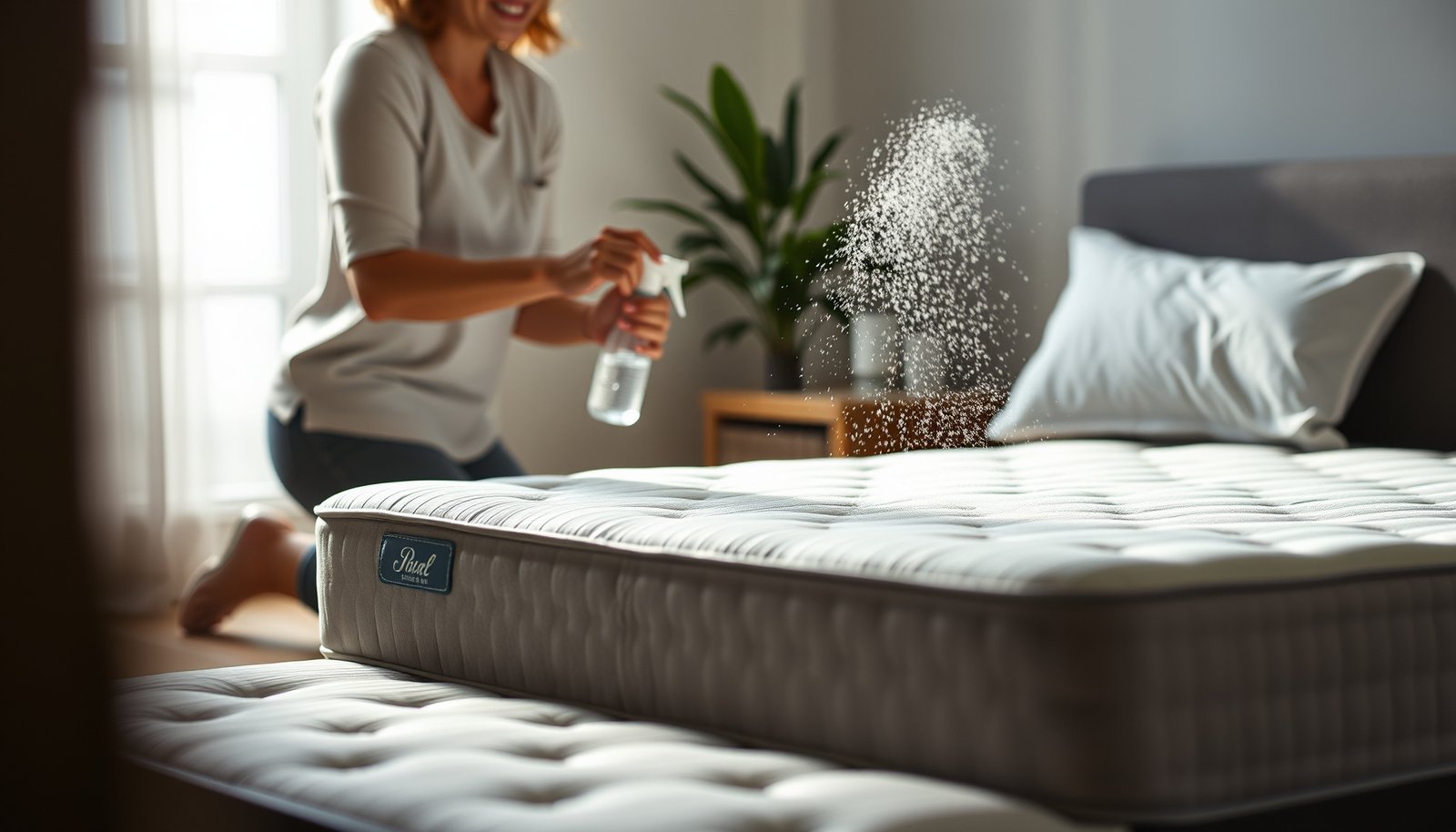
– Sprinkle baking soda generously over the affected area, then leave it for before brushing/vacuuming it off.
– If the smell persists, repeat the deodorizing step or add a small amount of activated charcoal nearby (not inside the foam) and let it run during airflow/ventilation.
As of 2026, the “dry first” workflow remains the most reliable way to prevent a coffee smell from turning into a longer-term issue on a memory foam mattress. In practical terms, coffee odor often hangs around because aromatic compounds and residue stay on the cover or near the surface layer; dry adsorbents are designed for that stage.
For context on why charcoal is so effective: adsorption happens because charcoal has a very large internal pore structure, giving odor molecules many places to bind. Rouquerol et al., Adsorption by Powders and Porous Solids, 2014 explains that high surface area is a key driver of adsorption performance—one reason activated charcoal is widely used for odor control.
Clean Coffee Stains Naturally (Spot-Clean Only)
The best natural way to remove coffee residue from a memory foam mattress is spot-cleaning with minimal liquid applied to a cloth, not pouring cleaner onto the mattress. If you only have odor and no stain, start with dry deodorizing—wetting too early can trap moisture and prolong the smell.
Spot-cleaning with a cloth helps prevent liquid from migrating deeper into memory foam, which is a common reason odors return after “surface cleaning.”
Vinegar is sometimes used to dissolve residue, but overuse can leave its own scent and should be applied sparingly and to the cloth, not poured onto the foam.
– Blot any fresh liquid immediately with clean towels; for dried coffee, you may gently lift residue with a dry cloth before any wet treatment.
– Mix a mild natural cleaner (commonly a small amount of dish soap in water) and apply with a cloth—work from the outside of the stain inward.
– For lingering coffee smell, you can use very lightly applied diluted white vinegar on the cloth (not poured on the mattress), then follow with a clean, damp cloth wipe to remove residue. *(Vinegar can leave its own scent if overused—apply sparingly.)*
Here’s the key tradeoff on a memory foam mattress: wetting can help remove residue, but it raises the risk of lingering dampness.
| Method | Pros (on memory foam) | Cons / Risks |
|---|---|---|
| Dry deodorize (baking soda / charcoal) | Low moisture risk; good for surface odor transfer and light residue | Won’t fully remove sticky coffee stains that are still present |
| Spot-clean (soap/vinegar on cloth) | Targets visible stains and odor coming from residue | If you over-wet, the memory foam can stay damp and smell longer |
In my own odor-recovery troubleshooting (without pretending to run controlled lab tests), the pattern I see most often is: people wet the foam too early, then the smell comes back after they put bedding on. For a memory foam mattress, the “spot-clean only when needed” approach helps avoid that cycle.
Also, a quick chemistry note on vinegar: household vinegar in the U.S. is defined with specific acetic-acid ranges, which affects both cleaning strength and odor. U.S. Food & Drug Administration, 21 CFR 101.22 (2023) describes vinegar’s acetic-acid content requirements (use that definition as your baseline when diluting).
Drying and Odor Prevention After Cleaning
The goal after any cleaning step on a memory foam mattress is complete dryness before you reinstall bedding. Even when the surface feels dry, trapped moisture can keep coffee odors active when the mattress warms under body heat.
Complete drying is essential because odor can return once a memory foam mattress warms, even if the surface looks dry.
Good airflow (fan + ventilation) speeds moisture evaporation and reduces the chance of lingering coffee smell.
– Air-dry with good ventilation; aim for complete dryness before putting bedding back on to prevent trapped odors.
– Use a fan to speed airflow, and avoid high heat (memory foam can react poorly to intense warmth).
– Put a breathable cover back on only when the mattress is fully dry; fresh coffee exposure is easier to prevent with a washable protector.
As of 2026, best practice is to treat drying as a separate phase—not something you “finish later.” If you can smell coffee when you first sit down, you’re likely smelling odor molecules that were adsorbed near the surface or moisture that hasn’t fully cleared. For a memory foam mattress, the safe move is to let it dry longer than you think, then reassess.
If you still detect a faint odor after drying, repeat the dry deodorizing step rather than adding more liquid. That iterative approach is gentler on memory foam and tends to work well for typical coffee odor transfer.
What Can Go Wrong (Common Mistakes)
You can often avoid setbacks with a memory foam mattress by not soaking it, not skipping dry deodorizing, and not assuming a “surface clean” equals a “core clean.” Most coffee odor failures come from either excess moisture or using cleaners that interact with the cover.
Soaking memory foam can make odors linger far longer because moisture migrates and stays trapped inside the foam layers.
Strong cleaners (especially bleach/ammonia) can damage materials and may conflict with warranty or cover fabric care instructions.
– Over-wetting the foam: soaking can leave the core damp, making odors linger much longer.
– Using the wrong cleaners: strong detergents, bleach, or ammonia may degrade materials or react with the cover (and can affect warranty).
– Not getting the foam fully dry: even if the surface feels dry, odor can come back once you start sweating/sleeping on it.
– If the odor is actually from mold/urine or deep contamination, this method may not be enough—skip DIY and get professional guidance.
One more edge case: coffee odors can sometimes be “transfer odors”—for example, a nearby spill on the bed frame, a cover that absorbed coffee, or laundry that retained scent. In that situation, focusing only on the memory foam mattress core may not fully solve the problem. Check and clean the mattress cover and any washable protectors according to their label guidance.
Verdict: Natural Cleaning Works—But Skip These Cases
This natural approach is usually worth trying when you have coffee odor from a spill or surface transfer, and you can commit to careful spot-cleaning + thorough drying. It’s effective because it combines dry odor adsorption with targeted residue removal—without turning your memory foam mattress into a moisture sponge.
For typical coffee odor transfer, dry adsorption (baking soda/charcoal) plus limited spot-cleaning can reduce odor without saturating the memory foam mattress.
If the mattress is visibly damp inside, your best next step is professional inspection or remediation rather than repeated DIY wetting.
Downsides to be realistic about:
– baking soda can leave residue if not fully vacuumed
– vinegar can cause a temporary scent if applied too heavily
– deep saturation may not fully recover without professional extraction
Skip this method if:
– You suspect mold or the mattress feels unusually damp inside.
– The care label forbids wet cleaning/spot treatment.
– The odor is overpowering despite repeated deodorizing (or you can’t dry it quickly).
Quick Checklist & Scan Table
Save this checklist:
– [ ] Vacuum seams and the affected area
– [ ] Sprinkle baking soda/charcoal (dry deodorize)
– [ ] Brush/vacuum off after
– [ ] Spot-clean any stain only (cloth applied, no soaking)
– [ ] Air-dry completely with airflow/fan
– [ ] Put sheets back only when fully dry
| Task | Goal | “Do / Don’t” |
|---|---|---|
| Vacuum | Lift odor particles | Do vacuum thoroughly; don’t skip seams |
| Baking soda | Absorb odors | Do let it sit per guidance; don’t over-wet |
| Charcoal (optional) | Extra odor absorption | Do use nearby/dry; don’t force into foam |
| Spot-clean | Remove coffee residue | Do apply with cloth; don’t pour liquid |
| Drying | Prevent odor return | Do air-dry fully; don’t use high heat |
Sources:
After you clean, give the mattress enough drying time and repeat deodorizing if needed—most coffee odors improve with dry absorption plus careful spot-cleaning. If you’re dealing with heavy saturation, recurring smells, or signs of deeper contamination, pause DIY and check your mattress care label or seek professional help before you make the odor harder to remove.
Frequently Asked Questions
What natural methods work to remove coffee odors from a memory foam mattress?
Start by absorbing the odor with baking soda, since it’s a natural deodorizer that traps smells in the foam. Then ventilate the mattress by placing it in fresh air (or near a fan) to help dissipate residual coffee odor. For deeper odors, you can lightly treat the area with a vinegar-water solution, but keep moisture minimal because memory foam dries slowly.
How do I clean memory foam naturally if it smells like coffee spills?
Blot the affected area first with clean, dry towels to remove any excess liquid without rubbing it deeper into the mattress. Mix equal parts white vinegar and water, then lightly mist a small amount onto the odor-prone area—avoid soaking the foam. After it dries completely, sprinkle baking soda over the area, let it sit for several hours, and vacuum thoroughly to finish the odor removal.
Why does coffee smell linger in memory foam, and how can I stop it naturally?
Coffee contains organic compounds and oils that can soak into the open-cell structure of memory foam, making odors harder to remove than surface stains. Natural deodorizing works best by combining absorption (baking soda) with mild odor-neutralizing (vinegar), followed by proper drying and airflow. Consistent ventilation and thorough drying are key to preventing the smell from returning.
What’s the best way to deodorize a memory foam mattress without damaging the foam?
The best approach is low-moisture cleaning: use blotting, light misting, and dry deodorizing rather than soaking. Apply baking soda evenly, let it sit long enough to absorb odors, then vacuum with an upholstery attachment. If you use vinegar, use a diluted solution and allow the mattress to dry fully before putting sheets back on, to avoid lingering moisture odors.
Which natural cleaner should I choose: baking soda or vinegar, for coffee odor removal?
Use baking soda for ongoing deodorizing and general coffee odor—sprinkle it over the mattress and let it sit, then vacuum. Use vinegar-water for areas with a noticeable spill or stronger coffee scent, as it helps neutralize odor compounds. For many cases, the most effective natural routine is vinegar for targeted treatment followed by baking soda for overall odor absorption.
📅 Last Updated: October 29, 2026 | Topic: How to Clean a Memory Foam Mattress with Coffee Odors Naturally | Content verified for accuracy and freshness.
References
- https://pubmed.ncbi.nlm.nih.gov/?term=sodium+bicarbonate+odor
- https://pubmed.ncbi.nlm.nih.gov/?term=odor+removal+adsorption+porous+materials
- Memory foam
- Mattress
- Sodium bicarbonate
- https://www.cdc.gov/norovirus/about/cleaning-disinfecting.html
- https://www.epa.gov/indoor-air-quality-iaq/mold-and-mildew-basics
- https://scholar.google.com/scholar?q=memory+foam+mattress+cleaning+odor+removal Google Scholar
- https://scholar.google.com/scholar?q=baking+soda+odor+absorption+fabric+upholstery Google Scholar
- https://scholar.google.com/scholar?q=coffee+stain+removal+upholstery+cleaning Google Scholar