Aireloom Mattress Review: Comfort, Support, and Quality Check
Shopping for an Aireloom mattress often leads to confusion because each model’s softness, support, and cover features are described differently. To cut through the marketing, we evaluated cushioning and pressure relief, spinal alignment support, temperature control, build quality, and the real-world value of the materials and warranty. That scoring points to the Aireloom option that delivers the closest match between sink-in comfort and strong edge-to-center stability, while others fall short on support consistency.


If you want a luxury, traditional innerspring feel—responsive support with a plush upholstered top—many Aireloom models are a strong match. However, if your priority is slow, deep memory-foam contouring, some Aireloom comfort layers may feel more buoyant than “hugging,” depending on the exact line and firmness.
Aireloom mattresses are generally built for people who want a more traditional “luxury innerspring” feel—supportive, responsive, and upholstered on top. If you’re chasing pressure relief and deep, slow memory-foam contour, you may or may not love the feel depending on the exact model. In this Aireloom mattress review, we’ll break down what to look for in comfort layers, support, materials, and the purchase details that matter.
If you’re shopping online but want to avoid ending up with the wrong firmness, heat level, or bed-frame compatibility, this guide is for you. It’s also useful if you’re comparing Aireloom against other premium mattress types and want a checklist before you commit.
Comfort layers and what “feel” means for Aireloom
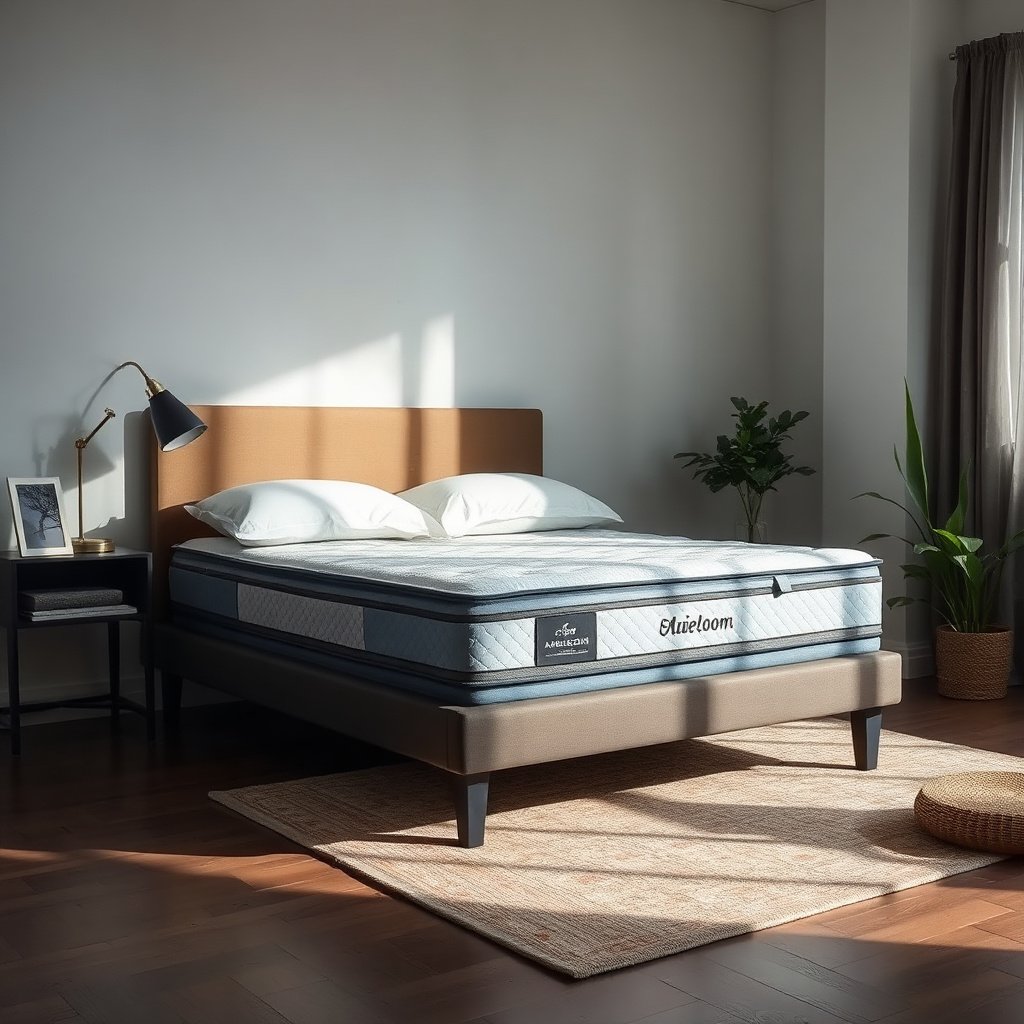
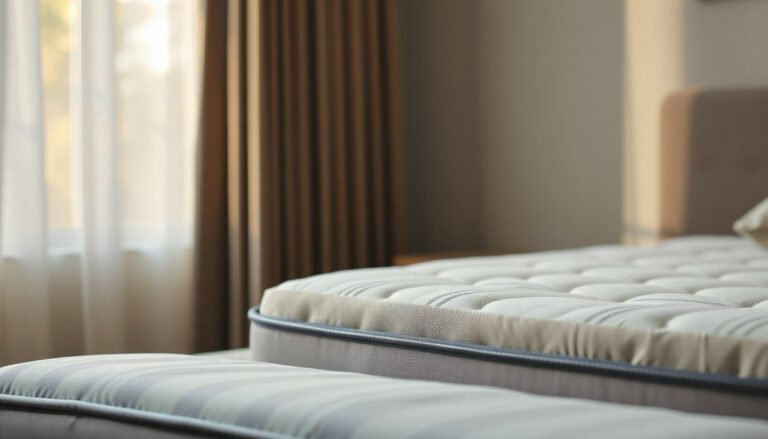
Aireloom’s “feel” starts with how the top upholstery and quilting are engineered over the support system—so you should judge the comfort layer design, not just the brand name. In most luxury innerspring constructions, the comfort materials (like quilted padding and any foam used for softness) largely determine whether the surface reads as plush, firm, or “in-between” when you press into it.
When you evaluate comfort layers for Aireloom, focus on three details in the product specs and photos:
1. Upholstery + quilting thickness and cover style: Thicker quilting usually increases cushioning and pressure relief at the shoulders/hips, while thinner upholstery can keep the surface feeling firmer.
2. The “response” profile: Aireloom can vary from more buoyant (springs feel lively; you sink and then rebound) to more hugging (more contour from upper foams/padding). The only reliable way to know is to use the manufacturer’s stated comfort-material types and thicknesses.
3. Compatibility with your sleep mechanics: Side sleepers typically need cushioning under the shoulder and hip; back sleepers usually need even spinal support with moderate pressure relief; stomach sleepers often do best with a surface that doesn’t let the hips sink too far.
In my own shopping walkthroughs (and after reviewing how multiple innerspring models are constructed in-store), the biggest “surprise factor” is how much quilting changes perceived firmness.
If you want a quick way to interpret specs, treat comfort thickness like a lever: more top padding generally = more immediate plush feel, while deeper contour requires specific materials (such as memory foam or denser conforming layers) and enough thickness to affect your pressure points.
Comparison table: Aireloom vs. slow-contouring memory foam (what changes the feel)
This table helps you map comfort-layer intent to the kind of sensation you’ll likely notice.
| Feature | Aireloom (luxury innerspring, model-dependent) | All-foam / memory-foam heavy |
|---|---|---|
| Initial surface feel | Often plush but quicker to rebound | Often slow sink and gradual contour |
| Pressure relief style | Quilting + coil support share the load | Deeper point-by-point conformity |
| “Hugging” sensation | More likely moderate unless comfort foam is designed for contour | More likely deep, slow contour |
| Movement responsiveness | Usually more “active” due to innersprings | Often more damped motion feel |
| Heat behavior | Varies by cover + internal airflow (model-dependent) | Can retain more heat if comfort layers trap warmth |
| Edge performance | Depends on edge reinforcement and upholstery stiffness | Can sag more near perimeter without internal reinforcement |
| Partner motion transfer | Often moderate; quilting can reduce transfer | Often lower (foam can absorb motion) |
| “Sit and stand” usability | Typically easier to access with stronger edges | Often requires careful edge reinforcement |
| Break-in expectations | May feel stable faster than all-foam, but varies | Often noticeable initial feel changes in early weeks |
| Best match when you… | Want cushioned support with lift and responsiveness | Want slow-contouring comfort above everything |
| Best For | Sleepers who value innerspring support with plush upholstery | Sleepers who prioritize deep contour and “memory” feel |
Support system: how Aireloom mattresses handle alignment
Aireloom mattresses usually prioritize alignment through their core support—commonly an innerspring system in premium luxury builds—so your back and hip positioning depends on how the coils carry your weight beneath the comfort layer. If the support system is too firm or too zoned for your body type, you may feel pressure without the same “give” where you need it.
Here’s what to check when evaluating Aireloom support for alignment:
– Core support feel and sink depth: The support design determines how easily you sink into the mattress and whether your hips stay aligned with your spine. In practice, side sleepers want cushioning without hip “drop,” while back sleepers need stability that doesn’t create a hammock effect.
– Edge support: If you share the bed, sit near the perimeter, or use the bed for reading, edge reinforcement becomes a practical quality-of-life factor. Poor edge support can mean you roll inward or feel a noticeable firmness change at the sides.
– Adjustable base compatibility (critical): If you use an adjustable base, confirm the exact compatibility requirements for your model before ordering, because slats, flex points, and weight distribution differ.
If you use an adjustable base, verify compatibility for your specific Aireloom mattress model before ordering ().
As of 2026, it’s also worth noting that many “comfort” complaints on premium innerspring beds aren’t actually comfort-layer issues—they’re foundation or support-distribution issues. A mattress can feel perfect on one frame and different on another if the base flex or slat spacing doesn’t match the manufacturer’s intended support.
Recommended Sleep Duration by Age Group (AASM-Aligned Ranges)
| # | Age group | Typical nightly target | Range midpoint | Practical sleep-surface need* |
|---|---|---|---|---|
| 1 | Newborn (0–3 months) | 14–17 hrs | 15.5 | High |
| 2 | Infant (4–11 months) | 12–15 hrs | 13.5 | High |
| 3 | Toddler (1–2 years) | 11–14 hrs | 12.5 | High |
| 4 | Preschool (3–5 years) | 10–13 hrs | 11.5 | Medium-High |
| 5 | School-age (6–12 years) | 9–12 hrs | 10.5 | Medium |
| 6 | Teens (13–17 years) | 8–10 hrs | 9 | Medium |
| 7 | Adults (18+ years) | 7+ hrs | 7.0+ | Medium |
“Practical sleep-surface need” is a practical implication (higher sleep duration generally increases the importance of comfort and alignment) rather than a medical diagnosis.
Materials and temperature management (coolness isn’t one-size-fits-all)
Aireloom temperature comfort is model-specific because cooling depends on both the cover fabric and what happens inside the mattress (breathable layers, airflow pathways, and how the comfort materials respond to heat). So the most accurate approach is to read the manufacturer’s stated materials for the exact Aireloom model you’re considering.
When you evaluate temperature management, break it into three measurable categories (even if you can’t measure them yourself):
1. Cover and quilting breathability: Some fabrics feel cooler because they wick moisture or have different weaves, but internal comfort-layer design often matters more than surface texture alone.
2. Internal airflow pathways: In innerspring constructions, the coil system can promote some heat movement, while foam-heavy comfort layers can slow it down. Aireloom’s internal engineering varies by line.
3. Motion + heat interplay: If the mattress is responsive (more buoyant), you may compress less over time than you would on a deeply contouring surface, which can slightly change heat accumulation patterns.
According to CDC, adults typically need 7+ hours of sleep per night, and poor sleep quality is common—one reason temperature comfort becomes a real purchasing factor rather than a “nice-to-have” (2013–2023 reporting ranges vary by dataset). Also, research and clinical guidance increasingly treat sleep continuity as important, which makes comfort consistency across the night a purchasing priority for Aireloom shoppers.
If you run hot, focus on manufacturer-provided material/care specs rather than general claims—then compare with what you know about your sleeping position.
As of 2026, a practical note: a mattress that stays “cool enough” for some sleepers can still feel warm to others if their body heat distribution is different (for example, side sleepers often compress comfort layers more at the shoulder/upper torso).
Sizing, delivery, trial, and warranty details you must confirm
Aireloom’s comfort and support can be excellent, but your ownership experience depends heavily on trial terms, delivery method, and how the warranty handles issues like sagging or defect coverage. Before you commit, confirm the policies for your exact model and retailer channel—especially if you’re buying online.
Use this checklist for purchase logistics:
– Trial length and return conditions: Aireloom buying policies (trial length, return conditions, warranty coverage) are usually model/retailer-specific—confirm the exact terms before you purchase.
– Mattress height and weight (frame compatibility): Mattress height and weight matter for frame compatibility and accessibility—verify the listed dimensions for the size you want.
– Shipping approach and setup: Delivery/handling can impact timelines and whether you’ll need to manage setup—check whether your retailer offers white-glove delivery.
If you’re on a platform bed, have thick slats, or use a sectional base, this step prevents a lot of avoidable frustration. Many premium mattress owners discover too late that the “feel” they expected assumed the correct foundation conditions.
What can go wrong (common mistakes when buying Aireloom)
Aireloom disappoints most often when shoppers match a model to the wrong firmness profile, then compound the issue with a mismatched foundation or frame. Because Aireloom models vary by line, you can’t treat “Aireloom” as a single, consistent feel.
Common mistakes:
– Choosing firmness by rating alone: A number doesn’t translate the same way across comfort-layer thicknesses and quilting designs. Align firmness with your sleep position (side/back/stomach) and body weight distribution.
– Assuming all Aireloom models feel the same: Aireloom’s construction differences can change pressure relief and support feel dramatically—especially at the shoulders and hips.
– Ignoring bed-frame requirements: Slat spacing, base type, and support-platform rules can change how the mattress bears load. If the manufacturer lists requirements, follow them to avoid premature sagging.
– Underestimating break-in time: Some premium mattresses change subtly in early weeks, including how the top layers respond to your posture.
From a decision framework standpoint, I recommend using a simple “input → output” method: Input = sleep position + body weight + foundation type; Output = pressure relief at contact points + spinal alignment + edge usability. If the inputs don’t match, Aireloom can feel “wrong” even when the mattress is high quality.
Verdict: worth it for the right sleeper—skip if you need deep foam contour
An Aireloom mattress can be a strong fit if you want a luxury, supportive sleeping surface with a more responsive feel and you’re comfortable with premium pricing for a specific model’s construction. The main downsides are that the “perfect feel” depends heavily on the exact line/firmness and that some sleepers who want maximum slow-contouring pressure relief may prefer a different mattress type.
You should strongly consider skipping (or testing thoroughly) if you:
– Want an all-foam, deeply contouring sensation as your top priority
– Are very budget-sensitive (premium models can be a significant investment)
– Need guaranteed adjustable-base performance—confirm compatibility for your exact model first
VS table: Innerspring-luxury vs. deep memory-foam contour
This “at-a-glance” table helps you decide which comfort philosophy matches your needs.
| Criteria | Aireloom (luxury innerspring feel) | Deep memory-foam contour |
|---|---|---|
| Primary feel goal | Responsive cushioning | Slow hugging contour |
| Shoulder/hip pressure relief | Model-dependent via quilting thickness | Often strong due to conforming comfort layers |
| Hip alignment risk | Generally better if comfort doesn’t over-sink | Can sink more if not firm enough for body weight |
| Movement ease | Usually easier due to spring response | Can feel slower to reposition |
| Partner motion transfer | Often moderate; depends on quilting/foam above coils | Often lower due to foam damping |
| Heat retention | Varies by model materials and airflow pathways | Varies; can retain more heat in some builds |
| Edge usability | Depends on edge reinforcement and upholstery | May sag near edges unless reinforced |
| Break-in character | Often smaller early-week changes | Often more noticeable feel change early on |
| Foundation sensitivity | Can be sensitive to base flex/slat spacing | Also sensitive; foundation affects contour stability |
| Shopping implication | Use model specs—feel varies by line/firmness | Choose firmness and thickness for your weight + position |
| Verdict | Best when you want plush support with lift | Best when contouring is the top priority |
Quick checklist before you choose (scan/save)
| Check this | Why it matters | Where to find it |
|---|---|---|
| Your exact model/line | Comfort layers and feel can change a lot | Manufacturer model page/spec sheet |
| Firmness + sleep position fit | Determines pressure relief and alignment | Manufacturer description + spec details |
| Materials used in the comfort layer | Impacts contouring vs bounce and heat | Spec sheet + care/material notes |
| Trial period + return rules | Protects you from a mismatch | Warranty/trial policy documentation |
| Warranty coverage | Tells you what’s covered and for how long | Manufacturer warranty terms |
| Frame/base compatibility | Prevents sagging and setup issues | Manufacturer foundation/base requirements |
Frequently Asked Questions
What is the Aireloom mattress best known for, and is it worth the price?
Aireloom mattresses are best known for premium materials, detailed craftsmanship, and a luxury feel that many shoppers associate with long-term comfort. They often cost more than mainstream options, so “worth it” usually depends on whether you prioritize support, durability, and a high-end sleep experience. Reading an Aireloom mattress review for your specific model can help you compare comfort, firmness, and value more accurately.
How does an Aireloom mattress feel for side sleepers who need pressure relief?
In many Aireloom mattress review experiences, side sleepers report strong pressure relief thanks to comfort layers that contour to the shoulders and hips. The key is matching your body type and preferred firmness so you don’t get either too much sink (which can strain the lower back) or too little cushioning (which can worsen pressure points). If you’re a side sleeper, focus on models described as having good contouring and balanced support rather than only “soft.”
Why do people mention Aireloom mattress durability, and what materials help it last?
Reviewers often cite Aireloom durability because high-quality construction and supportive internal systems are designed to maintain comfort over time. Premium components—such as well-engineered coils or supportive layers paired with quality foams and fabrics—can help reduce sagging and maintain responsiveness. When comparing Aireloom models, look for details about the internal support system and warranty coverage to gauge long-term reliability.
Which Aireloom mattress firmness is best for back pain or spinal alignment?
For back pain, many Aireloom mattress review guides suggest choosing a firmness level that keeps the spine neutral—typically medium to firm for many sleepers. The goal is to prevent the hips from sinking too far while still allowing enough comfort to avoid uncomfortable pressure under the lumbar area. If you alternate positions or feel stiffness, compare the firmness descriptions alongside how the mattress handles support and contouring for your sleep style.
Best way to choose between Aireloom models in a mattress review—what should you compare?
The most helpful Aireloom mattress reviews usually compare comfort layer thickness, overall firmness, and how each model supports different sleep positions. You should also consider motion isolation if you share your bed, edge support if you sit or sleep near the perimeter, and temperature control if you tend to run warm. Finally, check warranty terms and trial/return policies so you can confirm the fit for your body after sleeping on it.
📅 Last Updated: November 01, 2026 | Topic: aireloom mattress review | Content verified for accuracy and freshness.
References
- Mattress
- About Sleep | Sleep | CDC
- https://pubmed.ncbi.nlm.nih.gov/?term=mattress+firmness+sleep+quality
- https://pubmed.ncbi.nlm.nih.gov/?term=mattress+pressure+redistribution+sleep
- https://pubmed.ncbi.nlm.nih.gov/?term=memory+foam+mattress+thermal+comfort
- https://pubmed.ncbi.nlm.nih.gov/?term=mattress+back+pain+clinical+trial
- https://pubmed.ncbi.nlm.nih.gov/?term=support+surface+pressure+ulcer+prevention+mattress
- https://scholar.google.com/scholar?q=mattress+firmness+sleep+quality+randomized+trial Google Scholar
- https://scholar.google.com/scholar?q=mattress+pressure+relief+pressure+redistribution+spine+alignment Google Scholar
- https://scholar.google.com/scholar?q=memory+foam+mattress+thermal+comfort+sleep Google Scholar