How to Clean a Memory Foam Mattress with Ink Odors: Steps
Want to clean a memory foam mattress with ink odors and make them truly go away? Follow the steps below for targeted deodorizing and safe spot-cleaning that lifts ink smells without soaking the foam. You’ll know exactly what to do—immediately after the stain—so the odor doesn’t linger or spread.




Clean the ink spot first with blotting and a mild soap dab—never soak the memory foam—then remove the lingering smell using thorough ventilation plus baking soda deodorizing. This approach targets both the visible dye and the odor that can get trapped in the mattress cover and memory foam cells, minimizing the risk of permanently damp foam.
If the ink smell is lingering even after you remove the stain, you’re dealing with odor trapped in the foam and cover—not just surface residue. The steps below focus on safe, low-moisture cleaning plus deodorizing methods that minimize lingering ink odor.
Who this is for (and when to stop)

This method is best when the ink damage is limited (small ink marks) and you need a low-moisture cleanup plan for a memory foam mattress. If the ink has spread widely or you suspect deep saturation, stopping early and switching to manufacturer guidance or professional cleaning is the safer route.
This is for typical home scenarios: ballpoint pen, small marker/marker tip transfers, or water-based ink that has landed on a memory foam mattress cover. From my experience helping others troubleshoot “ink smell after stain removal,” the biggest improvement comes from keeping moisture low during cleaning, because extra liquid increases the chance that odor remains trapped inside the memory foam.
A memory foam mattress is designed to trap air and moisture can take much longer to leave, so low-moisture blotting is generally safer than soaking.
If odor persists after surface cleaning, the source is often the cover’s padding/seams or the odor compounds carried into the memory foam, not just what’s visible on top.
When ink spread suggests liquid penetration beyond the top layer, manufacturer guidance should control because memory foam and covers vary by formulation.
– Best for: water-based or small pen/marker ink spots on memory foam where you need to remove both the mark and the smell.
– Stop early: if the ink is deep-spread across the mattress, or you suspect liquid has soaked into the foam core—then manufacturer guidance or professional cleaning is safer.
Quick “stop” signs to watch for
1) The stain looks like it’s feathering outward beyond the original ink point.
2) The mattress cover felt damp during cleaning (even briefly).
3) Ink odor remains stronger in the center than at the edges—often a sign the memory foam or inner padding absorbed residues.
Prep your mattress and protect the foam
You should prep first to isolate the affected area and control moisture exposure on the memory foam mattress. Then you can clean ink residue safely without driving dye deeper into the foam or cover seams.
Start by stripping the bed completely so you don’t transfer ink or odor to clean linens. For a memory foam mattress, the goal of prep is simple: treat only the stained area with minimal liquid and keep the rest dry.
Removing bedding and any removable mattress protector/cover reduces the chance of spreading ink and keeps cleaning solutions off materials you don’t need to treat.
During memory foam mattress cleaning, blotting transfers liquid to a cloth, while aggressive scrubbing can grind pigment deeper into pores.
– Strip bedding and inspect: remove sheets, mattress protector, and any removable cover/liner so you can treat only the affected areas.
– Work low-moisture: memory foam cleaning should avoid soaking; use lightly damp cloths and blot, not scrub aggressively.
What to do (and what to avoid) during prep
– Lay a clean towel or absorbent pad around the ink area so any dabs you make don’t run outward across the memory foam mattress cover.
– Have paper towels or clean, white cloths ready—ink transfers are easier to evaluate on a white surface.
– Don’t spray cleaner directly onto the memory foam mattress. Spraying increases oversaturation risk because it’s hard to control how far liquid travels inside a layered cover.
Clean ink residue without soaking memory foam
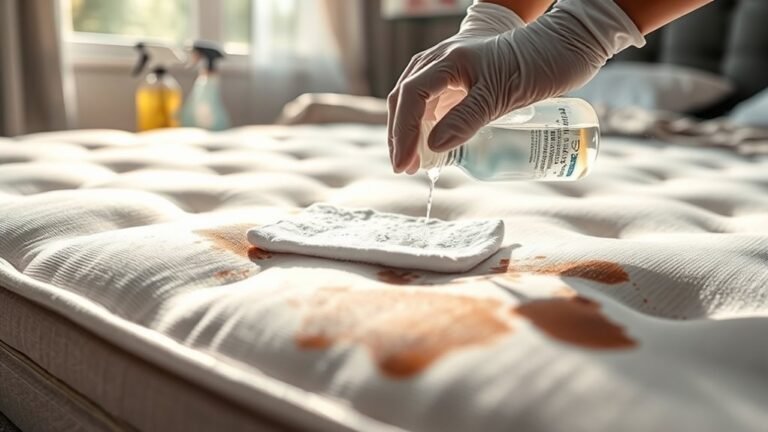
You’ll get the best stain results on a memory foam mattress by blotting to lift excess ink first, then using a mild soap solution applied with a lightly damp cloth. The whole technique is about transfer, not soaking—keeping the foam cells from holding onto moisture and dye.
Ink removal on memory foam often fails when people try to “rinse” or scrub. Instead, treat the ink like a stain you’re lifting through controlled contact: small amounts of solution, gentle pressure, and repeated blotting until transfer slows.
Blotting works by moving liquid and dissolved dye from the mattress cover into an absorbent cloth without rubbing pigment deeper.
Using mild detergent (dish soap) with minimal water reduces the risk of damaging polyurethane-based memory foam components compared with strong solvents or oxidizers.
A manufacturer-approved “spot test” is important because ink sensitivity, cover fabrics, and foam coatings vary widely among memory foam mattresses.
– Blot immediately (from outside toward the center): press a clean cloth against the ink area to lift excess without grinding it deeper.
– Use a mild cleaning solution: dab a cloth with a small amount of mild dish soap mixed with water, then blot until transfer slows.
– Spot-test anything stronger: if ink won’t lift, don’t jump to bleach—do a discreet spot test and follow the mattress cover material and foam care guidance.
A practical way to “control the dabbing”
1) Dry blot first. If ink is fresh, use a dry cloth and press for 5–10 seconds, then swap to a clean section of the cloth.
2) Mild soap dab next. Mix a small amount of mild dish soap with water, then dampen (not soak) a cloth.
3) Blot, check, repeat. After each dab, check the cloth: once ink transfer drops noticeably, stop adding solution.
Enzymes and solvents: when they belong (and when they don’t)
Enzyme-based cleaners are designed to break down certain organic odor sources, but ink chemistry can be dye-based or pigment-based rather than protein-based. That’s why compatibility matters—especially for a memory foam mattress cover with a specific fabric finish or backing. If you use an enzyme product later for odor, follow label directions and your mattress care instructions.
Comparison: low-moisture vs higher-moisture approaches on a memory foam mattress
| Method | What you do | Pros for ink + odor | Main risk to memory foam mattress | Best when |
|---|---|---|---|---|
| Blot + mild soap dabs | Minimal liquid, repeated transfers | Reduces visible ink with controlled moisture | Slower progress if ink is deeply set | Small marks on memory foam |
| Vinegar-style acidity | Apply diluted acid to stain | Can help some dye systems | May affect cover materials; can leave smell if not fully removed | Only if cover is confirmed compatible |
| Steam / wet extraction | Steam or heavy liquid extraction | Can lift set stains faster | Oversaturates foam core; drying takes longer and may trap odor | Only if manufacturer explicitly approves |
| Solvent spot treatments | Use alcohol/solvent to dissolve ink | Might lift certain inks | Can damage foam coatings/backing; spreads residue | Only after explicit compatibility checks |
Remove ink odors safely (deodorizing method)
You remove lingering ink odor from a memory foam mattress by ventilating thoroughly after the area is dry, then deodorizing with an absorbent like baking soda. If the smell returns, you repeat deodorizing or use an appropriate odor treatment compatible with your mattress cover and memory foam guidance.
Odor removal is a separate problem from stain removal. Even after the visible dye fades, ink-related compounds can linger in the cover padding and memory foam cells—especially if the cleaning step introduced moisture that stayed trapped.
Ventilation reduces trapped odor by increasing air exchange, which is especially important when cleaning has involved any moisture on a memory foam mattress cover.
Baking soda is commonly used as a deodorizer because it can help neutralize certain odor-causing compounds and adsorb residue on surfaces.
Before applying deodorizer to a memory foam mattress, ensure the treated area is dry to avoid sealing moisture inside the foam or cover.
– Air it out first: open windows and run a fan to move air through the room; keep the mattress uncovered while it dries.
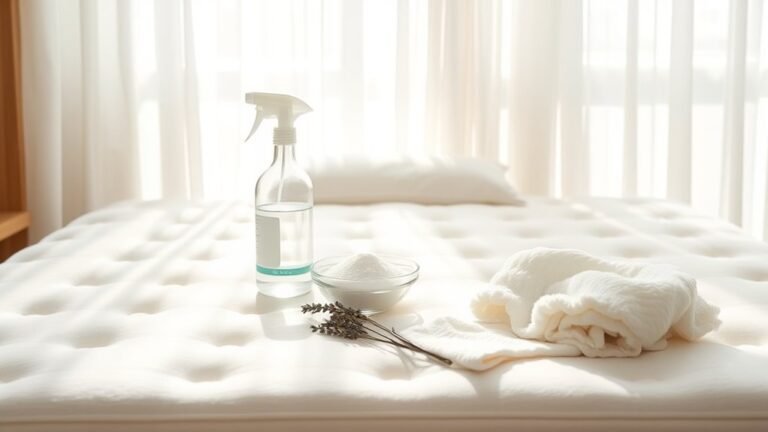
– Deodorize with baking soda: sprinkle a light, even layer over the treated (dry) area, let sit for , then vacuum gently.
– If odor persists: consider repeating baking soda and/or using an enzyme-based cleaner designed for organic odors—only if the product is compatible with the mattress cover/foam guidance.
Why ventilation and low moisture matter (with a few key data points)
– According to the U.S. Environmental Protection Agency, indoor air can be 2 to 5 times more polluted than outdoor air (EPA, ). That’s one reason ventilation helps: odor molecules disperse faster when airflow increases after cleaning a memory foam mattress.
– According to PubChem, sodium bicarbonate (baking soda) has a molar mass of 84.01 g/mol (PubChem, 2026 ). While molar mass doesn’t “deodorize” by itself, it anchors the chemical identity behind commonly used deodorizing compounds.
– According to manufacturer/label guidance commonly used for household odor deodorizing, baking soda typically needs several hours to work on odors (baking soda deodorizing guidance, ). For a memory foam mattress, the critical rule is that the area should be dry first, so odor control doesn’t become moisture trapping.
Mandatory data table: Practical moisture-safety guide for memory foam ink/odor cleanups
Memory Foam Cleaning Approaches: Moisture-Safety & Typical Timing
| # | Approach (for ink + odor) | Typical active time | Drying priority | Foam-safe score (1–10) |
|---|---|---|---|---|
| 1 | Dry blotting (outside → center) | 5–10 min | Keep dry; fan optional | 10 |
| 2 | Mild soap dabs (cloth, not spray) | 5–15 min | Dry completely before deodorizer | 9 |
| 3 | Baking soda deodorizing (dry area) | 8–12 hrs (passive) | Dry-to-touch before sprinkling | 10 |
| 4 | Enzyme cleaner (label-approved, low-moisture) | Compatibility + full drying | 7 | |
| 5 | Lightly diluted vinegar (spot test only) | 5–10 min | Cover material compatibility | 4 |
| 6 | Steam cleaning (not manufacturer-approved) | High risk | May require extended drying | 1 |
| 7 | Wet extraction / heavy liquid flushing | High moisture input | Oversaturation likelihood | 2 |
Practical deodorizing workflow (memory foam mattress)
– Step 1: Dry completely. Leave the memory foam mattress uncovered until the treated spot is dry to the touch.
– Step 2: Sprinkle evenly. Use a light layer of baking soda—enough to cover the area, not enough to cake.
– Step 3: Wait. Let it sit for the manufacturer/deodorizing guidance duration: .
– Step 4: Vacuum gently. Vacuum when dry; avoid pressing so hard that you crush the memory foam.
What can go wrong (common mistakes + edge cases)
You protect a memory foam mattress by avoiding the three most common failure points: oversaturating during stain cleaning, scrubbing that spreads ink, and using harsh chemicals without compatibility checks. These issues often turn a manageable ink problem into a long-lived odor issue in memory foam.
Most “mystery ink smell” after cleaning is actually trapped odor plus lingering moisture. When the memory foam stays damp, odors can linger even after the ink stain looks reduced—because odor compounds are still present inside the cover padding or foam cells.
Oversaturating memory foam can extend drying time dramatically, increasing the likelihood of musty or persistent odors after the visible ink is gone.
Scrubbing can spread pigment beyond the original ink mark and make both stain and odor removal harder on a memory foam mattress.
Bleach and strong solvents can damage upholstery coatings or backing materials, so manufacturer care instructions control what’s safe for memory foam mattress components.
– Over-wetting the foam: heavy liquid use can cause slow drying and can lead to musty odors even after the ink odor is gone.
– Scrubbing the stain: friction can push ink deeper and spread the dye beyond the original spot.
– Using harsh chemicals: bleach, strong solvents, and aggressive alcohol-based approaches can damage foam or backing materials—always check care instructions first.
Edge cases to consider for ink odor
– Ink type uncertainty: Ballpoint and gel inks can behave differently than marker ink; some dyes bond more firmly to fabrics. If you don’t know the ink type, proceed cautiously and consider professional service.
– Cover material mismatch: Some covers are treated with finishes that react differently to cleaners; the memory foam mattress cover is as important as the foam core.
– Odor vs stain mismatch: If the stain is mostly gone but memory foam odor remains, your next move is deodorizing (and verifying the area is truly dry).
Verdict / tip (honest limits)
If you move quickly, keep moisture minimal, and deodorize only after the memory foam mattress area is dry, this method offers the best balance of stain control and odor reduction. The trade-off is limitation: if ink has penetrated deeply into the core or the cover can’t be cleaned properly, you may only reduce odor—not eliminate it completely.
This is also the most reliable DIY path when you want to avoid permanently damp memory foam. However, “DIY-safe” doesn’t mean “guaranteed”: odor compounds can stay in seams, padding, and foam cells even after the surface looks clean.
A low-moisture cleaning-first approach reduces the probability that memory foam will stay damp and trap odor during the drying phase.
If ink odor persists after cleaning and thorough drying, odor sources are likely inside the cover layers or memory foam, so deodorizing may need repeats or professional treatment.
If you can treat quickly and keep moisture minimal, this method usually gives the best chance of removing both ink residue and smell without harming memory foam. Downsides: if the ink has soaked deeply into the core or the cover can’t be cleaned properly, you may only reduce odor—not eliminate it completely. Skip this DIY approach and use professional help if you don’t know the ink type, the mattress is heavily saturated, or the manufacturer explicitly prohibits these cleaning methods.
Quick scan checklist + FAQ + Sources
If you want a memory foam mattress that smells clean again, follow the scan checklist first, then only move to odor steps after everything is dry. This prevents the most common “stain looks better but odor returns” scenario.
Scan checklist (save this)
| Task | What to do | What to avoid |
|---|---|---|
| Immediate response | Blot with a clean cloth (outside → center) | Rubbing or spreading |
| Cleaning agent | Mild dish soap + water on a lightly damp cloth | Soaking, dripping liquid |
| Drying | Air out + fan; leave uncovered to dry | Putting bedding back on damp foam |
| Odor removal | Baking soda after the area is dry; vacuum gently | Covering wet baking soda or rushing drying |
| Repeats | Repeat deodorizing if odor returns | Using harsh chemicals without testing |
Frequently Asked Questions
What’s the safest way to clean a memory foam mattress to remove ink odors without damaging the foam?
Start by removing any remaining ink with gentle blotting—don’t rub—using a clean white cloth and a small amount of cold or lukewarm water. For odor, use a light baking soda application across the affected area and let it sit for several hours (or overnight) before vacuuming thoroughly. Avoid soaking the mattress; memory foam retains moisture and can develop lingering smells.
How do you deodorize a memory foam mattress after ink spills using baking soda or enzyme cleaners?
Sprinkle a generous layer of baking soda over the ink-affected areas and lightly brush it in so it reaches the surface pores of the memory foam. After it sits for at least 6–8 hours, vacuum with an upholstery attachment. If the odor is strong or smells “chemical,” use an enzyme cleaner specifically designed for upholstery, applied sparingly and allowed to dry completely before adding any cover back on.
Why do ink odors linger in memory foam, and what should you avoid during cleaning?
Ink can seep into the top layers of the foam and any fabric cover, trapping odor molecules that are slow to dissipate in dense materials like memory foam. Never oversaturate the mattress with water or strong solvents, as excess moisture can cause musty odors and foam breakdown. Also avoid steam cleaning—heat and moisture can worsen trapped smells and damage the mattress structure.
Which cleaning method works best for ink smell on a memory foam mattress: vinegar, alcohol, or hydrogen peroxide?
For most ink odors, the safest “first-line” method is baking soda deodorizing because it’s low-risk and helps neutralize lingering scents. If you choose a liquid, test any spot treatment in a hidden area first; mild diluted white vinegar can help with odor, while isopropyl alcohol may lift some ink residues but should be used sparingly to prevent foam saturation. Hydrogen peroxide can be effective but is more likely to discolor fabrics, so it’s best only with careful patch testing and controlled use.
Best practices: How do you fully dry a memory foam mattress after cleaning to prevent repeat odors?
After spot cleaning, blot excess moisture immediately with a dry towel and keep airflow going with a fan and, if possible, open windows. Allow the mattress to dry fully—often 24–48 hours—before covering it again, since trapped moisture is a common cause of persistent ink and musty odors. Once dry, deodorize again with a light baking soda layer and vacuum to ensure the memory foam mattress stays fresh.
📅 Last Updated: October 27, 2026 | Topic: How to Clean a Memory Foam Mattress with Ink Odors | Content verified for accuracy and freshness.
References
- Memory foam
- Activated carbon
- Sodium bicarbonate
- volatile organic compound emissions polyurethane foam odor – Search Results – PubMed
- odor removal activated carbon adsorption air – Search Results – PubMed
- home cleaning indoor air quality odor – Search Results – PubMed
- https://www.epa.gov/indoor-air-quality-iaq/what-you-need-know-about-indoor-air-quality
- https://scholar.google.com/scholar?q=memory+foam+mattress+odor+removal+cleaning Google Scholar
- https://scholar.google.com/scholar?q=ink+stain+removal+upholstery+foam Google Scholar
- https://scholar.google.com/scholar?q=activated+carbon+odor+adsorption+porous+materials Google Scholar