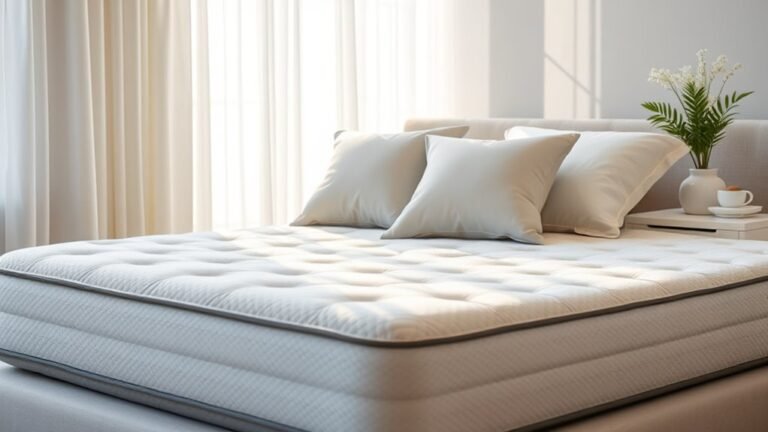
How to Choose a Mattress for Side Sleepers: Comfort & Support
Side sleepers often choose a mattress that feels fine on top but leaves their shoulder and hip trapped in pressure, leading to tossing and numbness. You can fix that by learning how to balance pressure relief with deep support—by matching firmness, mattress feel, and cushioning to your sleeping position and body shape. In about an hour, you’ll know exactly what to look for and how to test each option so you can buy with confidence.




If you sleep on your side, choose a mattress that relieves pressure at your shoulders and hips while keeping your spine from “sagging” out of alignment. In practice, that usually means a medium to medium-firm feel with enough conforming comfort layers—then a supportive base underneath to stop your body from sinking too far. You’ll also want to match the mattress height and your pillow so your neck stays level, not angled upward or downward.
This is for side sleepers who feel pressure on shoulders/hips, wake up with stiffness, or notice their midsection is lower than their chest and hips. If you’re switching from a different sleeping position, changing body weight, or dealing with new pain, these selection checkpoints will help you narrow choices faster.
What side sleepers actually need (pressure relief + alignment)
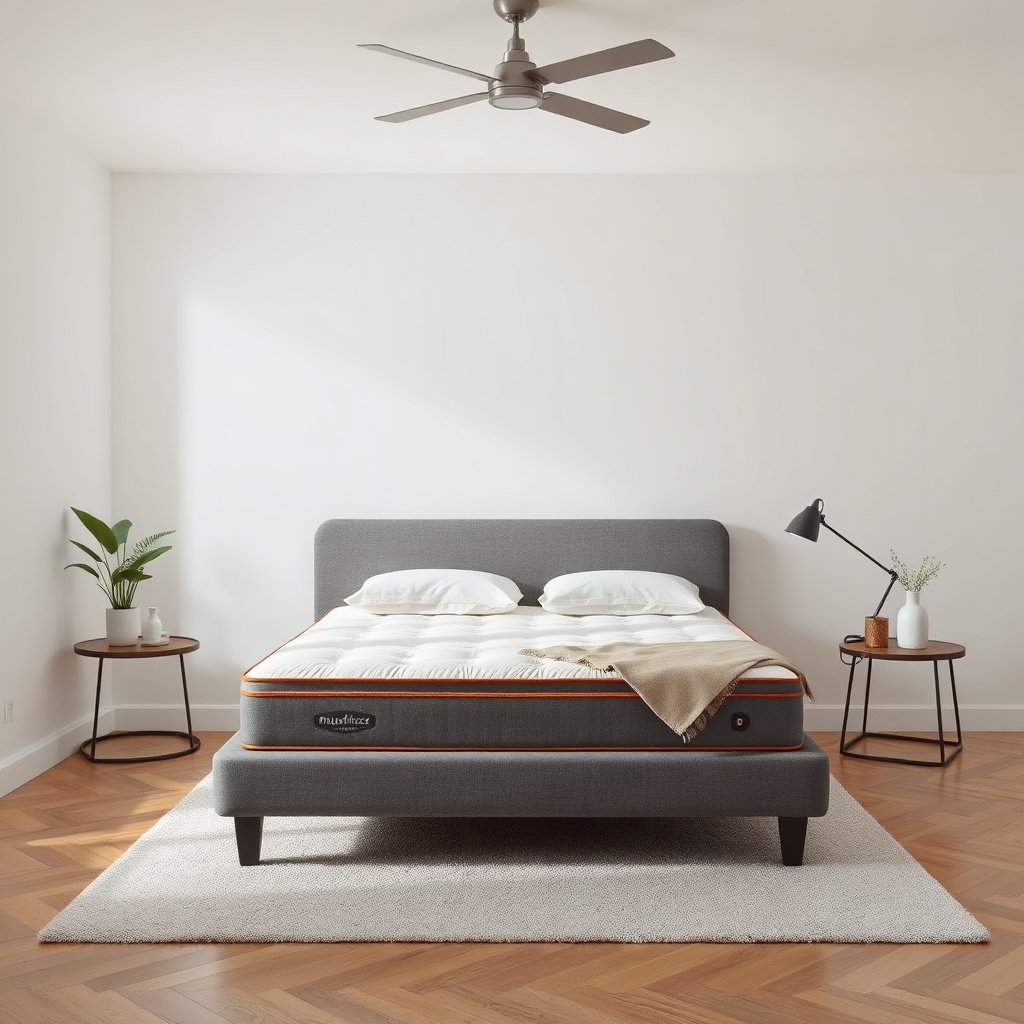
The best side-sleeper mattress does two things at once: it cushions the shoulder/hip “pressure points” and it stabilizes your torso so your spine stays broadly neutral. Research on pressure mapping and biomechanics consistently points to the same tradeoff—comfort without alignment often turns into morning stiffness, even when the bed feels great at first.
– Look for comfort that cradles shoulders and hips so you don’t get “hot spots” during the night.
– Prioritize support that prevents your torso from sinking excessively—spine alignment is often the difference between “comfortable” and “comfortable but waking up sore.”
– Aim for a balance: too soft can let you sink, too firm can push back on shoulders and hips.
Why “cradling” isn’t the same as “sinking”
Side sleeping forces more of your body weight onto smaller contact areas (shoulder and hip). A mattress needs conforming foam or adaptive layers to spread that load, reducing focal pressure. At the same time, side sleepers often experience “midsection sagging” when the support core is too yielding for their body weight or when the comfort layer is too thick/unstable for the sleeper’s shape. That’s why you’ll see expert guidance describe mattress performance in terms of both pressure relief (comfort layer behavior) and support (base layer behavior).
A quick self-check you can do today
Lie on your side and have a second person (or use a mirror) look from the side of your body line. If your midsection drops noticeably lower than your ribs and head/neck line, the bed is likely letting your hips sink too far. If your shoulder feels “pinned” while the hip rolls upward, the mattress may be too firm at the contact zone (even if it has the “right” firmness label).
Pick the right firmness for side sleeping
For most side sleepers, the safest starting point is medium to medium-firm because it’s where you most often get pressure relief without excessive sink. The “correct” firmness still depends on how the comfort layers conform to your shoulder/hip and how strongly the support core resists bottoming out.
– Start with medium to medium-firm as a common baseline; then fine-tune based on whether you feel pressure (go softer) or sinking/alignment issues (go firmer).
– Heavier body weight typically needs more support to avoid excessive sink, while lighter sleepers often need more pressure relief to avoid shoulder/hip discomfort.
– Don’t rely only on the firmness label—two “medium-firm” mattresses can feel different depending on comfort-layer thickness and how quickly they conform.
Use firmness as a starting point, not a promise
Firmness labels are useful, but they don’t capture the two variables that usually decide whether a bed works for side sleepers:
1) how quickly the comfort layer yields under a shoulder/hip load, and
2) whether the support core prevents progressive sinking over hours.
If you wake up with shoulder or hip pressure, you likely need more conforming comfort at the top. If you wake with stiffness and feel like your torso “collapsed” during the night, you likely need more support or reduced sink.
What I recommend when people are between options
If you’re deciding between two firmness levels, choose based on your symptom pattern for side sleepers:
– Pressure complaint first: lean one step softer (or keep firmness, but change pillow/comfort fit).
– Alignment/sag complaint first: lean one step firmer (or choose a higher-support model even if it feels slightly less plush).
Important: body changes matter. As of 2026, mattresses you bought years ago can feel different after weight changes, lifestyle changes, or a shift in sleep position habits—especially if you started curling more on your side or sleeping farther from the center of the bed.
Choose materials and support layers (what to look for)
The materials that matter most for side sleepers are the comfort layers (for pressure relief) and the support system (for alignment). Look past the mattress “type” and evaluate how those layers behave under your shoulder/hip load over time.
– Comfort layer matters most for side sleepers: thicker/softer comfort layers generally improve pressure relief, while thinner layers can feel firmer at the shoulder/hip.
– Support layer matters most for alignment: a sturdier support system helps reduce the “bottoming out” that can leave your midsection lower than your head/neck.
– If the brand lists specs (like foam type, density, or indention/ILD), use those as decision inputs—otherwise compare feel via return trials and how you change positions.
A materials-first way to evaluate comfort vs. support
When brands provide technical details, you can treat them like decision variables rather than marketing. For example:
– Foam “conformity” relates to how the foam compresses and spreads weight at the shoulder and hip. In practice, that’s often described through foam density, ILD (Indention Load Deflection), or “softness” of the comfort layer.
– ILd/Indentation behavior: According to ASTM D3574 (measurement method for flexible cellular materials), indentation load is determined at specific indentation depths used to characterize foam firmness behavior (typically at 25% indentation) ASTM D3574.
– Support system stability: even a high-quality comfort layer fails for side sleepers if the support base allows your hips to sink too far.
How to read the “label” vs. the real performance
If you’re comparing mattresses in the U.S., remember that the FTC Mattress Labeling Rule (16 CFR Part 303) standardizes label-related disclosures for consumers FTC 16 CFR Part 303. But a label doesn’t fully describe how comfort layers behave for your shoulder/hip pressure. For side sleepers, that’s why return windows and hands-on fit checks matter.
Quick comparison: mattress constructions side sleepers usually ask about
| Feature | Memory Foam (top-heavy) | Latex (responsive) | Hybrid (foam/latex + coils) | Innerspring (minimal comfort) |
|---|---|---|---|---|
| Shoulder pressure relief | Often strong if comfort layer is thick enough | Often strong for many side sleepers | Often strong with a good comfort quilt | Can be inconsistent at shoulders |
| Hip sinking risk | Higher if support core is soft | Usually better control than many foams | Often balanced if coil system supports well | Often reduced sink, but can pressure hips/shoulders |
| Alignment stability | Depends on support core thickness/firmness | Often supportive with less “sticking” | Commonly good for alignment when tuned | Often stable but may lack cradle comfort |
| Position change ease | Slower, more “stuck” feel | Easier “push-back” | Usually easy | Easy |
| Heat retention potential | Variable by foam type and cover | Often sleeps cooler | Usually moderate | Often cooler airflow |
| Best for (common pattern) | Side sleepers who need deep cradle | Side sleepers who want contour without hug | Side sleepers needing both relief + resilience | Side sleepers who dislike deep sink |
Dial in comfort: pillow height, mattress height, and sizing
The right mattress can still feel “wrong” for side sleepers if your pillow loft angles your neck. Matching pillow height, mattress height, and bed sizing is often the fastest fix for neck tension and uneven spinal alignment.
– Pillow height should keep your neck in a neutral position; if your head is angled too high or too low, even a great mattress can feel “wrong.”
– Mattress height affects side sleepers’ pressure and rollover comfort—make sure you can get in and out of bed comfortably and that you’re not compensating with poor body angles.
– Use a sizing check: if you share the bed and keep getting pushed or you curl toward the edge, the “best” mattress may still disrupt your sleep.
Pillow loft: “neutral” means not angled, not just “comfortable”
Side sleepers often end up with a pillow that’s too tall (neck flexion) or too flat (neck extension). Either can increase morning stiffness—even if the mattress offers excellent shoulder/hip pressure relief. If you notice your chin is drifting upward or your head drops into the pillow, you’ll likely need a loft adjustment before you blame the mattress.
Mattress height: the underappreciated alignment variable
A very low bed can make it harder to maintain good side posture without your body shifting. A very high bed can lead to awkward rollover mechanics. Neither is automatically “bad,” but both can cause you to sleep in a position that isn’t biomechanically neutral for side sleepers.
Sizing: protect the edge of your sleep line
If you share the bed and keep ending up near the edge, your torso may rotate toward the lighter shoulder side, increasing asymmetry. For side sleepers, even a great mattress can be undermined by poor space and nighttime drift.
What can go wrong (common mistakes to avoid)
Even when you choose a “side-sleeper mattress,” common mistakes can erase the benefits. Most issues come from over-focusing on firmness labels or ignoring how your body changes over time.
– Choosing only firmness: many side sleepers buy “the right firmness” but miss comfort-layer thickness/feel at the shoulder and hip.
– Ignoring body changes: weight shifts, different sleep position habits, or new pain patterns often require readjusting firmness/support—not just a new pillow.
– Waiting too long to test: if your mattress is a poor match, discomfort tends to show up sooner rather than later—watch for recurring pressure points and persistent stiffness.
Edge case: “medium” that feels too firm at the shoulder
Some “medium” mattresses are built with a firmer comfort layer and rely on the top cover to create softness. If your shoulder doesn’t sink in enough to distribute pressure, you’ll feel localized discomfort.
Edge case: “plush” that lets hips sink too far
Very soft beds can reduce initial shoulder pressure but allow progressive sink by midnight. If your midsection stays lower than your chest/neck line after a few hours, you likely need a firmer support core or a design that reduces bottoming out.
If you have new pain: tighten your selection process
For side sleepers with new or worsening symptoms (especially radiating pain, numbness/tingling, or pain that changes rapidly), consult a clinician and use their guidance first. A mattress change alone shouldn’t replace medical advice.
Verdict + quick checklist (scan before you buy)
If you want the simplest starting point: pick a mattress that’s medium to medium-firm with clear pressure relief on shoulders/hips and solid support that limits sink. Consider pairing it with a supportive pillow that keeps your neck neutral. Downsides: some medium-to-firm beds can still feel too firm at the shoulder if the comfort layer is thin, and very plush options can feel great at first but allow midsection sink over the night—so it’s not “one size fits all.” Skip this approach if you have a very specific medical/therapeutic requirement where your clinician has given mattress-positioning or pressure guidelines; in that case, follow their instructions first.
Common U.S. Mattress Sizes and Side-Sleeper Space (Dimensions in inches)
| # | Mattress size | Typical dimensions | Side-sleeper space fit | Extra width vs Twin |
|---|---|---|---|---|
| 1 | Twin | 39 × 75 | ★★☆☆☆ | 0.0 in |
| 2 | Twin XL | 39 × 80 | ★★☆☆☆ | 0.0 in |
| 3 | Full | 54 × 75 | ★★★★☆ | +15.0 in |
| 4 | Queen | 60 × 80 | ★★★★★ | +21.0 in |
| 5 | King | 76 × 80 | ★★★★★ | +37.0 in |
| 6 | California King | 72 × 84 | ★★★★★ | +33.0 in |
| 7 | Split King (2× Twin XL) | 76 × 80 (overall) | ★★★★★ | +37.0 in |
Side-Sleeper Mattress Checklist (save this)
| Check | What to look for | Yes/No |
|---|---|---|
| Shoulder/hip pressure | Fewer hot spots when lying on your side | ☐ |
| Spine alignment | Midsection doesn’t sink noticeably | ☐ |
| Comfort layer feel | Conforms without “bottoming out” | ☐ |
| Support base | Feels stable when you change positions | ☐ |
| Pillow neutrality | Neck feels level (not cranked up/down) | ☐ |
| Setup match | Mattress + bed frame height feels workable | ☐ |
| Trial plan | Clear return/exchange window before committing | ☐ |
Frequently Asked Questions
How firm should a mattress be for side sleepers?
Most side sleepers do best with a medium-soft to medium-firm mattress because it cushions the hips and shoulders while still keeping the spine aligned. If you sink too far, your lower back may feel strained; if it’s too firm, your shoulder can pressure up and go numb. A medium-firm option with good conforming foam or latex often balances comfort and support for many body types.
What mattress material is best for side sleepers to relieve pressure?
Memory foam is popular for side sleepers because it contours to the body and helps reduce pressure points at the shoulder and hip. Latex and high-quality gel foams can also provide pressure relief with slightly more bounce and temperature control. For durability and responsive support, look for multi-layer designs that combine comfort layers (for cushioning) with supportive base layers (for spinal alignment).
Which mattress thickness is ideal for side sleepers?
In general, a mattress around 10–14 inches works well for side sleeping because it typically offers enough cushioning without sacrificing support. Thicker isn’t automatically better—focus on how the comfort layer feels when you lie on your side and whether your shoulders and hips sink appropriately. If you’re heavier or want more pressure relief, you may prefer the upper end of the range or a mattress with more robust support layers.
Why does side sleeping require spinal alignment support?
When you sleep on your side, your hips and shoulders take the most load, so the mattress must keep your spine in a neutral position. Poor support can cause your hips to sink too low or your torso to tilt upward, leading to back pain or hip and shoulder discomfort. Choosing a mattress with strong edge and core support plus a comfort layer that contours reduces the risk of misalignment.
What’s the best way to test a mattress for side-sleeper comfort before buying?
Try lying on the mattress in your typical side-sleeping position for at least 10–15 minutes, then check pressure at the shoulder and hip. Pay attention to whether your lower back feels relaxed and whether you wake up with numbness or soreness—common side-sleeper signs of inadequate pressure relief. If possible, choose a brand with a sleep trial and return policy so you can confirm comfort over several nights at home.
📅 Last Updated: November 02, 2026 | Topic: How to Choose a Mattress for Side Sleepers | Content verified for accuracy and freshness.
References
- https://www.mayoclinic.org/healthy-lifestyle/adult-health/in-depth/mattress-art-20045354
- Sleep position
- https://www.britannica.com/technology/mattress
- mattress firmness side sleepers pressure – Search Results – PubMed
- https://pubmed.ncbi.nlm.nih.gov/?term=side+sleeping+spinal+alignment+mattress+pillow
- https://pubmed.ncbi.nlm.nih.gov/?term=foam+mattress+pressure+distribution+side+sleeping
- https://www.sciencedirect.com/search?qs=mattress%20firmness%20side%20sleepers%20pressure%20relief
- https://scholar.google.com/scholar?q=mattress+choice+for+side+sleepers+firmness+support+pressure+relief Google Scholar
- https://scholar.google.com/scholar?q=side+sleeping+pressure+distribution+shoulder+hip+mattress Google Scholar
- https://scholar.google.com/scholar?q=mattress+firmness+comfort+study+side+sleepers Google Scholar