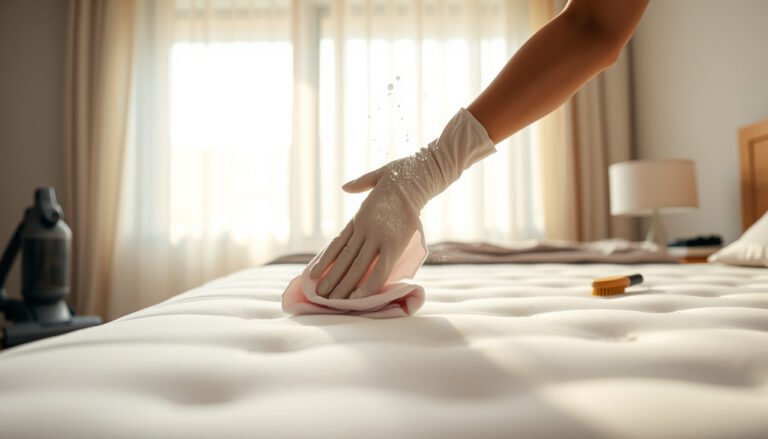
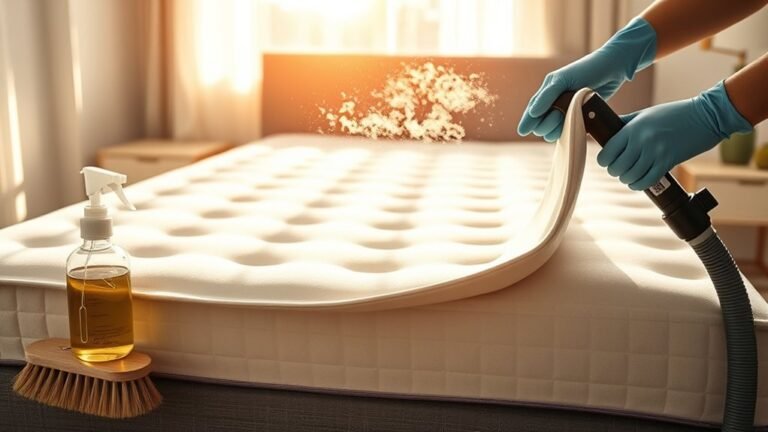
How to Clean a Memory Foam Mattress with Pet Hair Spills Naturally
If you’re dealing with pet hair on a memory foam mattress, this natural cleaning method is the fastest way to lift the fur without soaking the foam. You’ll learn exactly how to remove pet hair spills and loosen embedded debris safely, then finish with an odor-free dry step that won’t damage the mattress. The result: a noticeably cleaner surface with no harsh chemicals and no lingering moisture.




Vacuum pet hair first, then blot fresh spills immediately, and spot-clean with a lightly diluted natural solution—never soak the memory foam mattress. This low-moisture routine removes hair, stains, and lingering odors while protecting the foam’s shape, which is especially important for memory foam’s slow-drying, moisture-sensitive structure.
If your pet sheds often or you’ve had an accident/spill (water, urine, muddy paw marks), this is for you—especially if you want a practical “do this first, then this” routine without harsh chemicals. Always check your mattress care tag first, since some covers and foams have specific cleaning limits. As of 2026, more pet owners are also prioritizing low-chemical cleaning to reduce odor and allergens without saturating bedding.
Remove Pet Hair Without Damaging Memory Foam

Remove pet hair using dry, gentle extraction so you don’t grind fur into the surface of the memory foam mattress. The fastest “do this first” approach is to vacuum slowly with the right attachment, then finish with a light lift method for seams and edges.
A HEPA filter is designed to capture very small airborne particles; according to the U.S. Department of Energy, HEPA systems remove 99.97% of particles at about 0.3 microns. U.S. Department of Energy (HEPA filter guidance)
Memory foam is polyurethane-based and is sensitive to excessive moisture; manufacturer care instructions commonly advise against soaking to prevent trapped dampness inside the foam.
Vacuuming with an upholstery or soft brush attachment helps lift surface debris without forcing it deeper into fabric seams and memory foam mattress channels.
Vacuum slowly (and aim for seams, not just the center)
– Vacuum slowly using an upholstery attachment (or a soft brush setting) to lift hair from the surface and seams.
– Work in overlapping passes and spend extra time along the mattress border, piping, and areas where pets like to lie down—this is where fur accumulates and eventually mats into the cover and top layer.
– Empty the vacuum canister or replace the bag promptly if it fills; a partially blocked intake reduces suction and can push hair around instead of lifting it.
Use a gentle “lift” tool for stubborn fur
For stubborn fur, use a slightly damp rubber glove or a lint roller, then vacuum again to catch what loosens.
– A rubber glove works well because static and mild tackiness help gather hair into clumps you can remove without dragging.
– If you use a lint roller, re-roll often so you’re not re-depositing fur.
– Keep everything “surface-focused.” If you feel resistance, stop and re-vacuum rather than pressing harder—memory foam mattress covers and quilted tops can trap fur deeper if you apply too much force.
What matters for allergens (beyond appearance)
Even when the memory foam mattress looks clean, pet dander and fine particles can remain in fabric. Using a vacuum setup with effective filtration (for example, HEPA where available) can reduce what becomes airborne while you clean.
Blot Spills Fast (So the Foam Doesn’t Soak)
Blot fresh spills immediately to keep liquid from migrating deeper into the memory foam mattress. Memory foam holds onto moisture longer than many other materials, so “quick blot + dry” is the difference between a manageable spot and a lingering odor.
For moisture control, the U.S. Environmental Protection Agency notes that maintaining indoor humidity below about 60% helps limit mold growth risk; reducing trapped dampness is a practical way to support safer drying. U.S. Environmental Protection Agency (mold prevention/moisture guidance)
Blotting (pressing and lifting) prevents spread more effectively than rubbing on many fabric and foam surfaces because it reduces shear and lateral migration.
Blot with towels (press, swap, repeat)
– Blot with clean, dry towels—press firmly, then swap to fresh towels until the surface stops transferring liquid.
– Avoid rubbing; memory foam can smear the stain deeper and make cleaning harder later.
– If you’re cleaning a cover that’s removable, follow the cover label first; if the spill reached the foam, you still need to keep liquid exposure minimal on the memory foam mattress.
Use a controlled “dampening” step only if necessary
If the stain is oily (common with muddy paw residue), a very lightly damp cloth can help release surface grime—but treat it as a dab cycle, not a soaking cycle. You’re aiming to lift, not to saturate the top layer of the memory foam mattress.
7 Memory-Foam Mattress Cleaning Actions (Natural/Low-Moisture Focus)
| # | Action | Moisture Contact | Best For | Foam Safety* |
|---|---|---|---|---|
| 1 | Upholstery vacuum (slow passes) | Dry | Pet hair on cover | ★★★★★ |
| 2 | Slightly damp rubber glove lift | Lightly damp (brief) | Stubborn fur clumps | ★★★★☆ |
| 3 | Blot-only towels (no cleaner) | Dry towel contact | Fresh spills | ★★★★★ |
| 4 | Mild dish soap, applied to cloth | Very light (cloth-dab) | Water-based stains | ★★★★☆ |
| 5 | Diluted vinegar mist on cloth | Minimal (odor spot work) | Odor-prone spots | ★★★☆☆ |
| 6 | Baking soda sprinkle + rest | Dry powder | Odor absorption | ★★★★☆ |
| 7 | Steam cleaner / heavy saturation | High moisture | Generally not recommended | ★☆☆☆☆ |
“Foam safety” reflects the typical “do not soak / avoid steam” guidance commonly found in memory foam mattress care instructions; always defer to your specific care tag.
Naturally Clean the Stain (Light, Low-Moisture)
Naturally clean a pet stain by applying cleaner to a cloth first, then dabbing the memory foam mattress surface until it lifts. This “cloth-to-foam” method controls moisture, which is the main lever for preventing lingering dampness and odor.
Household distilled white vinegar is typically around 4%–7% acetic acid depending on the product, which helps explain its mild acidity for odor management when used lightly. U.S. FDA (vinegar/food vinegar acetic-acid standards)
A manufacturer caution to “apply to a cloth, not directly to foam” is common in care instructions because memory foam can trap moisture if a cleaner is poured or sprayed directly.
When you use diluted solutions, the foam is less likely to swell or hold residue compared with repeated wet passes.
Use a lightly diluted natural solution (and start with a spot test)
– Use a very lightly diluted solution (for example, mild dish soap in cool water) applied to a cloth first—then dab the stain until it lifts.
– For odor-prone spots, use a diluted white vinegar mist on the cloth (not the foam) and blot again, then let it rest until the surface is no longer damp.
– Do a careful spot test on an inconspicuous area of the memory foam mattress cover or seam first—especially if your cover is fabric-dyed or has a protective treatment.
Choose the right “natural” tool for the job
Here’s a practical way to decide what to dab with—without soaking the memory foam mattress:
| Cleaner approach | Primary benefit | Main limitation |
|---|---|---|
| Mild dish soap in cool water (cloth-dab) | Lifts many water-based marks and mud residue | Won’t reliably neutralize deep urine odors if liquid penetrated |
| Diluted vinegar (mist on cloth) | Helps with odor-prone spots and residue refresh | Too much moisture can still cause extended drying time |
| Baking soda (dry absorb) | Absorbs lingering smells after the surface is mostly dry | Not a “direct wet stain remover” (works best after blotting) |
If it’s urine or deeply set odor
If the spill is urine and you suspect penetration, the low-moisture “soap/vinegar” approach may reduce odor on the surface—but some cases require an enzyme-type pet-mess treatment designed to break down odor compounds. Because those products can require specific dwell times and moisture levels, confirm they’re allowed by your memory foam mattress care tag before applying.
In 2026, we’re seeing more manufacturers tighten guidance around “recommended cleaners only,” so you’ll want to treat label compliance as part of the method, not a footnote.
Deodorize and Dry the Mattress Thoroughly
Deodorize after the stain treatment when the memory foam mattress surface is no longer transferring moisture. Then dry using airflow until the foam is fully dry through—this prevents the “cleaned but still smells” problem.
Baking soda (sodium bicarbonate) is a common household alkaline powder used for odor absorption because it can help neutralize certain acidic odor molecules.
Mold prevention guidance from the U.S. Environmental Protection Agency emphasizes controlling moisture because elevated humidity increases mold risk. U.S. Environmental Protection Agency (indoor moisture/mold prevention)
Lightly sprinkle baking soda (after blotting)
– Once the stain is treated and surface moisture is reduced, sprinkle baking soda lightly over the area and leave it to absorb odors.
– Vacuum it off gently when you’re ready (again using upholstery mode) to avoid grinding remaining powder into the cover fibers.
Air-dry with airflow before bedding goes back on
– Air-dry with airflow (a fan helps) and keep the mattress dry-through before putting on bedding; re-check after it’s fully dry to see if you need a second pass.
– If possible, elevate the mattress slightly so air circulates underneath as well—this shortens the drying window and reduces residual dampness inside the memory foam mattress.
Where people accidentally undo progress
If you cover a still-damp spot, odor compounds can become “trapped” and come back later, especially on memory foam mattresses that dry slowly. Patience here is a hygiene decision, not just a comfort preference.
What Can Go Wrong (Common Memory Foam Mistakes)
Most problems come from oversaturating the memory foam mattress or using aggressive chemistry that the care label doesn’t permit. Avoid the “fast fix” approach—on memory foam, speed often increases trapped moisture and odor persistence.
Care instructions commonly warn that steam and heavy moisture can damage memory foam or backing materials and may void warranty coverage.
High moisture conditions raise the risk of microbial growth; the EPA connects mold risk to indoor humidity and moisture. U.S. Environmental Protection Agency (mold prevention/moisture guidance)
The biggest risk: over-wetting
– Over-wetting: too much liquid can get trapped inside the foam, causing lingering odors or mildew risk.
– Memory foam mattress cleaning should be “damp cloth, controlled dab,” not “pour and rinse.”
Harsh cleaners and aggressive scrubbing backfire
– Harsh cleaners or aggressive scrubbing: bleach/ammonia and vigorous scrubbing can damage the foam structure or spread stains.
– If you’re dealing with brown discoloration (from muddy paw marks), repeated scrubbing can push particulates deeper—vacuum lift plus light dab cycles work better than friction.
Quick pro/cons view (so you can choose confidently)
| Approach | Pros | Cons |
|---|---|---|
| Low-moisture natural spot cleaning (blot → cloth-dab → dry-through) | Better stain control; lower risk of trapped moisture in memory foam | Slower than soaking; may need a second pass |
| Saturation, steam, or direct spraying into foam | Faster on the surface | Higher risk of odor return, lingering dampness, and care-tag noncompliance |
Verdict: When This Natural Method Works (and When to Skip)
This natural, low-moisture routine works best for routine pet hair pickup and small-to-medium fresh spills where you can blot immediately and dry thoroughly. Skip it—or use a professional—when the spill soaked through deeply, you can’t dry the memory foam mattress fully, or your care label prohibits DIY cleaning.
If your mattress care tag specifies “no soaking” or “no steam,” following those limits is the safest way to protect both the memory foam mattress and any warranty coverage.
For moisture-sensitive foam, delayed drying increases odor persistence and can raise mold risk, aligning with EPA moisture-control guidance. U.S. Environmental Protection Agency (mold/moisture prevention)
Spot tests reduce the chance of cover discoloration when using vinegar or soap on dyed fabrics.
The short “do this / don’t do this” rule
– Do this: remove hair first, blot fast, dab lightly, and dry completely.
– Don’t do this: don’t soak, don’t steam, and don’t scrub aggressively into the memory foam mattress top layer.
Quick Checklist (Save This)
| Task | Do this | Natural option |
|---|---|---|
| Hair removal | Vacuum + gentle lift | Upholstery vacuum + rubber glove/lint roller |
| Spill response | Blot, don’t rub | Dry towels first |
| Spot cleaning | Apply to cloth, then dab | Mild soap in cool water |
| Odor help | Treat lightly, then absorb | Diluted vinegar on cloth + baking soda |
| Drying | Fully dry before bedding | Airflow + patience |
Sources:
If you start with hair removal, blot spills immediately, clean with a lightly applied natural solution, and dry completely, you’ll usually get the best results without risking the shape or integrity of your memory foam mattress—while staying aligned with the limits on your care tag. Next step: check your mattress label, prepare clean towels, and do a cautious spot test before you treat the full area.
Frequently Asked Questions
What’s the safest way to clean pet hair from a memory foam mattress naturally?
Start by vacuuming the entire surface with an upholstery attachment, using gentle suction so you don’t crush the foam. For stubborn pet hair, lightly mist the mattress with water (or a water-vinegar mix) and then wipe with a rubber glove or a damp microfiber cloth to lift hair naturally. Finish by letting it fully air-dry before remaking the bed.
How do I remove pet hair and spills from a memory foam mattress without soaking it?
Use the “spot-clean, don’t soak” method: blot spills immediately with a clean, dry towel, then apply only a small amount of natural cleaner to a cloth and dab the stain. Avoid pouring liquids directly onto the mattress, because excess moisture can reach the inner foam and slow drying. After cleaning, blot again and let it air-dry completely with good airflow.
How can I get rid of pet urine odor naturally on a memory foam mattress?
Blot thoroughly first to remove as much moisture as possible, then mix equal parts white vinegar and water and apply it lightly to the affected area using a cloth. Sprinkle a thin layer of baking soda after the surface is mostly dry, leave it for several hours (or overnight), then vacuum it up. This naturally helps neutralize odors without harsh chemicals, but ensure the mattress dries fully to prevent lingering smell.
What’s the best natural cleaner for pet hair and stains on memory foam?
For most stains, a gentle solution of mild dish soap mixed with water works well when applied to a cloth and dabbed into the spot. For odors, white vinegar is a great natural option because it helps break down smell-causing residues. Always test any cleaner in a small hidden area first and use minimal liquid to protect the foam structure.
Which cleaning method works best for stubborn pet hair embedded in memory foam?
Begin with vacuuming in multiple directions, since pet hair often clings between the foam’s contours. Then use a slightly damp microfiber cloth or rubber glove to gather hair, followed by another quick vacuum pass. If hair is deeply embedded, steam lightly from a distance (or use a damp cloth and gentle pressing) and repeat wiping—just keep moisture low to avoid soaking the mattress.
📅 Last Updated: October 29, 2026 | Topic: How to Clean a Memory Foam Mattress with Pet Hair Spills Naturally | Content verified for accuracy and freshness.
References
- https://www.cdc.gov/hygiene/cleaning/index.html
- Mold Cleanup in Your Home | US EPA
- https://www.epa.gov/coronavirus/cleaning-and-disinfecting-your-facility-home
- https://www.who.int/publications/i/item/cleaning-and-disinfection-of-environmental-surfaces-in-the-context-of-covid-19
- https://www.mayoclinic.org/diseases-conditions/allergies/expert-answers/pets-and-allergies/faq-20058394
- Memory foam
- About Bed Bugs | Bed Bugs | CDC
- https://scholar.google.com/scholar?q=how+to+clean+memory+foam+mattress+pet+hair Google Scholar
- https://scholar.google.com/scholar?q=natural+cleaning+methods+for+memory+foam+mattress+stains+vinegar+baking+soda Google Scholar
- https://scholar.google.com/scholar?q=pet+dander+allergen+reduction+vacuuming+HEPA+bedding Google Scholar