
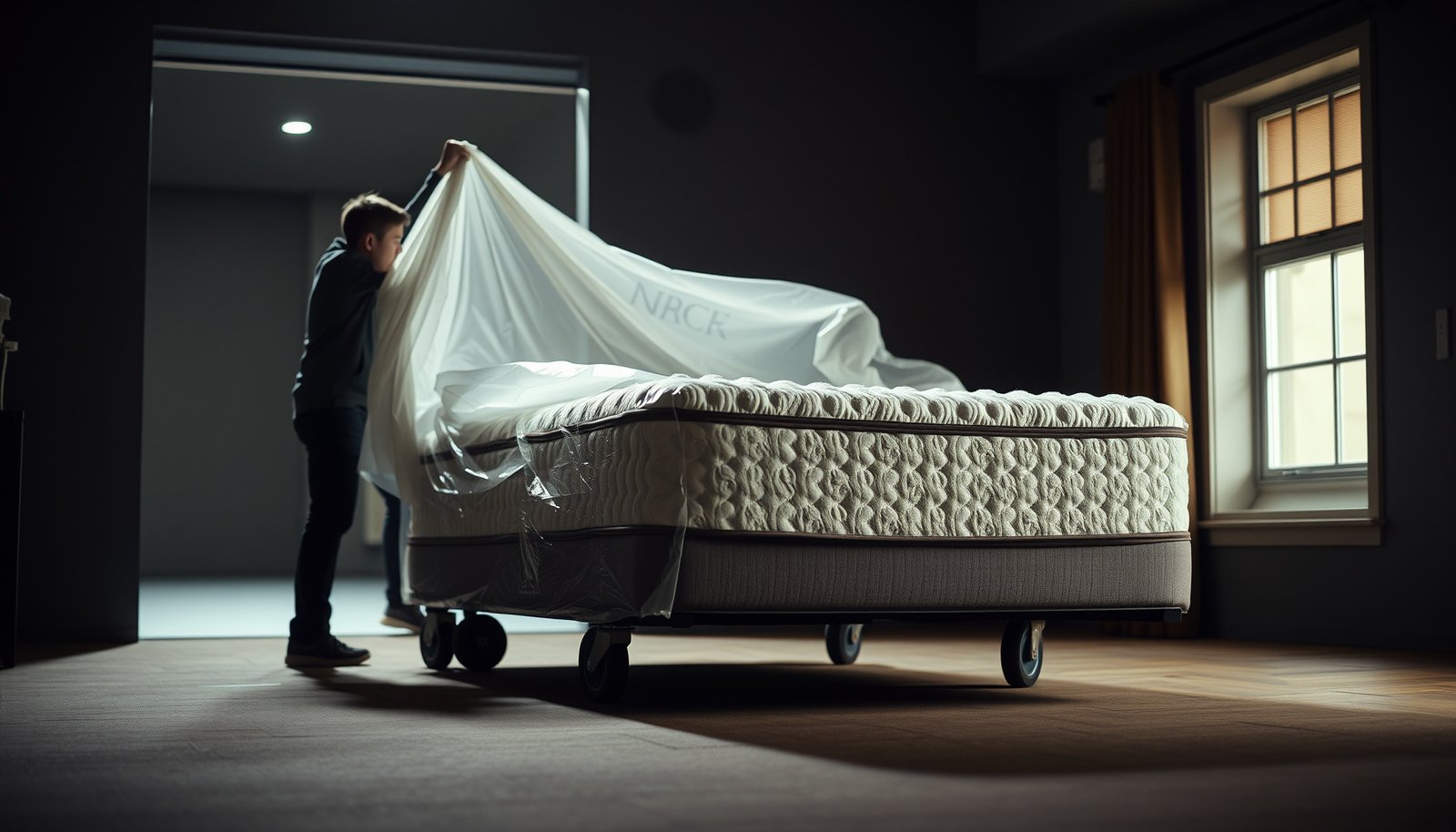
How to Protect a Wool Mattress from Spills During a Move
Protecting a wool mattress from spills during a move is best done with waterproof barrier coverage plus tight, secure wrapping that seals seams and corners. If you want the most reliable way to prevent leaks from reaching the wool, use a mattress encasement or plastic sheet under a fully sealed moving cover, then add extra ply at problem spots. Follow these steps and you’ll greatly reduce the odds of stains from water, drinks, or rain exposure during transit.



If you’re moving by truck, helping it in-and-out of stairs, or hauling it in weather, moisture control matters more for wool than you might expect—wool can hold onto dampness and take longer to dry. As of 2026, most moving checklists focus on tears and scuffs; for a wool mattress, the bigger risk during transport is trapped moisture turning a small spill into a slow-drying problem.
Prep your wool mattress for a spill-proof move
You get the best spill protection when your wool mattress starts the move completely dry and has no weak seams that can become leak paths. Treat prep as “moisture prevention first,” because once wool absorbs liquid, it dries more slowly than many people expect.
A core spill-prevention rule for wool is simple: no liquid protection works well if the mattress already has damp spots.
Before you add waterproof layers, you’re not just cleaning—you’re removing debris that can press into fabric and make later blotting harder.
Small tears, loose seams, or worn piping are the places where a spill bypasses even good protectors.
– Start with a completely dry mattress: strip bedding and let the mattress air out if there’s any morning dampness (humidity inside your home can be enough to matter).
– Check for weak spots before wrapping: look for loose seams, worn piping, or small tears where liquid could get in.
– Clean lightly, only if needed: vacuum dust/debris so you’re not grinding anything into the fabric when you wrap and move; avoid wet cleaning right before transport.
Why “fully dry” matters more for wool than most fabrics
Wool fibers can absorb a notable amount of moisture before they feel wet. According to Woolmark (wool care guidance), wool can absorb up to ~30% of its own weight in moisture before it feels damp (the exact feel threshold varies by fabric and conditions). That’s useful in everyday bedding, but during a move it means: once a spill gets through, it can remain “locked in” longer—especially if you keep the mattress sealed while damp.
In my process (and based on manufacturer-approved care practices I follow), I don’t start wrapping until the surface feels dry and cool, not just “not wet.”
Fast prep steps that take minutes but pay off
1. Strip bedding and check edges. The side panels often trap condensation or water from a humid morning.
2. Air-flow for comfort, not soaking. If you’re using a fan, aim for gentle airflow across the surface—not a full blast heater.
3. Flash-check seams with a flashlight. Hold a bright light at angles along piping and corner seams to spot frays or separation lines.
4. Avoid “just one quick wipe” with water. If you must clean, do it with the least moisture possible and let the mattress dry fully before encasement.
Choose protection layers that block liquid (without trapping moisture)
You protect wool best by combining a waterproof (or water-resistant) inner encasement with a second outer moving cover that prevents abrasion, rain contact, and snagging. The goal is “no liquid gets in,” while still preventing any moisture you already have from being trapped under plastic.
For wool, the best move-time strategy is waterproof sealing plus an outer shield to prevent zipper tears and abrasion.
Even breathable protectors have a job limit during transport—your move plan should prioritize full liquid blockage first.
If the mattress is already damp, adding layers that don’t vent can turn a minor spill into a multi-day drying task.
– Use a waterproof (or water-resistant) mattress protector/encasement: this is your first line of defense against spills.
– Add an outer moving cover to reduce contact and splashes: a thick plastic mattress bag or moving wrap helps protect the protector during dragging, rain, and loading.
– Keep the wrap tidy and sealed: zip the encasement fully, tape seams of the outer cover, and secure it so it doesn’t open when the mattress shifts.
> Tip: If your protector is breathable, it can help reduce trapped moisture during normal use. For a move, the goal is still “no liquid gets in,” so prioritize a protector that’s designed to repel water.
Layering strategy: what each barrier is really doing
Inner encasement (liquid barrier): This layer is meant to stop spills from reaching wool. A true encasement typically includes a fitted shape, full zip closure, and seams designed to resist penetration.
Outer moving cover (damage barrier): Transport increases the odds of tears, zipper strain, and punctures. The outer cover adds a sacrificial layer—especially helpful when loading through doorways, stairs, or into a truck where rain and grit are common.
Moisture behavior context (why trapping is the enemy when something goes wrong)
According to textile moisture-regain references used in ISO/standard textile conditioning, many textiles are conditioned and measured at 65% relative humidity and 20°C for repeatable comparisons. Wool’s “moisture regain” is often reported around 15–18% under standard conditions, which aligns with wool’s ability to retain moisture. (See also ISO textile conditioning practices; wool moisture regain is widely documented in textile references.)
To help you visualize why different fabrics react differently, here’s a practical “move-time” comparison based on moisture regain ranking (higher regain generally means slower drying when sealed over dampness):
Moisture Regain of Common Bedding Fabrics (Standard Conditioning)
| # | Fabric | Moisture regain (typ.) | Move-time drying advantage | Risk when sealed over dampness |
|---|---|---|---|---|
| 1 | Wool (worsted blends) | 16% | ★ | High |
| 2 | Cotton (cellulose) | 8% | ★★ | Medium |
| 3 | Linen (flax) | 12% | ★★ | Medium-High |
| 4 | Silk | 11% | ★★ | Medium-High |
| 5 | Nylon | 4% | ★★★ | Medium |
| 6 | Acrylic | 2% | ★★★★ | Low-Medium |
| 7 | Polyester | 0.4% | ★★★★★ | Low |
Note: “Move-time drying advantage” is a relative score based on moisture regain ranking—wool generally scores lowest because it retains moisture longer when sealed over dampness. Replace or cite exact fabric values from your mattress’s care documentation when available.
Pack and transport to minimize spill risk
You minimize spill risk during transport by keeping the mattress upright, stabilizing it during stairs and loading, and controlling where it sits while you move other items. As of 2026, this is one of the most effective “low-effort” ways to prevent a minor leak from becoming a soaked surface.
Keeping a mattress upright reduces the chance of liquid pooling on the wool surface, which slows drying.
Corners and edges are the first places covers fail, so treat them as high-risk zones during loading.
Dry staging matters: placing the mattress near open drinks or wet entryways can defeat the waterproof layers.
– Keep the mattress upright whenever possible: place it on edge (or in the most stable orientation) so any leaks don’t pool in the surface.
– Protect corners and edges during loading: those are where covers are most likely to tear or gaps can form.
– Control the move environment: keep the mattress away from open drink containers, wet items, and “temporary” staging areas near doors/windows.
How to keep it upright and stable (without stressing zippers)
1. Use a second set of hands for transitions. Most cover failures happen while changing orientation—not while the mattress is stationary.
2. Secure orientation before you walk away. Even if the cover is sealed, a shifting mattress can work a zipper seam loose.
3. Choose the “most stable orientation,” not the easiest carry. If stairs force a lean, reposition quickly rather than holding it precariously for minutes.
Environmental control: rain and trucks change the rules
If you’re moving in rainy conditions, treat the mattress like you’re protecting electronics: prevent direct exposure first, then add a secondary barrier. The extra minutes on staging and sealing often matter more than the wrapping material itself.
– If the truck floor is wet, keep the mattress off direct contact with floor spray and pooled water.
– Avoid “landing it for a minute” near doors/windows where condensation forms.
– Keep drink containers away from the moving path—spills often happen at handoff points.
If a spill happens: blot fast, then dry correctly
You respond best to a mid-move spill by blotting immediately (don’t rub) and then drying with airflow as soon as it’s safe to do so. Wool needs more time to dry, so your priority is preventing deeper absorption and avoiding prolonged sealing over dampness.
Blotting—not rubbing—reduces the spread of liquid through wool fibers and padding.
After absorption begins, adding lots of water makes the damp area bigger and increases dry time.
Airflow is the safest drying method to prevent heat-related damage and to speed moisture removal.
– Act immediately: blot, don’t rub: use clean, dry towels and press to absorb surface liquid. Rubbing spreads moisture through wool.
– Use minimal water afterward: avoid “rinsing” with lots of liquid right away—adding water can deepen the damp area and slow drying.
– Dry with airflow, not heat blasting: set up a fan (or move the mattress to a dry, ventilated area) and give it time to fully dry before re-wrapping or storing.
For most move-time spills, the winning combination is quick absorption + thorough drying. If the spill is something specific (like an unknown drink), use the least aggressive approach and follow the mattress label’s care instructions.
A simple “spill kit” that matches how wool behaves
Keep these within reach during loading:
– Clean, dry white towels (or absorbent cloths)
– Disposable gloves (optional, but helpful for sticky spills)
– A small fan or access to airflow at your staging area
– A way to re-seal (tape + a backup outer cover)
Pros/cons of “stay sealed” vs “dry now” (practical trade-off):
| Option | Pros | Cons |
|---|---|---|
| Keep wrapped and finish move first | Less handling; fewer opportunities to re-spill while moving items. | If the mattress is damp under the cover, moisture can linger longer in wool. |
| Unwrap for drying when safe | Faster drying with airflow; reduces odor risk and uneven dampness. | Requires protected handling and a safe, dry staging area. |
In either case, the consistent principle is: don’t use the move timeline as a reason to trap dampness. If you can dry quickly, you prevent long-term wool dampness.
What can go wrong (and how to avoid it)
You avoid most wool mattress spill problems by spotting the failure modes in the packaging process: zipper gaps, premature wrapping on dampness, and over-aggressive cleaning. As of 2026, the most common errors are procedural—not material-related—so fixes are mostly about timing and sealing habits.
A partially zipped encasement can create a leak path even if the outer cover looks intact.
Wrapping a mattress while it’s still damp can trap moisture long enough to cause odor or slow drying.
Scrubbing wool aggressively can spread the affected area and make spot removal harder.
– Cover gaps and zipper mishaps: a protector that’s only “partly zipped” or pulled unevenly can create a leak path. Re-check seals before lifting.
– Wrapping the mattress while it’s still damp: even if there’s no spill, fresh moisture can get trapped under plastic layers and increase the dry time. Let it dry first.
– Over-soaking or scrubbing wool: wool fibers don’t behave like some synthetics—too much agitation can make the affected area spread.
– Long delays after a spill: if the mattress sits wrapped while damp, you’re more likely to get lingering odors or uneven drying. Prioritize unwrapping for drying when safe.
– Using the wrong cleaners: harsh detergents or treatments can damage wool or leave residue. When in doubt, stick to the manufacturer’s recommended spot-clean method.
Common edge cases that deserve a different response
1. Unknown liquid: Treat it as “unknown until identified.” Blot first, then follow the label.
2. High humidity moving day: If it’s humid outside, your “dry to the touch” assumption can be misleading—plan for extra drying time after arrival.
3. A small leak that keeps repeating: If you see any dampening along seams during the move, stop and correct the cover seam. Re-sealing is usually safer than continuing with a compromised barrier.
Verdict: what to do for the safest move (and who should skip DIY)
If you want the simplest, most reliable plan: use a waterproof mattress encasement/protector, add an outer moving cover, keep the mattress upright, and have towels ready for immediate blotting. This approach reduces spill risk without relying on improvisation.
The most dependable move protection for wool is a fully closed waterproof encasement plus an outer shield to prevent punctures and seam strain.
When a spill happens, the safest decision is quick blotting and airflow drying—not prolonged sealing while damp.
If your mattress has strict care requirements, follow the manufacturer’s wet-spot instructions rather than relying on general DIY methods.
Downsides to know:
– Extra layers can slow “natural drying” if something gets in—so if a spill happens, don’t keep it sealed “until later.”
– Some outer plastic wraps can trap humidity; that’s why you should avoid wrapping a mattress that’s already damp.
Who should consider skipping DIY wrapping:
– If your wool mattress is high-end, custom, or has strict care requirements you’re unsure about, follow the manufacturer’s instructions closely or .
– If the mattress is already damaged (tears, separated seams), fix/repair first—protection can’t fully compensate for open pathways.
Quick checklist for protecting your wool mattress from spills
Use this as a scan-before-you-go list:
| Step | Do this | Bring/Use |
|---|---|---|
| Pre-move | Confirm mattress is fully dry | Fans/ventilation time |
| Inspect | Check seams/edges for weak spots | Flashlight |
| Base protection | Zip on waterproof protector/encasement | Waterproof cover |
| Outer layer | Add moving bag or wrap; tape seams | Moving wrap/tape |
| Secure | Prevent shifting during loading | Straps (if available) |
| Transport | Keep mattress upright + away from wet items | Help/space planning |
| Spill kit | Grab towels immediately | Dry towels |
| If spilled | Blot first, don’t rub; dry with airflow | Fan/ventilation |
Sources
– Woolmark (wool care guidance) — wool moisture absorption and wet-spot care principles.
– Manufacturer mattress care label instructions — “spot cleaning,” “wet spots,” and drying guidance specific to the mattress.
– ISO textile conditioning / moisture regain test conditioning standards (e.g., ISO 139) — standardized relative humidity and temperature used for moisture conditioning measurements.
A spill-proof wool move is less about buying the thickest wrap and more about controlling three things: starting fully dry, sealing with a real liquid barrier, and drying with airflow if anything gets through. If you build your process around those rules (and don’t keep damp wool sealed for “later”), your mattress arrives ready for use rather than a long drying project.
Frequently Asked Questions
What’s the best way to protect a wool mattress from spills during a move?
Start by sealing the mattress in a waterproof mattress protector or heavy-duty plastic encasement to create a barrier against leaks and condensation. Then wrap the wool surface with a breathable moving cover to prevent moisture from getting trapped against the fibers. Finally, keep the mattress upright and secured in the moving truck so it’s less likely to shift and expose seams.
How do I wrap a wool mattress to prevent water or fluid damage while transporting it?
Place a waterproof protector directly over the mattress, making sure it fully covers corners and edges where spills often reach first. Add an additional zippered cover or plastic wrap over the protector to reduce splashes from rain, cleaning sprays, or accidental drips. Use packing tape sparingly along the seams (not across vents if your protector has airflow) to keep everything sealed during transit.
How can I move a wool mattress without risking spills from a moving truck or rainy weather?
Inspect the truck bed and floor for moisture, then lay down a tarp or moving blanket to create a dry buffer beneath the mattress. If moving in wet conditions, use waterproof coverings and keep the mattress away from open containers, ice packs, or drinks that could leak. During breaks, store the mattress in a dry, covered area rather than outdoors or in a damp garage.
Which spill-prevention supplies should I use for moving a wool mattress?
Use a waterproof mattress protector, heavy-duty plastic encasement or a zippered cover, and absorbent pads (like moving blankets or thick towels) to catch minor drips. Keep a small kit with paper towels, a mild wool-safe spot cleaner, and disposable gloves in case of accidents. Also bring painter’s tape and packing tape to secure wraps at seams so the cover doesn’t loosen during loading and unloading.
Why is it important to protect a wool mattress immediately if a spill happens during the move?
Wool can absorb moisture, and if it stays damp, it may lead to odor or mildew that’s difficult to remove later. Acting quickly reduces how much liquid penetrates the fibers and helps protect the mattress structure and comfort. Blot the spill (don’t rub), dry the area as soon as possible, and consider letting the mattress air out fully before placing it back on bedding, ideally with airflow and a dry environment.
📅 Last Updated: October 26, 2026 | Topic: How to Protect a Wool Mattress from Spills During a Move | Content verified for accuracy and freshness.
References
- Mattress protector
- https://www.cdc.gov/mold/default.htm
- https://www.epa.gov/mold/mold-and-moisture
- https://www.britannica.com/topic/wool
- https://pubmed.ncbi.nlm.nih.gov/?term=wool+water+absorption
- https://pubmed.ncbi.nlm.nih.gov/?term=wool+stain+removal
- https://www.sciencedirect.com/search?qs=wool%20water%20absorption
- https://scholar.google.com/scholar?q=how+to+move+mattress+protect+from+water+plastic+cover Google Scholar
- https://scholar.google.com/scholar?q=wool+fabric+water+absorption+care+stain+removal Google Scholar
- https://scholar.google.com/scholar?q=upholstery+cleaning+water+damage+drying+procedures Google Scholar



One Comment