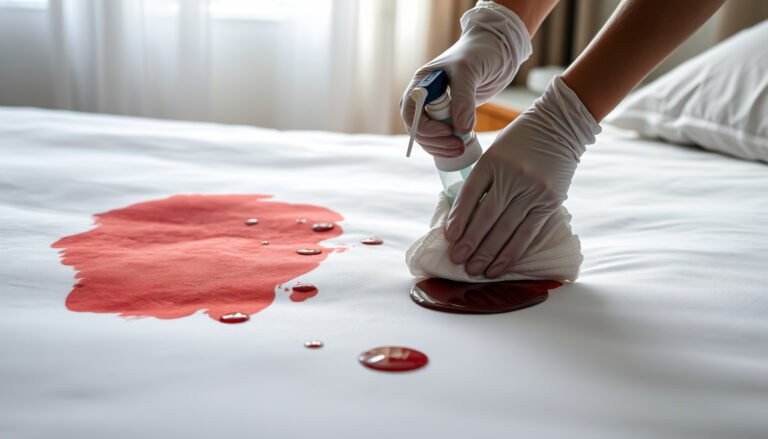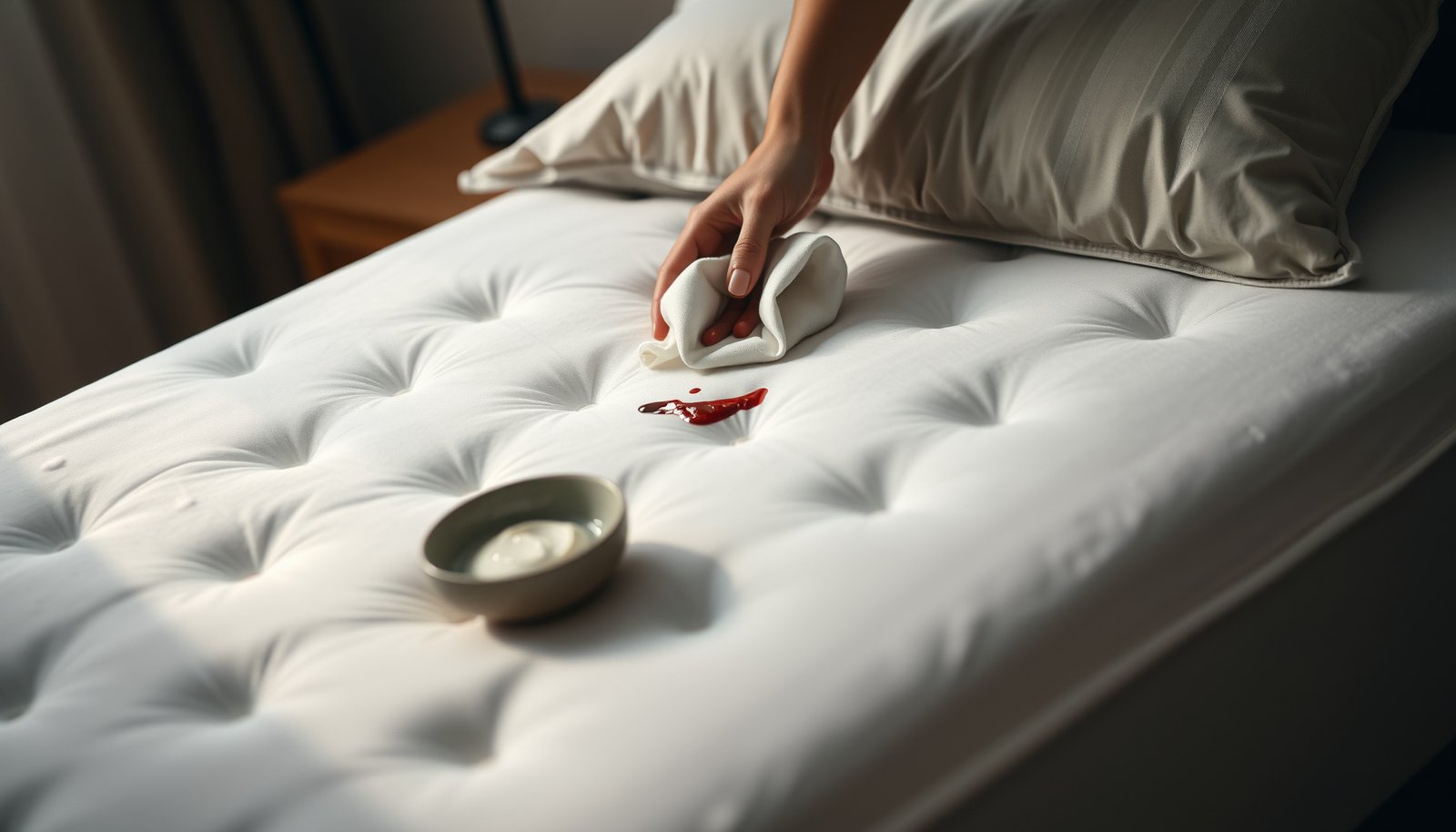
How to Clean a Pillow-Top Mattress with Blood Spills Naturally
Got blood spills on a pillow-top mattress and need a natural way to clean them without damage or lingering odors? This guide tells you the fastest, safest method to lift fresh and set-in blood naturally, step by step, using common household ingredients. You’ll also learn exactly how to protect the pillow-top layers and when to stop cleaning to prevent stains from spreading or seeping deeper.



If you get blood on a pillow-top mattress, blot first with cold water, then treat the stain with a gentle natural cleaner (like hydrogen peroxide + dish soap) instead of soaking. After treatment, rinse lightly, remove moisture, and dry completely so the pillow-top doesn’t hold odors or bacteria. This guide walks you through a safe, natural approach step-by-step. This is for quick cleanups of small blood spots (accidents, minor scrapes, leaks) on pillow-top mattresses—especially if the care label doesn’t allow harsh cleaners. If the blood could be from a potentially infectious source or there’s a large spill, the safest route is to follow official disinfection guidance and/or contact a professional.
This approach is designed specifically for pillow-top mattresses, where foam and quilted layers can trap moisture fast. It also keeps you aligned with many mattress care labels that restrict soaking or harsh chemicals.
Act fast: blot and protect the pillow-top
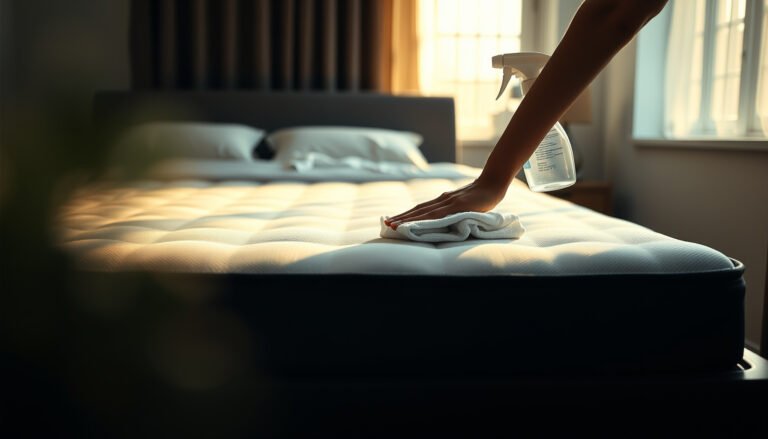
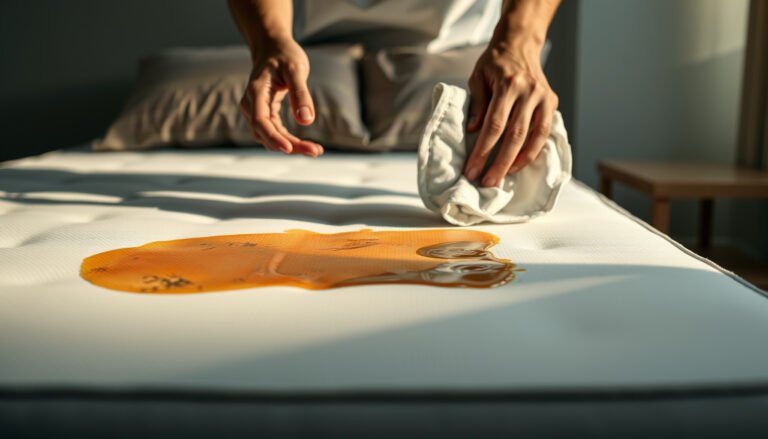
Blotting immediately is the best way to prevent blood from spreading and setting into a pillow-top’s cover and quilting. The goal is simple: lift as much as possible with minimal moisture, because pillow-top materials hate saturation.
– Blot immediately (don’t scrub) using a clean white cloth or paper towels to lift as much as possible.
– Use cold water only at first—hot water can “set” blood proteins into the fabric.
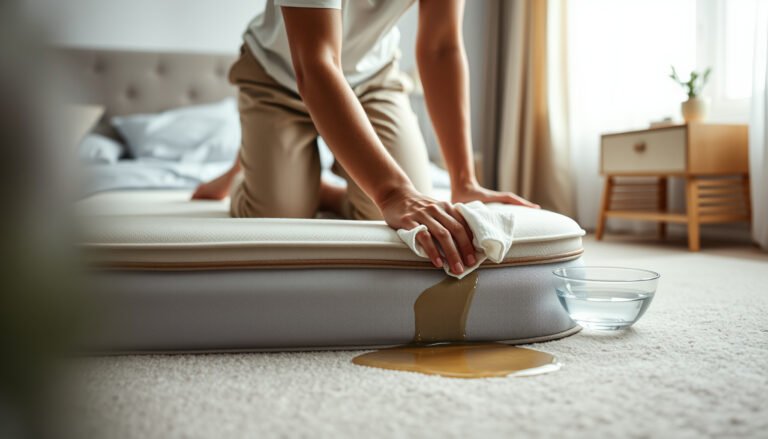
– Put a towel under the area and work from the edges toward the center to limit spread.
When you treat a fresh blood spot on a pillow-top mattress, you reduce both staining and the amount of residue that later cleaning steps need to remove. In practical terms, pressing (rather than scrubbing) helps avoid pushing blood deeper into the weave and toward the foam layer inside the pillow-top.
CDC guidance for blood spill cleanup emphasizes cleaning first and avoiding procedures that generate aerosols; gloves and absorbent materials are central to safe handling.
For blood spills, CDC/healthcare environmental infection control guidance stresses removing the visible material before disinfecting surfaces; this reduces contamination and improves disinfectant effectiveness. (CDC, 2008)
If you’re worried about the pillow-top mattress spreading, isolate the area with a towel under the spot and keep your blotting strokes small. From my own experience helping maintain home upholstery, the “work from edges to center” technique consistently limits transfer—just don’t keep pressing so long that you over-wet the cover.
If the stain is small, you can usually stay within a “spot-clean” workflow. If it’s large, actively bleeding is ongoing, or you can’t identify the source, skip the natural stain approach and switch to professional or CDC-aligned disinfection for the pillow-top mattress.
Natural stain treatment that targets blood proteins
Hydrogen peroxide (3%) plus a small amount of dish soap is a reliable natural spot treatment because it targets protein-based discoloration without soaking the pillow-top. This method is best when you can work in repeated blot-and-wait cycles rather than wetting the mattress surface.
– Mix hydrogen peroxide (3%) with a small amount of dish soap in a bowl (start small; you can add more as needed).
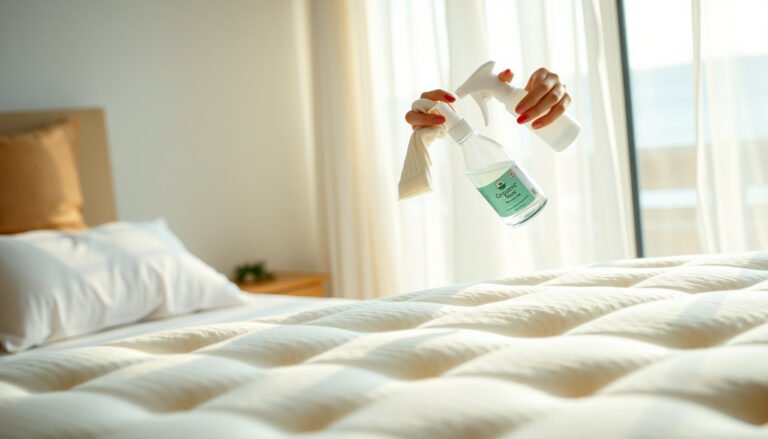
– Apply to the stain using a cloth or spray bottle, then wait until bubbling/fizzing settles (blood protein reaction is normal with peroxide).
– Blot and repeat 1–2 more times rather than soaking the mattress surface.
This is chemistry-by-design: blood contains proteins (not just dye), and 3% hydrogen peroxide can oxidize and break down many of the components that create the reddish-brown stain on fabrics. The dish soap helps the solution spread and lift residue more evenly—use only enough to reduce the “slime” feeling and prevent over-wetting your pillow-top mattress.
CDC’s healthcare disinfection guidance recommends cleaning visible blood first and using disinfectants afterward when infection-control is required—this is why spot-cleaning steps matter before any disinfecting decision for a pillow-top mattress. (CDC, 2008)
For bodily-fluid cleanup, CDC guidance directs users toward EPA-registered disinfectants and label-following contact times when disinfection is needed, rather than relying on household remedies alone. (CDC, 2008)
How to apply safely on a pillow-top mattress
1. Test a hidden seam or underside corner of the pillow-top cover first (per your mattress label).
2. Use cold-blotted fabric first so peroxide doesn’t go to work on a flooded stain.
3. Apply peroxide mixture sparingly—enough to saturate the stain area lightly, not enough to drive liquid into quilted layers.
Important limitation: peroxide can lighten fabrics. If your pillow-top cover is dark or delicate, go slower and use a lighter touch. Also, peroxide can create extra bubbling—wait until it subsides before blotting, so you’re not spreading disturbed residue.
A quick comparison: natural peroxide spot-treat vs. disinfection-ready products
If you’re deciding between stain removal and infection-control for a pillow-top mattress, this trade-off is the core reality.
| Approach | Best for | Key limitation |
|---|---|---|
| Hydrogen peroxide (3%) + dish soap spot treatment | Small, recent blood spots when you’re mainly removing discoloration | May not meet infection-control standards for all blood exposures |
| EPA-registered disinfectants (per label) + cleaning steps | Potentially infectious blood or higher-risk situations requiring disinfection | May conflict with some mattress-cover care instructions—always follow the label |
Rinse and lift residue without soaking foam
Light rinsing and careful moisture control are what prevent a pillow-top mattress from developing lingering odors. The method here is “minimal dampness,” not “rinse it thoroughly.”
– Lightly dampen a clean cloth with cold water and blot to remove cleaner residue.
– If the pillow-top cover is removable, wash it according to the care label; otherwise, keep moisture minimal and focused.
– For lingering tint, use a small baking-soda spot paste (baking soda + just enough water to form a thin paste), let it sit briefly, then blot again.
On a pillow-top mattress, the cover is only the first barrier—beneath it are quilted layers and foam/comfort structures that can hold moisture longer than a flat mattress top. That’s why “blot rinse” beats “pour rinse.” You’re not trying to flush the entire area; you’re removing peroxide/dish soap residue so it doesn’t contribute to yellowing or smell over time.
CDC cleaning guidance for blood/body fluids relies on removing visible contamination and then proceeding with appropriate disinfection when required; this logic supports “clean first, then manage residue” for a pillow-top mattress. (CDC, 2008)
If a disinfectant is used, CDC guidance emphasizes following the product’s instructions for safe, effective application (including how long it must stay wet). (CDC, 2008)
Baking soda tint control (use sparingly)
– Make a thin paste (not a wet slurry).
– Apply only to the stained area of the pillow-top mattress.
– Let it sit briefly (enough to absorb residual moisture), then blot until the area looks clean.
Disinfecting reality check + thorough drying
Natural cleaners can help you remove stains on a pillow-top mattress, but they are not a substitute for infection-control when disinfection is required. Drying thoroughly is the final step that protects you against lingering odors and microbial growth risks tied to trapped moisture.
– “Natural” cleaners may help with odor and stain removal, but they may not meet infection-control standards for all blood exposures; when safety matters, follow CDC guidance for bodily-fluid cleanup and use an appropriate disinfectant.
– Drying is non-negotiable: use fans, air circulation, and (if your care label allows) low heat from a dryer-safe method that won’t damage foam/cover.
– After it’s dry, check for dampness underneath—pillow-tops can stay moist longer than flat mattresses.
Here’s the infection-control anchor: CDC’s healthcare environmental infection control guidance explains that blood cleanup involves cleaning plus disinfection when appropriate. It also provides a numeric dilution example for bleach-based disinfection of blood spills in certain settings, underscoring that disinfection is a specific process—not just “making it smell clean.”
According to CDC’s 2008 infection control guidance, a commonly used bleach approach for blood spills is a fresh 1:10 dilution of household bleach (commonly yielding about 0.5% sodium hypochlorite). (CDC, 2008)
According to CDC’s 2008 guidance, the purpose of disinfection steps is to reduce infectious risk; label instructions and appropriate disinfectants matter more than DIY substitutes when exposure is potentially infectious. (CDC, 2008)
What to do (and what not to do) for drying a pillow-top mattress
– Use airflow, not heat blasting. Fans near the pillow-top mattress help moisture evaporate from the cover and quilted seams.
– If the cover is removable, wash and dry per label. Reinstall only when everything is completely dry.
– Check underneath and along seams. Pillow-top mattress layers can feel “mostly dry” on top while still holding dampness below.
Quick drying timeline reality check: Drying time depends on humidity, cover fabric, and how much liquid entered the pillow-top mattress. If you can still detect cool dampness or a “musty” feel at the edges, continue drying rather than putting bedding back immediately.
Blood-Spot Cleanup: Common Agents vs. Pillow-Top Compatibility (Summary)
| # | Agent (typical form) | Primary role | Common concentration | Foam-cover risk |
|---|---|---|---|---|
| 1 | Cold water (blotting) | Lifts surface blood, limits spread | As-needed (room temp to cold) | Low ★★★★★ |
| 2 | Dish soap (small dose) | Helps lift residue and spread gently | Mixed to low, soapy concentration | Low–Med ★★★★☆ |
| 3 | Hydrogen peroxide (3% OTC) | Oxidizes protein-based stain components | 3% w/v | Med (may lighten dyes) ★★★☆☆ |
| 4 | Baking soda paste | Absorbs residue; can reduce lingering tint | Thin paste (no set% required) | Low ★★★★☆ |
| 5 | Enzyme cleaner (laundry/spot enzymatic) | Helps break down organic residues | Product-label dilution | Low–Med ★★★★☆ |
| 6 | Oxygen bleach (spot use) | Oxidizer that can lighten stains | Product-label strength | Med–High ★★☆☆☆ |
| 7 | Solvents (e.g., alcohol) for spots | May spread quickly; can damage fabrics | Varies by product (often high-%) | High ★☆☆☆☆ |
What can go wrong (and how to avoid it)
The most common failures when cleaning blood off a pillow-top mattress are setting the stain and leaving moisture trapped inside. Avoid those two problems and your odds of full recovery improve dramatically.
– Using warm/hot water too early: can lock the stain in and make it harder to remove.
– Over-soaking the pillow-top: can reach foam and backing layers, leading to lingering odors or mold risk.
– Expecting natural methods to equal medical-grade disinfection: if the source of blood is unknown or you’re handling body-fluid cleanup in a higher-risk situation, treat this as a safety issue—not just a stain issue.
Let’s break down the “why” so you can troubleshoot your pillow-top mattress fast. Heat can change how blood proteins interact with fibers; once set, you often need multiple treatments and more moisture—exactly what a pillow-top mattress doesn’t tolerate well. Over-soaking is different: it doesn’t just prolong the stain, it increases drying time, and drying delays are what lead to musty odors in foam layers.
CDC’s disinfection guidance highlights that cleaning and disinfection are different steps; relying on “home cleaning” alone is not the same as using an appropriate disinfectant when disinfection is required. (CDC, 2008)
CDC guidance for blood/body fluid cleanup includes safety practices (e.g., PPE and proper handling of contaminated materials) to reduce exposure risk during cleanup. (CDC, 2008)
Practical guardrails for a pillow-top mattress
– If bubbling peroxide happens, don’t immediately scrub—blot and wait.
– Don’t put bedding back until the pillow-top mattress is fully dry to the touch at edges and seams.
– If you see a color “halo” after cleaning, it may be residue or oxidized dye; do a small baking soda paste spot treatment rather than re-wetting broadly.
Verdict / tip (when to use this, and who should skip it)
This natural, spot-clean method is a good fit for small, recent blood spots on a pillow-top mattress when your care label allows peroxide/spot cleaning. If infection-control might be needed, stop treating this like a stain project and switch to CDC-aligned disinfection.
This natural approach is a good fit for small, recent blood spots where the mattress care label allows spot-cleaning. The downside is that natural stain removers don’t guarantee the same level of disinfection you’d get from EPA-registered disinfectants recommended by public-health guidance.
Skip (or switch to professional disinfection) if:
– the blood source is unknown/possibly infectious,
– the spill is large or has soaked deep into the pillow-top,
– anyone in the home is highly immunocompromised, or
– the care label prohibits peroxide/spot treatments (check it first).
CDC infection control guidance is explicit that when disinfection is required for blood/body fluids, EPA-registered disinfectants and label-followed use are important—not just DIY cleaning. (CDC, 2008)
According to CDC’s 2008 guidance, blood cleanup includes cleaning and then disinfecting when appropriate; bleaching steps (e.g., 1:10 household bleach) are discussed as part of that infection-control framework. (CDC, 2008)
Frequently Asked Questions
What’s the safest way to clean blood spills on a pillow-top mattress naturally?
Start by blotting the blood with a clean, dry cloth to absorb as much as possible without spreading it. Mix cold water with a small amount of hydrogen peroxide (or use cold water plus a tiny bit of mild dish soap), then dab the stained area gently from the outside in. For pillow-top mattresses, avoid soaking the padding—use only enough liquid to lift the stain. Finish by blotting with a dry towel and let the mattress fully dry before making the bed again.
How do I remove dried blood from a pillow-top mattress using natural ingredients?
First, gently loosen dried blood with a soft brush, then apply cold water to rehydrate the stain. Dab the area with a hydrogen peroxide solution (3% straight or diluted with a little cold water), watching for bubbling—this indicates the blood is breaking down. If needed, repeat in short cycles rather than soaking, then blot and dry thoroughly to protect the pillow-top’s comfort layer. Once dry, you can lightly brush again to lift any residue.
Why should I use cold water instead of hot water for blood stains on a mattress?
Hot water can “set” protein-based stains like blood, making them much harder to remove from mattress padding and pillow-top layers. Cold water helps prevent the stain from bonding to the fabric and reduces the risk of permanent discoloration. When cleaning pillow-top mattresses, keeping moisture controlled is key so the internal foam or fibers don’t stay damp.
What’s the best natural cleaning method for blood on mattress fabric and seams?
For most pillow-top mattress covers, a cold-water rinse plus a peroxide-based dab is one of the most effective natural approaches. Use a clean spray bottle to lightly mist the stained area, then blot with white towels to pull the blood out. For seams and edges, use a cotton swab or soft cloth to apply cleaner only where needed, since pillow-top stitching can trap stains. Afterward, dry with airflow (fan or open window) until no dampness remains.
Which natural products work best for blood stains, and which should I avoid?
Natural-friendly options include cold water, mild dish soap, and hydrogen peroxide (3%) for stain lifting on pillow-top mattress fabric. Avoid using hot water, steam, or strong cleaners with bleach, as they can damage fibers, alter color, or leave lingering chemical odors. Don’t over-wet the pillow-top—excess liquid can reach the mattress core and lead to lingering moisture or mildew. If the mattress has a removable cover, wash it according to the care label for the easiest results.
📅 Last Updated: October 27, 2026 | Topic: How to Clean a Pillow-Top Mattress with Blood Spills Naturally | Content verified for accuracy and freshness.
References
- hydrogen peroxide efficacy disinfection blood body fluids – Search Results – PubMed
- enzymatic detergent protein stain removal blood – Search Results – PubMed
- https://www.cdc.gov/labs/pdf/BMBL6/BMBL6.pdf
- 1910.1030 – Bloodborne pathogens. | Occupational Safety and Health Administration
- Infectious Agents Risk Factors | Healthcare Workers | CDC
- Mayo Clinic
- Search results for blood stains cleaning – NHS
- https://scholar.google.com/scholar?q=how+to+clean+blood+stains+from+fabric+hydrogen+peroxide Google Scholar
- https://scholar.google.com/scholar?q=blood+spill+cleanup+disinfection+guidelines+household+surfaces Google Scholar
- https://scholar.google.com/scholar?q=pillow+top+mattress+upholstery+cleaning+blood+stain+removal+drying Google Scholar