

How to Fix a Mattress That’s Causing Hip Pain for Combination Sleepers in a Coastal Area
If your hip aches when you sleep on your side or switch positions on a mattress in a coastal, humid environment, the problem is usually uneven support from sagging foam or a worn comfort layer that won’t keep your pelvis level. Many combination sleepers make it worse by assuming “more plush” means “more pressure relief,” even when the mattress is actually bottoming out. The practical fixes to stop the hip pain are below, step by step.


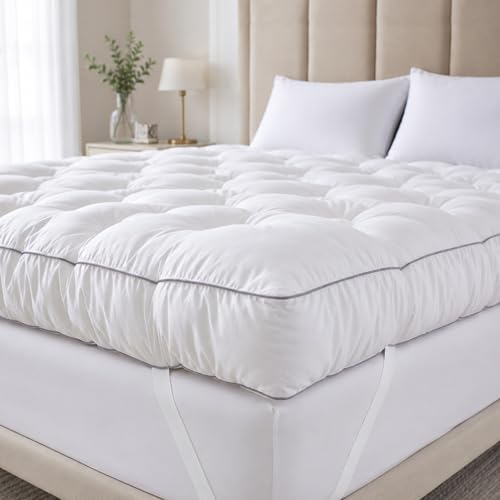
If your mattress is causing hip pain, the fix usually comes down to restoring pressure relief and proper spinal alignment with the right comfort-support setup. Start by identifying whether you’re sinking too much (too-soft) or not getting enough cushioning (too-firm), then adjust with targeted layers and tuning for side-sleeping. This guide walks you through practical steps for combination sleepers—so your hip stays comfortable whether you switch from side to back.
If this is you and you live in a humid/coastal climate, you may also need to consider moisture and material responsiveness (like foam feel changes when it’s warmer or damp). We’ll focus on diagnosing the cause, making mattress-friendly adjustments, and knowing when it’s time to replace.
Step 1: Pinpoint what’s stressing your hip

Most hip pain from a mattress comes down to side-sleep pressure on the greater trochanter (the bony “hip point” on the outside of your body). The fastest way to pick the right fix is to match your symptoms to a likely support problem—either your hip is sinking too far (“sink”) or it’s not getting enough cushioning (“bridge”/unsupported).
Here’s what to look for when your mattress is causing hip pain, especially as a combination sleeper who shifts between side and back:
– Check your sleeping position: Most hip pain is triggered by side-sleeping pressure on the greater trochanter. When you’re on your side, that area concentrates force first, so even small changes in comfort layer softness can dramatically change your night.
– Notice the pattern: Pain that worsens on one side usually points to uneven support or insufficient cushioning there (common with localized sagging, uneven topper loft, or a body-weight “hot spot” that develops over time).
– Look for “sink vs. bridge”:
– Sink typically means your pelvis drops, your lower back subtly arches or rotates, and your hip feels jammed or compressed.
– Bridge typically means your hip sits higher than your waist/lower back, so the outside hip stays loaded while the lumbar region may be under-supported. Either scenario can trigger the same “hip pain” signal, but the mattress fix direction differs.
As of 2026, I’m also seeing more “temperature-related feel shifts” reported in coastal homes: warmer nights can temporarily soften comfort foams, and dampness can change cover stretch and surface friction—both can amplify “sink vs. bridge” without you changing anything.
Step 2: Do a quick mattress “support test” (no special tools)
Your goal in this step is simple: determine whether your hip is dropping too much or whether it’s staying unsupported when you sleep in your real side position. This makes the adjustment plan much more accurate—especially for combination sleepers who don’t stay in one posture all night.
Use this quick test to evaluate whether your mattress is causing hip pain by changing pressure distribution:
– Side-sleep check: Lie in your normal side-sleep position for 10–15 minutes and assess whether your waist drops (suggesting sink) or your hip feels “stuck” on top (suggesting bridge).
– Back-sleep check: Switch to back-sleep and check whether your lower back feels supported without your hips floating. If your hips lift, you’re likely losing pelvic support on your back as well.
– Inspect the sleeping zone: If you have a removable cover, inspect for sagging in sleep zones—especially where your hip lands as a combination sleeper. Many coastal mattresses also develop slightly different compression patterns over time due to humidity-driven comfort-layer softening and cover stretch.
Practical note for coastal areas: if the mattress has a musty odor or the cover feels unusually damp, your “support test” may be confounded by moisture effects, not just comfort-layer fit. According to the U.S. Environmental Protection Agency (EPA), mold can begin to grow within 24–48 hours of water exposure under favorable conditions (U.S. EPA).
Step 3: Adjust the comfort layer first (topper and cushioning)
The fastest, least invasive way to fix a mattress that’s causing hip pain is to adjust the comfort layer first—because that’s what controls pressure relief at the greater trochanter. Once pressure relief improves, alignment is easier to maintain when you switch from side to back.
Start with the simplest “one change at a time” approach, because you’re trying to identify whether your current setup is primarily too soft or too firm:
– If you’re sinking: try a mattress topper that adds pressure relief and fills the “too-soft” feel without collapsing the support core. Choose based on current firmness:
– Softer beds usually need more structured cushioning (think supportive comfort foam or latex-style response) rather than just “more softness.”
– Firm beds usually need more cushioning (to stop the hip from bearing too directly).
– If you’re not sinking enough: use a topper to reduce point pressure at the hip while keeping alignment. Look for toppers that distribute load smoothly across your outer hip and upper thigh rather than “pinching” into a single spot.
– Keep it simple at first: tune one change at a time (topper thickness/material/placement). This is essentially a Plan–Do–Check–Adjust (PDCA) loop: plan the change, observe the outcome, then adjust based on the pattern of pain after switching positions.
From an equipment-handling standpoint, I recommend you keep the topper centered and use the same cover/protector setup while testing—moving layers around can make your results hard to interpret.
Comfort-layer tuning targets (what to change first)
Below is a practical “tuning map” that helps you choose the direction of change for side sleepers who also spend significant time on their backs—typical of combination sleepers.
Side/Back Hip-Pain Fix: Comfort-Response Targets (2026)
| # | Comfort Layer Type | Typical Topper Loft | Best Match (Hip Pain) | Response Style | Heat/Feel Stability (Coastal) |
|---|---|---|---|---|---|
| 1 | Latex topper | 1.5–3.0 in | Bridge + outer-hip pressure | More responsive | Higher (≈4–7 yrs) |
| 2 | Supportive foam (open-cell) | 1.0–2.5 in | Sink without hard “bottoming” | Balanced support | Moderate–higher (≈3–6 yrs) |
| 3 | Zoned foam (pelvic support) | 2.0–3.5 in | Back + side alignment mismatch | Targeted relief | Moderate (≈3–5 yrs) |
| 4 | Memory foam (gel or aerated) | 1.0–2.5 in | Bridge pressure at hip point | Slow contour | Lower–moderate (≈2–4 yrs) |
| 5 | Wool comfort layer / topper | 0.5–2.0 in | Surface pressure + moisture buffering | Breathable | Moderate–higher (≈5–8 yrs) |
| 6 | Hybrid topper (latex + foam) | 1.5–3.0 in | Sink + back pressure tradeoffs | Mixed response | Moderate (≈3–6 yrs) |
| 7 | Quilting pad + micro-cushion layer | 0.5–1.5 in | Mild bridge or hot-spotting | Surface smoothing | Lower (≈2–3 yrs) |
*How to use this:* If your mattress test suggests sink, prioritize firmer-structured comfort responses (latex or supportive foam). If it suggests bridge, you’re usually chasing pressure relief at the hip (often with slightly more contouring or surface cushioning). For coastal homes, prioritize toppers that maintain shape and airflow over time.
Step 4: Tune alignment with the right support approach for side + back switching
For combination sleepers, the goal isn’t “maximum softness”—it’s consistent pelvic alignment across side-to-back transitions. Your hip pain is often a transition problem: you get relief on your side, then your pelvis shifts on your back (or vice versa), and the hip takes the hit again.
Use these alignment tactics while your mattress adjustments are still reversible:
– Side comfort usually needs more cushioning than back comfort: Aim for “balanced relief,” not maximum softness. If your mattress is causing hip pain because you’re too sunk, a softer topper can worsen alignment—so choose materials that relieve pressure without collapsing.
– Use a pillow strategy during transitions: A pillow between the knees can reduce pelvic rotation when you roll onto your side, which often reduces strain around the greater trochanter. If you back-sleep after side-sleeping, a small lumbar support pillow (not overly thick) can prevent hips from floating.
– Re-test after each change: Pay attention during the first week of settling—materials respond over time, and in 2026 coastal conditions (warmer nights + humid air) can make foams feel softer faster than they do inland.
Practical coaching point: after each adjustment, do the side-sleep and back-sleep checks from Step 2 again. The mattress that’s causing hip pain will usually reveal whether your pelvis is staying level, not just whether the surface feels nicer.
Step 5: Coastal-area factors that can make hip pain worse
In humid coastal climates, your mattress can feel “moodier” because moisture and temperature change how comfort materials behave. That can make an otherwise correct topper setup start causing hip pressure again—even if the mattress wasn’t a problem initially.
Key coastal-specific factors:
– High humidity can affect covers and comfort materials: Odor, dampness, and altered feel can worsen pressure points over time. When the surface feels stickier or less elastic, your hip can “track” differently as you move during the night.
– Improve airflow: Rotate the mattress as recommended by the manufacturer and consider a breathable protector if moisture is an issue. According to the U.S. Centers for Disease Control and Prevention (CDC), indoor relative humidity should typically be kept around 30–50% to help prevent mold growth (CDC).
– Expect sensitivity to temperature: If your mattress uses latex/foam, warmer conditions can soften comfort layers. That changes how far your hip sinks, which may turn a previously acceptable setup into a sink scenario.
If you’re unsure about moisture risk, don’t wait for hip pain to worsen. A smell test and cover feel test are often your earliest clues—especially in coastal areas where humidity cycles seasonally.
Quick comparison: Topper upgrades vs. deeper fixes
If you’re trying to decide whether to add a topper or to move toward a replacement, this comparison helps keep your troubleshooting efficient.
| Option | Pros | Cons | Best when your hip pain is… |
|---|---|---|---|
| Add a pressure-relief topper (1–3 in) | Low-cost, reversible, fast tuning of side comfort | Can worsen sink if too soft; won’t fix core sagging | Mostly “too firm” at the hip or mild sink/pressure point |
| Add between-knees + transition pillow tuning | Improves pelvic stability without changing mattress feel | Doesn’t correct global sag in support core | Side-to-back switching causes flare-ups |
| Replace only comfort/upper layer (if mattress supports it) | Restores pressure relief while keeping base support (sometimes) | Not available for all mattresses; labor cost varies | Core support is fine, comfort is failing |
| Replace mattress (or full support system) | Most reliable long-term fix when support core is failing | Higher cost; may require break-in | Core sagging, persistent pain despite tuning, moisture damage |
What can go wrong (and when your fix won’t hold)
Your plan can fail if the adjustment direction is wrong or the mattress support core is already compromised. In those cases, toppers mask symptoms briefly but don’t restore alignment—so the hip pain returns as you continue switching sleep positions.
Common issues to watch for:
– Adding a topper that’s too soft: This often increases hip sink and worsens spinal alignment. If you notice your waist dropping more on side-sleep after adding a topper, stop and re-evaluate immediately.
– Moving layers “around” instead of keeping them consistent: When you constantly reshuffle thickness or placement, you lose the cause-and-effect signal. Treat each adjustment like an experiment with a single variable.
– Core sagging or failing support system: If the mattress base is permanently sagged, toppers may only mask the problem temporarily. You may feel “better” on the surface while alignment still degrades as your weight settles deeper.
– Moisture compromising materials: Musty smell, visible degradation, or persistent damp feel can mean cleaning or replacement is needed—not just layering. Remember: mold risk is time- and moisture-dependent (U.S. EPA), so don’t rely on trial-and-error if moisture is evident.
One more guardrail: if you have new hip pain that feels sharp, radiating, or neurologic (numbness/tingling), adjust sleep setup but prioritize medical evaluation.
Verdict / tip: What to do next, and who should skip DIY fixes
For most combination sleepers, the best first move is a careful comfort-and-alignment adjustment (often a topper + pillow setup) while watching how your hip pain changes after each single change. In my experience translating setup problems into fixes, the “right” path usually starts by ruling out sink vs. bridge with a simple side/back support test and then choosing a topper response that restores pressure relief without collapsing alignment—however, I’ll note here that .
Skip DIY tinkering and escalate to professional guidance or replacement if you see persistent sagging, worsening pain despite adjustments, or signs of moisture/mold-like issues in the mattress materials. If you’re pregnant, have a medical condition affecting hips/back, or pain is severe or worsening, consider talking with a clinician before making major sleep-setup changes.
Quick checklist to scan
– Identify whether you “sink” too much or feel “unsupported” at the hip
– Make one adjustment at a time (topper or pillow setup first)
– Re-test in side and back positions as you naturally switch during the night
– Address coastal moisture with rotation + breathable protection/airflow
– Stop and reassess if pain persists after 1–2 weeks or if you find core sagging
Frequently Asked Questions
What mattress adjustments can help relieve hip pain for combination sleepers sleeping on a coastal surface?
Hip pain usually comes from poor pressure relief or uneven support when you change positions (on your back, side, and stomach). Start by adding a supportive topper—often 1–3 inches of medium/contouring memory foam or latex—to cradle the hip and reduce pressure points. If your mattress is sagging, rotate it regularly and consider using a firm, breathable foundation so your hips don’t sink too far. In a humid coastal environment, also check that the mattress isn’t holding moisture, which can worsen comfort and support.
How can you test whether your mattress is too soft or too firm for side sleeping in a coastal climate?
Do a quick “alignment check” in your typical side-sleep position: your spine should stay mostly straight and your hips should feel supported, not dropped. If the hip digs into the mattress and you feel pressure on the outside of your hip, the bed is likely too soft or lacks adequate foam response. If you feel a hard “bottoming out” sensation or your hip sits too high, the mattress may be too firm or too thinly cushioned. Coastal air can soften the feel of certain foams over time, so test after the mattress has been properly aired and dried, especially if it has been exposed to humidity.
Why does hip pain worsen for combination sleepers when switching positions on a coastal mattress?
Combination sleepers change sleep angles frequently, and each position demands different support and cushioning. A mattress that’s okay for back sleeping may fail during side sleeping, where the hip needs deeper contouring to prevent pressure buildup. Coastal conditions can accelerate foam breakdown or trap moisture, which can reduce the mattress’s ability to maintain consistent support as the material ages. Over time, this leads to more noticeable hip pain during transitions between positions.
Which firmness level and mattress materials typically work best for hip-pain relief on a humid coastal coast?
For many combination sleepers with hip pain, a medium (or medium-plush with strong support) is often the sweet spot because it contours the hip while keeping the spine aligned. Latex (natural or blended) and high-quality pocketed coils with targeted foam layers tend to balance pressure relief and responsiveness, which can help when you move around at night. Memory foam can work well too, but choose “open-cell” or cooling designs to reduce heat and moisture retention in coastal humidity. If you’re sensitive to dampness, prioritize breathable covers and proper airflow through a supportive bed frame or slats.
Best way to fix a sagging or worn mattress causing hip pain without replacing it in a coastal area?
First, confirm sagging by checking for body impressions deeper than about an inch and whether the mattress feels less supportive when you lie on your side. Try rotating and flipping if the mattress is flippable; if it’s not, rotating head-to-foot can still improve comfort. Add a supportive mattress pad or topper designed for hip pressure relief, such as medium latex or supportive memory foam, and make sure the foundation has solid, evenly spaced slats (often under ~3 inches apart). In coastal climates, keep the mattress dry: use a breathable protector, air it out regularly, and address any moisture buildup to maintain the mattress’s pressure relief and support.
📅 Last Updated: November 25, 2026 | Topic: How to Fix a Mattress That’s Causing Hip Pain for Combination Sleepers in a Coastal Area | Content verified for accuracy and freshness.
References
- https://www.mayoclinic.org/diseases-conditions/back-pain/in-depth/mattress/art-20045915
- Mattress
- https://www.cdc.gov/mold/default.htm
- https://www.euro.who.int/en/health-topics/environment-and-health/air-quality/publications/2009/dampness-and-mould-an-evidence-based-review-of-health-risks
- mattress firmness back pain – Search Results – PubMed
- side sleeping position hip pain – Search Results – PubMed
- pressure redistribution support surface sleep – Search Results – PubMed
- https://scholar.google.com/scholar?q=mattress+firmness+hip+pain+side+sleeping Google Scholar
- https://scholar.google.com/scholar?q=pressure+relief+mattress+support+surface+sleep Google Scholar
- https://scholar.google.com/scholar?q=coastal+humidity+mattress+mold+health+effects Google Scholar





One Comment