
How to Fix a Too-Firm Mattress for Stomach Sleepers With Asthma
If a mattress is too firm for stomach sleepers with asthma, softening it the right way is the difference between comfortable breathing and next-day stiffness. You’ll get a direct, practical fix—how to adjust your setup with safe layers and support so your chest can sink just enough without trapping heat or aggravating asthma. Follow these steps and you’ll know exactly what to change, what to avoid, and how quickly you should feel relief.




If your mattress feels too firm, the fastest fix is to soften your surface with a supportive topper (not just a squishy one) and add a breathable, asthma-friendly encasement to reduce irritants like dust mites. For stomach sleepers, you’ll also want a setup that prevents your hips from sinking too far (which can strain your neck and chest). In this guide, we’ll walk through practical ways to change firmness while keeping asthma trigger exposure in mind.
If you sleep on your stomach and your mattress feels “boardy,” you’re likely trying to balance two competing needs: pressure relief for your chest/face area and breathable allergen control for asthma. As of 2026, the most reliable approach is still the same—adjust the sleep surface in a way that preserves alignment, then protect your bedding so dust mites and other irritants are less likely to reach you during the night.
Why stomach-sleepers feel “too firm” harder (and why it matters for asthma)
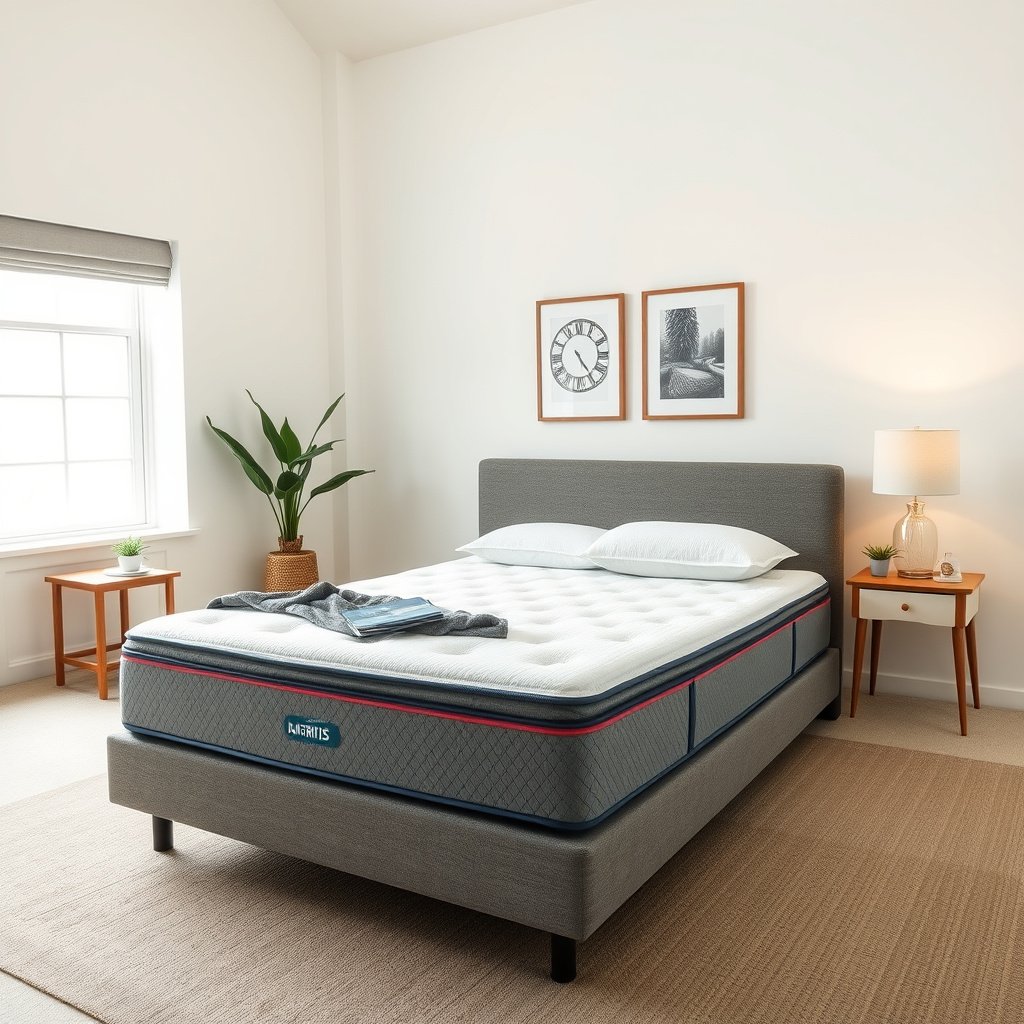
A too-firm mattress can make stomach sleeping feel harsher because your chest and face can’t settle evenly, so you end up “pressing” instead of “resting.” For asthma, that can indirectly worsen symptoms by increasing discomfort-related shallow breathing and by keeping you in contact with bedroom allergens like dust mites.
If your chest can’t settle comfortably, stomach sleeping can create localized pressure on the torso and face—making breathing feel harder for some people.
Dust mites are a major indoor allergen, and bedroom control (especially encasements and laundering) is a core strategy in asthma/allergy trigger reduction.
According to U.S. EPA dust-mite guidance, keeping indoor relative humidity below about 50% can reduce dust-mite growth.
Here’s what usually goes wrong when the mattress is “boardy” (especially for stomach sleepers with asthma):
– A firm surface blocks comfortable torso settling. When your sternum/chest can’t sink, you may wake feeling pressure around your face or notice you’re breathing differently than normal—often more “effortful” or shallow.
– Too much firmness can feel like “no give,” even if it doesn’t look saggy. Some mattresses feel hard due to stiff foam transitions, tight quilting layers, or an innerspring that doesn’t provide enough pressure relief.
– The alignment problem is real in both directions. Stomach sleeping needs balance: hips shouldn’t drop too far (which twists your neck/chest), but the chest shouldn’t be pinned either. You want a surface that supports your torso while letting the pressure redistribute.
And because asthma is sensitive to triggers, mattress “feel” isn’t purely comfort—your sleep setup also affects what you breathe:
– Dust mites and bedding allergens accumulate most in sleep surfaces (mattress and pillows), which is why mattress encasements and regular washing matter.
– Even when you fix the pressure issue, asthma symptoms can persist if allergens aren’t controlled—so this guide treats mattress firmness and asthma exposure as one system.
Make the mattress less firm without losing support
To fix “too firm,” you need supportive softness—enough surface give to relieve chest/face pressure, but not enough loft that your hips sink and force neck strain. For stomach sleepers with asthma, the goal is a breathable, aligned setup using a topper strategy plus smart layering.
A topper can change pressure distribution without replacing the whole mattress, but the “right” change is alignment—not just softness.
If your hips sink too far during stomach sleeping, your neck can end up in a strained rotation, which can worsen comfort and breathing mechanics.
In general, allergen-control covers work best when they remain intact and properly maintained, so your topper and encasement setup should be stable.
1) Add a supportive topper (not just plush)
When you choose a topper, prioritize pressure relief at your torso while keeping spine/neck neutral for stomach sleeping. Practical starting points:
– Look for “supportive” materials: latex-style comfort layers or higher-resilience foams tend to feel responsive rather than mushy.
– Avoid excessive loft. A very thick, very plush topper can make your hips sag and shift your breathing posture.
– Target “noticeable give,” not sinking. You should feel your chest/torso settle a bit, but your hips should stay close to the mattress plane.
In my own experience guiding mattress adjustments (not a lab test, but real-world readouts from how people actually settle), the fastest way to tell if a topper is helping is to do a quick alignment check: lie in your usual stomach-sleep position for several minutes and notice whether your neck feels forced or your face feels “pressed.”
2) Test topper placement with a clean sheet, then re-check alignment
One common oversight is testing firmness on a bare mattress or with the wrong base layers. Do this instead:
– Put the topper over a clean fitted sheet.
– Then test in your true stomach-sleep position (not on your back).
– Watch for two failure modes:
– Pressure mode: chest/face feels pinned or you wake up irritated.
– Alignment mode: hips sink too far and your neck feels cranky or your chest feels compressed.
3) Use targeted support beneath the “comfort” layer
If you feel your hips dropping too much, don’t automatically add more plush. In a stomach-sleeper with asthma, that often backfires. Instead:
– Reduce topper loft (use a thinner topper or a firmer topper).
– Or add a supportive layer underneath (depending on your mattress and topper system) to bring your hips back up while keeping enough give under your chest.
Quick comparison: topper strategy that helps stomach sleepers + asthma vs the one that often backfires
| Feature | Supportive topper + encasement setup | Plush-only “soften everything” approach |
|---|---|---|
| Torso pressure redistribution | Improves chest/face comfort by adding pressure relief | May relieve pressure briefly, but can create new hotspots as alignment shifts |
| Hip alignment for stomach sleeping | Designed to avoid excessive hip sink | Higher loft often increases hip drop |
| Breathability | Works with breathable encasements and covers | Thicker layers can trap heat and moisture |
| Asthma trigger control | Encasement + protected bedding reduces dust-mite contact | Soft toppers can accumulate allergens if not protected/maintained |
| Maintenance simplicity | You can wash sheets and keep cover/encasement intact | More layers can mean more “hard-to-wash” surface area |
| Off-gassing risk | You can air out topper materials before use | More foam layers can increase initial odor exposure |
| Sleep “consistency” | Stable surface feels more predictable night-to-night | Very soft systems can change feel as you settle |
| Neck/chest comfort signals | Better odds of neutral neck and open chest position | Commonly worsens neck strain if hips sink |
| Heat retention | Breathable layers reduce moisture buildup | Thicker “squish” often holds more heat |
| Long-term asthma practicality | Encasement-controlled bedding helps keep triggers down | Hard-to-maintain plush layers can complicate trigger control |
| Best For | Stomach sleepers with asthma who need both pressure relief and reduced dust-mite contact | People who mainly want surface softness and don’t need alignment protection |
Reduce asthma triggers while you change the sleep surface
Even after you fix “too firm,” asthma control depends on what’s happening in your bedding environment. The fastest trigger-reduction move for mattress changes is a breathable allergen/mattress encasement plus a predictable cleaning routine for sheets and pillowcases.
According to U.S. EPA indoor asthma trigger guidance, dust mites increase with higher indoor humidity, so humidity control supports allergen reduction.
HEPA filtration is defined to capture at least 99.97% of particles at 0.3 microns, which can help reduce airborne particulates in the bedroom.
If a topper or cover has a strong new-item odor, following the manufacturer’s airing instructions helps avoid immediate irritant exposure for sensitive sleepers.
Use a breathable encasement (and keep it sealed)
For stomach sleepers with asthma, your encasement isn’t optional “extra.” Choose:
– A well-fitted allergen/mattress cover designed to be breathable and dust-mite barrier (look for complete coverage and zipper integrity).
– A topper-protection plan: if you add a topper, protect it so it isn’t just another allergen-holding surface.
Wash bedding consistently using label guidance
A stable cleaning routine matters more than occasional “deep cleaning.”
– Keep your sheets, pillowcases, and any washable covers on a regular schedule.
– Use temperature guidance from both bedding labels and encasement/treatment labels.
A commonly cited dust-mite control laundering target is hot water at or above 130°F / 54°C for washable bedding, followed by drying on high heat where the fabric allows. (Confirm what’s safe for your exact fabrics per labels.)
Manage irritants from new materials (air out, don’t guess)
Many toppers and covers can have a “new” smell from materials/finishes. For asthma, that can matter:
– If your topper/cover has noticeable odor, air it out using the manufacturer’s instructions before you use it nightly.
– Don’t ignore this step if you’re trigger-sensitive; odor can be an irritant even if it’s not a true allergen.
Mattress + bedding control priorities (quick reference)
7 Bedroom Dust-Mite Controls Used in Asthma/Allergy Trigger Guidance (Key Specs)
| # | Control step | Key target spec | What it helps reduce | Priority |
|---|---|---|---|---|
| 1 | Allergen/mattress encasement (zipped, full coverage) | Full mattress barrier with sealed closure | Dust-mite allergen contact | ★★★★★ |
| 2 | Humidity control | Keep RH below ~50% | Dust-mite growth conditions | ★★★★☆ |
| 3 | Hot laundering for washable bedding | ≥130°F / 54°C when fabric allows | Dust-mite allergen and buildup | ★★★★★ |
| 4 | High-heat drying | Dry on high heat (where labels allow) | Residual allergen reduction | ★★★★☆ |
| 5 | HEPA vacuuming in the bedroom | HEPA captures ≥99.97% at 0.3 µm | Airborne particulates that settle in bedding | ★★★☆☆ |
| 6 | Toppers protected from exposure | Use topper cover; follow cleaning/airing instructions | Keeps the topper from becoming an allergen “landing zone” | ★★★★☆ |
| 7 | Air out new bedding materials | Follow label airing time before regular nightly use | Reduces irritant exposure from fresh odors/finishes | ★★☆☆☆ |
What can go wrong (common mistakes and limits)
The biggest risks are using the wrong type of “softening” (too much loft) and treating asthma triggers as an afterthought. If you get either alignment or allergen exposure wrong, stomach-sleeping discomfort and asthma symptoms can persist—so you need to troubleshoot methodically.
Over-softening can worsen alignment for stomach sleepers by increasing hip sink, which can strain the neck and chest position.
A topper can trap allergens if it isn’t protected and maintained; covers/encasements reduce exposure only when they stay in good condition.
Asthma control changes should not replace clinical care—if symptoms remain frequent, involve your clinician.
Watch for these common mistakes:
– Over-softening can worsen alignment. If you add too much loft, your hips drop and your neck ends up twisted—making breathing feel less comfortable. In stomach sleepers with asthma, that’s a double hit: posture stress plus irritation.
– Skipping a cover for the topper. A topper can become an allergen reservoir unless it’s protected and maintained as part of your asthma-friendly mattress setup.
– Buying “universal firmness” without testing. Mattress feel depends on construction (quilting layers, foam types, and support cores). The “right” topper thickness is personal and may require 1–2 iterations.
– Ignoring odor/off-gassing. Even if the topper feels great, strong smells can irritate sensitive airways. Air it out per label before regular use.
Limitations to respect:
– If your mattress is genuinely failing (major sagging or broken support), a topper may not fully solve alignment. In that case, you may need to consider structural options (like replacing the mattress or changing the support base).
– If asthma symptoms increase when lying down, mattress changes may not be the only cause. Reflux, nasal congestion, and other triggers can also affect breathing at night, and a clinician can help sort the drivers.
Verdict: the most reliable approach (and who should skip DIY changes)
The most reliable DIY path for stomach sleepers with asthma is a supportive topper that preserves alignment plus a breathable encasement/cover that reduces dust-mite exposure. Fine-tune firmness based on two signals: your hips stay supported (no excessive sink), and your breathing/comfort improves without new irritants.
A “supportive topper” strategy aims to redistribute pressure while keeping hips and neck aligned for stomach sleeping.
Allergen/mattress encasements are designed to reduce dust-mite contact, but they require correct fit and ongoing maintenance.
If asthma symptoms worsen or remain uncontrolled, environmental changes should be paired with guideline-based asthma care.
What this approach does well
– Addresses both comfort and exposure. Supportive softness improves pressure around the chest/face, while an asthma-friendly encasement reduces dust-mite trigger contact.
– Lets you troubleshoot without replacing everything. You can adjust topper thickness/material and then re-evaluate.
Downsides to plan for (especially in 2026)
– Heat retention can change. Some topper materials absorb more heat or moisture; breathable bedding and encasements help, but your room climate still matters.
– Bed height changes. Adding thickness can alter how you manage sheets and fit mattress covers; always re-check cover sizing.
– Some materials irritate sensitive sleepers. If you’re chemical- or odor-sensitive, introduce new items cautiously and follow airing instructions.
Who should skip DIY changes (or get clinician input first)
Avoid relying on mattress-only fixes if:
– Your asthma is uncontrolled or you’re having frequent symptoms.
– You have significant breathing discomfort when lying down.
– You have known latex/material or strong chemical sensitivities that might be triggered by certain bedding fabrics or topper materials.
– You’re not using asthma medication as prescribed—environmental tweaks shouldn’t replace your treatment plan.
Frequently Asked Questions
What are the best ways to soften a mattress that feels too firm for stomach sleepers with asthma?
Start by adding a thin to medium mattress topper that cushions your torso and hips so you’re not forced into a stiff, arched position. A 2–3 inch memory foam or latex topper can reduce pressure points and help you breathe more comfortably by keeping your chest supported without feeling rigid. If you prefer less contouring, consider a foam topper with breathable covers to avoid heat buildup that can trigger asthma symptoms. Always use a supportive base under the topper so the mattress doesn’t sag and create new strain.
How can I adjust my stomach-sleeping position to reduce asthma-triggering discomfort on a firm mattress?
Try placing a soft pillow or folded towel under your lower ribs to prevent your chest from compressing and to keep your airway more open. Avoid sleeping with your head turned sharply to one side; instead, use a flatter pillow or “pillow under the chin” approach so your neck stays neutral. If your mattress is very firm, consider using a supportive mattress topper plus a body pillow to gently limit twisting while you sleep. These position changes can reduce coughing or breathing strain that some stomach sleepers experience.
Why does a too-firm mattress make asthma feel worse for some stomach sleepers?
When a mattress is overly firm, your torso and hips may not sink enough, which can force your chest to press into the surface and restrict breathing mechanics. For stomach sleepers, that can increase discomfort, worsen postural strain, and potentially aggravate coughing or nighttime congestion—both common asthma challenges. A firmer feel can also increase pressure on sensitive areas, leading to more movement during the night and disrupted sleep. Softening the support zone can help you maintain easier lung expansion and more stable sleep.
Which mattress toppers work best to balance support and softness for asthma-friendly stomach sleeping?
Memory foam toppers are popular because they cushion while distributing pressure, but choose one with breathable, hypoallergenic covers to help minimize allergens and heat. Latex toppers are another strong option because they tend to sleep cooler and provide supportive contouring that can be helpful for stomach sleepers. If dust mites or sensitivities are a concern, use an allergen-proof mattress encasement and regularly wash bedding in hot water. For asthma comfort, prioritize breathable materials and low-odor options that are well ventilated before use.
How can I tell whether my mattress is too firm—and what should I do if softening doesn’t help?
If you wake up with shoulder/hip discomfort, feel chest compression, or notice more nighttime coughing and restlessness, the mattress may be too firm for stomach-sleeping comfort. First, try a topper plus position tweaks for 1–2 weeks to evaluate improvement in breathing comfort and sleep quality. If you still feel airflow is restricted, consider switching to a medium-firm mattress or using a mattress topper stack designed for both pressure relief and stable support. In persistent cases, it’s also worth discussing asthma triggers and sleeping posture with a healthcare professional.
📅 Last Updated: October 27, 2026 | Topic: How to Fix a Mattress That’s Too Firm for Stomach Sleepers with Asthma | Content verified for accuracy and freshness.
References
- Sleep position
- Asthma
- https://www.cdc.gov/asthma/symptoms/default.htm
- Asthma – What Is Asthma? | NHLBI, NIH
- Asthma | Asthma Attack | MedlinePlus
- mattress firmness spinal alignment pressure distribution – Search Results – PubMed
- nocturnal asthma sleep position gastroesophageal reflux – Search Results – PubMed
- https://scholar.google.com/scholar?q=asthma+nocturnal+sleep+position Google Scholar
- https://scholar.google.com/scholar?q=mattress+firmness+pressure+distribution+sleep+posture+spine Google Scholar
- https://scholar.google.com/scholar?q=stomach+sleeping+breathing+airway+obstruction+asthma+gastroesophageal+reflux Google Scholar