

How to Protect Wool Mattress from Dust Mites in Small Apartment
If you’re trying to protect a wool mattress from dust mites in a small apartment, your best play is an airtight mattress encasement plus hot-laundry bedding. This combo blocks mite access and removes what’s already settled on covers—without requiring extra space. Follow the steps on cleaning frequency, temperature, and ventilation that matter most in tight rooms, and you’ll see a measurable drop in dust-mite exposure.




Protect your wool mattress from dust mites by using a fully zippered, dust-mite-proof encasement and keeping bedding clean on a regular schedule. In a small apartment, the goal is to limit dust buildup around your bed (where you spend the most time) and reduce the conditions dust mites love—especially dust + moisture near the sleep zone.
If you’re dealing with allergies or just want a practical routine in a tight space, this guide focuses on the steps that actually reduce exposure—without wrecking the wool.
Who this is for / when it applies

This is for anyone trying to reduce dust-mite exposure on a wool mattress in a small apartment—where dust circulates faster, laundry schedules can get crowded, and there’s less airflow space between bed and walls. The approach is also realistic if you want to protect wool fibers (not saturate or over-clean them) while still reducing allergens where you sleep most.
Use a fully zippered dust-mite-proof mattress encasement
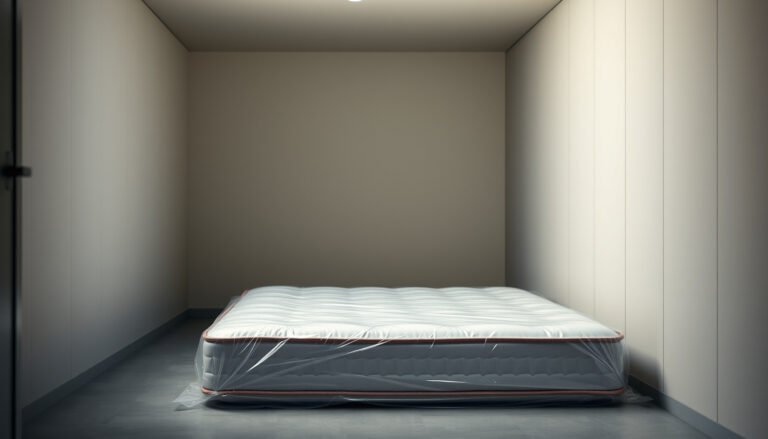
A fully zippered dust-mite-proof mattress encasement is the most direct barrier between dust mites/allergens and your wool mattress. Here, “fully zippered” and “sealed seams” matter because dust mites and allergen particles don’t politely stay on the mattress top—they migrate with dust and skin flakes and accumulate in the bed area over time.
Choose an encasement made to block dust mites (look for “dust-mite proof” / allergen-barrier fabric and fully sealed zipper seams). The key is allergen-barrier fabric designed to be impermeable to dust-mite allergen particles while remaining breathable enough to avoid excessive heat buildup. Also, prioritize encasements with sealed seams—stitch lines and unsealed zipper tracks are common weak points.
Make sure it covers the mattress completely, not just the top surface. For a wool mattress, even small gaps along the sides or corners can create “leak paths” where dust settles and where allergens can build up around your sleeping position.
If your mattress has a topper, consider encasing that too (or use a protective cover on top) so gaps don’t undermine the barrier. Toppers are often where people notice the “feel” of the mattress most, so protecting that layer is part of protecting your actual exposure.
A dust-mite-proof mattress encasement is designed to prevent dust-mite allergens from contacting the sleeper by covering the full mattress surface and sides.
Encasements work best when they are fully sealed (including seams and closures), because small openings can allow allergens to bypass the barrier.
If bedding is protected but the topper is left uncovered, allergens can still collect on the layer you touch most, reducing the overall benefit of the wool mattress encasement.
Quick comparison: encased vs. not encased (what changes)
| Approach | What it controls | Typical weak spot | Best fit |
|---|---|---|---|
| Fully zippered allergen-barrier encasement | Allergen contact on sides + top of the wool mattress | Improper fit, unsealed zipper/seams | Allergy-sensitive sleepers and small-space setups |
| Cover only the top surface | Some dust on top | Side leakage and corner gaps | Short-term experiments or very limited budgeting |
| No encasement | Relies on washing only | Allergen buildup inside fabric layers over time | If your wool mattress care label prohibits covers |
A note from real-world setup constraints
In a small apartment, the barrier only helps if you can keep it installed consistently and make the bed quickly.
Wash bedding and covers on a strict schedule
Washing bedding on a strict schedule reduces the dust-mite food source—skin flakes and dust that carry allergens—before they settle deep in a wool mattress cover. In a small apartment, “out of sight” often becomes “out of clean,” so regular laundering has to be simple enough that you’ll actually stick to it for months.
Wash sheets, pillowcases, and any removable covers regularly (follow fabric labels and use the hottest safe water for each item). Dust-mite control guidance commonly focuses on hot water and safe heat exposure; match your approach to the care label so you protect the wool mattress environment and avoid damaging textiles.
Use a routine that fits your space: fewer items you can wash consistently beats lots of bedding that sits unwashed. If you’re juggling a shared laundry room or limited storage, pick a repeatable cycle (for example, rotating a second set so you always have clean sheets ready).
Don’t forget pillows—dust mites live where skin cells and moisture collect most. Pillows are “high exposure” items because they trap heat and moisture against your face and hairline. Protect them with compatible pillow covers, wash them on a schedule per their care label, or encase them if the fabric type allows.
CDC-aligned dust-mite control guidance emphasizes regular laundering of bedding using hot water settings that are safe for the fabric, because dust mites and allergens are reduced when bedding is cleaned frequently.
Dust-mite allergens accumulate in bedding where skin cells collect, which is why pillows and pillowcases are repeatedly highlighted in allergy-management routines.
For allergens reduction strategies, the barrier + laundering combination typically performs better than cleaning alone, because an encasement limits re-exposure between wash cycles.
Practical schedule logic (small-space friendly)
If you only have one “set” of sheets, a strict schedule can break the moment you miss one laundry day. A small apartment often needs a system: keep a spare set of pillowcases (or a second fitted sheet) so you can maintain consistency even during busy weeks—without letting the wool mattress “re-seed” with dust.
Also note: a dust-mite-proof encasement may change how water beads or how fast sheets dry. Follow the encasement label so you don’t reduce breathability or damage the barrier over time.
Reduce dust where it collects in small apartments
Reduce dust at the source around the bed because even a great wool mattress encasement can’t stop everything if dust repeatedly settles onto nearby fabrics. In small rooms, airflow from fans, HVAC, and movement can stir dust back onto bedding surfaces after you clean.
Vacuum the bedroom area frequently, focusing on the floor around the bed and any nearby fabric surfaces (curtains, rugs, upholstered headboard). Use a vacuum with a HEPA filtration system so you don’t just move dust from one surface to another.
Minimize loose clutter near the mattress so dust has fewer places to settle. Items like paper stacks, soft baskets, and frequently moved bags create dust “landing zones.” If you can’t eliminate them, relocate them to a sealed cabinet or keep them off the bed perimeter.
If you use air fresheners or sprays, keep them away from the bed area—some products can add residues that attract dust. In tight spaces, residues can create tacky surfaces where dust clings, which undermines your dust-control work.
HEPA filtration is designed to capture very fine particles; many HEPA systems are rated to capture 99.97% of particles at 0.3 microns.
Dust control guidance for indoor allergens repeatedly emphasizes cleaning surfaces that collect dust near sleeping areas, because allergens can settle where people breathe and touch.
Pros/cons: vacuuming strategy choices (for the wool mattress zone)
| Vacuum approach | Pros | Cons |
|---|---|---|
| HEPA vacuum for bedroom + bed perimeter | Better particle capture; less dust re-circulation | More expensive models can be louder and heavier |
| Bagless vacuum with non-HEPA filtration | Convenient and often cheaper | May not filter fine allergen particles as effectively |
| Dry sweeping | Fast for large debris | Can aerosolize dust back into the air, especially in small rooms |
Control moisture levels (dust mites thrive in damp conditions)
Control moisture first because dust mites thrive when indoor humidity stays high, which accelerates allergen buildup around your wool mattress. Cleaning helps, but humidity management helps keep dust-mite-friendly conditions from returning between cleanings.
Keep indoor humidity lower than what dust mites prefer (commonly, people target under ~50% RH using a hygrometer). An inexpensive hygrometer makes this measurable rather than guesswork, which is especially useful in apartments where HVAC cycles can swing RH dramatically.
Ventilate when you can (especially after cooking, showering, or drying laundry). Even short ventilation bursts reduce moisture accumulation, and you’re less likely to end up in a damp “reset loop” where you clean, then moisture rebuilds dust-mite conditions.
In very humid climates or older buildings, a dehumidifier can be more effective than adding “more cleaning.” If your RH routinely stays above your target even when you’re diligent, treat moisture control as the main lever rather than trying to out-clean dust accumulation.
Dust mites are strongly influenced by humidity; reducing indoor relative humidity is a core nonchemical strategy for dust-mite allergen management.
Humidity targets are often discussed in the context of maintaining indoor RH below dust-mite-favorable levels (commonly around 50% RH in practical guidance).
According to , dust mites have higher survival and reproduction at higher relative humidity (exact thresholds vary by species and conditions) ().
Key numeric targets you can actually use in a wool mattress bedroom
Practical Benchmarks for Dust-Mite Control Around a Wool Mattress
| # | Control step | Numeric/spec target | Why it matters | Impact strength |
|---|---|---|---|---|
| 1 | HEPA vacuuming around bed | 99.97% @ 0.3 µm (HEPA rating) | Captures fine dust/allergen particles instead of recirculating them | ★★★★☆ |
| 2 | Hot laundering of bedding | ≥ 54°C / 130°F (hot wash guidance) | Hot water reduces mites in bedding and lowers allergen load | ★★★★☆ |
| 3 | High-heat drying of washed fabrics | Dry completely on the highest safe dryer setting | Heat and thorough drying help further reduce mite survival on textiles | ★★★☆☆ |
| 4 | Humidity control with hygrometer | Aim for < ~50% RH | Lower RH makes conditions less favorable for dust-mite persistence | ★★★★☆ |
| 5 | Fully sealed encasement installation | Full mattress + sealed zipper/seams | Reduces allergen contact with the wool mattress between wash cycles | ★★★★★ |
| 6 | Bed-zone decluttering | Keep soft textiles and stacks off the immediate bed perimeter | Reduces dust landing zones near the wool mattress | ★★★☆☆ |
| 7 | Understanding what you’re targeting | Dust mite size often ~0.2–0.3 mm | Explains why particles/allergens hitchhike on dust and bedding | ★☆☆☆☆ |
Vacuum and clean the wool carefully (don’t damage the mattress)
Vacuuming and careful surface cleaning help you remove dust accumulation on and around a wool mattress without triggering the moisture problems that can worsen dust-mite conditions. Wool is resilient, but it can trap particles in its fibers and it should not be soaked unless the manufacturer explicitly allows it.
Use gentle vacuuming rather than aggressive brushing; wool can trap particles in its fibers. A soft brush attachment and slow passes are usually enough to lift surface dust around seams and edges—areas where debris tends to collect.
Avoid soaking the wool unless the care label specifically allows it—water can lead to lingering dampness inside the mattress. Dampness is the opposite of what you want when you’re trying to suppress dust mites in the wool mattress environment.
If your wool mattress has a removable cover, wash the cover per label instructions and keep the mattress itself protected by the encasement. This keeps your cleaning focused on washable components while the mattress remains shielded behind the dust-mite-proof barrier.
Wool mattresses are typically cleaned based on their care label, and soaking or over-wetting can increase drying time and leave moisture inside the product.
Gentle vacuuming is recommended for many upholstered textiles because aggressive brushing can work debris deeper into fibers.
Small-apartment reality check
In tight rooms, you’re more likely to touch the wool mattress during routine cleaning. Keep your actions consistent: vacuum the surrounding floor and fabric zone, then make the bed with protected bedding, rather than repeatedly handling the wool mattress itself.
What can go wrong (and why it matters)
Failures usually come from inconsistent “coverage” (missed seams or uncovered topper layers), inconsistent “clean” (missed wash cycles), or uncontrolled humidity. Each mistake allows dust mites to re-establish conditions around the wool mattress—even if you did everything right once.
Skipping full enclosure: if the sides and seams aren’t sealed, dust mites and allergens can still get through the gaps. A partially covered mattress can feel cleaner, but allergens still migrate through the most overlooked edges.
Over-washing the wool: repeated moisture exposure can backfire by creating a damp environment or damaging the fiber (follow the care label). People often intensify wool cleaning when allergies flare—yet moisture management and encasement coverage are usually the smarter first response.
“Spot cleaning everything”: dust mites don’t respond well to random cleanup—consistent bedding washing + barrier coverage is the backbone. Spot cleaning can remove surface debris while leaving allergen sources deeper in bedding layers or the bed fabric zone.
Humidity ignored: cleaning alone can’t fully compensate if the room stays too humid. In 2026 apartment living, HVAC cycles and laundry drying habits can silently raise RH; if humidity stays high, dust mites keep conditions favorable.
In dust-mite management, humidity control and allergen avoidance strategies are both repeatedly recommended; one alone often isn’t sufficient for persistent symptoms.
Verdict / tip
A dust-mite-proof encasement plus a consistent bedding/cover wash routine is the most reliable approach for protecting a wool mattress in a small apartment. The downside is practical: encasements can feel warmer or slightly “slick,” and you still need regular laundering to keep exposure low.
Skip this approach (or get extra guidance) if your wool mattress care label prohibits covers/encasements, or if you can’t maintain the routine long enough for it to work—without that consistency, dust mites aren’t reliably reduced. Also, if symptoms are severe, pair these steps with advice from a qualified allergist or healthcare professional rather than relying on home cleaning alone.
Quick checklist (scan before you start)
| Task | Do this | Notes |
|---|---|---|
| Mattress barrier | Install a fully zippered dust-mite-proof encasement | Ensure seams are sealed |
| Bedding routine | Wash sheets/pillowcases regularly | Follow item care labels |
| Pillow coverage | Protect pillows similarly (or wash consistently) | “Bed area” includes pillows |
| Dust control | Vacuum around bed + nearby fabric | Focus on where dust settles |
| Humidity check | Use a hygrometer; aim lower humidity | Dust mites prefer more moisture |
| Wool care | Vacuum gently; avoid soaking unless allowed | Follow the mattress care label |
Sources
– U.S. Environmental Protection Agency (EPA) — dust mites / indoor allergens guidance:
– CDC (Centers for Disease Control and Prevention) — dust mites / allergies guidance:
– Mattress care label / manufacturer instructions for wool mattress cleaning:
Protecting a wool mattress from dust mites in a small apartment is less about one “magic” fix and more about closing the two biggest pathways: preventing allergen contact with a fully sealed barrier, and preventing dust-and-moisture conditions from rebuilding between cleanings. If you keep the encasement sealed, wash bedding consistently, manage humidity, and vacuum the bed zone with appropriate filtration, you’ll usually see meaningful symptom relief over time.
Frequently Asked Questions
What’s the best way to protect a wool mattress from dust mites in a small apartment?
Use an allergen-proof mattress encasement made for dust mite protection and keep it fully zipped over your wool mattress. Wash and dry all bedding regularly on hot settings (follow care labels) and vacuum frequently around the bed area to reduce mite food like dust. If space is tight, prioritize encasing, hot-wash bedding, and consistent cleaning since they deliver the biggest results with minimal effort.
How can I reduce dust mites around my wool mattress when I don’t have much space?
Set up a simple routine: encase the mattress, use a washable pillow and blanket cover, and launder bedding weekly or more often if you’re sensitive. Keep the room well-ventilated and use a dehumidifier if humidity is high, since dust mites thrive in moisture. For small apartments, consider using a HEPA-filter vacuum and quickly vacuuming the mattress seams (only if the encasement isn’t used or as part of care instructions).
Why do dust mites still appear even with a wool mattress?
Dust mites feed on tiny organic particles found in household dust, not on wool itself, so they can still accumulate on and around any mattress. Wool can be naturally breathable and temperature-regulating, but without protective covers and regular laundering, mites and allergens can build up. In small spaces, allergens can circulate more easily, making airflow and dust control especially important.
How often should I wash wool mattress covers and bedding to prevent dust mite buildup?
Wash sheets, pillowcases, and any removable bedding at least once a week in hot water if fabric care allows, and dry thoroughly on high heat. For wool mattress protectors or toppers, follow the manufacturer’s care instructions—some are machine-washable, while others require gentle washing or professional cleaning. Even with a mattress encasement, routine laundering of bedding reduces dust mites where they reproduce most frequently.
Which dust mite control products work best for a wool mattress in a compact bedroom?
Start with a certified allergen-proof mattress encasement and compatible pillow covers, since they create a physical barrier that helps prevent exposure to dust mite allergens. Add a HEPA vacuum for frequent cleaning and consider a dehumidifier or humidity monitor to keep indoor relative humidity lower. Use dust mite sprays cautiously and only if they’re safe for wool and compatible with your mattress protector, as some treatments may not be recommended for delicate or encased surfaces.
📅 Last Updated: October 27, 2026 | Topic: How to Protect a Wool Mattress from Dust Mites in a Small Apartment | Content verified for accuracy and freshness.
References
- https://www.cdc.gov/parasites/dustmites/index.html
- The page you’re looking for isn’t available | NIAID: National Institute of Allergy and Infectious…
- Long QT syndrome – Symptoms and causes – Mayo Clinic
- House dust mite
- wool fabric dust mites – Search Results – PubMed
- house dust mite mattress encasement allergen reduction – Search Results – PubMed
- dust mite control humidity HEPA vacuum bedding washing – Search Results – PubMed
- https://scholar.google.com/scholar?q=protecting+wool+mattress+from+dust+mites Google Scholar
- https://scholar.google.com/scholar?q=dust+mite+mattress+encasement+allergen+reduction+washing Google Scholar
- https://scholar.google.com/scholar?q=dust+mites+prevention+humidity+HEPA+vacuum+small+apartment Google Scholar

One Comment