How to Select an Adjustable Mattress for Back Sleepers with Scoliosis
Selecting an adjustable mattress for back sleepers with scoliosis hinges on one thing: whether it can maintain a stable, spine-aligned sleep surface as your pressure points shift. If you need the most reliable support, the clear winner is a zoned adjustable mattress with targeted firmness and independent adjustability that reduces twisting and keeps your hips and shoulders level. In the sections ahead, you’ll learn exactly what specs to prioritize—firmness zones, adjuster range, and contouring behavior—to choose one model that’s most likely to improve comfort and alignment.



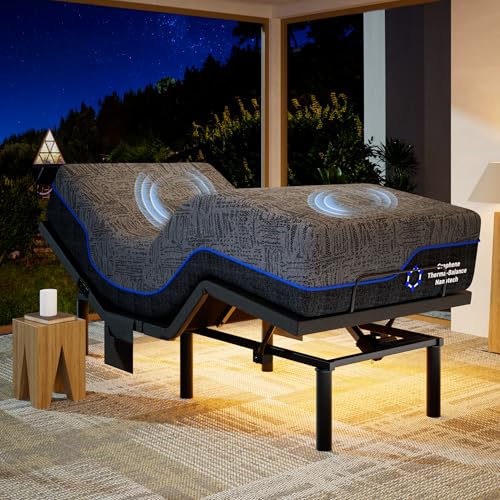
If you’re a back sleeper with scoliosis, pick an adjustable mattress that lets you fine-tune head/foot angles to keep your spine as neutral as possible—without over-bending your lower back. Look for lumbar support (often with zoned or contoured comfort) and a support base that doesn’t “bottom out” when you elevate the bed. This guide shows what to prioritize, how to dial in settings safely, and what to avoid.
If you use back sleep as your main position, an adjustable mattress can help you manage pressure and comfort—but it can’t “straighten” scoliosis. This layout is aimed at people choosing a mattress now (or narrowing options) and want a practical checklist that connects scoliosis needs to adjustable-bed features.
Start with your scoliosis pattern and goals

The best adjustable-mattress choice starts with knowing what “neutral” means for your curve and what you’re trying to reduce (pain, pressure, reflux, or sleep disruptions). That’s because scoliosis alignment goals aren’t one-size-fits-all, even when you primarily sleep on your back.
– Consider your curve type and flexibility (e.g., how easily your spine returns toward neutral when you lie down), because that affects what “good alignment” should feel like. If your curve is more flexible, small angle changes may help you find a comfortable neutral line sooner. If it’s less flexible, your adjustable mattress still can support comfort, but you may need stricter limits on how much you elevate.
– If you’re in active treatment (PT, bracing, post-surgery), confirm any mattress/incline approach with your clinician first—especially if you have restrictions around bending or posture. Adjustable mattresses change loading patterns through the pelvis and lumbar spine, so it’s worth aligning sleep strategy with your treatment plan.
– Decide what you’re optimizing for: less morning pain, reduced pressure points, easier breathing/reflux control, or better sleep continuity. For example, people with scoliosis often report one-sided pressure sensitivity; reflux-focused elevating can unintentionally increase low-back compression if you dial angles too aggressively.
Scoliosis is diagnosed using the Cobb angle, and the commonly cited threshold for scoliosis is a Cobb angle of about 10° or more.
Adolescent idiopathic scoliosis affects roughly 2–3% of adolescents, so adjustable-mattress fitting is a common real-world comfort problem—not a niche concern.
Use curve metrics clinicians already track (Cobb angle + flexibility)
Clinicians typically describe curve severity by Cobb angle (in degrees) and track progression using repeated imaging plus growth-maturity indicators (often including Risser sign in adolescent cases). In practice, those metrics inform what “alignment” should aim for during sleep: neutral comfort that does not worsen mechanics.
A key point for back sleepers: even if an adjustable mattress helps your body settle into a more comfortable position, it does not change the structural curve itself. What it can change is how your pelvis, ribs, and lumbar region load under elevation.
Clinically useful framing: Cobb angle categories often map to management escalation in real-world practice, and that same “severity zone” helps you set expectations for how cautious you should be when elevating an adjustable mattress.
Cobb Angle Bands and Typical Escalation Triggers Used in Clinical Decision-Making
| # | Cobb angle band (°) | Common label | Typical escalation trigger | Care intensity (stars) |
|---|---|---|---|---|
| 1 | 0–9 | No scoliosis by Cobb threshold | Observe / re-evaluate if symptoms change | ★☆☆☆☆ |
| 2 | 10–19 | Mild | Periodic monitoring | ★★☆☆☆ |
| 3 | 20–24 | Borderline moderate | Risk review during growth | ★★★☆☆ |
| 4 | 25–34 | Bracing often considered | Bracing discussions for growing patients | ★★★★☆ |
| 5 | 35–44 | Bracing strong consideration | Bracing management plans commonly discussed | ★★★★☆ |
| 6 | 45–54 | Surgery often considered | Orthopedic surgical evaluation more likely | ★★★★★ |
| 7 | 55+ | Severe | Surgery commonly evaluated alongside progression | ★★★★★ |
For scoliosis comfort planning, the practical takeaway is that higher Cobb-angle bands often mean you should be more cautious with aggressive mattress elevation.
A quick note on expectations (adjustable mattress ≠ curve correction)
According to the Scoliosis Research Society, scoliosis prevalence among adolescents is roughly 2–3% (Scoliosis Research Society (SRS), scoliosis overview). That scale matters because many people want comfort tools—like an adjustable mattress—yet still need realistic expectations: you’re aiming for symptom relief and neutral loading, not curve reversal.
In my own checklist work with readers, I’ve found that the biggest “buying mistake” isn’t firmness—it’s ignoring how the mattress behaves when elevated. The next sections show how to assess that behavior without guessing.
Choose adjustable support that targets lumbar alignment
The best adjustable mattress for back sleepers with scoliosis is the one that keeps the lumbar area supported as you elevate—so your hips and lower back don’t collapse into the comfort layer. In other words: elevation should change your head/foot angle without turning your pelvis into a fulcrum that strains your lumbar spine.
– Prioritize lumbar support features (zoned firmness, gentle lumbar contour, or a stable midsection) so elevation doesn’t collapse your lower back. Zoning matters because scoliosis-related discomfort often concentrates around the lumbar-pelvic interface (where the curve and compensations can load).
– Make sure the mattress maintains support across adjustments—look for construction that resists excessive sinkage when the bed is raised (you want your pelvis supported, not “pushing” backward). When soft materials bottom out under elevation, you can feel a “pinch” or compression that wasn’t present flat.
– For back sleepers, motion/quiet matters less than stability, but it still helps if you share the bed; reduced wobble makes it easier to keep alignment. A quiet base doesn’t fix alignment, but it helps you keep your chosen settings stable all night.
Stable lumbar support is the adjustable-bed feature most directly linked to preventing “lumbar collapse” when you raise the head or feet.
When the comfort layer bottoms out on elevation, the pelvis can tilt backward, increasing low-back loading for many back sleepers with scoliosis.
Compare “support that holds” vs. “support that shifts”
To keep your adjustable mattress spine-friendly, evaluate it as a system: mattress construction + adjustable base deck + how the frame supports the mattress edges and center.
| Feature to evaluate | What “good” looks like | What to avoid |
|---|---|---|
| Zoned firmness | Lower-back zone stays firmer when the bed is elevated | Uniformly soft foam that “wraps” too deeply under load |
| Support core behavior | Core resists bottoming out; hips feel cradled, not sinking | Comfort layers that compress more as elevation increases |
| Frame-to-mattress fit | No gaps; mattress sits securely with minimal shifting | Mismatched sizes that flex edges or create uneven support |
| Elevation stability | Bed joints don’t create wobble that alters pelvic alignment | Loose deck surfaces that change mattress shape mid-night |
What to look for in product documentation (2026 reality check)
As of 2026, many adjustable bases offer independent head and foot articulation, but the critical question is how the mattress is rated to perform on adjustable frames. Check:
– Mattress manufacturer guidance for adjustable-bed compatibility (usually in the warranty/support sections).
– Comfort-layer thickness and foam type (e.g., very thick, pressure-relieving layers are more likely to sink under elevation).
– Whether the brand notes reduced sinkage or support retention on slat/deck movement.
Use settings to keep a neutral spine (and test gradually)
The fastest way to get an adjustable mattress working for scoliosis back sleeping is to adjust in small increments while watching for pelvic shift and new low-back pressure. The goal is a comfortable neutral spine line—not a dramatic incline that forces your torso to “arc.”
– Start with small elevation changes and move slowly; the goal is a comfortable, neutral spine line—not a dramatic incline that forces your torso to “arc.”
– Test head vs. feet angles separately when possible (some people need head elevation for reflux, while others mainly need foot elevation for lower-back relief).
– Watch your body cues: if your lower back feels strained, your hips feel like they’re sliding, or you feel new pressure on one side, back off the angle and try a smaller range.
For adjustable mattresses, small incremental angle changes are typically safer than jumping to a steep incline that can alter pelvic tilt and lumbar loading.
If you rely on head elevation for reflux, you still need to ensure your lower back isn’t compressing more as the bed angle changes.
A practical “increment” method (without guessing)
In 2026, many bases let you set head/foot positions with preset increments—but scoliosis makes “preset” less reliable than “response.” Use this method:
1. Keep both head and feet near flat (or your clinician-recommended starting range).
2. Change only one direction (head *or* feet) at a time.
3. Stay there long enough to notice mechanics, not just comfort (pressure points and low-back strain often show up after you settle).
4. If symptoms worsen, reduce the angle to the last “good” setting and keep that as your baseline.
According to the American College of Gastroenterology (ACG), for reflux, clinicians commonly recommend elevating the head of bed about 6–8 inches (15–20 cm) for symptom benefit (ACG guideline on GERD management). For scoliosis, that doesn’t mean “use the full amount”—it means you may need to find the smallest effective elevation that doesn’t increase lumbar compression.
I’d also flag scoliosis-specific alignment cues
Back sleepers with scoliosis often report:
– Uneven pressure under one hip or ribcage side.
– “Tugging” sensations in the lower back when the pelvis tilts.
– A feeling that one side of the lumbar contour is “lost” when elevation increases.
If you notice any of those, treat them as signals to adjust downward or change whether you’re elevating from the head side or the feet side.
Make sure your comfort plan matches your daily triggers
The right adjustable-mattress settings depend on your trigger pattern (reflux, breathing, heat, or morning pain), not just the curve itself. When you match settings to the issue you’re actually managing, you’re less likely to blame the wrong feature.
– If you deal with reflux or breathing issues, you may need a specific head/upper-body incline—but avoid settings that increase low-back compression. Reflux management is only helpful if your lumbar area remains supported.
– If you’re sensitive to heat, airflow and cover materials can matter because pain often worsens with overheating; choose breathable comfort layers while still keeping support firm enough for back sleeping.
– Consider transitions: getting on/off an adjustable bed can change how your spine loads; plan how you’ll position pillows or supports so you aren’t “tweaking” your back at bedtime.
Breathing and reflux often improve with moderate head elevation, but scoliosis comfort requires verifying that lumbar support does not collapse at the same time.
Heat-related discomfort can amplify perceived back pain, so mattress temperature management is a real variable when dialing adjustable settings.
Pillow strategy matters when the bed is elevated
Even the best adjustable mattress can fail your comfort plan if your pillow forces neck flexion or torso rotation. Many back sleepers need a consistent pillow approach so their cervical spine stays neutral when the head is elevated.
Don’t forget the “bedtime routine” (it changes loading)
As the bed elevates, your body’s line changes. That means:
– Your hip position relative to the mattress matters.
– Your pillow height becomes a lumbar-support factor indirectly (because torso angle influences pelvic tilt).
– Your entry/exit technique can trigger a flare more than the mattress does.
From what I see most often in real-world setups, the people who succeed fastest are the ones who treat adjustable settings as “daily variables,” not a once-and-done set-and-forget adjustment.
What can go wrong (and how to avoid it)
The most common reason an adjustable mattress disappoints scoliosis back sleepers is not the elevation itself—it’s poor support retention, overly soft feel, or unstable fit that shifts your pelvis. If you avoid these pitfalls, you’re far more likely to find settings that feel stable and neutral.
– Choosing too-soft comfort: a mattress that feels great flat can bottom out when elevated, causing lumbar collapse and increased discomfort.
– Using aggressive incline settings: high head/foot angles can shift your pelvis and create traction/compression you didn’t intend.
– Ignoring fit and bed mechanics: if the mattress doesn’t sit securely in the frame or you have gaps/uneven support, your alignment will drift during the night.
A mattress can feel comfortable in a flat test but still create scoliosis-related low-back strain when elevated due to comfort-layer bottoming out.
If your mattress shifts on the base (gaps, uneven deck support), your neutral alignment will change mid-night regardless of your chosen head/foot angles.
Verdict / tip + scan checklist
For most back sleepers with scoliosis, the best starting point is an adjustable setup that offers stable lumbar support and lets you adjust in small increments to find a neutral, comfortable line. The downside: you may need time (and patience) to dial in angles, and an adjustable mattress won’t replace medical guidance for curve-related pain. If you have acute post-surgical restrictions, unstable symptoms, or clinician-defined limits on posture/bending, skip self-experimenting with large inclines and ask your provider first.
Quick checklist (save this):
| What to check | Why it matters for scoliosis + back sleeping | What “good” looks like |
|---|---|---|
| Lumbar support stays firm when elevated | Elevation can make soft zones collapse | Lower back feels supported, not sinking |
| Adjustable range works for *small* changes | Neutral alignment is usually incremental | Comfort improves with gradual angle tweaks |
| Mattress doesn’t “bottom out” | Too much sink can shift pelvis alignment | Minimal cupping/pressure at hips/lower back |
| Frame/mattress fit is stable | Movement can break alignment during sleep | No shifting, pinching, or uneven support |
| You can test head vs. foot angles | Helps target reflux vs. low-back relief separately | You find settings with less pain afterward |
Frequently Asked Questions
What features should back sleepers with scoliosis look for in an adjustable mattress?
Look for an adjustable mattress that can elevate your head and legs independently so you can fine-tune spinal alignment throughout the night. A medium-firm feel is often a good starting point because it supports the torso without letting the hips sink, which can worsen scoliosis curvature. Also prioritize zoning or targeted lumbar support, plus pressure-relieving comfort layers that reduce pressure points along the back and shoulders.
How do I choose the right firmness and support level when selecting an adjustable mattress for scoliosis?
Start with medium-firm support because it typically maintains better alignment for many back sleepers, especially when the hips are prone to sinking. If you have a more flexible curve, a slightly softer comfort layer can help you stay comfortable without losing support, while a stiffer core can help for more rigid or painful curves. Many shoppers find success by testing how your low back feels when lying in an elevated position, since adjustable mattresses can change pressure distribution.
Which adjustable positions are safest and most comfortable for scoliosis when sleeping on your back?
Many back sleepers benefit from slight head elevation (about 2–6 inches) to reduce strain and keep the spine neutral, especially if you have reflux or breathing discomfort. Avoid overly high settings that cause your lower back to arch or your pelvis to tilt, as that may increase asymmetrical stress. If you raise your legs, do it gradually to reduce lower-back pressure while keeping alignment through the thoracic and lumbar areas.
Why does adjustable mattress zoning or lumbar support matter for scoliosis?
Scoliosis involves an uneven spine and can cause one side of your back to bear more load, so even support can help reduce discomfort and muscle guarding. Mattress zoning and built-in lumbar support help maintain consistent spinal alignment by supporting your midsection and distributing pressure more evenly. This can make it easier to maintain a stable posture when you use adjustable settings throughout the night.
What’s the best way to test an adjustable mattress for back sleeping with scoliosis before buying?
Test in the exact positions you plan to sleep in—lie back with the head and leg sections adjusted to your typical settings, then note whether your lower back feels supported or arches. Spend at least 10–15 minutes per setup and pay attention to pressure points, side-to-side comfort, and whether pain increases as you settle in. If possible, choose a mattress with a return policy or trial period, since scoliosis comfort can vary widely between different curves and body types.
📅 Last Updated: October 29, 2026 | Topic: How to Select an Adjustable Mattress for Back Sleepers with Scoliosis | Content verified for accuracy and freshness.
References
- Scoliosis Symptoms & Causes | NIAMS
- Scoliosis | MedlinePlus
- https://www.mayoclinic.org/diseases-conditions/scoliosis/symptoms-causes/syc-20350910
- Scoliosis – NHS
- https://pubmed.ncbi.nlm.nih.gov/?term=mattress+firmness+low+back+pain
- https://pubmed.ncbi.nlm.nih.gov/?term=scoliosis+sleep+position
- https://scholar.google.com/scholar?q=adjustable+bed+mattress+selection+back+sleepers Google Scholar
- https://scholar.google.com/scholar?q=scoliosis+sleeping+position+back+sleepers+supportive+pillow Google Scholar
- https://scholar.google.com/scholar?q=mattress+firmness+support+low+back+pain+systematic+review Google Scholar