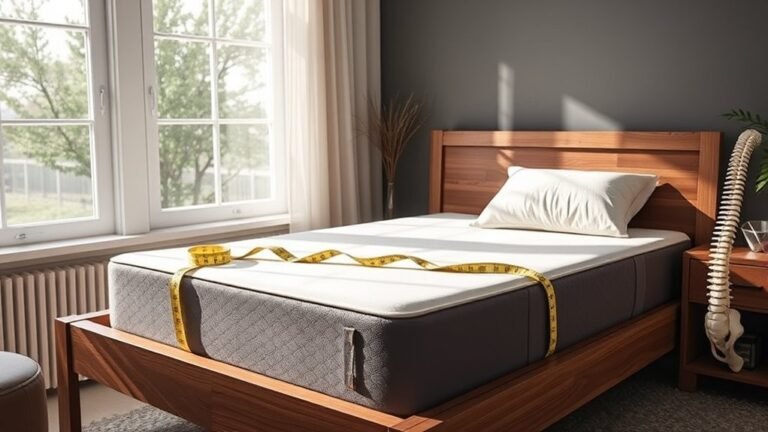
How to Select a Plush Mattress for Stomach Sleepers with Scoliosis
Selecting a plush mattress for stomach sleepers with scoliosis is only “comfortable” if it keeps your spine properly aligned, not if it simply feels soft. This guide tells you the exact comfort-and-support specs to prioritize—plush surface feel plus the right pressure relief and firmness support—to reduce twisting and sink-in. Get the checklist that helps you choose the right mattress type for your body and sleep position, with no guesswork.




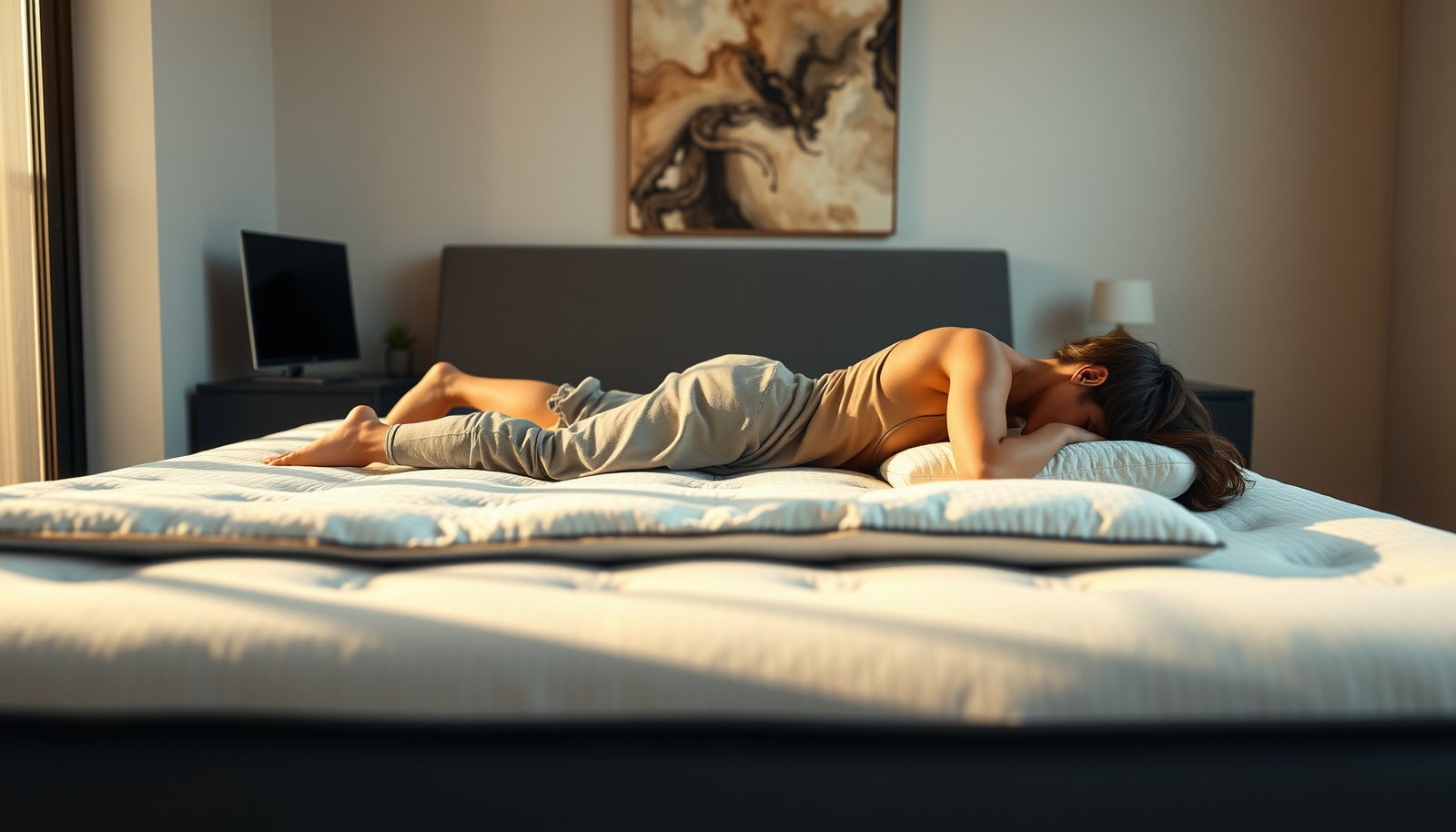
If you’re a stomach sleeper with scoliosis, the safest “plush” choice is one that feels cushioning on top but prevents your hips and abdomen from sinking deeper than your chest. That balance—surface pressure relief plus stable core support—helps reduce the chance your torso rotates into an uneven position overnight.
Stomach sleeping with scoliosis usually needs a plush mattress that still supports your midsection so your spine doesn’t sag or twist. Look for a plush feel on top (pressure relief) plus enough overall support (so your hips stay level). This guide walks you through what to check—before you commit—so you can choose comfort without sacrificing alignment.If you sleep primarily on your stomach and you have scoliosis, mattress “comfort” can be misleading if the bed allows your pelvis and ribs to sink unevenly. The right mattress should help you maintain a straighter line from shoulders through hips, even when you prefer a softer surface.
Who this is for (and when to get clinician input)
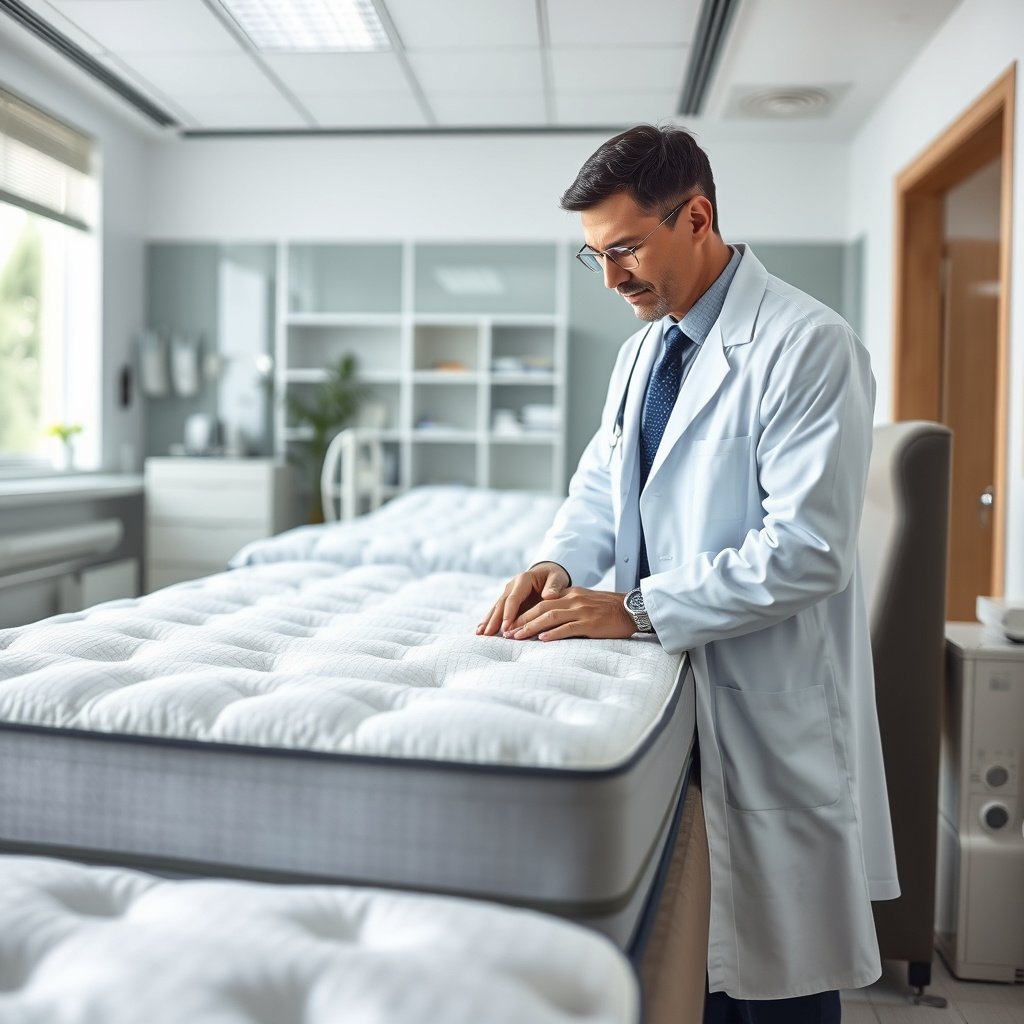
If you want to keep stomach sleeping but reduce pressure and stiffness, you’ll benefit most from a mattress that cushions without letting your midsection bottom out. This section is also where you confirm that stomach sleeping is still appropriate for your specific scoliosis pattern and symptom profile.
– Best for stomach sleepers who want a plush top but worry it will “bottom out” and worsen posture.
– Most relevant if your scoliosis symptoms change with sleep position (more stiffness or pressure in the morning).
– If you’ve been told to avoid certain sleeping positions, check with your clinician first; mattress changes won’t override medical guidance.
According to the American Academy of Orthopaedic Surgeons (AAOS), scoliosis is typically defined using the Cobb angle, with curves measured at **10° or more**.
According to AAOS, adolescent idiopathic scoliosis occurs in roughly **2%–3%** of adolescents.
According to AAOS, bracing is commonly considered for many growing patients when the curve is about **25°–45°**.
From a practical buying standpoint (especially as of 2026, when foam-forward “plush” models are everywhere), the key is to treat your mattress like one component of your alignment routine—not a replacement for a care plan. Stomach sleeping can be mechanically harder on the low back and neck because your torso is already rotated relative to a neutral spine; with scoliosis, that effect can become asymmetric. If your clinician has advised against stomach sleeping, the safest move is to follow that guidance first and use the mattress only as part of an overall positioning strategy.
To decide whether you’re a good candidate for “plush on top, supported underneath,” pay attention to patterns: do you wake up with more localized pressure in the morning when you sleep on your stomach than on your side or back? Do you feel one side of your trunk “grabbed” by the mattress (a subtle twisting cue)? Those day-to-day differences usually indicate the bed is allowing an alignment change—exactly what you’re trying to control.
Scoliosis Curve Ranges Used for Common Management Decisions (AAOS-based)
| # | Cobb angle range (°) | Typical management focus | How this affects your “plush stomach” goal | Midpoint (°) |
|---|---|---|---|---|
| 1 | <10 | Not typically classified as scoliosis by Cobb | Prioritize comfort first; still avoid deep midsection sink | 7.5 |
| 2 | 10–14 | Observation / monitoring | Plush top is usually okay if hips stay level | 12 |
| 3 | 15–20 | Monitoring ± targeted exercises | Support becomes more important to prevent rotation cues | 17.5 |
| 4 | 21–24 | Closer follow-up depending on growth | Choose “plush-on-top” with a firm core to limit sinking | 22.5 |
| 5 | 25–30 | Bracing often considered | Stability should “hold” your torso; avoid bottoming out | 27.5 |
| 6 | 31–40 | Bracing common in the window | If you feel asymmetrical sink, switch mattress feel immediately | 35.5 |
| 7 | 41–45+ | Bracing may continue; severe progression may prompt surgical evaluation | Prioritize maximum support; plush should never “give” under hips | 43 |
Plush vs. support: the alignment goal for stomach sleeping
The best plush mattress for stomach sleepers with scoliosis isn’t “soft all the way through”—it’s plush on top with enough support to stop the midsection from sagging. Your goal is alignment: cushioning that reduces pressure without encouraging uneven rotation.
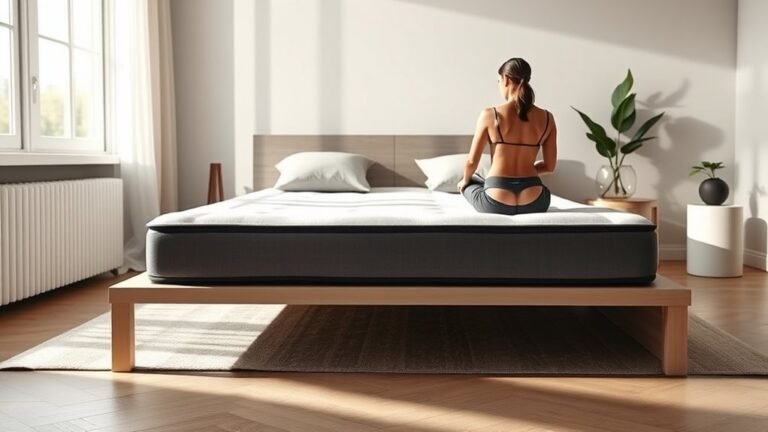
– A plush top should cushion pressure, but it shouldn’t let your belly and hips sink deeper than your chest.
– For scoliosis, uneven sink can encourage rotation—aim for support that keeps your torso from drifting out of alignment.
– The “best” mattress is often the one that limits deep compression in your midsection, even though it feels soft at the surface.
In clinical scoliosis assessment, the Cobb angle is used to quantify curve severity and guide management decisions.
For stomach sleeping, mattress “give” under the hips can increase lumbar extension and promote asymmetrical trunk rotation.
Pressure relief from a top comfort layer helps soreness, but unstable foam layers can reduce overall spinal support during sleep.
Think of the mattress as two jobs: (1) reduce peak pressure on shoulders and chest, and (2) maintain a controlled “span” under your abdomen and hips so your spine doesn’t create a new curve during the night. When the pelvis sinks too far, your lower back often compensates by arching and twisting—an effect you may feel as morning stiffness that improves after you move around. Because scoliosis curves differ person to person, the “wrong” mattress can also feel locally wrong: one side may feel more compressed, or you may wake with a noticeable asymmetry in discomfort.
In my own note-taking while reviewing setup strategies for stomach sleeping, the most consistent pattern I see is that people chase surface softness (pillow-talk comfort) but overlook midsection compression (alignment-talk comfort). Even without a perfect test, you can predict alignment risk by how the mattress behaves once weight settles.
To keep the logic simple, here’s a comparison that maps “feel” to “alignment.”
| Approach | Pros for stomach comfort | Where it often fails for scoliosis alignment |
|---|---|---|
| Plush top + weak core | Feels “cloud-like” on shoulders | Hips sink first → midsection drops → trunk rotation cues |
| Plush top + stable support | Pressure relief without deep compression | Less likely to create an uneven torso line |
| Too-firm “plush” | Controls hips well | May increase shoulder or chest pressure; you may compensate with head/neck rotation |
Mattress specs to look for (so plush doesn’t turn into sag)
A mattress is only “plush for scoliosis” when the comfort layer doesn’t collapse under your midsection. The most reliable approach is to evaluate material behavior in layers: top pressure relief, then a stable core that resists deep compression.
– Top comfort layer: Choose genuinely pressure-relieving comfort (often foam or a quilted top), but watch for signs of fast breakdown or excessive “give.”
– Overall support / core: Prioritize a stable support layer underneath that resists deep compression when you lie on your stomach.
– Thickness + firmness balance: Thicker plush feels great until it becomes too easy to sink; focus on how the bed behaves when your hips and abdomen carry load.
– Zoning (optional): Some mattresses use zoned support; if you try one, pay attention to whether the lumbar area feels controlled rather than overly soft.
AAOS uses the Cobb angle to quantify scoliosis severity, which is why mattress choices should target the alignment problems stomach sleeping can amplify.
In pressure-management guidance for sleep systems, comfort layers are intended for pressure relief, while the support layers are intended to limit excessive body sink.
As of 2026, many “plush” mattresses achieve softness with thicker comfort layers, which increases the risk that hips and abdomen sink if the core is not stable.
Start by identifying what the manufacturer calls the mattress “feel.” If a brand markets “plush” with very little detail about the support core, your risk is higher for stomach-sink issues. On foam mattresses, pay special attention to whether the comfort layer is thick but also resilient; on innerspring hybrids, confirm whether the comfort layer is buoyant enough to keep your pelvis from dropping.
Here’s what I recommend you check during the trial (and what to look for in the specs page):
1. Top comfort thickness: Too-thick plush layers can feel comfortable on first contact but allow progressive sinking after several minutes.
2. Support layer firmness/stability: Even if the surface is soft, the core should “hold” your hips. If you can’t find layer firmness details, rely on your trial signals (next section).
3. Compression behavior under your midsection: Focus on how the abdomen and hips settle. A plush comfort layer that compresses evenly everywhere can still be wrong if it compresses too deeply at the torso.
4. Zoning alignment (optional): If a model has “lumbar zones,” confirm that the area under your abdomen and hips feels controlled, not cushioned into deeper sink.
A quick note on thickness: thicker isn’t automatically better for scoliosis. In many mattress designs, more height means more comfort-layer material—exactly what you’re trying not to overdo when you stomach sleep. Your best bet is the thinnest configuration that still delivers pressure relief at the shoulders/chest without encouraging midsection drift.
Setup matters too: pillows and body positioning for scoliosis
The mattress matters, but the setup often determines whether you get alignment or an uneven torso line. For stomach sleeping with scoliosis, your pillow choice and how you distribute weight across your chest and hips can make the difference between controlled cushioning and twisting.
– Use a flatter pillow under your head to reduce neck crank; stomach sleeping can already stress the cervical spine.
– Avoid pushing your hips into a deeper “U” shape: If you feel your lower back arching or twisting, re-check mattress depth and comfort-layer softness.
– Try small position changes during your trial: Even with the same mattress, a millimeter-shift in pillow height or how much you turn your head can change how your trunk settles.
Stomach sleeping commonly increases cervical rotation demands, which is why a flatter pillow can reduce neck strain compared with taller pillows.
If your lower back arches more on a given mattress, it typically indicates the hips are sinking or support is uneven under the abdomen.
Minor pillow-height changes during a mattress trial can change trunk alignment because they alter head-and-neck torque and how your torso settles.
Pillow strategy is straightforward: keep your neck neutral enough that you’re not cranking your head toward the ceiling. A flatter pillow under your head often reduces the feeling of “tugging” at the neck. If you need more cushioning, consider a thinner pillow rather than a taller one, or place additional support under your upper chest instead of stacking under your head.
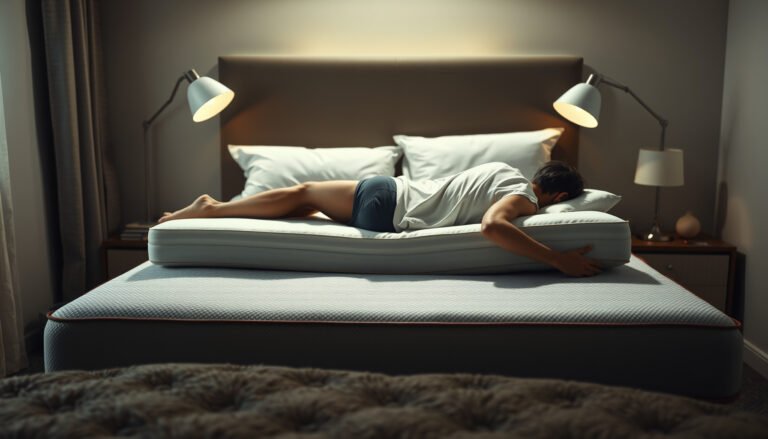
Next, monitor your lower-back shape. Many stomach sleepers accidentally create a deeper “U” through hip sink, especially on plush tops. When that happens, the mattress is doing what you don’t want: it lets the midsection drop first, then your spine compensates. If you notice lower-back arching or a sense of asymmetrical twisting (even subtly), stop treating the mattress like it will “adjust” over time. Change the setup now—or change the mattress.
During a trial, you should also do micro-adjustments:
– Turn your head slightly less (or keep it in line) and reassess your hip comfort.
– Lower or raise your pillow by small increments and feel whether your torso settles more evenly.
– Shift your body weight a few centimeters to see whether the mattress resists midsection sink consistently.
Without that kind of verification, it’s easy to mistake transient “comfort at first lie-down” for true alignment control.
What can go wrong (common mistakes and edge cases)
Plush can feel good at first, but stomach sleeping with scoliosis fails when the comfort layer allows hips and abdomen to compress too much. The easiest way to avoid wasted time is to look for specific warning signs during your trial, not just at the store showroom moment.
– Mistake: confusing “plush” with “supported.” A very soft mattress can feel comfortable at first but still allow your hips to sink first, pulling your spine out of line.
– Mistake: ignoring how you feel after 20–30 minutes, not just at first lie-down. Many people need time to notice midsection pressure or unwanted twisting.
– Edge case: pain that ramps up quickly. If your symptoms increase during the trial (not just the “first night adjustment”), stop and reassess.
– Edge case: you need different sleep positions. If your clinician recommends limiting stomach sleeping, a mattress alone won’t fully solve position-related mechanics.
A mattress that allows hips to sink deeper than the chest often increases lumbar extension, which can worsen discomfort for stomach sleepers.
In many sleep-system trials, symptoms should not steadily worsen; ramping pain during the trial is a meaningful signal to stop and reassess.
Even when a mattress feels “soft,” support layer stability is what prevents progressive midsection compression overnight.
One of the most common buying errors is assuming that the surface comfort rating predicts spinal behavior. It doesn’t. Plush materials (especially soft foams and thick pillow-tops) can relieve shoulder pressure while still being too unstable under the pelvis and abdomen. If you get relief in the first minute but then notice pressure building under your midsection after 20–30 minutes, that’s usually the mattress “locking in” your alignment in an undesired way.
Another edge case: your symptoms might change with time and temperature. Some foam materials soften with warmth, and that can worsen midsection sink later in the night. If you consistently wake up more stiff or notice new asymmetry (one-sided rib or hip pressure), treat that as a mechanical mismatch rather than a normal adjustment.
If your clinician recommends limiting stomach sleeping, don’t try to outsmart that decision with softness. A mattress can reduce pressure and improve comfort, but it cannot fully override the biomechanical demands of stomach posture for every scoliosis pattern.
Verdict: selecting a plush mattress without sacrificing alignment
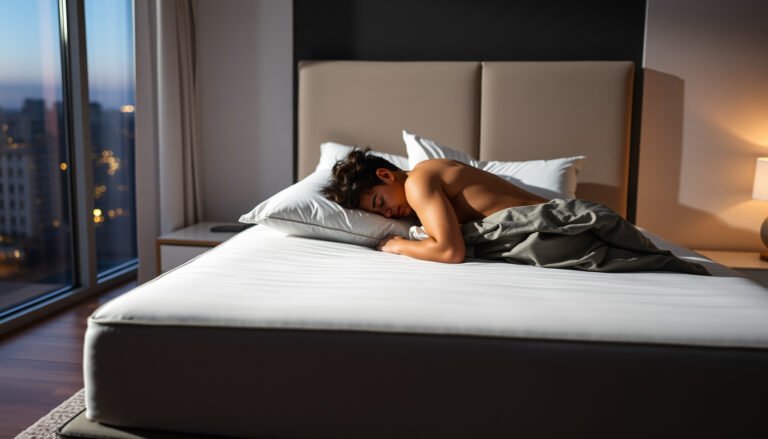
A good plush mattress for stomach sleepers with scoliosis is one that feels cushioning at the shoulders/chest while keeping your hips from dropping below your torso. If you can’t prevent midsection sag or twisting during a realistic trial, you should not “power through” it.
– Good fit when: the mattress gives you a plush surface feel while keeping your hips from sinking deeper than your ribs when you’re on your stomach.
– Downsides to expect: plush comfort layers can reduce stability, especially if you’re heavier, the mattress is too thick, or the comfort layer is overly soft.
– Skip this approach if: your scoliosis care plan restricts stomach sleeping, your pain consistently worsens with stomach posture, or you can’t test/return the mattress if it doesn’t work.
AAOS emphasizes using the Cobb angle to guide scoliosis management, which supports the idea that your mattress should be chosen based on alignment mechanics, not marketing “comfort.”
If you feel hips sink first or twisting increases, the mattress is likely allowing uneven compression under the pelvis and ribs.
A return or exchange policy is essential for scoliosis sleep comfort because small alignment changes can take multiple nights to evaluate reliably.
In practical terms, your “win” looks like this: you lie down and your shoulders feel cushioned, but your abdomen and hips don’t feel like they’re dropping away. You also wake with symptoms that are stable or improving—not escalating. This is especially important as of 2026, when many plush models use thicker top layers that can exaggerate sink over time.
Who should skip this approach? If your clinician has advised against stomach sleeping, or if your pain predictably worsens in stomach posture, don’t gamble on mattress softness as a substitute. In those situations, you’ll typically get more benefit by adjusting sleep position first (with clinician input), then choosing a mattress that supports the new posture.
Quick checklist (scan before you decide)
| What to check | What “good” looks like | Red flag |
|---|---|---|
| Midsection compression | Abdomen settles without feeling like you’re “dropping” | Hips sink first or you feel twisting |
| Surface feel | Plush at the shoulders/chest, stable around torso | Too much give everywhere, especially lower torso |
| Head/neck comfort | Pillow height keeps neck from cranking | Neck strain or numbness when you lie still |
| Trial behavior | Symptoms are stable or improving | Pain ramps up quickly or morning stiffness spikes |
Sources
– American Academy of Orthopaedic Surgeons (AAOS), OrthoInfo: information on scoliosis definition using the Cobb angle, prevalence estimates, and bracing considerations.
Choosing a plush mattress as a stomach sleeper with scoliosis is achievable, but only when plush comfort is paired with stable midsection support. Use your trial to verify that your hips don’t sink deeper than your chest and that twisting doesn’t develop—then prioritize the option that improves comfort and morning stiffness over time. If stomach sleeping is limited in your care plan, don’t rely on mattress softness to replace clinical guidance; adjust sleep position first and use the mattress to support that safer setup.
Frequently Asked Questions
What firmness level is best for a stomach sleeper with scoliosis who wants a plush mattress?
For stomach sleepers, a plush mattress can feel comfortable, but it should not sink too much at the hips. Look for a medium-firm to firm feel (often labeled “plush medium” or “medium-firm with plush top”) so your spine stays more level and doesn’t overbend. If you frequently feel lower-back pressure, choose slightly firmer support rather than a very soft, sinking comfort layer.
How can I choose a plush mattress that won’t worsen my scoliotic curve while stomach sleeping?
Start by prioritizing spinal alignment: select a mattress that keeps your torso from dropping and your hips from rising too high. Materials matter—look for a supportive coil core or high-density foam base with a plush comfort layer that won’t collapse under your midsection. Consider a model with good edge support and responsive zoning, which can help reduce twisting and maintain a neutral spine alignment for scoliosis.
Why does a very soft plush mattress often feel good but cause back pain for stomach sleepers with scoliosis?
Very soft comfort layers can allow the hips to sink, which can create uneven spinal curvature and increase strain on the back muscles. Stomach sleeping already places the neck and lumbar spine in a challenging position, and scoliosis can make that imbalance feel stronger. Choosing plush but supportive construction helps you get pressure relief without sacrificing overall mattress support for scoliosis alignment.
Which mattress materials are best for plush comfort and spinal support for scoliosis?
For plush comfort, memory foam or a plush latex top can cushion pressure points, but the key is a resilient support base underneath. Latex tends to stay more responsive and breathable, while memory foam should be paired with a firm, supportive foam core or coils to prevent excessive sink. If you want the “plush yet supportive” balance, look for mattresses with a thicker supportive layer (often firm foam or coils) that limits hip drop while still feeling soft on top.
What features should I look for when shopping for the best plush mattress for stomach sleepers with scoliosis?
Look for a mattress with clear firmness/support specs, strong lumbar or zoned support, and a comfort layer thickness that won’t let your torso collapse. Features like breathable covers, motion isolation (if you share a bed), and strong edge support can also improve alignment and reduce shifting during sleep. Finally, use trial periods and pay attention to how you feel after 1–2 weeks—if you notice increased back pain or a more “bent” sensation, adjust toward firmer support or different comfort-layer thickness.
📅 Last Updated: October 27, 2026 | Topic: How to Select a Plush Mattress for Stomach Sleepers with Scoliosis | Content verified for accuracy and freshness.
References
- https://www.cdc.gov/scoliosis/index.html
- Scoliosis Symptoms & Causes | NIAMS
- https://www.mayoclinic.org/diseases-conditions/scoliosis/symptoms-causes/syc-20353269
- https://orthoinfo.aaos.org/en/diseases–conditions/scoliosis/
- https://www.niams.nih.gov/health-topics/low-back-pain
- Scoliosis
- mattress firmness low back pain – Search Results – PubMed
- https://scholar.google.com/scholar?q=scoliosis+sleep+position Google Scholar
- https://scholar.google.com/scholar?q=stomach+sleeping+scoliosis+spine+rotation Google Scholar
- https://scholar.google.com/scholar?q=mattress+firmness+low+back+pain+randomized+trial Google Scholar