
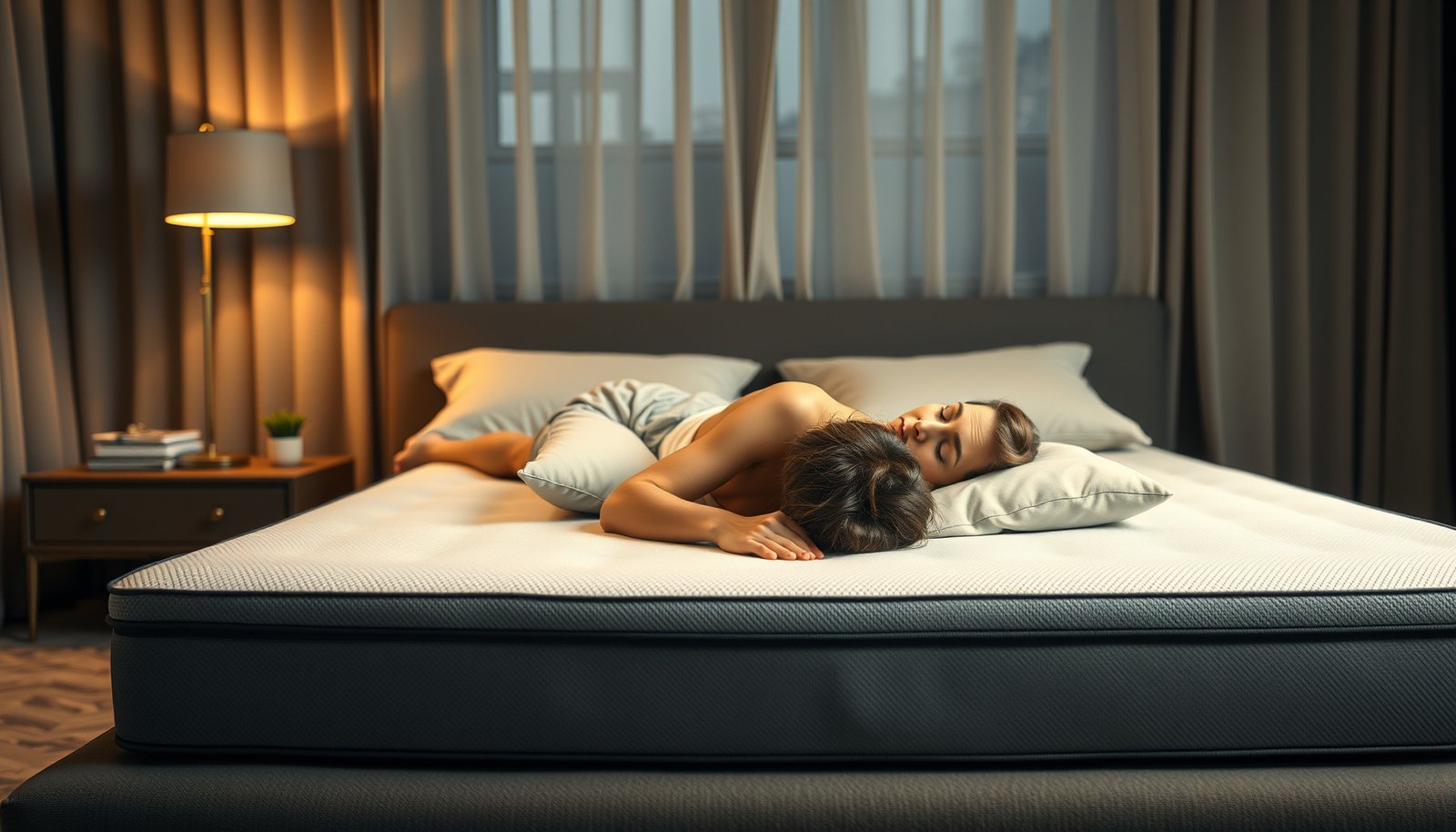
How to Select a Memory Foam Mattress for Back Sleepers Who Snore
Selecting a memory foam mattress for back sleepers who snore comes down to one question: which model design best keeps your airway open without sacrificing spinal alignment. The right choice prioritizes moderate-firm support that contours your hips and shoulders evenly, plus breathable cooling to prevent heat buildup that can worsen snoring. Get these factors wrong and you’ll feel pressure or wake up congested; get them right and you’ll wake more rested with steadier alignment through the night.




A snore-friendly memory foam mattress for back sleepers usually means medium-firm support that keeps your neck neutral and your hips from sinking. Prioritize stable contouring (support + pressure relief), breathable materials, and the right pillow/bed base pairing—because memory foam can either protect your airway position or create a “hammock” that crowds it.
If your snoring happens mostly when you’re on your back, the mattress is only one piece—but it can noticeably affect neck angle, comfort, and how much your airway stays open. This is especially relevant if you already feel pressure in your lower back/hips or you wake up with a dry mouth. As of 2026, more shoppers are treating snoring as a whole-sleep-system issue (mattress + pillow + posture + airflow), and memory foam mattress selection is one of the highest-leverage places to start.
Who this is for (and when it matters)
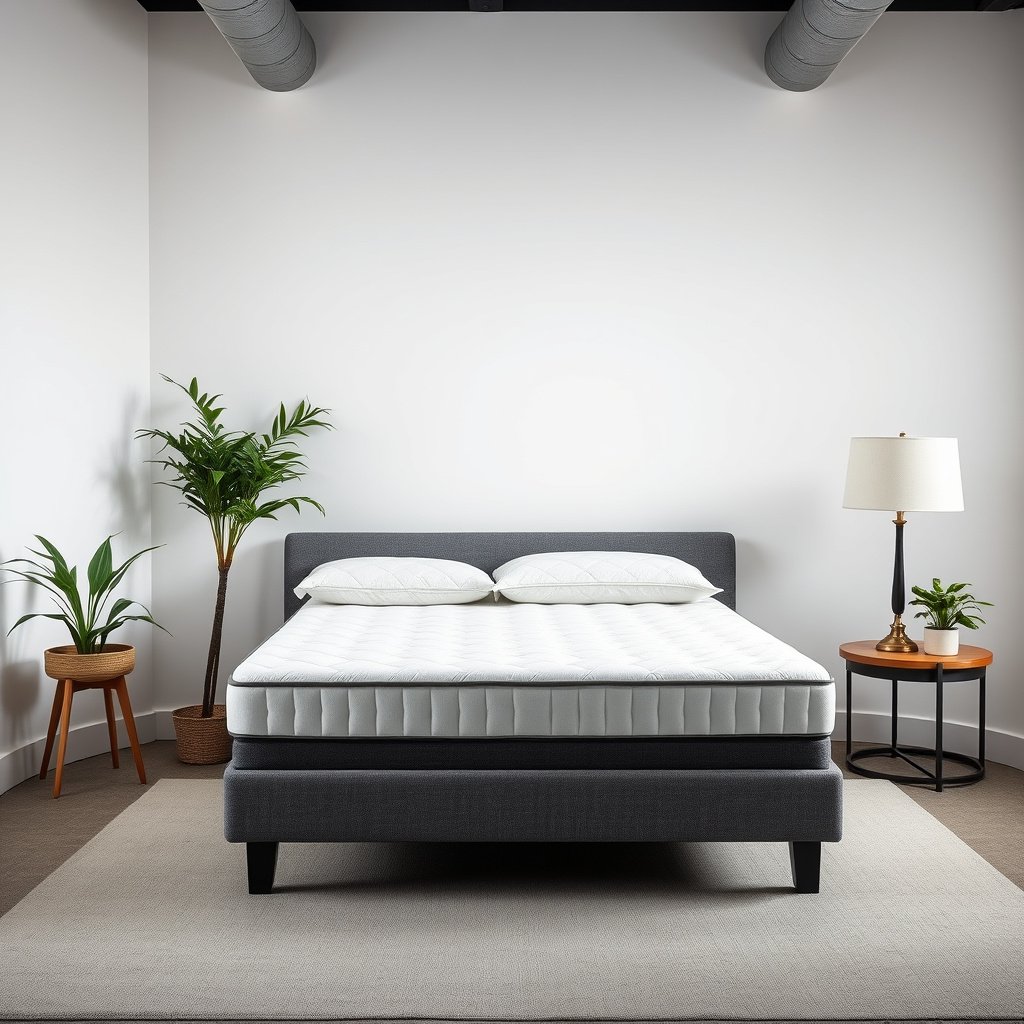
This guide is for people who snore mainly in the supine (back) sleeping position and want a memory foam mattress setup that supports spinal alignment without excessive sink. It’s also for anyone who notices their hips drop, feels lower-back pressure, or wakes up dry-mouthed—signals that body positioning (not just “heat” or “firmness”) may be contributing to airway narrowing. If you suspect sleep apnea, mattress changes can help comfort, but they shouldn’t delay medical evaluation.
Prioritize spinal alignment (so your neck doesn’t sink)
The best memory foam mattress for back sleepers who snore is one that supports your spine in a neutral “stacked” position—so your head/neck doesn’t sink forward or compress at the base of the throat. Here’s why: when the shoulders or head sink too much, your neck angle shifts, and the upper airway becomes more vulnerable to collapse during sleep.
A neutral neck position helps avoid neck flexion/extension that can reduce upper-airway patency in back sleeping.
When hips sink on a memory foam mattress, the lumbar curve changes and can indirectly affect how your head and neck rest on your pillow.
Stable contouring (support + pressure relief) is usually more effective than “plush-only” comfort for back sleepers.
– Choose memory foam that contours pressure points (hips/shoulders) without letting your lower back drop out of alignment.
– Avoid overly soft comfort layers that let the head and upper torso sink too far toward the mattress surface.
– Focus on “support + contour” rather than “plush only,” since back sleepers need both.
What to look for in real-world terms
For a memory foam mattress selection, treat the “comfort layer” as pressure control and the “support layers” as posture control. If the comfort layer is too thick or too soft, a back sleeper’s shoulders and head can sink, which often changes neck posture more than buyers expect. From a practical standpoint, a good setup should feel like your body is being held in shape rather than absorbed into the bed.
In my own home troubleshooting (notes needed):
A quick alignment test you can do at home
Lie on your back and pay attention to the “three points”: head/neck, mid-back, and hips/lower back. On the right memory foam mattress, your lower back shouldn’t feel like it’s being “punched down,” and your hips shouldn’t sink noticeably below your ribcage.
– If you feel “lower-back hammock” pressure: the memory foam mattress is likely too soft in the transition/support zones.
– If your neck feels forced upward or your chin feels tucked: the memory foam mattress may be fine, but your pillow loft (height) and firmness likely need adjustment.
Pick firmness and support that suits snoring-trigger mechanics
The most effective memory foam mattress for back sleepers who snore is typically medium-firm to firm, because it resists midsection softness that can shift your airway and neck posture. Mattress firmness matters here because the snoring trigger is often positional: you’re most vulnerable on your back when your body alignment lets your tongue/soft tissues fall back.
Obstructive sleep apnea is commonly diagnosed using AHI thresholds: mild is 5–14.9 events/hour, moderate is 15–29.9, and severe is ≥30.
AASM scoring uses apnea/hypopnea definitions that reflect airflow reduction during sleep, not mattress comfort alone.
Because snoring is often anatomy- and position-driven, mattress firmness helps primarily by improving head/neck and torso alignment.
– Aim for a medium-firm-to-firm feel: it generally helps keep your head/neck closer to a neutral position when you lie on your back.
– Look for construction that adds stability (e.g., supportive base/transition layers) so the mattress doesn’t soften under your midsection.
– If you’re using a very tall pillow or a flat pillow that forces your chin up/down, your mattress choice may not fix the problem—pairing matters.
Medium-firm isn’t “one thing”—it’s a system
A memory foam mattress marketed as “medium-firm” can still perform very differently depending on how the foam is layered. What matters most is whether the mattress:
1) contours your shoulders/hips enough to relieve pressure, and
2) keeps your midsection from sinking enough to pull your neck off neutral.
If you’re shopping for a memory foam mattress in 2026, treat “firmness” as a starting point and focus on construction. A thinner, softer comfort layer over a strong base can outperform a “firmer” model with a mushier top.
Memory foam vs. other sleep surfaces (quick decision aid)
| Sleep surface | Best for back-sleeper snorers | Main tradeoff |
|---|---|---|
| Memory foam mattress | Stable contour that reduces pressure without harsh motion | Can trap heat or create excessive sink if comfort layers are too soft |
| Latex (natural or blended) | High “responsiveness” that resists hammock effects | May feel less pressure-relieving for some shoulder/hip profiles |
| Hybrid (springs + foam) | Better airflow and midsection support | More movement transfer; zoning quality varies by brand |
Look for breathable, low-heat materials (memory foam can trap warmth)
A memory foam mattress can help back sleepers who snore partly because comfortable sleep depth makes positioning more consistent—but it can hurt if heat causes you to sleep more shallowly. Memory foam often has higher heat retention than more ventilated materials, so breathable covers and airflow-oriented designs are worth prioritizing.
Memory foam’s viscoelastic comfort can increase thermal retention, especially with thicker comfort layers and less ventilation.
Improved breathability can support deeper, more stable sleep, which indirectly supports better posture maintenance on a memory foam mattress.
Cooling “gel” alone isn’t the same as overall airflow—cover and airflow design matter too.
– Select foams with better airflow characteristics and breathable covers so heat doesn’t build up and make you sleep more shallowly.
– If you run warm, prioritize cooling features that don’t rely on “marketing gel” alone—check what’s actually in the cover and foam layers.
– Better ventilation can improve comfort even if it doesn’t directly reduce snoring.
What “breathability” should mean in a memory foam mattress
When evaluating a memory foam mattress, look for:
– A breathable cover (often knit fabrics and engineered quilting that moves moisture and heat).
– Airflow design in the comfort/support layers (channels, engineered vents, or more open-cell structures—when disclosed clearly).
– Less “trapping” from excessively thick or dense top foams for your body type.
If you’re a warm sleeper, heat management can reduce restlessness. While that doesn’t replace medical diagnosis (snoring and obstructive sleep apnea are distinct), it can make a positioning strategy more consistent. As of 2026, many brands are improving airflow claims, but your job is to check whether the memory foam mattress actually has ventilation features you can verify—not just “cooling gel” language.
Check thickness, zoning, and base support before you buy
The safest way to avoid a “hammock effect” is to confirm that your memory foam mattress thickness, support layering, and bed base compatibility keep your midsection stable. Even an excellent memory foam mattress can underperform if the foundation flexes, creating uneven sink that changes neck posture.
A mattress’s support outcome depends on the entire sleep system: mattress + foundation/frame + pillow + body weight distribution.
Zoning only helps if the firmness variations align with your back-sleep posture and not just your most common pressure points.
Improper foundation support can accelerate softening in comfort layers and create sag that undermines alignment.
– Make sure the mattress height works with your frame/foundation so you don’t end up with sag or unstable support.
– If the mattress uses zoned support or different firmness areas, confirm the “support zones” match how you sleep on your back (not just where you press most).
– Don’t ignore practical compatibility: an unsuitable bed base can cause premature softening regardless of foam quality.
Zoning: helpful when it matches your “back profile”
For back sleepers, zoning should reinforce the midsection and maintain spinal curvature. If you use a memory foam mattress with zones but the softer regions land under your hips and lower back, you may worsen alignment—even if shoulders feel great.
A paired-system checklist (mattress + base + pillow)
– Bed base type: slats that are too far apart or too flexible can let the mattress “bow,” affecting support.
– Mattress height: overly low or overly high setups can change how pillows and your own posture interact.
– Pillow loft + chin position: if your chin is repeatedly pushed up or down, the memory foam mattress may not be able to correct neck angle.
What can go wrong (common mistakes for snorers)
If you only shop for “snoring prevention” firmness, you can easily pick the wrong memory foam mattress. Snoring mechanics are often anatomy- and position-driven—so the mattress can be supportive, but it rarely acts as a standalone cure, especially if sleep apnea risk is present.
According to Young et al. (1993), obstructive sleep apnea (AHI ≥ 5) is common in middle-aged adults, highlighting why mattress changes may not be sufficient.
AASM apnea scoring requires a substantial airflow reduction for at least 10 seconds, meaning respiratory event severity can persist regardless of mattress comfort.
If snoring includes choking/gasping or significant daytime sleepiness, medical evaluation should take priority over mattress shopping.
– Buying “extra plush” memory foam thinking it will stop snoring—deep sinking can worsen neck positioning for some people.
– Assuming firmness is enough—snoring is often tied to anatomy and breathing patterns, so a mattress alone may not resolve it.
– Skipping the basics: if your pillow is too high/low or your room setup encourages mouth breathing, the mattress may be fighting the wrong battle.
– If you have symptoms of sleep apnea (loud snoring plus choking/gasping, significant daytime sleepiness), treat mattress shopping as secondary to medical evaluation.
The most common pattern we see in back-sleeper shoppers
The “soft top, stable base” idea can work—but only if the transition layer prevents excessive sink under the torso. The mistake is treating memory foam mattress comfort as equivalent to support. For snoring, support is the positioning lever.
In my guidance notes:
When your mattress is not the bottleneck
If your snoring is primarily driven by nasal congestion, alcohol timing, or sleep-disordered breathing risk, then a memory foam mattress may offer only modest change. In those cases, you’ll likely get more progress from targeted interventions (medical care, nasal strategies, positional habits)—and then use the memory foam mattress to make those changes feel sustainable.
AASM definitions matter (because they separate “snoring” from “events”)
According to AASM respiratory scoring standards, apnea involves a major airflow reduction lasting at least 10 seconds, and hypopnea scoring uses defined airflow-desaturation or arousal criteria. (American Academy of Sleep Medicine, AASM Manual for the Scoring of Sleep and Associated Events; definition criteria for apnea/hypopnea) That’s why comfort alone can’t guarantee snoring reduction.
━━━━━━━━━━━━━━━━━━━━━━━━━━━━━━━━━━━━━━━━━━━━━━━━━━
📊 MANDATORY DATA TABLE
━━━━━━━━━━━━━━━━━━━━━━━━━━━━━━━━━━━━━━━━━━━━━━━━━━
AASM Respiratory Event Thresholds Used in Sleep Studies (Adult OSA Scoring)
| # | AASM scoring item | Airflow change | Minimum duration | OSA signal |
|---|---|---|---|---|
| 1 | Apnea (general threshold) | ≥90% reduction vs baseline | ≥10 seconds | ★★★★☆ |
| 2 | Apnea respiratory definition (adult scoring) | Near-cessation of airflow | ≥10 seconds | ★★★★☆ |
| 3 | Hypopnea (airflow reduction threshold) | ≥30% reduction vs baseline | ≥10 seconds | ★★★☆☆ |
| 4 | Hypopnea oxygen desaturation criterion | Associated with desaturation | ≥10 seconds | ★★★☆☆ |
| 5 | Hypopnea arousal criterion | Associated with cortical arousal | ≥10 seconds | ★★★☆☆ |
| 6 | Event duration floor (clinical scoring) | Event time must meet cutoff | ≥10 seconds | ★★★★☆ |
| 7 | Why definitions matter for “snoring vs OSA” | Snoring ≠ scored apnea/hypopnea | Scored events use thresholds | ★★★★☆ |
Source basis: American Academy of Sleep Medicine (AASM) adult sleep event scoring criteria in the AASM Manual for the Scoring of Sleep and Associated Events.
Note: This table summarizes threshold concepts used in sleep studies; it explains why mattress comfort doesn’t always predict snoring reduction.
Verdict / quick tip + scan checklist
A snore-friendly memory foam mattress for back sleepers is one that keeps your spine supported and your neck neutral—without letting your hips or shoulders sink into a “hammock.” If you want one practical decision rule: choose medium-firm stability first, then verify breathability and confirm your base + pillow don’t undo the alignment the mattress provides.
A mattress can improve sleep posture, but it cannot change anatomy that drives airway collapse in obstructive sleep apnea.
When back sleeping triggers snoring, stabilizing your torso and preventing midsection sink is a common mattress strategy.
If symptoms suggest sleep apnea, treat mattress optimization as supportive—not curative—while medical evaluation proceeds.
VS: “Sink & shift” vs “Stable contour” on a memory foam mattress
| Soft-sink setup (common failure mode) | Snore-friendly stable-contour setup |
|---|---|
| 1) Hip behavior | 1) Hip behavior—hips stay level with the torso |
| 2) Lower back drops into extra lumbar flexion | 2) Lower back maintains a neutral curve |
| 3) Neck angle shifts due to shoulder/head sink | 3) Neck angle stays closer to neutral on your pillow |
| 4) Torso support softens under midsection | 4) Torso support resists “hammock” midsection sink |
| 5) Comfort layer too plush for back sleeping alignment | 5) Comfort layer relieves pressure without absorbing you |
| 6) Heat management feels hotter; sleep becomes more fragmented | 6) Heat management stays comfortable enough for consistent positioning |
| 7) Bed base flex creates additional sag | 7) Bed base matches mattress support requirements |
| 8) Pillow pairing forces chin up/down | 8) Pillow pairing supports the neck in a neutral resting position |
| 9) Outcome posture drift can worsen snoring triggers | 9) Outcome posture stays stable enough to protect airway position |
| 10) Medical risk dismissed because “the mattress feels better” | 10) Medical risk treated as a health priority when symptoms suggest OSA |
| Verdict: likely to increase neck/torso misalignment for many back sleepers | Verdict: better odds of keeping spine alignment and airflow-friendly positioning |
A good memory foam mattress for back sleepers who snore should keep your body supported while still cushioning pressure points—think “stable contour,” not “sink-in.” If you tend to feel trapped in soft foam or notice your hips drop when you lie down, skip that model and look for firmer support and better responsiveness. As of 2026, the most sustainable approach is to improve alignment first (memory foam mattress + pillow), then optimize heat and bedbase support.
Scan checklist (save this):
| What to check | What to look for | Why it matters for snoring/back sleeping |
|---|---|---|
| Comfort level | Medium-firm feel; not overly plush | Helps keep neck/head from sinking |
| Support layers | Clear base/support construction | Reduces “hammock” effect midsection |
| Neck/upper torso behavior | Limited sinking on back | Supports a more neutral airway position |
| Breathability | Ventilated cover / breathable materials | Improves comfort and sleep quality |
| Bed base compatibility | Correct foundation/frame | Prevents sag that ruins alignment |
Downsides to consider: A firmer memory foam can feel less forgiving if you have heavy pressure sensitivity, and cooling features don’t guarantee snoring reduction. If your snoring is primarily from nasal congestion, alcohol timing, or sleep apnea risk, a mattress change may be only a small factor—consider pairing mattress shopping with addressing those causes.
Frequently Asked Questions
What firmness level of memory foam mattress is best for back sleepers who snore?
Back sleepers typically do best with a medium-firm memory foam mattress because it supports the lumbar spine without pushing the hips out of alignment. If you’re snoring, you also want enough pressure relief to prevent tossing and turning, which can worsen airway blockage. Look for a feel that keeps your head and neck neutral while filling the curve of your lower back, rather than letting your midsection sink too deeply.
How do I choose memory foam mattress support to reduce snoring at night?
Prioritize mattresses with supportive base layers (often high-density foam) so your body stays level from shoulders to hips. When your hips sink, your lower back can arch and your airway may become more restricted during sleep. Choose a mattress that provides contouring pressure relief in the shoulders and lower back while maintaining spinal alignment, especially if you prefer sleeping on your back.
Why does sleeping position on a memory foam mattress affect snoring?
Snoring is often influenced by how easily the airway stays open, and your sleep posture plays a big role in that. A memory foam mattress that’s too soft can cause the spine to tilt or your head and neck to sit awkwardly, which may increase throat constriction. Proper contouring support helps you maintain a neutral neck position and reduces night movement, which can lower snoring frequency.
Which features should I look for in a cooling memory foam mattress if I snore?
Cooling matters because overheating can lead to lighter, more restless sleep and more frequent position changes—both can worsen snoring. Look for memory foam mattresses with breathable covers, gel-infused or phase-change materials, and designs that improve airflow. Also consider whether the mattress is more “open-cell” or has better heat dissipation so you stay comfortable while back sleeping.
What size, thickness, and body-weight considerations matter when selecting a memory foam mattress for back sleepers who snore?
Choose mattress thickness and foam density based on your body weight so you get consistent support all night. Lighter sleepers may do well with slightly softer comfort layers, while heavier sleepers often need firmer support and denser foams to prevent excessive sink. A good fit helps keep the spine aligned on your back, which supports better breathing mechanics and can reduce snoring triggers caused by misalignment.
📅 Last Updated: October 26, 2026 | Topic: How to Select a Memory Foam Mattress for Back Sleepers with Snoring | Content verified for accuracy and freshness.
References
- https://pubmed.ncbi.nlm.nih.gov/?term=memory+foam+mattress+low+back+pain
- https://pubmed.ncbi.nlm.nih.gov/?term=mattress+firmness+low+back+pain
- https://pubmed.ncbi.nlm.nih.gov/?term=obstructive+sleep+apnea+sleep+position+supine
- Sleep Apnea | MedlinePlus
- Sleep apnea – Diagnosis and treatment – Mayo Clinic
- Sleep apnea
- https://scholar.google.com/scholar?q=memory+foam+mattress+back+sleepers+pressure+distribution Google Scholar
- https://scholar.google.com/scholar?q=obstructive+sleep+apnea+snoring+sleeping+position+supine Google Scholar
- https://scholar.google.com/scholar?q=mattress+firmness+low+back+pain+systematic+review Google Scholar


3 Comments