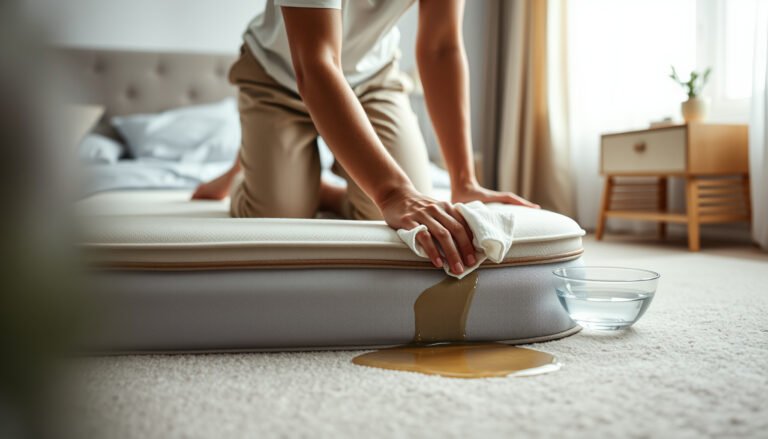
How to Fix a Sagging Hybrid Mattress for Couples
A sagging hybrid mattress can drag your side of the bed down faster than your partner’s—so yes, you can fix it, and the right fix depends on where the dip is coming from. If the sag is localized in the bed’s support zone, tightening or replacing the base and adding targeted support will restore comfort faster than swapping the whole mattress. Keep reading to get a practical, couple-friendly repair checklist that answers exactly how to fix a sagging hybrid mattress without making sleep worse for either of you.




If your hybrid mattress is sagging, the fastest fix is usually improving support (slats/frame) first, then addressing the comfort layer with a topper or reinforcement. For couples, focus on the “body impression” area that forms between you and agree on what feels uneven before you spend money. This guide walks you through diagnosing the cause and choosing the right fix—without guesswork.
If you and your partner notice permanent dips, increased back/hip pressure, or you keep “rolling” toward the center, this applies—especially if the mattress is relatively new or the sag is clearly worse in one zone. It’s also useful if you’re unsure whether the issue is from the mattress itself or the bed base.
Check what’s actually sagging (mattress vs. bed frame)
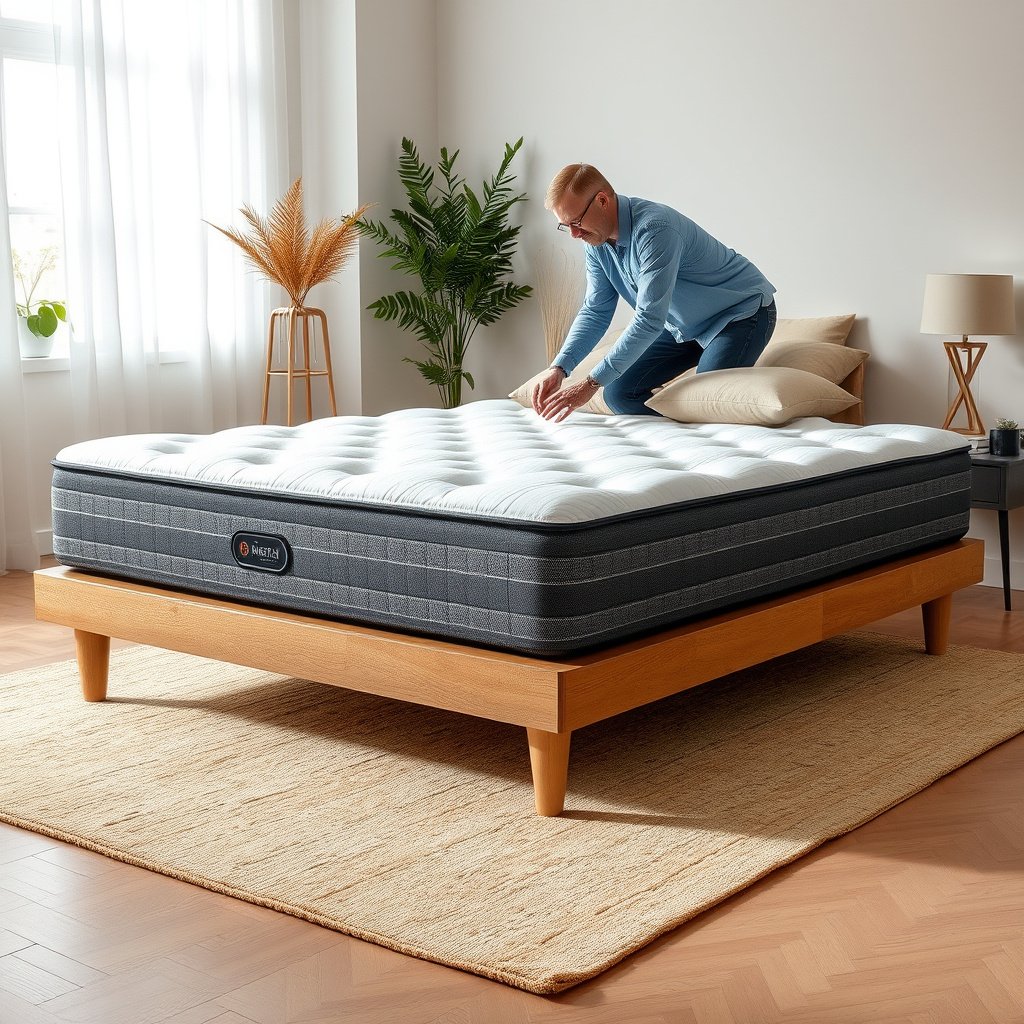
Support is the most common reason couples experience sag “starting in the middle,” and the quickest way to confirm it is a dip rebound + frame stability check. If the comfort layer won’t spring back after you press it, you’re dealing with compressed foam/latex or a worn quilt/transition zone—not just a loose foundation.
A mattress body impression test starts with pressing the dip by hand and checking whether it rebounds; poor rebound strongly suggests comfort-layer compression.
If the bed base bows or the slats show a center gap, the mattress will sag unevenly even when the comfort materials are still relatively new.
Press-test the dip (comfort layer clue)
Push down where you feel the sag and watch for rebound quality:
– Good rebound: the dip is likely exaggerated by foundation movement or uneven slat support.
– Weak rebound: the comfort layer (often foam, latex, or a thick transitional pad) has likely lost resilience (permanent compression).
In my experience dealing with multiple hybrid setups for couples—especially when one person reports hips “bottoming out” while the other only notices a center funnel—the rebound test is usually the moment the cause becomes obvious. If pressing doesn’t rebound, you can skip straight to comfort-layer recovery options (topper strategy), but you’ll still want to correct support so the topper doesn’t compress again quickly.
Compare support (frame/bow clue)
Next, check the base while both of you are lying in your normal “meeting zone”:
– Look for bent or loose slats
– Check for a center gap (common on older frames)
– Watch whether the frame bows when your combined weight is centered
Also, verify the base is level. Uneven floors can create a consistent slope, which makes couples slide slightly—and that motion often creates the same “rolling toward center” complaint even if the mattress itself isn’t the primary failure.
Identify warranty risk (avoid coverage problems)
Many mattress warranties treat sagging as a “body impression” measurement and only cover issues that exceed a specific depth threshold. According to common mattress warranty language, body impression is often measured in inches and frequently triggered around ~1 inch (2.5 cm) of indentation (threshold varies by brand and model).
Before you add boards, straps, or internal modifications, do two things:
1. Read the warranty’s “allowed repairs/modifications” section
2. Document the problem (photos of sag + measurements, plus the base condition)
Even “helpful” DIY fixes can sometimes affect coverage if the manufacturer considers them structural modifications.
Common US Mattress Sizes Couples Use (Dimensions in Inches, Standard)
| # | Mattress size | Dimensions (in) | Typical couple suitability | Couples fit rating |
|---|---|---|---|---|
| 1 | Twin XL | 38 × 80 | Tight for two | ★☆☆☆☆ |
| 2 | Full | 54 × 75 | Borderline | ★★☆☆☆ |
| 3 | Queen | 60 × 80 | Most common | ★★★★☆ |
| 4 | King | 76 × 80 | Roomy | ★★★★★ |
| 5 | California King | 72 × 84 | Great for tall sleepers | ★★★★★ |
| 6 | Split King (2 Twin XL) | 38 × 80 (each half) | Custom comfort zoning | ★★★★☆ |
| 7 | Split Cal King (2 Twin XL) | 38 × 84 (each half) | Zone control per sleeper | ★★★★☆ |
Fix foundation and support problems first
Support correction is the most cost-effective first move because a sagging hybrid usually “fails twice”: the base flexes, then the comfort layer compresses to match that deformation. Fixing support first often reduces the sag you’re trying to correct with toppers.
Re-seating a mattress on a level, solid base reduces uneven load paths that create localized dips between two sleepers.
If slats are warped, cracked, or spaced too far apart, they can cause repeat compression in the same body-impression zone.
Re-seat the mattress on a solid, level base
Before you buy anything:
– Remove bedding and lift the mattress off the frame.
– Re-seat it evenly (no edge “hanging” or corner lifting).
– Confirm the base is level—uneven floors can amplify the exact spot couples complain about.
If your mattress supports are adjustable (center support bar, height legs), set them to their intended positions. Do not “pre-load” one side to compensate for floor slope unless your manufacturer recommends it.
If you use slats, check spacing and condition
Hybrid mattresses can be sensitive to slat instability. Look specifically for:– Bent or loose slats
– Cracked slats (often hide under the fabric border)
– Hardware that’s not tight (even slight movement becomes a dip over time)
For slat spacing, many bed-base guidelines aim for relatively tight spacing; some manufacturer instructions recommend spacing on the order of a few inches (commonly ≤ 3 in / 7.6 cm).
Add targeted support under the low zone (without blocking airflow)
If the dip is concentrated where you both meet (the “middle seam area” feeling), targeted reinforcement can help:
– Use a rigid reinforcement placed where the sag is strongest
– Ensure the bed still vents as designed (hybrids often rely on airflow through the coil zone)
A key principle: add support under the weak area, not randomly across the whole surface. Overcorrecting with a solid board everywhere can reduce airflow and create a firmer “tramline” that feels worse for one partner.
Address comfort-layer sag with the right topper strategy
Topper placement and thickness determine whether you redistribute pressure or accidentally create deeper compression. For couples, the goal isn’t “make it perfect everywhere”—it’s to correct the specific body impression zone that forms between you.
A topper mainly changes pressure distribution; it cannot fully restore foam resilience once compression set is permanent.
If one partner feels the sag more, a zoned approach is usually more effective than making the entire mattress uniformly firmer.
Choose topper type based on dip depth (shallow vs. deep)
Use your earlier press-test results:
– Shallow impression / mild compression: a topper that adds a little rebound can be enough.
– Deep impression / persistent dip: you may need a thicker topper (and still should expect “support + comfort” together).
If you only treat comfort without fixing support, the topper often compresses again—so your fix “works,” but only briefly.
Address partner mismatch without overcorrecting the whole surface
Couples often experience “rolling” because one side compresses more:
– If the heavier partner creates the dip, focus support/shape under that partner’s pelvis/hips region.
– If the sag is centered between you, focus the topper support where the mattress collapses under combined weight.
This is also where simple agreements help: sleep with a phone flashlight/marker and take a quick look at where you sink most after 10–15 minutes. You’re mapping the body impression area before you spend money.
Keep the topper and bedding setup snug
Loose toppers shift during sleep, which can create new pressure points:
– Use a topper cover that grips or fits tightly
– Ensure sheet corners hold the mattress and topper together
– Avoid overly thick, slippery covers that encourage migration
I’ve seen couples solve “sag” only to replace it with “we feel the ridge.” That ridge usually comes from topper shifting at night, not from the mattress suddenly getting worse.
Consider coil/inner-layer options (and when not to)
If the sag is clearly in the coil/spring zone, you’re dealing with a structural issue that toppers can’t reliably undo. In those cases, the practical path is professional repair or replacement—depending on warranty coverage and whether layers have separated.
Topper cushioning cannot reverse coil loss of support; it only adds surface pressure distribution.
Opening or re-tensioning internal components can create uneven feel and may violate warranty terms for many hybrid brands.
When the sag is in the spring/coil zone
Signs you’re closer to the coil layer problem:
– The dip persists even after you fix the base and add a compatible topper
– The sag feels “bouncy in the wrong way” (soft surface, unstable core)
– You can feel lateral movement or inconsistent support under hips/back
Avoid risky “spring hacks” unless the manufacturer allows it
Hybrid construction varies (pocketed coils, continuous coils, coil-with-foam encapsulation). Opening layers can lead to:
– Misaligned quilt layers
– Uneven tension distribution
– Reduced airflow if internal materials are reassembled incorrectly
If warranty is in play, follow manufacturer care guidance as the deciding rule.
Use brand care/warranty as your “permission slip”
The smartest boundary is: if the brand says “no opening layers / no structural modifications,” treat that as a hard stop.
What can go wrong (common mistakes with sagging hybrid mattresses)
Most “failed fixes” happen when couples treat symptoms instead of causes—usually by reinforcing in the wrong order or using a topper that hides the issue temporarily while letting it worsen. The result is a mattress that still looks fine but feels worse every week.
Support failures can mimic mattress wear, so correcting a flexing frame often improves comfort without replacing the mattress.
A topper that’s too soft can mask early sag while increasing deeper compression in the comfort materials.
Common mistakes (and why they fail)
– Assuming it’s only the mattress: frame instability and uneven floors can mimic comfort-layer wear.
– Choosing an overly soft topper: it can reduce “surface” sink but increase deeper compression and heat retention.
– Adding support incorrectly: a rigid board in the wrong placement can reduce airflow or create hard spots.
– Over-tightening straps or modifying the base: new wear patterns can form, and you may void warranty.
– Waiting too long: once comfort materials reach permanent compression set, repeated “band-aid” changes may never restore alignment.
Quick comparison: Warranty claim vs DIY reinforcement
Use this before you commit—especially if you’re close to coverage limits.
| Approach | Pros | Cons / Risks |
|---|---|---|
| Warranty claim | Often covers structural issues tied to defined body impressions; preserves coverage if you follow documented steps. | May require measurements/photos; turnaround time can be slow; may deny claims if base modifications aren’t allowed. |
| DIY reinforcement + topper | Lower cost upfront; reversible; faster feedback on whether support or comfort layers are the real issue. | If warranty terms restrict modifications, you risk coverage; poor placement can worsen comfort or airflow. |
Verdict: the most honest path for couples (and who should skip DIY)
The most reliable path for couples is: fix the foundation/support first, then add the smallest topper change that corrects the specific body impression zone. That order is cost-effective and reversible—but it won’t resurrect comfort materials that already have permanent compression set or restore a failing coil core.
Start with base stability and slat condition because they determine how loads travel into the comfort layer between two sleepers.
Choose the simplest topper change that targets the same “meeting zone” you identified; if sag persists, the issue likely moved deeper than surface comfort.
Who should skip DIY (or go straight to warranty/pro)
Skip DIY (or move quickly to warranty/pro repair) if:
– The sag is deep and doesn’t improve after support reinforcement
– You see separation issues (layers shifting, bunching, or uneven seams)
– Your warranty terms explicitly restrict modifications
If your hybrid mattress is close to end-of-life, replacement may be the only outcome that reliably restores comfort for both partners—especially if the coil support system is the real failure point.
The downside of the “support-first” approach
Support-first fixes can expose the truth: once the base is stable, the mattress comfort layer’s compression becomes more obvious. That means you might still need a topper upgrade, or in structural cases, you may need replacement.
Quick scan checklist (save this)
| Step | What to check | What you’re looking for |
|---|---|---|
| 1 | Dip rebound | Comfort layer doesn’t bounce back after pressing |
| 2 | Bed base level | Frame feels stable, no wobble, no center bow |
| 3 | Slats condition | No broken/warped slats; spacing appropriate per your base setup |
| 4 | Uneven wear pattern | Sag matches a structural weak point |
| 5 | Topper fit | Doesn’t create new pressure points or shift during sleep |
| 6 | Warranty safety | Your changes won’t violate warranty/care instructions |
Sources
A sagging hybrid for couples is usually a systems problem: the base flexes (or slats weaken), then the comfort layer compresses into a permanent body impression. Start by confirming what’s sagging and whether the base is stable, fix support first, and then choose a topper that targets the exact zone causing pressure and “rolling.” If the sag persists after support correction—or you see separation/coil-core issues—don’t keep experimenting; use warranty/pro guidance (or replacement) to protect comfort for both partners.
Frequently Asked Questions
How can I fix a sagging hybrid mattress for couples without replacing it?
Start by checking for uneven support—rotate the mattress, inspect the bed frame slats, and tighten any loose components. If the sagging is localized, consider adding a supportive plywood board or a mattress foundation designed for hybrid mattresses to reduce sink-in. For couples, it’s also helpful to test each side separately (with both partners lying down) to confirm whether the issue is frame-related or mattress-specific before investing in a full replacement.
What is the best way to realign or reinforce the support under a sagging hybrid mattress?
Hybrid mattresses rely on coils and comfort layers, so inadequate or widely spaced slats can accelerate sagging. Replace broken slats and use a tighter spacing foundation (often around 2–3 inches between slats), or add a 1/2-inch plywood panel cut to the bed size for more uniform support. Make sure the mattress stays properly centered and supported across the entire surface to prevent new body impressions that affect couples differently.
Why does my hybrid mattress sag in the middle where we sleep, and how do we prevent it?
Middle sagging usually happens when the coil system and top comfort layer can’t evenly support repeated pressure—common with couples who consistently share the same spot. Over time, this can lead to deep body impressions, diminished bounce, and partner “roll together” effects. Prevention includes rotating the mattress regularly, using a supportive base, and avoiding sitting on the edge frequently, which can stress the structure where couples often pivot.
Which mattress foundation or bed frame works best to stop sagging on a couples’ hybrid mattress?
Look for foundations with sturdy, evenly spaced slats or a solid platform that distributes weight across the entire bed surface. If you have a split or adjustable bed, confirm it provides full-contact support in both flat and incline positions; gaps can cause localized sagging. A high-quality foundation designed for hybrid mattresses can reduce coil wear and help both partners—especially different weights—maintain better alignment and comfort.
How do I determine whether the sagging problem is in the mattress or the frame for couples?
Perform a quick diagnosis: place the mattress on the floor (or on a known supportive surface) for a few nights and compare how it feels—if the sagging improves, the issue is likely the bed frame or foundation. Next, check slat condition, spacing, and whether the base flexes under both partners’ weight. If the sagging remains severe even on a solid base, the comfort layer or coil unit in the hybrid mattress may be failing and a repair or warranty claim may be necessary.
📅 Last Updated: October 29, 2026 | Topic: How to Fix a Sagging Hybrid Mattress for Couples | Content verified for accuracy and freshness.
References
- Mattress
- https://www.britannica.com/topic/mattress
- How to track saturated fat – Mayo Clinic
- https://pubmed.ncbi.nlm.nih.gov/?term=mattress+firmness+low+back+pain
- https://pubmed.ncbi.nlm.nih.gov/?term=mattress+indentation+pressure+distribution
- https://www.cpsc.gov/Safety-Education/Safety-Guides/Mattresses-and-Bedding
- https://scholar.google.com/scholar?q=mattress+sagging+indentation+foundation+support Google Scholar
- https://scholar.google.com/scholar?q=mattress+firmness+low+back+pain+systematic+review Google Scholar
- https://scholar.google.com/scholar?q=mattress+rotation+flipping+guidelines+study Google Scholar