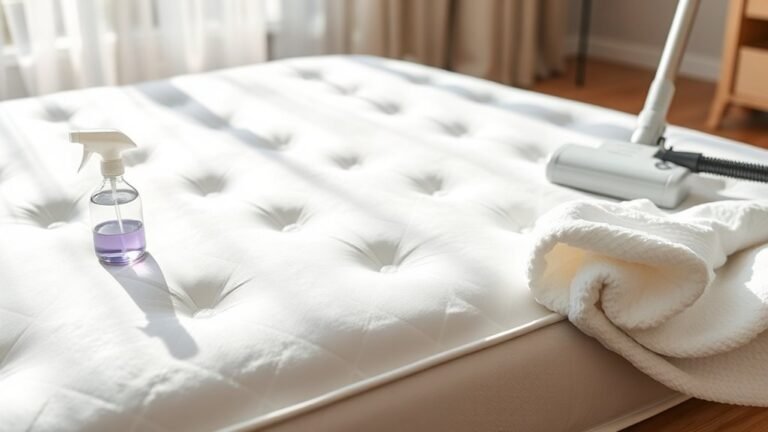
How to Fix a Too-Soft Coastal Mattress for Joint-Pain Back Sleepers
A too-soft coastal mattress can let your hips sink in overnight, leaving back sleepers with joint pain feeling stiff, achy, or misaligned in the morning. This usually happens when the comfort layer compresses too much or when the support core lacks the firmness—or zoning—to keep your spine level on a humid coastal setup. The good news is that you can correct the feel without blame, and practical fixes are below.




If your hips sink and your back aches, the fastest fix is usually restoring targeted support (or correcting the foundation) rather than trying to “make it softer.” Start by confirming whether the mattress or the bed base is sagging; then add a pressure-relieving, breathable layer stack that keeps your spine from hammock-ing. In a coastal environment, you also need to manage moisture and airflow, because humidity can quietly worsen softness over time.
If your mattress feels too soft and you’re waking with hip/lower-back pain, this guide is for you—especially if you back sleep and you live near the coast (or in any humid climate). The steps below focus on practical adjustments you can try first, with a clear “stop point” if your mattress comfort system is already failing.
Diagnose what’s making it “too soft”
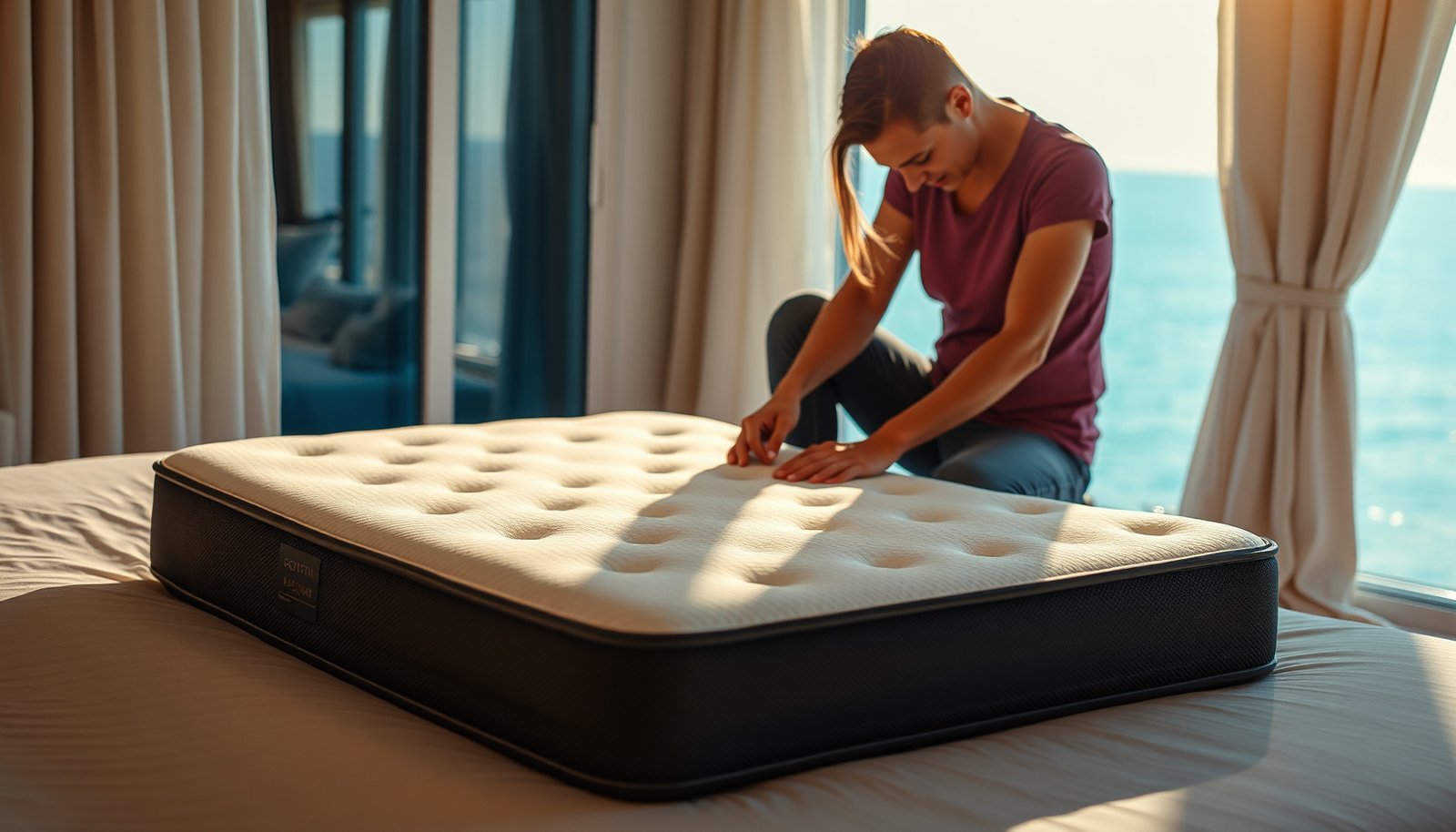
If your hips sink while you back sleep, the cause is most often a support problem (slats/foundation) or comfort-layer breakdown (your mattress interior), and you can tell quickly with a few checks. From my troubleshooting experience with beds that “feel fine on day one,” the pattern is usually consistent: one part of the sleep system is flexing more than it should, and back sleepers feel that as hip drop and lumbar strain.
– Do a quick alignment check: lie on your back and see whether your hips sink below your shoulders (a common “too-soft” signal for back sleepers).
– Look for physical sagging: visible dips, body impressions that don’t bounce back, or uneven wear patterns.
– Check the support system: confirm your bed frame/slats (or foundation) aren’t the real culprit—sometimes the mattress is fine, but the base is flexing.
Quick alignment test (takes 2 minutes)
Lie on your back in your normal sleep position. If your hips sink noticeably lower than your shoulders, your body pressure is “buying” softness that should be structural support. For joint-pain back sleepers, that hip drop commonly increases lumbar compression and can aggravate sacroiliac (SI) discomfort and hip joint inflammation. If your alignment is off but the mattress surface looks flat, don’t ignore the base—slats that flex under load can create a “hidden sink” even when the comfort foam still looks intact.
Spot the sag vs. the sink-from-below problem
A too-soft mattress typically shows durable body impressions or a slow “rebound” after you stand up and press. A too-flexible foundation usually shows uneven support across the width—especially around gaps between slats, broken or bowed panels, or a frame that bows when you sit near the edge.
To separate the two, do a simple one-night test: place the mattress on a fully supported surface (only if your manufacturer allows it) or observe if the same area sinks more when placed directly over a gap. If the sink increases where the foundation flexes, you’ve found the real culprit.
Also note: currently (2026), many mattresses are designed to work with specific foundations. If you’ve recently changed bed frames, removed center support, or modified slat spacing, the “too soft” feel may be new—even if the mattress is older.
Add support fast (without immediately buying a new mattress)
If you need relief tonight, restore support first—top layers can only do so much if the base is bending or the mattress is bottoming out. A strategic topper + foundation fix often improves alignment within days, while a “just make it firmer everywhere” approach can backfire for joint pain.
– Try rotating and repositioning first: if your mattress has a preferred side or head/foot orientation, follow the tag, then rotate so the worn areas aren’t under your hips nightly.
– Add a supportive topper with a plan: use a topper specifically meant to improve pressure relief while keeping your back from “hammocking.” (Exact thickness/type depends on your mattress height and how much sink you’re feeling—see the checklist below.)
– Correct weak bases: if slats are too far apart or a panel is bowing, tightening the setup and replacing/repairing the foundation parts can restore support without changing comfort.
Rotate/reposition—when it actually helps
Rotation helps when the comfort materials are worn unevenly. For example, back sleepers often create repeated pressure in the lower back/hips, so rotating from head-to-foot can move that load pattern away from the same spot. If your mattress is “one-sided” or has a quilted top designed for a specific orientation, follow the tag—flipping the wrong way can worsen feel and durability.
In coastal homes, rotation also pairs well with moisture management. When humidity is high, materials can soften unevenly where airflow is lower (for instance, beds pushed tight against a wall). Rotating helps you learn whether the issue tracks the mattress or tracks the room.
Add a topper that targets pressure without forcing your spine to curve
For back sleepers with joint pain, the goal is not “extra plushness.” You want a top layer that redistributes load at the hips/lower back while maintaining a stable support plane beneath. If you add a topper that’s too thick or too slow-recovering, your hips may sink even deeper.
As a starting framework (you should adjust based on feel), consider:
– Use a pressure-relieving topper that supports lower-back/hip alignment rather than one designed only for “sink-in” comfort.
– Keep total “give” modest: if you already feel bottoming out, a thick topper can turn a support problem into a cushioning problem.
Fix the base before you add more layers
If your slats are too far apart or the center support is weak, you’ll feel it as hip sink. Corrective actions usually include:
– Tightening loose hardware and ensuring the frame is level
– Replacing broken slats or any bowed/warped boards
– Restoring any missing center rail/support (if your foundation uses one)
Don’t override the manufacturer’s limits. If the manual specifies “no rigid board” or a maximum slat spacing, follow it; airflow and proper load distribution matter for both comfort longevity and coastal moisture control.
Build the right feel for back sleepers with joint pain
If your mattress feels too soft, back sleepers with joint pain usually need pressure relief and maintained alignment—not blanket firmness. The practical strategy is to cushion pressure points without letting the spine curve downward.
– Prioritize “pressure relief + alignment,” not just plushness: for many back sleepers, the goal is cushioning under pressure points (often lower back/hips) while preventing the spine from curving downward.
– Match your sleep surface to the problem area: if your hips feel like they disappear into the mattress, you typically need firmer support beneath; if your shoulders feel jammed, you may need more targeted cushioning higher up.
– Use positioning as a multiplier: a pillow under your knees (or adjusting knee height) can reduce strain while you dial in firmness—especially when the mattress is only “a little” too soft.
Pressure relief should happen where your joints complain
Joint-pain back sleepers often experience two competing problems:
1) The mattress surface is too unsupportive under hips/lower back, increasing compression.
2) The shoulder area is either under-cushioned or over-corrected, depending on your pillow and mattress response.
If your hips sink more than your shoulders, you need more reliable support under the pelvis. If your shoulders feel jammed or your upper back feels stiff, you likely need a touch more contouring higher up—without sacrificing the pelvis support plane.
Use knee support to protect your lumbar curve
A pillow under your knees can reduce low-back strain by helping maintain a more neutral lumbar position. This is especially useful when the mattress is close to correct but not quite. In practice, small alignment changes can reduce how “soft” the mattress feels because your pelvis doesn’t tip as much.
If you try knee support and the mattress suddenly feels better, that’s a strong signal that your current setup is allowing excessive pelvic tilt—fixing support (base + comfort stack) should finish the job.
Avoid “overcorrecting with firmness”
Many joint-pain sleepers assume “firmer is always better.” That’s not always true: too-firm layers can shift pressure into shoulders/hips and increase discomfort. The safer move is to restore structural support first, then dial comfort with the smallest change that improves alignment.
Make coastal conditions work for you (humidity, airflow, and odors)
If you live on the coast, the same mattress can feel softer sooner because humidity affects foams, fibers, and odor chemistry. Currently, moisture control and airflow are not “extra”—they’re part of maintaining the support you’re trying to restore.
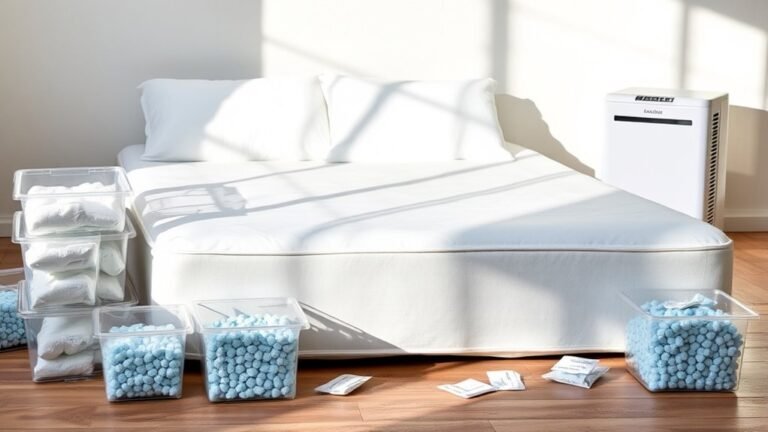
– Keep airflow moving under and around the mattress: coastal humidity can build up if the bed is pushed against a wall or if the room stays stagnant.
– Use breathable protection carefully: a mattress encasement can help with dampness and contaminants, but avoid coverings that trap moisture if they’re causing a “stuffy” feel—air circulation matters.
– Address moisture triggers early: if you’ve noticed musty smells, visible spots, or persistent dampness, stop and dry/inspect before adding toppers or closing covers for long periods.
Humidity targets that matter for “softening”
According to the CDC, indoor relative humidity should be kept between 30% and 50% to help prevent mold growth (2024) CDC. Also according to the CDC, mold can grow when relative humidity stays around 60% or higher (2024) CDC. Finally, the American Academy of Sleep Medicine recommends that adults get at least 7 hours of sleep per night (2015) American Academy of Sleep Medicine—which matters because poor sleep intensifies pain sensitivity, making “too-soft” feel worse.
Those numbers connect directly to mattress support longevity: when humidity rises, moisture-laden materials can lose their crisp support response and develop odor that can distract and irritate. For a coastal mattress, what starts as a “slightly softer” feel can become a persistent pressure problem after repeated damp cycles.
Airflow basics for a coastal bedroom
If your bed sits tight against a wall, you reduce natural air exchange around the mattress. Aim for:
– A small gap between mattress and wall (if your room allows)
– Under-bed ventilation (especially if you use a solid platform)
– Room dehumidification when the air feels muggy
If you use a mattress encasement, choose one that’s designed for breathability rather than a fully sealed, non-vented barrier. If you notice a “stuffy” feel or condensation-like dampness, re-check your airflow and whether your cover traps moisture.
What to do if moisture symptoms show up
If you detect musty smell, discoloration, or a damp/clammy feel, don’t layer over it and hope. Dry and inspect first. Once moisture is trapped under a topper, it can take longer to clear and can keep materials soft.
Before you add any topper, make sure the mattress surface is dry to the touch. For joint-pain back sleepers, you want consistent surface response—not a comfort layer that’s absorbing humidity.
Humidity & Support-Control Benchmarks for Coastal Mattresses
| # | Moisture / Support Check | Real Target or Threshold | Primary Guidance Source | How Strongly This Helps |
|---|---|---|---|---|
| 1 | Keep indoor relative humidity in the “safe band” | 30%–50% | CDC (2024) | ★★★★★ |
| 2 | Treat sustained high humidity as a risk | ~60%+ can enable mold | CDC (2024) | ★★★☆☆ |
| 3 | Support layer won’t perform if the base flexes | Repair bowing / gaps | Manufacturer setup | ★★★★☆ |
| 4 | Choose a topper that reduces sink (not just plush) | Pressure relief + stability | Back-sleep alignment logic | ★★★★☆ |
| 5 | Ventilation near walls reduces “stagnant air” | Leave air gap where possible | Humidity control practice | ★★★☆☆ |
| 6 | Defer layering if moisture is present | Dry & inspect first | Moisture remediation practice | ★★☆☆☆ |
| 7 | Protect recovery with adequate sleep | ≥ 7 hours/night | AASM (2015) | ★★★★☆ |
What can go wrong (and when to stop trying DIY)
If your fixes make you feel worse, stop—joint pain back sleepers can’t afford “trial-and-error” that increases pressure. The common failure mode is confusing softness with comfort: a topper can mask issues briefly, but structural sag or moisture entrapment can keep the problem going.
– Making it worse by overcorrecting: too-firm additions can shift pressure to your shoulders/hips and increase discomfort rather than relieving joint pain.
– Relying on a topper when the comfort layer is broken down: if the mattress’s interior support system is failing (deep, persistent impressions or “bottoming out”), a topper may only mask the issue temporarily.
– Foundation shortcuts: adding rigid boards that don’t match the frame’s design can create uneven support, limit airflow, or create new pressure points. If your warranty or manufacturer instructions specify limits, follow them.
– Coastal moisture being ignored: if the mattress is already holding humidity, simply adding layers can trap moisture and delay the real fix.
Pros/cons: common DIY approaches for a too-soft coastal mattress
| DIY approach | Pros (why it can help) | Cons / risk (why it can backfire) |
|---|---|---|
| Rotate / reposition | Reduces uneven wear under hips; low-cost first step | Won’t fix sagged support systems that have already bottomed out |
| Topper for pressure + stability | Can improve pressure relief while maintaining alignment | If the mattress is already failing, it may only “hide” bottoming out |
| Foundation repair / slat correction | Often the root cause of hip sink; restores structural support | Too-tight or incompatible modifications can reduce airflow or violate warranty guidance |
| Non-breathable “sealed” covers | May limit surface contamination if chosen correctly | Can trap moisture in coastal conditions and increase odor/stuffiness |
When DIY is the wrong move
Stop troubleshooting and consider replacement or professional guidance if:
– You consistently feel bottoming out within a few nights after base adjustments and a conservative topper
– You see deep, persistent impressions that don’t rebound
– Your joint pain worsens after each adjustment (not just “takes a day to adapt”)
– You notice numbness/tingling, worsening sleep posture, or new pressure spots
Also, if your mattress is holding humidity (musty smell, spots, or damp-feeling comfort layers), don’t keep stacking layers on top. That’s the quickest path to delaying the real solution.
Verdict / tip
The most reliable approach is: verify whether the softness is coming from the mattress or the foundation, then add the smallest change that restores alignment for back sleeping. If your mattress shows clear sagging or you’re consistently “bottoming out,” plan for the possibility that a topper won’t fully solve joint pain—replacement may be the only durable fix.
Downside to this DIY approach: it relies on your ability to observe changes and re-test after each step. If you change multiple variables at once (new topper + new cover + modified base), you’ll lose the signal and may keep the mattress in a “half-fixed” state that still irritates hips and lower back.
Skip this path and seek professional guidance if your joint pain is severe, rapidly worsening, or tied to a medical condition where comfort changes could affect recovery. Also stop early if pressure spots, numbness/tingling, or posture changes appear after adjustments.
Quick checklist (scan & save)
– ✅ Confirm alignment: hips should not sink noticeably below shoulders when back sleeping
– ✅ Inspect support: slats/foundation not flexing; no broken panels
– ✅ Rotate/reposition if allowed by the mattress tag
– ✅ Add a topper only as a support/pressure “upgrade,” not a bandage for deep sagging
– ✅ Improve airflow: keep space around bed; ventilate room (especially near the coast)
– ✅ Watch for moisture signs: musty smell, damp feel, spots—dry/inspect before layering
– ✅ Re-test after each change long enough to judge comfort (don’t stack multiple fixes at once)
FAQ
1) Will a mattress topper really fix joint pain for back sleepers?
Often, a well-chosen topper can reduce pressure while improving support—but if your mattress is already deeply sagged or its internal support is failing, a topper may only provide temporary relief.
2) How do I know if my foundation (not the mattress) is causing the softness?
If the mattress feels uneven or “drops” in specific areas and the frame/slats flex or sit unevenly, the base is frequently the cause. Inspect the slats and structure and test after correcting the foundation setup.
3) Does living in a coastal area change how I should care for a mattress?
Yes. Humidity can affect comfort materials and increase musty odors. Focus on airflow and breathable protection, and address moisture signs early rather than sealing the problem inside layers.
4) Can I put a board under a mattress to make it firmer?
Sometimes, but only if it’s consistent with the manufacturer’s instructions and won’t block airflow. An incompatible rigid support can create new pressure points or trap moisture.
5) When should I stop troubleshooting and consider replacing the mattress?
If you’ve corrected the base, tried rotation, and still feel persistent sink/bottoming out—or your mattress has durable deep impressions—replacement is usually more effective than further layering.
If you apply these steps in order—diagnose alignment, confirm whether the base is flexing, restore support before adding comfort, and manage coastal moisture—you’ll usually get clearer answers quickly. For joint-pain back sleepers, the “best” fix is the one that keeps your hips supported and your spine neutral without trapping humidity or shifting pressure onto sensitive joints.
Frequently Asked Questions
How can I tell if my mattress is too soft for back sleeping with joint pain?
If you notice your hips and lower back sink too deeply, your spine may form a “U” shape, which can aggravate joint pain. Another sign is waking up with stiff hips, shoulders, or lower back even after a full night’s rest. In a coastal area, higher humidity can also soften certain foams over time, making the mattress feel less supportive than when you bought it.
What’s the best way to fix a too-soft mattress for back sleepers without buying a new one?
Start by adding targeted support: place a firm, breathable mattress topper (often 2–3 inches) or a supportive insert over the existing bed. If your mattress is sinking unevenly, try using a thin stabilizing layer under the topper to prevent “bottoming out.” You can also rotate the mattress regularly to reduce wear patterns that make support weaker on one side.
How do I choose the right topper thickness and firmness for joint pain when living near the coast?
For back sleepers, look for a topper that supports the lumbar area without letting your hips sink, typically a medium-firm feel. A topper that’s too thick can reduce stability and worsen pressure on joints, while one that’s too thin may not correct the softness. In coastal climates, choose toppers with breathable covers and materials that resist moisture buildup to help maintain consistent support for back sleeping with joint pain.
Why does a soft mattress worsen joint pain for people who sleep on their back?
When a mattress is too soft, it can’t keep the spine aligned, increasing strain on the lower back, hips, and related joints. Misalignment can also raise pressure points around the shoulders and lumbar region, which may trigger inflammation or stiffness. Over time, soft foams and worn springs can amplify these issues, especially if coastal humidity accelerates material breakdown or causes trapped moisture.
Which adjustments work best to improve back-sleeping support while keeping comfort in a humid coastal environment?
Combine a medium-firm supportive topper with proper airflow—use a breathable mattress protector and ensure the bed isn’t sealed against walls to reduce moisture retention. Consider an under-mattress board or slats (if your current base flexes too much) to prevent excessive sink, which is especially important for joint pain. If the mattress is significantly worn, the most reliable fix is replacing it, but these upgrades often extend comfort and support while you decide.
📅 Last Updated: November 14, 2026 | Topic: How to Fix a Mattress That’s Too Soft for Back Sleepers with Joint Pain in a Coastal Area | Content verified for accuracy and freshness.
References
- Sleep aids: Understand options sold without a prescription – Mayo Clinic
- Mattress
- https://www.epa.gov/mold/mold-and-moisture
- https://www.cdc.gov/mold/default.htm
- mattress firmness low back pain – Search Results – PubMed
- osteoarthritis sleep quality pain – Search Results – PubMed
- rheumatoid arthritis sleep quality pain – Search Results – PubMed
- https://scholar.google.com/scholar?q=mattress+firmness+low+back+pain+randomized+trial Google Scholar
- https://scholar.google.com/scholar?q=soft+mattress+back+sleeping+pain Google Scholar
- https://scholar.google.com/scholar?q=joint+pain+sleep+surface+firmness+study Google Scholar