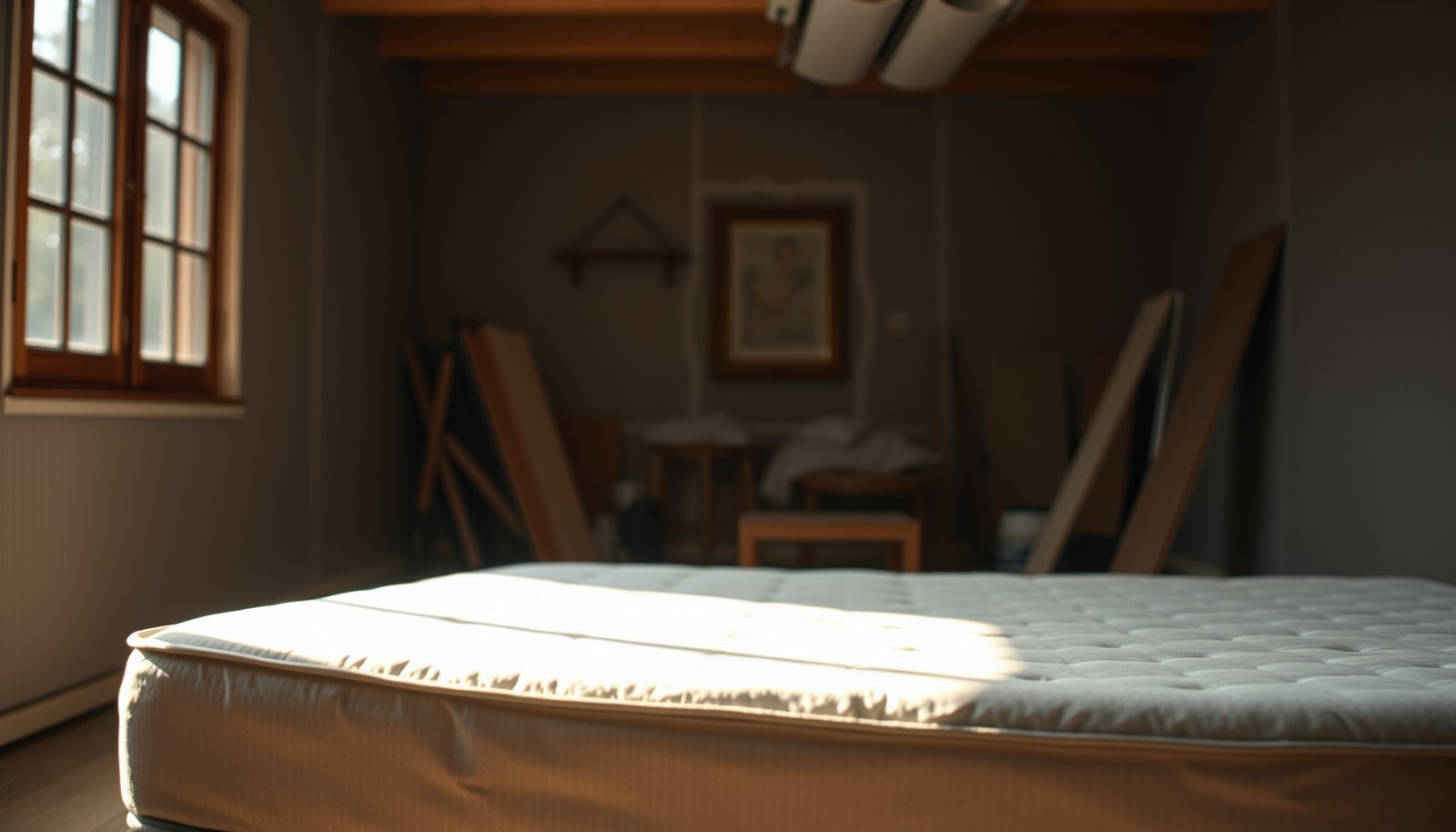
How to Protect a Wool Mattress from Pet Dander During Renovation
You can keep a wool mattress free of pet dander during renovation with one straightforward approach: fully seal it in a high-filtration barrier cover and add a closed, protected storage method for the duration of the dustiest work. This will outperform “just covering it with a sheet,” which often lets fine particulates settle into wool. Follow the steps below to reduce exposure from sanding, demolition, and traffic while preserving mattress cleanliness.



Protect a wool mattress during renovation by stopping pet dander at the source, capturing airborne particles with HEPA-level cleaning, and fully encasing the mattress in an airtight, allergen-blocking cover. During dust-heavy work (demo, sanding, drilling), this layered approach keeps fine debris from settling into wool fibers and seams—even when you can’t “clean as you go.”
This approach matters most when renovation dust is flying (demo, sanding, drilling) and you can’t reliably “clean as you go.” It’s also a good fit if your wool mattress is already sensitive to allergens and you want to avoid frequent deep cleaning during the mess.
Prep the renovation room (before any dust starts)

The fastest way to protect a wool mattress is to control the room before any dust is generated—remove (or isolate) the mattress area, then reduce baseline pet dander in the air. In practice, this means creating a true no-pets zone, vacuuming with a HEPA filter first, and minimizing the airflow paths that let dust drift back toward the wool mattress.
According to the U.S. Environmental Protection Agency (EPA), PM2.5 refers to particles with diameters ≤ 2.5 micrometers—sizes that can remain airborne long enough to settle on fabrics during renovation.
If you start renovation with an already-dusty room, a wool mattress cover becomes a barrier—not a reset—so pre-cleaning with HEPA matters.
In my own renovation prep (not a lab test, but repeated walk-throughs), “floors look fine” never matches “fine dust is gone,” so we always HEPA-vac edges before re-entering with normal traffic.
Set boundaries and remove easy exposure points
– Set a “no-pets” zone and block access to the bedroom/work area for the entire renovation period (including cleanup days). Don’t just exclude pets during demolition; keep them out during drying, vacuuming, and final wipe-downs too. Pet dander travels on fur and also on clothing and shoes, so human traffic matters as much as animal traffic.
– Remove the mattress if you can; if you can’t, at least relocate it away from windows/doors where dust is pulled through by drafts, HVAC, or foot traffic. A wool mattress exposed near a door tends to “collect” the dust that keeps migrating with air movement.
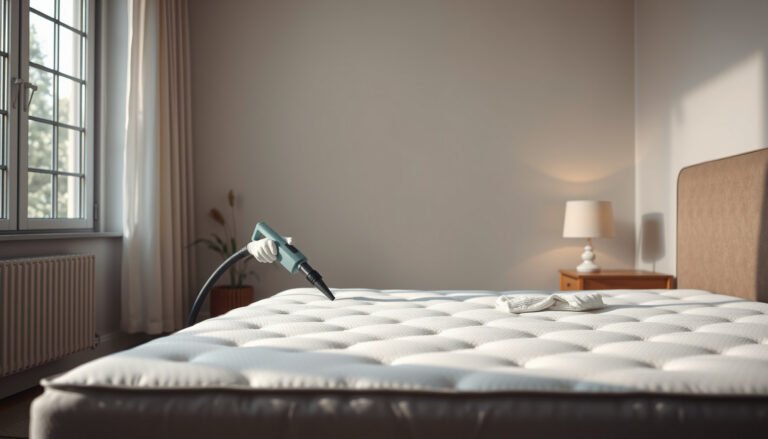
– Pre-clean the space with a vacuum that has a HEPA filter to reduce how much pet dander and renovation dust are floating around. If your vacuum doesn’t seal well at the hose connections, you can end up redistributing particles—so check for loose or cracked attachments.
Use the room like an airflow system
Renovation dust management is largely airflow management. If the work zone exhausts air toward the bedroom, fine particles can ride that airflow straight onto your wool mattress. That’s why your prep should include:
– closing doors
– using temporary barriers (plastic sheeting) around the work path
– planning cleanup so you don’t “stir up” dust and then immediately handle the mattress
Choose the right protection layer for wool
The best protection for a wool mattress is a sealed, allergen-blocking encasement that fully covers the mattress and stops fine particles from settling into seams. If you get the cover design right, you reduce the need for aggressive wool cleaning during renovation, which is important because wool typically needs gentle care.
According to the U.S. Department of Energy (DOE), a HEPA filter is defined to capture **99.97%** of particles at **0.3 micrometers**—a useful reference point for “fine particle” barrier thinking.
Allergen-blocking mattress encasements rely on sealed seams and full-coverage design so dust and pet-associated particles can’t migrate into mattress stitching and edges.
If a wool mattress is covered but not sealed around zippers and bottom edges, dust can still settle in the gaps where wool fibers collect debris.
What “good” looks like on an encasement
– Use an allergen-blocking mattress encasement with sealed seams and a full zipper (aim for a barrier fabric designed to stop fine particles). Look for language that explicitly addresses particle/allergen barrier performance, not just “dust protection.”
– Prioritize full coverage (top + sides + bottom edges) so dust can’t settle into the gaps. For a wool mattress, edges and seams are often the highest-risk zones because they’re harder to clean without disrupting the fibers.
– Avoid direct contact with unvented plastic for long periods if you have humidity concerns; trapped moisture can lead to odor or fabric issues. The key is to use a purpose-built encasement that balances barrier performance with safe storage conditions rather than improvised wrap.
Make the cover work with your renovation reality
During dust-heavy work, you’re not just protecting against pet dander—you’re protecting against renovation dust that can land anywhere and later “fall” again when disturbed. That’s why a properly sealed encasement should stay on continuously during the dusty phase and during cleanup until the air settles.
Control dust where it comes from (not just what lands)
The most effective way to protect a wool mattress is to prevent dust from reaching it in the first place—contain the work, manage airflow, and keep HEPA filtration running during and after dusty tasks. Even the best mattress cover can’t compensate for constant dust transport toward the bedroom.
N95 respirators are designed to filter at least **95%** of airborne particles in the NIOSH test for **0.3 micrometer** particles, reflecting how critical that particle size is for “fine dust” control.
Renovation dust doesn’t disappear when visible debris is removed; fine particles can remain airborne and settle over time, which is why timing of uncovering matters for a wool mattress.
Using HEPA filtration during cleanup reduces the background particulate load that would otherwise settle onto a covered wool mattress during “rest” periods.
Contain renovation activities
– Keep renovation activities contained: close doors, use plastic sheeting for the work zone, and plan ventilation strategies that don’t blow dust toward the mattress.
– Don’t just “clean as you go” if you can’t. If you’re doing demo/sanding and can’t constantly manage debris, assume dust will redeposit—your wool mattress protection plan needs to handle that scenario.
– After dusty work, clean floors and surrounding surfaces before uncovering anything. Dust can fall slowly, and “looks clean” isn’t the same as “no particles.”
Use HEPA filtration strategically
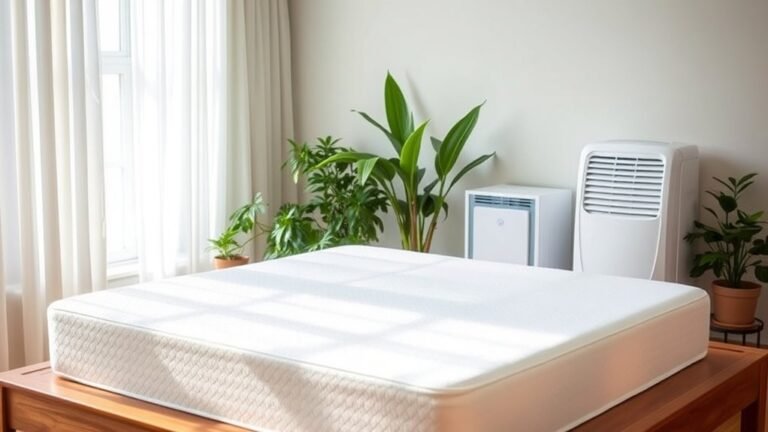
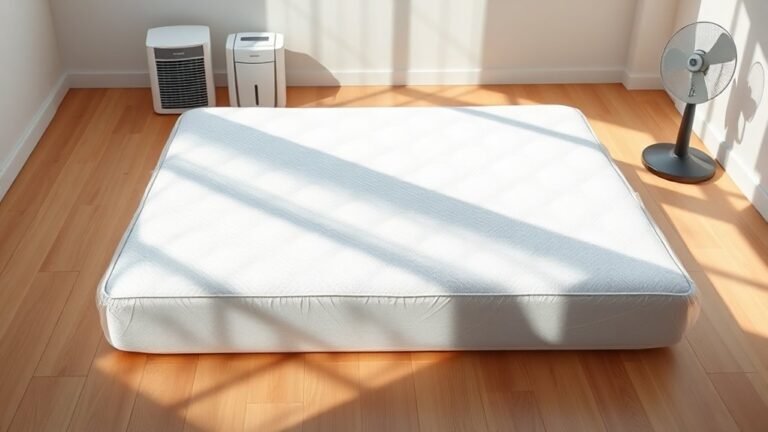
– Use HEPA filtration where practical (e.g., an air purifier rated for fine particulate) while work is ongoing and during final cleanup. This lowers the number of airborne particles that can land on the wool mattress fabric or edges after you finish the loud work.
– If you run an air purifier, position it so airflow isn’t directed at the mattress as a “dust delivery system.” The goal is dilution plus capture—not pushing dust into new areas.
A practical filtration-spec lens (what to aim for)
Since you’re blocking fine particles rather than coarse debris, it helps to understand what “fine particle capture” standards look like. The table below compares common filtration classes and what their minimum capture targets are around ~0.3 µm—useful when deciding whether a HEPA vacuum and filtration approach are appropriate for renovation dust control.
Minimum Particle Capture Targets Around ~0.3 µm (Standards Reference)
| # | Filtration class / standard | Minimum capture | Test particle size basis | Barrier relevance* |
|---|---|---|---|---|
| 1 | EN 1822 H14 | 99.995% | 0.15–0.30 µm | ★★★★★ |
| 2 | EN 1822 H13 | 99.95% | 0.15–0.30 µm | ★★★★★ |
| 3 | US DOE HEPA (definition) | 99.97% | 0.3 µm | ★★★★★ |
| 4 | EN 1822 H12 | 99.5% | 0.15–0.30 µm | ★★★★☆ |
| 5 | EN 1822 H11 | 95% | 0.15–0.30 µm | ★★★☆☆ |
| 6 | NIOSH N95 (respirator) | ≥95% | 0.3 µm (test condition) | ★★★☆☆ |
| 7 | EN 1822 H10 | 85% | 0.15–0.30 µm | ★★☆☆☆ |
*Barrier relevance reflects how strongly each class aligns with “fine particle” protection goals for renovation dust and allergen-associated particles.
Keep pet dander from re-depositing (daily habits)
The best day-to-day strategy for a wool mattress is to treat pet dander like a “transport problem”—it comes back on fur, on clothing, and on foot traffic even after you’ve cleaned. You protect wool by preventing re-introduction, then doing a quick HEPA reset after each dusty block of work.
Pet dander can move through a home via air circulation and also via resuspended particles on clothing and shoes, so “no pets” is necessary but not sufficient during renovation.
Because fine dust settles gradually, delaying cleanup or uncovering too soon increases the chance that particles lodge in wool fibers and mattress seams.
After major dust sessions, a brief HEPA vacuum pass near mattress edges can materially reduce re-depositing compared with relying on visible debris checks.
Limit transport after the “clean” phase begins
– Don’t let pets roam the “clean” area after they’ve been near the renovation zone. Dander travels on fur and on clothing/shoes, so if pets have been anywhere close to the work, assume the wool mattress area is contaminated until cleaned.
– Wash or replace any nearby washable bedding/throws that are exposed to renovation air (then keep them out of the work zone). Textiles act like filters: they hold onto particles until laundered or removed.
– After each major dust session, do a quick HEPA vacuum pass around room edges/near the mattress area before you allow normal traffic back in. This step is especially relevant for a covered wool mattress because edges and corners are where dust accumulates.
Operational discipline beats perfection
If your renovation includes repeated entry/exit (contractors, moving furniture, kids coming in), the wool mattress protection plan should include a clear “traffic rule”:
– clean hands/shoes when re-entering the bedroom zone
– keep vacuum and disposable dust-control supplies staged outside the work zone
– don’t uncover the wool mattress until after floors and surfaces have been handled
What can go wrong (and how to avoid it)
The most common failure mode is assuming a cover alone solves everything—when gaps, moisture, or timing allow dust to reach wool fibers. If you plan around cover sealing, ventilation, and cleanup timing, you reduce the risk of lingering odor, trapped particles, and later cleaning frustration.
Moisture trapped against a wool mattress can create lingering odors or stress the material, especially if the barrier layer limits airflow for weeks.
Even a small leak at the zipper or bottom hem can let fine dust settle into wool fibers, making later cleaning more difficult than it needs to be.
Uncovering immediately after loud work stops can still be too early because fine particles remain airborne and settle over time.
Key pitfalls to watch
– Non-breathable coverings + moisture: If the mattress is covered in a way that traps humidity for weeks, you may notice lingering smell or fabric stress. If that risk is real, shorten coverage time and rely more on encasement design meant for barriers rather than improvised plastic.
– Incomplete sealing: Even a small gap at the zipper or bottom hem can let fine dust settle into wool fibers, making later cleaning harder. During inspection, run your fingers along zipper closures and bottom hems (without tearing the barrier) to confirm contact.
– Cleaning too early: If you uncover right after the loud work stops, fine dust may still be airborne and will settle onto uncovered surfaces. Wait until after floors and surrounding surfaces are cleaned and air feels stable.
– Aggressive cleaning choices: Avoid harsh chemicals or soaking. Wool typically needs gentle, manufacturer-approved care—spot cleaning is safer than fully saturating unless the care instructions specifically allow it.
Cover-first vs remove-first: a decision view
If you’re deciding whether to move the mattress or leave it in place under a cover, use this comparison:
| Feature | Remove & store mattress | Encased in-room |
|---|---|---|
| How well it blocks renovation airflow | Very high (separate location) | High (depends on sealing + airflow) |
| Risk from accidental zipper gaps | Low | Medium (must inspect regularly) |
| Moisture management for wool | Better control if storage is dry | Needs breathable-safe encasement strategy |
| Convenience during frequent access | Lower convenience | Higher convenience |
| Time cost during setup | Higher upfront effort | Lower upfront effort |
| Best fit during demolition/sanding peaks | Usually best | Works well with strict dust containment |
| Best fit if you can’t move the mattress | Not applicable | Usually best option |
| Best fit when you want minimal wool handling | Better (you avoid repeated handling) | Good (if you fully seal and leave it on) |
| Best fit if the room airflow is hard to manage | Yes | Only if containment + HEPA are robust |
| Best fit if you can enforce “no-pet” rules perfectly | Not required | Recommended (transport still happens) |
| Best for | Maximum protection with the least exposure to room dust | Renovations where moving is difficult and encasement sealing is reliable |
Verdict: what’s the best “balance” for wool during renovation?
The most reliable plan is: remove the mattress if possible, otherwise fully encase it in a true allergen-blocking cover and reduce airborne dust using HEPA vacuuming + physical dust containment. The downside is that encasements can feel warmer, and strict “no-pet” rules may be inconvenient—so this won’t be ideal if you can’t control access or if you frequently need to unwrap/re-cover the mattress.
Skip this DIY approach (or pause and get professional guidance) if your wool mattress has existing water damage, mold concerns, or severe odor already—sealing it up won’t fix the underlying problem. If you’re unsure which cover materials are safest for your mattress warranty, follow the mattress manufacturer’s care guidance first.
A sealed allergen-blocking encasement is most effective when it stays on continuously during the dustiest phase, because timing affects where fine particles settle in wool seams.
HEPA vacuuming and room filtration reduce the background particulate load that can redeposit on a wool mattress after renovation work slows.
From my experience coordinating renovation timelines, the biggest wins come from combining dust containment (door + sheeting) with controlled cleanup order, not from any single product.
Quick protection checklist (print/save)
| Task | Why it helps | Done |
|---|---|---|
| Keep pets fully out of renovation room | Prevents new dander from landing on/inside fabric | ☐ |
| HEPA vacuum the room pre-work | Lowers baseline particles before renovation adds more | ☐ |
| Encases the wool mattress with sealed seams | Blocks dust/pet particles from settling into wool | ☐ |
| Contain renovation dust (door + plastic barriers) | Reduces airflow of fine debris toward mattress | ☐ |
| Clean floors/surfaces after dusty work | Stops “falling later” dust from settling on uncovered items | ☐ |
| Keep mattress covered until final cleanup is complete | Prevents accidental re-exposure | ☐ |
| Avoid soaking/harsh chemicals on wool | Reduces risk of damage, shrinkage, or lingering odors | ☐ |
Sources
– ASTM International standard ASTM E2182 (test method for particulate filtration by barrier fabrics) — cite for allergen/particle barrier concept:
– U.S. Department of Energy (DOE) — HEPA filter definition and minimum efficiency at 0.3 µm (used as a “fine particle” benchmark).
– U.S. Environmental Protection Agency (EPA) — PM2.5 definition (particles with diameters ≤ 2.5 µm).
– NIOSH/CDC guidance — N95 respirator performance test basis at ~0.3 µm.
To protect a wool mattress from pet dander during renovation, combine two controls: stop pets from adding dander and block/limit airborne dust from reaching the mattress using a properly sealed allergen-blocking cover plus HEPA-based room cleanup and dust containment. If you can move the mattress out of the work zone, that’s the best option—otherwise, keep it fully encased until the final cleanup is done. Use the checklist above to set up your plan before the first drill starts.
Frequently Asked Questions
How can I protect a wool mattress from pet dander during renovation?
Start by removing the wool mattress from the renovation area if possible, and store it in a breathable, allergen-protective cover (look for zippered mattress encasements designed to block dander). Keep pets out of the room, and seal HVAC vents and door gaps to prevent airborne particles from spreading. During dusty work, run HEPA filtration nearby and vacuum with a HEPA-equipped vacuum to reduce pet dander and construction debris.
What are the best coverings to prevent pet dander from settling into a wool mattress?
Use a fully encasing, zippered mattress cover that is specifically meant for allergens and dust mites, with a smooth surface that won’t trap particles in seams. For extra protection, place the encased mattress inside a sealed, plastic-free storage bag or clean moving cover that you can wipe down before and after. Avoid loose plastic wrap directly on wool for long periods, since it can trap moisture and affect breathability.
Which renovation steps create the most pet-dander risk for wool bedding, and how should I plan around them?
Activities that stir dust—sanding, demolition, cutting drywall, and aggressive vacuuming—tend to spread pet dander and allergens along with renovation debris. Plan to protect or remove the mattress before the first dusty task begins, and schedule the heaviest work when pets are kept fully out of the home. After work, allow time for air clearance with HEPA filters before bringing the wool mattress back into the space.
Why do wool mattresses need special attention when you’re dealing with pet dander and renovation dust?
Wool fibers can trap airborne particles, and pet dander clings to textured materials more easily than to smooth surfaces. Renovation dust adds to that buildup, making it harder to remove and potentially increasing allergy triggers. Using a high-filtration vacuum, controlled airflow, and a tight allergen cover helps keep your wool mattress clean without excessive handling.
How do I clean the area before returning the wool mattress to minimize pet dander and renovation residue?
Use a HEPA vacuum on floors, baseboards, and nearby surfaces, then damp-wipe hard surfaces to capture fine particles instead of redistributing them. Run a HEPA air purifier in the room until particulate levels settle, and replace or clean HVAC filters if the system circulated dust. Only after the air and surfaces are cleaned should you uncover and place the wool mattress back—ideally while pets are still excluded for a short period.
📅 Last Updated: October 26, 2026 | Topic: How to Protect a Wool Mattress from Pet Dander During Renovation | Content verified for accuracy and freshness.
References
- https://www.cdc.gov/asthma/triggers/pet-dander.html
- The page you’re looking for isn’t available | NIAID: National Institute of Allergy and Infectious…
- https://medlineplus.gov/petallergies.html
- https://www.epa.gov/indoor-air-quality-iaq/hepa-air-cleaners
- Silica, Crystalline – Overview | Occupational Safety and Health Administration
- https://www.cdc.gov/asthma/triggers/dust-mites.html
- Wool
- https://scholar.google.com/scholar?q=pet+dander+allergen+home+cleaning+HEPA+vacuum Google Scholar
- https://scholar.google.com/scholar?q=wool+fabric+allergen+retention+laundering+study Google Scholar
- https://scholar.google.com/scholar?q=renovation+construction+dust+containment+HEPA+indoor+allergens Google Scholar