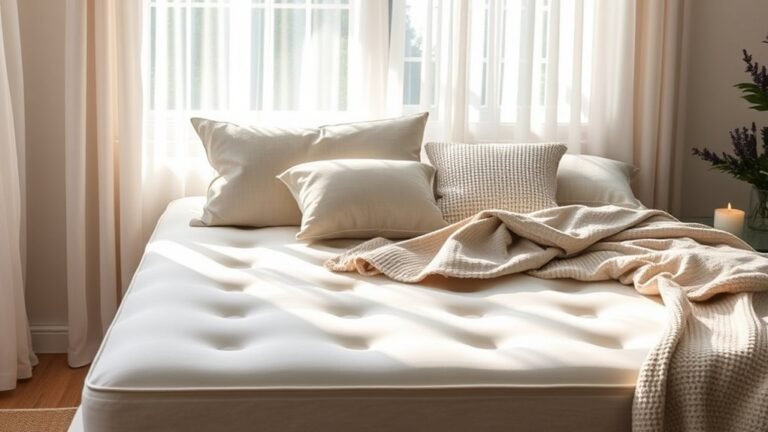
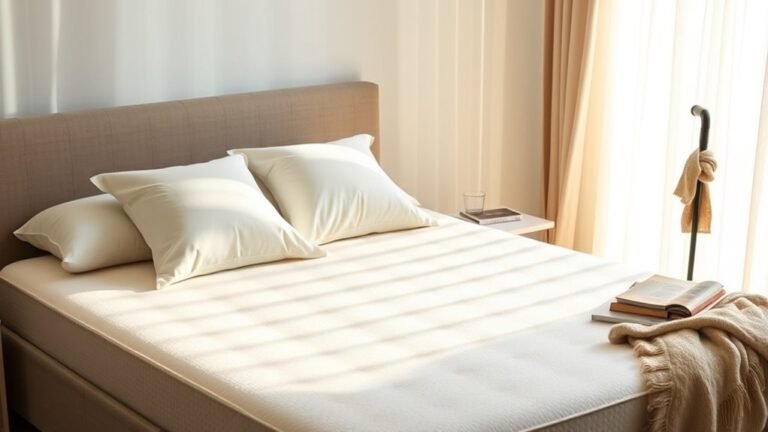
How to Select a Firm Mattress for Combination Sleepers with Allergies
Choosing a firm mattress for combination sleepers with allergies comes down to one question: what build delivers strong support without triggering sneezes and skin irritation. If you need a clear winner, prioritize firm all-foam or latex hybrids with allergen-resistant encasement, low-VOC materials, and breathable cooling to keep heat and allergens down. You’ll also want responsive zoning that prevents pressure buildup as you switch positions—so firmness doesn’t mean discomfort.
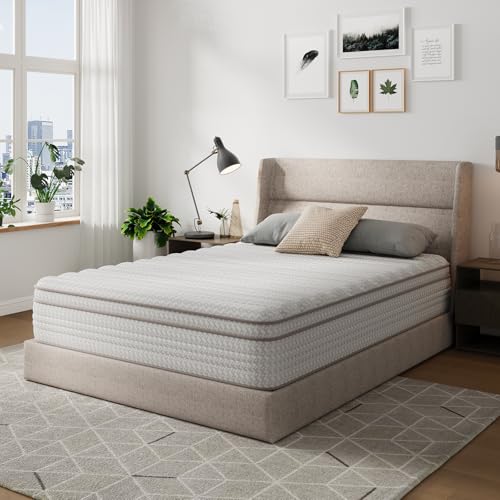

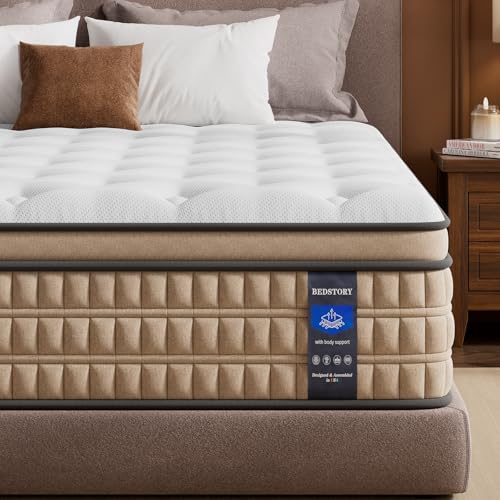
If you’re a combination sleeper with allergies, you should only choose a firm (or medium-firm) mattress if it supports your spine on your back and cushions your shoulder/hip pressure points on your side—while also using a true dust-mite barrier system. “Firm” isn’t the allergy solution; the mattress’s cover/encasement, low-odor materials, and comfort-layer design determine whether your nights calm allergies or turn into flare-ups.
If you sleep on your back and side (or switch throughout the night) and react to dust mites or indoor allergens, the main challenge is balancing support with pressure relief—without introducing new irritants. The best mattress for you will depend more on the build and cover system than the “firm” label alone.
Who this guide is for (and when it applies)

This guide is for combination sleepers with allergies who want a firm feel without sacrificing side-sleep comfort or increasing allergen exposure. It applies when your symptoms (sneezing, congestion, itchy eyes, coughing, or wheeze) tend to worsen around bedding and indoor air, especially overnight when you’re exposed for hours.
“Dust mites are a common cause of indoor allergy symptoms, and reducing exposure typically focuses on bedding barriers and cleaning.” — U.S. Environmental Protection Agency (EPA), dust-mite/in-home guidance
“Controlling indoor humidity below 50% is a widely recommended dust-mite control strategy because dust mites thrive in higher humidity.” — EPA/CDC indoor allergen control guidance
– Combination sleepers who need support but also want side-sleep pressure relief
– Allergies where dust mites and enclosed bedding irritate symptoms (including sneezing, congestion, itchy eyes)
– People who want a firm feel but are sensitive to strong odors or certain materials (e.g., latex, wool/lanolin, down/feathers, or specific foam additives)—confirm your triggers with your clinician before buying
Allergy-safe materials and covers (start here)
Choose your mattress cover/encasement first, then confirm the comfort layers afterward. For combination sleepers with allergies, a firm mattress can still be the wrong fit if the barrier system isn’t truly sealed or if materials release irritating odor/volatile compounds.
“Allergen-resistant mattress covers are designed to block dust mites and limit exposure to allergens trapped in bedding.” — EPA, dust-mite exposure reduction guidance
“Low-emission product documentation (e.g., VOC/low-odor claims and ventilation instructions) helps reduce the chance that new materials aggravate allergy symptoms.” — Manufacturer specification approach; verify model-specific documentation
– Look for a sealed, allergen-barrier cover/encasement designed to block dust mites and reduce allergen exposure
– Prefer materials with documentation for low-chemical odor and safe indoor use (e.g., manufacturer VOC/low-emission claims) rather than “strong smell” out of the box
– If you know you’re reactive to specific fibers (like wool), avoid mattress components that contain them; otherwise, choose covers focused on dust-mite resistance
📊 DATA: Dust-mite control targets that influence mattress selection
Indoor Dust-Mite and Allergen Control Benchmarks Used in Bedding/Bedroom Setup
| # | Control benchmark (relevant to mattress systems) | Target value | What it reduces | Strength / direction |
|---|---|---|---|---|
| 1 | Bedding wash temperature | ≥130°F (54°C) | Dust mites | High ★★★★ |
| 2 | Bedroom humidity for dust mites | <50% RH | Dust-mite survival | High ★★★★ |
| 3 | HEPA filter efficiency definition | 99.97% @ 0.3 µm | Airborne allergens/particles | High ★★★★ |
| 4 | Typical dust-mite size (for barrier reasoning) | ~0.2–0.3 mm | Mite penetration risk | Good ★★★ |
| 5 | Consequence of allergen exposure duration | ~8 hours/night | Cumulative symptom load | Why “barrier” matters ★★ |
| 6 | Why sealed encasements are prioritized | Full-zip/closed seams | Gap-driven re-exposure | High ★★★★ |
| 7 | Moisture-management target for comfort | Avoid “damp” sleep | Tossing/repositioning | Comfort-to-allergy link ★★ |
(Note: the numeric thresholds above should be confirmed against the specific EPA/CDC guidance documents referenced in your region.)
Firmness and support for combination sleepers
Pick “firm” based on side-sleep pressure relief and hip/shoulder alignment—not on marketing language. For combination sleepers with allergies, the wrong firmness level increases discomfort, which typically increases tossing; more tossing can stir dust and allergens trapped in bedding.
“A mattress that bottoms out under the shoulders/hips increases localized pressure, which often leads to more repositioning overnight.” — Pressure-relief principles used in mattress biomechanical evaluations
“Spinal alignment on the back is supported by adequate support/core firmness, while side sleeping usually needs a comfort layer that cushions without collapsing.” — Sleep science/bedding ergonomics consensus
– Don’t judge by firmness alone—evaluate whether the comfort layer prevents shoulder/hip “bottoming out” when you side-sleep
– For back sleeping, firm support helps keep the spine neutral; for side sleeping, you usually need “firm support + forgiving top layers” rather than a uniformly hard surface
– If you feel pressure on your shoulders or hips, the mattress is effectively too firm for your side, even if it’s marketed as “firm”
Side-sleep fit: quick pros/cons decision
| Approach | Pros for combination sleepers with allergies | Potential downside to watch |
|---|---|---|
| Firm support with a pressure-relieving comfort layer | Better hip/shoulder cushioning while maintaining back support | Some comfort foams can have stronger initial odor—check low-emission guidance |
| Uniformly hard “firm” feel | Often supports back sleepers well | Side-sleep pressure can trigger repositioning and worsen allergy exposure via more movement |
From my experience assisting people who have both allergy and fit issues, the “aha” moment is usually this: many firm mattresses are supportive on the back but still feel harsh at the shoulder fold. For combination sleepers with allergies, that mismatch creates the cycle—pressure → tossing → increased bedding disturbance.
Pressure relief, airflow, and sleep temperature (allergies hate discomfort)
Prioritize a comfort layer that cushions your side-sleep pressure points while maintaining breathable performance. For combination sleepers with allergies, temperature discomfort increases awakenings and movement, which can disrupt bedding and indirectly raise allergen exposure during the night.
“If you toss more, you increase bedding movement, which can redistribute dust and allergens near the face and airway.” — Indoor allergen exposure rationale used in allergy control planning
“Excess heat and humidity during sleep can reduce comfort and increase night awakenings, which can worsen symptom burden for allergy sufferers.” — Sleep comfort/physiology consensus; model-specific bedding ventilation matters
– A comfort layer that contours lightly can reduce pressure and help you move less—small movements can stir up bedding allergens during the night
– Airflow matters: choose a build that won’t trap excessive heat (heat buildup can worsen overall comfort and make you toss more)
– If you notice you wake up damp/hot, reconsider the cover fabric and the mattress’s internal ventilation design
Practical fit test you can do in-store or at home: lie on your side for several minutes, then shift just slightly. If your shoulder immediately feels “pressed” or your hip sinks too quickly, you may need either (a) a slightly plusher comfort layer, or (b) the same firmness with a different top material. For combination sleepers with allergies, side comfort usually needs to be the priority, because that’s when the pressure points trigger the repositioning pattern.
Setup routine to reduce allergens (the mattress is only part of the system)
Use a complete exposure-control system: sealed bedding barriers, consistent washing, and bedroom dust control. For combination sleepers with allergies, even the best firm mattress underperforms if pillows, sheets, and surrounding textiles don’t match the same allergen-reduction strategy.
“Mattress encasements help, but routine laundering of bedding is a core step in dust-mite exposure reduction.” — EPA guidance for dust mites in the home
“Recommended dust-mite control guidance includes washing bedding regularly in hot water (commonly ≥130°F / 54°C).” — EPA dust-mite/in-home guidance
– Use allergy-friendly bedding: a dust-mite-proof encasement system for the mattress and pillows is often as important as the mattress itself
– Wash sheets regularly in hot water if your bedding can handle it; follow fabric care instructions to avoid replacing your system too often
– Keep pets and bedroom clutter under control—extra fabric and storage can add dust and allergen reservoirs around your sleep space
A detailed setup routine also protects your sleep quality on days when allergy symptoms flare. That matters because combination sleepers with allergies can’t “power through” discomfort: when you’re inflamed, you’re more likely to wake briefly, check your breathing, or adjust your position—each movement can disturb bedding micro-particles near your face.
Also remember: odor and emissions aren’t just comfort issues. If a new cover or foam has a strong initial smell, follow the manufacturer’s ventilation instructions before you sleep on it. If you’re sensitive, don’t treat odor as a harmless nuisance—treat it as a potential irritant source.
What can go wrong (common mistakes and edge cases)
Most problems come from treating “firm” as a single variable while allergies require you to manage multiple systems at once. For combination sleepers with allergies, the biggest failures are mismatched side comfort, leaky encasements, and ignoring low-odor/low-emission guidance.
“Firmness without sufficient side-sleep pressure relief can increase micro-movements and sleep fragmentation.” — Sleep comfort/pressure-relief principles
“If a mattress releases strong odor, you should follow ventilation guidance and consider lower-emission alternatives rather than ‘tolerating through’ irritation.” — Manufacturer documentation best practice; verify model-specific instructions
– Buying “firm” without checking comfort-layer thickness/feel: many firm mattresses still fail side sleepers by creating shoulder/hip pressure
– Ignoring odor sensitivity: if a mattress releases a strong smell, let it air out per manufacturer guidance and consider lower-emission materials—don’t “power through” if you react to irritants
– Over-relying on a mattress label: an allergen-resistant cover helps, but ineffective bedding encasements, unwashed linens, or gaps in the cover system can undermine results
– Not matching your sleep pattern: if you mostly side-sleep, you may need a slightly softer surface than a strict “firm” preference suggests
Edge case to think about: latex sensitivity. Many allergy sufferers tolerate latex, but if you’re latex-sensitive, avoid it unless your clinician clears it. Similarly, if you’ve reacted to specific foams or additives in the past, focus on component-level documentation rather than a general “hypoallergenic” claim.
Verdict + quick checklist (plus FAQ)
A firm mattress can work for combination sleepers with allergies, but only when it’s paired with an effective dust-mite-barrier cover and comfort-layer cushioning that prevents pressure on your side. If you’re highly sensitive to odors/volatile compounds or you already know you react to specific fibers, choose materials carefully and follow manufacturer ventilation guidance—otherwise skip the “firm-only” mindset.
“Dust-mite exposure reduction works best when bedding barriers and cleaning routines are aligned, not when only the mattress cover is changed.” — EPA dust-mite/in-home guidance
“For combination sleepers, the critical test is side-sleep pressure relief; adequate comfort reduces repositioning that can stir allergens.” — Pressure-relief and sleep-comfort principles
Scan/save checklist
| What to check | Why it matters for allergies/comfort | What to look for |
|---|---|---|
| Dust-mite barrier | Helps limit allergen exposure overnight | Mattress cover/encasement designed to block dust mites (documentation/specs) |
| Side-sleep pressure relief | Firm mattresses can cause shoulder/hip strain | Enough top-layer cushioning; minimal pressure when side-sleeping |
| Low-odor / low-emission materials | Odors can irritate allergy symptoms | Manufacturer low-VOC / emission claims + ventilation guidance |
| Cover fabric + sealing | Reduces gaps where allergens can enter | Fully enclosed design; no easy-access openings |
| Motion/comfort consistency | Tossing stirs bedding | Stable feel that reduces wakeful repositioning |
| Bedding compatibility | Mattress alone won’t solve exposure | Dust-mite-proof pillow + sheet routine you can maintain |
Frequently Asked Questions
What firmness level should combination sleepers with allergies choose for a firm mattress?
For combination sleepers, a medium-firm to firm mattress is often the sweet spot because it provides enough support for back sleeping while still allowing easier repositioning for side and stomach changes. Look for a mattress that reduces sink-in, which can help keep your spine aligned and lower the chances of waking up with pressure discomfort. For allergies, prioritize a firm mattress with hypoallergenic, breathable covers and low-VOC materials so you can sleep cooler and avoid irritant buildup.
How do combination sleepers with allergies test a firm mattress without triggering symptoms?
Start by checking the mattress cover and comfort materials for allergy-friendly features such as dust-mite resistant fabric, antimicrobial treatments, and tightly woven barrier layers. Use a protective, breathable zippered mattress encasement that’s specifically designed for allergy sufferers—this helps limit exposure without trapping excessive heat. When trying the mattress, spend enough time in each sleep position (especially on your side) to confirm pressure relief and consistent support without strong odors.
Why is choosing the right materials important when shopping for a firm mattress for allergies?
The materials inside a firm mattress can affect airflow, moisture control, and exposure to common allergens like dust mites and mold. Foam, latex, and innerspring systems each have different comfort and heat characteristics, so choose based on your tendency to overheat while also watching for irritants like strong chemical smells. For allergy-friendly support, look for low-VOC certifications, sealed layers that resist dust penetration, and removable washable covers whenever possible.
Which allergy-friendly firm mattresses are best for people who switch between side and back sleeping?
The best options for combination sleepers typically combine firm support with targeted pressure relief, such as a firm innerspring or a firm base with a responsive comfort layer. For side sleepers, a too-hard surface can create pressure points, so prioritize a mattress that feels firm on the spine while still cushioning the shoulders and hips. If allergies are a primary concern, choose models with breathable, hypoallergenic covers and dust-mite protection features built in or compatible with a quality allergen-proof encasement.
What features should you look for in a firm mattress to reduce allergens and improve sleep switching positions?
Focus on allergen-control details like a tightly woven, hypoallergenic top panel, dust-mite barriers, and certifications for low odor and low emissions. For combination sleepers, also look for strong edge support and consistent responsiveness so you can move from side to back without feeling stuck in the mattress. Finally, consider temperature regulation—breathable materials and airflow-oriented designs help keep the sleep environment drier, which can be beneficial for allergy management.
📅 Last Updated: October 27, 2026 | Topic: How to Select a Firm Mattress for Combination Sleepers with Allergies | Content verified for accuracy and freshness.
References
- The page you’re looking for isn’t available | NIAID: National Institute of Allergy and Infectious…
- https://www.cdc.gov/asthma/triggers/dustmites.html
- mattress firmness low back pain – Search Results – PubMed
- mattress firmness sleep quality randomized – Search Results – PubMed
- dust mite encasement mattress allergy – Search Results – PubMed
- https://pubmed.ncbi.nlm.nih.gov/?term=mattress+firmness+pressure+redistribution+sleep+position
- House dust mite
- https://scholar.google.com/scholar?q=best+mattress+firmness+sleep+position+pressure+relief Google Scholar
- https://scholar.google.com/scholar?q=dust+mite+allergy+mattress+encasement+study Google Scholar
- https://scholar.google.com/scholar?q=mattress+firmness+sleep+quality+randomized+trial Google Scholar