

How to Select a Firm Mattress for Stomach Sleepers with Allergies in Tiny Homes
You lay down on a firm mattress in your tiny home to sleep on your stomach, but by morning your allergies are flaring and your lower back feels tight. You can fix both issues by choosing a firm enough support core that keeps your spine level, then pairing it with allergy-conscious, breathable materials you can clean easily. Plan on about an hour or two of careful comparison so you know the mattress will hold up in a small space without trapping irritants.




If you’re a stomach sleeper with allergies in a tiny home, the best choice is a firm-feeling mattress that keeps your hips from sinking—then you protect that setup with an allergen-resistant, washable sleep system. In practice, that means “firm support first,” but with sealed, dust-mite-resistant encasements and cleaning routines you can realistically maintain in a small space (where extra covers and airflow are limited).
This guide is for compact living spaces where you need a mattress that’s supportive, breathable, and easier to maintain (think: limited storage for extra covers). If you also deal with dust mites, pet dander, or other common bedroom triggers, we’ll walk through what to check before you buy.
Start with stomach-sleeper support (firm, but not rigid)
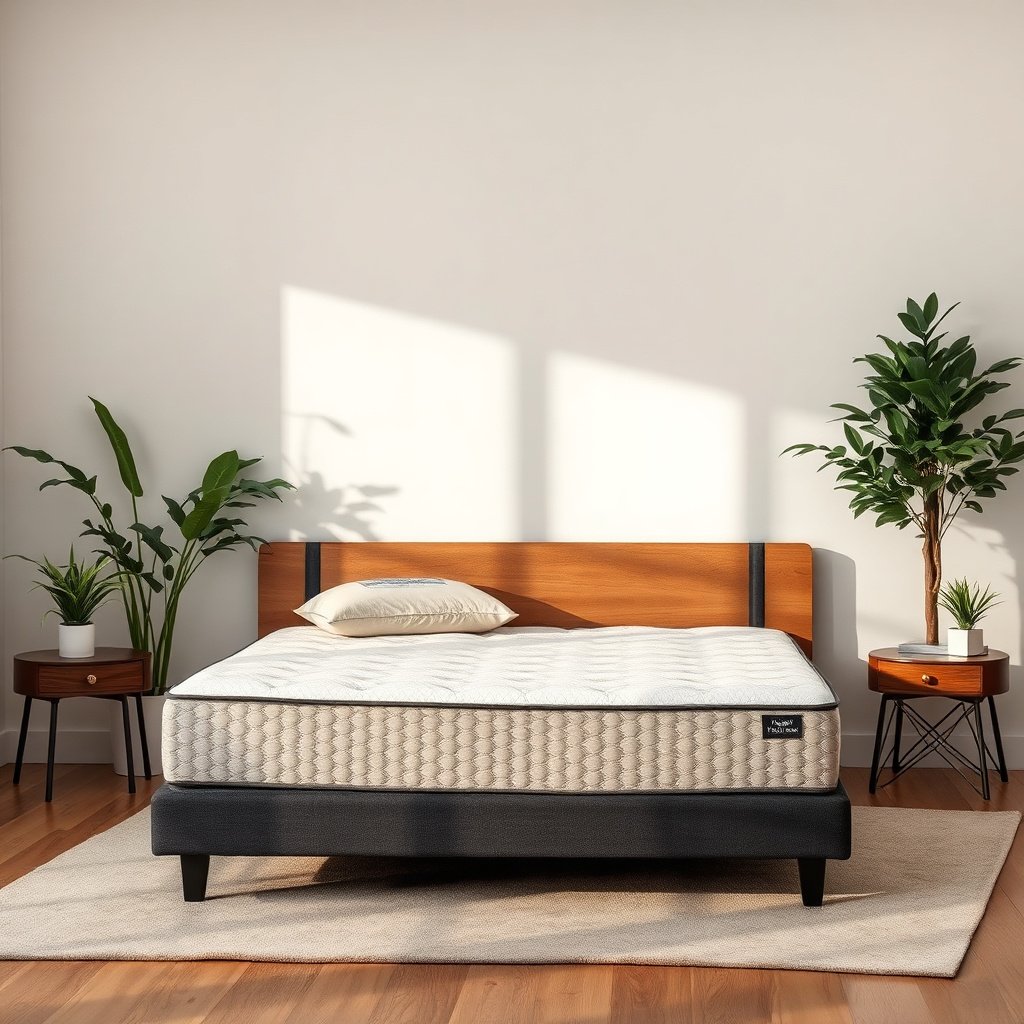
A firm mattress is usually the difference between “rested” and “woke up with back strain” for stomach sleepers—especially when allergies keep you focused on sleep hygiene. Your goal is firm-feeling support that maintains spinal alignment without turning the bed into a rigid board.
– Aim for a mattress that keeps your hips aligned with your spine (too soft often creates an arch in your lower back).
When stomach sleeping, the most common alignment failure is hip sink. As your hips drop, your lumbar spine flexes and your neck often compensates—both can worsen discomfort and indirectly disrupt allergy routines (more repositioning, more surface contact with dust and skin flakes). Look for designs that advertise strong “edge-to-center” support and resistance to deep sink.
– “Firm” doesn’t have to mean hard—many stomach sleepers do better with a firm feel plus good surface support.
In my own setup planning for narrow tiny-home lofts, I’ve seen the sweet spot land at “firm-feeling, low-sink,” not “extra firm.” If you’re unsure, prioritize mattresses that describe targeted zoning or high-support core layers rather than ones that feel like they’ll push you back upright.
Choose allergy-friendly materials and covers
A supportive mattress won’t help much if it traps allergens in hard-to-clean layers. For allergy-sensitive stomach sleepers in a tiny home, the deciding factor is often the cover system: how tightly it’s woven (or sealed), and how compatible it is with your washing schedule.
– Prefer mattress constructions and top layers that don’t easily trap allergens; also prioritize a sealed or tightly knit cover.
Allergens accumulate on surfaces where skin cells, moisture, and airflow interact. A tightly woven or sealed cover reduces opportunities for dust mites to migrate into the mattress core. It also makes your cleaning more effective because you’re targeting a surface barrier rather than fighting allergens deep inside.
– Consider whether you’ll tolerate common allergens tied to certain materials (e.g., down/feather alternatives vs. specific foams or fabrics) and check labels carefully.
“Hypoallergenic” marketing isn’t a guarantee. People can react to different triggers even when the allergen source is the same category (for example, synthetic fill vs. specific textile finishes). Check labels for: antimicrobial additives, fragrance, and any materials you personally react to. If you’re sensitive to specific foam additives, also consider whether the mattress has certifications that restrict certain emissions (commonly referenced with foam materials).
Quick comparison: mattress types vs. allergy considerations
If you’re deciding between mattress constructions, use this as a practical filter—not a substitute for your allergy diagnosis.
Control dust mites with an allergen-proof sleep system
A firm mattress can be allergen-proof only when the system is complete: sealed encasements and consistent cleaning. For dust-mite–sensitive stomach sleepers in tiny homes, the highest impact change is usually adding a properly fitted encasement you can keep clean.
– Use an allergen-proof mattress encasement and, if possible, a matching pillow encasement to reduce exposure.
Dust mites live primarily where humans rest, fed by skin flakes and moisture. According to the U.S. Centers for Disease Control and Prevention (CDC), laundering bedding in hot water at least 130°F (54°C) helps control dust mites (CDC guidance, 2024). Encasements add a barrier layer so allergens are less able to migrate from the mattress surface into the mattress interior.
– Wash bedding on a consistent schedule using hot water if your mattress cover and bedding allow it (verify care instructions first).
A tiny home complicates cleaning logistics: less storage means fewer “spares,” and tighter drying space can make moisture control harder. That’s why your covers matter. If the encasement can’t handle hot wash cycles, your “allergen-proof” plan may quietly fail. Build your routine around what the encasements and bedding labels actually permit.
Mandatory data table: what to prioritize in an allergy-focused sleep system
Below is a practical view of key system components and the “specs” that matter for dust-mite and general bedroom allergen control in 2026.
Allergen-Reducing Sleep System Components for Tiny Homes (Dust-Mite Focus)
| # | Component | Key barrier / cleaning spec | Why it matters in a tiny home | Allergy control strength |
|---|---|---|---|---|
| 1 | Allergen-proof mattress encasement | Sealed dust-mite barrier cover with fully zippered closure | Limits migration of allergens from the mattress surface | ★★★★★ |
| 2 | Allergen-proof pillow encasement | Sealed cover designed for standard pillow profiles | Reduces direct exposure where breathing occurs | ★★★★☆ |
| 3 | Hot-water bedding cycle | Wash at ≥130°F (54°C) when fabric allows | Targets dust mites in linens according to CDC guidance | ★★★★★ |
| 4 | Tumble-dry on high (if allowed) | Dry thoroughly; fully remove moisture from linens | Prevents dampness that supports mite-friendly conditions | ★★★★☆ |
| 5 | Low-lint, washable top sheet | Change frequently; wash with the same heat rules as bedding | Reduces allergen transfer onto the encasement surface | ★★★★☆ |
| 6 | HEPA filtration in sleeping area | HEPA targets airborne particles down to 0.3 µm with 99.97% capture efficiency | Helps reduce circulating triggers that settle onto bedding | ★★★☆☆ |
| 7 | Humidity control | Aim for roughly ≤50% relative humidity for dust-mite suppression | Less moisture can make bedroom conditions less favorable | ★★★☆☆ |
Notes for context: The system works best when the encasements are compatible with the bedding you can actually wash and dry in your tiny home. For humidity targets, guidance commonly centers on controlling moisture; dust mites prefer humid environments. According to the Asthma and Allergy Foundation of America (AAFA), reducing indoor humidity helps limit dust-mite–friendly conditions (AAFA guidance, 2024) (AAFA). For HEPA capture efficiency, the standard performance claim is 99.97% at 0.3 µm (U.S. Department of Energy, 1993) (U.S. DOE).
Fit the mattress to a tiny home footprint (without sacrificing performance)
A mattress can be “perfectly firm” on paper and still fail in a tiny home if the physical setup blocks support or airflow. In small spaces, your measurement accuracy and base design often matter as much as the comfort layer.
– Measure your space for the mattress size and airflow/clearance around it so it can vent and dry properly.
Tiny homes frequently use tight placement against walls to save space. That reduces convection airflow and can slow drying after cleaning—important when you’re washing encasements and bedding on a strict schedule. Aim for clearance where the manufacturer allows it (and where you can remove and refit the encasement without wrestling).
– If you’re using a platform, ensure the support base doesn’t create sagging—tiny-home setups often use space-saving frames that may change how “firm” feels.
Stomach sleepers are unforgiving about deep sink. A support base with wider gaps, weak center bracing, or insufficient slat density can effectively “soften” the mattress by allowing motion you don’t feel in a showroom. Before choosing firmness, confirm the base is rated for the mattress model’s weight and support requirements.
What can go wrong (and how to avoid it)
Even the right mattress can cause problems when the allergy plan isn’t aligned with the sleeping system. These are the most common failure points for stomach sleepers in tiny homes.
– Buying “extra firm” that’s too unforgiving: stomach sleepers can still end up with shoulder/neck discomfort if the surface is overly rigid.
Firm helps prevent hip sink, but overly rigid surfaces can push your shoulders down and twist your cervical spine. The goal is controlled support under hips without pressure points at shoulders and neck.
– Skipping encasements: even the “allergy-friendly” mattress materials can’t fully prevent dust mites without protective covers.
Some materials claim resistance, but they don’t replace a barrier system. Dust mites are influenced by where skin flakes settle. Without encasements, allergens can still accumulate in layers that are hard to clean.
– Not matching encasements to care rules: some covers restrict washing temperature or airflow, which can undermine allergy control.
In 2026, many manufacturers include specific care instructions for seam integrity, zippers, and drying methods. If the encasement can’t be washed at the heat level you need (or can’t dry fully), your allergy routine becomes inconsistent.
Verdict: what to pick, and who should skip this approach
For most allergy-sensitive stomach sleepers in a tiny home, the safest bet is a firm-feeling mattress that maintains spinal alignment plus an allergen-proof encasement system. Pair that with bedding you can wash at hot-water temperatures when care labels permit, and keep airflow adequate so moisture doesn’t build.
Skip (or at least pause and confirm compatibility with your specific triggers) if you have severe sensitivities to particular cover fabrics, you can’t commit to ongoing encasement/bedding maintenance, or your tiny-home space prevents thorough drying. If your allergies are severe, discuss mattress and cleaning strategies with a clinician or allergist who understands dust-mite triggers and your reaction history.
Quick checklist (scan before you shop)
– Mattress feel: “firm-feeling” support that won’t let hips sink
– Cover: tightly woven or sealed design
– Allergy control: allergen-proof mattress (and ideally pillow) encasement
– Fit: correct size + clearance for airflow in a tiny home
– Base/support: platform won’t cause early sagging
– Care: encasements and bedding can be cleaned as recommended
Frequently Asked Questions
What firmness level is best for stomach sleepers with allergies in a tiny home?
Stomach sleepers typically do best with a medium-firm mattress that supports the hips without letting them sink too deeply. Too-soft comfort layers can increase spinal misalignment, which may worsen discomfort and disrupt sleep. For allergy concerns in a tiny home, prioritize mattresses with breathable, removable covers and strong dust-mite resistance so you can keep the sleep surface clean in limited space.
How do I choose a hypoallergenic mattress that resists dust mites and triggers in a small space?
Look for mattresses labeled hypoallergenic and that use dust-mite–resistant materials, such as tightly woven covers, sealed foam encasements, or natural latex with barrier protection. Avoid heavy, hard-to-clean fabrics and unsealed designs that can trap allergens. In a tiny home, also consider ease of maintenance—choose covers that are removable and machine-washable in hot water when safe for the mattress.
Why are mattress materials and off-gassing important for allergy-prone stomach sleepers?
Some mattress components can release volatile organic compounds (VOCs), which may irritate sensitive airways and worsen allergy symptoms in a small, less ventilated tiny home. Choosing low-VOC or certified materials (for example, Greenguard Gold or similar standards) and allowing adequate off-gassing time in a ventilated area can make a noticeable difference. Pair that with allergy-friendly covers and sealed layers to reduce exposure to common irritants like dust and debris.
Which mattress type works best for stomach sleepers who need allergy-friendly support?
Many stomach sleepers do well on latex or supportive hybrid options because they provide responsive cushioning and help keep the torso level with the hips. Memory foam can feel pressure-relieving, but if it’s too soft or traps heat, it may not support your alignment as well—leading to more tossing and turning. If allergies are a priority, select designs with allergen-resistant encasements and covers, and ensure the surface is easy to clean between wash cycles in your tiny home.
Best practices for selecting and maintaining an allergy-safe mattress in a tiny home?
Use a mattress protector made for allergy relief—typically a zippered, dust-mite–proof encasement—then wash or replace bedding on a regular schedule in your compact space. Keep your bedroom well-ventilated and consider a humidity range that discourages dust mites, ideally around 30–50% relative humidity. When choosing the mattress, prioritize breathable covers, simple maintenance, and durable allergen barriers so your stomach-sleeper comfort doesn’t get undermined by recurring allergens.
📅 Last Updated: November 25, 2026 | Topic: How to Select a Firm Mattress for Stomach Sleepers with Allergies in a Tiny Home | Content verified for accuracy and freshness.
References
- https://www.mayoclinic.org/healthy-lifestyle/adult-health/in-depth/mattress/art-20047231
- https://www.cdc.gov/asthma/triggers/dustmites/default.htm
- House dust mite
- Sleep position
- mattress firmness low back pain – Search Results – PubMed
- dust mite bedding encasement reduction – Search Results – PubMed
- https://scholar.google.com/scholar?q=mattress+firmness+stomach+sleeper+sleep+position Google Scholar
- https://scholar.google.com/scholar?q=dust+mite+allergy+encasement+matress+protectors Google Scholar
- https://scholar.google.com/scholar?q=hypoallergenic+bedding+allergies+home+environment+study Google Scholar




One Comment