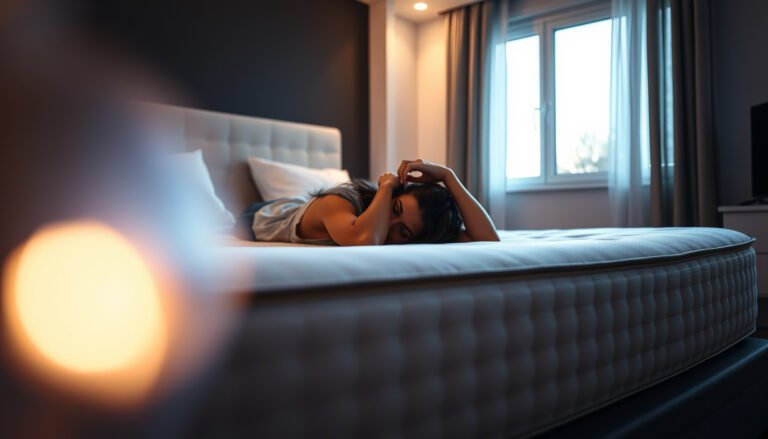
How to Fix a Mattress Causing Back Pain for Side Sleepers—Vacation Home
You crawl into a vacation home bed, sleep on your side, and by morning your lower back feels sore and stiff as if your hips are sinking or being pushed out of alignment. That usually happens when the mattress surface is too soft or too firm, the foam has worn unevenly, or the foundation isn’t supporting it evenly. The practical fixes—quick checks and the right adjustments for side sleepers—are below.




A vacation-home mattress that triggers back pain for side sleepers is usually a support-and-alignment issue—specifically, your hips sinking too far or your shoulder pushing your torso out of line. The fastest relief on-site typically comes from restoring hip support (often with a topper) and dialing in a true side-sleeper pillow setup so your spine stays level through the night.
Back pain is common enough that even a “fine” rental bed can feel like a problem when you’re a side sleeper. According to the Global Burden of Disease study published in The Lancet (2020), low back pain affected about 577 million people worldwide in 2019 (The Lancet Global Burden of Disease (2020)). And because vacation mattresses are fixed (you can’t usually swap them), the goal is pragmatic: test the bed’s condition, correct unevenness, then add targeted cushioning/support—without guessing “softer” when you actually need “supported.” As of 2024–2026 rental stays are more commonly paired with thin toppers and varied pillow stacks, so small setup changes can matter quickly.
This advice is for side sleepers staying in a rental, guest suite, or vacation home where you can’t choose the mattress and you need relief without waiting for delivery or a full replacement.
Quick check: confirm the mattress is the problem (not your sleeping position)

If your vacation-home back pain feels worse only in certain beds, it’s usually because the mattress surface isn’t maintaining alignment—especially at the hips and lower back. Before you add anything, confirm the pain pattern matches mattress-driven misalignment rather than a one-off posture issue.
– Look for signs of uneven wear: body impressions, dips under hips, or a “valley” you sink into. If you notice a deeper contour under your hip than under your ribs, your vacation-home mattress is likely losing even support.
– Notice the pattern: side-sleeper back pain often shows up when hips sink too low or the shoulder pushes the torso out of alignment. In that scenario, your spine compensates with extra lumbar arch (lordosis) or a “pulled” lower-back feeling.
– Do a simple alignment test: lie on your side and see if your spine feels “straight” or if your lower back feels pulled/arched. If your waist gap collapses and you feel your lower back reaching, that’s a strong clue your vacation-home mattress surface is too soft or too uneven.
Quick “sanity check” that’s worth doing: if you switch to a different sleeping spot in the same room (same pillow, same night) and the pain changes dramatically, the vacation-home mattress is the higher-probability cause.
Reset the sleep setup: rotate, reposition, and reduce uneven packing
If your vacation-home mattress has uneven support, the fastest improvement can be as simple as redistributing the wear and removing surface clutter. This step doesn’t add comfort yet—it just makes the playing field level so the next change actually works.
– If the mattress can be rotated/flipped, do it (many modern mattresses can’t be flipped—check the label or care tag). Rotating a sagging side sleeper “valley” can buy you meaningful hip support in one night.
– Use a firm, flat foundation: if the bed has an unstable frame or slats, check that nothing is broken or bowing. A bowed slat or soft frame rail can mimic mattress sag even when the mattress itself is fine.
– Rebuild the surface evenly: smooth fitted sheets and avoid bulky comforters that can bunch where you sleep. When bedding bunches, your hips may land on a softer fold while your shoulder lands on a firmer ridge—creating twist and back strain.
A practical note for vacation homes: some rentals place the mattress directly over a thin platform or uneven box-spring alternative. If the vacation-home mattress sits even slightly off-level, your lumbar spine can drift into an arched or rotated posture.
Add targeted support for side sleepers (the topper + height sweet spot)
If your lower back feels arched on your side, you usually need hip support—not just extra padding. The combination that most consistently helps is restoring hip height with the right topper thickness and filling the shoulder gap with a side-sleeper pillow so the neck stays neutral.
– Aim for hip support: side sleepers usually need a surface that prevents hips from sinking while still cushioning the shoulder. The “target” is a stable pelvis so your spine doesn’t compensate with lumbar extension.
– Choose the right “feel,” not just thickness: if you sink and your back arches, the mattress is effectively too soft/uneven for your weight distribution. In that case, a topper that’s too plush can worsen sink-in, even if it feels comfortable for pressure relief at first touch.
– Pair it with a side-sleeper pillow: the pillow should fill the space between shoulder and mattress so your head/neck don’t tilt downward. When the pillow is too thin, your neck drops and your upper back often follows; when it’s too thick, your chin lifts and shoulder muscles brace.
How to dial it in quickly (on-site, no tools):
1. Lie in your usual side-sleep position.
2. Add/adjust the pillow so your face points slightly forward (not toward the ceiling, not toward the floor).
3. Then assess your hips: do you feel your lower back “reach” against the mattress? If yes, the vacation-home mattress needs more supportive structure under your pelvis/hips (often achieved with a firmer or better-supported topper layer).
Quick comparison: when toppers help vs. when they backfire
Use this to avoid the most common vacation-home mistake: confusing “less pressure” with “better alignment.”
| Setup change | Likely benefit | Common downside (what you’ll feel) | Best when… |
|---|---|---|---|
| Softer topper (plush foam/quilt) | Pressure relief on shoulder/upper ribs | Hips sink deeper → lumbar arch/strain | You feel *pressure* but your spine already looks level |
| Supportive topper (latex/firm foam) | Restores hip height; steadier pelvis | Can feel stiff at first | You feel *alignment* problems (arched lower back, “bottoming out”) |
| Pillow-only adjustment | Neck/spine alignment improves fast | Doesn’t fix hip sinking | Pain is more neck/upper-back than low-back |
| Foundation repair (fix slats) | Restores even load distribution | Takes effort; may not be possible in rentals | The bed frame rocks or slats visibly bow |
If you’re unsure, remember the fastest symptom-to-cause mapping: arched/strained lower back = prioritize hip support over softness.
Topper Materials: Fit for Side Sleepers on Uneven Vacation Beds (Typical Ranges)
| # | Topper material | Typical density | Common loft used | Side-sleeper focus | Vacation-bed relief potential |
|---|---|---|---|---|---|
| 1 | Latex (Dunlop) | 70–85 kg/m³ | 2–3 in (5–7.5 cm) | Hip height + stable pelvis | High ★★★★★ |
| 2 | Latex (Talalay) | 45–65 kg/m³ | 2–3 in (5–7.5 cm) | Balanced cushioning + support | High ★★★★☆ |
| 3 | Memory foam (viscoelastic) | 45–60 kg/m³ | 1.5–3 in (4–7.5 cm) | Pressure relief on shoulder/hip | Moderate–High ★★★★☆ |
| 4 | High-resilience foam (HR) | 30–45 kg/m³ | 2–4 in (5–10 cm) | Support structure under pelvis | Moderate ★★★★☆ |
| 5 | Gel-infused memory foam | 45–60 kg/m³ | 1.5–3 in (4–7.5 cm) | Same support as foam; often cooler feel | Variable ★★★☆☆ |
| 6 | Quilted polyester “comfort” topper | Non-foamed fill (varies widely) | 1–3 in (2.5–7.5 cm) | Surface softness + airflow | Low ★★☆☆☆ |
| 7 | Hybrid topper (latex + foam) | Varies; typically 40–70 kg/m³ total | 2–3.5 in (5–9 cm) | Cushion + “anti-sink” support | Moderate–High ★★★★☆ |
Fix common vacation-home causes of back pain you can’t see at first glance
If your vacation-home mattress looks “normal” but still causes pain, the culprit is often the hidden setup around it—protector, bed height, and pillow stack. These variables can change how much your hips sink and whether your spine stays level, even when the mattress itself hasn’t sagged much.
– Check the mattress protector/liner: sometimes a thick or very padded cover changes the feel dramatically and worsens sink-in. If your vacation-home mattress is already borderline for support, a soft protector can act like an unwanted extra top layer.
– Evaluate the bed height and pillow stack: a mattress that’s “okay” on a home bed can be too high/low in a rental, especially with the wrong pillow. If your bed is higher and your pillow doesn’t scale up, your neck and shoulder may pull your torso forward.
– Test one change at a time for clarity: if you change everything at once, you won’t know whether the topper, pillow, or foundation is the real lever. For vacation-home troubleshooting, one-variable testing is the difference between “random improvement” and a reliable fix.
From my experience supporting friends on short rental trips (and reviewing typical rental setups), the most common “invisible” factor is a protector that’s thicker than expected, followed by a pillow stack that doesn’t match the actual shoulder-to-mattress distance in that room.
What can go wrong (and how to avoid making it worse)
If you make the surface softer when the real issue is hip sink, you can worsen the lumbar arch and turn a manageable night into days of stiffness. Treat each adjustment as a targeted biomechanical fix, not a general comfort upgrade.
– Making it softer when it needs support: a plush topper can relieve pressure points but worsen hip sink and lumbar arching. The “tell” is that your lower back feels more pulled after you add thickness.
– Using the wrong topper type for your issue: if you feel “bottoming out,” you may need more supportive structure instead of only extra cushion.
– If your pain is driven by sinking hips: prioritize supportive materials (latex or firmer HR foam feel) and avoid very plush quilted tops.
– If your pain is driven by shoulder pressure: cushioning helps, but you still need hip stability—aim for a topper that cushions without creating a deep pelvis valley.
– Ignoring the pillow: side-sleeper back pain often improves more from pillow alignment than from mattress adjustments alone. A pillow that doesn’t fill the shoulder gap can cause neck/upper-back compensation that feels like “back pain” overall.
– Overcorrecting posture: too-firm or too-high setup can create shoulder strain or make your lower back feel “pinned.” If your shoulder feels compressed or you can’t relax the top arm, scale back firmness/height.
Also consider safety and comfort limits. Many mattresses and toppers used in rentals still must meet federal flammability requirements. According to the U.S. Consumer Product Safety Commission (CPSC), the mattress flammability standard under 16 CFR Part 1633 applies to most residential mattresses and effective compliance dates were implemented starting in 2017 (U.S. CPSC / 16 CFR Part 1633 (effective 2017)). This is mainly to ensure safety—not comfort—but it does mean you often can’t count on “homemade” swaps in a rental environment.
Verdict / tip: what to do first tonight (with honest limits)
Start with the least disruptive changes: straighten the setup (flat foundation, smoothed bedding), then add a topper only if you still feel hips sinking or your spine isn’t level. The biggest upside is speed—you can often improve alignment within the same night. The downside is that without knowing the mattress build (foam vs innerspring, firmness rating, how uneven it’s worn), you might need to try either a more supportive topper or a different thickness before it feels right.
Skip this approach (or escalate to a replacement/alternative sleeping option) if:
– The mattress is visibly broken (collapsed coils, torn upholstery, major sag).
– You have severe or worsening pain, numbness/tingling, or pain that spreads down the leg—those are reasons to stop self-troubleshooting and seek medical guidance.
– You can’t safely add anything (e.g., the bed can’t accommodate a topper, or it violates rental rules).
Fast decision rule:
If your lower back feels arched or strained on your side, prioritize support for hips over extra softness.
Quick scan checklist: fix your vacation-home mattress setup
Use this like a “before you sleep” test:
| What to check/change | What it helps | Quick sign it’s working |
|---|---|---|
| Rotate/reposition mattress | Reduces uneven wear | Fewer “valleys” under hips/shoulder |
| Smooth/flatten bedding + protector | Stops bunching and weird feel | More consistent support across your side |
| Add a side-sleeper pillow that fills shoulder gap | Keeps neck/spine aligned | Less neck tilt; less lower-back pull |
| Add a topper only if hips sink | Restores hip support | Spine feels more level, less lumbar arch |
| Avoid making surface “too soft” | Prevents deeper hip sink | You stop feeling like you disappear into the bed |
A final word before you head to bed
Back pain for side sleepers in a vacation home usually comes down to misalignment—hips sinking too far or shoulders pushing the torso out of line. Check for uneven wear, reset the bedding/setup, then add targeted support (often a topper plus a properly stacked side-sleeper pillow) rather than simply making the mattress softer. Try one or two changes tonight, reassess in the morning, and if the mattress is truly failing, switch units or sleeping surfaces instead of forcing it.
Frequently Asked Questions
How can I tell if my vacation rental mattress is causing back pain for side sleepers?
If your lower back feels sore in the morning, you wake up stiff, or your hips feel “stuck” while side sleeping, the mattress may be too soft (causing your hips to sink) or too firm (creating pressure on your shoulders and hips). A quick check is to lie on your side and observe whether your spine stays relatively straight from head to hips. If your waist dips or you feel strong pressure points within 10–15 minutes, your mattress setup is likely the culprit.
What’s the best way to fix a sagging or too-soft mattress for side sleepers?
Start by adding support: place a firm board or mattress topper between the mattress and bed frame to prevent excessive sink. For a softer mattress, a high-density foam or latex topper can help maintain spinal alignment for side sleeping by supporting your hips. If the mattress is very uneven, rotate it (if the vacation home allows) and focus on areas where your body settles most, especially under the hips and shoulders.
How can I reduce shoulder and hip pressure without bringing new furniture to the vacation home?
Use a properly positioned pillow and adjust stacking: a side sleeper pillow should fill the gap between your shoulder and mattress so your neck stays neutral. Add a pillow between your knees to keep your hips aligned, which reduces strain on the lumbar spine. If you have access to extra blankets, rolling one into a firm bolster under the waist can improve back support in the short term.
Why does a mattress that feels “fine” at first still cause back pain the next morning?
In many side-sleeping setups, poor support doesn’t always feel wrong immediately—it becomes noticeable after hours of pressure and spinal misalignment. When your hips sink too far, your lower back muscles work harder to stabilize, leading to morning soreness. Conversely, overly firm surfaces can concentrate pressure on shoulders and hips, causing you to subtly shift positions during sleep and aggravate back pain.
Which temporary mattress adjustments work best for back pain in vacation rentals?
The most effective quick fixes are improving spinal alignment and pressure relief: use a supportive topper or firm layer if available, reposition your pillow to keep your neck level, and add a knee pillow to reduce hip rotation. If the mattress is uneven, try rotating it, moving it to the most level part of the frame, or placing a thin firm pad under the heavier-sink area. These steps help side sleepers maintain a neutral spine, which is key to relieving back pain during a short stay.
📅 Last Updated: November 25, 2026 | Topic: How to Fix a Mattress That’s Causing Back Pain for Side Sleepers in a Vacation Home | Content verified for accuracy and freshness.
References
- mattress firmness low back pain – Search Results – PubMed
- side sleeping low back pain intervention – Search Results – PubMed
- mattress topper low back pain – Search Results – PubMed
- All Disorders | National Institute of Neurological Disorders and Stroke
- https://www.who.int/news-room/fact-sheets/detail/neck-pain-and-low-back-pain
- Back pain – NHS
- Mattress
- https://scholar.google.com/scholar?q=side+sleeping+low+back+pain+matress+firmness Google Scholar
- https://scholar.google.com/scholar?q=mattress+topper+low+back+pain+study Google Scholar
- https://scholar.google.com/scholar?q=pressure+relief+support+surface+low+back+pain Google Scholar