

How to Fix a Mattress Causing Hip Pain for Stomach Sleepers in Tiny Homes
You roll onto your stomach in your tiny home and notice your hip aching instead of relaxing. That discomfort usually comes from a mattress that sinks or shifts under your pelvis, leaving your spine slightly arched and your hip forced to work harder. The good news is that a few practical adjustments can restore better alignment—starting with the mattress and support setup right under it.
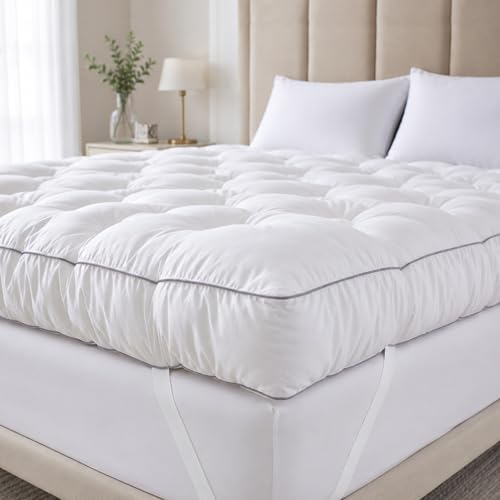



If your stomach sleeping position makes your hip ache, the fastest fix is usually improving mattress support and alignment—either by adding the right topper/support layer or reducing sag/pressure. Start by identifying whether the mattress is too soft (hips sink), too firm (creates pressure), or uneven (one side sits higher), then adjust your setup in small steps until your hips feel level—especially in tiny homes, where frames and foundations often differ from a traditional bedroom.
If you’re a stomach sleeper in a tiny home—where your bed frame, floor surface, or storage/space constraints may differ from a typical bedroom—this is for you. It’s also for you if you’ve already tried “just switch pillows” and still feel hip pain when you lie on your stomach.
Check why your mattress is causing hip pain (soft vs. firm vs. uneven)

The quickest way to stop hip pain is to confirm whether the mattress is failing the pelvis-support test (too much sink, too much pressure, or unwanted tilt). Once you match your symptoms to the correct category, the right fix becomes obvious—because each problem responds to a different adjustment.
H2 headings like “soft vs. firm vs. uneven” matter because stomach sleeping is unforgiving: your lumbar spine typically depends on the pelvis floating in a near-neutral position. In practice, “mattress support” is what prevents your hips from either dropping too low or getting pinned too high under your own body weight.
– Soft/sagging setups: if your hips sink lower than your ribs, you can get strain at the hip joint and low back.
– Too-firm or poorly aligned surfaces: if your pelvis can’t sink slightly, stomach sleeping can create pressure points.
– Uneven height or frame issues: even a small tilt can force your hips to twist while you sleep.
According to ASTM International (ASTM D3574), indentation load/deflection testing compresses foam to a set depth (commonly referenced as 25% indentation in mattress-foam context), which is one reason “soft” isn’t just a feeling—it’s often a measurable loss of support. As of 2026, many tiny-home beds use mixed systems (slats on a narrow platform, partial coverage over floor joists, or a mattress directly over flooring), which can exaggerate the “uneven” and “localized sink” categories even when the mattress brand is the same.
Do a quick at-home alignment test in 5 minutes
You can usually diagnose the cause in minutes by checking where your hips sit relative to your chest and whether one side compresses more. This 5-minute alignment test turns vague hip discomfort into a clear “soft vs. firm vs. uneven” decision.
Do this once while you’re fully rested so you can trust what you feel, not what you’re compensating for.
– Lie down in your stomach sleeping position and notice whether your hips feel “lower than the chest” or “stuck higher than it should be.”
– Use a mirror or phone (optional) to check level: ask someone to glance from the side if you can, or place a mirror where you can see your profile.
– Press test: pay attention to whether one hip feels noticeably more compressed than the other.
Here’s what I recommend for tiny homes specifically: move slowly and deliberately as you get into the position, then stay still for 20–30 seconds before judging. Tiny spaces often encourage “micro-shifts” (the mattress edge, a leg of the bed frame, or a seam in the topper ends up under one hip). Those micro-shifts can turn a mild discomfort into a consistent pain pattern.
Also note timing. If your hip pain ramps up within the first 5–10 minutes, it often points to pressure (too firm or too thin relief over a firm layer). If it builds gradually over the next 30–60 minutes, it often points to support/sag (hips sinking and spinal alignment drifting). Stomach sleeping is common but still a minority posture; according to National Sleep Foundation (Sleep in America survey), prone (stomach) sleepers were reported at roughly ~7% of adults in the mid-2010s—so many mattress setups aren’t tuned for this position.
Fix mattress support with topper + placement (small changes first)
The fastest mattress fix for stomach sleepers is to correct mattress support and alignment under the pelvis—by either lifting to reduce sink or adding pressure relief while keeping stable support. In tiny homes, do small changes first because a topper that “helps” can also hide a deeper foundation problem.
– If hips sink too much: try a firmer topper or add a supportive layer underneath (aim for more lift under the pelvis, not a board-flat feel).
– If pressure is the problem: use a comfort layer (thinner/softer topper) to reduce direct contact pressure while keeping overall support.
– Placement matters in tiny homes: keep the mattress centered on the support surface—shifting it can change how it flexes across a gap or thin floor.
A practical topper decision rule (what to try first)
If your stomach-sleep alignment test shows your hips are dropping, prioritize support. If it shows your hips are not dropping enough (you feel “pinned” or sharp hotspots), prioritize pressure relief.
| Adjustment path | Best for | What you’ll feel | Main trade-off |
|---|---|---|---|
| Add/lift pelvic support (firmer topper or supportive underlayer) | Hips sink below chest | Level pelvis in prone | May feel less “hug” for belly |
| Add pressure relief (thinner softer topper) | Hotspots on one hip or along bony points | Less immediate pinching | Too much softness can recreate sinking |
| Re-center mattress + prevent edge flex | Uneven hip compression | Symmetry returns after shifting | Requires re-check after moving the bed |
One important detail for tiny homes: “placement” includes whether the topper seams or comfort zones line up under your pelvis. If your topper is quilted with zones or baffles, the exact pattern can alter where your hip joint loads. After every adjustment, repeat the alignment test so you’re changing one variable at a time.
Quick guidance for how long to wait
In most mattress-support troubleshooting, you’ll get useful feedback within a few nights because your muscles learn the new load distribution. If you’re still in pain after several nights, you likely need a fine-tune (thickness, firmness, or base correction), not a complete reset.
Common measurements you can track
If you want objective notes, write down: (1) whether hips feel “lower,” “level,” or “higher,” (2) where pain peaks (front hip crease vs. side/bony point vs. near waistband area), and (3) whether pain is immediate (first 10 minutes) or delayed (30–60 minutes). This turns trial-and-error into structured analysis—and makes mattress support and alignment easier to dial in.
Tiny-Home Mattress Support Fixes for Stomach Sleepers (Prone) — What Often Improves Hip Pain
| # | Support issue / fix pattern | Measurable sign | Stomach-sleep effect | Hip-pain relief likelihood |
|---|---|---|---|---|
| 1 | Hips sinking (too-soft support) | Indentation > 1 in (2.5 cm) at hip under moderate load | Pelvis drops, low-back strain tendency increases | ★★★★☆ High |
| 2 | Pinned pressure (too-firm on bony points) | Immediate hotspot < 10 minutes at one hip point | Pressure compresses soft tissue without pelvic “float” | ★★★☆☆ Medium-High |
| 3 | Uneven base tilt | Side-to-side height mismatch ≥ 0.5 in (12 mm) by feel or straightedge | Pelvis twists, hip joint loading becomes asymmetrical | ★★★★☆ High |
| 4 | Slat/plywood gaps creating “hot spots” | Slat spacing > 3 in (76 mm) over the hip zone | Mattress flex concentrates under one hip | ★★★☆☆ Medium |
| 5 | Topper too thick on unstable base | Topper thickness ≥ 3 in (7.6 cm) + base flex present | Comfort masks sag, alignment drifts later | ★☆☆☆☆ Low |
| 6 | Airflow restriction (enclosed platform condensation feel) | Top cover feels “warmer/wetter” within 60–120 minutes | Material softening sensation increases sink risk | ★★☆☆☆ Medium-Low |
| 7 | Support compromise (switching partly to side with a body pillow) | Night hours in prone decrease over 3–7 nights | Reduces repetitive hip joint loading in prone | ★★★☆☆ Medium |
That data table is meant to help you translate “hip pain” into measurable setup symptoms. The core principle remains the same: mattress support and alignment under the pelvis are the levers—pillows alone rarely solve prone hip pain in a tiny home.
Address the base and airflow limits common in tiny homes
The majority of “mystery hip pain” in tiny homes comes from the foundation, not just the mattress. When bed frames sit over narrow platforms or storage cutouts, mattress support and alignment can change across the night—even if the mattress feels fine on a showroom floor.
– Check the foundation/bedding system: slats, platform, and gaps can create “hot spots” that show up as hip pain.
– Prevent sag from limited support: if your bed sits directly on a floor or narrow platform, you may need extra reinforcement/support for even loading.
– Don’t trap moisture if you can avoid it: poor airflow can worsen mattress feel over time (especially on enclosed platforms); improve ventilation where possible.
Tiny homes often introduce three specific foundation variables:
1) Slat spacing and bending: Many manufacturers specify maximum support spacing; in practical bedding guidance, exceeding ~3 in (76 mm) can allow more localized flex under load (a common setup factor behind one-hip compression).
2) Edge proximity and gaps: If storage drawers or cutouts sit under part of the bed, the mattress may bridge unevenly—creating a “hinge” that pushes your pelvis into twist.
3) Floor contact and uneven surfaces: Even small floor slope, rugs, or subfloor texture can alter mattress support and alignment.
Airflow matters because materials behave differently when they hold heat. If your platform is enclosed, the mattress may soften in the zones that run warmest, which can gradually mimic “sag” even when the mattress is still structurally fine. As of 2026, many tiny-home owners report that ventilation improvements (open sides, breathable protectors, leaving a gap at the platform edge) stabilize comfort over time—reducing the day-to-night variability that can otherwise confuse troubleshooting.
What can go wrong (and how to avoid making it worse)
The most common mistake is treating symptoms instead of fixing mattress support and alignment. If you correct the wrong variable (firmness when the issue is tilt, or thickness when the issue is foundation flex), you can delay relief or increase discomfort.
– Overcorrecting firmness: too-firm adjustments can increase pressure on the pelvis and lead to sharper discomfort.
– Adding layers without support: thick toppers on an unsupported base can mask the problem briefly and then worsen sag.
– Ignoring persistent pain signals: if pain is severe, worsening, numbness/tingling appears, or you wake frequently with new symptoms, don’t just “keep tweaking”—consider professional guidance.
Two additional edge cases to watch:
– Topper “comfort drift”: a topper can feel perfect on day one and still fail your pelvis-support goal after a few nights if the base flexes. If your hip pain improves and then returns, it’s often a sign the mattress support and alignment aren’t stable across the week.
– Partner contact and movement (in tiny spaces): body movement may shift the mattress position by a few centimeters. That can reintroduce uneven support and restart the pain cycle.
If you suspect pinched nerve symptoms (tingling, numbness, radiating pain past the hip), don’t treat this as a setup-only issue. Professional evaluation can clarify whether the problem is mechanical (alignment/load distribution) or neurologic.
Verdict: what to try first, and who should skip mattress DIY
The best first step is to adjust mattress support and alignment underneath (or with topper firmness) rather than chasing pillows alone. Here’s the logic: prone hip pain is usually driven by pelvic position—so your changes need to control how the pelvis sits, not only how your head feels.
– Best first step: start with the *support/alignment* adjustment (underneath support or topper firmness) rather than chasing pillows alone.
– Downside to expect: any topper/support change can shift your overall comfort—some stomach sleepers may find they need partial side-lying during the night.
– Skip DIY tweaking if: you have significant back/hip conditions, neurologic symptoms (numbness/tingling), or your pain rapidly worsens after changes—get medical or physical therapy input instead.
– Disclosure: this guide is based on common sleep-alignment principles and mattress support troubleshooting; .
If you do DIY, use a controlled process: one change, then reassess within 2–3 nights. That preserves learning and prevents “layer soup” (too many simultaneous variables).
Scanable checklist (save this for your next adjustment)
– [ ] Hips sink below chest in stomach position? → increase support under pelvis or use firmer topper
– [ ] Pressure feels concentrated on one hip? → check uneven setup, rotate mattress, re-center it
– [ ] Mattress feels “bouncy” or uneven across the surface? → check base/slats/platform gaps
– [ ] After change: pain improves after a few nights but doesn’t disappear? → fine-tune thickness/firmness (one variable at a time)
– [ ] Pain worsens, spreads, or includes numbness/tingling? → stop and seek advice
Frequently Asked Questions
How can I tell if my mattress is causing hip pain when I sleep on my stomach?
Stomach sleepers often feel hip pain when the mattress is either too soft and lets the hips sink too far or too firm and forces an uncomfortable arch in the lower back and pelvis. Common clues include soreness on the hip bone area, pressure points after 20–30 minutes, and waking with stiffness that improves only after changing positions. If you notice the mattress forms a noticeable “dip” under your pelvis or you feel your hips tilting upward, it’s a sign your support and alignment need adjustment.
What’s the best way to fix hip misalignment for stomach sleepers in a tiny home?
Start by improving lumbar and hip alignment: place a thin, supportive pillow under your lower abdomen (not under your hips) to help keep your pelvis from dropping. If you don’t want extra pillows, try a mattress topper—generally 1–3 inches—to fine-tune softness and reduce pressure on the hip while still supporting your spine. In a tiny home where space is limited, prioritize a topper or pad that’s easy to remove and rotate so you can test comfort changes quickly.
How do I choose a topper thickness and firmness to reduce hip pain on my current mattress?
If your hips sink into the mattress and you feel pressure in the hip crease, choose a slightly firmer topper or a memory foam/gel option with medium firmness to prevent excessive sink. If your mattress feels like it’s forcing your pelvis to stay too high, a softer comfort layer can relieve hip pressure and make stomach sleeping less jarring. For many stomach sleepers, a 1–2 inch topper offers enough adjustment without drastically changing your mattress feel, but thicker toppers can help if your current surface is very firm or uneven.
Which mattress foundation or bed setup adjustments can help hip pain in a small space?
Hip pain can worsen if your mattress is on an overly flexible platform or slats spaced too far apart, causing poor support under the pelvis. Check that slats are typically around 2–3 inches apart (or follow your mattress manufacturer guidance) and make sure the mattress sits flat without sagging. In a tiny home, consider adding a supportive board or using a sturdier frame to keep the sleep surface stable, since even small changes in support can improve hip alignment and reduce pressure.
Why does a mattress that feels “comfortable” still cause hip pain for stomach sleepers?
Many stomach sleepers feel comfortable at first because the mattress initially cradles the body, but hip pain can develop as the pelvis gradually sinks or as the spine arches over time. When the mattress doesn’t match your body shape and sleep position, pressure shifts to the hips and surrounding muscles, leading to soreness and stiffness. By targeting pressure relief (less hip sink) and better spinal alignment (less lower-back arch), you can keep stomach sleeping comfortable and reduce recurring hip pain.
📅 Last Updated: November 25, 2026 | Topic: How to Fix a Mattress That’s Causing Hip Pain for Stomach Sleepers in a Tiny Home | Content verified for accuracy and freshness.
References
- Mattress
- Sleep position
- https://www.mayoclinic.org/healthy-lifestyle/adult-health/expert-answers/how-to-sleep/faq-20058545
- https://medlineplus.gov/lowbackpain.html
- mattress firmness low back pain – Search Results – PubMed
- foam topper low back pain – Search Results – PubMed
- https://scholar.google.com/scholar?q=stomach+sleeper+hip+pain+mattress+firmness Google Scholar
- https://scholar.google.com/scholar?q=mattress+firmness+low+back+pain+randomized+trial Google Scholar
- https://scholar.google.com/scholar?q=low+back+pain+sleep+position+stomach+sleeping Google Scholar



2 Comments