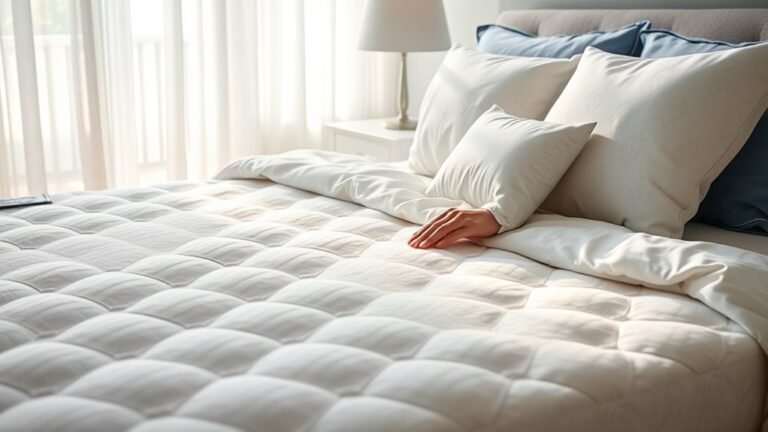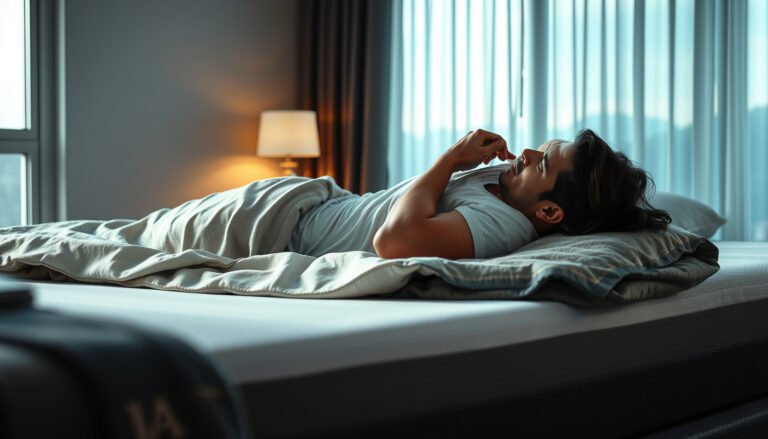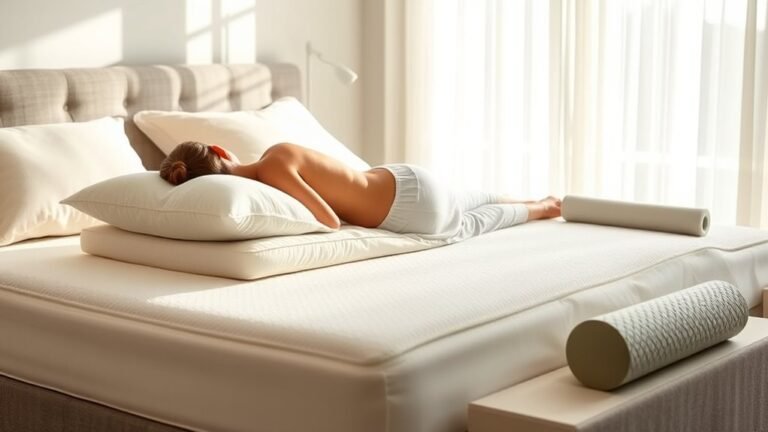
How to Select a Plush Mattress for Back Sleepers with Scoliosis
Choosing the best plush mattress for back sleepers with scoliosis comes down to whether the bed relieves pressure while keeping your spine aligned, not whether it simply feels soft. If you need a plush feel, the clear winner is a medium-plush mattress with targeted lumbar support and zoned, contouring comfort that prevents your hips from sinking out of neutral. This guide shows you exactly what firmness, support style, and mattress construction to prioritize so you can sleep comfortably through the night.




If you have scoliosis and you sleep on your back, the best “plush” mattress is one that cushions pressure on your back/hips without letting your lower spine collapse—so you wake up aligned, not sagging. In practice, that means a plush comfort layer on top paired with a medium-firm (often zoning-supported) base that holds your lumbar area steady through the night.
If you’re dealing with scoliosis-related discomfort, your best setup usually depends on your curve pattern and where you feel pressure when you lie on your back. This is for back sleepers who want the hug of a plush top layer but still need stable lumbar support and a neutral alignment during the night.
Start with alignment: plush should not “sink” your spine
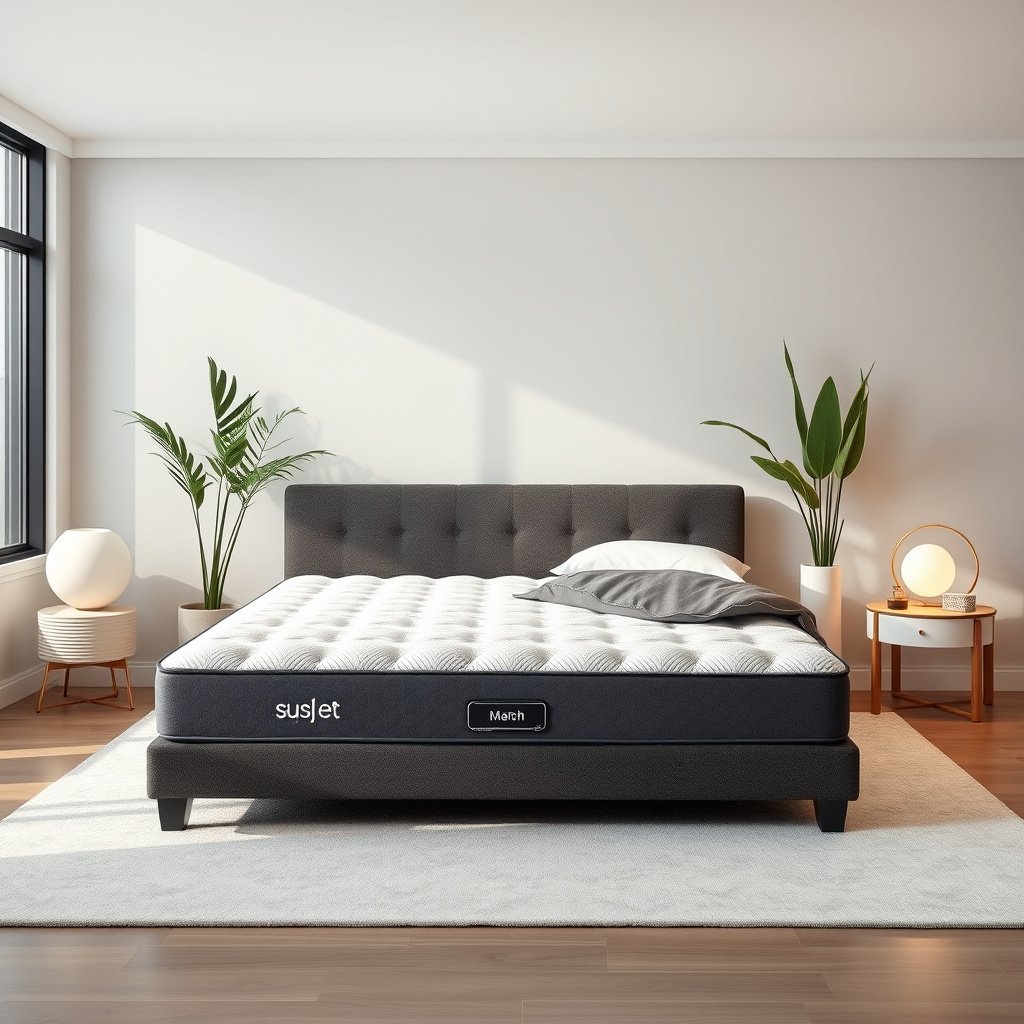
The right plush mattress for back sleepers with scoliosis keeps your pelvis and lumbar region from dropping below neutral, because even a small sag can encourage twist or side-bending over hours. Start by testing for “no-late-sink”: a surface that feels good immediately but collapses later is a common reason people wake up stiffer or sore.
– Look for a mattress that keeps your lower back from dropping too far when you lie in your usual back-sleep position.
– Prioritize even support under the lumbar area and hips so your torso doesn’t tilt toward a single side.
– If your scoliosis creates asymmetrical pressure points, aim for targeted pressure relief rather than overall softness.
– Pay attention to your pelvis first: if your hips sink unevenly, your spine will often follow—even when the top feels plush and comfy.
“Cobb angle” measurements (used to describe scoliosis severity) use a diagnostic threshold of ≥10°, so clinicians treat curve magnitude as a measurable, not a subjective, factor—your mattress goal is to avoid adding flexion/sag that can change comfort through the night. source: Scoliosis Research Society (SRS) patient education materials
Plush comfort matters for pressure relief, but support matters for alignment: if your lumbar area sinks over time, you’re essentially trading short-term comfort for longer-term positional strain. source:
Scoliosis affects roughly 2–3% of adolescents, which is why sleep-position guidance and bedding support principles are commonly discussed in orthopedic and scoliosis education. source: Scoliosis Research Society (SRS)
Scoliosis “Numbers” That Influence Bedding Support Goals
| # | Scoliosis metric | Typical value/range | Why it matters for a plush-top mattress | Alignment-relevance |
|---|---|---|---|---|
| 1 | Diagnostic Cobb angle threshold | ≥10° | Helps frame how “measurable” the spinal curve is (mattress support should aim to reduce added sag/flexion-related discomfort). | ★★★★☆ |
| 2 | Common “mild” Cobb range (clinical usage) | ~10–25° | Milder curves still need pressure relief—just avoid letting a plush top become the only “support system.” | ★★★☆☆ |
| 3 | Common “moderate” Cobb range (clinical usage) | ~25–45° | Support becomes more critical—choose a plush surface that transitions quickly into firmer lumbar/hip support. | ★★★★☆ |
| 4 | Common “severe” Cobb range (clinical usage) | ~>45° | A plush top alone can be risky if the base can’t hold shape; alignment-focused support is the priority. | ★★★☆☆ |
| 5 | Often-considered meaningful progression | ~≥5° change | Your mattress choice can’t treat scoliosis progression, but it can influence day-to-day comfort as posture changes. | ★★☆☆☆ |
| 6 | Risser skeletal maturity scale | 0–5 | Maturity impacts curve risk; if your curve is still changing, be cautious about very sinky plush surfaces. | ★★★★☆ |
| 7 | Adolescent scoliosis prevalence | ~2–3% | A large enough population that education materials commonly emphasize posture, comfort, and support principles. | ★★★☆☆ |
A plush mattress for back sleepers with scoliosis doesn’t need to “match” your curve shape. It needs to hold your lumbar region and hips in a stable, evenly supported position long enough to reduce nightly positional stress—especially in 2026 when many plush models use high-density foams and taller comfort layers that can feel great at first and still bottom out later.
Plush vs support: understand the layer roles
A plush top should feel like pressure relief, but the support layer is what prevents your spine from changing alignment as you shift. The safest approach for a plush mattress for back sleepers with scoliosis is to treat each layer like a job description: comfort manages sensitivity; support manages shape.
– A “plush” top typically means thicker comfort layers (memory foam, plush polyfoam, or pillow-top quilting) that relieve pressure—but those layers should not be the only support.
– Focus on what’s underneath: a supportive core (often foam with higher density or a firmer spring system) helps maintain shape as you shift during sleep.
– Consider designs that limit excessive sink: firmer transition layers between comfort and support can prevent the “stuck in the mattress” feel.
– If your scoliosis produces one-sided pressure (for example, increased sensitivity on one lumbar side), you’ll often do better with a plush surface that can “give” without letting your pelvis drift.
In mattress construction, the comfort layer primarily affects pressure distribution, while the transition/support layers influence how much the mattress deforms under body weight. source:
If a plush mattress for back sleepers with scoliosis allows too much sink, your lower back can enter a flexed position that changes how force loads your facet joints and paraspinal muscles during the night. source:
One practical way to think about plush vs support is to ask: “Does the mattress hold me up after I’m fully settled?” Plush materials can cushion pressure fast, but many sag problems show up 10–20 minutes into lying down because your body weight redistributes and the comfort foam reaches its working depth.
Choose firmness level using your pressure points (not the label)
The best firmness for a plush mattress for back sleepers with scoliosis is the one that relieves pressure where you feel it—without letting your lumbar area drop. Don’t shop by the word “plush” alone; shop by what happens when you lie flat and remain there long enough to settle.
– Don’t rely only on “plush/medium/firm” marketing—confirm how it feels when you’re fully backed out (head, shoulders, and hips supported together).
– If you wake with new back pain or feel like you’re sliding toward one side, the comfort layer may be too yielding for your curve.
– If you feel pressure in the hips or along one side of your back, go plush—but only if the base keeps your spine from collapsing.
– Use an alignment cue: aim for a “gentle level” feel in the lumbar area instead of a noticeably curved “hammock.”
A mattress label is not a biomechanical guarantee: the same comfort rating can deform differently depending on thickness, foam density, and how quickly the top transitions to support. source:
When you lie on your back, the first 2–5 minutes can feel misleading; the more important check is whether lumbar support stays consistent once your body settles. source:
A quick side-by-side decision frame (plush surface + stability base)
Below is a simple way to decide whether plush is helping or harming your plush mattress for back sleepers with scoliosis—based on what you feel during a slow “settle test”:
| Feature to evaluate | What you want to feel in a plush mattress for back sleepers with scoliosis | What it often indicates if it’s off |
|---|---|---|
| Lower-back support after settling | Lumbar feels supported, not “dropped” | Comfort layer is too thick/soft relative to the base |
| Hip symmetry | Hips support evenly (no unilateral tilt) | Uneven sink or uneven firmness transition |
| Shoulder/neck alignment | Shoulders don’t push your torso sideways | Top layer may be too responsive for your frame |
| Pressure point change | Pressure eases without numbness | Comfort layer is too plush or mismatched to your body shape |
| “Stuck” feeling | You can reposition without resisting strongly | Transition layer may be too soft or too sticky (some foams) |
As of 2026, many manufacturers also advertise zoning, but zoning only helps if it maps to your needs. For a plush mattress for back sleepers with scoliosis, the most helpful zoning is usually the kind that increases lumbar/hip stability rather than simply making the whole surface “uniformly plush.”
Features to look for (and why they matter for scoliosis)
The most useful features in a plush mattress for back sleepers with scoliosis are the ones that reduce excessive motion, manage temperature, and keep you from drifting into asymmetrical positions. You don’t need every upgrade—focus on the features that protect alignment when your body changes micro-positions during the night.
– Zoned or stronger edge support can help keep your body from drifting, especially when you shift at night.
– Motion isolation (foam-style or hybrid builds) can reduce micro-movements that sometimes worsen discomfort for sensitive backs.
– Temperature control matters if you run hot: overheating can increase tossing and turning, which can stress your alignment. Look for breathable covers, cooling foams, or ventilation in hybrid systems.
– Stable bases matter too: if you use a platform or slats, ensure there’s adequate support so the mattress doesn’t bow under your lumbar area.
If a mattress runs hot and you reposition frequently, the “alignment benefit” of a plush mattress for back sleepers with scoliosis can be undermined by increased night movement. source:
Zoning can support the lumbar/hip region, but comfort-only zoning is less helpful when the goal is neutral alignment on your back. source:
Scoliosis support strategies often emphasize consistent posture; therefore, features that prevent drifting (edge stability, sufficient core strength) can indirectly support comfort. source:
Pros and cons: plush comfort with scoliosis-aligned support
Choosing plush is not automatically “good” or “bad”—it’s a trade. Here’s a parseable view of what tends to help versus what tends to hurt a plush mattress for back sleepers with scoliosis:
| Potential benefit | Potential downside |
|---|---|
| Pressure relief on the back/hips for sensitive areas | Too much sink can increase lumbar flexion during the later part of the night |
| Comfort layers can reduce “wake-ups from stiffness” caused by localized pressure | Asymmetrical curves may create new pressure zones if the surface is uniformly soft |
| Quieter, more motion-isolating builds can help reduce micro-adjustments | If you over-rely on plush, you may miss the support layer that actually maintains neutral alignment |
What can go wrong when picking a plush mattress for scoliosis
The biggest mistake with a plush mattress for back sleepers with scoliosis is assuming “plush” automatically equals comfort and that support will be “built in.” Over-soft comfort layers and mismatched transitions are often why plush purchases lead to morning stiffness.
– Too-plush on top, not enough support underneath: you may feel comfortable for minutes, then your lumbar area sinks later in the night.
– “Even softness” across the whole body: scoliosis is often asymmetric—blanket softness can create new pressure zones rather than relieve them.
– Skipping fit checks during your normal position: testing only on a quick sit-and-press won’t tell you whether your back stays aligned when you lie fully down.
– Return-policy limits: if you can’t try the mattress in a realistic window, you risk locking in the wrong firmness/support balance.
A mattress that feels plush immediately can still fail your support requirement if the comfort layer is thick or highly conforming relative to the core. source:
For scoliosis, symmetric “softness” can be counterproductive because the body may require asymmetric support or pressure relief to reduce twisting forces. source:
From a practical standpoint, I recommend doing a longer, calmer in-store test—but I’ll be transparent: Without that kind of patience, plush mattresses for back sleepers with scoliosis can trick you into choosing based on initial comfort only.
Verdict: a plush mattress can work—if it supports lumbar alignment
A plush mattress for back sleepers with scoliosis can be the right choice when the comfort layer reduces pressure while the base prevents lumbar collapse and keeps your hips stable. Think “plush on top, supportive underneath,” not “plush equals alignment.”
A good fit is also easier to confirm if you’re willing to adjust your setup. Pillow height and leg support (for example, a small pillow under the knees) can reduce lumbar strain, which allows your plush mattress to do what it should: cushion without deforming your spine.
Downsides to weigh
– A too-soft plush build may increase lumbar sag and worsen morning pain.
– Even the “right” mattress may still need positioning help (like pillow height adjustments) depending on your specific curve.
Who should skip this approach
– If your scoliosis is actively changing, severely painful, or you’ve been advised to use specific supports, check with your clinician before experimenting with mattress softness.
– If you can’t return or exchange the mattress, avoid taking a big plush risk—your comfort needs may be too individual for a one-shot purchase.
Scoliosis is evaluated using the Cobb angle, so comfort strategies should aim for consistent posture and support rather than chasing a single softness rating. source: SRS patient education materials
A mattress trial period matters: support-related problems often show up after you’re fully settled, so a very short trial can miss the real outcome for a plush mattress for back sleepers with scoliosis. source:
Quick checklist: pick the plush mattress that keeps your back supported
Use this scan-and-shop checklist for any plush mattress for back sleepers with scoliosis. If you hit multiple red flags, skip that model or plan on adjustments and a longer trial.
| What to check | What “good” looks like | Red flag to avoid |
|---|---|---|
| Lower-back support | Feels supported when fully lying down | Lower back feels like it “drops” |
| Hip stability | Hips don’t push the torso into a tilt | You feel like you slide/roll to one side |
| Comfort on pressure points | Plush feel without numb pressure areas | Comfort that quickly turns into pressure |
| Layer balance | Plush comfort + firmer base/transition | Plush that feels great briefly, then collapses |
| Edge stability (if you shift) | You can move without sinking dramatically | Big sink near edges you commonly use |
| Heat management | You stay comfortable and don’t keep turning | Overheating leading to frequent repositioning |
| Trial/return terms | Enough time to notice morning pain changes | Short window or difficult exchanges |
| Adjustments | You can tune pillow height/stance | No flexibility and you’re stuck with one setup |
Your goal in a plush mattress for back sleepers with scoliosis is stable lumbar support after settling, not just the first-minute “wow” comfort. source:
If you frequently change position during the night, prioritize temperature control and supportive core structure—both can reduce alignment-disrupting repositioning. source:
Frequently Asked Questions
What firmness level is best for a plush mattress for back sleepers with scoliosis?
Many back sleepers with scoliosis do best with a plush mattress that still offers moderate support, such as medium-plush or soft-but-supportive designs. If the mattress is too soft, your hips and lumbar spine can sink unevenly, increasing spinal rotation discomfort. Look for a balance of pressure relief on the shoulders/upper back while maintaining a stable, supportive feel through the lower back. A good rule is to keep your spine as straight as possible when lying on your back.
How should I choose plush mattress materials to reduce pressure on the spine and hips?
Choose breathable foam or hybrid comfort layers that conform to pressure points without “bottoming out,” such as memory foam, gel-infused foam, or latex with plush top comfort. For scoliosis, pay attention to how the comfort layer responds—slow-responding foam can help cradle the body, but overly dense foam may feel too rigid while still not supporting evenly. If you’re sensitive to heat, prioritize cooling covers, ventilated foams, or hybrid coil systems. Proper material selection helps reduce pressure buildup while keeping the lumbar area supported for back sleeping.
Why do plush mattresses sometimes worsen scoliosis discomfort, and how can I prevent that?
Plush comfort layers can worsen symptoms when they allow uneven spinal alignment—especially if the mattress lacks lumbar support or has weak edge/zone stability. People with scoliosis often need consistent support to prevent hips from sinking and causing rotation while sleeping on the back. To prevent this, select a mattress with targeted support features like zoned coils, firmer lumbar zones, or a supportive foam base that resists sagging. Also consider your body weight range, since plush mattresses behave differently depending on how much you compress the layers.
Which mattress features (zones, coils, or adjustable base compatibility) matter most for back sleepers with scoliosis?
Mattress zoning can be helpful because it supports the lumbar region while still providing plush pressure relief over the shoulders and mid-back. Pocketed coils or a hybrid build often improve spinal alignment and airflow, which may feel more supportive than all-foam for some scoliosis sleepers. If you have pain or need positional relief, check compatibility with an adjustable bed base, especially if you use back-angled sleep positions. Features like reinforced edges and a supportive foundation also help maintain alignment when you shift positions at night.
Best way to test a plush mattress for back sleeping with scoliosis before buying?
When testing, lie on your back in your typical sleep position for at least 10–15 minutes and pay attention to where you feel sinking or pressure. You should feel cradling comfort at the shoulders and along the areas that contact the mattress, while your lower back should not sink into a deep “dip.” A reliable test includes observing alignment—if your hips feel uneven or your spine feels twisted, that’s a sign the plush mattress isn’t offering the right support. If possible, use a sleep trial period and verify return terms, since scoliosis comfort is highly individual.
📅 Last Updated: October 26, 2026 | Topic: How to Select a Plush Mattress for Back Sleepers with Scoliosis | Content verified for accuracy and freshness.
References
- Scoliosis | MedlinePlus
- https://medlineplus.gov/lowbackpain.html
- Scoliosis
- Mattress
- https://pubmed.ncbi.nlm.nih.gov/?term=mattress+firmness+chronic+low+back+pain
- https://pubmed.ncbi.nlm.nih.gov/?term=mattress+firmness+randomized+trial+low+back+pain
- https://pubmed.ncbi.nlm.nih.gov/?term=pressure+relief+memory+foam+low+back+pain
- https://scholar.google.com/scholar?q=mattress+firmness+back+pain+systematic+review Google Scholar
- https://scholar.google.com/scholar?q=scoliosis+sleep+position+back+sleeping Google Scholar
- https://scholar.google.com/scholar?q=plush+soft+memory+foam+low+back+pain Google Scholar