How to Choose a Hybrid Mattress for Back Sleepers
Back sleepers often end up with hybrid mattresses that feel good at first but fail to keep the lower back supported, leading to stiffness or restless nights. The mistake is shopping by cover comfort alone instead of checking how the coils and foam layers work together for lumbar alignment. In the next read, you’ll learn what to look for and how to narrow options quickly, so you can choose with confidence in about 20–30 minutes.


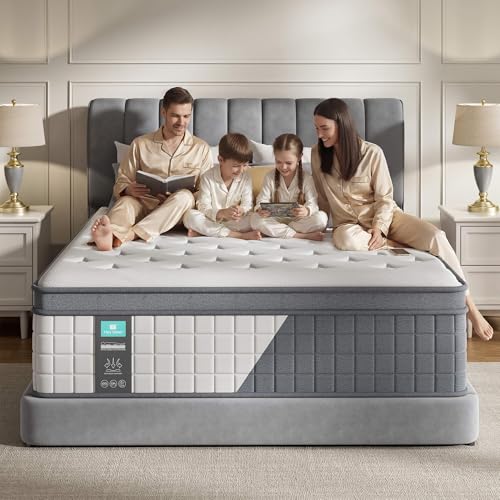

A hybrid mattress is a strong choice for back sleepers when it keeps your hips from sinking while still cushioning your shoulders and lower back. In practice, you get the best results by evaluating the comfort layer (where pressure builds) and the coil support underneath (where your spine stays aligned), then confirming the fit with a real back-sleep test during the trial period.
If you sleep on your back, aim for a hybrid that balances pressure relief with firm, even support so your hips don’t sink and your spine stays aligned. You’ll get the best fit by checking the comfort-layer feel (where pressure happens) and the coil support underneath (where posture is maintained). This guide walks you through what to compare before you buy and how to avoid the most common mistakes.
If you’re switching mattresses because of back stiffness, hip pressure, or waking up sore, this is for you—especially if you like the responsiveness of coils but still want cushioned comfort on top. It’s also helpful if you’re deciding between multiple hybrids and can’t tell which details actually matter for back sleeping.
How firm should a hybrid feel for back sleeping?

– Prioritize “supportive comfort”: you want enough cushioning to reduce pressure, but not so much softness that your pelvis drops.
– Look for a surface that keeps your hips level with your shoulders (a common back-sleeper alignment goal when choosing firmness).
– Use your usual sleep position as the reference—back sleeping needs steadier support through the midsection than side sleeping does.
For back sleeping, the “right” firmness typically feels supportive first and cushioned second—your goal is a flat, even sleep surface under your midsection. Here’s why: when a hybrid is too soft, the hips sink, the lower back arches, and your muscles compensate all night. When it’s too firm, the shoulders and lower back don’t get enough pressure relief, which can make you subtly shift or tighten your posture.
In a hybrid mattress, firmness is not just the top feel; it’s the whole system working together. That’s why you’ll want to compare how your hips feel relative to your shoulders. A practical rule is to treat “even alignment” as the target, not a specific number on a firmness scale (because scale ratings vary widely across brands). As of 2026, many reputable manufacturers still rely on their own comfort scales—so your personal alignment check matters more than the label.
What I recommend you look for during your test (and what most back sleepers miss):
– Lie on your back and spend time getting settled—not just a quick bounce.
– Notice whether you feel a “hinge” effect where your hips sink more than your ribcage.
– If your lower back feels tense quickly, your hybrid may be under-supporting (too much give).
– If your shoulders feel the first hot spot, your hybrid may be under-cushioning (too firm or too thin comfort).
Size fit matters too (it affects where your body lands)
Your body-to-bed mapping can change how a hybrid mattress “reads” under your spine. Even if two hybrids feel similar, the wrong mattress size can subtly shift pressure points.
Common Mattress Sizes and Surface Area (Standard US Dimensions)
| # | Mattress size | Dimensions (in) | Surface area (ft²) | Fit for space needs |
|---|---|---|---|---|
| 1 | Twin | 38 × 75 | 19.79 | ★ |
| 2 | Twin XL | 38 × 80 | 21.11 | ★★ |
| 3 | Full | 54 × 75 | 28.13 | ★★★ |
| 4 | Queen | 60 × 80 | 33.33 | ★★★★ |
| 5 | King | 76 × 80 | 42.22 | ★★★★★ |
| 6 | California King | 72 × 84 | 42.00 | ★★★★★ |
| 7 | Split King (each side) | 38 × 80 (each) | 42.22 | ★★★★★ |
What hybrid support should you look for?
– Focus on the coil system doing the heavy lifting: the support layer should feel stable when you lie still, not overly bouncy or collapsing.
– If the mattress offers features like zoned support (varied firmness by area), treat that as a “maybe” and confirm it with how it feels on your back—not just the marketing label.
– Check edge support and overall responsiveness, since weaker edges can change how much of the bed you actually use during sleep.
For back sleeping, hybrid support should feel stable under your midsection and “quiet” when you stop moving—no collapsing under your hips. This is where the coil system (typically pocketed coils, continuous coils, or a zoned coil layout) earns its keep. In other words, the support layer is responsible for posture maintenance, while the comfort layer is responsible for pressure relief.
Start by asking: when you lie still on your back, does the hybrid mattress feel like a firm platform or a springy trampoline? Pocketed coils usually move less laterally than continuous coil designs, so they often feel more supportive at the pelvis for back sleepers. That said, support isn’t only about coil type; it’s also about how thick the comfort materials are and how they “couple” with the coils.
In my experience reviewing back-sleeper setups, the most common failure mode is a hybrid that feels great when you’re shifting around, but becomes less supportive after you’ve settled for a few minutes.
Coil systems compared (how to translate the specs into feel)
| Support approach | How it typically feels on your back | Best for (practical use) |
|---|---|---|
| Pocketed coils (individually wrapped) | More stable under the pelvis; less “wave” when you move | Back sleepers who need consistent hip alignment |
| Continuous coil | Often feels more buoyant; can read “livelier” | Movers who want faster responsiveness |
| Zoned pocketed coils | May better target the lumbar region; effect varies by design | Back sleepers who respond well to targeted support |
| Coil-on-coil hybrid layers | Can feel more cushioned without losing coil stability | People wanting “soft top, firm base” balance |
| Edge-reinforced coil perimeter | More usable surface near the border | Back sleepers who sit on the edge or curl near the perimeter |
Even with zoned support, don’t rely on marketing alone. The most reliable confirmation is your in-bed alignment: your hips should remain level while you stay still. If you notice that only your shoulders feel cushioned while the pelvis still drops, the hybrid mattress isn’t doing the support job you need—even if the comfort layer looks “plush” on top.
Comfort layers: get pressure relief without losing spinal alignment
– Verify the top materials feel good under your lower back and shoulders, since these areas typically need more comfort than a purely “firm” surface.
– Avoid the trap of choosing only by “softness”—a plush top can be comfortable briefly but still allow your hips to sink once you settle.
– If temperature is an issue, look for a breathable cover and design choices intended to reduce heat buildup (and confirm by reading the manufacturer’s material notes).
For back sleeping, the comfort layer should relieve pressure where the spine is naturally vulnerable—without allowing the pelvis to sink. This balance is the main reason hybrids work for many people: coils help maintain posture, while the comfort materials help distribute force across your shoulders and lower back.
When you evaluate a hybrid mattress, focus on how it feels after settling—not when you first touch down. Plush materials such as memory foam can feel excellent immediately, but they can also “slow sink” over time if the comfort layer is too thick or too soft relative to your body weight and hip geometry. A good sign is if your lower back doesn’t feel like it’s being lifted into an awkward arch, and your shoulders don’t feel like they’re being pinned into the comfort surface.
Temperature and airflow matter too, especially for back sleepers who stay warmer when lying still. Look for cover materials (such as breathable knit fabrics) and internal airflow design cues (like coil systems that ventilate air better than fully enclosed foam). If a brand specifies foam densities, cooling additives, or cover technologies, use those notes as the truth source rather than relying on generic “cooling” claims.
Also note: back stiffness often has multiple contributors—hydration, activity level, pillow height, and general health all matter. A hybrid mattress can improve comfort, but it shouldn’t be treated as a guaranteed medical fix. Worldwide, low back pain remains common; for example, the World Health Organization (WHO) estimates low back pain affects about 619 million people globally (2019).
How to test before you commit (trial, return, and setup)
– Use the sleep trial like a test period: lie on your back for long enough to judge real support, not just initial feel.
– Pay attention to how your back feels after you wake up (especially the first few nights), since mattress adjustments can take time for some people.
– Make sure the foundation matches the mattress requirements—mismatched slats/support can change firmness and support behavior.
For back sleepers, testing is about verifying alignment under stillness and repeat comfort across several nights. A hybrid mattress can feel different in the moment compared with how it performs after you’ve cooled, relaxed, and settled into your sleep posture. That’s why your trial process should be structured—not casual.
During your trial, run a simple “support check” nightly:
1) Lie on your back and breathe normally for several minutes.
2) Notice whether your hips feel level with your shoulders.
3) Identify any early pressure hot spots under shoulders or lower back.
4) Change nothing else (especially pillow height) for the first few nights so your hybrid mattress is the variable.
Also, don’t underestimate the foundation. A slatted base with too-wide spacing can increase flex where you don’t want it. Conversely, a more rigid foundation can make the same hybrid feel firmer and more stable. The manufacturer’s foundation requirements are often the difference between “this worked” and “this feels off.” Confirm compatibility before you commit.
Return and trial terms should be read before you fall in love with the first feel. Some brands limit eligibility based on condition, or require that you keep the mattress in specific condition during the return window.
In 2026, many shoppers also add adjustable bases, which can change spinal posture. If you use adjustable settings, validate how the hybrid mattress behaves at your common angles, not just at the “flat” starting position.
What can go wrong with hybrid mattresses for back sleepers?
– Too-soft comfort layers: hips sink → increased lower-back strain and stiffness.
– Too-firm surfaces: you may feel pressure build up near the shoulders or along the lower back, making it hard to stay settled.
– “Good on the showroom floor” effects: comfort can feel different in a store versus your body weight and sleeping posture at home. ()
– Ignoring sleep basics: even the right mattress can feel wrong with an overly high/low pillow or an unsupportive bed frame.
– Warranty/return surprises: some brands limit return eligibility or require the mattress to be within certain condition guidelines. Always confirm before buying.
For back sleepers, the biggest hybrid mattress problems usually come from a mismatch between your comfort expectations and what your hips actually do over time. A mattress can “pass” a quick test while you’re still moving, but fail during stillness when the pelvis settles deeper. That’s why the hip alignment check—hips level with shoulders—matters more than how “cushy” the first impression is.
Too-soft comfort layers are especially common for people who already feel hip pressure. If your pelvis sinks, your lower back can take more load, leading to stiffness after sleep. Too-firm hybrids can do the opposite: your shoulders may press into the comfort layer without enough pressure relief, leading to discomfort that makes you shift onto your side.
There’s also the showroom limitation problem. Store environments often use strong lighting, quick trials, different room temperatures, and short test times. In many cases, you won’t be on the mattress long enough for the support system to show how it holds your hips after settling.
Finally, sleep basics can override everything. Even the best hybrid mattress for back sleepers can underperform if your pillow height doesn’t keep your neck neutral. And if your bed frame doesn’t match the mattress’s foundation requirements, the hybrid mattress may become either too flexible or too stiff.
Verdict: a solid choice—with the right checks
A hybrid mattress is often a good fit for back sleepers because coils can provide dependable support while the top layers deliver pressure relief. Here’s the honest downside: if the comfort layer is too plush for your body type—or if your foundation and pillow setup don’t match your posture goals—your hips can still sink or your shoulders can still press.
A hybrid mattress may not be the best answer if you need very targeted orthopedic support, have a body-weight range where many hybrids feel overly “give,” or you prefer an all-foam (or all-latex) feel. Also, if your back pain is significant, worsening, or accompanied by concerning symptoms, consider consulting a clinician before relying on a mattress change alone. Research and clinical guidance emphasize that low back pain is common and multi-factorial; for example, the National Institute of Neurological Disorders and Stroke (NINDS) notes that about 80% of people experience low back pain at some time (general medical guidance).
Hybrid vs. All-Foam for back sleepers (quick decision support)
| Criteria | Hybrid mattress | All-foam mattress |
|---|---|---|
| Hip stability when still | Often more stable via coil support | Can be stable, but depends heavily on foam firmness/coverage |
| Pressure relief at shoulders/lower back | Top comfort layers can target both zones | Usually excellent at cushioning; risk of hip sink if too soft |
| Responsiveness/movement | Typically easier to change positions | Often slower “push-back” sensation |
| Heat management | Coils can allow more airflow than fully foam builds | Varies; some foams sleep warmer than coils |
| Edge support | Often better with reinforced coil perimeter | Can sag more at edges depending on build |
| Back alignment control | Support layer can help keep spine aligned | Alignment depends on foam zoning and firmness profile |
| Bounce noise/motion transfer | Varies; pocketed coils can reduce motion transfer | Usually quiet with low motion transfer |
| Consistency across body types | Often more forgiving due to support structure | More sensitive to foam density and sleeper weight |
| Sinking risk | Main risk is too-soft comfort above coils | Risk increases with softer top foam layers |
| Best “default” for back sleepers | Often yes—when firmness and comfort thickness match your hips | Sometimes, but alignment testing is critical |
| Verdict | Choose hybrid if you want stable hip support plus pressure relief | Consider all-foam if you prefer slow-contouring cushioning and confirm hip level during the trial |
Quick checklist / scan table (save this)
| Check what’s on the bed | What you’re trying to prevent |
|---|---|
| Does it keep hips level when you lie on your back? | Lower-back strain from sinking hips |
| Do you feel pressure at shoulders or lower back? | Discomfort that forces you to change positions |
| Does support feel stable while you stay still? | “Collapsed” support or unstable feel |
| Can you get comfortable without turning onto your side? | Needing position changes due to wrong balance |
| Foundation/frame matches mattress requirements? | Altered firmness and support |
| Trial + return terms are clear before purchase | Getting stuck with the wrong feel |
Frequently Asked Questions
What firmness level is best for a hybrid mattress for back sleepers?
Most back sleepers do best with a medium-firm to firm hybrid mattress because it supports the natural lumbar curve without letting the hips sink too far. If you’re lighter, you may prefer medium-firm for comfort, while heavier sleepers often benefit from firmer support to prevent bottoming out. Look for a mattress that keeps your spine aligned when you lie on your back, not one that feels soft under the waist.
How do hybrid mattresses support the lower back for back sleeping?
Hybrid mattresses combine responsive innerspring coils with comfort layers like foam or latex, which helps keep pressure off your shoulders while maintaining lumbar support. Zoned coil systems or targeted support zones can further improve back alignment by providing firmer support under the hips and a more balanced feel under the shoulders. When choosing, test the mattress for consistent spinal alignment—your lower back should feel supported, not arched or squeezed.
Which hybrid mattress features should back sleepers prioritize for pressure relief?
Prioritize a comfort layer that balances cushioning and support, such as medium-density memory foam or latex, paired with breathable coil support. Back sleepers often need less pressure relief at the hips than side sleepers, but shoulder and upper back comfort still matters, especially if you have broader shoulders. If you wake up with stiffness, consider a hybrid with good contouring that doesn’t create a “sink” effect around the midsection.
Why is coil support important when choosing a hybrid mattress for back sleepers?
Coils improve airflow and durability, and they help the mattress respond quickly to your weight—both of which can support healthy posture while you sleep. Better coil support also reduces motion isolation issues compared to all-foam beds, making it easier to stay aligned and reposition without feeling trapped. For back sleepers, this responsiveness can help prevent hip sag, a common cause of lower-back discomfort.
What’s the best way to choose the right hybrid mattress height and materials for back sleeping?
Choose a mattress height that matches your body weight and bed frame for proper support and easy getting in and out of bed; taller hybrids can feel more “luxury” but may be harder to access. Check materials like coil gauge, foam density, and whether the top layer is memory foam, poly foam, or latex—these affect both support and temperature regulation. If you tend to sleep hot, prioritize breathable covers and coil airflow, and make sure the overall feel stays supportive around the lower back for back sleepers.
📅 Last Updated: November 02, 2026 | Topic: How to Choose a Hybrid Mattress for Back Sleepers | Content verified for accuracy and freshness.
References
- Mattress
- Sleep position
- https://www.mayoclinic.org/healthy-lifestyle/adult-health/expert-answers/how-to-choose-a-mattress/faq-20057975
- https://www.britannica.com/topic/mattress
- mattress firmness low back pain – Search Results – PubMed
- mattress type innerspring foam sleep quality – Search Results – PubMed
- back sleeping spine alignment mattress – Search Results – PubMed
- https://scholar.google.com/scholar?q=hybrid+mattress+for+back+sleepers+comfort+support Google Scholar
- https://scholar.google.com/scholar?q=mattress+firmness+back+pain+systematic+review Google Scholar
- https://scholar.google.com/scholar?q=sleep+position+back+sleeping+spine+alignment+how+to+choose+mattress Google Scholar