

How to Choose a Mattress Topper for Back Sleepers: Best Fit Tips
The best mattress topper for back sleepers is one that stays medium-firm while supporting the lumbar curve, keeping hips from sinking and maintaining neutral alignment. This matters most if your current bed feels either too soft under the midsection or too firm on pressure points. We judge options by thickness, materials (memory foam, latex, or fiber), responsiveness, and breathability, since those factors determine comfort without the “hammock” effect.



Choosing a mattress topper for back sleepers is mainly about keeping your hips supported so your spine stays level—without sacrificing pressure relief. Start by matching the topper’s loft (height) and firmness to your current mattress, then choose a material that fits your comfort priorities like heat control and long-term resilience.
Back sleepers typically need a “steady underneath, gently cushioned on top” setup. If the topper is too lofty or too soft, your hips sink and your lower back may over-arch. If it’s too firm, you can lose pressure relief at the shoulders, upper back, or along the sides of the waist. As of 2026, the best approach is to treat the topper as an adjustable comfort layer: you’re tuning alignment and feel, not replacing the support core.
Who this is for (and when it applies)
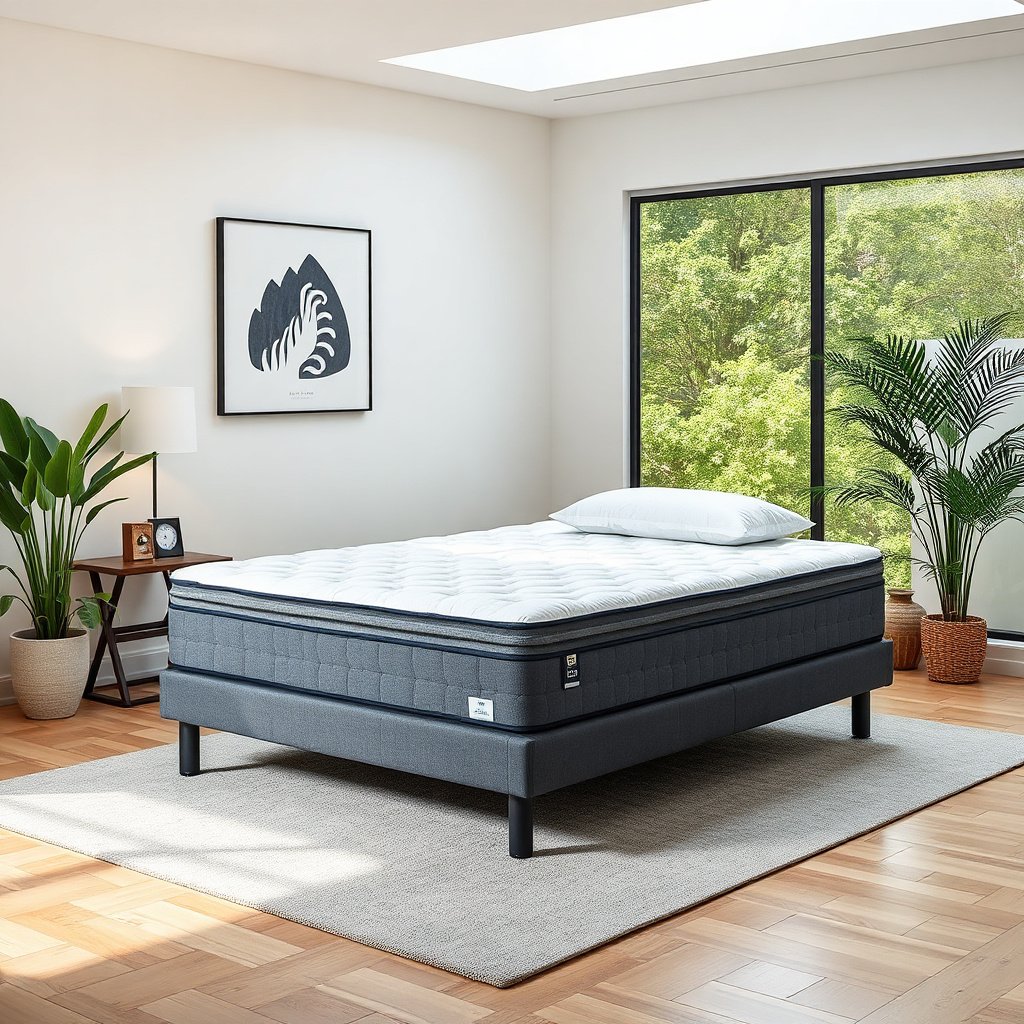
– You sleep on your back and want pressure relief without your midsection sinking out of alignment.
– Your current mattress feels too firm (pressure) or too soft (hips/belly sinking).
– You’re looking to fine-tune comfort—rather than replacing the whole mattress—by adding a topper.
If any of those describe you, a topper can be an efficient “comfort recalibration.” The key is to diagnose whether your problem is primarily pressure (you feel hard points) or support (you feel your hips drop). That distinction largely determines firmness and loft choices.
Choose the right thickness and firmness for back sleepers
Back sleepers generally do best when a topper adds cushioning while preserving hip support, so the lower back doesn’t compensate. In practice, that means you want enough contouring to relieve pressure, but not so much softness that the mattress-topper system lets your pelvis sink first.
– Prioritize spinal alignment: you want your hips to stay supported so your lower back doesn’t arch too much.
Look for “even support”—when you lie on your back, your hips should feel supported at the same time your shoulders feel cushioned. If your waist feels like it’s sagging, the system is letting you rotate into extension (a common contributor to discomfort).
– If your mattress is already firm, start by avoiding an overly “plush” topper that can change your posture.
A firmer mattress can still create pressure at shoulders or shoulder blades; you don’t necessarily need extra sinking to solve that. Instead, choose a topper that’s comfortable without being tall.
– If your mattress is too soft, look for a topper that adds support (not just softness) to slow down that sink.
When the underlying bed is too givey, “cloud-soft” toppers often exaggerate the issue by letting hips sink farther. What you usually need is structure under the cushioning layer—often achieved with a firmer core or a responsive material that resists deep compression.
To make the tradeoffs clear, here’s a quick comparison of how common topper materials tend to behave for back sleepers.
Pick the best material for your comfort needs
The “best” material for back sleepers is the one that cushions without letting your hips sink faster than your shoulders. Here’s how the major topper materials typically translate into pressure relief, responsiveness, and heat comfort.
– Memory foam: often good for cushioning pressure, but can feel warmer depending on the design—watch for ventilation/airflow features.
Memory foam’s slow response can be great for relieving shoulder and upper-back pressure. The back-sleeper caution is loft: if the foam is thick or soft enough to let your pelvis drop, your lower back can become the compensator.
– Latex or latex-blend: typically offers a more responsive feel and may be easier to move on during the night.
Latex tends to “push back” more consistently as you shift, which can help maintain alignment when you add cushioning on top.
– Polyfoam / gel foam: can be a middle path for comfort, but quality varies—compare density and support layers in the specs (or ).
The material name alone doesn’t tell the durability story. For back sleepers, what matters is whether the topper’s support layer prevents bottoming out rather than just adding surface softness.
Material and certification matter for comfort durability and what’s inside the cover and foam. For example, OEKO-TEX Standard 100 organizes textile testing into four product classes (I–IV) based on skin contact and intended wearer type (OEKO-TEX Standard 100 (official standard)). That doesn’t automatically tell you “best topper,” but it helps you understand how cover fabrics are evaluated for regulated substances.
Also, if you’re tracking fiber origin for covers (like organic cotton), GOTS defines thresholds for organic fiber content—typically 70% minimum organic for “made with organic” and 95% minimum organic for “organic” (Global Organic Textile Standard (GOTS) requirements). If the cover is important to you, GOTS is a useful lens for evaluating the textile side of the topper system.
Finally, CertiPUR-US focuses on foam emissions and restricted substances; it states that certified foams meet emissions criteria and do not include added PBDEs, TDCPP, or TCEP, along with limits/restrictions related to certain heavy metals (CertiPUR-US Program requirements for flexible polyurethane foam). If you’re sensitive to odors or certain chemicals, this kind of program documentation can be more meaningful than marketing labels.
Check fit, cover, and support details (so it actually stays put)
A topper won’t help your alignment if it shifts or bunches, so fit and attachment matter as much as foam choice. The goal is a stable, flat surface that supports your hips consistently from night one to night fifty.
– Choose the correct size and thickness for your mattress topper “depth” so corners lie flat and seams don’t bunch.
Even small corner lift can create uneven support—especially noticeable along the hip crease area for back sleepers.
– Look for a secure attachment system (e.g., corner straps/elastic) if your sleep position causes shifting.
If you tend to move from back to side during the night, look for a topper designed to stay anchored with straps, grippers, or a well-fitting elastic perimeter.
– Consider breathability: covers made with performance fabrics (or breathable quilting) can help if you run warm.
Heat management is a system: breathable cover + ventilation in the foam (where applicable) + airflow in your bedroom.
To choose the right topper size confidently, match your mattress size first—topper length and width matter for corner fit.
US Standard Mattress Dimensions (Topper Fit Reference)
| # | Mattress Size | Width (in) | Length (in) | Surface Area (sq ft) | Fit Priority |
|---|---|---|---|---|---|
| 1 | Twin | 38 | 75 | 19.79 | Lower |
| 2 | Twin XL | 38 | 80 | 21.11 | Lower |
| 3 | Full | 54 | 75 | 28.13 | Lower |
| 4 | Queen | 60 | 80 | 33.33 | Lower |
| 5 | King | 76 | 80 | 42.22 | Higher |
| 6 | California King | 72 | 84 | 42.00 | Higher |
| 7 | Split King (2× Twin XL) | 76 | 80 | 42.22 | Higher |
What can go wrong (common mistakes for back sleepers)
These mistakes usually happen when people treat toppers like “more comfort” instead of “alignment tuning.” The symptoms are predictable: hip sink, lower-back arching, heat buildup, or uneven support from shifting.
– Too much loft: the topper raises your body and can alter hip support, causing lower-back discomfort.
A taller topper can also change how your shoulders settle, sometimes forcing you to compensate with pillow height.
– Too soft without enough structure: hips sink first, which often leads to a more pronounced back arch.
If your midsection feels like it drops when you lie still, the topper is probably fighting you rather than helping.
– Heat retention: some materials feel great initially but become uncomfortable if you sleep warm—check ventilation features and care guidance.
If you often wake up warm or sweaty, prioritize breathable covers and airflow-oriented designs.
– Ignoring mattress “age” or sag: if the underlying mattress is already deeply worn, a topper may only mask the problem temporarily.
A topper can’t replace broken spring support or significant core sag; it may make the bed feel different without truly correcting the support geometry.
– Allergies or sensitivities: if you have reactions, verify the cover/material certifications and follow the cleaning instructions exactly.
Covers should be removable if you’re washing regularly, and cleaning guidance should match your foam type.
From what we see in real-world comfort adjustments, the most common “regret path” is buying a topper that’s too plush and too thick—so it feels better on the first test lie, then creates hip sink after a full night. If that’s you, scale back loft and re-evaluate firmness.
Verdict: a practical way to choose (and who should skip a topper)
A mattress topper is often a smart, lower-commitment way to dial in back-sleep comfort—especially when the main issue is pressure or minor support mismatch. The most reliable strategy is to match loft and firmness to your current mattress first, then choose a material that fits your heat and responsiveness needs.
Skip a topper (or treat it as a temporary fix) if your mattress has deep sag, major structural wear, or broken/bunched support that creates severe posture distortion. If you have persistent pain that worsens at night or with specific positions, it’s worth discussing comfort changes with a clinician—because the “best feel” may not be the right medical choice.
Quick scan checklist (save this)
| What to check | Why it matters | What you’re aiming for |
|---|---|---|
| Loft/height vs. your current mattress | Avoids posture shifts that stress the lower back | Hip support feels even while you lie flat |
| Firmness level | Too plush can let hips sink; too firm can increase pressure | Comfortable cushioning without “bottoming out” |
| Material type | Affects pressure relief, responsiveness, and warmth | Comfort that matches whether you sleep hot |
| Attachment/fit | Slippage creates uneven support | Topper stays flat through normal movement |
| Cover breathability & care | Impacts comfort over time | Easy maintenance and airflow where needed |
Sources
– CertiPUR-US — official certification and testing documentation for foam materials and emissions (manufacturer/certification program documentation).
– OEKO-TEX Standard 100 — official textile testing and certification standard (certification body documentation).
– Global Organic Textile Standard (GOTS) — official standard requirements for certified organic textiles (certification body documentation).
– Back-sleep alignment guidance (spine/comfort positioning) —
The bottom line is straightforward: choose a topper that keeps your hips supported and your spine feeling level, then match loft, firmness, and material to your current mattress and how you sleep (especially heat). Measure for the right fit, use an attachment system that prevents shifting, and don’t ignore underlying mattress sag. If you’re unsure, make the smallest change that targets your specific issue—pressure relief versus support—and re-check the checklist before you commit.
Frequently Asked Questions
What mattress topper thickness is best for back sleepers?
For most back sleepers, a topper thickness of about 2 to 3 inches balances pressure relief and spinal support. If you’re dealing with minor discomfort from a worn mattress, 2 inches is often enough to add cushioning without sinking too much. If your mattress feels very firm or your hips sink, consider 3 inches, but choose a supportive material (like latex or high-density foam) to prevent excessive contouring.
How do you choose the right firmness of a mattress topper for back pain?
Back sleepers generally do best with a medium to medium-firm topper that relieves pressure while keeping the spine aligned. Too soft can let your hips sink, which may increase low back pain, while too firm may create pressure points around the shoulders and upper back. Look for toppers described as “supportive,” “balanced,” or “medium-firm,” and prioritize materials that contour without collapsing.
Why is material choice important when selecting a mattress topper for back sleepers?
The material affects both pressure relief and how well the topper maintains spinal alignment. Memory foam is great for cushioning and isolating pressure, while latex tends to offer responsive support and better airflow. If you sleep hot or want easier repositioning, a breathable latex or gel-infused foam topper can be a better fit. For back sleepers on a sagging mattress, a supportive foam or latex topper helps restore surface stability.
Which mattress topper types work best for back sleepers on a too-firm mattress?
If your mattress feels too firm, a 2 to 3 inch memory foam or gel memory foam topper can soften the surface and reduce pressure under the shoulders and lower back. Alternatively, a latex topper can add comfort while still supporting your hips so you don’t sink. Consider an option with medium firmness and enough density to avoid hammock-like sagging, especially if your mattress is already older or uneven.
Best way to prevent hips from sinking when using a mattress topper for back sleeping?
To prevent hips from sinking, choose a topper that offers adequate support beneath the cushioning layer, such as latex or high-density foam. Look for density ratings (for foam) or structured designs that keep the pelvis level, and avoid very plush toppers that allow excessive sink. If possible, use a topper with a thickness around 2–3 inches and pair it with a solid mattress foundation to maintain alignment and consistent support.
📅 Last Updated: November 02, 2026 | Topic: How to Choose a Mattress Topper for Back Sleepers | Content verified for accuracy and freshness.
References
- Mattress
- Memory foam
- Sleep position
- mattress firmness low back pain – Search Results – PubMed
- Relationship between a pressure redistributing foam mattress and pressure injuries: An observatio…
- mattress support spinal alignment sleep – Search Results – PubMed
- mattress topper comfort pressure trial – Search Results – PubMed
- https://scholar.google.com/scholar?q=mattress+topper+back+sleeper+how+to+choose Google Scholar
- https://scholar.google.com/scholar?q=mattress+firmness+low+back+pain+systematic+review Google Scholar
- https://scholar.google.com/scholar?q=memory+foam+mattress+topper+pressure+relief+spinal+alignment Google Scholar





One Comment