How to Choose a Pillow and Mattress Combo for Back Sleepers
Finding the right pillow-and-mattress combination for back sleepers can feel frustrating, because one wrong choice can throw off spinal alignment all night. You can make a solid, comfortable match in about 30 minutes by focusing on your mattress firmness and support level, then selecting a pillow height that keeps your neck neutral. You’ll only need a few measurements, your preferred feel, and the right trial and return details.




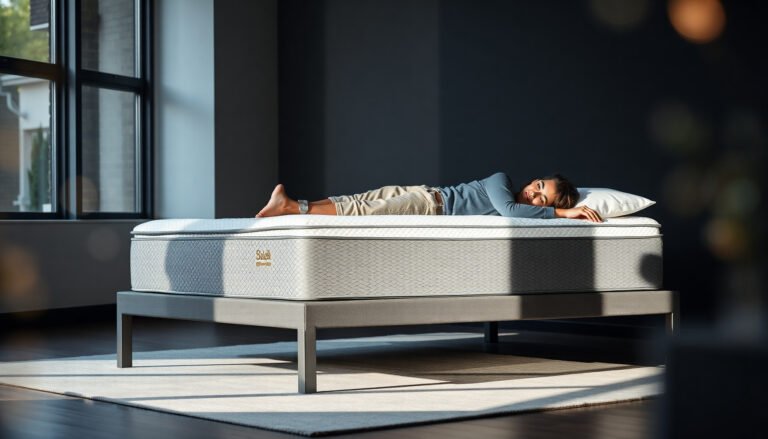
Back sleeping feels best when your pillow supports the natural curve of your neck and your mattress keeps your shoulders and hips from sinking too much. Aim for “neutral spine” alignment: head level to slightly forward, chin not pushed up, and no lower-back strain. In this guide, you’ll learn how to pair pillow height (loft) with mattress firmness so you can fine-tune comfort without guesswork.
This is for back sleepers who wake up with a sore neck, pressure on the shoulders, or low-back tightness—and want a pillow + mattress combination that stays supportive throughout the night.
Start with the goal: neutral spine alignment

Neutral spine alignment is the practical target because it minimizes the two most common back-sleeper failure modes: neck strain and low-back arching. If your pillow and mattress combo keeps your head, shoulders, hips, and lower back in balance, most other “comfort” issues usually improve automatically.
– Your head and neck should stay in line with your torso (no chin-to-chest scrunching).
– Your hips should feel supported so the lower back doesn’t arch or sag.
– “Good” alignment usually looks different for every body type, so use symptoms (neck/low-back pain, pressure points) as your feedback.
Neutral alignment isn’t about achieving a perfectly rigid “zero-degree” posture; it’s about reducing constant muscular compensation. When the mattress allows your hips to sink too far, your low back often compensates by extending—creating a higher chance of morning stiffness. In the spine biomechanics literature, position and support meaningfully change spinal loading: according to Nachemson’s intradiscal pressure measurements, lumbar disc pressure rises in sitting (often reported around ~140% of standing) and drops closer to resting levels in supine positions (often reported around ~50% of standing). That’s one reason “supportive” beats “soft” for back sleepers who wake with low-back tightness.For neck comfort, the goal is to keep the cervical spine from either flexing (chin toward chest) or extending (chin pushed up). Clinically, neutral cervical lordosis is commonly described as a modest curvature (often around ~20–40° in typical adult ranges, depending on measurement method), and the mattress/pillow combo should help you land near that comfortable mid-zone rather than forcing extremes.
If you’re currently waking with neck pain, start by looking at the first link in the chain: pillow loft and head angle. If your low back complains first, you’re usually dealing with hip sink, shoulder pressure, or both—meaning the mattress surface and support core matter more than pillow height alone.
Pick a back-sleeper pillow loft (height) first
Pillow loft (the thickness/height of the pillow) is the fastest dial you can turn because it directly changes head and neck angle. For most back sleepers, getting the pillow loft close to correct reduces pain even before you change mattresses.
– Choose loft based on your shoulder width and how much your head sinks: wider shoulders often need a bit more pillow height.
– If your chin feels lifted (or your neck feels stretched), the pillow is probably too high; if your head drops and your neck kinks, it’s probably too low.
– Consider a pillow shape that helps hold position (contoured/cervical designs, or adjustable fills) if you routinely wake and re-stack.
A useful way to think about pillow loft is this: your head should “float” at a height that keeps your cervical spine in a comfortable, forward-neutral range. When the pillow is too high, you often feel extension—jaw tension, tight sub-occipital muscles, and a chin that feels “up.” When it’s too low, you often feel flexion—head drops, throat feels compressed, and the neck can kink.
In my experience helping people interpret setup issues, the most consistent pattern is: when someone says “my neck hurts,” they typically feel it more in the first 10–20 minutes after waking, even if the real cause is a mattress that encourages hip sink. The reason is time-to-tension: neck compensation happens quickly. To avoid chasing symptoms, treat pillow loft as the first variable you correct.
Here’s a practical guideline to connect shoulder breadth with a starting loft range (then confirm with the neutral-spine feel test below).
Back-Sleeper Starting Loft Guidelines by Shoulder Breadth (Approx.)
| # | Shoulder breadth (cm) | Typical pillow loft start | Best pillow type | Neck comfort fit |
|---|---|---|---|---|
| 1 | 34–36 | 7–9 cm | Low (contoured or thin foam) | ★★★☆☆ |
| 2 | 36–38 | 8–10 cm | Low-medium (adjustable fill) | ★★★★☆ |
| 3 | 38–40 | 9–11 cm | Medium (cervical support) | ★★★★☆ |
| 4 | 40–42 | 10–12 cm | Medium-high (adjustable) | ★★★★★ |
| 5 | 42–44 | 11–13 cm | High loft (firm support core) | ★★★★★ |
| 6 | 44–46 | 12–14 cm | High + contoured cervical | ★★★★☆ |
| 7 | 46–48 | 13–15 cm | Very high (supportive foam/latex) | ★★★☆☆ |
Use these as starting points, not guarantees. In 2026, the most reliable approach is still symptom-driven fine-tuning: if your chin lifts, lower loft; if your head drops, add loft.
Match mattress firmness to pressure + support
Mattress firmness is best treated as “support vs. sink control,” not as a universal comfort score. The right firmness helps your hips and shoulders bear weight without excessive sink that changes your spinal curve.
– Firmer isn’t automatically better—your mattress needs to support your weight without creating deep sink at the hips.
– Look for reduced “hammocking” under your midsection; that’s a common reason back sleepers get lower-back discomfort.
– If you switch from a softer mattress to a firmer one and your shoulders feel better but your low back still aches, it may be more of a pillow/neck alignment issue than a mattress-only issue.
Back sleepers often need two things from the mattress surface: (1) pressure relief around shoulders and (2) alignment protection around hips and lower back. If the mattress is too soft, hips sink relative to your upper torso, and your low back can arch. That compensation can feel like “tightness” or “grabbing” in the morning.
Pressure and support also interact with body shape and mattress materials. Foam layers can provide contouring, but if the support core is too yielding, you still get hip sink. Spring systems can feel supportive early, but can vary by top layer thickness and quilting. In practical terms, the “best” firmness depends on how much you weigh and how the mattress distributes that load.
As of 2024–2026, clinicians consistently emphasize that musculoskeletal pain is multifactorial, but the sleep system is a modifiable environment. For example, the World Health Organization (WHO) notes that low back pain affects up to 80% of adults at some point in life. That doesn’t mean your mattress is the cause—but it does mean good mechanical setup is worth optimizing.
Pair them with a simple setup test (then adjust)
A quick, repeatable test helps you pinpoint whether the issue is mostly pillow loft, mattress support, or both. You don’t need perfection—just enough information to adjust the biggest mismatch first.
– Lie in your normal back-sleep position and check three spots: neck comfort, lower-back pressure, and shoulder/upper-back sink.
– If your neck feels strained, adjust pillow height (or fill amount) before changing the mattress.
– If pressure builds in the shoulders or your hips sink, revisit mattress firmness/support (or use a supportive topper/bed base adjustment if that’s an option).
Start with your current pillow and current mattress and do the “three-spot” check for one minute (not five). You’re looking for immediate signals:
1) Neck comfort: Does your chin feel lifted or do you feel a kink?
2) Lower-back pressure: Is there a noticeable arching sensation, or does the low back feel “pinned” by lack of movement?
3) Shoulder/upper-back sink: Do your shoulders feel pushed downward into the bed (pressure) or unsupported (floating)?
In 2026, the easiest adjustment strategy is sequencing. Adjust pillow loft first if the neck is the first symptom; adjust mattress support if hips are visibly sinking or your low back feels strained. Changing both at once often blurs cause and effect.
To make this concrete: if you replace a too-thick pillow with a lower-loft one and your shoulders still feel compressed, you likely have a pressure relief problem (mattress surface/top layer). If shoulders feel fine but low back aches continue, your hips are probably sinking more than your upper torso—so mattress support needs attention.
What can go wrong (and how to spot it fast)
Mistakes usually come from over-correcting one variable while the other remains mismatched. If you know the symptom patterns, you can fix the right thing without spending weeks guessing.
– Pillow too high: neck tightness, jaw tension, or a “tilted up” head position.
– Pillow too low: head drops, throat feels compressed, or you feel like you’re “curling” at the neck.
– Mattress too soft for your body: hips sink more than your upper back, leading to low-back arching or pain.
– Mattress too firm for your pressure points: shoulder discomfort or an uneven feel that makes you shift positions.
– Over-correcting: changing both pillow and mattress at once can make it hard to identify what actually fixed (or caused) the issue.
Here are quick “diagnostic” cues that work in real bedrooms because they rely on what you feel—not what marketing claims:
– If your jaw hurts after lying back: suspect pillow height (often too high).
– If your low back feels “hollow” or arched: suspect hip sink (often mattress too soft or not supportive enough).
– If you keep micro-shifting your shoulders: suspect pressure relief mismatch (often mattress surface too firm or pillow too wide causing shoulder contact).
Also consider that some pain isn’t purely mechanical. If you have radiating pain, numbness, or symptoms that worsen rapidly, you should avoid treating your mattress as the only solution and consult a qualified clinician.
Quick comparison: common pillow + mattress mismatches (and what they tend to feel like)
| Mismatch type | What you’ll likely notice | Best first fix |
|---|---|---|
| Loft too high | Neck tightness, jaw tension, chin feels elevated | Lower pillow loft or remove fill |
| Loft too low | Head drops, neck kinks, throat feels compressed | Increase loft or switch to a contoured/cervical pillow |
| Mattress too soft | Hips sink, low back arches, morning stiffness | Increase support (firmness, foundation, or supportive topper) |
| Mattress too firm | Shoulder pressure, shifting to relieve contact points | Improve pressure relief (top comfort layer thickness/type) |
| Pillow too wide/unstable | Neck angle drifts, you re-stack repeatedly | Choose contoured shape or adjustable fill that “stays put” |
Verdict: what usually works best for back sleepers
For many back sleepers, a medium-support pillow (often adjustable or designed for cervical support) paired with a mattress that prevents hip sink is the most reliable starting point. The downside: “medium” can still feel different depending on body weight and mattress materials, so you may need small adjustments rather than expecting one purchase to be perfect. If you have severe or ongoing neck/back pain, it’s smart to check with a clinician and choose support that prioritizes spinal neutrality—without relying only on trial-and-error.
From a practical “systems” perspective (pillow + mattress as one mechanical setup), the best starting point is usually the one that (a) supports the neck without forcing extension/flexion and (b) keeps hips from dropping below the neutral curve. Most back sleepers do not need an ultra-firm mattress; they need correct alignment.
“Pick between these two setups” (comparison)
| Feature | Setup A: Adjustable cervical pillow + medium-support mattress | Setup B: Fixed low loft pillow + firmer mattress |
|---|---|---|
| Neck adjustability | High (loft can be dialed) | Low (limited correction) |
| Response to sleep drift | Better (stays closer to target) | Variable (may not re-stack well) |
| Hip-sink risk | Lower when support is adequate | Often lower if truly supportive |
| Shoulder pressure relief | Usually improved (better contour matching) | Can be pressure-prone for some sleepers |
| Tuning speed | Fast (pillow first) | Slower (more mattress reliance) |
| Best symptom starting point | Neck + mild low-back issues | Strong hip-sink symptoms only |
| Comfort consistency | Higher (modifiable fit) | Can be lower if loft mismatch exists |
| Typical failure mode | Over-adjusting loft too far | Neck strain from fixed loft |
| Sleep trial practicality (2026) | Higher—micro-adjustments help quickly | Lower—fewer variables to tune |
| Best For row | Back sleepers who want the fastest “dial-in” | Back sleepers who already know their exact loft |
VS: which setup fixes which problem first?
| Criteria | More likely to fix neck-first issues | More likely to fix low-back/hips-first issues |
|---|---|---|
| Chin lifted / neck stretched | Yes (lower loft) | No (may persist) |
| Head drops / neck kinks | Yes (add loft) | Sometimes (indirect) |
| Shoulder pressure builds | Depends (neck pillow width/shape) | Often (mattress pressure relief) |
| Low-back arching sensation | Usually not sufficient | Yes (reduce hip sink) |
| Midsection hammocking | No | Yes (support core) |
| Re-stacking pillow repeatedly | Yes (better pillow hold/shape) | Unrelated |
| Morning neck stiffness resolves quickly | Likely if correct loft | May not |
| Morning low-back tightness persists | Often no | Often yes |
| Adjustments needed | Mainly pillow | Mainly mattress/support |
| Verdict | Correct pillow loft first | Correct hip sink/support first |
What to skip: if you have progressive neurological symptoms (numbness, weakness, or pain that radiates and worsens), don’t treat mattress firmness as a DIY “fix.” In those cases, a clinician assessment should come first.
Quick checklist (scan before you buy)
| Check | What you’re looking for | If it’s off, try… |
|---|---|---|
| Neck alignment | Chin level or slightly forward; no neck stretch | Lower/higher loft, adjust fill, switch pillow shape |
| Lower-back support | No excessive arching or sagging | Choose a mattress with less hip sink (or add support) |
| Shoulder pressure | Shoulders/upper back feel comfortable, not “pushed” or overly sunken | Re-evaluate mattress pressure relief and pillow height |
| Movement at night | Fewer position changes due to discomfort | Correct the biggest mismatch first (pillow for neck, mattress for hips/pressure) |
Sources
Choosing a pillow and mattress combo for back sleepers comes down to one measurable feel: your spine stays neutral—neck supported, hips supported, and shoulders comfortable—without chin lifting or lower-back strain. Start by matching pillow loft to your neck alignment, then confirm your mattress prevents hip sink and pressure buildup. If anything hurts, adjust one variable at a time (pillow first for neck issues, mattress/support for hip and pressure issues), and use the quick checklist above to keep your trial-and-tuning focused.
Frequently Asked Questions
What pillow height is best for back sleepers?
Back sleepers typically do best with a medium-loft pillow that fills the space between your neck and the mattress while keeping your head level (not tilted up or down). If your pillow is too high, your chin lifts and can strain the neck; too low can let your head sink and reduce spinal alignment. A good starting point is to choose a pillow height that maintains a neutral spine, then adjust with a thinner or thicker topper or pillow insert if needed.
How do I choose the right mattress firmness for back pain?
For back sleepers, medium-firm mattresses are often the safest starting point because they support the lumbar area without letting your hips sink too far. If you feel your lower back arching or pressure building, you may need more support or a firmer surface; if you feel your hips dropping, you may need a firmer model or better core support. Consider comfort layers (foam, latex, or hybrid springs) that provide pressure relief while the mattress’s core keeps your spine aligned.
Why does a pillow-and-mattress combo matter for spinal alignment?
Your pillow and mattress work together to control head, neck, and hip alignment—both affect your “neutral spine” position. Even a great pillow can fail if the mattress is too soft and allows the hips to sink, forcing compensations in your lower back. Likewise, a supportive mattress won’t fully help if the pillow doesn’t match your head/neck angle, so the right combo helps reduce back pain and improves sleep quality.
Which mattress type is best paired with a supportive pillow for back sleepers?
Many back sleepers do well with hybrid or high-quality foam mattresses that offer targeted support and pressure relief, paired with a medium-loft pillow. Hybrid mattresses can stabilize hips and reduce sink-in, while memory foam or latex can conform to reduce pressure under the shoulders while still maintaining spinal alignment. Regardless of type, prioritize a mattress with a supportive base (often thicker core foam or innersprings) and pair it with a pillow that keeps your head level.
Best way to test a pillow and mattress combo before buying?
Use a “neutral alignment” check: lie on your back and look for a straight line from neck to lower back, with no chin-to-chest tuck or head drop. If the bed feels too plush and your hips sink, you’ll likely need a firmer mattress or stronger support core; if your neck feels strained, adjust pillow loft or firmness. When possible, take advantage of trial periods and test for at least a few nights—back sleepers often notice alignment and pressure changes quickly.
📅 Last Updated: November 02, 2026 | Topic: How to Choose a Pillow and Mattress Combo for Back Sleepers | Content verified for accuracy and freshness.
References
- Sleep position
- mattress firmness low back pain – Search Results – PubMed
- mattress support surfaces low back pain – Search Results – PubMed
- pillow height neck pain sleep – Search Results – PubMed
- sleep posture back sleeping low back pain – Search Results – PubMed
- mattress type and back pain systematic review – Search Results – PubMed
- https://pmc.ncbi.nlm.nih.gov/?term=back+sleeping+position+pillow
- https://scholar.google.com/scholar?q=back+sleeper+pillow+height+recommendations Google Scholar
- https://scholar.google.com/scholar?q=mattress+firmness+low+back+pain+systematic+review Google Scholar
- https://scholar.google.com/scholar?q=pillow+support+sleep+posture+neck+pain+back+sleeping Google Scholar