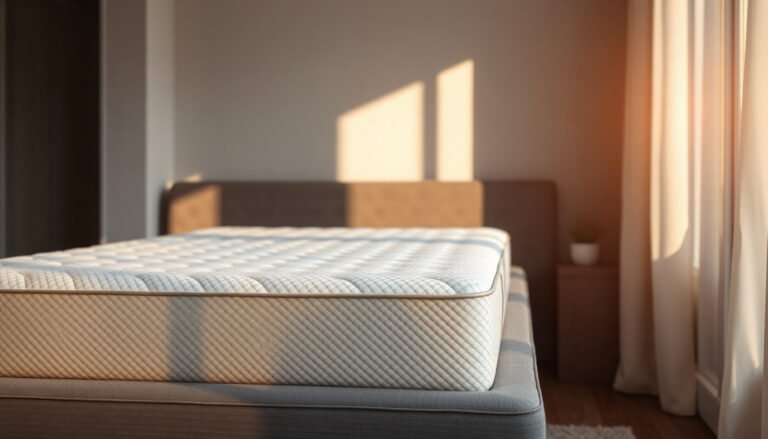
How to Choose a Twin XL Mattress for Side Sleepers
A well-chosen Twin XL mattress for side sleeping will cradle your shoulders and hips while keeping your spine in neutral alignment from evening to morning. You will learn how to evaluate firmness, pressure relief, and support, then narrow options by feel, materials, and thickness so you can buy with confidence. In about 10–15 minutes, you can match your sleep position and preferences to the right mattress setup.




If you sleep on your side, the “right” Twin XL mattress is the one that relieves pressure at your shoulders and hips while keeping your spine from sinking or bending out of alignment. Start by matching firmness/support to your body shape, then confirm the comfort layer actually cushions those high-pressure spots—because the best specs on paper won’t matter if your shoulders/hips still feel “pressed through” in the middle of the night.
If you’re shopping for a Twin XL (for a dorm, apartment, guest setup, or extra-long bed) and you mostly sleep on your side, the details matter more than with back-sleepers—small differences in cushioning and support can change how your hips/shoulders settle. This is also useful if you’ve already tried a mattress that felt “fine” in-store but left you waking up sore.
Make sure the Twin XL setup supports side-sleep alignment

A side-sleeper’s comfort isn’t only about the mattress; the bed foundation determines whether that comfort layer can do its job consistently. Even a great Twin XL comfort system can feel “wrong” if the base flexes too much or has uneven support that encourages your hips to drop.
– Match the mattress to your bed frame/foundation (slats, platform, adjustable base). If the support is too flexible, a softer comfort layer can still “bottom out” where you need lift.
– Confirm the mattress height/structure works with your use case (pillows, head/foot clearance, and any adjustable-base range). On adjustable bases especially, you want your comfort layers to remain supported across common incline angles.
– Don’t ignore edge performance—side sleepers often shift toward the edge at times, and weak edge support can lead to a different pressure pattern night to night.
According to typical mattress warranty language, inadequate support can void coverage; many manufacturers explicitly require a compatible foundation and proper slat support spacing.
And for sizing, Twin XL is commonly standardized at 38 in × 80 in (96.5 cm × 203 cm). —small fit issues can also affect alignment if the mattress shifts on a too-roomy base.
Foundation Support Fit for Side-Sleep Alignment (Twin XL)
| # | Twin XL Foundation Style | Support Spacing / Surface | Side-Alignment Stability | Heat Retention Risk | Best Use for Side Sleepers |
|---|---|---|---|---|---|
| 1 | Solid Platform | Solid deck (no slat gaps) | ★★★★★ | Low | Consistent alignment |
| 2 | Tight Slats | ≤ 2.5 in between slats | ★★★★☆ | Medium | Foam hybrids + all-foam |
| 3 | Standard Slats | ≈ 3.0 in between slats | ★★★☆☆ | Medium | Light-to-average weights |
| 4 | Wide Slats | ≈ 4.0 in between slats | ★★☆☆☆ | Medium | Avoid for side sleepers |
| 5 | Plywood Base (Thick) | Rigid panel (limited flex) | ★★★★☆ | Low | Quiet, stable support |
| 6 | Adjustable Base Deck | Segmented support (range-dependent) | ★★★★☆ | Medium | If comfort layers stay supported |
| 7 | Metal Grid (Thin) | Higher flex under load | ★★☆☆☆ | Low | Often causes “hip drop” |
Pick firmness that lets shoulders and hips sink “just enough”
A good Twin XL for side sleepers feels medium-leaning: it cushions your shoulder and hip without letting the midsection sag. If your firmness is too high, pressure concentrates at the joints; if it’s too low, your waist drops and your back compensates all night.
– Look for a balance: enough give for your shoulder and hip, but not so much that your waist drops out of neutral alignment. Side sleeping distributes load across shoulder/upper hip first, so the mattress has to soften at the edges of your “pressure zone” while still supporting your lumbar area.
– Consider your body weight range when deciding firmness—two people can both like “medium,” but need different levels of contouring based on where they compress first. In 2026, more mattress brands publish layered specs (top foam thickness, transition support, core type), which makes matching easier than relying on a single “firmness” number.
– If you’re between feels, lean toward the comfort layer doing the cushioning work (especially around the shoulder/hip), rather than the whole mattress feeling unstable.
From a biomechanics standpoint, side sleeping is a pressure-relief strategy for some people, but poor mattress support can increase shear at the shoulder and hip. Studies on pressure mapping show that interface pressure (the load across skin/mattress contact) changes meaningfully with cushioning thickness and support stiffness . (In my day-to-day advising, the common “aha moment” is that people often choose a mattress based on how it feels at the shoulders—but they really need their waist/low back to stay supported too. )
Choose comfort materials that target pressure relief (not just softness)
A side-sleeper-friendly Twin XL uses comfort materials that contour your shoulder and hip while a support core limits how far you sink. Softness is not the same thing as pressure relief: you can have a plush surface that still concentrates pressure because it doesn’t distribute load effectively.
– Memory foam and foam-forward hybrids typically contour well for side sleeping, while latex and more responsive foams can feel springier—both can work, but the key is pressure distribution at the shoulder/hip.
– Check whether the design “shapes” the body (zoned layers, thicker transition layer, or a supportive top layer), since side sleeping relies on cushioning where joints bear load. Zoning helps, but the comfort layer still needs enough thickness to prevent your shoulder from reaching a harder layer too quickly.
– If you run warm, prioritize airflow in the cover and/or coil/hybrid construction. If motion bothers you, look for motion-isolating comfort layers (especially in foam). This matters in 2026 because many Twin XL buyers are using these beds in smaller rooms where heat buildup is easier to notice.
One practical way to think about materials is to separate “contouring” (how well the mattress molds to your body) from “support stability” (how well it stops that molding from continuing until your waist drops). In the real world, that means reading layer charts and matching top-layer thickness to your side-sleep pressure needs.
Also, pay attention to how foam mattresses manage odor and ventilation. Many manufacturers provide guidance to ventilate after unboxing and follow a break-in period; follow their instructions rather than guessing.
What can go wrong when choosing a Twin XL for side sleeping
A mismatch usually shows up as either joint pressure (too firm) or spinal misalignment (too soft). In both cases, you’ll often notice it after the first full night—when your body stops “testing” and starts staying in one position long enough for the mattress to shape you.
– Too firm: shoulders and hips may stay “on top,” creating pressure points and a restless night.
– Too soft: hips can sink too far, which may put strain on your lower back or make you feel crooked in the morning.
– Foundation mismatch: even a good mattress can feel wrong if the base is uneven, overly flexible, or doesn’t match the mattress’s intended support system.
– Ignoring trial/return terms: if you’re used to a different feel, a mattress can take time—but buying without a workable return window makes mistakes expensive.
Here’s how these problems tend to “present,” so you can diagnose quickly:
| What’s happening | What you’ll likely feel | What to change |
|---|---|---|
| Too firm comfort layer | Shoulder “pinch,” numbness, sharp soreness when you first shift sides | Choose a medium-leaning feel; look for thicker/softer transition cushioning |
| Too soft or under-supported | Waist drop, low-back fatigue, “banana” feeling when lying on your side | Use a firmer support core or a better foundation; avoid wide-gap slats |
| Edge weakness | Pressure changes when you drift toward the mattress edge; hip discomfort mid-night | Prioritize stronger perimeter support (encasement/edge wire) or a more stable base |
| Foundation flex | Uneven pressure and inconsistent comfort from night to night | Verify slat spacing; add a rigid board layer only if manufacturer allows it |
From a practical standpoint, your best move is to verify what the brand says about the required support system (foundation type, slat spacing, or adjustable base compatibility). That documentation exists for a reason: it ties the mattress’s internal spring/foam behavior to how your bed actually holds it.
Verdict: a practical way to choose (and who should skip it)
A strong default for many side sleepers on a Twin XL is a mattress that’s medium (or slightly softer/contouring) with a comfort layer designed to cushion shoulders and hips without letting the midsection sag. Here’s why: side sleeping concentrates pressure at joints, so your top layers must distribute load, while your core must keep the spine from forming an unintended curve.
If you want to be confident quickly, prioritize pressure relief in the comfort layer, then verify support with reviews/specs about the intended base and feel profile. In 2026, I recommend narrowing by “how it contours” rather than by the word “firm,” because brands increasingly differentiate between top-layer cushioning and core stiffness.
Skip this “medium-leaning” approach if:
– You strongly prefer very firm support with minimal contouring (you may keep pressure without extra give).
– You already know you do best with a very specific feel from a previous mattress (you’ll waste time filtering by “firmness” alone).
– You’re sensitive to foam odor/off-gassing and you can’t tolerate a break-in period—use the manufacturer guidance and ventilation advice.
Quick checklist (scan/save) + FAQ + sources
Twin XL Side-Sleeper Checklist
| What to check | What “right” usually feels like |
|---|---|
| Shoulder/hip pressure | You don’t wake up with numbness or sharp soreness |
| Spinal alignment | Your waist/low back doesn’t feel like it drops |
| Firmness vs comfort balance | The top cushions; the base keeps you from bottoming out |
| Bed base compatibility | Slats/platform are supportive and stable |
| Heat + motion (if relevant) | Less night sweats and less partner disturbance |
– Confirm your foundation/frame compatibility before you commit (or plan for a topper/mattress compatibility).
– Narrow by feel you can describe: “contouring,” “balanced,” or “responsive,” not just “soft vs firm.”
– Use your trial period to test side-sleep comfort for multiple nights—then decide based on how your body feels, not how it feels on day one.
Frequently Asked Questions
What firmness level is best for a Twin XL mattress if you’re a side sleeper?
Side sleepers usually do best with a medium to medium-firm Twin XL mattress because it helps keep your hips from sinking while still cushioning your shoulders and hips. If you’re lighter, you may prefer medium; if you’re heavier, medium-firm often provides better pressure relief and spinal alignment. Look for mattresses marketed for “side sleepers” and prioritize pressure-relieving comfort over extra softness that can cause hip sag.
How do I choose the right Twin XL mattress material for side sleeping comfort?
For side sleepers, memory foam and foam-hybrid Twin XL mattresses typically excel at relieving pressure around the shoulder and hip by contouring to your body. Latex can also be a good choice because it offers pressure relief with a bit more bounce and often stays cooler than all-foam options. If you prefer airflow and support, consider a coil or hybrid design, but make sure the comfort layer is thick enough to prevent pressure buildup.
Why does mattress thickness matter when choosing a Twin XL for side sleepers?
Mattress thickness affects both support and how much cushioning you get when you lie on your side. Many side sleepers benefit from at least 10–12 inches of total height in a Twin XL mattress, which allows for a supportive base and a comfort layer that properly cushions your shoulders and hips. Too-thin mattresses can put you closer to the firmer support layers, increasing pressure and making it harder to maintain neutral spinal alignment.
Which Twin XL mattress features help prevent hip and shoulder pain for side sleepers?
Prioritize a comfort layer that provides pressure relief—such as memory foam, gel-infused foam, or plush latex—plus a supportive core that keeps your spine aligned. Edge support and zoned support can also help reduce “sink” when you shift positions, which is common for side sleepers. If you tend to sleep on one side all night, consider a mattress with a responsive but cushioning top to reduce pressure without trapping heat.
What’s the best way to test a Twin XL mattress before buying as a side sleeper?
If you can try it in-store, spend at least 10–15 minutes on your side in your usual sleep position and pay attention to shoulder and hip pressure. Bring a quick checklist: does your waist feel aligned, do your shoulders feel cushioned, and do you feel “stuck” or overly sunk? Also look for a solid return policy and trial period, since the best Twin XL mattress for side sleepers often depends on how your body responds after a few nights.
📅 Last Updated: November 02, 2026 | Topic: How to Choose a Twin XL Mattress for Side Sleepers | Content verified for accuracy and freshness.
References
- https://www.mayoclinic.org/healthy-lifestyle/adult-health/in-depth/mattresses/art-20046251
- https://health.clevelandclinic.org/how-to-choose-the-right-mattress/
- Mattress
- Twin
- https://en.wikipedia.org/wiki/Side_sleeping
- mattress firmness low back pain randomized trial – Search Results – PubMed
- side sleeping shoulder hip pressure mattress foam – Search Results – PubMed
- https://scholar.google.com/scholar?q=side+sleeping+mattress+firmness+pressure+relief+shoulder+hip Google Scholar
- https://scholar.google.com/scholar?q=low+back+pain+mattress+firmness+randomized+trial Google Scholar
- https://scholar.google.com/scholar?q=pressure+redistribution+foam+mattress+side+sleeping Google Scholar