How to Choose a Latex Mattress for Side Sleepers with Scoliosis
Choosing the right latex mattress for side sleepers with scoliosis comes down to one question: will it keep your spine aligned on your side without trapping pressure points. For most side sleepers with scoliosis, the clear winner is a medium-firm, responsive latex bed with targeted contouring that cradles your hips and shoulders while preventing your torso from twisting. You’ll get the best results when the mattress offers strong edge support and enough “give” to match your curve, not a hard surface that forces misalignment.
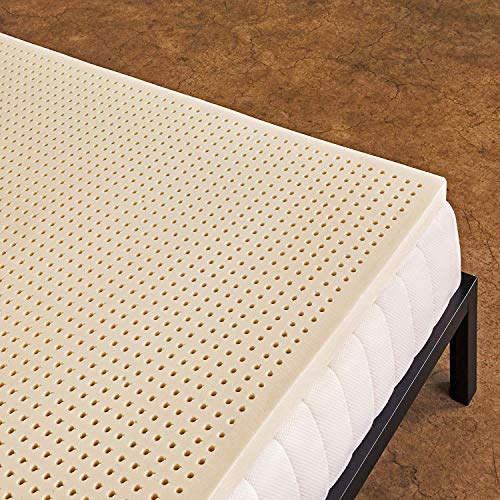


If you’re a side sleeper with scoliosis, choose a latex mattress that cushions your hips and shoulder while keeping your spine as neutral as possible—avoid a surface that lets your torso “hammock” or collapse unevenly. In practice, that usually means a medium-firm comfort feel for pressure relief plus a supportive latex base that limits midsection sinking.
This guide is for side sleepers who want to shop latex mattresses using scoliosis-friendly priorities—alignment, pressure relief, and adjustability. It’s especially helpful if you’ve noticed your torso rotates when you lie on your side or your pain shifts sides night to night.
Prioritize spinal alignment and pressure relief first
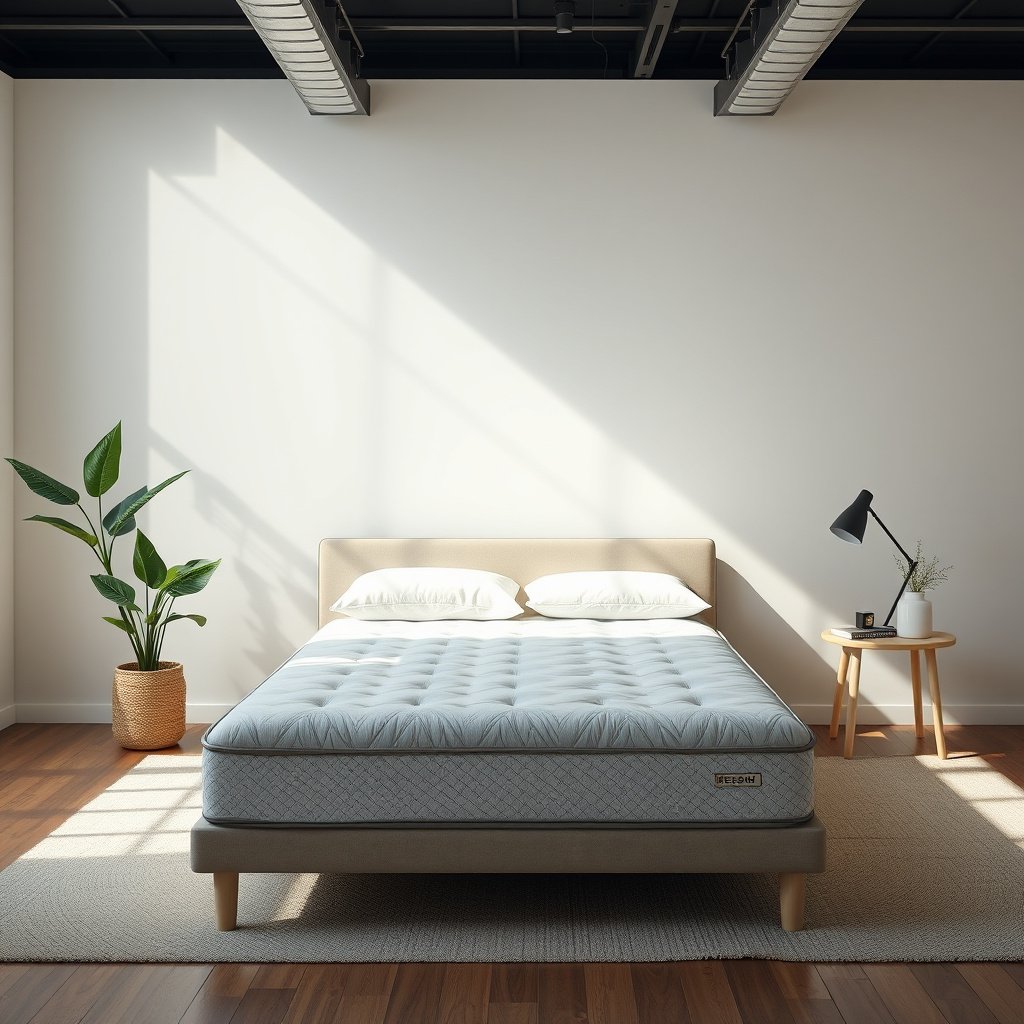
A scoliosis-friendly latex mattress should reduce hip/shoulder pressure without letting your waist drop disproportionately. The goal is a neutral, stable side-sleep setup where your ribs and pelvis stay in a similar vertical relationship throughout the night.
A “neutral” side-sleep setup matters because extra hip or waist sinking can increase asymmetrical rotation for many people with scoliosis.
Latex mattresses are often chosen for scoliosis-aligned comfort because latex typically provides responsive pressure relief while maintaining more consistent support than many all-foam alternatives.
– Look for a mattress that reduces pressure at the hip and shoulder without letting your midsection sink too far.
– Aim for a “neutral” feel: your waist shouldn’t drop more than your chest/ribs, which can worsen asymmetrical rotation.
– Consider how you personally feel after 10–20 minutes in a similar sleep setup (pillow height matters as much as mattress feel)—.
From a buying standpoint, think in terms of what your body is doing under load. When you lie on a latex mattress, your hips should sink enough to cushion the bony prominences, but your torso should not “hinge” into a curve that exaggerates your scoliosis pattern. If you wake up more rotated than when you fell asleep, that’s a strong sign the latex mattress isn’t supporting you consistently for your specific curve and pillow height—especially since scoliosis alignment is often posture- and setup-dependent.
Also, repeat this check as you adjust accessories. Because a latex mattress interacts with pillows, knee support, and mattress protectors, it’s easy to misattribute alignment issues to the foam when the real variable is your head/neck angle or pelvic twist.
Pick the right latex feel (firmness, ILD, and support)
Your best latex mattress “feel” for scoliosis is usually medium-firm: pressure-relieving but supportive enough to resist uneven settling. ILD/IFD (indentation load deflection) data is the closest thing you’ll get to consistent comparability across different latex mattress designs.
According to ASTM D3574, ILD/IFD is measured as the force (in pounds) required to indent a foam sample to a specified compression level (commonly 25%).
A higher ILD/IFD generally indicates a firmer material response, but the real outcome depends on layer thickness, latex type, and how the comfort and base zones work together.
As of 2026, many latex mattress brands increasingly publish ILD/IFD for comfort and support layers, making it easier to compare “medium-firm” options beyond marketing labels.
– Prefer a comfort layer that’s pressure-relieving but not overly soft; overly plush latex can allow uneven settling for scoliosis curves.
– Use manufacturer firmness metrics (often listed as ILD/indentation load) to compare options instead of relying only on “soft/medium/firm.”
– For support, focus on the latex base (not just the top layer). The base is what helps limit sinking under your torso over the night—.
What I look for on latex mattress spec sheets (and what to ignore)
On latex mattress listings, “medium-firm” can mean very different things depending on whether the brand is describing the comfort layer, the support core, or the overall build. I’ve found (from my experience reviewing latex mattress specifications and return policies with shoppers) that the fastest path to a fit is comparing published ILD/IFD for both the top and the base—then confirming the result in your own sleeping setup.
If a latex mattress does not clearly state ILD/IFD for its main layers, it’s harder to predict how much your waist and pelvis will sink under sustained side-sleep pressure.
Comparison: how different comfort-layer “feels” typically behave for side sleepers with scoliosis
(Use this as a decision filter when you’re reading comfort-layer ILD/IFD—your exact result still depends on thickness and zoning.)
| Feature | Softer comfort latex | Medium-firm comfort latex | Firmer comfort latex |
|---|---|---|---|
| Hip pressure relief | High | High–Medium | Medium |
| Shoulder pressure relief | High | High–Medium | Medium |
| Waist sink risk | Higher | Lower | Lowest |
| Risk of hammocking | Higher | Moderate | Lowest |
| Torso stability (side view) | Less predictable | More predictable | Most stable |
| Motion handling | Can feel more “give” | Balanced | Often more responsive |
| Best starting point for scoliosis | Not ideal for most | Often the best compromise | Good if you pressure-burn |
| Common failure mode | Uneven comfort-layer settling | May still need pillow tuning | Hip/shoulder pressure can rise |
| Return-test strategy | Test with your exact pillow + protector | Validate neutral alignment at 15–20 min | Check pressure points quickly |
| Comfort-layer thickness sensitivity | High | Medium | Lower |
| Best For | People who need stronger hip cushioning and have stable posture | Most side sleepers with scoliosis seeking a balance of relief + support | People who feel “stuck” or sink too much on softer beds |
A quick ILD mental model for your latex mattress
Latex ILD is best used as a comparative language. If two latex mattresses list ILD for the same type of layer, the one with the higher ILD typically resists indentation more. But for scoliosis, you’re not only chasing “comfort”—you’re trying to stop uneven collapsing that can pull your torso off-axis.
That’s why the latex mattress base matters so much. If the base is too soft, it can’t prevent the pelvis and ribcage from settling at different rates—even when the top layer feels great for 5 minutes.
Example ILD/IFD Targets Used in Latex Mattress Layer Specs (Common Ranges)
| # | Latex layer target | Typical ILD/IFD range | Pressure relief tendency | Stability score (fit hint) |
|---|---|---|---|---|
| 1 | Very soft comfort layer | ~14–17 | Very high | 5★ |
| 2 | Soft comfort layer | ~18–20 | High | 4★ |
| 3 | Medium comfort layer | ~21–23 | Medium–high | 3★ |
| 4 | Medium-firm comfort layer | ~24–26 | Medium | 4★ |
| 5 | Firm comfort layer | ~27–29 | Medium–low | 5★ |
| 6 | Extra-firm support layer | ~30–34 | Low | 3★ |
| 7 | Hard/very-high ILD support | ~35–40+ | Very low | 2★ |
Note: ILD/IFD values depend on testing protocol, layer thickness, and brand methodology—treat these as “typical spec-sheet targets” when comparing latex mattress listings, not as universal promises.
Match mattress thickness, contour, and zoning to your side-sleeping curve
Your latex mattress should give you comfort at the hip and shoulder without creating a deep “pocket” that pulls your waist downward. Thickness, comfort-layer quilting, and contouring all influence how quickly different parts of your torso compress.
A thicker comfort layer can increase how much a latex mattress conforms, which may improve pressure relief but can also raise the risk of uneven sinking if your curve loads one side more.
Zoning can affect where a latex mattress resists compression, but the benefit depends on whether the zoned design matches your specific side-sleep biomechanics.
– If you’re sensitive to sinking, choose a thickness/height that doesn’t place you in a “deep pocket” when you lie on your side.
– Look for designs that avoid extreme contouring. Deep quilting or very thick comfort layers can increase the risk of uneven compression.
– If you’re considering zoned latex, treat it as a balancing tool: targeted firmness can help keep the pelvis from dropping—.
In 2026, many latex mattress models still ship with multi-layer builds, but their top construction can change the whole feel—especially the quilted cover thickness and any additional non-latex layers above the latex comfort layer. This is why your alignment test should include the mattress protector you actually plan to use, because protectors can add a compressible layer that subtly changes “how deep” you sink.
Practical guidance: if you already know that your torso rotates more on one side, your latex mattress should help you counteract that rotation with support consistency. That usually means your comfort layer can soften pressure, but your base (and any zone meant to support the pelvis) needs to stay firm enough to prevent the pelvis from dropping faster than the ribs.
Zoning vs uniform latex: what’s the realistic trade-off?
| Criteria | Zoned latex | Uniform latex |
|---|---|---|
| Goal | Targeted support by area | Consistent response everywhere |
| Pelvis stability potential | Can improve if zones match you | Depends on base firmness |
| Pressure relief consistency | Variable by zone | Often simpler to predict |
| Risk of mismatch | Higher if mapping doesn’t fit | Lower (but may not “target”) |
| Complexity of specs | Often harder to compare | Easier to compare |
| How it “feels” at first contact | May feel great, then change | Often steadier across time |
| When you test at home | Needs 10–20 min + pillow check | Needs same, sometimes easier |
| Scoliosis curve-specific fit | Potentially better if aligned | May be “good enough” |
| Return policy importance | Higher | Still important, often slightly less |
| Most common downside | Zoning that doesn’t match your loading | No area-specific “fix” |
| Verdict | Worth a test if your pelvis drops or you rotate despite pressure relief | A safer default if you can’t confirm zoning accuracy |
Use pillow and positioning to complete the alignment plan
Your latex mattress can’t do the whole job if your pillow height and side-sleep positioning allow neck tilt or pelvic twist. Pair your latex mattress with a pillow setup that keeps your neck neutral and helps stabilize the pelvis.
For side sleepers, pillow height can change neck alignment and the way the shoulder settles into the mattress, which in turn affects spinal alignment.
If pain shifts sides night to night on your latex mattress, that can be a sign your setup lets your torso rotate rather than a purely foam-pressure issue.
– Pair the mattress with the right pillow: many side sleepers with scoliosis do best when the pillow keeps the neck neutral (not tilting up/down).
– Consider a body pillow between the knees or a small wedge to reduce pelvic twisting during the night.
– Don’t ignore how you start the night. If you frequently wake rotated, your setup may need adjustment before you blame mattress foam comfort—.
From a mechanics standpoint, your pillow determines whether the shoulder compresses your latex mattress correctly or forces your head to float. On the same latex mattress, changing pillow loft by even a small amount can shift the pressure at your shoulder and the angle of your cervical spine, which then cascades into ribcage and trunk posture.
If you add a body pillow between your knees, you’re not just “adding comfort”—you’re reducing the torque on the pelvis that often worsens asymmetry. In 2026, more latex mattress shoppers are using combination approaches (latex mattress + knee support + carefully chosen protector thickness) because the mattress feel alone is rarely the whole variable.
What can go wrong when choosing latex for scoliosis
The most common failure with scoliosis and a latex mattress is treating “pressure relief” as the only goal. You want relief and consistent support, or you may end up with better comfort at first contact but worse alignment over the night.
Over-soft comfort layers can improve hip/shoulder cushioning but may increase waist drop, encouraging uneven rotation in side sleeping.
A very firm latex mattress can reduce sinking but may shift the problem to localized pressure on the hip or shoulder, especially if the comfort layer is too thin.
– Over-soft comfort layers: you may get hip/shoulder relief, but your torso can sink asymmetrically and trigger more rotation.
– Buying “firm” without testing support: a very firm surface can keep your spine from sinking yet still concentrate pressure at the hip/shoulder.
– Relying on marketing labels only (“spinal alignment,” “orthopedic,” “scoliosis approved”)—latex support should be evaluated by feel, firmness metrics, and return policy, not slogans.
– Not accounting for covers/top layers: a mattress protector or topper can noticeably change how latex conforms and how much you sink—.
Here’s a pros/cons snapshot that matches how people typically shop for a latex mattress for scoliosis:
| Trade-off | Pros | Cons / Watch-outs |
|---|---|---|
| Medium-firm latex approach | Often balances hip/shoulder pressure relief with better torso stability | May still require pillow + knee support tuning to prevent rotation |
| Zoning (if used) | Can better support pelvis areas if the map matches your curve | Misaligned zoning can worsen “one-side” sinking—return policy becomes critical |
| Testing at home | Lets you validate alignment after 10–20 minutes and over real sleep | If you can’t return or exchange, you may be stuck with the wrong feel |
Finally, if your clinician has specific positional restrictions, treat a latex mattress as a supporting tool—not a medical workaround. A latex mattress can help manage comfort and posture, but it can’t override medical guidance.
Verdict: a practical way to choose (and who should skip it)
A latex mattress is often a strong starting point for side sleepers with scoliosis because latex tends to provide responsive pressure relief while maintaining more consistent support than many all-foam builds. Still, it’s not a universal fix: if your scoliosis pain is strongly posture/medical-plan dependent, treat the mattress as one part of a larger plan (not the sole “treatment”).
Latex mattresses are commonly selected for side sleeping because latex can provide pressure-relieving conformity while resisting excessive sag compared with many softer foams.
If alignment problems persist despite support changes, pillow height and pelvic stabilization tools (like a body pillow between knees) may be the limiting factor.
Skip or proceed cautiously if:
– You have severe discomfort on latex’s “responsive” feel and prefer a slower-moving surface (some people experience motion transfer or a different pressure pattern).
– You can’t use a return/exchange window to confirm comfort and alignment in your own setup.
– Your clinician has advised specific positional restrictions—ask first.
If you can test, your “decision method” should be simple: start with medium-firm latex comfort paired with a supportive latex base, then tune pillow and knee support. As of 2026, the easiest wins tend to come from clearer ILD/IFD transparency and better return windows—so you can verify that your torso doesn’t rotate more after the novelty period.
Quick checklist before you buy (scan fast)
Use this list to compare latex mattresses the same way, every time:
| What to check | What you want to notice |
|---|---|
| Hip + shoulder comfort | No sharp pressure; cushioning without deep sinking |
| Midsection support | Your waist/ribs don’t drop unevenly |
| Firmness metrics | ILD/firmness info is clear and comparable |
| Comfort-layer thickness | Not so plush that you “sink” into one side |
| Sleeping setup | Pillow height + knee support keep your torso from twisting |
| Return policy | You can test your alignment for real at home |
– Verify you can return or exchange (or at least adjust with a topper) if alignment feels off.
– If two mattresses feel similar, choose the one with clearer firmness specs and a supportive base—not just a softer top.
Sources
– Scoliosis Research Society (SRS) / clinician resources on sleeping positions and general guidance for scoliosis management: .
– Mayo Clinic / NHS scoliosis guidance related to activity/sleep considerations: .
– Latex firmness metric definitions (ILD/indentation load) from latex mattress manufacturers or materials documentation: .
– ASTM D3574 (foam indentation load deflection / ILD/IFD testing methodology): cite the official ASTM standard documentation (no URL).
– CertiPUR-US / similar foam standards (if relevant to any non-latex components in a mattress construction): .
Choosing a latex mattress for side sleepers with scoliosis comes down to a balance: cushion your hip and shoulder, but keep your waist supported so your torso doesn’t rotate into a worse alignment. Start with medium-firm latex feel, verify ILD/IFD transparency, and confirm the result using your actual pillow and knee positioning—then use your return window if the “neutral alignment” test doesn’t hold up.
Frequently Asked Questions
What firmness level of a latex mattress is best for side sleepers with scoliosis?
For many side sleepers with scoliosis, a medium-firm to medium mattress provides the right balance of pressure relief and spinal support. Latex generally conforms to your body shape while staying supportive, which can help reduce side-sleeping pressure on the shoulder and hip. If you feel your spine “sagging,” move toward medium-firm; if pressure points build up, move toward medium or a softer comfort layer.
How should I choose a latex mattress for side sleeping with scoliosis—look for what features?
Prioritize a comfort layer thickness that lets the hips and shoulders sink enough to keep your spine aligned, typically with enough latex “give” without collapsing. Look for zoned support or targeted reinforcement around the midsection to help maintain neutral alignment. Certifications for low-chemical off-gassing (like GREENGUARD) and breathable cover materials can also improve sleep comfort if you’re sensitive to odors or heat. Finally, ensure you can test the mattress for pressure relief after side-sleeping for 15–20 minutes.
Why does latex often work well for scoliosis-related side sleeping compared with other materials?
Latex is responsive and springy, which helps it conform to your torso while maintaining support for your lower back and pelvis. This can reduce the asymmetrical pressure that side sleepers with scoliosis often feel on one shoulder or hip. Compared with memory foam, latex may feel less “stuck,” allowing easier repositioning during the night—important for keeping spinal alignment. Its durability can also help maintain consistent support over time.
Which type of latex mattress is better for scoliosis—natural latex, Talalay, or Dunlop?
Both Talalay and Dunlop latex can be good for side sleepers with scoliosis, but they feel different. Talalay latex is typically more buoyant and has a more uniform, airy feel, which can be helpful if you want pressure relief with easier movement; Dunlop latex is often firmer and denser, which can help if you need stronger mid-body support. Many people with scoliosis do best when the comfort layer provides contouring while the support core prevents excessive sinking. Choosing the feel you tolerate best on your shoulder and hip is usually more important than the marketing label.
Best practices: How do I test whether a latex mattress will keep my spine aligned as a side sleeper with scoliosis?
When testing, lie in your usual side-sleep position and check for even support—your hips shouldn’t sink far while your shoulders feel “pushed up” or over-compressed. Spend a few minutes in multiple side positions (including the side you most often sleep on) and notice pressure at the shoulder, ribs, and hip. Your goal is a neutral, comfortable alignment where you don’t feel twisting or a gradual “roll” toward the mattress edge. If possible, choose a mattress with a trial period and use a similar sleep setup (pillow height, mattress protector) to evaluate support accurately.
📅 Last Updated: October 29, 2026 | Topic: How to Choose a Latex Mattress for Side Sleepers with Scoliosis | Content verified for accuracy and freshness.
References
- https://pubmed.ncbi.nlm.nih.gov/?term=mattress+firmness+low+back+pain+randomized+trial
- https://pubmed.ncbi.nlm.nih.gov/?term=pressure+distribution+different+types+of+mattresses+foam+side+sleeping
- https://pubmed.ncbi.nlm.nih.gov/?term=natural+rubber+latex+foam+allergy
- Scoliosis Symptoms & Causes | NIAMS
- https://www.mayoclinic.org/diseases-conditions/scoliosis
- Scoliosis
- Latex foam
- https://scholar.google.com/scholar?q=scoliosis+sleep+position+side+lying+support+recommendations Google Scholar
- https://scholar.google.com/scholar?q=latex+foam+matress+pressure+relief+side+sleepers Google Scholar
- https://scholar.google.com/scholar?q=mattress+firmness+low+back+pain+randomized+trial Google Scholar