Fix Mattress Causing Back Pain for Combination Sleepers in Small Space
If you’re a combination sleeper in a small space and your back hurts after you move from side to back, your mattress setup is likely the culprit. Most often, the bed is either sagging from pressure, sitting on a frame with inadequate support, or fitted with layers that don’t match your weight shifts, which throws your spine out of alignment. The practical fixes are below, step by step.



If your mattress is causing back pain, the fastest fix is to restore spinal alignment for both your side and back sleep—usually by correcting support first (foundation/slats/placement) and then adding targeted pressure relief (topper/pillow adjustments). Start with a quick diagnosis (sag, uneven support, wrong firmness/height), then make one change at a time so you can tell what actually helps. This is especially for combination sleepers (you switch between side and back) who don’t have much room to move the bed, so you can’t easily “tune” the setup with lots of extra distance, different bases, or bulky furniture.
If you’re dealing with morning back pain in a compact bedroom, the issue is often mechanical rather than “just comfort.” According to the American Academy of Orthopaedic Surgeons, low back pain affects about 80% of people at some point (AAOS). And according to the Global Burden of Disease Study (IHME), low back pain affected roughly 577 million people worldwide in 2019 (IHME, Global Burden of Disease Study 2019). In 2026, the most reliable approach is still the same: verify your mattress setup’s support and alignment before changing materials.
Diagnose the mattress setup (before buying anything)

Start by determining whether your mattress setup is failing at support (uneven or sagging contact) or at alignment (your spine is being forced into a non-neutral position). For combination sleepers, a mattress can feel “okay” on one side but still create the pain pattern you notice after switching positions—because one posture is being compensated incorrectly.
– Check for sagging or “body impressions” where your hips/shoulders sink more than the rest of the bed—uneven support is a common back-pain trigger. A key sign is asymmetry: if one hip drops more than the other, your pelvis rotates slightly, and your lower back muscles often overwork overnight.
– Look at the support system: slats spacing, broken/warped bed frame sections, or a base that flexes too much can cause the mattress to behave softer than it should. Even a high-quality mattress setup can act “too soft” if the foundation gives way under pressure.
– Do a simple alignment test: when side sleeping, your head/neck should stay in line with your spine; when back sleeping, your lower back shouldn’t feel unsupported or forced upward. If your lower back feels “pushed” toward the mattress, your comfort layer may be letting your hips sink too much; if it feels “hollow/gapped,” support may be too firm or your pillow/placement may be throwing your pelvis out of neutral.
Fast diagnostic tip for 2026: Take a photo of your sleeping position (even a quick phone photo from the side) and compare how straight your spine looks when you switch between back and side. Your mattress setup is usually the culprit when the alignment problem repeats in the same spots every morning.
Fix support issues in a small space (fast, no fluff)
Fixing support is usually the quickest way to reduce back pain because it addresses the “foundation” problem that both side and back sleep depend on. In a small room, even minor bed placement errors can change how evenly the mattress contacts the slats or platform.
– Tighten and verify the frame/foundation: if the mattress sits on a weak or uneven base, even a “good” mattress can cause pain. Check that all bolts are fully seated, the center support (if your frame has one) is in place, and the mattress sits flat without a visible tilt.
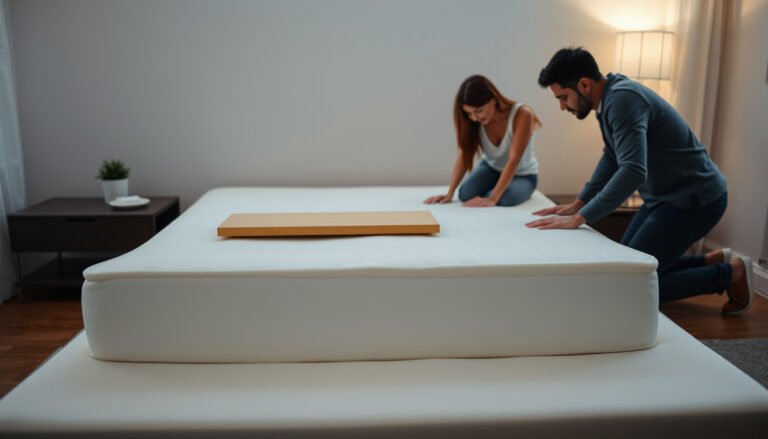
– Consider adding or repositioning support under the mattress (only if you’re sure it’s compatible with your mattress type). If you use boards, aim for a stable, even surface rather than a few high spots. In 2026, a common small-space workaround is a properly sized, continuous board/panel that eliminates slat-to-mattress “bridging,” but you should confirm your mattress’s warranty/support requirements first.
– Place the bed so it’s fully supported and not “pinched” or tilted by nearby furniture or an awkward corner layout. In small rooms, it’s easy to end up with one side slightly stressed—especially if a nightstand, dresser, or wall prevents the frame from sitting squarely.
Foundation Stability vs. Back-Pain Risk (Typical Mattress Setups)
| # | Support type (bed base) | Typical slat gap | Stability score | Pain-risk trend |
|---|---|---|---|---|
| 1 | Solid platform (continuous) | 0 in |
95 ★★★★★
|
↓ Lower risk |
| 2 | Bunkie board / plywood panel (continuous) | 0–(panel edges only) |
83 ★★★★★
|
↓ Lower risk |
| 3 | Wood slats (tight spacing) | ≤ 3 in (7.6 cm) |
71 ★★★★☆
|
↓ Moderate risk reduction |
| 4 | Wood slats (medium spacing) | ~ 3–4 in (7.6–10.2 cm) |
60 ★★★★☆
|
↔ Mixed |
| 5 | Slatted frame with visible flex | ≥ 4 in (10.2 cm) or uneven |
46 ★★★☆☆
|
↑ Higher risk |
| 6 | Frame sections misaligned / uneven contact | Varies by side |
40 ★★★☆☆
|
↑ Higher risk |
| 7 | “Pinched” bed (tilted by room layout) | Uneven contact |
33 ★★☆☆☆
|
↑ Highest risk |
Dial in firmness for side + back sleeping
Tune firmness based on what changes your body feels during the “worst” posture—not what feels nicest for five minutes. For combination sleepers, the goal of a mattress setup isn’t one-position comfort; it’s neutral alignment and pressure relief for both side and back.
– Target pressure relief for side sleeping first: if your shoulders or hips feel like they’re sinking too far, the mattress is likely too soft for one of your positions. Common pattern: shoulder pain comes from reduced support under the upper back while the shoulder drops; hip discomfort often comes from the pelvis rotating.
– Add lumbar support for back sleeping: if you feel a gap in your lower back, you may need firmer support where your midsection sits (or a topper that doesn’t let your hips drop). A frequent culprit is a comfort layer that’s too responsive/too deep—hips sink, lumbar arches, and the mattress setup “pulls” you out of alignment.
– Since you sleep in more than one position, prioritize “balanced alignment,” not just comfort in one posture—your worst pain usually points to the position needing the most correction.
When you’re making a mattress firmness change, keep the “one variable at a time” rule. If you adjust both comfort and pillows at once, you lose the ability to tell whether the mattress setup is truly helping your spine or just changing where you feel pressure.
Quick trade-off map (pros/cons for firmness changes)
| What you change | Pros (why it helps) | Cons (what can backfire) |
|---|---|---|
| Make the surface firmer (less sink) | Often improves back-sleep alignment by preventing hip drop. | Can increase shoulder/hip pressure for side sleepers. |
| Add pressure relief (more cushion) | Can reduce “hot spots” on shoulders/hips for side sleeping. | If cushion lets hips sink too much, back sleeping can worsen. |
| Adjust pillow height for neck/shoulders | Improves alignment indirectly; neck strain can amplify back pain. | Wrong height can cause neck issues and change your whole posture. |
Use layering to relieve pressure without changing the whole bed
Use layering when you want to preserve your existing mattress setup while solving pressure points. In 2026, the “least disruptive” changes are usually a topper swap and pillow-height adjustment, not an immediate full mattress replacement.
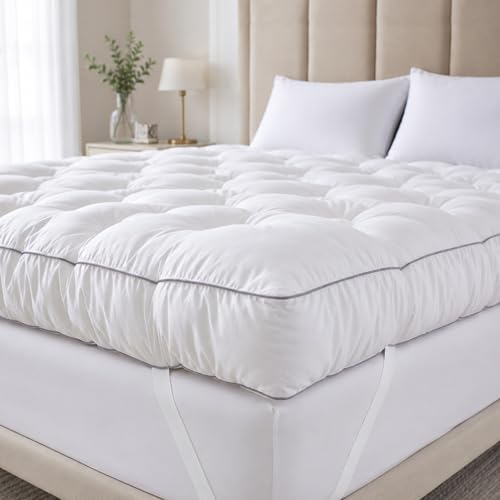
– Try a mattress topper as the low-commitment adjustment: the goal is to reduce pressure on shoulders/hips while keeping overall support under your spine. If your hips sink on your back, the topper is not just “comfort”—it becomes part of the support equation.
– Use a pillow strategy that matches your position—side sleepers often need a pillow that fills the space between shoulder and mattress, while back sleepers usually need a slimmer pillow to avoid pushing the head forward. For combination sleepers, you may need a compromise pillow, plus small adjustments like adding/removing a thin roll under the pillow edge when you switch postures.
– If you already have a thick topper, remember it can sometimes worsen back pain by letting hips sink too much—reducing thickness or changing topper type can be more helpful than adding more layers.
Practical method: Spend two nights using one change, then evaluate morning pain pattern (not just whether you felt cozy at bedtime). If your mattress setup feels softer but your back wakes up more sore, you’ve learned something important: you improved surface comfort at the expense of alignment.
Rotation, maintenance, and when replacement is the real answer
Rotation and maintenance can “reset” uneven wear patterns, but replacement becomes the honest answer when sagging or support failure is beyond what layering can compensate. For back pain, a mattress setup that has lost its ability to support neutral alignment usually can’t be fixed permanently with toppers.
– Rotate or flip if your mattress design allows it (and follow the care label). If one side is more “set” than the other, back pain can come from that one-sided wear.
– Reassess after each change: give your body a short adjustment window, then decide based on whether pain is trending better or worse. With combination sleepers, track whether both side and back nights improve, not just one.
– If you’re consistently dealing with deep sagging, worn comfort layers that can’t be corrected with a topper, or a support base that can’t be made stable, replacement may be the honest solution.
Also remember that sleep duration and recovery matter. According to the National Sleep Foundation, adults typically need about 7–9 hours of sleep per night (National Sleep Foundation). When sleep drops, pain sensitivity rises—so a mattress setup “fix” can look weaker if your overall sleep schedule is disrupted.
What can go wrong (common mistakes and edge cases)
Avoid these common errors because they create misleading results—especially when you’re troubleshooting a mattress setup in a small room. Most people don’t fail because they tried toppers; they fail because they didn’t fix the order of operations.
– Skipping the base: People often blame the mattress while the real issue is slat spacing, a warped frame, or uneven contact—fixing the foundation can reduce pain without changing the mattress.
– Over-softening: Thick toppers can feel cushy but still allow hips to drop, especially for back sleeping—pain may get worse even if the surface feels comfortable.
– One-and-done adjustments: If you change the topper, pillow, and frame all at once, you won’t know what helped (or what caused the pain). For combination sleepers, this can be especially confusing because posture changes every night.
– Position mismatch: Combination sleepers sometimes end up with pillow choices that work for side sleeping but create neck strain (or vice versa). Back pain can be secondary to misaligned neck/shoulders and poor overall posture.
– If you have existing medical issues: If your pain is severe, worsening, or paired with numbness/weakness, mattress changes won’t address the underlying problem—get medical guidance first.
If you’re trying to troubleshoot in 2026 and your symptoms are neurologic (numbness, tingling, progressive weakness), prioritize clinical evaluation over mattress tuning. A mattress setup can support comfort, but it can’t treat nerve compression.
Verdict / tip + scan-friendly checklist
If you’re short on space, your best “order of operations” is: stabilize the base → restore alignment → add pressure relief only where you need it. Don’t assume you need a new mattress right away—often a topper + support correction fixes the problem, but if you have ongoing sagging that topper can’t compensate for, replacement is the more effective (and cost-efficient long-term) path.
Quick checklist (use this while you troubleshoot)
| What you notice | Most likely cause | What to try next |
|---|---|---|
| Hips sink too far on side or back | Mattress too soft / uneven support | Check frame/slats; try topper with better support |
| One shoulder hurts more when side sleeping | Pressure + pillow height mismatch | Adjust pillow height; consider topper to reduce pressure |
| Back feels worse after switching positions | Alignment not working for one posture | Tune for the “worst” position first (often side or lower-back support) |
| Bed feels uneven or “bouncy” | Foundation flex or sag | Stabilize base; ensure full, even contact |
| Pain persists after changes | Wrong fix order or unsuitable layer | Undo the last change, refine one variable at a time |
Frequently Asked Questions
What are the signs my mattress is causing back pain for combination sleepers in a small space?
Common signs include waking up with a sore lower back, feeling pressure in the hips/shoulders, or noticing discomfort when you change positions from side to back or stomach. In small spaces, limited room can also force you into less ideal alignment, making poor mattress support more noticeable. If your mattress is sagging, has worn-out foam, or forms body impressions, it may be failing to keep your spine neutral for mixed sleep positions.
How do I fix mattress back pain for side and back sleeping without replacing it in a small room?
Start by adjusting your sleep setup: use a firm, supportive foundation and ensure your mattress isn’t sitting on a sagging or uneven platform. Add a mattress topper matched to your needs—typically a medium-firm comfort layer for side-to-back combination sleepers—to reduce pressure while maintaining support. You can also use targeted pillow support (a pillow under your knees for back sleeping, and a body pillow between knees for side sleeping) to improve spinal alignment even in tight spaces.
Why does my combination sleeper setup make back pain worse on a too-soft mattress?
If your mattress is too soft, your hips may sink farther than your shoulders (especially when you switch from side to back), creating uneven spinal alignment and increased strain on the lower back. Combination sleepers put more shifting demand on the comfort and support layers, so weak support quickly translates into discomfort. In small spaces, you may have less ability to find “just right” positioning, so the mattress’s support issues become harder to compensate for.
Best ways to test whether my mattress needs a topper, a new foundation, or both for back pain relief?
Try a simple at-home test: if your back feels better on a firmer surface for a night, you likely need more support (such as a firmer foundation or added stability under the mattress). If you feel pressure points (hips/shoulders) more than low-back sag, a pressure-relieving topper (often medium-firm) can help without losing too much support. Check for visible dips, uneven wear, and proper bed slat spacing—these often determine whether the fix should be a topper upgrade or foundation repair first.
Which mattress adjustments work best for back pain when my bedroom space is limited?
Choose solutions that improve alignment without requiring major rearrangement: place the bed on a level, supportive base, and keep the mattress free from sagging contact points. Use a topper plus position-specific pillows to support your spine during side-to-back transitions—this is especially helpful when you can’t easily reposition the bed or turn around comfortably. If you have to sleep close to a wall or in a tight layout, ensure you can rotate your body naturally; awkward movement can worsen back pain even on an otherwise supportive mattress.
📅 Last Updated: November 14, 2026 | Topic: How to Fix a Mattress That’s Causing Back Pain for Combination Sleepers in a Small Space | Content verified for accuracy and freshness.
References
- https://www.mayoclinic.org/healthy-lifestyle/adult-health/in-depth/sleep-and-back-pain/art-20045622
- https://medlineplus.gov/lowbackpain.html
- Low Back Pain – OrthoInfo – AAOS
- Mattress
- Back pain
- low back pain mattress firmness – Search Results – PubMed
- mattress sagging support low back pain – Search Results – PubMed
- https://scholar.google.com/scholar?q=low+back+pain+sleep+and+mattress+firmness Google Scholar
- https://scholar.google.com/scholar?q=mattress+support+surface+sagging+low+back+pain Google Scholar
- https://scholar.google.com/scholar?q=side+sleeping+back+pain+combination+sleepers+mattress+recommendations Google Scholar