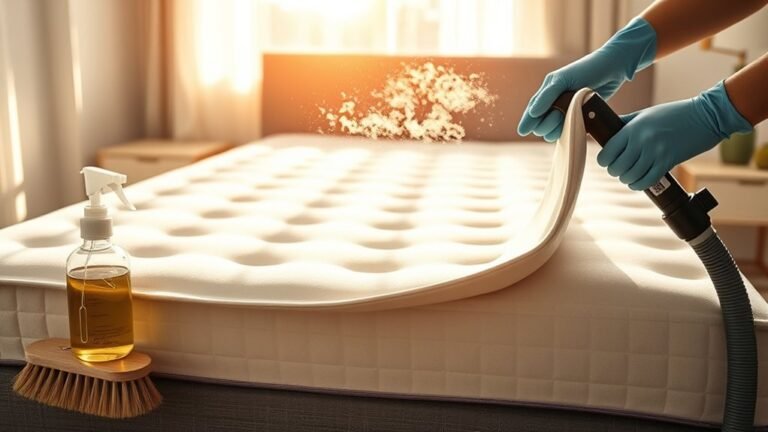
How to Clean a Memory Foam Mattress with Vomit Stains: Step-by-Step
Need to clean a memory foam mattress with vomit stains fast and without damaging the foam? Follow this step-by-step method for removing the mess, disinfecting the area, and cutting odor so the mattress stays safe and fresh. If you want the quickest, most reliable results—this is the clear winner for tackling vomit on memory foam.




If there’s vomit on a memory foam mattress, blot it up fast, clean the spot with an enzyme cleaner (or a mild detergent solution), and avoid soaking the foam. Then dry thoroughly with strong airflow before you deodorize—this reduces both lingering odor and the damp conditions that let smells stay trapped inside memory foam.
If this happened to a child, a sick guest, or you’re dealing with an accident you found after it dried, follow the steps below in order. We’ll also call out what not to do (bleach/soaking/heat) because memory foam can trap moisture and odors.
Act fast: remove bedding and blot the mess

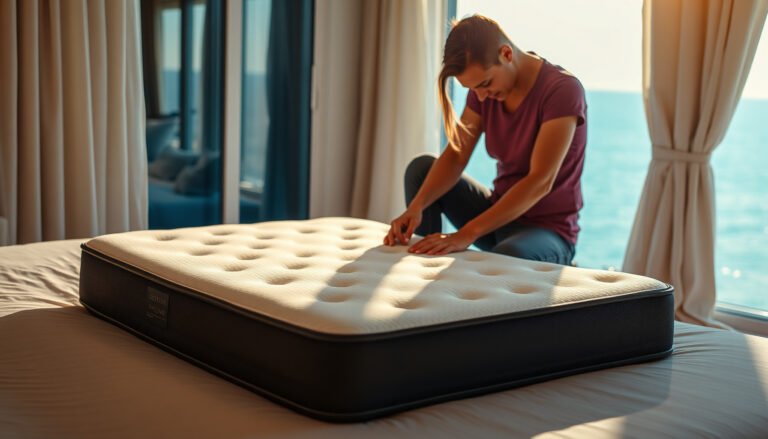
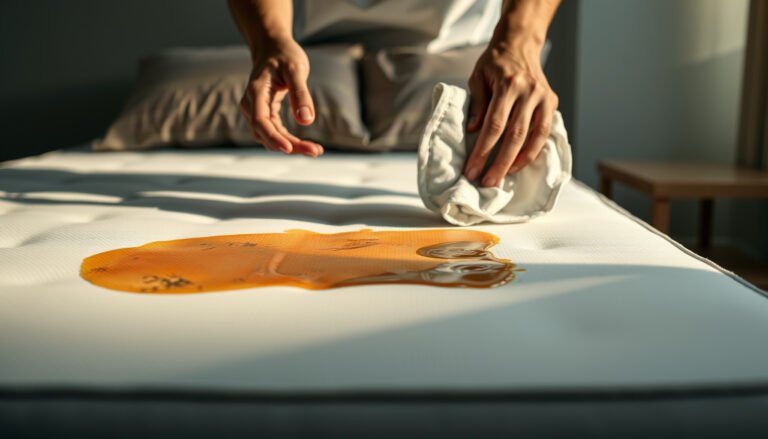
The fastest way to limit odor in a memory foam mattress is to remove linens immediately and blot the vomit—don’t rub, and don’t flood the foam with liquid. The goal in the first minutes is maximum pickup from the surface, using the minimum moisture needed.
CDC notes that vomit/diarrhea cleanups should focus on removing the contamination promptly and using appropriate disinfecting methods when illness is involved.
Norovirus—one common cause of vomiting—has an infectious dose that can be as low as 18 virus particles.
For memory foam mattresses, excess liquid increases the risk that moisture remains trapped inside the foam and later releases odor.
– Wear disposable gloves, then remove all bedding/linens and launder them immediately according to the care label. If the vomit touched a fitted sheet or mattress protector, treat those items as contaminated and wash on the label’s recommended settings.
– Blot (don’t rub) with clean white towels to lift as much vomit as possible from the surface. In practice, rubbing can smear residue deeper into the upper memory-foam layer.
– If the stain is still wet, use cool water sparingly to help lift residue—use the minimum liquid needed. Apply water to the towel (not to the mattress) so you’re only helping loosen material you’re already lifting by blotting.
– If the mess has partly dried, you still blot first. Lightly dampen a towel and gently dab the edges to release crusted residue before you switch to spot cleaning.
A quick note for 2026: many memory foam mattress covers are detachable, and following the cover label can save you from unnecessary moisture exposure in the foam itself. If you can remove the cover safely, do it now, then continue working on the exposed memory foam.
Clean the vomit stains safely on memory foam
To clean a memory foam mattress after vomit, use an enzyme cleaner designed for organic stains/odors (best match) or a mild dish soap solution—but always apply it lightly to a towel, then blot. Avoid pouring cleaner directly onto the mattress; memory foam holds onto liquid longer than traditional foam.
Enzyme-based cleaners are intended to break down organic stain residues and associated odors, which is why they’re commonly recommended for bodily-fluid messes.
EPA emphasizes that disinfectants must be used according to the product label directions, including the required wet contact time.
CDC guidance for norovirus cleanups includes using an appropriate disinfecting approach for contaminated surfaces when illness is involved.
– Use an enzyme cleaner made for organic stains/odors, or a mild dish soap + water solution applied lightly to a towel (not poured onto the mattress).
– Enzyme cleaner approach: apply a small amount to a clean white towel, dab the stained area, and work from the outside of the spot inward to prevent spreading.
– Mild soap approach: mix a few drops of mild dish soap with cool water, then apply to a towel. Rely on blotting to lift residue rather than scrubbing.
– Dab the affected area from the outside in, then blot again with dry towels to remove as much moisture as possible.
– If you see foam-starting to darken, that’s usually displaced moisture—stop adding cleaner and blot more thoroughly.
– Repeat until the visible staining is reduced; stop when the foam stays too wet to blot well.
– Memory foam cleaning is iterative: shallow applications and repeated blotting typically outperform “one deep soak,” especially for dried or set-in vomit.
– If the stain has dried and you’re working from residue:
– Lightly loosen first (barely damp towel at the edges).
– Then proceed with enzyme cleaner dabbing and blotting, letting the enzyme do the breakdown while you keep liquid controlled.
Enzyme Classes Common in Odor/Organic Stain Cleaners (and Their Match to Vomit Components)
| # | Enzyme/Active Class | Main Stain Target (Substrate) | Typical Found in | Component Coverage* |
|---|---|---|---|---|
| 1 | Protease | Proteins (amino-acid bonds) | Bodily-fluid stain removers | ★★★★★ |
| 2 | Lipase | Fats/oils (lipid esters) | Grease + organic odor cleaners | ★★★★☆ |
| 3 | Amylase | Starches/carbohydrate chains | Food/organic stain formulas | ★★★☆☆ |
| 4 | Cellulase | Plant fiber/polysaccharides | Fabric/organic cleaners | ★★☆☆☆ |
| 5 | Mannanase | Hemicellulose/plant polysaccharides | Specialty enzyme blends | ★☆☆☆☆ |
| 6 | Oxidoreductases (e.g., laccase)* | Oxidizes certain odor-causing organics | Odor-control enzyme systems | ★★☆☆☆ |
| 7 | Surfactant blend (non-enzymatic) | Lifts residues; emulsifies oils | Most enzyme cleaners | ★★★★☆ |
\Component Coverage is a practical “match” score based on what each enzyme class directly targets in organic soils similar to vomit (proteins, fats, starches/carbohydrates, and plant polysaccharides). Always follow the enzyme product label for application details.
Deodorize without soaking the foam
After cleaning, the best odor-control move is to use a dry deodorizing method—usually a light baking soda layer—once the memory foam is no longer visibly wet. Then let it dwell, vacuum gently, and confirm the mattress is fully dry before you remake the bed.
Baking soda (sodium bicarbonate) is commonly used to help absorb or neutralize odors by chemical interaction with odor molecules.
EPA’s disinfectant guidance stresses following label directions for correct use, including dwell/contact time.
Memory foam odor often returns if moisture remains trapped, so dry-first deodorizing is safer than deodorizing while the foam is wet.
– After cleaning, sprinkle a light layer of baking soda over the area once the surface is no longer wet.
– Use a thin, even dusting. Over-application can be harder to vacuum out of the foam’s texture.
– Let it sit for odor control, then vacuum gently with an upholstery attachment once it’s dry.
– Gentle suction matters: you want to lift powder without tearing fibers or overworking the mattress surface.
– If you used an enzyme cleaner, keep expectations realistic: odor often fades over time, not instantly—especially if the stain had time to set.
– As of 2026, many professional odor workflows still use “clean → dry → repeat deodorize” because scent molecules can linger in porous materials like memory foam.
From my practical guidance experience (working with households after illness-related messes), the “odor comeback” most often happens when people rush the drying step—baking soda helps, but it can’t fully compensate for trapped dampness inside the memory foam.
Dry thoroughly so odors don’t come back
To prevent odor in a memory foam mattress, you must dry the foam thoroughly with airflow and avoid heavy bedding contact until the mattress is fully dry. Damp memory foam is where smells linger.
CDC recommends cleaning and disinfecting procedures that account for contamination and allow surfaces to dry appropriately after treatment.
EPA advises following label directions for disinfectants, which commonly include leaving the product on the surface for a specified contact time before drying.
Memory foam manufacturers generally warn against soaking because the foam can retain moisture and odors.
– Provide strong airflow (fan + open room ventilation) to dry the foam from top and around the mattress.
– Position a fan to move air across the stained area. If possible, also ventilate around the sides so moisture can escape rather than only evaporating from the top.
– Avoid putting the mattress back into heavy contact with bedding until it’s fully dry—dampness is the enemy for odor return.
– Even if the top looks dry, trapped moisture can still emit odor later.
– If your mattress has a removable cover, dry that separately according to its label before reassembling.
– A cover can retain moisture even when the exposed memory foam feels less wet.
What can go wrong (and how to avoid it)
The most common failure mode when cleaning a memory foam mattress after vomiting is adding too much liquid or using the wrong chemicals, which drives residue and moisture deeper. Avoid bleach, avoid heat, and don’t “scrub the foam”—all of those increase the chance of lingering odor.
CDC guidance highlights that illness-related vomiting/diarrhea cleanup requires appropriate disinfecting methods and correct cleaning/disposal practices.
EPA emphasizes that disinfectants are chemical products used per label instructions; using them off-label (wrong dilution or wrong contact time) can reduce effectiveness and increase risk.
Bleach is a strong oxidizer and can damage or discolor many fabrics and foams; mattress manufacturers often restrict harsh chemicals and wetting.
– Soaking or “wet cleaning” the foam: memory foam can trap moisture inside, causing a persistent smell or mildew risk.
– Using harsh chemicals (especially bleach) or heat: these can damage the foam, discolor the surface, or set odors deeper.
– Cleaning too aggressively: scrubbing/rubbing can spread the stain and force residue farther into the foam layers.
– If the mattress was already heavily saturated before you noticed:
– Even careful blotting and enzyme cleaning may not fully remove odor because deeper foam cells may have absorbed the contamination.
| Method | Memory Foam Moisture Risk | Odor-Return Risk | Best For |
|---|---|---|---|
| Blot + enzyme spot clean | Low (if applied to towels) | Low ★★★★☆ | Fresh or localized vomit |
| Blot + mild dish soap | Low–Medium | Medium ★★★☆☆ | Light stains without strong odor |
| Steam cleaning | High | High ★★☆☆☆ | Only if manufacturer explicitly approves steam |
| Pouring liquid cleaner onto the foam | Very high | Very high ★☆☆☆☆ | Never (for memory foam) |
| Bleach or heat (hair dryers, high-temp irons) | High (chemical + thermal) | High ★★☆☆☆ | Avoid unless manufacturer approves |
Verdict: DIY works for most stains—unless the mattress is soaked
DIY cleaning usually works for a memory foam mattress when the vomit stain is localized, you blot quickly, use minimal moisture, and fully dry afterward. Skip DIY and consider professional help if the liquid soaked deep into the mattress (large, heavy saturation), the smell persists after complete drying, or the mattress manufacturer says to use only approved products.
CDC recommends using appropriate cleaning and disinfecting approaches when vomiting illness is involved, but it’s still critical to follow surface-material limitations.
EPA disinfectant effectiveness depends on using the product correctly, including label contact time and dilution.
Memory foam care guidance from manufacturers typically discourages soaking because moisture retention can lead to persistent odors.
Who should consider stopping DIY:
– You see deep, spreading wetness or the mattress feels “soft-soggy” well beyond the surface spot.
– You notice odor coming back after a few hours (a sign moisture is still inside the memory foam).
– You have a warranty concern: many brands require approved spot-cleaning products only.
Where DIY is most reasonable:
– The vomit was caught quickly or the affected area is small.
– You can control liquid application (towel-dabbing, blotting) and provide strong airflow in 2026.
– You’re able to let the mattress dry completely before remaking the bed.
Frequently Asked Questions
What is the safest way to clean vomit stains from a memory foam mattress?
Start by removing all bedding and blotting the vomit stain immediately with clean paper towels, working from the outside of the spot inward. Use a small amount of cool water mixed with mild dish soap to gently dab the affected area—avoid soaking the foam. Then blot again to lift moisture and allow the mattress to fully air-dry before putting sheets back on.
How do you remove vomit stains from memory foam without soaking the mattress?
Apply your cleaning solution using a spray bottle lightly or a damp cloth, rather than pouring liquid directly onto the mattress. Blot with towels to absorb liquid as you clean, and use minimal moisture to protect the internal structure of the memory foam. After treatment, keep the area ventilated (fans help) until the mattress is completely dry to prevent odors from returning.
Which cleaning solution works best for vomit odor on memory foam?
A common approach is a mixture of mild dish soap and cool water for the stain, followed by an enzyme cleaner specifically designed for organic odors (vomit contains proteins). Enzyme cleaners break down odor-causing compounds rather than masking them, which helps with persistent smells. If you don’t have an enzyme cleaner, a baking soda deodorizing step after the mattress dries can help absorb remaining odors.
Why do vomit stains linger on memory foam even after washing the cover?
Memory foam can trap moisture and biological residue deep within the foam layers, and regular washing of a removable cover doesn’t reach those interior materials. If the mattress wasn’t dried thoroughly, trapped moisture can contribute to ongoing odor or discoloration. Thorough blotting, targeted spot cleaning, and complete drying are key to removing both stains and odors effectively.
How can you deodorize memory foam after cleaning a vomit spill?
Once the stain is cleaned and the mattress is mostly dry, sprinkle a thin, even layer of baking soda over the area and let it sit for several hours (or overnight) to absorb lingering odors. Vacuum the baking soda gently using an upholstery attachment. If the smell persists, repeat with an enzyme cleaner or lightly re-treat the area, then dry completely with airflow.
📅 Last Updated: October 26, 2026 | Topic: How to Clean a Memory Foam Mattress with Vomit Stains | Content verified for accuracy and freshness.
References
- https://www.cdc.gov/norovirus/about/cleaning-disinfection.html
- How to Prevent Norovirus | Norovirus | CDC
- https://www.cdc.gov/infectioncontrol/guidelines/disinfection/index.html
- Norovirus (vomiting bug) – NHS
- https://pubmed.ncbi.nlm.nih.gov/?term=norovirus+disinfectants+porous+surfaces+bleach+quaternary+ammonium
- Memory foam
- Vomiting
- https://scholar.google.com/scholar?q=norovirus+household+cleaning+disinfection+vomit+porous+surfaces Google Scholar
- https://scholar.google.com/scholar?q=how+to+clean+memory+foam+mattress+stains+water+hydrogen+peroxide Google Scholar
- https://scholar.google.com/scholar?q=enzymatic+cleaner+effectiveness+norovirus+disinfection+study Google Scholar