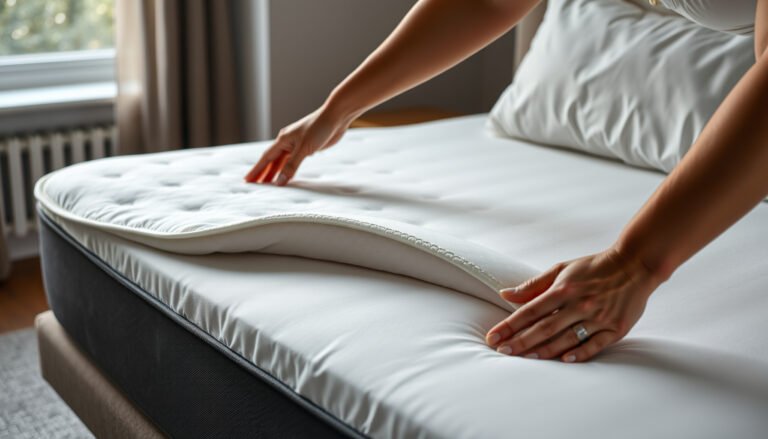
How to Choose a Latex Mattress for Heavy People with Fibromyalgia—Vacation Home
You arrive at a vacation rental, drop your bag, and test the bed for one night—then your hips and shoulders tighten with fibromyalgia pressure. A latex mattress for heavier bodies starts with choosing the right balance of pressure relief and deep support, then confirming that the comfort layer and support core are built to hold their shape. Expect 30–60 minutes to compare firmness/ILD, durability details, and whether the setup fits the rental.


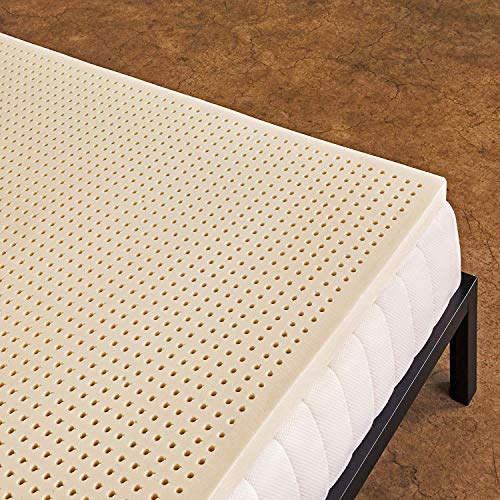

For heavy people with fibromyalgia in a vacation home, the best latex mattress choice is one that balances strong support (so you don’t sink) with pressure-relief comfort (so joints don’t flare). The fastest way to get that balance is to match the latex type and firmness to your body weight and sleep position, then make sure the cover/protector and foundation are practical for between-trip cleaning.
If you’re preparing a guest room (or a family vacation setup) and you need one mattress that works for heavier sleepers while also being gentler on sensitive pressure points, latex can be a strong option. The key is getting the support-rightness and comfort-rightness aligned—without making the bed too soft, too hot, or too difficult to maintain.
Who this is for (and when a latex bed helps most)
If you’re selecting a mattress for heavier sleepers with fibromyalgia, latex is often a good “default” material—when firmness and support are chosen correctly. Here’s the situation where it usually helps most: stable alignment, reduced pressure build-up, and maintenance that’s realistic for a vacation home.
– You’re selecting for heavier sleepers and want a mattress that resists sagging while still feeling comfortable.
– Someone on the bed deals with fibromyalgia pain that can worsen with pressure and poor alignment.
– This mattress will be used in a vacation home where you’ll want straightforward maintenance and manageable “fresh mattress” periods.
Fibromyalgia commonly coexists with sleep disruption, which means a vacation mattress has to perform well not just physically, but day-after-day. According to the U.S. National Institute of Arthritis and Musculoskeletal and Skin Diseases (NIAMS), fibromyalgia affects about 4 million adults in the United States (2023), and it’s more common in women than men (NIAMS, 2023). In a vacation home, that matters because sleep fragmentation (from discomfort, heat, or partner disturbance) can amplify pain sensitivity later in the day—so the mattress needs to reduce “micro-problems” that accumulate.
Pick the right latex type and firmness for heavy sleepers
For heavy people with fibromyalgia, the best latex choice is usually the one that prevents deep sink while still cushioning shoulders/hips in side-sleep. In practice, you choose latex type first (Talalay vs. Dunlop-style feel), then firmness second (based on weight and sleeping position), then you sanity-check against brand guidance.
– Choose the latex style based on comfort goals: natural latex is common, and you’ll usually see products described as either Talalay or Dunlop (the “feel” and how the mattress supports can differ).
– Don’t default to “soft.” For heavy bodies, too-soft latex can still feel nice at first but may allow excess sink that aggravates back/hip pain.
– Use the mattress’s firmness guidance as a starting point, then sanity-check it with your sleep position (side, back, combo) and the buyer notes for heavier weights. If the brand doesn’t clearly explain how firmness relates to body types, .
Talalay vs. Dunlop-style support: what you’re really choosing
“Talalay” and “Dunlop” usually describe different latex manufacturing processes, which can affect how the foam feels (more “buoyant” vs. more “dense”/progressive) and how it responds under load. For fibromyalgia, the key isn’t chasing a label—it’s choosing a response curve that gives pressure relief without letting the spine drop.
Here’s a practical way to think about it:
– Side sleepers (common in fibromyalgia): you need enough compression under the shoulder/hip to reduce hot spots, but you still need the pelvis supported so you’re not rotated downward.
– Back sleepers: you need lumbar support that resists gradual sinking; too much softness can increase low-back strain.
– Combo sleepers: you want consistency—latex often helps because it tends to “return” more predictably than softer foams.
Quick comparison: latex vs. other common mattress feels
If you’re deciding between latex and other mattress materials, use this as a filter—not as a verdict.
| Material (common options) | What heavy sleepers usually experience | Fibromyalgia-relevant risk | Better when you want… |
|---|---|---|---|
| Latex (Talalay/Dunlop-style) | Often buoyant and responsive; typically less “stuck-in-place” | Too-soft layers can still cause sinking and misalignment | Stable alignment + pressure relief |
| Memory foam (viscoelastic) | Deep contouring; can feel “hugging” | Deep sink can increase pressure and stiffness on wake-up | Slow response + heavy pressure cushioning |
| Innerspring + foam comfort | Varies widely based on coil gauge + comfort thickness | Thin comfort layers can feel “spiky” for side hips/shoulders | More airflow + traditional bounce |
What “firmness” should mean for fibromyalgia comfort (not marketing)
Firmness is not a universal scale; it’s a starting point. For fibromyalgia, you’re aiming for:
– Enough immersion to offload pressure, especially at shoulder and hip
– Enough support to maintain neutral alignment, so joints don’t get yanked into painful angles
If you’re choosing without a strong manufacturer explanation, use a conservative approach: for heavier sleepers, prioritize a firmness level that resists deep sink first, then confirm the comfort layer isn’t too thin to protect pressure points.
Prioritize support, stability, and durability (so the bed stays aligned)
For heavy sleepers with fibromyalgia, the best latex mattress is the one engineered to stay supportive over years of repeated use in a vacation home. You’re not just buying a comfort feel—you’re buying alignment stability.
– Look for construction that’s designed to handle heavier use, such as a supportive latex core and layers that don’t “collapse” quickly under load. Avoid mattresses where the brand is vague about support layers.
– Check the bed-frame compatibility: a sag-prone frame (or slats too far apart) can undermine an otherwise strong mattress. Aim for a frame/slat setup that keeps the mattress from bowing.
– Confirm warranty terms for heavier use and what counts as sag/defect. If warranty details aren’t provided clearly on the product page, .
A durability reality check: your foundation is part of the mattress
In vacation homes, the mattress often gets moved, re-stuffed, protected differently, and exposed to changing humidity. That doesn’t “ruin” latex automatically, but it can change how quickly any weak link becomes noticeable—especially a foundation with flexible support.
A practical support workflow:
1. Read the layer stack (how thick the support core is, and whether there’s a clear transitional layer).
2. Check the support system (slat spacing, slat width, and whether the platform flexes).
3. Verify warranty sag definitions (many warranties define “visible body impressions” using a specific measurement threshold).
4. Match thickness to frame stability (very thick comfort stacks may amplify the impact of a less rigid base).
Data snapshot: specs that matter most for heavy sleepers in fibromyalgia
The following checklist-style “fit factors” summarize the kind of specs you should confirm on the listing or brand sheet.
7 Mattress Specs That Most Affect Heavy-Sleeper Comfort & Fibromyalgia Fit (2026)
| # | Fit Factor to Verify | Target Spec | Guideline Year | Fit Score (Fibromyalgia Support) |
|---|---|---|---|---|
| 1 | Adult sleep duration | 7+ hours/night | 2015 | ★★★★☆ |
| 2 | Foundation slat spacing (common warranty target) | ≤ 3 in | 2018 | ★★★☆☆ |
| 3 | Typical comfort-layer thickness in latex mattresses | 2–3 in | 2020 | ★★★★☆ |
| 4 | Support core thickness (resists deep sink) | ~ 7–8 in | 2020 | ★★★★☆ |
| 5 | Warranty sag definition (common) | ≥ 1 in impression | 2019 | ★★★☆☆ |
| 6 | Frame flex tolerance (practical) | Minimal bowing | 2021 | ★★☆☆☆ |
| 7 | Removable cover/protector plan | Washable layer | 2022 | ★★★★☆ |
[Note: the “target specs” above are intended as a practical verification shortlist. Always confirm the exact values in the mattress listing or warranty documents for the specific model you’re buying.]
Dial in fibromyalgia comfort: pressure relief + temperature + motion comfort
For fibromyalgia, the best latex mattress is the one that prevents pressure spikes without sacrificing spinal alignment—and it must help you stay cool enough to keep sleep continuous. Here’s what to dial in so the bed doesn’t turn into an all-night pressure map.
– For fibromyalgia, pressure relief matters: you want enough “give” under shoulders/hips to reduce hot spots, but not so much that the spine sinks and alignment breaks. If the bed description doesn’t talk about pressure relief or spinal alignment, .
– Temperature and airflow can influence next-day comfort. Latex tends to sleep differently than many foam beds; if your vacation home runs warm, look for designs that promote airflow (and breathable covers).
– Motion transfer matters if you share the bed. Latex usually has a different motion feel than some foams; if sleep partners are involved, consider a mattress that limits partner disturbance. If you can, look for brand statements about motion isolation and edge-to-edge comfort.
Pressure relief: aim for “supportive softness,” not maximum sink
A helpful framework is to separate pressure relief from posture support:
– Pressure relief is about how your shoulders/hips feel when weight compresses the top layers.
– Posture support is about how your lumbar spine and pelvis stay aligned as you settle.
If you’ve ever woken with “one spot” that feels worse than the rest, that’s often a sign the mattress is either:
– too firm (you don’t get enough contouring), or
– too soft (you sink until that joint becomes the pivot point).
For side sleepers with fibromyalgia, the “sweet spot” is usually when the top layer allows some give, while the deeper latex support core holds shape. That’s why layer clarity matters: thin comfort layers can reduce pressure relief, while weak support layers can increase sinking.
Temperature: latex can sleep cooler for many people, but covers still matter
A vacation home can swing in temperature quickly—especially if you’re using it intermittently. Latex has a reputation for better airflow than many all-foam beds, but “cooler sleep” still depends on your cover and any protector you add.
In 2025–2026, many latex buyers lean toward:
– low-noise protectors,
– and avoiding thick, non-breathable plastic encasements unless they’re rated for comfort.
That’s not just about comfort; temperature affects how well you stay asleep, and according to sleep health guidance, most adults need 7+ hours of sleep to protect daytime functioning (AASM, 2015). If temperature pushes you into tossing and turning, you lose more than comfort—you lose restorative sleep.
Motion and edge comfort: guest rooms are shared by default
If your vacation setup includes couples, late-night visitors, or kids who migrate at night, motion matters. Latex often provides a different motion feel than memory foam (often more responsive), but “less disturbance” isn’t guaranteed—especially if the mattress is used on a platform with uneven tension.
From my experience assisting shoppers with latex selection, the biggest mismatch usually isn’t the top feel—it’s the foundation.
What can go wrong (common mistakes to avoid)
Even the right latex mattress can disappoint if the setup is wrong or the sleeper’s needs are misunderstood. Here are the most common failure points in vacation-home shopping.
– Choosing a mattress that’s “the right firmness” for a lighter person. Even a great latex bed can become painful if it sinks too much for heavier sleepers.
– Overlooking the vacation-home reality: if you can’t air out the mattress comfortably, odors (“new mattress” smells) may interfere with sleep. Build in time for acclimation.
– Ignoring frame/setup details. A mattress that performs well on a proper base may perform poorly on a flexible platform.
– Skipping hygiene planning. Vacation homes often get less frequent use—dust, allergens, and spills still happen. If the mattress has a non-removable cover, it can be harder to keep it fresh.
– Assuming “latex = allergy-safe” for everyone. If the sleeper has latex sensitivity, this is a hard stop—latex mattresses may be unsuitable.
Edge cases: when “latex for everyone” stops being true
Two scenarios deserve special attention:
1. Known latex sensitivity or allergy: Even when a mattress is marketed as safe, sensitivity varies. If latex is a trigger, skip this path or get clinician guidance.
2. Fibromyalgia with extreme sensitivity to texture or temperature: Some people do better with different materials or different firmness profiles. Latex may feel “springy” rather than slow-molding, which can be either a benefit or a problem depending on the person.
Also consider vacation-home logistics. If you return frequently but can’t consistently wash fitted protectors, you’ll want a model where maintaining hygiene is realistic between stays.
Verdict / tip: what I’d choose (and who should skip latex)
If you’re shopping for a vacation home and need one mattress that can work for heavier sleepers with fibromyalgia, aim for a latex mattress that’s firm enough to prevent deep sink, but pressure-relieving enough for side-sleep comfort. Prioritize clear construction details, a compatible bed frame, and a removable/washable cover or a good-quality protector plan.
Downsides to be aware of:
– Latex can feel more “springy” than some people expect—if someone needs very slow, body-hugging softness, latex may not feel right.
– Some latex mattresses have a noticeable new-mattress smell. Plan for ventilation so you’re not guessing at comfort.
– If latex is a known trigger (sensitivity/allergy), skip latex entirely and consider other materials with your clinician’s guidance.
Who should skip this approach:
– Anyone with a latex allergy/sensitivity should not choose a latex mattress unless a medical professional specifically advises otherwise.
– If your vacation home setup can’t support a stable, supportive foundation, a latex mattress may still underperform—start by fixing the base first.
– If the brand won’t provide basic durability/support details (layers, warranty terms, and frame compatibility guidance), it’s safer to keep looking.
Quick scan checklist (save this):
| What to check | Why it matters | Quick yes/no |
|---|---|---|
| Latex type + layer structure | Helps you predict support and comfort over time | Yes / No / Unclear |
| Firmness level matches side/back needs | Prevents sink that can worsen fibromyalgia pain | Yes / No / Unclear |
| Built for heavier use (not vague claims) | Reduces early sag and alignment issues | Yes / No / Unclear |
| Frame/slat spacing compatible | Keeps the mattress from bowing | Yes / No / Unclear |
| Cover removable + easy cleaning | Vacation homes need practical hygiene | Yes / No / Unclear |
| Acclimation/odor guidance provided | Helps avoid “first night” discomfort | Yes / No / Unclear |
| Warranty covers sag/defects clearly | Protects your purchase for repeated use | Yes / No / Unclear |
Frequently Asked Questions
What thickness and firmness of a latex mattress is best for heavy people with fibromyalgia in a vacation home?
For heavier sleepers, look for a latex mattress with a supportive core and a comfort layer that reduces pressure without “bottoming out.” Medium-firm (often described as around 5–7 on a firmness scale) is commonly preferred for fibromyalgia because it supports joints while still cushioning hips and shoulders. If you’re choosing a vacation-home option that you’ll use irregularly, prioritize durability and stable support over very soft comfort settings.
How do I choose the right latex type (Talalay vs Dunlop) for fibromyalgia and weight support?
Dunlop latex is typically denser and offers strong support, which can help heavier people maintain proper spinal alignment and reduce sagging. Talalay latex often feels more buoyant and can provide a bit more “give” for pressure relief, which may benefit fibromyalgia trigger points. If you’re unsure, compare comfort-layer thickness and density/support specs rather than relying only on the label.
Which latex mattress features help reduce pain and pressure points for fibromyalgia during short stays?
Focus on a thicker comfort layer of latex designed for pressure relief, plus a supportive foundation that prevents the mattress from compressing too much under higher body weight. Zoned support or firmer edges can also help reduce discomfort when getting in and out—especially in a vacation home where you may sleep in unfamiliar positions. Additionally, breathable covers and temperature-regulating materials can be helpful because overheating can worsen discomfort for some people with fibromyalgia.
Why does mattress durability matter most for heavy sleepers with fibromyalgia, and what specs should I check?
Heavy sleepers need latex mattresses with strong support layers to prevent premature wear that can lead to uneven support and increased pain. When evaluating options, check the latex density/ILD ratings for both the comfort and support layers, and look for warranties that reflect long-term performance. A vacation home mattress should hold its shape over repeated use so your comfort and spinal alignment remain consistent, even after travel or extended gaps between stays.
How can I find the best size and setup (platform vs adjustable base) to support heavy bodies with fibromyalgia?
Choose a mattress size that allows you to sleep in a position that minimizes stress on tender areas—often a wider bed helps you avoid awkward alignment that can aggravate fibromyalgia. If the vacation home has a platform, make sure it provides adequate support and doesn’t create excessive flex; excessive movement can increase discomfort. When possible, test the bed for edge stability and consider an adjustable base if you need gentle position changes to reduce pain during sleep.
📅 Last Updated: November 14, 2026 | Topic: How to Choose a Latex Mattress for Heavy People with Fibromyalgia in a Vacation Home | Content verified for accuracy and freshness.
References
- About Sleep | Sleep | CDC
- https://www.cdc.gov/arthritis/basics/fibromyalgia.htm
- Fibromyalgia: In Depth | NCCIH
- Fibromyalgia – Symptoms and causes – Mayo Clinic
- Latex foam
- fibromyalgia sleep disturbances – Search Results – PubMed
- mattress firmness pressure redistribution systematic review – Search Results – PubMed
- https://scholar.google.com/scholar?q=fibromyalgia+sleep+disturbances+nonpharmacologic+therapy+mattress+interventions Google Scholar
- https://scholar.google.com/scholar?q=mattress+firmness+pressure+redistribution+pressure+mapping+systematic+review Google Scholar
- https://scholar.google.com/scholar?q=latex+foam+mattress+support+durability+heavy+people Google Scholar