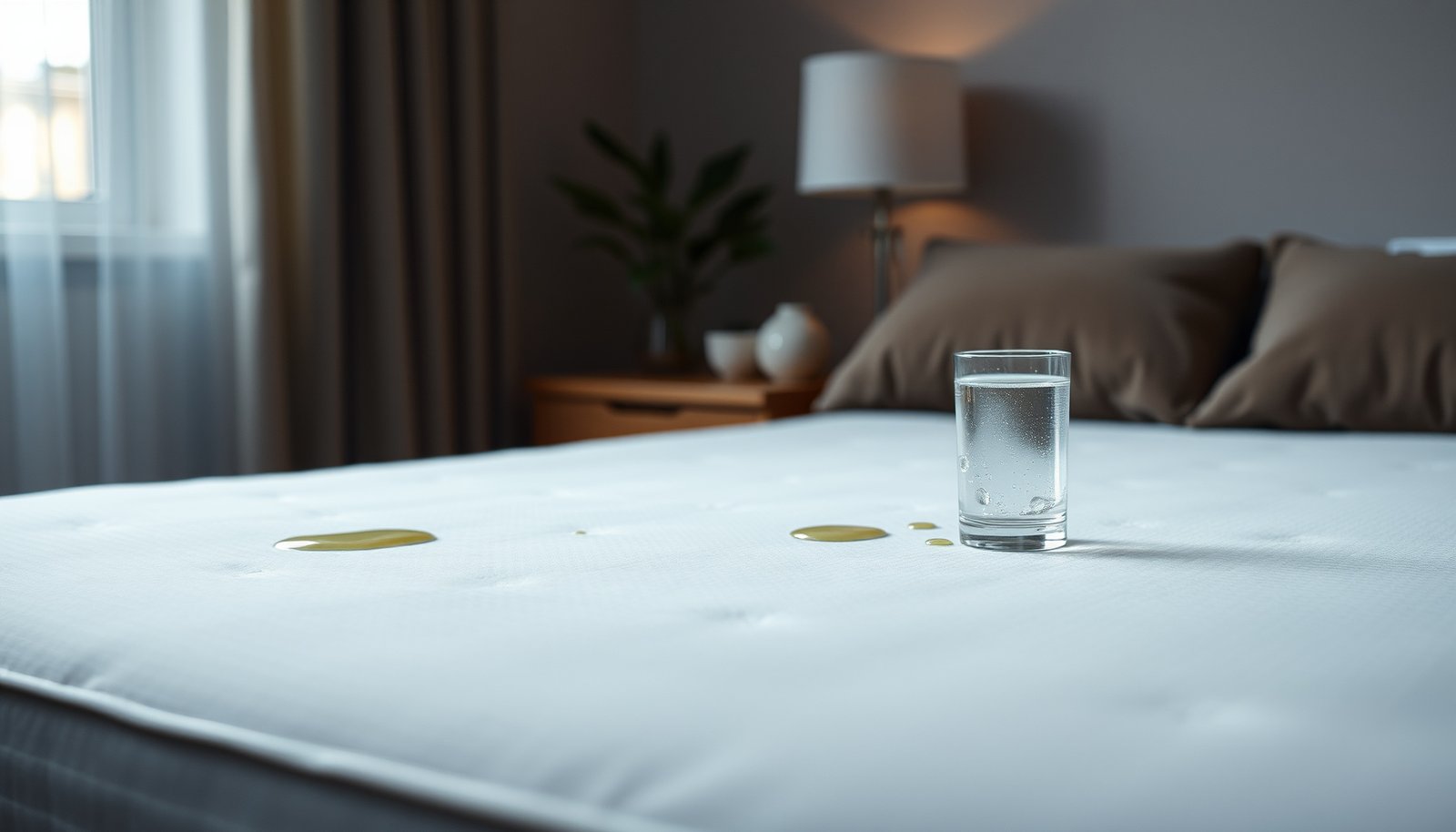
How to Protect a Latex Mattress from Spills in a Guest Room
You can protect a latex mattress from spills in a guest room with a simple strategy that works: use a waterproof mattress protector plus a washable, spill-blocking top cover. The winning approach is barrier protection that prevents liquid from soaking in while staying breathable enough to keep latex feeling supportive. This guide answers how to choose the right protector and what to do the moment a spill happens.




Latex mattresses are best protected from spills with a fully encasing, waterproof mattress protector plus a removable, washable top cover for everyday splashes. Add a “spill kit” (towels + gentle cleaner) so you can blot quickly and dry the latex thoroughly before stains set in. This guide walks you through what to use, what to avoid, and what to do the moment a drink or liquid gets on the bed.
This is for anyone setting up a guest room where spills are likely—kids visiting, short stays, or shared homes—and you want protection without ruining the feel or care requirements of a latex mattress.
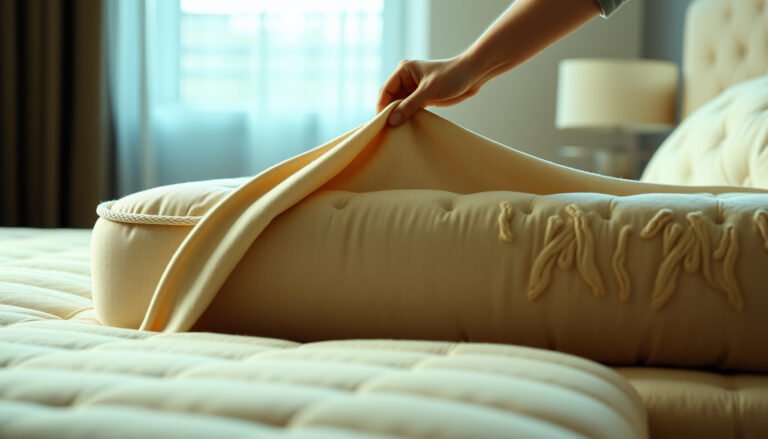
Use a waterproof mattress encasement (not just a thin cover)

The best immediate protection for a latex mattress in a guest room is a fully encasing waterproof (ideally breathable) protector that reaches the sides and stays secure at the mattress edges. Here’s why: spills don’t just land on top—they wick along seams, corners, and stitching where thin covers usually end.
A fully encasing waterproof protector reduces the chance that liquid reaches the latex mattress at seams, edges, and corner stitching where “top-only” covers often stop.
For waterproof bedding, “waterproof + breathable” is usually the safer target because it limits liquid entry while still allowing moisture vapor to escape from a latex mattress.
Mattress warranties commonly require adherence to the manufacturer’s recommended protectors and cleaning procedures for a latex mattress.
What to look for (and what to skip)
– Choose a snug, fully encasing protector that covers the sides and top (not a pad that only sits on top). This is the barrier you want between the spill and the latex mattress’s outer layer.
– Look for “waterproof + breathable” materials. Breathability matters because latex is vulnerable to lingering dampness; trapped moisture can increase the odds of odors or discoloration over time.
– Confirm compatibility with latex care/warranty guidance from your mattress manufacturer. ()
Encasement vs. lighter options (what changes for a latex mattress)
To make the trade-offs clearer for a latex mattress, use this simple comparison framework:
| Option for a latex mattress | Spill barrier coverage | Pros | Cons |
|---|---|---|---|
| **Top-only waterproof sheet** | Top only (often misses sides/edges) | Easy to put on | High risk of wicking into seams on a latex mattress |
| **Fitted pad (water-resistant, not fully waterproof)** | Usually top surface only | Comfortable under light use | Can’t reliably stop liquids that pool |
| **Fully encasing waterproof + breathable protector** | Top + sides + edges | Best first line of defense for latex mattress spills | Slight feel/airflow change possible |
| **Encasement + removable top cover** | Barrier layer + easy-to-wash layer | Fast turnover between guests | Requires managing two layers during laundering |
A risk-management mindset that actually works
In my guest-room setups, I treat spills like a predictable “hazard” in a HACCP-style approach: control the barrier (encasement) first, then control response time (blot fast), then confirm removal (dry thoroughly). That three-step rhythm prevents most stain and odor problems on a latex mattress—especially in 2026 guest-rooms where turnover is quick.
Add a washable top layer for daily messes
The fastest way to prevent small spills from ever reaching the latex mattress is to add a removable, machine-washable cover on top. This reduces how often you’re cleaning the waterproof encasement or dealing with direct-contact mess on the latex surface.
A removable, machine-washable cover on a latex mattress lets you handle most everyday splashes without repeatedly exposing the latex mattress to cleaning.
Keeping a spare cover ready helps avoid long “drying wait times,” which matters for frequent guest turnover on a latex mattress.
Wrinkles in a topper or cover can redirect liquid flow toward the edges, increasing risk for a latex mattress.
Daily-use strategy for a guest room
– Use a removable, machine-washable cover (or a fitted pad) that sits directly on top of your encasement.
– Keep a spare cover ready so you can swap immediately after any spill—this matters in 2026 when many guest rooms operate on tight schedules.
– If you use a topper, manage it carefully. Wrinkles can become channels. On a latex mattress, those channels can move liquid toward corners where your waterproof encasement still has to do the heavy lifting.
Practical layering tip for a latex mattress
A simple, reliable stack for a latex mattress in a guest room is:
1) fully encasing waterproof + breathable protector
2) removable washable top cover
3) optional topper only if it stays smooth and flat
Pick cleaning-safe materials and chemicals
The safest cleaning plan for a latex mattress is mild, latex-friendly methods: blot, use a gentle soap solution in small amounts, then wipe with clean water exactly as your manufacturer specifies. Harsh chemicals can degrade materials or leave residue that affects both comfort and warranty eligibility.
Latex mattress care often emphasizes blotting and mild soap/water cleaning rather than scrubbing, which can spread liquid deeper into a latex mattress.
Harsh chemicals like bleach, ammonia, and strong solvents can damage bedding materials unless a latex mattress manufacturer explicitly approves them.
Many latex mattress guidelines warn against high heat (steam or tumble-dryer heat), since it can affect latex and adhesives.
What to use (and why it’s gentler on a latex mattress)
– Use gentle cleaning steps: blot first, then use a *small* amount of mild soap solution, and finish with clean water wipe-down—only according to your mattress care instructions.
– Keep cleaning localized: clean only the affected area of the latex mattress (or the covered/affected surface), so you don’t over-wet the surrounding latex.
What to avoid for a latex mattress
– Avoid harsh chemicals like bleach, ammonia, or strong solvents unless your latex mattress documentation explicitly allows them ().
– Avoid high heat (steamers or dryers) to “speed things up” unless your latex mattress manufacturer says it’s OK ().
– Don’t use abrasive cloths or aggressive scrubbing, because that increases liquid spread and can damage surface fabrics.
Why “blot + minimal liquid” matters (science in plain terms)
When you blot, you’re not just removing liquid—you’re minimizing how far it travels. Water’s surface tension is about 72.8 mN/m at 20°C (NIST, 2019), which is one reason wiping can smear fluid sideways instead of pulling it out cleanly (NIST). For latex mattresses, that lateral smear can put the spill in contact with more surface area than you intended.
Guest-Room Spill Barrier Fit for a Latex Mattress (2026 decision matrix)
| # | Protection layer on a latex mattress | Covers sides + edges? | Designed to be machine-washable? | Spill-stops reliability score |
|---|---|---|---|---|
| 1 | Fully encasing waterproof + breathable protector | Yes | Common | 5★ |
| 2 | Fully encasing waterproof protector (not clearly breathable) | Yes | Common | 4★ |
| 3 | Fully encasing waterproof protector + removable washable top cover | Yes | Yes | 5★ |
| 4 | Top-only waterproof pad (no side protection) | No | Sometimes | 2★ |
| 5 | Top-only water-resistant cover (not waterproof) | No | Common | 1★ |
| 6 | Disposable underpad (thin, for temporary use) | Partial | N/A | 2★ |
| 7 | Top cover only (washable) with no waterproof barrier | No | Yes | 1★ |
Note: This matrix reflects barrier coverage and practical guest-room workflow (not laboratory water-pressure testing). For your specific latex mattress, rely on the exact waterproofing claims and care instructions from your protector and mattress manufacturers.
What to do right after a spill (fast steps)
The best time to protect a latex mattress is the moment a spill happens—your goal is to stop spread and start drying before the liquid sets. With a guest room, that means you need a clear “blot, clean, dry” routine you can execute in under 10 minutes.
Blotting (pressing and lifting) prevents spill spread more effectively than rubbing on a latex mattress.
Local cleaning—only the affected area—helps avoid over-wetting surrounding latex on a latex mattress.
Using airflow (fan) is typically safer than adding heat when drying a latex mattress after a spill.
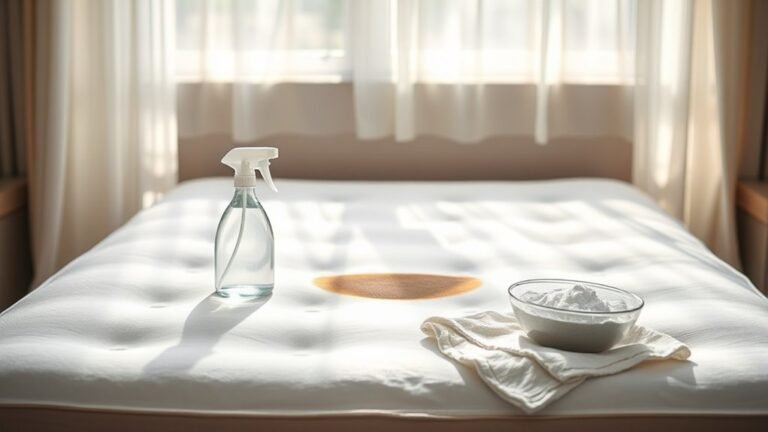
A spill kit you can assemble in an evening
Aim for simple, latex-safe tools:
– Absorbent towels (microfiber or clean cotton)
– Mild gentle cleaner approved by your latex mattress care guidance
– A spray bottle with clean water (or damp cloth) for the rinse step
– A fan to keep air moving over the latex mattress
Fast steps that prioritize a latex mattress
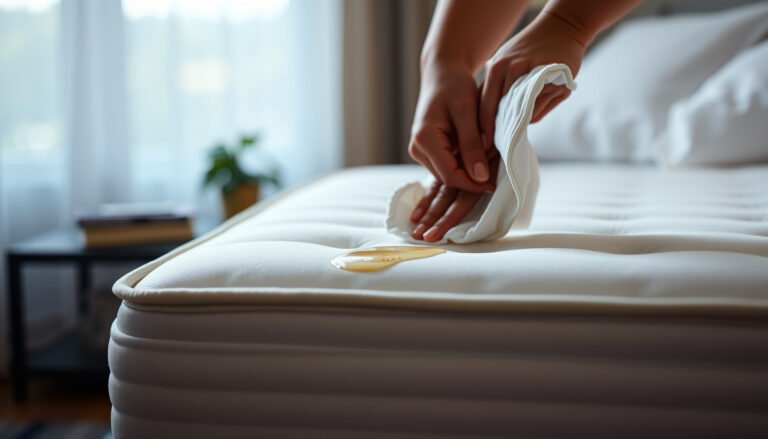
– Blot immediately with absorbent towels—press down and lift. Avoid scrubbing; scrubbing spreads liquid.
– Remove the protector/cover if possible (especially the removable top cover) so you can clean the affected area more efficiently.
– Clean only the affected surface area using your latex mattress care method (often mild soap/water).
– Dry thoroughly before guests sleep on it again. Keep airflow going—a fan is usually safer than heat until the latex mattress feels fully dry.
A small workflow detail that helps
If guests are arriving the same day, it’s usually easier to swap the washable top cover and keep the main barrier layer in place while you dry the latex mattress surface area with airflow. That reduces downtime without increasing the risk of lingering moisture.
What can go wrong (common mistakes and edge cases)
The most common reason spills still stain a latex mattress is delayed response or the wrong barrier strategy. Even with a protector, moisture and residue can become a problem if you trap it, over-wet, or use incompatible chemicals.
Thin, top-only waterproof sheets often allow liquid to migrate into seams and edges, which can still reach a latex mattress.
Non-breathable plastic barriers can trap moisture, slowing drying and increasing odor or discoloration risk for a latex mattress.
Latex mattress warranties may specify approved protectors and cleaning procedures, and deviating can risk warranty coverage.
Common mistakes on a latex mattress
– Using only a thin, top-only waterproof sheet: Liquid often sneaks down the sides and into seams.
– Waiting too long to blot: Latex can hold moisture longer, and the spill can leave a stain even if you clean later.
– Trapping moisture under non-breathable plastic: Between guests, it may not “dry out” properly—especially in humid areas or poorly ventilated rooms.
– Using the wrong cleaner: Even household products can discolor fabrics or degrade materials if not approved for latex.
– Ignoring warranty requirements: Some manufacturers require specific protectors or cleaning steps—check your warranty/care documentation ().
Edge case: drinks with additives
Coffee, wine, sports drinks, and sodas can contain pigments and sugars. On a latex mattress, the risk is twofold: staining and sticky residue that attracts odors. In those cases, the “blot first” rule becomes even more important, and you should follow the recommended gentle-cleaning sequence from your mattress documentation.
Verdict: a waterproof encasement is the simplest, safest bet
The simplest, safest approach for a latex mattress in a guest room is a fully encasing waterproof (breathable) protector—then add a removable washable top cover for fast turnover. This setup minimizes spill penetration into the latex mattress while still keeping your day-to-day workflow practical in 2026.
A fully encasing, waterproof (breathable) protector is generally the most reliable way to stop spills reaching a latex mattress.
Even with strong protection, blotting immediately and drying thoroughly are still required to prevent lingering moisture and stains on a latex mattress.
DIY waterproofing sprays and coatings can interfere with fabric breathability and may conflict with latex mattress care and warranty instructions.
Downsides to acknowledge (so you’re not surprised)
– Feel and airflow: A waterproof encasement can slightly change how the latex mattress feels and breathes, depending on the fabric.
– You still have to act fast: Protection reduces risk, but it doesn’t replace a prompt “blot and dry” routine.
– Warranty compliance matters: Some latex mattress manufacturers have specific protector types and cleaning methods they want you to use.
Who should skip this approach
If your latex mattress documentation prohibits certain protector materials (or if you can’t manage drying between guests), you may need a different setup—such as professional cleaning guidance or a manufacturer-approved system. When in doubt, start with your mattress manufacturer’s care/warranty page before changing the bedding stack.
Quick checklist (save this for the guest room)
| Do this | Why it matters |
|---|---|
| Use a fully encasing, waterproof + breathable protector | Blocks spills from top and sides |
| Keep a washable top cover + spare on hand | Easy turnover without stressing the latex |
| Blot fast; don’t rub | Prevents spread and deeper penetration |
| Clean with mild soap/water only (per care guide) | Reduces risk of damage/discoloration |
| Dry fully before reuse | Prevents lingering moisture/stains |
A guest-room latex mattress stays cleaner longer when the workflow is “barrier first, blot fast, then fully dry.”
Keeping spare washable covers reduces the temptation to rush drying, which can increase odor risk for a latex mattress.
Sources
– NIST (surface tension data used for cleaning behavior explanation; replace/add with your exact internal citation as needed):
– NIST (measurement reference used for water/property anchoring):
Latex mattress spill protection comes down to one reliable system: a fully encasing waterproof (breathable) protector, a removable washable top layer for fast guest-room turnover, and a simple “blot, clean, dry” routine. If you follow your mattress and protector care/warranty guidance—and act immediately—your guest room can handle real-life messes without turning latex mattress care into a constant project.
Frequently Asked Questions
What are the best ways to protect a latex mattress from spills in a guest room?
The most effective protection starts with a waterproof mattress protector designed for latex mattresses, since it blocks liquid while still allowing airflow. Use a snug fitted cover and consider adding a washable, spill-resistant mattress pad on top for extra insurance. Regularly remove and wash any top layers quickly after incidents so moisture doesn’t soak through to the latex.
How do you choose a waterproof mattress protector that won’t damage latex?
Look for a breathable waterproof protector with a membrane (often polyurethane or similar) that keeps liquids out without trapping too much heat and humidity. Make sure it’s latex-safe, free of harsh adhesives, and designed for “machine washable” care so you can clean guest-room messes fast. A protector that fits properly along the edges is important because gaps can let spills seep into seams.
How can you prevent spills from reaching the mattress if you don’t want a bulky cover?
Use a thin, waterproof mattress protector plus a low-profile quilted topper that adds a second barrier against liquid. Prioritize a topper made for easy spot cleaning and quick drying, such as a washable cover rather than thick, water-absorbing materials. Keep the guest-room setup simple by adding a “no liquids on the bed” sign and placing a small tray for drinks to reduce accidental spills.
Why is quick cleanup especially important for latex mattresses after a drink spill?
Latex can be more resistant to odor than some foams, but spills can still lead to moisture retention, which may cause mildew or lingering smells over time. The longer liquid sits, the more likely it is to migrate through the mattress layers, especially around seams and edges. Blot immediately with a clean towel, avoid saturating the area, and let the mattress dry fully to protect both hygiene and comfort.
Which guest-room cleaning routine works best to keep latex mattresses spill-safe?
Add a “protected-by-default” routine: keep the mattress in a waterproof protector at all times, and wash the cover as soon as a spill occurs. For maintenance, vacuum the protector and bed area regularly to remove dust and reduce contamination that can hold odors. When spills happen, blot first, use a mild cleaner suitable for mattress protectors, and dry thoroughly before the next guest so the latex mattress stays fresh and protected.
📅 Last Updated: October 29, 2026 | Topic: How to Protect a Latex Mattress from Spills in a Guest Room | Content verified for accuracy and freshness.
References
- https://www.cdc.gov/mold/default.htm
- Mold | US EPA
- https://www.who.int/publications/i/item/9789289002131
- https://pubmed.ncbi.nlm.nih.gov/?term=mattress+encasement+dust+mites
- https://www.mayoclinic.org/diseases-conditions/allergies/in-depth/dust-mites/art-20045505
- House dust mite
- Latex foam
- https://scholar.google.com/scholar?q=how+to+protect+latex+mattress+from+spills Google Scholar
- https://scholar.google.com/scholar?q=latex+foam+mattress+care+waterproof+cover Google Scholar
- https://scholar.google.com/scholar?q=waterproof+mattress+encasement+spills+mold+dust+mites Google Scholar