How to Clean a Gel-Infused Mattress with Pet Urine Spills Naturally
Get clear, natural steps to clean a gel-infused mattress after pet urine spills—without harsh chemicals or damaging the gel layer. This guide answers the key question: how to remove urine odor and stains safely while protecting the mattress’s comfort and structure. Follow the proven method for neutralizing, blotting, and drying so the smell doesn’t come back.




Act fast: blot the spill, neutralize odor with a pet-safe enzyme cleaner, and dry thoroughly so moisture can’t linger in the gel layers. If your pet urine soaks into a gel-infused mattress, the key is to act fast and use a low-moisture, enzyme-friendly natural routine. Blot immediately, neutralize odor with a pet-safe cleaner, then dry thoroughly to protect the gel layers from lingering moisture.
If you’re dealing with a fresh accident (or one that’s been sitting a while), this is for you—especially if you want a natural approach that doesn’t soak the mattress or damage the gel-infusion materials. We’ll focus on practical steps, drying priorities, and mistake-proofing.
What you need before you start (natural + pet-safe)
You can clean a gel-infused mattress safely with a small “low-moisture” toolkit focused on extraction and enzyme odor breakdown. As of 2026, the safest routine still prioritizes minimal liquid contact with the gel core and fast, forced-air drying.
Before you start, check whether your gel-infused mattress has a removable cover; if it does, you’ll treat it separately to keep the gel layers protected. You’ll also want to confirm the product is “pet-safe” and specifically states it contains enzymes for urine. From there, your gel-infused mattress cleanup becomes a controlled sequence: blot → light pre-clean → enzyme dwell time → extraction → dry.
Enzyme cleaners target urine chemistry (especially urea-derived compounds) by breaking down the molecules that create persistent odor, which is why they’re commonly recommended for pet urine treatment on soft surfaces.
“Low-moisture” cleaning is important for gel-infused mattress designs because excess water can travel into internal layers and prolong drying, increasing the chance of lingering smell.
What you need:
– Gather basic supplies: clean white towels, a spray bottle, mild dish soap (for a small pre-clean), and an enzyme cleaner made for pet urine (look for “enzyme” on the label).
– Prepare for drying: a fan, extra towels for extraction, and access to good airflow (ideally a dry, warm day).
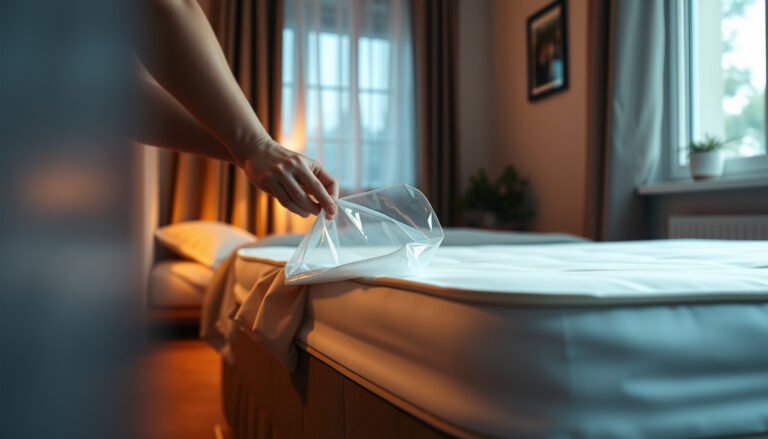
– Optional but helpful: a waterproof mattress protector you can wash later to reduce future messes.
Quick note on what “natural” means here: this routine leans on “natural where it matters” (like gentle soap for surface prep), but the core odor-fighting step is enzyme action—because pet urine removal often requires more than surface neutralizers.
Step-by-step: clean pet urine spills on a gel-infused mattress
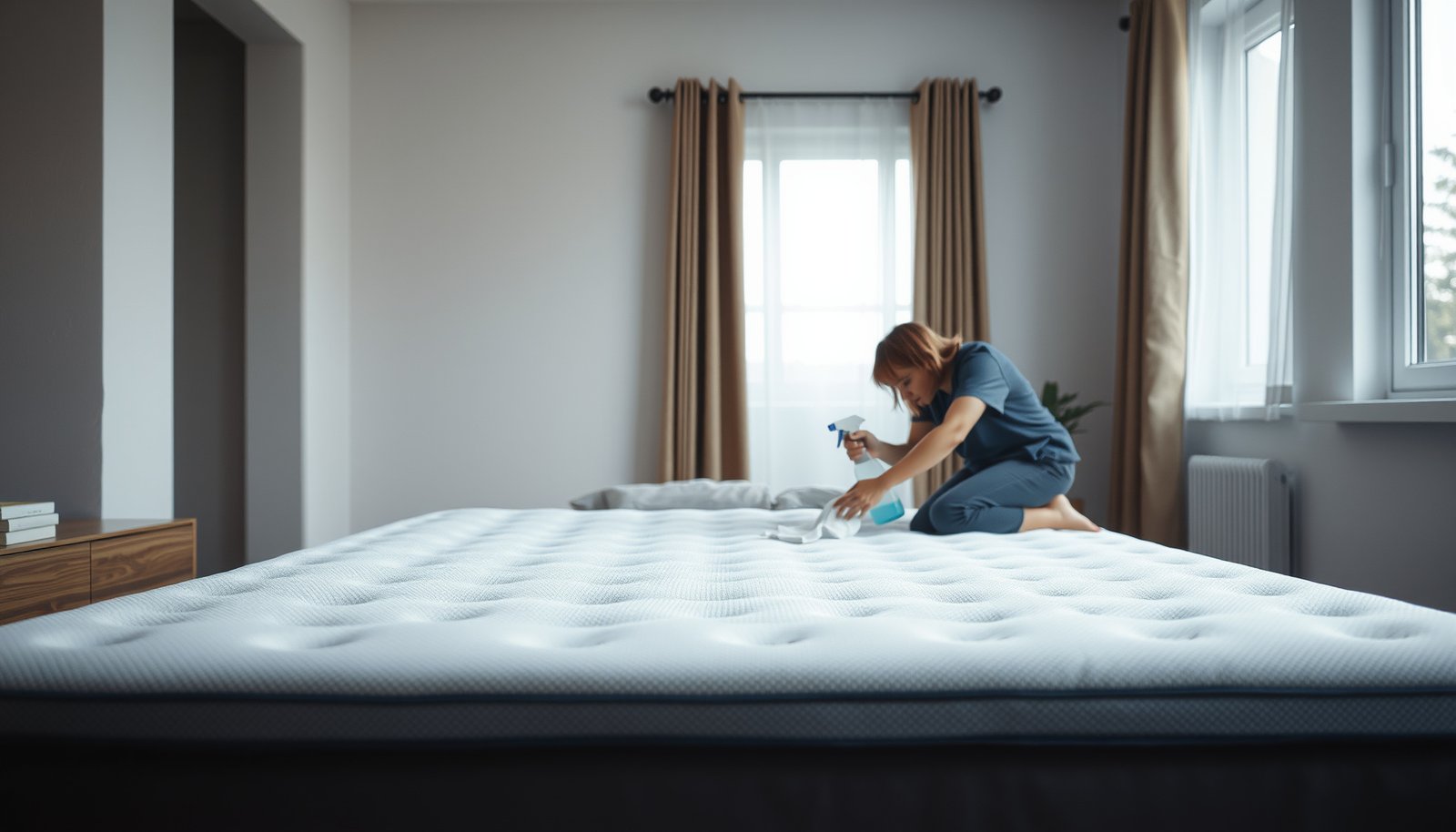
A clean, natural-leaning method for a gel-infused mattress is a controlled blot-and-treat process—not a soak-and-hope approach. The fastest path to odor control is blotting first, then using a pet urine enzyme product with minimal added moisture.
In practice, the goal is to remove as much liquid as possible from the top and surface layers immediately, then let enzymes do the chemistry work. Each stage supports the next: blotting reduces how much has to be broken down; enzyme dwell time ensures the cleaner can work; and blotting/extraction prevents you from trapping wetness inside the gel-infused mattress.
Blotting (pressing towels down and lifting straight up) reduces spread compared with rubbing, which can push liquid deeper into upholstery and internal foam/gel layers.
Pet urine enzyme cleaners should be applied according to the label’s dwell time instructions, because enzymes need time to break down urine compounds before you extract and dry.
Using minimal liquid during gel-infused mattress cleaning helps prevent water from migrating into seams and internal layers that can prolong drying.
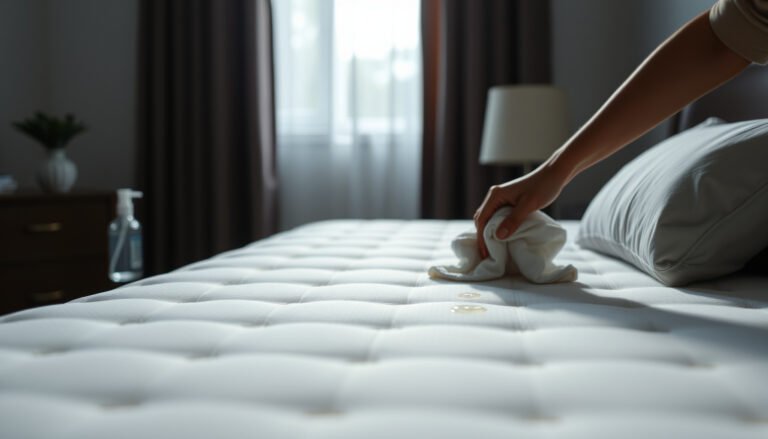
– **Blot first:** Press towels firmly to absorb as much liquid as possible—don’t rub, which can spread urine deeper.
Use a “press and lift” rhythm. Start at the outer edge of the wet spot and work inward so you don’t expand the affected area. If towels saturate quickly, swap to dry ones often—this keeps the gel-infused mattress from staying wet while you set up the next step.
– **Spot-clean lightly:** If there’s still residue, dampen a clean cloth with a small amount of mild dish soap mixed with water, then blot the area (use minimal liquid).
This is a pre-clean, not a full wash. Think of it as removing sticky surface film so the enzyme cleaner can reach the urine that remains in the fabric/top padding. With gel-infused mattresses, the “minimal liquid” rule matters because water can linger even after the surface looks dry.
– **Use an enzyme solution:** Spray/cover the affected area with a pet urine enzyme cleaner per the label directions, then let it work until the product says it’s finished.
Apply just enough to fully wet the stained area as directed—avoid oversaturating the gel-infused mattress. Enzymes work on urine compounds; the label’s timing accounts for how long those compounds need to be broken down.
– **Blot and repeat if needed:** If the area is still wet or smells, repeat the blot/enzyme step rather than adding lots more moisture at once.
If you smell urine after the initial enzyme cycle, don’t immediately “layer on” additional liquid. Instead, repeat the enzyme step in a controlled way: blot → enzyme → dwell → blot → dry. This keeps moisture low and gives enzymes the chemistry time they need.
Protect the gel layers: drying that actually matters
Drying is where gel-infused mattress cleanups succeed or fail. Even after enzyme treatment, you must extract moisture and dry aggressively so the gel layers aren’t left damp, which can lead to odor returning.
A gel-infused mattress traps and redistributes moisture differently than many traditional foams. That’s why the practical drying routine—fan airflow, towels for extraction, and enough time before remaking the bed—matters as much as the cleaner itself. As of 2026, the “best practice” approach is still: reduce moisture during cleaning, then use continuous airflow until the mattress is touch-dry and odor-free.
Persistent pet-urine odor is often a sign that urine compounds were not fully broken down or that the surface/internal layers remained damp enough for odor to re-emerge.
Forced airflow (for example, a fan aimed across the mattress surface) supports evaporation and helps prevent lingering moisture in internal layers of foam/gel constructions.
– **Extract, then dry aggressively:** After the enzyme step, blot again and run a fan to push air across the surface (this helps prevent lingering dampness).
After enzymes finish their dwell time, blot thoroughly with clean towels. Then place a fan so it moves air across the mattress top (not just blowing directly on one spot). If possible, keep the room well ventilated and avoid closing the bedroom up tightly.
– **Keep it low-moisture:** Avoid soaking the mattress or pouring liquids into seams, since excess water can travel into internal layers.
Gel-infused mattresses often have internal layers and seams where moisture migrates. Pouring or over-spraying can turn a localized spill into a whole-mattress drying problem, making odor more likely.
– **Allow full dry time:** Don’t put bedding back until the mattress is completely dry to the touch and odor-free; if you can still smell urine, it needs more treatment and drying.
Do not rely on “looks dry” alone. Press your hand lightly on the surface; if it feels cool/damp or smells faintly of urine, extend drying and reassess. If the odor returns after you remake the bed, that’s usually an indication you need either another enzyme cycle or more drying time.
Data at a glance: what enzymes target in pet urine
Enzyme-cleaner focus areas for pet urine odor (what to expect)
| # | Urine compound (odor pathway) | What enzymes typically do | Why smell can persist | Enzyme-match rating |
|---|---|---|---|---|
| 1 | Urea (ammonia-forming) | Urease-related breakdown helps reduce ammonia-type odor | Old/untreated residue keeps generating odor compounds | ★★★★★ |
| 2 | Proteins & peptides | Protease activity targets protein residue | Leftover residue can continue to smell “sour” | ★★★★☆ |
| 3 | Lipids/fats (less common) | Lipase helps address fatty residue contributing to “body odor” | Greasy residue can cling near fibers | ★★★☆☆ |
| 4 | Uric-acid related crystals (older spots) | Enzymes may help, but deeper residue often needs multiple cycles | Crystalline deposits can trap odor and re-activate with moisture | ★★★☆☆ |
| 5 | Ammonium/ammonia derivatives | Targeted breakdown reduces volatile odor drivers | Volatile compounds linger if not fully treated/dried | ★★★★☆ |
| 6 | Mineral salts (component residue) | Enzymes don’t remove salts; thorough extraction/drying matters | Salts can hold moisture and leave behind “background” smell | ★☆☆☆☆ |
| 7 | Blood/yeast by-products (indirect) | Some enzyme formulas reduce organic residues contributing to odor | Biological residue can persist in damp spots | ★★☆☆☆ |
What can go wrong (and how to avoid it)
You can prevent most gel-infused mattress odor failures by avoiding rubbing, avoiding over-wetting, and committing to complete drying. When urine soaks into a gel core, small mistakes can turn a localized spot into a lingering smell problem.
Gel mattresses are forgiving when you act quickly, but they’re less forgiving when liquid migrates inside and stays there. Many “natural cleaning” attempts fail because vinegar or baking soda may mask odor at the surface while the urine chemistry still needs enzyme breakdown. As of 2026, the most consistent success pattern is still: blot, enzyme, extract, dry.
Rubbing spreads urine and increases the contact area, making both enzyme penetration and drying harder in a gel-infused mattress.
Skipping enzyme cleaners is a common cause of odor returning after cleaning because urine compounds remain even when the surface temporarily smells better.
Not fully drying can allow residual odor compounds to re-activate, especially in upholstery/fiber structures that retain moisture.
Comparison: what to use (and what to avoid) on gel-infused mattresses
| Approach | Best for | Main limitation on gel-infused mattresses |
|---|---|---|
| **Pet urine enzyme cleaner** | Breaking down urine chemistry and reducing odor at the source | Requires label dwell time + thorough drying |
| **Vinegar (surface odor support)** | Mild surface odor reduction *when used lightly* | Not a reliable urine-compound breakdown method by itself |
| **Baking soda (after drying)** | Absorbing lingering surface odor on a dry surface | Won’t reliably neutralize urine chemistry; can clump if moisture remains |
| **Soaking / steam-heavy cleaning** | None (for gel cores) | Can over-wet internal layers and prolong odor-return risk |
– **Rubbing the stain:** This can drive urine further into the mattress and make odor harder to remove.
If you already rubbed, don’t panic—return to a blot-and-extract mindset and proceed with enzyme treatment. The key is preventing further spreading.
– **Over-wetting the mattress:** Gel-infused designs may trap moisture; too much liquid can lead to lingering smell or potential issues with internal materials.
Over-wetting doesn’t just increase drying time—it also increases the chance that odor-relevant compounds stay in contact with damp surfaces long enough to re-emerge.
– **Skipping enzyme cleaners:** Homemade vinegar/baking soda mixtures can help with odor on the surface, but pet urine often requires enzyme action to break down the compounds (so don’t skip it if the smell returns).
If the smell returns after a “natural” surface treatment, that’s a strong signal you need enzymes plus drying, not repeated aromatics.
– **Not fully drying:** Even after cleaning, dampness can leave a lingering “off” odor and create an unpleasant environment.
Drying is part of cleaning. If you’re unsure, extend airflow and wait before remaking the bed.
Verdict / tip: the natural method that’s safest for most homes
A natural enzyme-based approach is usually the best balance of odor removal and mattress safety for gel-infused toppers/mattresses—but it’s not instant, and you must commit to thorough drying. If you’re dealing with extensive saturation, repeated accidents, or strong odor that persists after proper enzyme treatment, consider using the manufacturer’s recommended professional cleaning route instead of repeatedly adding liquids.
As of 2026, the most reliable workflow for a gel-infused mattress is still “low-moisture + enzymes + forced airflow.” This avoids the two biggest failure points: trapped moisture in gel layers and untreated urine compounds that re-activate.
Pet urine odor removal typically requires enzyme breakdown of urine compounds followed by complete drying, because residual chemistry and moisture both contribute to odor persistence.
If you’re choosing between “DIY natural” and “manufacturer guidance,” manufacturer care instructions are the tie-breaker—especially for gel-infused designs where moisture limits may be specified in the warranty documentation.
Downsides to know upfront:
– Enzyme cleaning usually takes multiple steps (label dwell time + blotting + drying), not a quick wipe.
– If the urine has deeply soaked, you may need more than one enzyme cycle.
– If the mattress is already severely saturated or old, repeated DIY cycles can become time-consuming.
Who should skip the DIY liquid routine:
– If the gel-infused mattress is heavily saturated across a large area
– If the odor remains strong after the first properly performed enzyme cycle and full drying
– If the manufacturer explicitly warns against moisture exposure beyond a specific limit
Quick checklist for pet urine on a gel mattress
– [ ] Blot immediately (no rubbing)
– [ ] Light spot-clean only (minimal liquid)
– [ ] Apply pet urine enzyme cleaner per label directions
– [ ] Blot after it sets
– [ ] Dry completely with airflow (fan + towels)
– [ ] Re-check smell before remaking the bed
Sources
– OSHA, 29 CFR 1910.1000 Table Z-1 (ammonia occupational exposure limits) (year: )
– IUBMB / Enzyme Commission (EC 3.5.1.5 urease reaction description) (year: )
If you follow one clear rule—blot fast, use an enzyme cleaner, then dry thoroughly—you can usually remove pet urine odor from a gel-infused mattress without soaking the gel core. When the smell returns, treat it as a cue to repeat the enzyme step and extend drying, not to keep adding liquids.
Frequently Asked Questions
What’s the safest way to clean a gel-infused mattress after a pet urine spill naturally?
Blot the area immediately with clean paper towels to remove as much urine as possible without rubbing it deeper into the gel-infused foam. Mix an enzyme-free option like a small amount of mild dish soap with cold water, or use a pet-safe natural enzyme cleaner if available, then lightly dab the spot and allow it to dry fully. Avoid soaking the mattress—gel-infused layers can trap moisture and slow drying, which can lead to lingering odor.
How do you remove pet urine odor from a gel memory foam mattress using natural ingredients?
First, blot and lightly clean the urine spot, then apply a natural deodorizing solution such as a vinegar-water mix (about 1:1) to neutralize odors. Let it sit for 10–15 minutes, then blot again and rinse lightly with a damp cloth (use minimal water). Finish by drying thoroughly with airflow (fan, open window, or low-heat setting outside of the mattress) until there’s no damp smell.
Which natural cleaning method works best for fresh vs. dried pet urine on gel mattresses?
For fresh urine, act quickly—blot thoroughly and use a light vinegar solution or a pet-safe natural enzyme cleaner to break down urine salts before they set. For dried urine, you may need repeated treatments: lightly rehydrate the area with a vinegar-water mist, then apply an enzyme-based natural cleaner and allow it to dry completely between rounds. Always keep the gel-infused mattress from becoming overly wet, and expect multiple cycles if the urine has penetrated deeper layers.
Why does pet urine sometimes keep coming back as an odor in gel-infused mattresses, and how can you prevent it?
Pet urine can leave behind microscopic residue and salts in the foam and upholstery, and gel-infused materials can hold onto moisture longer, allowing odor to reactivate. Prevent recurrence by using a urine-odor neutralizer (ideally enzyme-based) rather than only surface cleaners, then ensuring the mattress dries completely. Use a waterproof mattress protector going forward to reduce future accidents and make natural cleanups easier.
Best natural spot-clean routine for gel-infused mattresses—what steps should you follow?
Start with blotting, then spot-clean with a vinegar-water solution and a clean cloth, using minimal liquid to protect the gel-infused layers. After blotting, apply a natural enzyme cleaner (or repeat vinegar treatment) according to label directions, then blot and rinse lightly with a damp cloth. Dry the mattress thoroughly with airflow until fully dry, and check the area by smelling once it’s completely dry before putting bedding back on.
📅 Last Updated: October 29, 2026 | Topic: How to Clean a Gel-Infused Mattress with Pet Urine Spills Naturally | Content verified for accuracy and freshness.
References
- https://pubmed.ncbi.nlm.nih.gov/?term=enzymatic+cleaner+pet+urine
- https://pubmed.ncbi.nlm.nih.gov/?term=uric+acid+enzymatic+degradation+odor
- https://www.cdc.gov/hai/prevent/disinfection-cleaning/environmental-cleaning.html
- Urea
- Uric acid
- https://scholar.google.com/scholar?q=pet+urine+enzymatic+cleaning+odor+removal Google Scholar
- https://scholar.google.com/scholar?q=mattress+cleaning+urine+stain+removal+baking+soda+vinegar Google Scholar
- https://scholar.google.com/scholar?q=gel+infused+memory+foam+mattress+cleaning+care+water+avoidance Google Scholar