How to Protect a Cotton Mattress from Spills in a Small Apartment
Protecting a cotton mattress from spills in a small apartment is easiest with a waterproof mattress protector plus fast-acting spot coverage for the most likely leak zones. This guide gives you the quickest, most effective setup to stop liquid from soaking in, without sacrificing airflow or comfort in tight spaces. Follow these proven steps and you’ll know exactly what to use—and what to avoid—when the next spill happens.




A fully encasing waterproof mattress protector (not just a top pad) plus immediate blot-and-dry cleanup is the most reliable way to prevent stains and musty odors on a cotton mattress in a small apartment. For tight spaces, the goal is simple: stop liquid from soaking into cotton fibers, then remove moisture fast enough to prevent lingering dampness.
If you’re sharing space, keeping drinks nearby, and dealing with limited airflow/storage, you’ll benefit from protection that works day-to-day—not only after accidents. This guide walks you through selecting a true waterproof encasement, setting up spill prevention in a small footprint, and handling messes without damaging the mattress.
Choose the right waterproof cover for cotton
A cotton mattress stays “stain-prone” when liquids can creep underneath seams, corners, or shifting pads—so you want a fully encasing waterproof protector with secure edges. Done correctly, it blocks liquid at the surface long enough for you to blot and dry, which is what prevents both discoloration and damp, musty conditions.
A fully encasing, edge-secured waterproof mattress protector is designed to prevent liquid from migrating into seams and corners, which are common entry points for spills on cotton mattresses.
If water damage leads to excess indoor moisture, mold growth can begin within 24–48 hours, so stopping a cotton mattress from staying damp matters quickly in a small apartment.CDC (Mold—General Guidance)
Know what “fully encasing” means (and what it should replace)
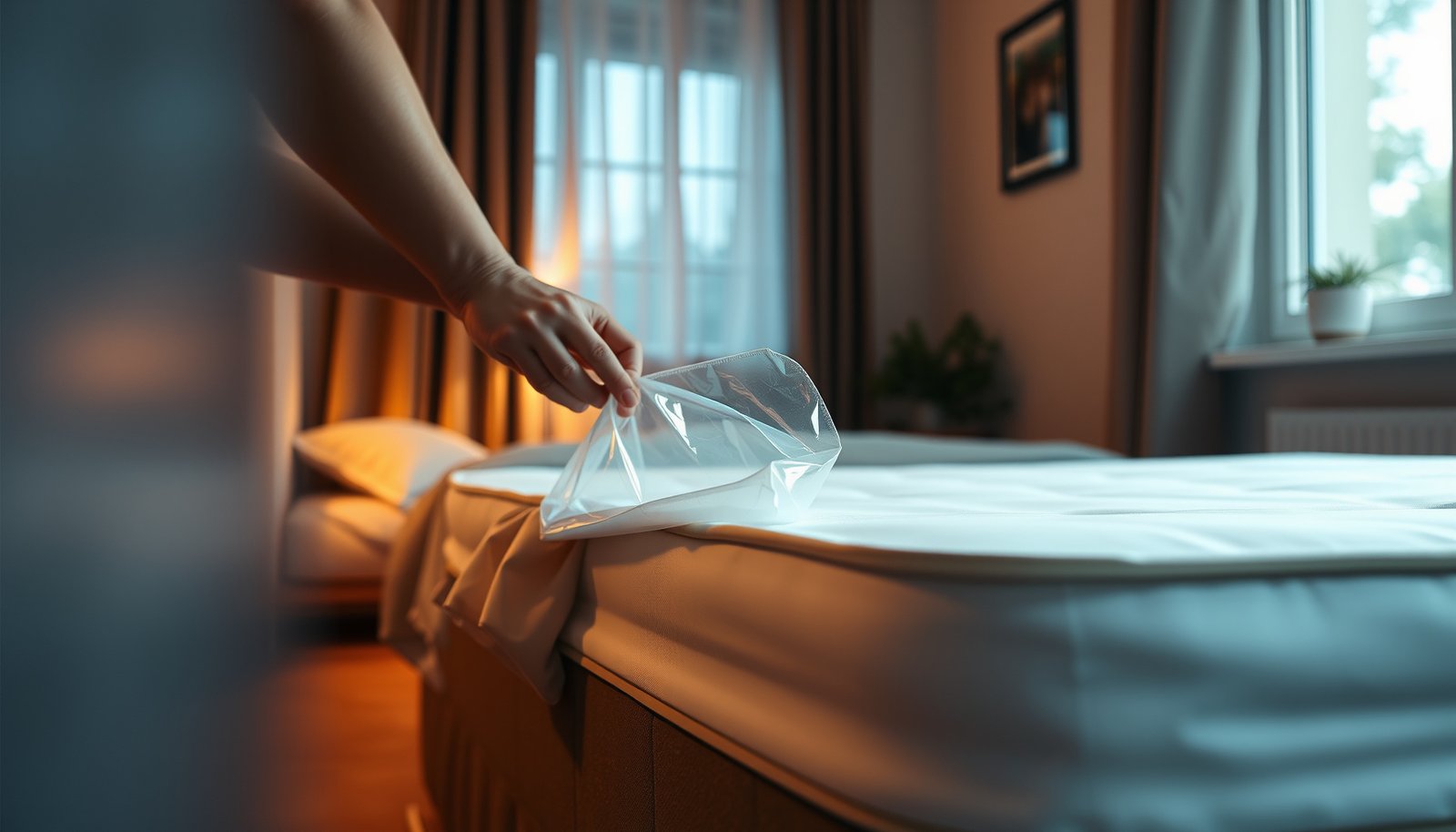
Look for a fully encasing mattress protector with waterproof fabric (often described as “waterproof breathable”) and zipped or fully secured edges so spills can’t creep underneath. For a cotton mattress, that edge protection is the difference between “liquid sits on top” and “liquid finds a path into the cotton layers.”
In practical terms, you want:
– A protector that covers the top and sides (not a half-coverage liner).
– Secure closure (zippers, bands, or tight elastic) that resists shifting when you change positions.
– Correct sizing for your mattress dimensions and mattress depth so the protector doesn’t loosen over time.
From my experience with small-space living and frequent rearranging, the issue isn’t usually the spill itself—it’s that loose bedding shifts during everyday movement, slowly exposing untreated corners.
Prioritize fit over “looks” so the cotton can’t absorb liquid
Prefer protectors that are designed for mattresses (right size, properly deep-pocket fit) rather than loose liners that slide when you move. A well-fitting encasement stays smooth and taut, reducing the chance that a spill gets trapped at an edge and then wicks downward into cotton fibers.
Comparison: fully encasing waterproof protector vs. top pad
| Feature | Fully encasing waterproof protector | Top pad / non-encasing “shield” |
|---|---|---|
| Edge coverage | Covers sides/corners; designed to prevent liquid migration | Often leaves seams/edges partially exposed |
| Movement resistance | Tighter fit reduces shifting during turning/sleep | May shift, creating micro-gaps where cotton can wet |
| Typical spill outcome | Spill stays on top long enough to blot and dry | Spill can wick under corners or seams before you notice |
| Best use case | Daily, day-in-day-out protection for cotton mattresses | Occasional protection if edges are still fully secured |
Choose sizing that matches real mattress dimensions
If the protector doesn’t match your mattress size and depth, corners can loosen and create “leak paths” for liquid. In small apartments, where you’re more likely to bump the bed frame while moving furniture, correct sizing becomes even more important.
US mattress size footprints and relative waterproof coverage need (standard dimensions)
| # | Mattress size | Standard dimensions (in) | Surface area (sq ft) | Relative coverage vs Twin |
|---|---|---|---|---|
| 1 | Twin | 39 × 75 | 20.31 | 1.00 |
| 2 | Twin XL | 39 × 80 | 21.67 | 1.07 |
| 3 | Full | 54 × 75 | 28.13 | 1.38 |
| 4 | RV Queen | 60 × 75 | 31.25 | 1.54 |
| 5 | Queen | 60 × 80 | 33.33 | 1.64 |
| 6 | King | 76 × 80 | 42.22 | 2.08 |
| 7 | California King | 72 × 84 | 42.00 | 2.07 |
Prevent spills before they happen (small-apartment friendly)
The fastest way to protect a cotton mattress is to prevent the spill from ever landing on the sleep surface. In 2026, most small-apartment damage comes from everyday habits—cups, bottles, and easily tipped items—not from “rare disasters.”
In small spaces, a drink landing zone (tray/coaster zone) reduces the chance that beverages contact the mattress surface and edges—where cotton mattresses are most vulnerable.
Keeping indoor humidity under control helps reduce conditions that support mold after water exposure; the EPA recommends indoor relative humidity be maintained around 30–50%.EPA (Mold and Humidity Guidance)
Add a bedside “drink landing zone” you’ll actually use
Create a bedside “drink landing zone”: a small tray, coaster, or shallow container so cups don’t sit directly on the mattress area. The goal isn’t “perfect behavior”—it’s making the safe option the default.
If your nightstand is cramped, place a small tray at the exact spot where people naturally set drinks (for you and guests). In tiny apartments, this one adjustment often outperforms adding more blankets, because it prevents liquid from reaching the cotton mattress at all.
Reduce splash risk from reachable surfaces and foot traffic
Reduce splash risk by keeping liquids off reachable surfaces—or using a stable side table instead of stacking items where they can tip. Small apartments tend to concentrate movement paths near beds (entryways, kitchen pass-throughs, shared hall traffic), so you want drink containers far enough away that a shoulder bump won’t fling a cup.
Also consider these simple risk reducers:
– Choose lidded bottles over open cups when possible.
– Keep straw cups and spill-resistant bottles within the landing zone.
– Avoid placing fragile décor next to the bed that could fall onto bedding during a quick pass.
Make cleanup faster: set up a simple spill kit
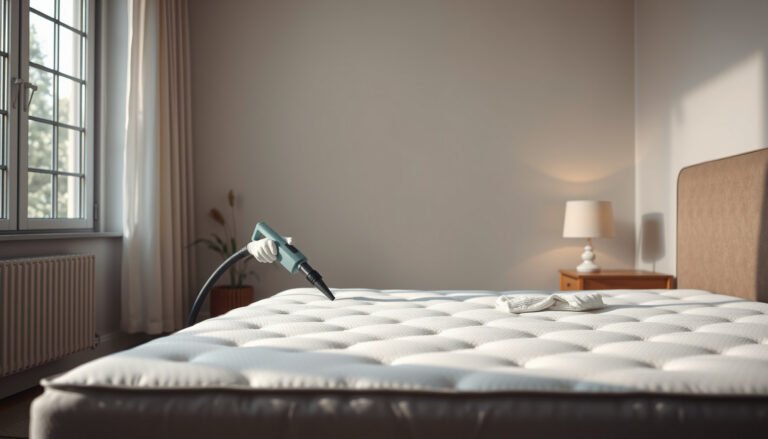
You protect a cotton mattress by making cleanup immediate and controlled, not by “waiting until later.” A small spill kit within arm’s reach shortens the time liquid sits on the protector and gives you the tools to blot-and-dry fast.
Because mold can begin growing within 24–48 hours after water damage, quick blotting and drying is a practical moisture-control strategy for cotton mattresses in apartments.CDC (Mold—General Guidance)
Using towels (instead of soaking tools) supports “lift and remove” cleanup, which reduces how much liquid can reach cotton fibers.
Build the kit around blotting and minimal moisture
Keep a small bin nearby with:
– Clean white towels/paper towels
– A mild detergent (for fabric)
– A spray bottle of clean water (for controlled blotting)
Add a couple of optional “small-space” items that can make the process smoother:
– Disposable gloves (helps if you’re cleaning for roommates/guests)
– A plastic bag for temporarily holding wet towels
– A small fan you can aim at the bed quickly
Make “remove and launder” part of the routine
Store a spare protector or have a clear plan to remove and launder the cover immediately. This matters because leaving a protector damp (even if the mattress is protected) slows drying and can contribute to persistent odor.
In 2026, many apartment dwellers prefer to wash less frequently due to shared laundry logistics. But odor prevention is time-sensitive: if anything gets damp, you want a plan that gets fabric dry as soon as possible.
What to do when a spill hits (quick, cotton-safe steps)
When a spill happens, act as if time matters—because it does. The safest approach for a cotton mattress is blot first, use minimal moisture if you clean, then dry thoroughly with airflow.
The EPA emphasizes that managing moisture is key in preventing mold; drying promptly after water exposure supports that moisture-control goal.EPA (Mold and Humidity Guidance)
CDC guidance notes that mold can begin growing within 24–48 hours after water damage, reinforcing the need for fast blotting and drying after spills.CDC (Mold—General Guidance)
Blot first—don’t rub
Blot first—don’t rub. Press towels into the spill to lift liquid out of the surface fibers without pushing it deeper. On a cotton mattress, rubbing can spread the liquid and increases the chance it works into seams/edges (even with protection if the protector shifts).
A practical blot method:
– Lay a folded towel over the spill area
– Press firmly for a few seconds
– Swap to a dry section of the towel repeatedly
Clean only if needed, and keep moisture minimal
If you need to clean, use minimal moisture: lightly dab with a mild detergent solution, then blot with clean towels until the area feels less damp. Think “lift residue,” not “wash the mattress”—especially in small apartments with limited airflow.
If the spill is likely sticky (soda, syrup, juice), residues can cling even after initial blotting. In those cases, consider a fabric-appropriate approach and prioritize thorough drying.
Dry with air movement until there’s no damp odor
For drying, aim for air movement (open window/turn on a fan). If the mattress (or protector top) still smells damp, give it more time—trapped moisture is what leads to lasting issues.
In my own apartment setup, the drying time varies based on airflow; . Even with a protector, I’ve learned the smell test is the most reliable “last check” before putting bedding back fully on top.
What can go wrong (common mistakes and edge cases)
Most damage happens when people assume “waterproof” means “ignore it.” With cotton mattresses, delays and over-wetting can still lead to lingering odor, dampness, or residue—especially when apartment ventilation is limited.
If you rely on a non-encasing top pad, spills can reach exposed seams/edges and wet cotton layers, increasing the risk of discoloration and lingering damp odor.
Because mold can begin growing within 24–48 hours after water damage, waiting to clean or dry thoroughly after a spill increases risk.CDC (Mold—General Guidance)
Common mistakes that undermine spill protection
– Using only a thin top sheet “water shield” that doesn’t fully cover the mattress can leave seams and edges exposed where spills often sneak underneath.
– Over-wetting during cleanup can drive liquid deeper into cotton layers and make drying much slower—especially in small apartments with limited airflow.
– If the spill involves sticky liquids (syrups, soda) or unknown substances, blot-and-rinse may not fully remove residues; you may need a fabric-appropriate cleaning approach and careful drying.
Edge case: breathability and heat retention
Covers that trap heat or reduce airflow may make the mattress feel warmer—if you’re sensitive to that, you’ll want a more breathable option. “Waterproof breathable” is often a marketing phrase; what matters practically is whether the protector maintains decent airflow and whether you’re comfortable with the feel.
Also watch for “secondary moisture” behaviors: if you cover up wet bedding immediately, trapped humidity can create a musty smell even when the mattress itself isn’t visibly wet.
Verdict: what’s the most reliable approach (and who should skip it)
A fully encasing waterproof protector + fast blot-and-dry cleanup is the most reliable setup for protecting a cotton mattress from spills in a small apartment. The logic is straightforward: you stop liquid from soaking into cotton fibers, then you remove moisture before it has time to create odor or growth conditions.
CDC notes mold can begin growing within 24–48 hours after water damage, which supports quick dry-out as a core strategy for cotton mattress spill response.CDC (Mold—General Guidance)
The EPA recommends maintaining indoor humidity around 30–50% to reduce mold-supporting conditions, which aligns with keeping cotton mattresses and protectors dry.EPA (Mold and Humidity Guidance)
Pros and cons of the best setup
| Category | What you gain | What to watch |
|---|---|---|
| Spill containment | Edges stay protected; liquids have less access to cotton seams | Poor sizing or loose fit can still create pathways for wetting |
| Odor prevention | Faster blot-and-dry reduces the window for persistent damp smells | If you delay cleanup, moisture can still set in |
| Comfort | Waterproof barrier reduces stress about daily living | Some encasements can feel crisper and may reduce airflow |
Who should skip (or modify) this approach
Skip the fully encasing waterproof setup if you:
– Strongly dislike the feel of an encasement, especially on cotton mattresses.
– Sleep hot and find that reduced breathability affects comfort.
– Can’t commit to fast cleanup—because even the best protector can only help if you respond quickly.
If you need an alternative, use only options that still cover edges securely. In 2026, “water-resistant top pad” is not the same as “fully encasing waterproof protection,” and cotton mattresses punish that difference.
Quick checklist / scan-save
| Task | Do this | Avoid |
|---|---|---|
| Mattress protection | Use a **fully encasing waterproof** protector sized correctly | Loose pads that shift or don’t cover seams/edges |
| Spill prevention | Use a tray/coaster zone near the bed | Cups directly on surfaces that can tip |
| Spill response | **Blot** with towels immediately; dab minimally if needed | Rubbing or soaking the mattress |
| Drying | Increase airflow (fan/window) until dry | Leaving damp fabric to sit |
Sources
– CDC (Centers for Disease Control and Prevention). Mold—general guidance on moisture control and early growth timing after water damage.
– EPA (U.S. Environmental Protection Agency). Mold and Moisture / Indoor relative humidity guidance (including recommended indoor humidity ranges).
A cotton mattress can survive apartment spills cleanly when you control two things: liquid exposure time and drying speed. Choose a fully encasing waterproof protector with secure edges, set up a simple drink-safe landing zone and a nearby spill kit, then respond immediately with blotting and airflow drying. If you can’t act fast or you can’t tolerate reduced breathability, adjust your approach—but don’t rely on a thin top pad alone.
Frequently Asked Questions
How can I protect a cotton mattress from spills in a small apartment?
Use a waterproof mattress protector specifically designed for cotton mattresses, ideally one with breathable fabric so heat and moisture don’t get trapped. Add a washable fitted top sheet as an extra barrier, and consider placing a tray or small mat near where drinks or food are most likely to land. In a small apartment, keeping cleaning supplies (paper towels, enzyme cleaner, and a backup protector) within reach makes spill response faster, which helps prevent staining in the cotton.
What type of waterproof protector works best for cotton mattresses?
Look for a breathable, fully waterproof mattress encasement or fitted protector with a membrane layer that blocks liquid spills while allowing airflow. A good option is a cotton- or cotton-blend top surface paired with waterproof backing, since it reduces the “clammy” feel that some waterproof covers have. Choose the correct mattress depth (thickness/height) so the protector fits snugly and doesn’t shift during sleep, which can expose cotton edges to spills.
Which spill-prevention strategies are most practical for a studio or small bedroom?
Start with “barrier stacking”: a waterproof protector on the mattress, a fitted sheet on top, and an absorbent layer (like a washable mat) where you routinely place drinks. If you eat in bed, use a dedicated spill zone—such as a small lap desk or tray—so liquids don’t reach the mattress surface. You can also reduce risk by storing open beverages in sealed containers with lids and keeping a compact cleaning kit nearby for immediate blotting.
Why do cotton mattresses stain so easily after spills, and how do I stop it fast?
Cotton is naturally absorbent, so spills soak into fibers quickly and can lead to discoloration and lingering odors if not addressed promptly. As soon as a spill happens, blot gently with paper towels or a clean cloth—don’t rub—then rinse lightly with cool water and use an appropriate cleaner if needed. The fastest prevention is immediate action plus the waterproof protector, because it blocks liquid from reaching the cotton and forming stains.
What’s the best way to clean a spill on a mattress protector without damaging cotton?
Follow the care label, but in general, blot first, then rinse with cool water and use a mild detergent or an enzyme cleaner for organic messes like drinks. For most waterproof mattress protectors, you can wash on a gentle cycle and air-dry or tumble-dry on low to avoid degrading waterproofing layers. Always ensure the protector is completely dry before putting it back on the cotton mattress to prevent trapped moisture and mildew.
📅 Last Updated: October 27, 2026 | Topic: How to Protect a Cotton Mattress from Spills in a Small Apartment | Content verified for accuracy and freshness.
References
- Mattress protector
- Mold
- https://www.cdc.gov/mold/default.htm
- https://www.epa.gov/mold/mold-and-mildew
- https://www.epa.gov/mold/preventing-mold-growth
- dampness and mould indoor air health – Search Results – PubMed
- https://www.mayoclinic.org/diseases-conditions/asthma/in-depth/mold/art-20044823
- https://scholar.google.com/scholar?q=mattress+protector+waterproof+encasement+spill+prevention Google Scholar
- https://scholar.google.com/scholar?q=spot+cleaning+cotton+fabric+water+stain+removal Google Scholar
- https://scholar.google.com/scholar?q=mold+prevention+water+damage+drying+time+household Google Scholar