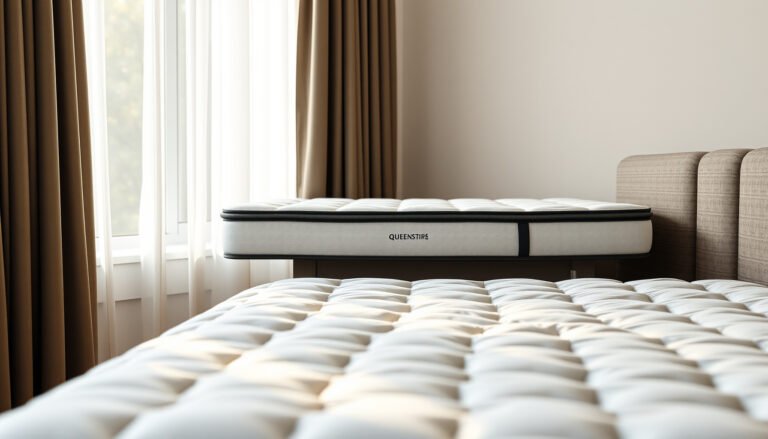
Sealy Mattress Reviews: What to Know Before You Buy
Sealy mattress reviews often get tangled in opinions about firmness, but the real differentiators are how the support system performs for your sleep position. Most people think a higher price automatically means better comfort, yet reviewers consistently reward mattresses that balance pressure relief, edge support, and temperature control while matching the feel you prefer. Using those criteria—plus warranty terms and return policies—we highlight which Sealy models are most likely to satisfy back, side, and stomach sleepers.



Sealy mattress reviews usually come down to a simple question: will the specific model’s firmness and support match how you sleep. If you use reviews to compare feel (pressure relief vs. sink-in) and durability expectations—not just star ratings—you’ll be much more likely to pick the right Sealy mattress the first time. In this guide, we’ll show you how to interpret the common “pros/cons” you’ll see across Sealy mattress reviews and what to double-check in the manufacturer details.
If you’re shopping online (and can’t test in-store), this is for you—especially if you’re a side sleeper, back sleeper, or you share a bed and need a mattress that performs well for more than one body type.
How to read Sealy mattress reviews without getting misled

The fastest way to avoid bad Sealy mattress buys is to treat reviews like “signals,” not proof—especially when firmness options exist within the same model line. If you read for patterns tied to sleep position and mattress function (support, motion transfer, durability), you’ll get far closer to what you’ll actually feel on a Sealy mattress.
– Look for repeated patterns tied to sleep position (side/back/stomach), not one-off complaints.
– Separate “feel” feedback (too firm/too soft, heat, edge support) from “function” complaints (sagging, motion transfer, durability).
– When reviewers mention “pressures points” or “support,” try to map that to your body needs (hips/shoulders vs. mid-back).
Match your sleep needs to Sealy mattress comfort styles
The right Sealy mattress for you is usually the one that matches your sleeping pressure points with the comfort-layer behavior described in reviews. Here’s how to translate the language you’ll see across Sealy mattress reviews into practical fit—without getting distracted by overall ratings.
– Side sleepers usually want more pressure relief at shoulders and hips; reviews often describe this as cushioning or “not too much sink.”
– Back sleepers commonly focus on lumbar support; reviews that mention a “raised midsection” or “even support” are usually the most relevant.
– If you’re a shared-bed sleeper, prioritize motion transfer and edge support themes—reviews often call out partner movement or the tendency to roll.
Typical US Mattress Sizes: Surface Area & Space Gain (Standard Dimensions)
| # | Size | Standard Dimensions | Surface Area (sq ft) | Space Gain vs Twin |
|---|---|---|---|---|
| 1 | Twin | 38 × 75 in | 19.79 | 0% |
| 2 | Twin XL | 38 × 80 in | 21.11 | +6.7% |
| 3 | Full | 54 × 75 in | 28.13 | +42.1% |
| 4 | Queen | 60 × 80 in | 33.33 | +68.4% |
| 5 | King | 76 × 80 in | 42.22 | +113.1% |
| 6 | California King | 72 × 84 in | 42.00 | +112.0% |
| 7 | Split King (2× Twin XL) | (38 × 80) × 2 | 42.22 | +113.1% |
As of 2026, the practical takeaway for Sealy mattress shopping is simple: bigger surface area doesn’t replace proper comfort/support, but it can reduce the “we both feel everything” problem—especially on firmer Sealy models where edge stability and motion transfer are more noticeable.
Compare materials and firmness using what’s stated (not just opinions)
The most reliable way to compare Sealy mattresses is to anchor your expectations in the construction and firmness options, then treat reviews as confirmation (or correction). On Sealy mattress review pages, the same model name can map to different comfort behaviors depending on the firmness tier or cover/topper style, so you need to read the materials story as carefully as the star rating.
– Use the firmness level descriptions and construction layers from the Sealy product page to interpret review language (e.g., “more contouring” vs. “firmer support”).
– Pay attention to whether the mattress is marketed as contouring/comfort-focused versus support-focused, then see if reviews agree with that expectation.
– If reviews disagree (some say “perfect,” others say “too firm”), check whether the model varies by firmness option or cover/topper style—Sealy lines can differ by configuration.
In my own shopping workflow, I first write down the exact firmness option and layer intent shown on Sealy’s product documentation, because that’s usually where mismatches begin.
Why this matters for Sealy
Sealy mattress reviews often mix “comfort layer behavior” with “overall support performance.” Foam comfort layers tend to increase sink/contouring, while supportive core layers determine whether your mid-back stays aligned—both can be affected by firmness selection. That’s why two people can write “Sealy is supportive” and “Sealy is too stiff” and still be accurate for different firmness tiers.
Check warranty, trial, and return terms before you trust reviews
The safest Sealy mattress decision uses reviews as input—but it depends on trial/return and warranty coverage as your safety net. Reviews can’t replace the manufacturer and retailer rules for timeframes, eligibility, and defect definitions, and Sealy mattress shopping online makes those terms especially important.
– Reviews can’t replace the return process; make sure you know the trial period rules for your retailer or the official Sealy program.
– Confirm the warranty coverage for your exact model (especially around sagging/defects).
– If you’re buying online, verify delivery/setup terms and whether you’ll need to keep packaging for returns.
Sealy also follows broader US product safety rules for mattresses and related products; for example, federal flammability requirements for mattresses are governed by CPSC regulations. According to the U.S. Consumer Product Safety Commission, mattress flammability requirements are covered under 16 CFR Part 1633 (the mattress/fire-safety rule framework published in 2016). This matters because the “feel” story in Sealy mattress reviews is separate from fire-safety compliance; you should evaluate comfort and support using Sealy construction details, not assumptions about safety.
What can go wrong with Sealy mattress shopping
The most common Sealy mattress problems come from mismatched firmness expectations and incomplete review context, not from Sealy “failing” across the board. If you know what tends to go wrong, you can filter reviews more effectively and avoid surprises during the break-in period.
– “Too firm” or “too soft” outcomes often come from picking the wrong firmness tier within the same model family—reviews may not reflect your chosen firmness.
– Heat complaints can be tied to room temperature, bedding choices, and mattress protector type; reviews won’t control those variables.
– Durability complaints may take time—if a reviewer is commenting after a short break-in period, consider that the mattress may still be conforming.
To keep expectations grounded for Sealy, remember that sleep needs vary by health and lifestyle. According to the Centers for Disease Control and Prevention, adults should get at least 7 hours of sleep per night (2015). If you’re sleep-deprived, sensitive to temperature, or recovering from pain, Sealy mattress comfort changes may feel more dramatic in the first couple of weeks than they would later.
Verdict: are Sealy mattresses worth it based on reviews?
Sealy mattresses are often worth considering when the review themes match your sleep position and the exact model/firmness you’re buying. Here’s the honest bottom line: reviews help you predict comfort and support, but they become misleading when shoppers compare different firmness tiers, sizes, or configurations within the same Sealy collection.
– Sealy can be a good fit if your top priority matches the review themes for the exact model you’re considering (pressure relief for side sleepers, consistent support for back sleepers, etc.).
– The downside: reviews are messy when shoppers compare different firmness options, sizes, or configurations—so you may end up with “the right brand, wrong build.”
– Skip (or at least pause) if you can’t verify the exact firmness/model details, the warranty coverage, and the return/trial rules. If you’re very sensitive to firmness differences, strongly consider trying a showroom option or using a retailer with a low-risk return plan.
| What tends to go right with Sealy (based on common review themes) | What tends to go wrong |
|---|---|
| Consistent pressure relief language for side sleepers (shoulders/hips) when buyers choose a softer/cushioning tier. | “Too firm” complaints that likely reflect a different firmness option than the buyer selected. |
| Back sleeper reviews that mention stable lumbar support and fewer “hammock” feelings. | Heat complaints influenced by bedding/protectors rather than the Sealy comfort materials alone. |
| Edge-support and “rolling less” comments for couples when the model’s perimeter support performs well. | Early sag concerns written before Sealy’s expected break-in window, blending conformity with durability. |
Quick Sealy mattress review checklist (scan/save)
| What reviewers mention | What it usually means | What to verify on Sealy’s spec page |
|---|---|---|
| “Too firm” | Not enough contouring/comfort layer for your sleeping pressure points | Exact firmness option + comfort layer description |
| “Too much sink” | Comfort layers may allow deeper “give” than you prefer | Construction notes (comfort layer thickness/feel) |
| “Heat” or “hot sleeping” | Comfort materials may retain warmth; bedding affects results | Cooling/cover description and material types |
| “Sagging” after months/years | Potential durability issue or expectations mismatch | Warranty coverage for sagging/defects |
| “Partner movement” | Motion transfer/edge stability concerns | Any motion-transfer/edge support claims for your model |
Frequently Asked Questions
What do Sealy mattress reviews say about comfort and support?
Many Sealy mattress reviews highlight strong comfort right out of the box, with a mix of cushioning and responsive support. Customers often mention that Sealy models help reduce pressure points for side sleepers while still feeling stable for back and stomach sleepers. The support level varies by line (foam vs. innerspring), so reading reviews by sleep position can help you match the comfort you want.
How do Sealy mattress reviews compare Sealy foam vs. innerspring models?
In Sealy mattress reviews, foam models are frequently praised for contouring and motion isolation, which can be beneficial for couples. Innerspring options are often described as more breathable with a more traditional “bounce” feel and faster responsiveness. To choose between them, look for review keywords like “temperature,” “sink in,” “support,” and “ease of movement,” then filter by the model you’re considering.
Why are some Sealy mattresses rated lower in reviews, and what should you check?
Some lower-rated reviews on Sealy mattresses commonly mention issues like too-soft comfort, lack of edge support, or durability concerns over time. Many complaints are tied to choosing the wrong firmness or not accounting for body weight and sleep position. Before buying, check review mentions of longevity, sagging, and how the mattress feels after months of use, then compare firmness options within the same Sealy line.
Which Sealy mattress models are most recommended in recent customer reviews?
Customers often recommend specific Sealy models that consistently receive positive feedback for pressure relief, back support, and overall value. In many Sealy mattress reviews, popular picks tend to be those with clearly stated firmness options and supportive comfort layers, especially for back pain support. To find the best fit, read multiple reviews that mention your sleep position and whether you prefer foam contouring or innerspring support.
What is the best way to use Sealy mattress reviews to choose the right firmness?
The best approach is to match your sleep position and body type to the firmness ratings discussed in Sealy mattress reviews. Side sleepers often look for “medium” or “soft” comfort to cushion hips and shoulders, while back and stomach sleepers usually prefer “medium-firm” or “firm” to keep the spine aligned. Also pay attention to review details about “sinkage” and “edge support,” since firmness can feel different depending on whether the mattress is foam, hybrid, or innerspring.
📅 Last Updated: November 01, 2026 | Topic: reviews on sealy mattresses | Content verified for accuracy and freshness.
References
- Sealy
- Mattress
- https://www.mayoclinic.org/healthy-lifestyle/adult-health/expert-answers/mattress/faq-20057997
- https://www.cdc.gov/sleep/about_sleep/index.html
- https://www.nhlbi.nih.gov/health-topics/sleep-deprivation
- https://pubmed.ncbi.nlm.nih.gov/?term=mattress+firmness+sleep+quality
- https://www.cpsc.gov/Safety-Education/Safety-Guides/Mattress-and-Box-Spring-Safety
- https://scholar.google.com/scholar?q=Sealy+mattress+review Google Scholar
- https://scholar.google.com/scholar?q=Sealy+mattress+trial+warranty+reviews Google Scholar
- https://scholar.google.com/scholar?q=Sealy+Posturepedic+mattress+review Google Scholar