How to Select a Latex Mattress for Back Sleepers with Hot Flashes
If you’re a back sleeper dealing with hot flashes, the best choice is the right latex mattress—not just any “cooling” bed. This guide tells you exactly how to select latex firmness, cooling design, and airflow so you stay comfortable through the night without waking up overheated. Get the checklist that narrows your options fast and leads to a clear winner for your sleep position and temperature swings.



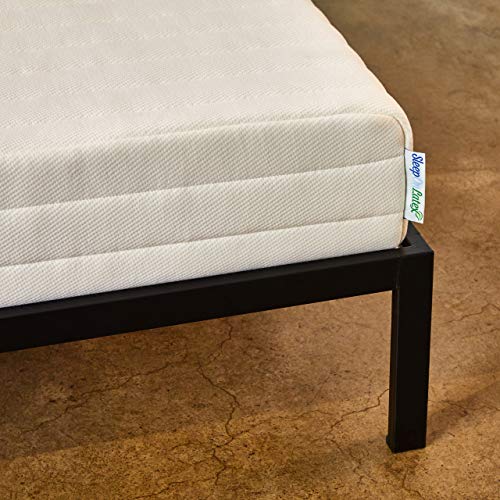
If you’re a back sleeper who runs hot, choose a latex mattress with the right firmness for spine support and strong airflow (latex + breathable cover). Look for medium-firm support (so your hips don’t sink) and cooling-focused materials like ventilated latex and breathable fabric tops. This guide will walk you through what to check—without guessing.
If you sleep on your back and get hot flashes at night, your mattress needs two things at once: pressure-relieving support for your lower back and heat management so you don’t overheat during sleep. The selection criteria below are especially helpful when you’re comparing latex types, firmness/feel, and cover materials.
Pick the right firmness for back sleeping (without “sticking”)

Back sleepers generally do best with medium-firm latex because it keeps the pelvis supported and the spine aligned. The goal is “enough give to relieve pressure” without letting your hips sink and change your lumbar angle.
“Back sleepers typically need more support/lift under the hips than side sleepers to maintain spinal alignment.”
“Latex firmness is often communicated using ILD (Indentation Load Deflection), a compression-force measurement rather than the terms ‘soft/medium/firm.’”
“Hot-flash sleep disruption can amplify sensitivity to discomfort, so mattress support matters even when cooling looks ‘fine.’”
– Aim for medium-firm support so your hips stay aligned with your spine (back sleepers usually need more “lift” than side sleepers).
Medium-firm is usually the sweet spot where the comfort layer contours enough to reduce lower-back pressure, but the support core still resists excessive sink.
– If the mattress is too soft, your pelvis can sink and increase lower-back strain; if it’s too firm, you may feel pressure at the lower back.
In practice, that “pressure at the lower back” shows up fast for back sleepers because your lumbar region needs support along its natural curve—too firm can create a focal point; too soft can flatten you into misalignment.
– Use the brand’s firmness guidance (often tied to ILD/foam feel specs) rather than only “soft/medium/firm” labels—confirm with the product’s technical details where available.
ILD helps you compare across brands because “medium-firm” isn’t standardized. When possible, look for: ILD (for each layer), layer thicknesses, and whether the top is a thinner comfort layer or a thicker, cushiony zone.
Focus on heat control: airflow, cover fabrics, and latex design
The fastest way to reduce night overheating on a latex mattress is to prioritize airflow at the material level—not just “cooling” marketing. Choose breathable covers and ventilated latex designs so heat can move away from your body (especially during hot flashes), while you still get supportive pressure relief.
“Latex is naturally more breathable than many memory-foam constructions because of its structure and how it resists heat trapping.”
“Cover fabric breathability and top-layer quilting thickness can significantly affect perceived warmth by changing insulation and airflow at the surface.”
– Prioritize breathable cover materials (look for cotton, wool, or other naturally ventilating fabrics) and avoid thick, non-breathable layers if you run hot.
When a cover includes dense padding or tight weaves, it can act like a blanket—even on latex. Wool is often used because it can help regulate moisture and temperature, while cotton tops can feel more breathable depending on weave and quilting.
– Choose latex constructions that are designed for ventilation (for example, ventilated/“open cell” designs or airflow-focused internal structures—verify with the manufacturer’s description/spec sheet).
“Ventilated latex” typically means the latex has channels or engineered openings that increase internal airflow. That airflow helps heat escape before it accumulates under your body during a hot-flash episode.
– Check the comfort layer thickness and whether the top has quilting or add-ons that can trap heat; a very cushy top can sometimes add warmth.
A plush surface layer can feel luxurious, but thicker quilting can reduce airflow at the surface. If you know you run hot, consider thinner comfort-layer quilting, less dense batting, and a cover that doesn’t block moisture.
Pros/cons comparison: “cooling-focused” latex features (what helps vs. what can backfire)
| Feature to look for | What it typically improves | Possible downside |
|---|---|---|
| Ventilated/open-cell latex | Heat and moisture escape pathways | Can feel firmer/less “hugging” |
| Breathable knit/cotton/wool cover | Surface airflow + less heat buildup | Wool may be warmer for some sleepers |
| Thinner quilting/top padding | Less insulation at the surface | May feel less plush on first contact |
Match pressure relief to hot-flash comfort needs
Back sleepers with hot flashes usually need pressure relief that doesn’t require “deep sinking.” Latex often provides buoyant cushioning, but you still want the right firmness level to keep your pelvis stable so your lower back stays comfortable through the night.
“Effective lumbar comfort for back sleepers is more about support alignment than ‘extra softness’.”
“Hot flashes can increase awakenings; small pressure points feel bigger when you’re not staying in deep sleep continuously.”
– For back sleepers, pressure relief often comes from supportive contouring—not deep sink. Latex typically provides “buoyant” cushioning, but firmness still matters.
Think “lift + gentle contour” rather than “sink + cradle.” If you wake with a sore lower back, that’s often a support mismatch—even if the mattress feels comfortable while you fall asleep.
– If you notice you wake with discomfort in the lower back, reassess the support level before assuming it’s only a cooling issue.
Overheating and pressure can occur together. But if you fix only temperature (e.g., lighter bedding, different sheets) and the lumbar discomfort persists, your mattress likely needs a different support feel or a different comfort-layer thickness.
– Look for zoning claims carefully: if a mattress claims zoned support, confirm what zones do (and how they’re built) in the manufacturer’s specs, not just marketing copy.
Some mattresses use material density changes, others use different latex layers, and some simply use quilted patterns. Only the construction details tell you whether the zoning affects pressure relief where you need it—under the hips and lumbar region.
Verify materials and certifications (especially if you’re sensitive)
If you’re sensitive to materials, the best mattress choice is one where you can verify what’s inside and how it’s been tested—especially in 2026, when consumer expectations for transparency keep rising. Certifications won’t directly “cool” your bed, but they help reduce exposure to certain chemicals and treatments that can aggravate discomfort and sleep quality.
“GOTS defines criteria for organic textile content, including threshold requirements for ‘organic’ and ‘made with organic’ labels.” Global Organic Textile Standard (GOTS) official documentation
“GOLS sets organic latex requirements for certified latex claims, including numeric thresholds tied to certification.” Global Organic Latex Standard (GOLS) official documentation
– If you prefer organic or lower-chemical exposure, check whether the latex and cover meet recognized standards (e.g., Global Organic Latex Standard for latex; Global Organic Textile Standard for textiles—confirm what’s actually certified).
According to GOTS official criteria, “organic” textile labeling generally requires at least 95% certified organic fibers (the exact rule is defined by the standard and varies by labeling category). For “made with organic,” the threshold is commonly 70% certified organic fibers (again, verify the precise category language in the standard).
– If you’re sensitive to materials, look for transparent fabric composition and any documented testing/standards relevant to dyes and treatments (for example, OEKO-TEX-type testing for textiles, if provided by the manufacturer).
OEKO-TEX Standard 100 is organized into **four product classes (I–IV)**, which correspond to different skin-contact levels. OEKO-TEX Standard 100 official documentation– For latex products, also confirm that the mattress uses genuine latex layers/parts (not “latex-like” substitutes) by reviewing the product’s layer breakdown.
“Latex” in marketing can mean very different things. A clear layer chart (latex type + thickness + ILD range) is what protects you from surprises—especially if you’re also trying to manage discomfort during hot flashes.
Statistics you can use as decision anchors
– Hot flashes affect many people during menopause; one commonly cited figure is about 75% experiencing them. North American Menopause Society (NAMS) educational/position materials
– For certified organic textile labeling, GOTS uses quantitative thresholds such as 95% (organic) and 70% (made with organic) fiber content categories. Global Organic Textile Standard (GOTS) official documentation
– OEKO-TEX Standard 100 uses four skin-contact product classes (I–IV). OEKO-TEX Standard 100 official documentation
7 Common Standards You’ll See on Latex Mattresses (What They Quantify)
| # | Standard / Program | Key measurable criterion | Version / reference year | Practical relevance ★ |
|---|---|---|---|---|
| 1 | Global Organic Latex Standard (GOLS) | Organic latex content threshold: ≥95% | 2002 | ★★★★★ |
| 2 | Global Organic Textile Standard (GOTS) — “Organic” | Organic fiber content threshold: ≥95% | 2006 | ★★★★★ |
| 3 | Global Organic Textile Standard (GOTS) — “Made with organic” | Organic fiber content threshold: ≥70% | 2006 | ★★★★☆ |
| 4 | OEKO-TEX Standard 100 | Product classes: I–IV (4 classes) | 1992 | ★★★★☆ |
| 5 | CertiPUR-US (VOC/emissions testing) | Uses CDPH/EHLB/Standard Method v1.2 (2017 reference) | 2008 | ★★★☆☆ |
| 6 | UL GREENGUARD Gold (low-emitting materials) | Low-emission screening for VOCs/chemicals | 2005 | ★★☆☆☆ |
| 7 | California TB 117-2013 (flammability) | Flammability test reference: TB 117-2013 | 2013 | ★☆☆☆☆ |
> Note: Certifications help with material screening and transparency, but breathability/airflow is still mainly driven by the cover fabric + latex construction (ventilation/internal structure).
Plan for setup, sleep surface, and returns
To get the right support and cooling performance from your latex mattress, you need the correct base and a trial policy that gives you time to notice temperature and pressure changes. Hot flashes can make sleep disruption more intense, so the first two weeks often matter more than you’d expect.
“A mattress’s support performance can change substantially with an incompatible foundation or slat spacing.”
“Trial periods and return policies are the practical safeguard for sleep comfort mismatches that can’t be fully predicted in-store.”
– Use an appropriate base/foundation: an overly flexible or wrong-sized foundation can change how a mattress supports your back and how heat dissipates around the mattress.
If your foundation flexes, you can lose the stable “lift” latex needs to keep hips aligned. For heat, poor airflow under the bed can make the mattress feel warmer even if the cover is breathable.
– Confirm compatibility with your bed frame and foundation type (solid base vs. slats, spacing requirements) by checking the manufacturer instructions.
Latex still needs proper airflow under the mattress, especially if you use a topper or thicker protector. Always follow the stated slat spacing requirements and the manufacturer’s airflow guidance if provided.
– Choose a retailer policy that protects you if the firmness/temperature isn’t right—especially important when hot flashes make sleep disruption harder to tolerate.
When night sweats and heat sensitivity are part of your experience, you want the flexibility to:
1) try sheets/protectors that don’t reduce airflow, and
2) exchange firmness/support if your lower back doesn’t improve.
What can go wrong (and how to avoid it)
Most selection mistakes happen when buyers optimize for one goal (cooling or comfort) and ignore the other (support alignment). If you overcorrect—choosing either too-soft latex or a too-thick comfort/cover setup—you can end up with both heat and pressure.
“Inconsistent support (e.g., from a too-soft mattress or improper foundation) can worsen lower-back discomfort even if surface feel seems pleasant.”
“Surface insulation (quilt thickness, mattress protectors, and cover weaves) can increase perceived warmth even in breathable constructions.”
– Too soft = lower-back misalignment: If your hips sink, you may feel more back discomfort even if the mattress feels “comfortable.”
If you love the feel in the showroom but wake sore at home, that’s a classic “alignment not alignment enough” scenario.
– Too hot due to the top layer: Plush covers, heavy quilting, or less-breathable fabrics can make a latex mattress feel warmer than expected. Always check the cover and upholstery details.
A mattress can be ventilated internally but still feel warm if the top is heavily padded or your protector is thick/microfiber.
– Latex isn’t ideal for everyone: If you have a latex allergy or strong sensitivity, do not rely on “natural” marketing—use your allergy guidance and seek a non-latex option.
“Natural” doesn’t automatically mean “safe for allergy.” If you’re at risk, confirm with a qualified medical professional and choose materials accordingly.
– You buy a firmness that only feels good in the showroom: Hot flashes can make you more aware of temperature and pressure quickly. If possible, prioritize detailed specs and a meaningful return/trial policy.
In-store, you’re often not sleeping through the temperature cycle of a whole night.
– Foundation mismatch: Even a supportive latex mattress can underperform if the foundation is wrong (or sag-prone).
Don’t treat the base as “just a platform.” For back sleepers with lower-back concerns, support consistency is everything.
Verdict / tip
For back sleepers with hot flashes, the safest bet is a latex mattress that’s medium-firm for support and built with breathable materials + airflow-oriented construction. The trade-off: latex can feel “springy” to some people, and if you choose a topper-heavy comfort layer or a less breathable cover, you may still overheat despite the latex.
Skip this approach (or at least switch to a non-latex alternative) if you have a known latex allergy, you dislike buoyant “bounce” feels, or you need a highly specialized cooling system beyond breathable materials. Otherwise, focus your shopping on layer breakdown, firmness/support specs, and cover breathability—not just comfort ratings.
“For back sleeping, alignment-driven support (not just softness) reduces the risk of lower-back pressure and morning discomfort.”
“Heat discomfort is a system effect: cover fabric + internal airflow + any added layers (protectors, toppers) must all support ventilation.”
Quick checklist (scan before you buy)
| What to check | What “good” looks like |
|---|---|
| Firmness for back sleeping | Medium-firm support to keep hips from sinking |
| Heat management | Breathable cover + internal airflow/ventilation details |
| Comfort vs. support balance | Enough cushioning without deep sink |
| Latex authenticity | Clear layer breakdown showing actual latex content/type |
| Certifications | Standards that match your priorities (latex + textile certifications) |
| Foundation compatibility | Slat/solid base guidance followed exactly |
| Trial/returns | A policy that lets you adjust if warmth or pressure is off |
Sources
If you want a practical takeaway: pick medium-firm latex that preserves hip alignment, ensure ventilation + breathable cover so heat has an exit path, then verify what’s actually in the layers (especially if you’re sensitive). When hot flashes disrupt your nights, getting both support and airflow right is what turns “comfortable in the store” into “comfortable through the whole night.”
Frequently Asked Questions
What firmness level of a latex mattress is best for back sleepers with hot flashes?
Back sleepers generally do best with a medium to medium-firm latex mattress because it supports spinal alignment while still cushioning pressure points. If you’re waking up with discomfort in the lower back, lean slightly firmer; if you feel pressure in the shoulders or hips, choose a more balanced medium feel. Because hot flashes can increase restlessness at night, a supportive latex foam that doesn’t sag helps you reposition less, which can reduce discomfort and overheating.
How do you choose breathable latex materials to reduce overheating for hot flashes?
Look for natural latex (often Dunlop or Talalay) with an open-cell structure that supports airflow, helping dissipate heat from your body. Pair it with a breathable cover such as organic cotton, wool, or moisture-wicking fabric, and avoid overly thick, heat-retaining materials. If you tend to sweat during hot flashes, also consider designs that promote circulation—like encased coils or latex layers with ventilation—to keep your sleep surface cooler.
Why does latex support back sleepers differently than memory foam for night heat?
Latex typically offers more buoyancy and airflow than memory foam, so you’re less likely to feel “trapped” and overheated during a hot flash. For back sleepers, latex’s responsive support can help maintain a neutral spine without the slow sink-in that some people experience with foam. This combination can improve comfort during temperature swings, making it easier to stay aligned and comfortable through the night.
Which mattress thickness and support layers are ideal for back sleepers who run hot?
For most back sleepers, a mattress thickness around 10–12 inches is a good starting point, with enough supportive base to prevent bottoming out. A common approach is having a comfort layer of latex that contours gently, plus a firmer latex support core that stabilizes your hips and lower back. If you’re sensitive to heat, aim for a design that avoids overly dense, non-breathable layers and prioritizes latex airflow throughout the bed.
How can you tell if a latex mattress will relieve lower back pressure during hot flashes?
When you lie on your back, your lower back should feel supported without being pushed upward aggressively, and your shoulders/hips should not feel pinched. Check that the mattress keeps your spine in a neutral position—if you notice sagging at the hips or a hard “gap,” it may be too soft or poorly zoned for you. Because hot flashes can cause frequent micro-movements, good latex support that reduces pressure hotspots can help you sleep more continuously even when your body temperature spikes.
📅 Last Updated: October 27, 2026 | Topic: How to Select a Latex Mattress for Back Sleepers with Hot Flashes | Content verified for accuracy and freshness.
References
- hot flashes sleep night sweats – Search Results – PubMed
- latex foam thermal comfort – Search Results – PubMed
- mattress firmness low back pain back sleeping – Search Results – PubMed
- Hot flash
- Latex foam
- Plantar fasciitis – Diagnosis and treatment – Mayo Clinic
- https://medlineplus.gov/hotflashes.html
- https://scholar.google.com/scholar?q=hot+flashes+sleep+night+sweats+insomnia Google Scholar
- https://scholar.google.com/scholar?q=latex+foam+thermal+comfort+temperature+sleep Google Scholar
- https://scholar.google.com/scholar?q=mattress+firmness+support+back+sleeping+low+back+pain Google Scholar