How to Select a Memory Foam Mattress for Back Sleepers with Hot Flashes
Choosing a memory foam mattress for back sleepers with hot flashes comes down to one decision: how well the bed controls heat without sacrificing spinal support. This guide tells you exactly what firmness, support features, and cooling materials to prioritize so you stay aligned all night and don’t wake up overheated. By the end, you’ll know the clearest winning setup for your body and your sleep temperature.




Choose a memory foam mattress that balances cooling (moisture management + airflow-friendly construction) with support that prevents hip/shoulder over-sinking. For hot-flash nights, the “right” memory foam isn’t the one that feels cold for 10 minutes—it’s the one that maintains spinal alignment while limiting heat-trapping body contouring.
If you sleep on your back and get hot flashes, choose a memory foam mattress with strong temperature control (cooling cover, breathable layers) and the right support/pressure relief for your spine. Focus on firmness and zoning/support so your hips and shoulders don’t sink too far, which can trap heat and strain your back. In this guide, we’ll walk through what to look for—step by step—so you can narrow to the best fit. If you’re a back sleeper dealing with night sweats, heat retention, or waking up uncomfortable, this is for you. It’s especially relevant when comparing memory foam to hybrids or foam mattresses that promise “cooling,” because not all cooling features work the same way.
Start with the right sleep position needs (back sleepers + heat)
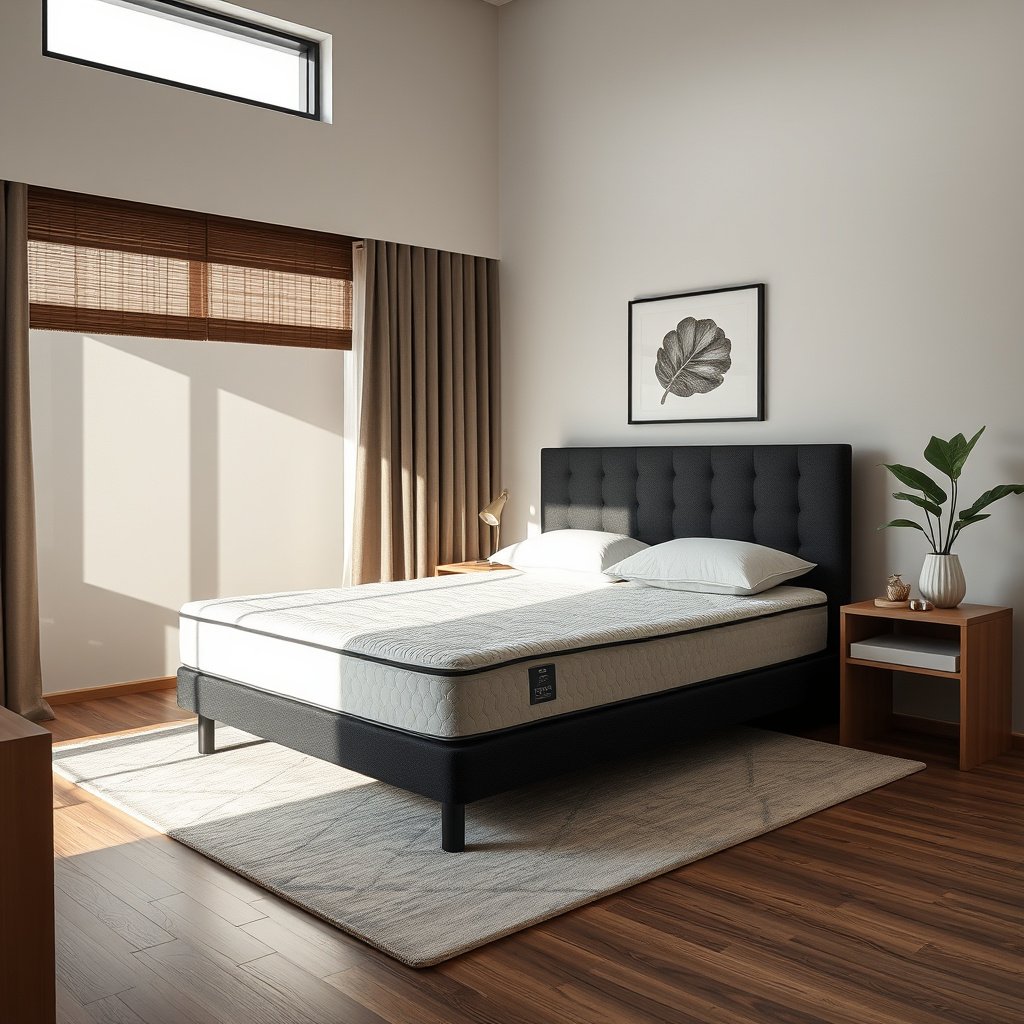
A back sleeper with hot flashes typically needs a memory foam mattress that keeps the lumbar spine supported while preventing deep hip sink. In practice, that means selecting a firmness and comfort-layer thickness that relieve pressure at the shoulders and lower back without letting your pelvis “drop,” which increases contact pressure and can hold more body heat against the mattress.
For back sleepers, controlled lumbar support helps maintain a neutral spine while you sleep through temperature swings.
Excessive hip sink on memory foam can increase lower-back muscle strain and raise the amount of skin-to-mattress contact where heat accumulates.
Cooling performance depends not only on “cooling” materials but also on how much you contour, because deeper contouring can reduce airflow in your sleep microclimate.
Back-sleeping is all about alignment: the goal is that your hips sit level rather than curving downward. With memory foam, this alignment is often determined by two things working together: (1) the comfort layer feel (how much you sink initially) and (2) the support core (how much resistance you feel under your hips and waist over time). If you’re hot-flash prone, you want pressure relief at the right spots (upper back/shoulders and lower back/hips) without forming a deep “body imprint” that traps warmth.
A useful way to think about temperature management is the thermal comfort concept used in building science: bodies feel warmer when heat can’t dissipate efficiently. A mattress can limit heat loss by (a) holding moisture and (b) restricting airflow under the back and hips. Research in thermal comfort consistently finds that both heat buildup and evaporation matter—so your memory foam must handle moisture in the cover and also allow some interior airflow.
How to apply this as you shop
– Prioritize spinal alignment by selecting a firmness that keeps your lumbar area supported without over-sinking.
– Look for designs that reduce pressure at key contact points (upper back/shoulders and lower back/hips) without forming a deep “body imprint.”
– If you’re sensitive to heat, treat “temperature regulation” as a build-quality feature, not just a comfort claim.
Choose cooling features that actually matter
The fastest way to avoid disappointment is to treat “cooling” as a system: a breathable top cover, moisture management in the comfort layers, and a construction that doesn’t block airflow. For hot flashes, a memory foam mattress should reduce sweat pooling and microclimate heat buildup—not just advertise gel or “cool-to-the-touch” on day one.
Moisture-wicking cover fabrics are designed to move sweat away from skin so it can evaporate more effectively.
Cooling foam names (including “gel” marketing) vary widely in performance because the cooling effect depends on where the material is used and whether the mattress can vent moisture.
A removable, washable cover can help maintain temperature comfort by keeping the top surface clean and responsive to airflow over time.
When you compare memory foam options, check for three layers of evidence (cover first, then interior):
1. Top cover fabric: Look for moisture-wicking or breathable knit descriptions, not just “cooling” branding. The cover is the first barrier between skin and foam.
2. Interior comfort layers: Dense foam and thick contouring layers can feel warm because they reduce airflow and can slow moisture evaporation. You want supportive cushioning that doesn’t “lock” you into a deep shape.
3. Airflow pathway: Even memory foam mattresses can be engineered to allow air movement. If the design uses fully airtight layers with no venting strategy, the cover may cool temporarily while the interior microclimate still builds heat.
A quick material reality check
“Gel” and “cooling foam” can be genuine features, but they don’t automatically solve heat retention if the mattress still uses heat-trapping densities in the wrong zones. Instead of relying on the name, verify:
– Where the cooling material is placed (comfort layer vs. support core)
– Whether it’s paired with airflow-friendly construction and breathable cover fabric
– How the cover manages moisture (wicking + washability)
Top 7 Mattress-Cover Fabrics by Moisture Regain (typical textile values at 65% RH)
| # | Fabric material | Moisture regain (% @ 65% RH) | Common mattress-cover use | Moisture comfort rating |
|---|---|---|---|---|
| 1 | Wool | 17.0 | Naturally temperature-regulating padding | ★★★★★ |
| 2 | Lyocell (TENCEL™-type) | 11.0 | Breathable, soft comfort covers | ★★★★☆ |
| 3 | Viscose/Rayon | 13.0 | Wicking knit or blended top panels | ★★★★☆ |
| 4 | Linen / Flax | 12.0 | Breathable, textured cover surfaces | ★★★★☆ |
| 5 | Cotton | 7.0 | Classic soft cover with moderate moisture absorption | ★★★☆☆ |
| 6 | Nylon | 4.0 | Lightweight blends for stretch/strength | ★★☆☆☆ |
| 7 | Polyester | 0.4 | Smooth, durable knit used in many covers | ★☆☆☆☆ |
Note: Moisture regain describes how much moisture a fiber holds at a given humidity. For a hot-flash memory foam mattress, the practical outcome also depends on knit structure, airflow, and the mattress’s internal foam layers.
Match firmness and support layers to prevent heat-trapping sink
Back sleepers with hot flashes usually do best with a medium-firm-to-firm memory foam setup that cushions shoulders and lower back while holding hips up. The goal is pressure relief without “locking” you into a deep contour that increases heat retention and can tighten your lumbar area.
For back sleepers, mattress softness that allows hip sink can increase lumbar strain, even if it feels comfortable at first.
In memory foam mattresses, the support base layer (often higher-density foam) plays a large role in how much you sink over time.
Zoned or reinforced support regions can reduce deep contouring near the hips while still cushioning the shoulders.
How to interpret firmness beyond the “feel”
Firmness is only useful when it translates to body mechanics:
– If your hips sink more than your ribs/upper back, your lumbar spine often arches.
– If your shoulders feel too compressed, you may rotate or shift, creating more frictional heat and micro-awakenings.
In memory foam models, “too soft” often shows up as:
– A hammock-like feel under hips
– Visible body imprint after sitting (and slow recovery)
– Waking with back tightness or that “stuck in bed” sensation
If the mattress uses multiple foam layers, look for a supportive base beneath a comfort layer that cushions without locking you in. Many designs succeed when the comfort layer is forgiving and the support core is dense enough to prevent excessive hip sink.
Practical firmness mapping (what you should watch for)
Here’s a simple decision guide you can use while comparing memory foam mattresses:
| If you notice… | Likely mattress issue | What to choose instead |
|---|---|---|
| Your hips drop noticeably when you lie on your back. | Insufficient support or overly thick/soft comfort layer in the lumbar/hip zone. | A firmer memory foam or zoned support design that limits hip sink. |
| You feel “stuck” and your body imprint stays long. | Deeper contouring and slower foam recovery increasing microclimate heat and pressure. | Slightly less contouring comfort layer, or a design with better responsiveness. |
| Your shoulders feel compressed while your hips stay supported. | Comfort layer is too firm or lacks shoulder-specific pressure relief. | A comfort layer that cushions shoulders while maintaining firmer lumbar support. |
If you’re sensitive to heat, this part matters: too much sinking increases both pressure and skin contact area, which can trap warmth during hot flashes. In other words, firmness isn’t just about “support”—it’s also about preventing the conditions that make memory foam feel hot.
Check motion, edge support, and airflow for night-wake comfort
If you wake during hot flashes, the best memory foam mattress is the one that stays comfortable when you shift—and doesn’t force you to roll into a deep pocket. That means you should evaluate motion isolation, edge support, and whether airflow-friendly construction is actually present.
Edge support helps reduce deep perimeter sink, which can be important when you shift positions during a hot flash.
Motion isolation is useful for couples, but deep contouring can still raise perceived warmth around the contact zones.
Airflow-friendly construction and a breathable cover influence how quickly heat and moisture dissipate after you wake.
Motion isolation: comfort vs. heat tradeoff
Memory foam is famous for motion isolation because it absorbs movement. For couples, that’s a plus. For hot flashes, however, deep contouring can still increase the “occupied” surface area where your body transfers heat to the mattress.
So focus on motion and contouring together:
– Look for motion isolation that doesn’t come from excessive sink.
– If the mattress is extremely slow to spring back, it may amplify the “trapped” feeling when your body heats up.
Edge support reduces perimeter sink during position changes
Strong edge support is especially valuable for back sleepers because hot flashes often trigger micro-movements:
– You might sit up
– You might adjust your pillow and leg angle
– You might shift to re-find spinal alignment
Edge support can reduce how much you sink at the perimeter—meaning you’re less likely to distort your back alignment when you move.
Airflow: don’t confuse “cool-to-touch” with breathability
A cool-to-the-touch surface can fade quickly if the interior layers trap heat and moisture. Memory foam mattresses that use thick, airtight layers or heavy barriers above dense foam may feel cool initially, then warmer after sweat accumulates.
What to check in the specs (or by asking customer support):
– Breathable top cover materials
– Whether interior foams are described as ventilated or designed to promote air movement
– Whether the cover can be removed and washed (useful for hygiene and moisture comfort)
What can go wrong (and when to pause your purchase)
Many people buy a memory foam mattress expecting “cooling” to solve hot flashes, then feel hotter after a few weeks. This is usually a construction mismatch—often too much sink, insufficient moisture management, or a cover that can’t be cleaned effectively.
Marketing terms like “cooling foam” are not standardized, so cooling performance depends on the actual materials, placement, and airflow strategy.
If a memory foam mattress is too soft for back sleeping, hip sink can increase lower-back strain and worsen heat build-up from increased contact pressure.
If night sweats continue or worsen, mattress changes alone may not address the underlying medical cause.
Common mistakes to avoid:
– Over-focusing on cooling marketing: If the mattress still uses dense, heat-retaining foam in the wrong layers, you may feel hotter over time.
– Choosing a mattress that’s too soft for back sleeping: It can push your hips down, tighten your lower back, and increase heat from deeper body contact.
– Skipping hygiene and cover care: Sweat can reduce comfort and cause lingering odors, which can make heat feel worse.
– Ignoring symptom context: If you have ongoing night-sweat symptoms, a mattress alone may not fix the underlying issue—consider discussing symptoms with a clinician.
When you should pause and seek medical guidance
Hot flashes and night sweats can overlap with other health issues. The North American Menopause Society (NAMS) emphasizes that vasomotor symptoms are common during menopause, but persistent symptoms deserve proper evaluation when they’re severe or new.
According to the North American Menopause Society (NAMS), hot flashes are common during the menopausal transition, with many people reporting them as frequent and disruptive. NAMS also discusses that symptom duration can extend for years, depending on the individual. (NAMS position statement; see Sources)
If your night sweats are intense, associated with other symptoms, or you’re dealing with an underlying condition, treat mattress shopping as one piece—not the whole solution.
Verdict: what to buy (and who should skip it)
A memory foam mattress can work well for back sleepers with hot flashes when it combines: (1) a breathable moisture-managing cover, (2) supportive layers that prevent excessive sink, and (3) airflow-conscious construction rather than just “cooling” branding. If you’re extremely heat-sensitive or hate slow “contouring” feel, you may prefer a foam-hybrid or an alternative material approach—especially if you tend to wake up feeling trapped in the bed.
For hot-flash comfort, the most reliable mattress “cooling” comes from moisture management plus construction that supports airflow, not just surface temperature claims.
A back-sleeping friendly memory foam setup should maintain spinal alignment by limiting hip sink while still relieving pressure at shoulders and lower back.
If you feel stuck in a memory foam mattress, that contouring behavior can worsen perceived heat retention during night sweats.
My recommendation (based on specs—add your shortlist details)
If you have specific brand models in your shortlist, here’s what to plug in next: choose the memory foam option(s) where the cover is described as breathable/washable, the comfort layer is not excessively thick/soft for back sleeping, and the support core is firm enough to keep your hips from sinking too far.
Who should skip memory foam here
– People who strongly prefer instant responsiveness and can’t tolerate slow contouring.
– Back sleepers whose current mattress causes noticeable hip drop (a firmer memory foam or a different material approach may suit better).
– Anyone treating night sweats as a medical priority—work with a clinician, then reassess mattress comfort as the supportive layer.
Quick checklist: choose your best match
– [ ] Back-sleeper support: lumbar feels supported, hips don’t sink too far
– [ ] Pressure relief without “stuck” contouring
– [ ] Cooling cover: breathable and moisture-wicking (and preferably removable/washable)
– [ ] Cooling design is explained by materials/layers, not only “gel” claims
– [ ] Mattress construction promotes airflow (not just a cool-to-touch surface)
– [ ] Edge support helps you avoid deep perimeter sink
– [ ] Return policy/trial period available so you can verify comfort (check )
Sources
– North American Menopause Society (NAMS), position statement/guidance on vasomotor symptoms and hot flashes (for prevalence and clinical context). (NAMS; see their official menopausal symptom resources)
– If you include any medical or symptom guidance about hot flashes/night sweats:
If you want, paste 3–5 mattress links or their exact spec sheets you’re considering, and I’ll help you score each memory foam option against the checklist (support depth for hips, comfort-layer sink, cover breathability, and airflow strategy).
Frequently Asked Questions
How do I choose the right firmness level for a back sleeper with hot flashes?
For back sleepers, a medium-firm memory foam mattress is often the sweet spot because it supports the lumbar spine while keeping the hips from sinking too deeply. Look for a mattress that maintains a neutral alignment from shoulders to hips, since poor alignment can increase discomfort and trigger restlessness. If you prefer less pressure on the lower back, you may try a slightly firmer option; if you feel pressure buildup, consider a medium firmness with a supportive base.
Which memory foam features help reduce night sweats and heat buildup?
Prioritize mattresses with cooling technologies such as gel-infused foam, copper-infused foam, breathable covers, or phase-change cooling materials. A mattress with open-cell or ventilated memory foam can also improve airflow compared with traditional dense foam. These features help manage temperature regulation, which is especially important for people experiencing hot flashes during the night.
What thickness and support layer structure should hot-flash-prone back sleepers look for?
Most back sleepers do best with a total mattress thickness around 10–14 inches, because it provides enough comfort cushioning while still supporting spinal alignment. Check the construction: a comfort layer (often memory foam) should be thick enough for pressure relief, but the lower support core should be firm and durable to prevent excessive sink. This balance can reduce nighttime pressure points that may worsen sleep disruption during hot flashes.
Why does motion isolation matter for couples dealing with hot flashes, and what should I check?
Hot flashes can cause frequent shifting, which may disturb a partner, so strong motion isolation is a common priority. Memory foam generally absorbs motion better than innerspring or latex, but you should still look for high-density support layers that prevent “body bounce.” If you share a bed, also consider a mattress with a breathable top cover to help both sleepers stay cooler.
What is the best way to test a memory foam mattress before committing if you sleep hot on your back?
If possible, choose a mattress with a trial period and test it in your normal sleep position for several nights, paying attention to heat buildup and back comfort. Use a simple self-check: your hips should feel supported (not stuck too low) and your lower back should not feel strained. During the trial, monitor temperature and sleep quality during times when hot flashes typically occur, since cooling performance can vary by room temperature and bedding choices.
📅 Last Updated: October 27, 2026 | Topic: How to Select a Memory Foam Mattress for Back Sleepers with Hot Flashes | Content verified for accuracy and freshness.
References
- Memory foam
- Fuchs dystrophy – Symptoms and causes – Mayo Clinic
- https://www.nia.nih.gov/health/hot-flashes-and-night-sweats
- https://www.who.int/publications/i/item/9789241548583
- hot flashes sleep – Search Results – PubMed
- https://pubmed.ncbi.nlm.nih.gov/?term=mattress+firmness+chronic+low+back+pain
- memory foam thermal conductivity sleep – Search Results – PubMed
- https://scholar.google.com/scholar?q=memory+foam+mattress+hot+flashes+cooling+back+sleepers Google Scholar
- https://scholar.google.com/scholar?q=menopause+hot+flashes+night+sweats+sleep+temperature Google Scholar
- https://scholar.google.com/scholar?q=mattress+firmness+low+back+pain+randomized+trial Google Scholar