

How to Select a Plush Mattress for Stomach Sleepers with Allergies—Small Space
You can choose a plush mattress that supports stomach sleeping while limiting allergy triggers in a small space—without guesswork or wasted purchases. In the next few minutes, you will learn how to match firmness and support to a forward-leaning sleep position, verify allergen-reducing materials and certifications, and confirm the bed’s dimensions work in tight rooms. You will leave with a clear checklist of what to inspect before you buy, so you can start sleeping more comfortably right away.


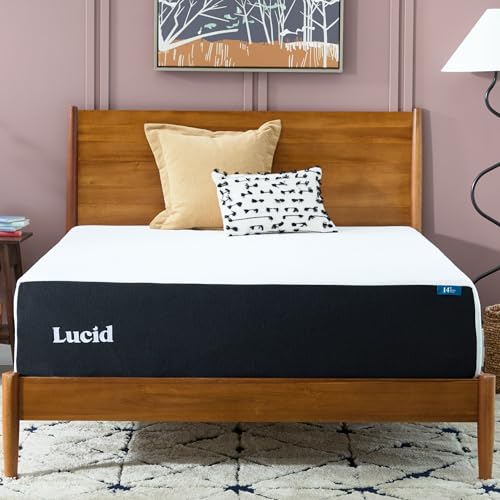

Stomach sleepers with allergies usually do best with a plush-on-top, supportive-underneath mattress—not pillow-soft cushioning that sinks too much. Prioritize allergy-safe, tightly built materials (plus a sealed, washable mattress cover) while choosing a low-profile design that helps keep your neck and hips from twisting out of alignment—especially when you’re working with limited room space.
For whom this helps: If you sleep mostly on your stomach and share a compact room (or need something that’s easier to fit, move, and maintain), this walkthrough helps you narrow down comfort and allergen-control features without overbuying.
Balance plush comfort with stomach-sleeper support

The right plush mattress for stomach sleepers answers two needs at once: it should feel “soft on top” without allowing your hips to drop below your ribs. In other words, you want controlled cushioning plus enough internal support to keep spinal alignment neutral.
Prevent deep sink (the core stomach-sleeper problem)
– Look for a plush top that doesn’t let you “sink” into the mattress; aim for medium firmness overall or plush-and-support layers designed to reduce excessive body impressions.
– Choose a lower-loft feel (or a mattress with a thinner build) so your neck isn’t forced into an awkward bend while you sleep face-down.
– If you’re comparing models, press-test the conceptually: pay attention to how quickly the surface regains shape after you remove pressure (slower recovery often indicates deeper sink and longer “stay down” zones).
A practical way to interpret that press-test: if you push down with your palm or forearm, a supportive design should “spring back” relatively quickly and evenly. If the area holds the impression longer than a few moments, stomach sleepers typically get more hip sag, which can strain the lower back and encourage neck rotation.
Use construction cues that correlate with stomach alignment
Plush comfort doesn’t have to mean contouring that cups your body. Many beds labeled “plush” can still be engineered with a stable comfort layer over a denser support core. What you’re trying to find is a top that cushions your shoulders and chest without letting your pelvis drop.
Prioritize allergy control materials (not just “hypoallergenic” claims)
Allergy-friendly comfort comes from barrier performance and material transparency, not marketing language. A plush top can still be a good choice for allergies—if the cover and comfort layers are built to resist allergen accumulation and moisture retention.
Confirm allergen resistance in the cover + comfort system
– Confirm the mattress cover and comfort layers are designed to resist common triggers (dust mites, odors, and general allergen buildup); look for removable, washable components where possible.
– Use a true allergen barrier: a fully encasing mattress protector (top-to-bottom with sealed seams) can help keep irritants from settling into the bed over time.
– Avoid “mystery materials” you can’t identify—if the label is unclear, ask for specifications or documentation from the manufacturer.
This matters because “hypoallergenic” is not a regulated, single standard in many markets. For stomach sleepers who spend more time face-to-mattress, the head/neck area is one of the highest-exposure zones—so seam quality and zipper sealing are meaningful.
Aim for verifiable standards where possible
For filtration and dust control around the room (not just the mattress), real-world air quality is influenced by how well your HVAC or vacuum handles fine particles. According to the U.S. Department of Energy and filter-industry testing definitions, HEPA filters remove 99.97% of particles at 0.3 microns (DOE/HEPA definition and common standard test basis). That doesn’t replace a mattress barrier, but it supports an allergen-control routine.
Pick the right size and thickness for a small space
The best mattress for a small room isn’t necessarily the biggest one—it’s the one that fits your access and cleaning workflow. For plush-on-top comfort, thickness also affects how “low-loft” your face-and-neck position stays for stomach sleeping.
Use footprint + maneuverability, not just comfort
– Measure your available floor area and door/walkway clearance before choosing a mattress thickness and packaging type; bulky or very tall setups can be harder to maneuver in tight rooms.
– Favor sizes that match how you’ll position the bed (e.g., keeping clearance for laundry, vacuuming, and bedding changes) rather than maxing out every inch.
– Consider edge support and ease of getting in/out—small rooms often mean you’re climbing on from the same side repeatedly, so stability matters.
Also note that thickness isn’t automatically better for comfort or durability. A too-tall bed can make it harder to maintain your preferred neutral neck angle when you sleep face-down, especially if you tuck your head toward one side.
Mattress Footprints by Common Size (Small-Space Planning)
| # | Mattress size | Size (inches, W×L) | Footprint (sq in) | Space saved vs Queen |
|---|---|---|---|---|
| 1 | Twin | 39×75 | 2,925 | +43.8% |
| 2 | Twin XL | 38×80 | 3,040 | +41.2% |
| 3 | Full | 54×75 | 4,050 | +18.8% |
| 4 | Queen | 60×80 | 4,800 | +0.0% |
| 5 | King | 76×80 | 6,080 | -26.7% |
| 6 | California King | 72×84 | 6,048 | -26.0% |
| 7 | Full XL | 54×80 | 4,320 | +10.0% |
Queen footprint is 60×80 = 4,800 sq in. “Space saved vs Queen” is calculated as (Queen area − size area) / Queen area.
Improve airflow to reduce moisture and allergen buildup
The best plush mattress for allergies still needs airflow, because heat and moisture can worsen comfort and encourage odor retention. Plush layers can be allergy-friendly—if they don’t trap humidity near your face and upper chest while you stomach sleep.
Prefer breathable cover + ventilated internal designs
– Look for designs that promote ventilation (breathable covers, open-cell foam, coil systems, or other airflow-focused construction); trapped heat can worsen comfort and encourage odor retention.
– If you run warm, a plush comfort layer should still allow airflow—otherwise you may feel hotter than expected even with “soft” quilting.
– Keep your room and bedding dry: humidity control is a real factor in how well allergy routines work.
Moisture control is not optional for dust-mite management. According to the U.S. Centers for Disease Control and Prevention (CDC), dust mites thrive in higher humidity environments; one commonly recommended target is keeping indoor relative humidity below about 50% to reduce dust mite growth (CDC dust mite control guidance).
Keep bedding strategy aligned with stomach sleeping
Since you’re closer to the top surface, wash frequency tends to matter more than it does for back sleepers. A sealed, breathable cover helps—but you still need a cleaning rhythm you can sustain in a small room.
Set yourself up for cleaner bedding routines
A mattress can be well-built and still fail allergy goals if you can’t keep bedding genuinely clean. In a compact space, your routine needs to be simple enough to repeat consistently.
Build a “barrier + wash” workflow you can actually maintain
– Plan a routine you can maintain: wash sheets and pillowcases regularly, and keep a sealed protector between you and the mattress.
– Vacuum and clean around the bed area with a method suited for allergens; if you’re using a vacuum, aim for equipment that’s designed for fine particles (follow its instructions).
– Ventilate the mattress in line with manufacturer guidance before long-term use—this reduces the chance you’ll trap any new-mattress odor in a small room.
If dust mites are a concern, washing temperature matters. According to CDC dust-mite control guidance, washing bedding in hot water (at least 130°F / 54°C) is commonly recommended to reduce dust mites (CDC dust mite control guidance). For small rooms, hot-water washing can be limited by your laundry setup—so if that’s your constraint, plan your shopping around washable encasements and a practical laundry cadence.
A comparison you can use right away
Below is a quick “fit vs upkeep” comparison that tends to matter most in small spaces.
| Choice | Pros for stomach sleepers + allergies | Cons / watch-outs |
|---|---|---|
| Plush top with controlled sink + medium firmness core | Softer feel without major hip drop; easier to keep neck/hips aligned; can still feel comfortable for face-down rest | If the comfort layer contours too much, hips can sag—test rebound behavior |
| Sealed encasement + removable washable cover | Helps prevent allergens settling into seams; supports consistent cleaning | If it’s not fully encasing or the seams aren’t sealed, exposure can remain high |
| Very tall “luxury” bed in a compact room | More cushioning may feel luxurious short-term | Harder to access all sides for cleaning; loft may worsen neck angle for stomach sleeping |
What can go wrong (and how to avoid it)
The most common failure mode is buying “plush” that sinks too deeply, then compensating with posture until your neck and lower back pay the price. The second big risk is assuming labels replace barriers—marketing cannot substitute for a sealed mattress cover you maintain.
Watch for alignment drift and barrier gaps
– Too plush can be a problem: if the mattress contour makes your hips sink lower than your ribs, you may feel neck or lower-back strain—this can happen even on beds marketed as “stomach-friendly.”
– Skipping a sealed protector can backfire: marketing alone (“hypoallergenic,” “natural,” etc.) doesn’t replace a barrier designed for allergen control.
– Small-space tradeoffs are real: if you can’t access all sides for cleaning or bedding changes, allergen management becomes harder over time.
This is also where airflow issues can quietly undermine your effort. If the mattress traps heat, you may sweat more during sleep; moisture plus reduced ventilation can increase odors and make daily freshness routines harder.
Verdict: a “plush top + supportive feel” approach (and when to skip it)
If you’re a stomach sleeper with allergies in a small space, the best choice is typically a plush comfort layer paired with enough support to keep your spine neutral—plus a sealed, washable encasement strategy. Skip this approach (or reassess your choice) if you already know you feel discomfort on softer surfaces, if you can’t keep up with regular bedding care, or if the mattress materials and construction details aren’t clear enough for you to verify allergy-friendly features.
In 2026, the most reliable way to avoid regret is to buy for both your comfort mechanics (controlled sink and low loft) and your allergen mechanics (sealed coverage, cleanability, and airflow). When either part is missing, the bed can become either a posture problem, an allergy problem, or both.
Quick checklist (scan-and-save)
| What to check | What “good” looks like |
|---|---|
| Comfort for stomach sleeping | Plush feel without deep sink; lower-loft support that keeps your neck/hips aligned |
| Allergy barrier | Fully encasing protector with sealed seams; removable/washable components when available |
| Materials transparency | Identifiable layers and documented construction/cover details |
| Small-space fit | Correct dimensions + thickness that works with your room access and cleaning habits |
| Airflow | Breathable cover/ventilation design to reduce heat and moisture buildup |
| Maintenance reality | You can wash bedding and manage cleaning without turning the bed into a hassle |
Frequently Asked Questions
What firmness is best for stomach sleepers with allergies who need a plush mattress in a small space?
Stomach sleepers usually need medium-firm support to prevent the hips from sinking and creating low-back strain, even when the mattress is plush on top. Look for a plush comfort layer (for pressure relief) paired with a supportive core that keeps your spine aligned. If you’re buying for a small room where you may notice heat build-up, choose breathable materials so you can stay comfortable without trapping allergens.
How can I choose a hypoallergenic plush mattress for stomach sleeping without losing space?
Focus on mattresses that are specifically labeled hypoallergenic and use allergy-friendly materials like tightly woven covers and quality foam or latex that resist dust-mite harborage. In a small space, prioritize a mattress size that fits your room layout while still offering enough surface area for proper spinal alignment. Consider a low-profile or slimmer “plush” model that provides comfort without making the bed too bulky, and pair it with an allergen-proof encasement and washable bedding.
Why do dust mites and allergens matter more with plush mattresses, and how do I reduce exposure?
Plush comfort layers can trap moisture and debris more easily than flatter surfaces, which can increase dust-mite comfort if the materials aren’t resistant. Reduce risk by choosing a sealed, allergen-barrier cover and laundering sheets regularly in hot water if the fabric allows. A waterproof encasement plus consistent cleaning of your small bedroom’s textiles (pillows, blankets, curtains) can significantly lower allergen load while you enjoy the plush feel.
Which mattress materials are best for a plush feel and allergy-friendly stomach sleeping?
For an allergy-conscious plush mattress, latex and high-quality memory foam with certifications or low-VOC claims are common choices because they tend to be easier to keep clean and may be less hospitable to allergens than fabric-heavy designs. If you prefer an ultra-plush top, look for removable covers that are machine-washable and resistant to dust accumulation. For stomach sleepers, ensure the support core is firm enough to keep your hips from dropping, regardless of whether the top layer is latex, foam, or a plush comfort quilt.
What features should I look for when buying the best plush mattress for a small apartment with allergies?
Choose features that improve hygiene and temperature control: an allergen-barrier mattress encasement, breathable cover fabric, and a support system designed to maintain alignment for stomach sleepers. If space is limited, consider a bed frame and mattress thickness that keeps the sleeping surface stable and easy to make, since consistent cleaning is key for allergy management. Finally, check for low-odor certifications (like low-VOC) and a solid return/warranty policy, so you can confirm comfort and reduce the risk of irritation before fully committing.
📅 Last Updated: November 25, 2026 | Topic: How to Select a Plush Mattress for Stomach Sleepers with Allergies in a Small Space | Content verified for accuracy and freshness.
References
- https://www.cdc.gov/allergies/dustmites.html
- https://www.mayoclinic.org/healthy-lifestyle/adult-health/expert-answers/how-to-choose-a-mattress/faq-20058289
- https://www.mayoclinic.org/healthy-lifestyle/adult-health/expert-answers/sleep-positions/faq-20057999
- House dust mite
- https://www.epa.gov/indoor-air-quality-iaq/dust-mites
- dust mite mattress encasement – Search Results – PubMed
- hypoallergenic bedding encasements asthma – Search Results – PubMed
- https://scholar.google.com/scholar?q=plush+soft+mattress+stomach+sleeping+spine+alignment Google Scholar
- https://scholar.google.com/scholar?q=dust+mite+mattress+encasement+study+allergy Google Scholar
- https://scholar.google.com/scholar?q=latex+vs+foam+allergic+reactions+mattress Google Scholar




2 Comments