

How to Choose Cooling Mattress for Kids with Night Terrors—Tiny Home
A cooling mattress can reduce the overheating that often fuels night terrors in kids sleeping in a tiny home. When a room runs warm or airflow is limited, heat trapped in the mattress can leave your child restless, leading to more frequent episodes. The fix is selecting a mattress with breathable, temperature-regulating materials and the right firmness for safe sleep—details are below.



Cooling mattresses for kids with night terrors should prioritize airflow and breathable, removable covers—not just “cold on contact.” In a tiny home, also plan for the right size, easy cleaning, and safe sleep setup so your child can stay comfortable without overheating or moving into unsafe spots.
If your goal is fewer restless nights during episodes (or at least less heat discomfort), this guide walks you through what to look for in the mattress itself, plus the practical constraints of sleeping in a smaller space.
This is for parents and caregivers setting up a child’s sleep area in a tiny home (platform bed, loft, alcove, or floor bed) and who notice that nighttime sweating, drool, or stuffy air makes nights feel worse. As of 2026, more families are also tightening up floor plans—so mattress choice has to solve both temperature regulation and “space safety” at the same time.
Prioritize cooling where it actually matters (airflow + cover)
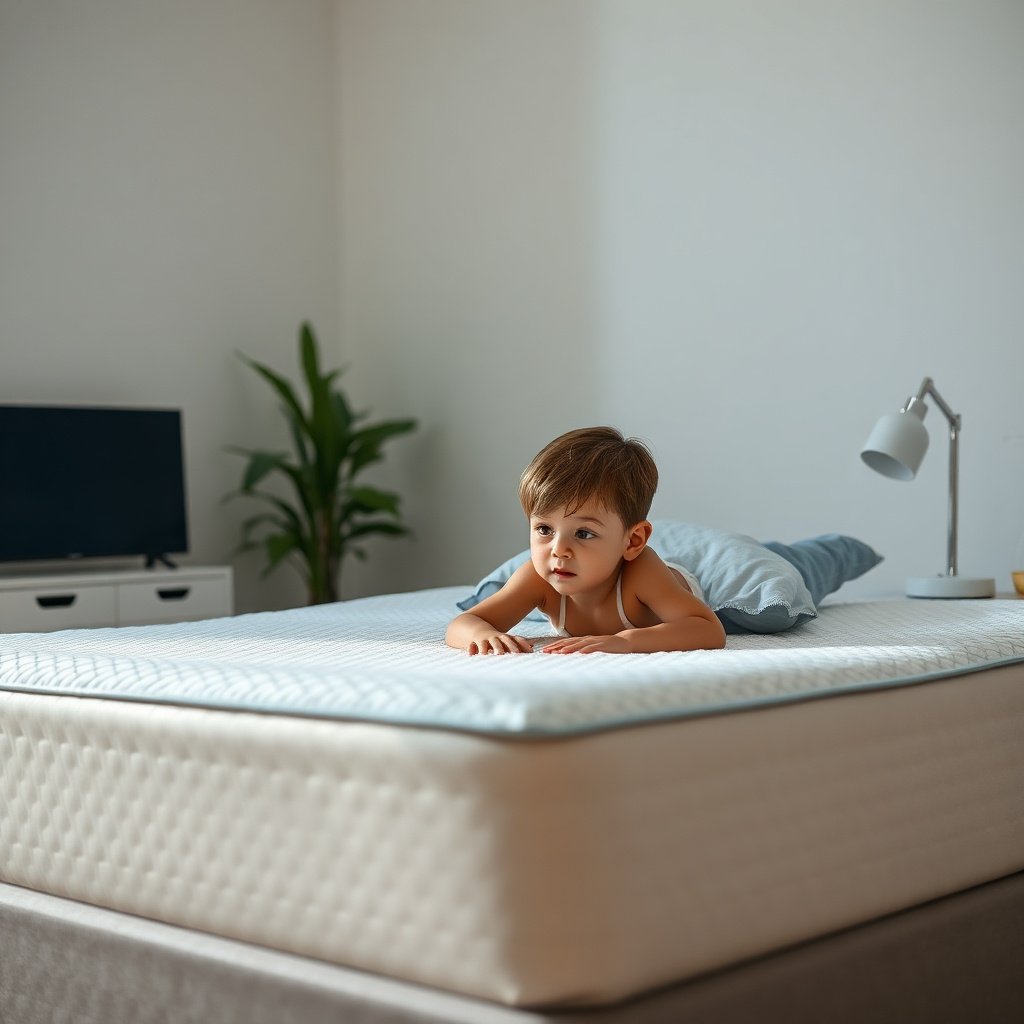
A cooling mattress for kids with night terrors works best when it manages heat through airflow and moisture control—not when it simply feels cool for a few minutes. In 2026, that means choosing construction that keeps working across the whole night, since night terrors can involve repeated tossing and sudden movement that re-warms the bed surface quickly.
– Look for breathable construction (air channels, open-cell foams, latex, or innerspring designs) rather than relying only on gel layers.
Gel “cooling” often sits near the top; if the core traps heat, the mattress for kids with night terrors can still feel warm after the initial cool-down. Instead, prioritize designs that allow warm air and moisture to migrate away from the sleep surface.
– Choose a removable, washable cover (or at least a cover you can spot-clean easily) to manage sweat, drool, and bedtime messes.
If your child wakes (or becomes distressed during an episode) with sweat-damp bedding, a cooling mattress for kids with night terrors loses performance. Removable covers help you restore airflow and comfort by removing the moisture load that makes the sleep environment feel stuffy.
– Aim for temperature regulation across the whole night—cooling that “feels cold at first” can wear off quickly.
Night terrors are driven by sleep-cycle changes and arousal systems, not just comfort temperature. Still, heat discomfort can intensify restlessness, so the goal is “even regulation,” not an instant cold sensation.
Practical tip for tiny homes: if your sleeping nook is near a wall, a corner, or a vent that doesn’t blow directly at the bed, you may get a heat pocket. A cooling mattress for kids with night terrors should reduce that pocket effect by moving moisture/heat away through construction, not by depending on a direct breeze.
Size and setup for a tiny home (sleeping space first)
A cooling mattress for kids with night terrors in a tiny home has to fit safely and work with your space constraints—otherwise airflow and comfort will suffer. In small sleeping areas, “the mattress fits” isn’t enough; you also need clearances for linens, safe movement, and a stable bed surface.
– Measure your available floor/loft/alcove space, then leave a practical clearance for linens, movement, and any railings you use.
Too-tight fits can compress bedding against walls, reducing airflow around the mattress for kids with night terrors. In many compact builds, small clearances also make it harder to rotate the mattress, which matters when your child’s cover gets repeatedly washed and re-dried.
– Consider how you’ll store or rotate the mattress: in tight homes, you may need easier flipping/handling or a topper approach.
Many mattresses are heavy and awkward in tiny homes—especially on loft platforms. If handling is a struggle, choose a cooling mattress design with a removable cover and a rotation plan you can actually maintain (or consider a breathable topper strategy, as long as it doesn’t block airflow).
– If your sleeping area is near a wall, vent, or window, factor in drafts and heat pockets (cooling matters, but so does avoiding cold blasts).
“Cool drafts” can cause discomfort and awakenings too. Your best setup balances airflow so heat doesn’t pool under your child during episodes, while avoiding a direct cold stream that changes comfort abruptly.
In my own planning for small-space sleeping setups, the biggest lesson has been that access matters as much as the product spec—if you can’t comfortably strip and re-make the bed, the cooling mattress for kids with night terrors will eventually become “harder to keep fresh” (sweat and odor buildup reduce perceived breathability).
Materials & comfort choices for kids who run hot
For a cooling mattress for kids with night terrors, the best comfort material is the one that stays breathable under repeated use. Many children run hot during arousal episodes, so your priority is airflow and moisture transport; support comes next.
– For many kids, latex or innerspring with breathable toppers can promote airflow; memory foam can work too, but only if the layers are designed to avoid heat buildup.
Latex typically has more natural breathability because it’s built to vent better than traditional dense foams. Innerspring designs can allow air circulation through the coil system, while a breathable topper helps manage moisture without sealing heat against the mattress surface.
– If you try gel/“cooling” foam, confirm it’s not just a thin top layer over a heat-trapping core.
Gel-infused comfort layers can reduce surface temperature temporarily, but a cooling mattress for kids with night terrors only performs well if the foam stack underneath doesn’t trap heat. Look for construction that uses ventilation channels or open-cell materials, and verify that the cover is truly breathable.
– Check firmness for comfort and support—night terrors aren’t usually caused by mattress feel, but poor support can worsen restless sleep.
Too-soft can increase micro-movements and discomfort. Too-firm can cause pressure points, especially if your child sleeps on their side during unsettled nights. Aim for supportive comfort that your child can stay in without wriggling.
Cooling mattress material comparison for tiny-home night comfort
This is a quick contrast of common mattress constructions—use it to narrow down which “cooling mattress for kids with night terrors” approaches fit your tiny home and your child’s heat pattern.
| Feature | Breathable Innerspring | Latex (Natural/Blended) | Open-Cell / Ventilated Memory Foam | Gel “Cooling” Memory Foam |
|---|---|---|---|---|
| Airflow potential | High (coil + airflow) | High | Medium–High (depends on design) | Low–Medium (often top-only) |
| Moisture management | Good with breathable cover | Good | Variable; needs breathable cover | Can be limited if cover/core trap heat |
| Heat retention risk | Lower | Lower | Moderate (design-dependent) | Moderate–High |
| Support consistency | Often consistent | Often consistent | Can be consistent, but may warm | Can soften with warmth |
| Cover friendliness | Breathable covers work well | Breathable covers still recommended | Choose ventilated + washable covers | Make sure cover is breathable |
| Cleaning practicality in tiny homes | Good if cover removable | Good if cover removable | Depends; removable cover is key | Depends; odor can build if not washable |
| Movement during episodes | Generally stable | Stable | May contour and warm | May contour and warm |
| Best use with breathable sheets | Excellent | Excellent | Important | Important |
| Odor and off-gassing considerations | Often lower (varies by materials) | Often lower | Can be higher until aired out | Can be higher if sealed layers retain scent |
| Tiny-home rotation/handling | Often manageable with cover-only cleaning | Often manageable | May be heavier/less flippable | May be heavier/less flippable |
| Longevity for “fresh-feel” | Higher with proper cover washing | Higher | Depends on moisture/cover care | Depends strongly on cover and ventilation |
| Best For | Kids who run hot + need reliable airflow | Sweat-prone sleepers who benefit from breathable comfort | Families balancing support with advanced foam ventilation | If it’s paired with a breathable cover and proven airflow design |
Night-terror safety in a smaller sleeping setup
A cooling mattress for kids with night terrors is only one part of safety—if the bed setup isn’t stable, night-terror movement can create hazards. In a tiny home, episodes are more stressful because there’s less space to “bounce back” from sudden arousal.
– Keep the sleep surface stable and secure (especially if the bed is close to stairs/edges or within a loft-like space).
Night terrors can include sudden sitting up or thrashing. Any wobble in a platform, slat frame, or mattress fit increases risk. The mattress for kids with night terrors should sit flush and not shift when your child changes positions quickly.
– Use safety barriers only if they’re appropriate and do not introduce new hazards (gaps, hard contact points, or entanglement risks).
A poorly fitted guardrail can create a pinch point or a “catch spot” if fabric bunches. Choose hardware designed for the bed frame, verify the barrier spacing, and keep bedding from riding up into gaps.
– Focus on predictable routines and a low-stimulation wind-down; the mattress can help comfort, but it won’t replace behavior/environment strategies.
Night terrors have multiple triggers (sleep schedule disruptions, stress, illness, and fatigue). Cooling can reduce heat discomfort, but it doesn’t stop the sleep-cycle mechanism on its own.
Safety note for tiny homes: in loft setups, consider the path your child could take during an episode. A mattress for kids with night terrors should be paired with a setup that prevents feet from sliding toward stairs or the ladder area.
What can go wrong when shopping for “cooling”
A cooling mattress for kids with night terrors can fail quietly if you buy based on marketing terms rather than construction and maintenance. Many issues show up after a few weeks—when sweat and odors accumulate or when heat pockets persist in the tiny home layout.
– Overbuying on “cold” features: contact-cooling can fade, while poor airflow or a non-breathable cover can keep heat trapped.
If the cover material is thick, plasticky, or poorly breathable, the mattress for kids with night terrors can feel warm even if the top layer is advertised as “cool.”
– Choosing the wrong cleaning setup: if the cover can’t be washed or the mattress isn’t easy to maintain, sweat and odor buildup can make the bed hotter over time.
Odor buildup can also worsen discomfort for kids with sensitivities. In humid tiny homes, retained moisture is a compounding issue.
– Ignoring your room conditions: if the tiny home gets humid, no mattress will fully compensate—consider a small dehumidifier, bathroom/kitchen ventilation, and a quiet circulation fan rather than mattress-only solutions.
According to the U.S. Environmental Protection Agency, indoor environments with relative humidity above about 60% can support mold growth (2008) U.S. EPA (Mold guidance, 2008). Moisture plus a less-breathable bed cover can turn “cooling” into a short-lived fix.
Also be cautious about allergens: humid beds can increase dust-mite comfort zones. While your mattress doesn’t “cause” night terrors, the comfort environment it creates can influence how long your child stays in unsettled sleep before fully arousing.
Bedroom Temperature Setpoints and Match to “Optimal” Comfort Range
| # | Sleep setting | Temp (°F) | Temp (°C) | Matches NSF optimal range |
|---|---|---|---|---|
| 1 | Cooler than range | 55 | 12.8 | ★★☆☆☆ No |
| 2 | Slightly below range | 58 | 14.4 | ★★☆☆☆ No |
| 3 | At lower edge | 60 | 15.6 | ★★★★★ Yes |
| 4 | Comfort interior | 63 | 17.2 | ★★★★★ Yes |
| 5 | At upper edge | 67 | 19.4 | ★★★★★ Yes |
| 6 | Above range | 72 | 22.2 | ★★☆☆☆ No |
| 7 | Much warmer than range | 78 | 25.6 | ★★☆☆☆ No |
Note: NSF’s “optimal” guidance is a comfort reference, not a treatment for night terrors. For heat-sensitive children, it’s still useful because it helps you know whether your cooling mattress for kids with night terrors is compensating for a room that’s already too warm.
Verdict: a practical approach (and who should skip “cooling foam”)
If you want a straightforward win, prioritize breathability + washable cover + supportive comfort first, then add cooling tech only if it’s built into the airflow structure (not just a thin top). Downsides: very “cooling-focused” mattresses can feel firmer than expected, and some gel or specialty foams may still retain heat depending on thickness and your child’s body warmth. If your child has sensitivities, skip anything with strong odor or questionable material certifications, and .
Who should skip “cooling foam” specifically? If the cover is not breathable or removable, or if your tiny-home layout keeps the bed in a heat pocket (high humidity, little air circulation), cooling foam is often a cosmetic fix that can’t overcome trapped moisture.
Quick scan checklist (save this for shopping)
| What to check | Why it matters for night comfort | Notes |
|---|---|---|
| Removable, washable cover | Helps manage sweat/drool and maintain comfort | Look for easy-to-remove zippers/encasements |
| Breathable materials (air channels/latex/innerspring) | Reduces heat trapping through airflow | Breathable latex or innerspring with a washable cover |
| Full-night temperature control | Prevents “cools at first, warms later” | Confirm construction—not just marketing |
| Right size for your tiny-home setup | Avoids unsafe edge zones and awkward gaps | Measure twice; allow clearance for linens |
| Safe bed stability | Night terrors can involve sudden movement | Low-profile frame with solid support and a properly fitted, manufacturer-rated guardrail if needed |
Frequently Asked Questions
What should I look for in a cooling mattress for kids who have night terrors in a tiny home?
Look for a breathable, temperature-regulating mattress that helps prevent overheating, since kids often cycle into more disrupted sleep when their body gets too warm. Prioritize materials with strong airflow (like gel-infused memory foam or latex) and a cover designed for cooling. In a tiny home, also consider edge-to-edge comfort so your child stays supported even if the sleeping area feels tight or shifts at night.
How do I choose the right mattress firmness for a child with night terrors?
Choose medium-firm support to keep the spine aligned without trapping heat—too-soft surfaces can cause pressure buildup and higher skin temperatures. If your child is younger or has restlessness during night terrors, a mattress with responsive comfort (like latex or gel foam) can help them reposition more easily. Confirm the height fits your tiny home setup and use a stable bed frame to reduce wobble that can further disturb sleep.
Which cooling features work best for kid-safe temperature control in small spaces?
The best cooling mattresses combine a breathable top layer with internal airflow or heat-dispersing technology, such as gel-infused foam, cooling foam blends, or naturally breathable latex. Look for a removable, washable cover so you can manage sweat and allergens that may worsen nighttime awakenings. For tiny homes, also consider low-motion transfer if you share a bedroom—this can reduce how much your child’s sleep is affected by movement elsewhere.
Why does overheating matter for night terrors, and how can a cooling mattress help?
Night terrors are tied to disrupted sleep cycles, and overheating can make it harder for a child to stay in restorative stages. A cooling mattress can help keep the sleep environment within a comfortable temperature range, which supports more stable sleep for children who wake often or move frequently. Pair the mattress with consistent room ventilation and breathable bedding to maximize cooling benefits in a compact living space.
What is the best cooling mattress type for kids in a tiny home—gel memory foam, latex, or innerspring?
For many families, latex and gel memory foam are popular cooling mattress types because they support better airflow and heat management than traditional, heat-trapping foam. Latex often feels more breathable and responsive, while gel memory foam can add targeted temperature control for kids who run warm. Innerspring can work well if it has a supportive, breathable comfort layer, but check that it also provides enough pressure relief for your child’s body size and sleep position—especially if the bed frame and space constraints limit movement.
📅 Last Updated: November 25, 2026 | Topic: How to Choose a Cooling Mattress for Kids with Night Terrors in a Tiny Home | Content verified for accuracy and freshness.
References
- Night terror
- https://www.mayoclinic.org/diseases-conditions/night-terrors/symptoms-causes/syc-20376920
- Night terrors and nightmares – NHS
- About Sleep | Sleep | CDC
- https://www.cdc.gov/safe-sleep/index.html
- childhood night terrors parasomnia review – Search Results – PubMed
- sleep temperature thermoregulation review – Search Results – PubMed
- https://scholar.google.com/scholar?q=child+night+terrors+sleep+environment Google Scholar
- https://scholar.google.com/scholar?q=bedroom+temperature+sleep+children+thermoregulation Google Scholar
- https://scholar.google.com/scholar?q=cooling+bedding+sleep+temperature+study Google Scholar



One Comment