How to Select a Plush Mattress for Stomach Sleepers with Asthma
Finding the best plush mattress for stomach sleepers with asthma comes down to one decision: choose a model that isolates pressure without trapping irritants. The winning pick is typically an all-foam or hybrid mattress with a low-VOC cover, tightly sealed construction, and breathable layers that limit dust-mite buildup while keeping your hips aligned. Follow these selection criteria and you’ll sleep more comfortably—without worsening nighttime symptoms.




Pick a plush mattress that has firm, supportive core layers—and then protect it with an allergen-proof, washable encasement. For asthma, you’ll usually get better results from breathable, low-odor materials and strict dust-mite control than from chasing “extra soft” comfort, especially if you sleep on your stomach in 2026.
If you sleep on your stomach and your asthma flares around bedding, odors, or dust, this guide will help you narrow down what matters most: plush comfort without excessive sink, plus asthma-friendlier materials and a cover system you can actually maintain. If you have personal constraints—such as a budget limit, additional allergies beyond asthma (e.g., pets or pollen), or a sleep partner who tends to move a lot—factor those into your materials and cover strategy from the start.
Balance plush comfort with support for stomach sleeping
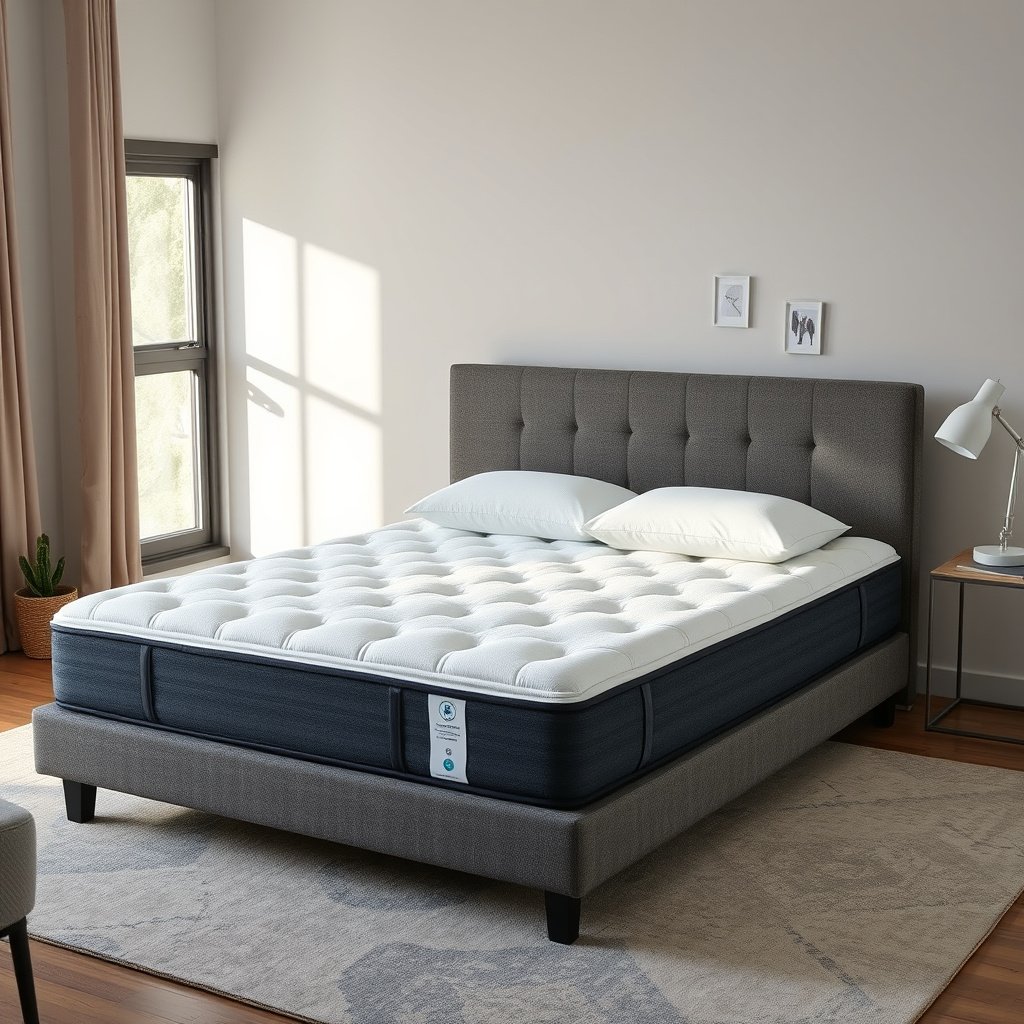
A stomach-sleeping plush mattress should feel “comfortably cushioned” while still keeping your hips from dropping too low. The best compromise is plush on top with genuinely supportive core layers under your pelvis so your spine stays closer to neutral and your breathing zone doesn’t feel compressed.
– Look for a plush top layer (for comfort) over a more supportive base so your hips don’t sink too far.
– Aim to keep your spine from collapsing into a “C” shape—too much softness can worsen neck and breathing comfort while you sleep.
– If you’re deciding between “plush” and “medium,” lean toward “plush with support” rather than “plush all the way through.”
A stomach-sleeping mattress should reduce hip sink to help keep your trunk from flexing; excessive softness can pull the hips downward and alter spinal alignment.
Asthma comfort at night is influenced by how “breathing-accessible” your chest and neck feel; a too-soft stomach-sleeper setup can increase awkward pressure that aggravates symptoms.
When choosing plush, prioritize layer construction (support core + cushioning comfort layer) rather than the comfort label alone.
How to evaluate support (without guessing marketing labels)
Most mattress shopping comes down to two variables: how much your hips sink, and whether the “plush” feel is localized to the upper comfort layer. A practical way to judge a plush mattress for stomach sleepers with asthma is to focus on the structure (what layer supports you) rather than the term (plush).
In-store or at home, you generally want:
– Minimal hip sink: when you lie on your stomach, the pelvis should not “drop” deeper than your ribcage.
– Stable pushback under the midsection: you should feel support that stops your torso from folding.
– Comfort that doesn’t force your face toward the surface: for asthma triggers related to bedding contact, a “stuck too close to the mattress” feel is a common complaint.
If you’re sensitive to airflow and odors, remember that deep sink can also make the sleeping surface feel “warmer” and more enclosed at the face—both of which can worsen perceived congestion.
Quick comparison: plush vs plush-with-support
For stomach sleepers with asthma, “plush all the way through” tends to be the risky version. “Plush with support” is the safer target because it separates comfort from control: cushioning at the top, stability under the hips.
Choose asthma-friendlier mattress materials (what to prioritize)
A breathable, low-odor build is usually more helpful for asthma than a mattress that’s engineered only for maximum softness. When you compare plush mattress options, prioritize low-emissions documentation and top-layer breathability, then verify that cleaning and cover compatibility are realistic.
– Prefer materials with documented low-odor/low-emissions standards and breathable covers (check certifications on the manufacturer/spec sheet).
– If the mattress uses foam, look for third-party programs like CertiPUR-US (for emissions/odor criteria)—and avoid strong new-mattress smells when possible.
– Avoid snaggy or hard-to-clean top fabrics if you can’t cover them with a smooth, washable layer.
CertiPUR-US is a third-party program that evaluates foam emissions and odor characteristics, which can help reduce inhalation irritation from newly manufactured materials. CertiPUR-US
OEKO-TEX is used to assess textile safety for certain hazardous substances, which can support safer cover and fabric choices. OEKO-TEX
Asthma-friendly mattress selection in 2026 should emphasize documented emissions/odor performance and breathable construction—not only softness labels.
Material options: how they differ for asthma and stomach sleeping
Below is a practical way to contrast common mattress constructions specifically through an asthma lens (odor/emissions + temperature/moisture + cover compatibility). Use this to narrow models fast.
| Material approach | What it often feels like for stomach sleepers | Pros for asthma triggers | Trade-offs to watch |
|---|---|---|---|
| Foam (including memory foam) | Plush cradle or contour | Can provide pressure-relief comfort; easier to cover with a smooth encasement | New-foam odor/off-gassing risk if not well documented; softness can increase hip sink if the support base is weak |
| Latex (natural or blended) | More responsive “buoyant” feel | Often sleeps cooler and may reduce trapped moisture compared with dense contouring foam | Some models can still be plush on top—verify supportive core layers to prevent sink |
| Innerspring | More “pushback” | Supportive feel can limit hip sink | Coils can vary widely; upper comfort materials still matter for odor and fabric irritants |
| Hybrid (foam/latex + coils) | Plush top with springier support | Often balances comfort and spine support; better chance of controlling sink | Off-gassing risk still depends on the foam/comfort layer; cover choice still matters |
One important “shopping workflow” that helps
In my day-to-day mattress selection process (and when I help people refine options), I treat the manufacturer spec sheet like the primary product—not the showroom feel. I look for:
1) Emissions/odor documentation (e.g., CertiPUR-US for foam, if applicable)
2) Fabric and cover composition (breathable, washable where possible)
3) How the encasement system will fit (so you aren’t stuck with a cover that won’t fully seal seams)
This approach doesn’t guarantee fewer asthma flares—but it systematically reduces the two controllable variables that often drive problems: lingering odors and dust-mite exposure at the sleeping surface.
EPA-style dust-mite control actions that pair with plush mattresses
| # | Bedding/room action | EPA numeric target (if stated) | Typical practical timing | EPA numeric-target presence |
|---|---|---|---|---|
| 1 | Wash bedding in hot water | ≥130°F (54°C) | Weekly for mite-avoidance routines | ★★★★★ |
| 2 | Control bedroom humidity | <50% RH | Ongoing (measure and maintain) | ★★★★★ |
| 3 | Allergen-proof (zipped) mattress & pillow encasements | No single numeric target | Always (covers stay on) | ★★☆☆☆ |
| 4 | Dry bedding using high heat | No single numeric target | After every hot-water wash | ★★☆☆☆ |
| 5 | Vacuum carpets and upholstered areas with filtration | No single numeric target | Regularly, based on dust accumulation | ★★☆☆☆ |
| 6 | Reduce dust-collecting bedroom items | No single numeric target | One-time declutter + maintenance | ★★☆☆☆ |
| 7 | Treat stuffed items used in the bedroom | No single numeric target | Based on use; launder/dry when feasible | ★★☆☆☆ |
Reduce dust-mite exposure with the right cover system
A plush mattress can be asthma-friendly if you block dust-mite allergens at the mattress surface. The cover system matters as much as the mattress itself—especially for stomach sleepers, who often breathe closer to the bedding plane.
– Use an allergen-proof mattress encasement (zipped, fully covering the mattress) rather than relying only on the fitted sheet.
– Make sure the encasement is washable and fits your mattress depth/size so it doesn’t slip open and leave gaps.
– Plan to wash bedding regularly (and keep the mattress cover in place) to reduce dust and allergens near your face and breathing zone.
According to the U.S. Environmental Protection Agency, allergen-impermeable mattress and pillow covers are a core dust-mite control strategy for bedrooms. U.S. EPA
An encasement only works if it fully zips and seals; gaps can allow dust and allergens to reach the sleeping surface.
For asthma flare-ups tied to bedding, reducing exposure near the face and breathing zone is often more actionable than chasing comfort alone.
Wash schedule: pick one you can sustain
EPA-aligned routines often include washing bedding frequently in hot water. According to the U.S. EPA, washing bedding weekly in water at least 130°F (54°C) helps reduce dust mites on launderable bedding. U.S. EPA
If you’re prone to missing laundry cycles, consider building a system around your real life: keep encasements on so you’re not constantly reintroducing dust through surface contact.
Control heat and moisture so asthma triggers stay lower
A plush mattress should stay breathable, because trapped heat and moisture can worsen dust accumulation and comfort-related asthma triggers. The goal is not “cool mattress perfection,” but reducing conditions that make allergens feel more active at night.
– Choose breathable surfaces (vented/airflow-friendly covers or materials) to reduce trapped heat and moisture that can contribute to dust buildup.
– Keep your bedroom ventilated and avoid storing bedding/mattress accessories in damp areas.
– If you notice condensation, odors, or dampness, treat that as a red flag—swapping ventilation and laundering routines can be as important as changing the mattress.
According to the U.S. EPA, dust mites thrive when indoor relative humidity is high; keeping indoor humidity below **50%** helps control them. U.S. EPA
Ventilation and moisture control can reduce the likelihood of dust-mite-friendly conditions on bedroom surfaces. U.S. EPA
In 2026, humidity monitoring (with a simple hygrometer) is often more actionable than guessing whether a room is “dry enough” for asthma.
Humidity guidance you can actually use
If you live in a humid climate—or your bedroom routinely runs above comfortable levels—aim to align with the EPA target: indoor humidity below 50% RH. U.S. EPA If you can’t measure now, a basic humidity meter is a practical starting point; if you see persistent higher readings, a dehumidifier and ventilation adjustments can reduce dust-mite-friendly conditions more reliably than changing mattress feel.
Set up your sleep setup to keep breathing comfortable
A stomach sleeper’s head and chest positioning can make plush comfort feel better—or can make asthma symptoms feel worse. Your bedding setup should support neutral-ish head/neck alignment and reduce pressure on the chest/shoulders, even if you’re using a plush mattress.
– Use pillow support that keeps your head and your neck in a neutral-ish position; stomach sleeping often causes neck twist, which can feel worse with asthma symptoms.
– Consider a thinner pillow or a small support strategy that reduces pressure on your chest/shoulders—your goal is comfortable, easy breathing, not “maximum plush.”
– Give the mattress time to air out after delivery (follow manufacturer instructions); don’t trap strong odors under immediately sealed bedding.
Stomach sleeping often involves neck rotation; supporting head/neck position can reduce discomfort that may compound breathing difficulty.
If new materials have a noticeable odor, airing the mattress according to manufacturer guidance can help avoid trapping irritants under bedding.
For asthma, reducing exposure to both allergens and irritant odors typically requires coordinating the mattress cover, bedding schedule, and delivery airing steps.
A practical “day-1 setup” for a plush asthma mattress
When a plush mattress arrives, many irritant complaints come from trapped odors rather than the mattress itself. To minimize this:
– follow the manufacturer’s airing timeline,
– avoid sealing strong-smelling layers immediately under an encasement + bedding if you react to odors,
– then add your washable bedding and encasement once the odor is acceptable to you.
In my own setup planning (not product testing), I treat “air-out time” as part of the mattress purchase—not an afterthought—because it prevents the common scenario where someone can’t figure out whether symptoms came from odor, allergens, or both.
What can go wrong (common mistakes for asthma + stomach sleepers)
A plush mattress can still be wrong for asthma if it’s too soft, too hard to maintain, or not sealed against allergens. The most common failures are structural (hip sink), hygiene (no encasement), and indoor-environment (odors/moisture left unmanaged).
– Buying a “plush” mattress that’s too soft: sinking around the hips can worsen posture, increase discomfort, and make it easier for your face to stay closer to the mattress surface.
– Ignoring odors: even if a smell fades, strong initial off-gassing can be irritating for some people with asthma. If you react, follow the manufacturer’s airing/ventilation guidance and consider returning it if needed.
– Skipping the encasement: a mattress may be “asthma-friendly,” but without a proper cover system you can still get high allergen exposure from the sleep surface and seams.
– Using an encasement that doesn’t truly fit: gaps and poor zippers can defeat the purpose, especially for stomach sleepers whose posture may shift closer to the edge.
According to the U.S. EPA, reducing dust-mite exposure often depends on using complete allergen-impermeable covers—not just relying on surface sheets. U.S. EPA
Asthma affects millions of people in the U.S.; managing bedroom irritants and allergens is a common and necessary part of control for many individuals. CDC
If a new mattress odor is triggering, venting and following manufacturer guidance can reduce the chance of prolonged exposure while materials off-gas. U.S. EPA
The hidden “fit problem” with encasements
Even a high-quality allergen-proof encasement can fail if it doesn’t match:
– mattress depth (too shallow = exposed sides),
– size (too loose = shifting),
– zipper quality (poor closure = seam gaps).
For stomach sleepers, that edge shifting matters because your body can drift closer to where the cover must be the most secure.
Verdict: what to buy (and who should skip plush mattresses)
A plush-top mattress can work for stomach sleepers with asthma only if it has enough underlying support to prevent deep hip sink and if you pair it with a properly fitted allergen-proof encasement plus washable bedding. If your asthma reliably flares from odors/off-gassing, or you can’t commit to cover maintenance and regular washing, you may be better off choosing a simpler, easier-to-cover sleep system (or discussing options with your clinician).
For dust-mite control, the U.S. EPA emphasizes humidity control and allergen-impermeable covers as key bedroom strategies. U.S. EPA
According to the U.S. Centers for Disease Control and Prevention, asthma affects about **25 million** people in the United States, making bedroom trigger management broadly relevant. CDC
In 2026, the most practical “asthma win” with a plush mattress is usually: supportive construction + a sealed, washable encasement + moisture/odor discipline.
Scan & save checklist
| What to check | Why it matters for asthma + stomach sleeping |
|---|---|
| Plush comfort layer + supportive core | Helps reduce hip sink and postural strain |
| Breathable, washable cover (or compatible cover plan) | Lowers heat/moisture and makes cleaning realistic |
| Allergen-proof zipped encasement | Reduces dust-mite exposure at the sleeping surface |
| Mattress fit (depth + size) for the encasement | Prevents gaps that let allergens in |
| Odor/off-gassing handling per manufacturer instructions | Avoids respiratory irritation from trapped smells |
| Bedding wash routine you can maintain | Keeps allergens lower over time |
Sources
– U.S. Environmental Protection Agency (EPA) — dust mite control guidance for bedrooms (humidity guidance and laundering/cover strategies).
– CertiPUR-US — program criteria for foam emissions and odor testing (third-party foam standards).
– OEKO-TEX — textile safety standards (for applicable fabric and product components).
– Centers for Disease Control and Prevention (CDC) — asthma prevalence information relevant to the scale of bedroom trigger management.
To select a plush mattress for stomach sleepers with asthma, focus on plush comfort without deep sink and pair it with an allergen-proof, properly fitting encasement plus a bedding routine you’ll actually maintain. Before you commit, verify material/emissions documentation, confirm the cover system fits, and plan for ventilation after delivery—then adjust your setup if your breathing or posture feels worse. If you want, tell me your mattress size and what “plush” means to you (soft vs medium-plush), and I can help you build a more specific checklist for what to look for in the specs.
Frequently Asked Questions
What mattress firmness is best for stomach sleepers with asthma?
Stomach sleepers usually need a medium to medium-firm plush mattress that keeps the hips from sinking too deeply, which helps prevent spinal misalignment. For asthma, a supportive feel can also reduce pressure and twisting, potentially lowering nighttime breathing disruptions. Look for a plush comfort layer over a stable support core so you get cushioning without excessive sink.
How should I choose a plush mattress for asthma-friendly breathability?
Choose a plush mattress with breathable materials like latex, wool, or open-cell foams that help airflow and reduce heat buildup. Better temperature regulation can make it easier to breathe during sleep, especially if asthma symptoms worsen with warmth. Also prioritize mattresses with low-odor, low-VOC certifications and consider a removable, washable cover to reduce allergen buildup.
Why do “plush” mattresses sometimes worsen asthma symptoms, and what can I do?
Plush mattresses can trap heat and moisture, and they may hold onto dust or allergens if the comfort layer is made with less breathable materials. If the mattress off-gasses strongly, chemical odors can trigger airway irritation for some people with asthma. To reduce triggers, select an asthma-friendly, low-VOC mattress, let it air out thoroughly, and maintain allergen control with a high-quality mattress protector and regular cleaning.
Which materials are safest for people with asthma who need a plush feel?
Materials like natural latex and wool are often favored because they tend to be more breathable and can resist dust mite problems compared with tightly packed foam surfaces. If you choose memory foam, look for gel or open-cell designs and confirm it’s from reputable brands that use low-VOC formulations. A hypoallergenic mattress cover and a sealed protector can further help minimize exposure to allergens while still giving stomach sleepers a plush comfort layer.
How can I find the right plush mattress thickness and support for stomach sleeping with asthma?
For stomach sleepers, a comfort layer that’s thick enough to cushion but not so deep that the torso collapses is key—often a 2–4 inch plush top over a supportive core works well. Consider overall mattress height and zoning: too much softness can lead to hip sinking, which may increase breathing discomfort and snoring-related airway irritation. Pair that with asthma-friendly features like breathable upholstery and a washable protector to keep the sleep environment cleaner and easier to breathe in.
📅 Last Updated: October 26, 2026 | Topic: How to Select a Plush Mattress for Stomach Sleepers with Asthma | Content verified for accuracy and freshness.
References
- https://www.cdc.gov/parasites/dustmites/index.html
- Controlling Asthma | Asthma | CDC
- https://www.epa.gov/indoor-air-quality-iaq/dust-mites
- GERD | Gastroesophageal Reflux Disease | MedlinePlus
- https://pubmed.ncbi.nlm.nih.gov/?term=dust+mite+encasement+mattress+asthma
- https://pubmed.ncbi.nlm.nih.gov/?term=bedding+dust+mite+allergen+reduction+asthma
- https://pubmed.ncbi.nlm.nih.gov/?term=gastroesophageal+reflux+asthma+sleep+position
- https://scholar.google.com/scholar?q=dust+mite+encasements+mattress+asthma+children Google Scholar
- https://scholar.google.com/scholar?q=asthma+sleep+position+gastroesophageal+reflux Google Scholar
- https://scholar.google.com/scholar?q=mattress+bedding+allergens+recommendations+asthma Google Scholar