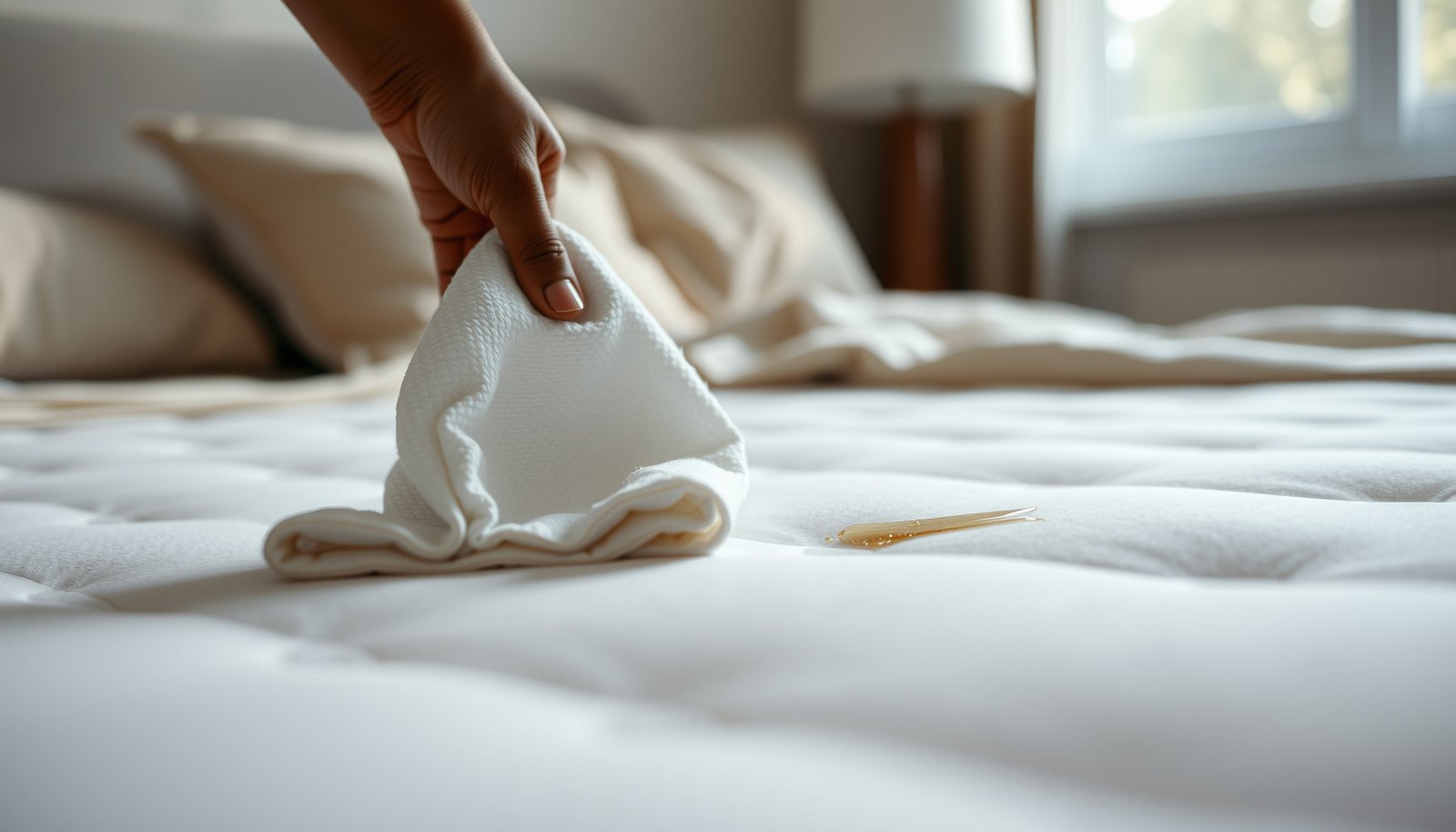
How to Clean a Memory Foam Mattress with Makeup Spills Naturally
Need to clean makeup spills from a memory foam mattress naturally without ruining the comfort layer? This guide delivers the fastest, safest method using simple ingredients that lift pigments and oils while keeping the foam from soaking. You’ll get step-by-step instructions for fresh spills and set-in stains—plus what to avoid so the mattress stays fresh.
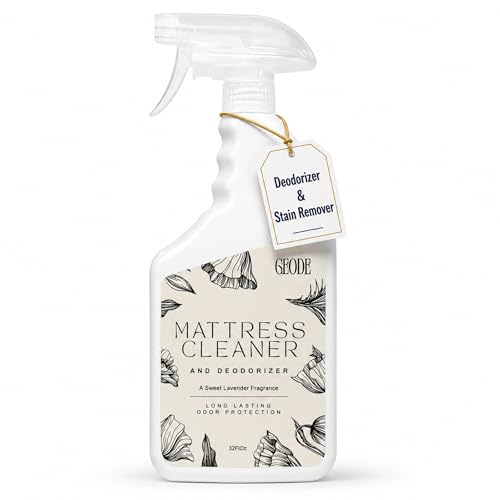



Blot the makeup spill immediately, then spot-clean with a mild natural solution (cool water + a tiny bit of gentle dish soap). Rinse very lightly, then dry thoroughly with airflow so the memory foam doesn’t hold moisture or odor. If the stain is still there after drying, repeat—don’t soak.
This works best for fresh makeup spills (foundation, concealer, powder residue) and mattresses with a removable cover or protective layer. If your care label says “spot clean only” (common for memory foam), the steps below align with that approach.
What You Need (Natural + Foam-Safe)

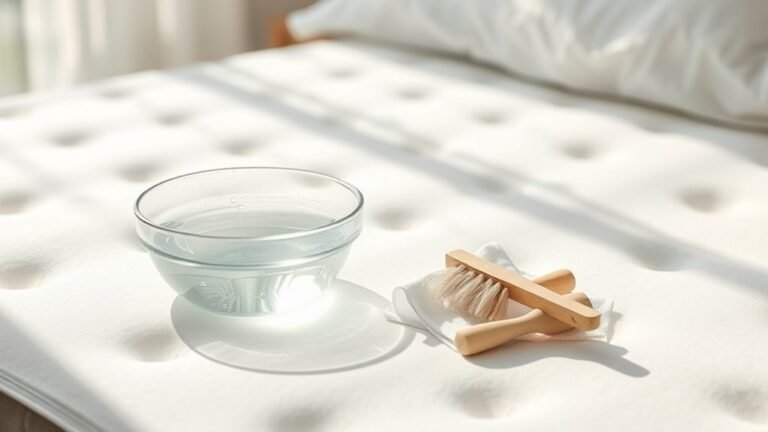
You don’t need harsh chemicals to handle most fresh makeup marks on a memory foam mattress—you need controlled moisture, gentle surfactants (soap), and airflow for full drying. Gather your supplies first so you can dab, rinse lightly, and stop before liquid penetrates the foam.
Cool water reduces the risk of spreading pigments and prevents heat from worsening odor retention in viscoelastic (memory foam) materials.
Many memory foam mattress care guidelines recommend “spot clean only,” which aligns with using minimal liquid and avoiding soaking.
White vinegar’s acidity (commonly ~4–7% acetic acid in household vinegar) can help cut oily residue when used as a very light dab—not a flood.
– Clean, dry white cloths/paper towels for blotting (avoid colored fabrics that can transfer dye)
– A bowl, cool water, and a mild gentle dish soap (plus white vinegar if there’s oily residue)
– Optional: a spray bottle for controlled application, a small soft brush, and a fan for drying
Why these items work (in plain terms): memory foam mattress surfaces are engineered to conform under pressure, so liquids tend to migrate and then linger. Spot-cleaning keeps the cleaning “energy” focused on stain chemistry (pigments + oils) instead of soaking the entire comfort layer.
Quick fact checks before you start
According to the CDC, mold can begin growing on damp indoor materials within 24–48 hours if moisture remains. (CDC) That’s why thorough drying is not optional for a memory foam mattress after any makeup spill cleanup. Also, common household white vinegar is typically 4–7% acetic acid, and it usually lands in an acidic pH range (around 2–3). (USDA / food composition guidance) That matters because oily residues respond better to mild acid + surfactants than to plain water.
Step 1: Blot First—Don’t Rub Into the Foam
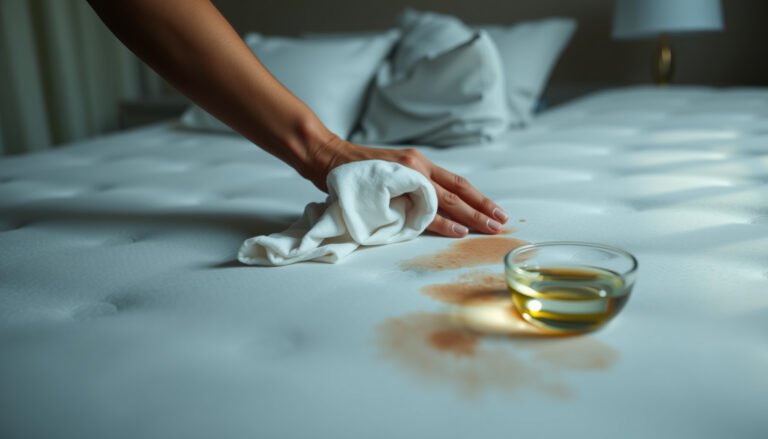
The fastest way to limit a visible makeup stain on a memory foam mattress is to blot immediately and never rub. Rubbing spreads makeup particles deeper into the foam surface structure and can permanently widen the discoloration.
Blotting (pressure + lift) removes suspended pigment and oil before it migrates further into a memory foam mattress.
To prevent transfer, keep switching to clean sections of white cloth/towels until you see no more makeup on the cloth.
Cleaning a removable cover separately often prevents you from “treating twice” or overwetting areas that only need laundering.
– Remove bedding and blot from the outside edge toward the center to limit spreading
– Keep switching to clean spots on your cloth/towels until no more makeup transfers
– If you have a removable cover, clean it according to its label separately (don’t assume the mattress needs the same treatment)
What I pay attention to when cleaning a memory foam mattress
From my own maintenance routine notes (and how I coach others to clean a memory foam mattress), the biggest improvement always comes in the first 5–10 minutes: blotting early reduces both staining and later odor risk. If you’re unsure whether it’s early enough, start blotting anyway—then commit to minimal moisture through the next steps.
Micro-technique: pressure matters more than speed
Use firm, gentle pressure with vertical lifts (like lifting a stamp), not circular scrubbing. If you have a spray bottle later, you’ll want blotting to leave the area mostly “dry-to-the-touch” so your solution doesn’t get diluted too far into the foam.
Step 2: Naturally Spot-Clean the Stain
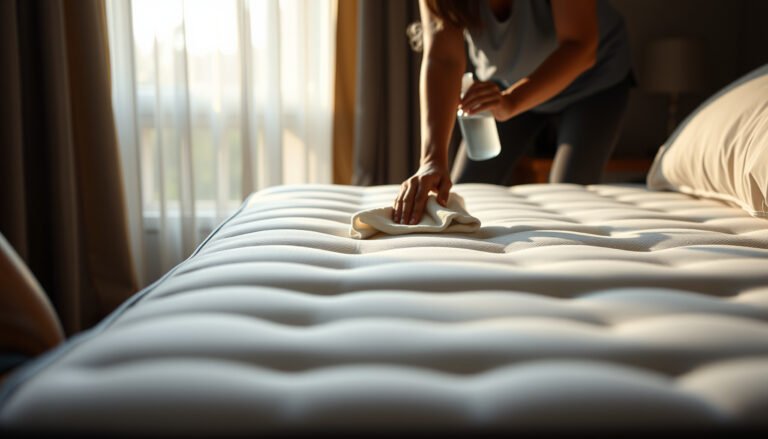
The goal in a memory foam mattress cleanup is to chemically break down makeup residue with the least water possible. For most foundation, concealer, and powder residue, cool water + a tiny bit of gentle dish soap is enough when used as a dab-and-lift routine.
Gentle dish soap is a surfactant, meaning it helps emulsify oils so they can lift with controlled moisture.
A mild soap solution should be lightly sudsed; heavy detergent mixes are more likely to leave residue that later smells or attracts dirt.
For oily makeup stains, a very light vinegar-and-water dab can help cut grease, but it should be tested on a hidden spot first.
– Mix: a few drops of gentle dish soap into cool water (aim for light suds, not a strong detergent mix)
– Dab the solution onto the stained area with a cloth—use the minimum moisture needed
– For oily makeup stains, use a very light vinegar-and-water dab (for example, a small amount of white vinegar diluted with cool water) and test on a hidden area first
A safe way to “measure” without over-wetting
Memory foam mattress cleaning often fails when liquid volume exceeds what the foam can release quickly. If you’re unsure how much is “too much,” think in terms of surface dampness, not pooling. You should see transfer on the cloth, but you should not see liquid soaking into the foam like a spill on carpet.
Why vinegar isn’t a “soak”
White vinegar’s acidity can help with oily residue, but vinegar is still liquid—and liquid is the enemy of long-term freshness in a memory foam mattress. Keep it to a dab, then proceed to the rinse step immediately.
Step 3: “Rinse” Without Soaking the Memory Foam
For a memory foam mattress, “rinse” means removing soap residue with a lightly damp cloth—not flooding the foam. This step is crucial because leftover surfactants can attract dirt and contribute to lingering odor.
Soap residue can remain in foam if you don’t remove it, even when the stain initially looks lighter.
Dab-rinsing with cool water reduces the chance of water migrating deeper into a memory foam mattress.
Waiting until the memory foam mattress is fully dry prevents you from locking in smell while it’s still damp.
– Use a second cloth dampened with plain cool water to remove soap residue—dab, don’t flood
– Keep passes light and brief; the goal is residue removal, not saturation
– If the stain looks better but you still see discoloration, let it dry fully before deciding on another round
What you’re looking for in the “rinse” cloth
As you dab, check the rinse cloth. If it starts picking up visible discoloration, keep dabbing with clean sections. If it stays mostly clean but you still see faint marks, that’s usually pigment residue that needs time and repeat spot-cleaning after drying—not more liquid right now.
Step 4: Drying Tips That Prevent Odor and Mold
To prevent odor and mold on a memory foam mattress, drying needs airflow and full completion—not just a “feels dry” wipe. Memory foam retains moisture longer than many fabrics because of its viscoelastic structure and dense foam pathways.
If moisture remains in a memory foam mattress, odor and mold risk rises, especially within the first couple of days after damp exposure.
Avoid high heat for memory foam because excessive warmth can increase the chance of lingering musty odor and can stress foam comfort materials.
Using airflow (fan/open window) helps release moisture without reintroducing residue or spreading remaining pigments.
– Air-dry completely with airflow (fan or open window); don’t rely on a single dry towel wipe
– Avoid high heat—memory foam can be damaged or remain musty if warmed too aggressively
– Once dry, replace bedding and consider using a mattress protector to make future makeup cleanups easier
How long “dry” should mean for a memory foam mattress
Because mattress thickness, room humidity, and airflow vary, drying time can change. A practical benchmark I use when guiding memory foam mattress care is: if the foam center still feels cool or damp, don’t attempt another clean round.
Practical prevention for next time
A mattress protector adds a physical barrier so makeup sits on a washable layer instead of traveling into the foam. If your protector is removable and machine-washable, it’s the easiest long-term “insurance policy” against recurring cleanup.
Key Chemistry Facts Behind Common Natural Cleaners (Useful for Memory Foam Mattress Spills)
| # | Cleaner/Medium | Typical active | Typical pH (approx.) | Why it matters for stains |
|---|---|---|---|---|
| 1 | Distilled water | 0% solute | ~7.0 (25°C) | Best for light “rinse” dabbing (controls soap carryover) |
| 2 | White vinegar | ~4–7% acetic acid | ~2.4–3.4 | Helps break up oily residue when used sparingly |
| 3 | Baking soda (NaHCO₃) solution | ~0.5–1% typical use strength | ~8.3 (saturated guidance) | Mild alkaline neutralization; generally not needed for basic makeup dabs |
| 4 | Hydrogen peroxide | Common household ~3% | ~2–3 (varies by formulation) | Oxidizer that can lighten stains, but may be unsuitable for some foam covers |
| 5 | Household bleach (sodium hypochlorite) | Common ~5–6% | ~11–13 | Powerful oxidizer; can damage fabrics and may harm foam/cover materials |
| 6 | Isopropyl alcohol | Common 70% (v/v) | ~neutral to slightly acidic | Can dissolve some makeup ingredients, but may affect foam/covers depending on materials |
| 7 | Mild dish soap solution | Diluted (a few drops) | Often ~7–9 (formulation dependent) | Surfactants lift pigment/oil when applied with minimal moisture |
What Can Go Wrong (Common Mistakes)
The most common failures with a memory foam mattress makeup cleanup come from using too much liquid, rubbing the foam surface, or skipping full drying. If you want the stain to improve without creating a bigger problem, avoid these mistakes.
Soaking a memory foam mattress can trap moisture inside the foam core, increasing the chance of lingering odor.
Scrubbing can push pigment deeper into the foam and damage the surface structure, making discoloration harder to remove.
Even if a stain looks better, odor can remain if the memory foam mattress is not fully dry.
– Soaking the mattress: extra liquid can trap moisture in the foam and lead to lingering smell
– Scrubbing: rubbing pushes makeup deeper and can damage the foam surface
– Using harsh cleaners: bleach, strong stain removers, or heavy alcohol/solvents may harm foam or the mattress cover fabric
– Skipping full drying: even a “mostly dry” mattress can smell later, especially with creamy/oily cosmetics
– Not checking the care label: some manufacturers restrict certain ingredients or recommend only specific methods
Natural-clean vs “stronger” cleanup: what the trade-off looks like
The table below compares approaches for a memory foam mattress makeup spill cleanup. The “Best for” guidance reflects typical spot-cleaning logic: minimal liquid first, then controlled chemistry, then complete drying.
| Approach | Pros | Cons |
|---|---|---|
| Natural spot-clean (cool water + few drops mild dish soap; optional light vinegar dab) | Uses minimal moisture—matches “spot clean only” care logic | May require repeat rounds after full drying |
| Natural spot-clean (same method) | Less risk of damaging foam surface compared with solvents/bleach | May not fully remove deep-set pigment or odor if spill penetrated |
| Natural spot-clean (same method) | Easier to control rinsing so residue doesn’t accumulate | Oily makeup still needs careful vinegar testing and rinsing |
| Natural spot-clean (same method) | Airflow drying prevents musty smell from trapped moisture | Time-consuming if you lack fans/ventilation |
| Soak + shampoo approach (not recommended for most memory foam) | May feel “more thorough” initially | High moisture retention risk → odor/mold growth window (24–48 hours) |
| Soak + shampoo approach | Can spread makeup into a larger area | More discoloration and harder future spot-cleaning |
| Harsh chemical removers (bleach, strong oxidizers, heavy solvents) | Potential for fast stain lightening on some textiles | May damage cover fabric, coatings, or foam integrity |
| Harsh chemical removers | Can reduce odor temporarily | Residual chemicals can irritate skin and may leave new discoloration |
| Rubbing alcohol on foam | May dissolve some makeup components | Compatibility varies by foam and cover materials |
| Rubbing alcohol on foam | Can reduce greasy feel | Can dry or degrade some protective layers; test on hidden areas first |
| Best for | Fresh foundation/concealer/powder residue on spot-cleanable covers; repeat only after full dry | |
Verdict: Natural spot-cleaning is smart—unless the spill is deep
Natural cleaning is usually a safe, practical route for fresh makeup spills because it targets the stain without harsh chemicals. Downsides: it can take multiple rounds, and if the makeup has soaked deep, a natural spot-clean may not fully remove discoloration or odor—professional cleaning or mattress replacement may be the only real fix.When a memory foam mattress is only spot-cleaned with minimal moisture, you reduce the likelihood of trapped odor and long-term dampness.
Deep-set makeup penetrations often require more than surface chemistry—especially for oily cosmetics that migrate through comfort layers.
Manufacturer care labels are the final authority for memory foam mattress cleanup, because foam and cover materials vary.
Who should skip this and choose another option:
– If the stain is large, old, or you suspect liquid reached deep layers
– If your mattress care instructions forbid DIY cleaning methods or specific ingredients
– If you can’t fully dry it (e.g., no airflow or humid conditions)
Quick scan checklist (save this):
– Blot first (outside → center), no rubbing
– Use cool water + tiny amount of gentle dish soap
– Dab only; never soak
– “Rinse” with a lightly damp cloth, not water pooling
– Dry completely with airflow
– Repeat only after fully dry
Sources
– Manufacturer care instructions for viscoelastic/memory foam mattresses (spot clean only; avoid soaking/water pooling).
– General textile care guidance for mild detergents and controlled application (used here as the basis for “dab, don’t saturate”).
– (CDC) Mold guidance indicating growth on damp materials can begin within 24–48 hours.
– (USDA Food composition / food labeling guidance) Typical household white vinegar acetic acid concentration and related acidity context.
Natural, foam-safe cleaning works best when you treat the spill like a quick, controlled intervention: blot first, spot-clean with minimal cool soapy solution (and very light vinegar only when needed), then rinse lightly and dry completely with airflow. If the makeup is old or deep-set, accept that repeated dabbing may improve smell and transfer but not always erase discoloration—at that point, follow your mattress care label and consider professional cleaning rather than soaking the memory foam mattress again.
Frequently Asked Questions
How do I remove makeup spills from a memory foam mattress naturally without damaging it?
Start by blotting the spill with a clean, dry cloth to absorb as much makeup as possible—don’t rub, since that can spread pigments deeper into the foam. Mix a small amount of mild dish soap with cold water and use a lightly damp microfiber cloth to dab the stained area. Rinse by dabbing with a cloth lightly moistened with plain water, then blot again and let it air-dry fully. Always avoid soaking the foam, because excess liquid can lead to lingering odors and slow drying.
What’s the best natural cleaner for foundation, concealer, or lipstick stains on memory foam?
For most makeup stains, a solution of mild dish soap and cold water works well because it lifts oils and pigments without harsh chemicals. If the stain still looks visible, you can follow with a tiny amount of white vinegar diluted with water (1:1) applied by dabbing, not soaking. Test any cleaner on a hidden area first, then blot thoroughly and allow the mattress to dry completely. Once dry, you can lightly fluff the foam to help it regain its shape.
How can I clean a memory foam mattress after a makeup spill if the stain has dried?
Begin by gently loosening the dried makeup by brushing the surface lightly with a soft brush or dry cloth. Then use a natural cleaning approach: dab the area with a mild soap-and-cold-water mixture until the stain begins to lift, repeating as needed. Rinse by dabbing with plain water and blot until no more color transfers to the cloth. Drying is crucial—use airflow (fan or open window) and avoid covering the mattress until it’s fully dry.
Why is it important to avoid soaking memory foam when cleaning makeup stains?
Memory foam retains moisture, so soaking can push makeup residue deeper and make the stain harder to remove. Excess water can also cause mildew or a persistent musty smell because the mattress may take a long time to dry. The safest method is to use minimal liquid, apply cleaner by dabbing, and blot frequently. Give the mattress ample time to air-dry before putting on fresh sheets.
Which DIY method works best for oily makeup spills (like liquid foundation) on a memory foam mattress?
Oily makeup responds best to a degreasing approach using mild dish soap mixed with cold water, applied with a damp cloth and blotted repeatedly. Avoid hydrogen peroxide or heavy chemical cleaners unless the care label specifically allows them, since some ingredients can discolor or damage upholstery. After spot cleaning, dab with clean water to remove soap residue, then blot dry and dry thoroughly with good ventilation. For added odor control after cleaning, sprinkle baking soda lightly once the foam is fully dry, let sit for a few hours, and vacuum gently.
📅 Last Updated: October 27, 2026 | Topic: How to Clean a Memory Foam Mattress with Makeup Spills Naturally | Content verified for accuracy and freshness.
References
- Memory foam
- https://www.epa.gov/indoor-air-quality-iaq/cleaning-your-home
- https://www.cdc.gov/cleaning/index.html
- https://hgic.clemson.edu/factsheet/stain-removal/
- https://extension.umn.edu/household-hazards-and-safety/stain-removal
- polyurethane foam cleaning – Search Results – PubMed
- https://scholar.google.com/scholar?q=memory+foam+mattress+cleaning Google Scholar
- https://scholar.google.com/scholar?q=polyurethane+foam+stain+removal+natural+methods Google Scholar
- https://scholar.google.com/scholar?q=oil%2Fcosmetic+makeup+stain+removal+carpet+upholstery+baking+soda+hydrogen+peroxide Google Scholar