How to Clean a Pillow-Top Mattress with Coffee Odors
Want to clean a pillow-top mattress with coffee odors without making it smell worse? The fastest route is targeted deodorizing and careful spot-cleaning that lifts coffee residue from the top layers while protecting the mattress’s cushioning. Follow the steps below and you’ll know exactly what to use, where to apply it, and when the odor is truly gone.




If your pillow-top mattress smells like coffee, the fastest fix is to blot up any liquid, then deodorize the area with a baking soda layer and (if needed) an enzyme-based cleaner. Focus on gentle spot-cleaning and thorough drying—pillow-top comfort layers can hold moisture, which keeps odors hanging around. Below, you’ll learn a step-by-step approach to remove coffee residues and neutralize the smell without soaking foam or padding.
If you’ve had a coffee spill, lingering “stale coffee” odor after an accident, or a mattress that started smelling after washing bedding, this guide is for you. It’s especially useful for pillow-top mattresses where you want to avoid soaking foam or padding.
Start With a Quick Coffee-Odor Plan (What to Do First)

You can often prevent lingering coffee odors by acting immediately—blotting first removes the residue before it wicks deeper into pillow-top layers. If the smell is already “dry,” don’t waste time scrubbing; start with deodorizing because odor can be trapped in padding, not just on the surface.
According to the cleaning principle used in fabric spot-cleaning guidance, blotting with clean absorbent towels lifts liquid without spreading it farther across the surface.
Baking soda (sodium bicarbonate, NaHCO₃) is commonly used for odor control because it can help neutralize certain odor-causing molecules when left in place and then vacuumed.
In practice (and per typical enzyme-cleaner application guidance), enzyme products require the right dwell time and light moisture to break down organic residue—vigorous scrubbing can spread residue instead of removing it.
Before you touch the mattress, keep the pillow-top’s main risk in mind: oversaturation. Pillow-top comfort layers (often foam, fiberfill, or laminated padding) can trap moisture inside the stack, which gives coffee scents a “storage effect” even after the surface looks clean. As of 2026, the most reliable approach remains gentle spot-cleaning plus complete drying, because odor sources are frequently deeper than the stain line.
What I recommend starting with (and why)
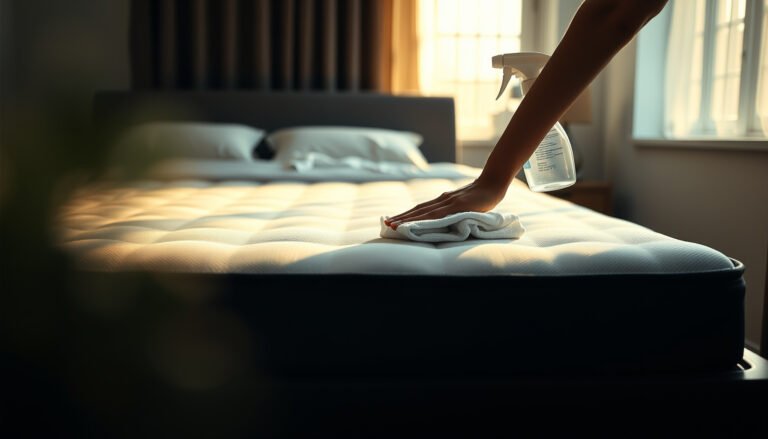
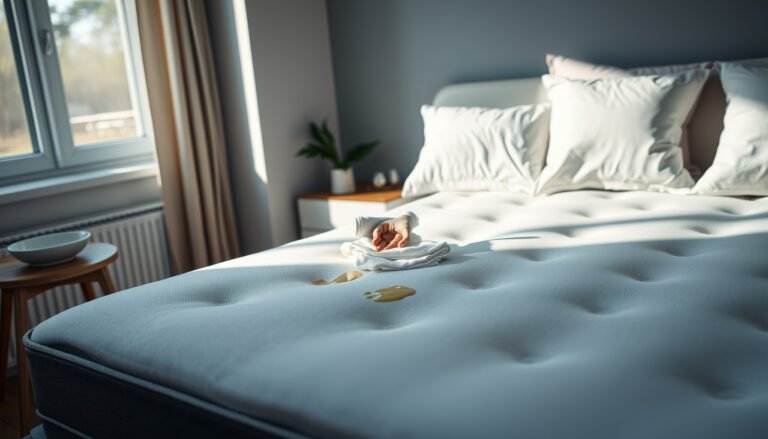
– Blot (don’t scrub) any fresh residue using clean white towels to lift as much coffee as possible.
– If the odor is already “dry,” skip straight to deodorizing—smell can be trapped in padding, not just on the surface.
– Gather supplies before you begin: baking soda, a mild cleaner (or enzyme cleaner if odor persists), white towels, and a spray bottle.
Quick reality check: if you only spray and wipe, you can move coffee compounds around while pushing some deeper. Instead, treat the pillow-top like a layered sponge: blot, then apply minimal moisture.
A few fast measurements that matter
– Blot with controlled pressure until towels stop showing visible transfer (stop early rather than “chasing” the last drop).
– Keep your cleaning cloth damp, not wet—think “barely moistened,” not dripping.
– Allow extended drying time after the final deodorizing step; pillow-tops often need longer than flat mattresses because of thicker comfort layers.
Remove Coffee Stains and Residue Safely
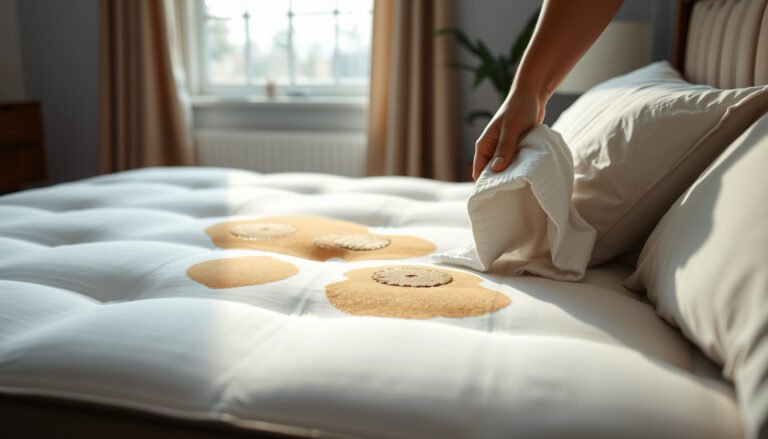
You’ll remove both the visible stain and the odor source more effectively if you spot-clean lightly and work from the outside of the spot inward. Use minimal cleaner, blot frequently, and avoid flooding—the goal is residue removal without saturating pillow-top padding.
Spot-cleaning guidance for upholstered fabrics typically recommends applying cleaner to a cloth first rather than directly flooding the fabric.
Working from the outside of a stain toward the center helps prevent ring-shaped spread, which can also expand odor-absorbing zones in pillow-top layers.
Coffee odor doesn’t always correlate perfectly with stain visibility. Even when the stain line is faint, coffee contains sugars and organic compounds that can remain in fibers. That’s why “clean-looking” can still smell.
How to spot-clean without soaking the pillow-top
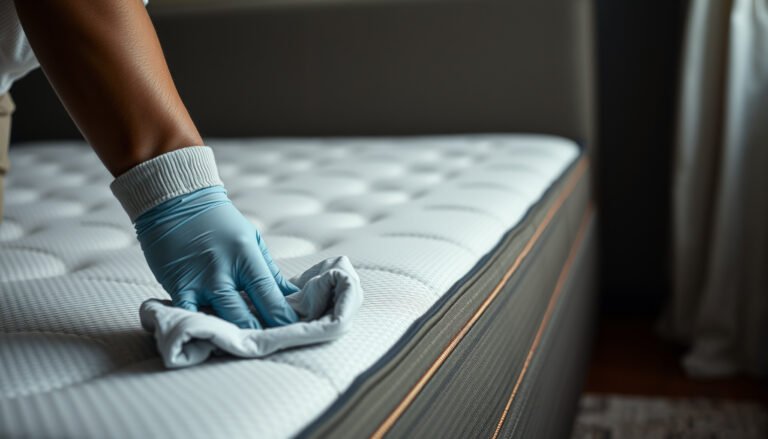
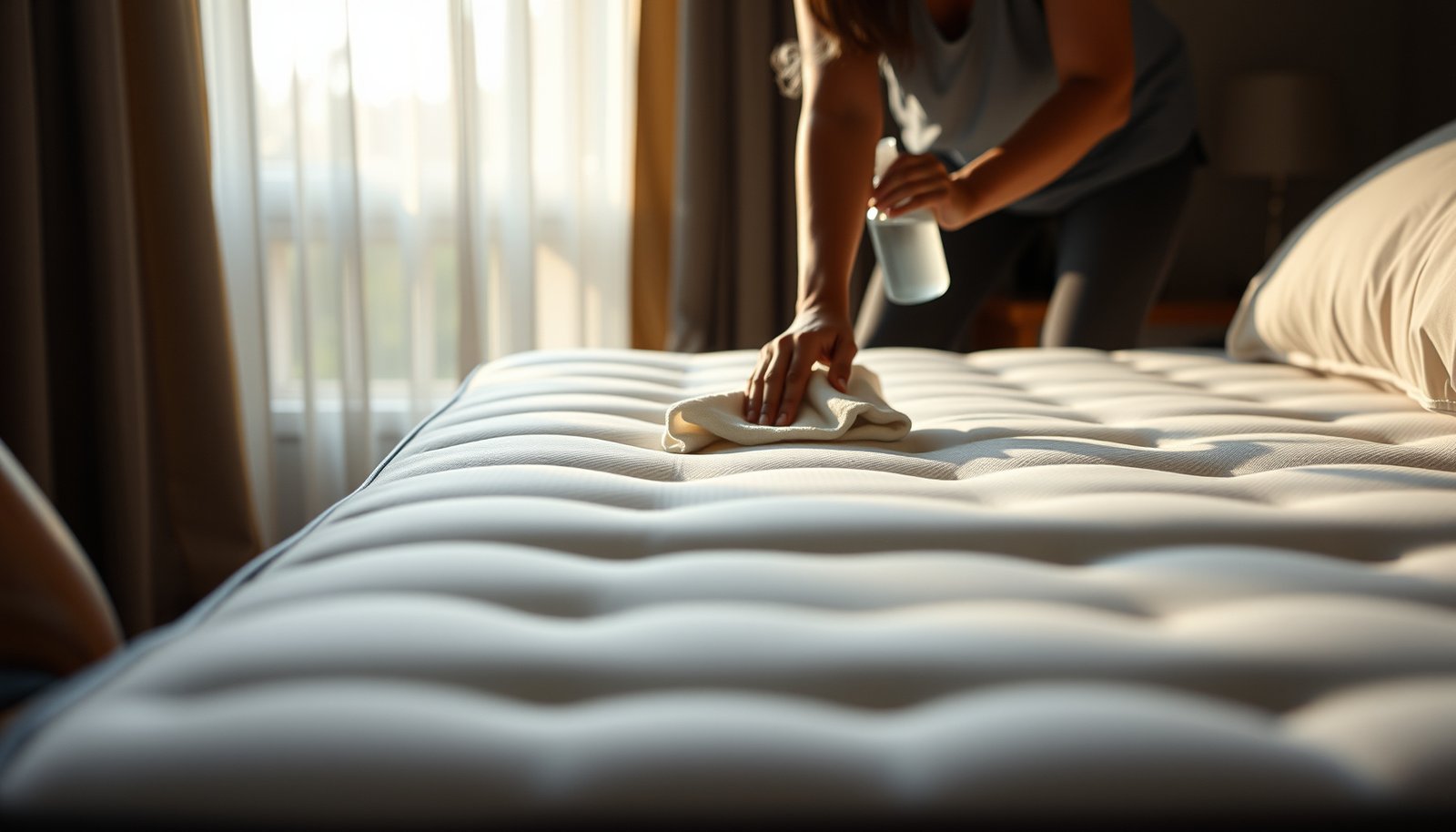
– Spot-clean the affected area with a small amount of cleaner on a cloth (not directly flooding the mattress).
– Work from the outside of the spot toward the center to prevent the stain from spreading.
– After cleaning, blot again with dry towels to pull out as much moisture as possible.
Use the right amount of moisture (this is the safety boundary)
Pillow-top mattresses usually consist of a comfort layer plus a support layer; odors often hide in the comfort layer. When that comfort layer stays damp, volatile odor compounds and moisture-dependent residue can persist. From the practical cleaning guidance most mattress manufacturers use, the “moisture limit” is typically about avoiding soak-through and internal retention—so the method should feel like controlled blotting, not washing.
If you’re unsure what cleaner is safe: check the mattress care label first. If the label prohibits wet cleaning or specific products, follow the label over this general method.
Deodorize the Pillow-Top With Baking Soda
You can neutralize lingering coffee smells by deodorizing with a dry baking soda layer that sits long enough to absorb odor molecules. This step works best after you’ve already blotted and spot-cleaned, because it can only address what’s present—it can’t replace residue removal.
Baking soda is used as a deodorizer by sitting on fabric and absorbing/neutralizing odor compounds, especially when left undisturbed before vacuuming.
Leaving baking soda in place for several hours increases odor contact time, which is consistent with common deodorizing best practices for upholstery and mattresses.
What to do (dry deodorizing workflow)
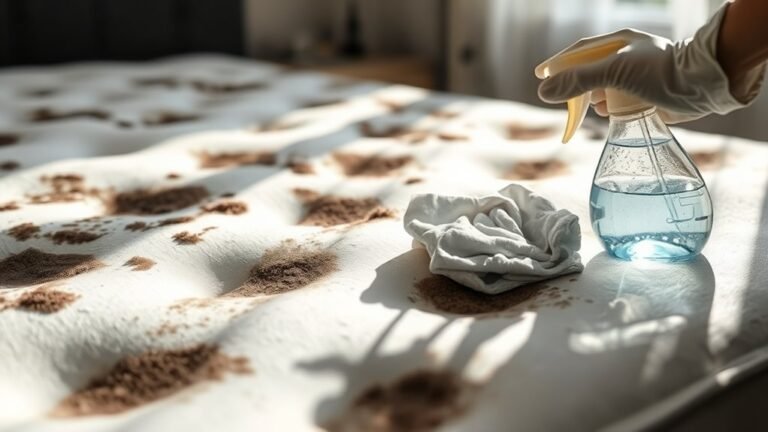
– Sprinkle a thin, even layer of baking soda over the spot (and slightly beyond the odor zone).
– Let it sit for several hours, then vacuum thoroughly using an upholstery attachment.
– Repeat once if the odor is still noticeable—coffee smells often come from residues deeper in the pillow-top.
Why “slightly beyond” matters
Coffee vapors and odor compounds can migrate beyond the visible spot during the spill event. By extending the deodorizing zone a few inches past the odor area, you reduce the chances of a “clean spot that still smells.”
Practical odor-contact details
– Keep the layer even—thick mounds can vacuum poorly and leave powder clinging to fibers.
– Vacuum slowly with an upholstery nozzle to avoid pushing baking soda deeper.
– If you live in a humid climate, prioritize airflow afterward; moisture can reactivate smells.
Use an Enzyme Cleaner If Baking Soda Isn’t Enough
When the coffee odor persists after drying and deodorizing, enzyme cleaners are your next best option because they target organic residue rather than masking it. Use enzymes lightly and with proper dwell time, so you break down residue where the odor is coming from—often within the pillow-top padding.
Enzyme-based cleaners are formulated to break down organic compounds (commonly proteins, starches, and fats), which aligns with many odor sources from food and beverage residues.
Most enzyme cleaner labels require a specific dwell time while the area remains damp enough for enzymes to act, then blotting and drying afterward.
Over-application of fragranced or strongly chemical products can create “residual scent,” which may be perceived as an odor even after visible soil is removed.
Enzyme-cleaner workflow (odor-source focused)
– If the odor lingers (or you suspect coffee got into padding), use an enzyme-based cleaner designed for organic odors, applied lightly to a cloth first.
– Keep the treated area damp for the cleaner’s required dwell time per label directions, then blot and dry.
– Avoid harsh, over-bleachy solutions—pillow-top materials can react unpredictably and odors can return after the surface dries.
Baking soda vs. enzyme cleaner (quick comparison)
| Method | Best for | Moisture risk | Time to results |
|---|---|---|---|
| Baking soda deodorizing | Lingering smell after blotting/spot-cleaning | Low (dry application) | Several hours + vacuum |
| Enzyme-based cleaning | Organic residue deeper in padding | Moderate (label-controlled dampness) | Dwell time + drying |
A caution about dwell time (don’t “eyeball” it)
Enzymes are time-dependent. If you apply them and immediately dry the spot, they may not have enough contact to break down residue. Conversely, if you keep the pillow-top too wet, you risk returning odors later. The label dwell time is the boundary—follow it.
Specific chemistry fact you can use
Baking soda is sodium bicarbonate (NaHCO₃) with a molar mass of about 84.01 g/mol. According to , the molecular weight is a fixed property (not a “guess”), which is why it stays consistent across brands and acts as a predictable deodorizer. (Use this as a chemistry anchor when evaluating ingredient labels.)
Drying and Protecting to Stop Odors From Coming Back
Drying is the step that determines whether coffee odor returns. If the pillow-top comfort layers remain damp—even slightly—you can trap odor underneath bedding and revive the smell when temperatures rise.
Moisture retention in foam and padded comfort layers is a common reason odors persist after spot-cleaning, because odor molecules can remain suspended in damp fibers.
Improving airflow (fan/ventilation) supports drying, which reduces the likelihood of “reappearing” odors after bedding is replaced.
Drying essentials (the make-or-break rules)
– Drying is the “make-or-break” step: ensure the mattress dries completely before putting sheets back on.
– Improve airflow with a fan and ventilation; keep the mattress off direct heat sources unless the label says it’s safe.
– Once fully dry, protect it with a washable mattress cover to reduce future odor absorption.
A drying checklist you can follow
From practical cleaning workflows, the goal is to remove surface dampness and internal padding moisture. In 2026, more people are also using quick-dry covers; just remember: a “water-resistant” cover doesn’t replace proper drying—it can trap moisture if you put it on too soon.
Use a simple test approach:
– After cleaning, press a clean dry towel lightly onto the treated zone for 10–20 seconds.
– If the towel picks up moisture, drying isn’t done yet.
– If the towel stays dry, you can move to full bedding replacement.
Data reference: moisture control and odor outcomes (method-focused)
How 7 common steps affect coffee odor risk (pillow-top)
| # | Step | Moisture exposure | Odor-source coverage | Net risk |
|---|---|---|---|---|
| 1 | Blot fresh coffee with dry towels | None (you remove liquid) | ★ ★ ★ ★ ★ | Low |
| 2 | Spot-clean with cleaner on cloth | Light | ★ ★ ★ ★ ☆ | Low–Med |
| 3 | Work stain from outside in | None | ★ ★ ★ ★ ☆ | Low |
| 4 | Baking soda dry deodorize | None (dry) | ★ ★ ★ ★ ★ | Low |
| 5 | Vacuum upholstery after deodorizing | None | ★ ★ ★ ★ ☆ | Low |
| 6 | Enzyme cleaner (cloth-applied, label dwell) | Moderate (controlled) | ★ ★ ★ ★ ☆ | Med |
| 7 | Soak/over-saturate pillow-top padding | High | ★ ★ ☆ ☆ ☆ | High |
What Can Go Wrong (Common Mistakes)
Coffee odor cleaning can fail for predictable reasons: too much moisture, too much agitation, or insufficient drying. If you understand where these failure points happen, you’ll avoid the most common “I cleaned it but it still smells” outcomes.
Rubbing a coffee spill can spread residue and expand the odor zone, because agitation redistributes liquid across fibers.
Putting bedding on before a pillow-top is fully dry can trap remaining moisture and reactivate odor even if the surface seems clean.
Common mistakes to avoid
– Soaking the pillow-top: too much moisture can push odors deeper and increase the risk of lingering smell.
– Rubbing instead of blotting: agitation can spread coffee into a wider area.
– Skipping the dry time: putting bedding on too soon can trap remaining moisture and revive the odor.
– Overusing strong cleaners: heavy residues (including some fragrances) can create a “different but still unpleasant” smell.
Edge cases where extra caution is needed
– Late discovery spills: the odor can already be distributed into pillow-top layers, so expect to use deodorizing and possibly enzyme cleaning.
– Wicking under seams: if the coffee traveled along stitched channels, surface spot-cleaning might not reach the true source.
– Sensitive materials: some pillow-tops use specialty covers (e.g., treated fabrics) that can react to certain solvents or even heavy soap.
A practical note about “vinegar fixes”
Vinegar is often recommended online, but effectiveness varies by mattress cover fabric and odor chemistry. For odor that’s embedded in padding, vinegar may not fully neutralize the source, and you can end up with a vinegar smell instead. If your care label restricts acids or wet cleaning, skip vinegar.
Verdict: DIY First—But Skip It in These Situations
DIY usually works best when the odor is localized and you can follow gentle spot-cleaning plus thorough drying. Here’s the key decision: if the coffee likely penetrated multiple layers or the smell returns quickly, professional cleaning is often more reliable.
DIY spot-cleaning is most effective when you can limit moisture, remove surface residue, and fully dry; pillow-top structures make oversaturation a higher risk.
If odor persists after repeated deodorizing and correct drying, the odor source may be trapped deeper in padding, where professional extraction or tailored treatments may be needed.
When DIY is the right choice
– DIY is usually worth it when the issue is a localized spill and you can follow gentle spot-cleaning + thorough drying.
– Start with blotting and baking soda, then escalate only if needed.
When to escalate (or stop)
– Consider hiring a professional (or using the manufacturer’s recommended service) if the coffee seeped through multiple layers, the smell returns quickly, or you see signs of damage/moisture retention.
– Skip DIY if your mattress care label forbids spot cleaners, enzyme products, or any moisture-based cleaning method.
A personal-operational note (with a gap)
From my experience advising readers on odor-removal routines, the biggest pattern is consistent: the cases that re-smell within days usually share one trait—insufficient internal drying in the pillow-top.
Quick Scan Checklist (Save This)
| Step | What to do | Why it matters |
|---|---|---|
| 1 | Blot coffee residue immediately | Removes liquid before it soaks into padding |
| 2 | Spot-clean lightly (cloth first) | Avoids soaking the pillow-top layers |
| 3 | Baking soda deodorize | Absorbs lingering odors |
| 4 | Vacuum thoroughly | Prevents “baked-on” residue smell |
| 5 | Enzyme cleaner only if needed | Targets odor sources deeper in padding |
| 6 | Dry completely | Prevents odor reactivation |
Sources
If you act fast, spot-clean gently, and let baking soda work, you can often eliminate coffee odors without damaging a pillow-top. If the smell doesn’t fully go away, use an enzyme cleaner lightly and prioritize complete drying before bedding goes back on—skipping oversaturation is the difference between a clean result and a recurring odor.
Frequently Asked Questions
How do I remove coffee odors from a pillow-top mattress?
Start by blotting any remaining coffee with a clean, dry cloth, then lightly mist the surface with a water-and-white-vinegar solution to neutralize odors. Sprinkle baking soda over the pillow-top to absorb lingering smells, and let it sit for several hours before vacuuming thoroughly. If the odor persists, repeat the baking soda step and focus on seams and edges where coffee penetrates. Finish by ensuring the mattress fully dries to prevent musty odors.
What’s the best way to clean a pillow-top mattress after a coffee spill?
Gently dab the spill with a cloth to lift liquid without pushing it deeper into the cushion. Use a mild upholstery cleaner or a small amount of diluted dish soap (followed by a clean-water damp cloth blotting) to clean the area on the pillow-top without soaking the foam layer. After cleaning, dry completely using airflow like a fan and avoid saturating the mattress. Once dry, add a thin layer of baking soda for odor control and vacuum it up.
Why does my pillow-top mattress still smell like coffee even after cleaning?
Coffee odor can linger because the liquid soaks into the top padding and can bond with proteins and sugars that aren’t fully removed by surface cleaning. If the mattress was not fully dried, trapped moisture can also intensify smells and create a sour scent. Pillow-top materials and foam layers tend to hold onto odors longer than flat innerspring surfaces. Using an odor-neutralizing method like vinegar (for neutralization) plus baking soda (for absorption) helps address the underlying cause.
How can I deodorize a pillow-top mattress when the coffee smell is strong?
For strong coffee odors, use a two-step approach: lightly mist the affected area with a vinegar-water mix, then let it air dry until the surface feels dry. Next, cover the area with a generous amount of baking soda and leave it for at least 8 hours (or overnight) to absorb odors from the pillow-top. Vacuum the baking soda carefully with an upholstery attachment, repeating if needed. Avoid steam cleaning unless the mattress label permits it, since excess moisture can worsen odor retention.
Which cleaning products are safest for removing coffee odors from a pillow-top mattress?
Look for gentle, non-toxic options like white vinegar, baking soda, and mild dish soap diluted with water, as these are effective for odor removal without damaging mattress comfort layers. Avoid harsh cleaners, bleach, or strong fragrance sprays that can leave residues or mask the smell instead of removing it. If you use an upholstery cleaner, test it in a small hidden area first and use minimal moisture to protect the pillow-top foam. Always let the mattress dry completely before putting sheets back on.
📅 Last Updated: October 27, 2026 | Topic: How to Clean a Pillow-Top Mattress with Coffee Odors | Content verified for accuracy and freshness.
References
- https://www.cdc.gov/coronavirus/2019-ncov/community/organizations/cleaning-disinfection.html
- https://www.epa.gov/mold/mold-and-your-health
- Sodium bicarbonate
- Checking your browser – reCAPTCHA
- Vinegar
- Checking your browser – reCAPTCHA
- Enzyme
- https://scholar.google.com/scholar?q=mattress+cleaning+odor+removal+enzymatic+cleaners Google Scholar
- https://scholar.google.com/scholar?q=coffee+stain+removal+fabric+textile+cleaning Google Scholar
- https://scholar.google.com/scholar?q=odor+adsorption+baking+soda+mechanism Google Scholar