

How to Select an Adjustable Mattress for Side Sleepers with Neck Pain
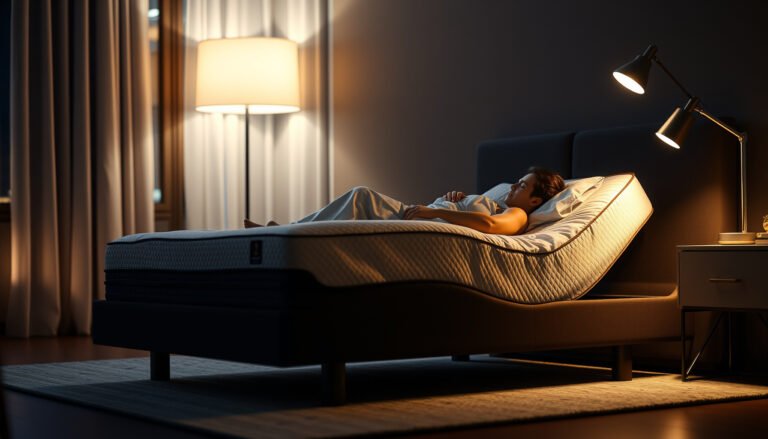
Side sleepers with neck pain often worsen it by choosing an adjustable bed that lifts the head without supporting the cervical spine. In a vacation home, you need a mattress that contours at the shoulder, keeps the neck level, and lets you fine-tune height and incline in small increments. With the right selection criteria and a 15-minute in-room test, you can dial in comfort quickly and sleep with less strain.




If you’re a side sleeper with neck pain, the best adjustable mattress choice is one that keeps your head and neck neutral with your spine—without letting your shoulder sink too deeply. Focus on upper-body (not just leg) adjustability plus stable “targeted” firmness, then fine-tune pillow loft so your nose points forward rather than up or tucked down.
Who this is for (and when a vacation-home setup matters)

This guidance is for side sleepers whose neck pain comes from misalignment—usually when the mattress “wedge effect” tilts the head or when the shoulder drops lower than the neck. It’s especially useful when you’re staying in vacation rentals, because the pillow options and mattress condition vary, and you’ll want a repeatable way to recreate your neutral alignment.
When it’s most likely to help
– This is for side sleepers who get neck pain from “wedge” pressure (head tilted up/down) or misalignment (spine not straight).
– It’s especially relevant in vacation rentals where pillow options and mattress condition vary, so you need repeatable support you can adjust quickly.
– If you already know your pain improves when your neck is neutral, a properly chosen adjustable mattress can help you recreate that alignment.
Why rentals complicate neck comfort
In an adjustable mattress setup for side sleepers with neck pain, the “support problem” is rarely only the mattress surface. It’s often the combined system: mattress firmness + how far your shoulder sinks + pillow loft + the way your upper-body lift (or lack of it) changes your head angle. If the rental mattress is a different firmness level—or if the pillow is too thick—you can end up with forward head posture (chin drifting up) or a tucked chin (chin drifting down), both of which commonly aggravate the cervical spine.
Start with side-sleeper alignment: firmness and feel
The right starting point is a mattress that cushions your shoulder without letting it collapse so far that your neck tilts. Practically, that usually means medium to medium-firm support and a feel that keeps your ribcage supported instead of “rolling” you into a gap.
Aim for “shoulder-friendly but spine-stable” support
– Too-soft usually lets the shoulder drop and tilts the neck; too-firm can force your head to angle to compensate.
– Choose a medium-to-medium-firm starting point unless you know you tolerate softer surfaces without head tilt.
– Prioritize how the mattress feels under your shoulder and the side of your ribcage—neck comfort often depends on what happens lower than your head.
What “good alignment” should feel like
When a mattress is working for side sleepers with neck pain, it tends to feel like you’re supported through the shoulder area without being pulled downward. Your head and neck should feel like they’re “floating” neutrally—supporting tissues aren’t stretched into an upward tilt, and your chin isn’t forced downward.
A simple self-check: lie on your side in your normal position and imagine a straight line from the middle of your back up through your head. If you instinctively crane your neck to find comfort, the mattress/upper-body support and pillow loft aren’t matching your anatomy yet.
Choose adjustable features that actually help neck positioning
The feature to prioritize in an adjustable mattress for side sleepers with neck pain is upper-body control (and/or targeted firmness zones) that directly changes how the head and shoulder sit. If adjustability only helps the legs, you can still end up with the wedge pressure or “shoulder sink” that triggers neck pain.
Look for upper-body/head targeting, not just leg lift
– Look for adjustability that affects head/upper-body positioning (not just leg lift), so you can fine-tune neck neutrality when you’re lying on your side.
– If the mattress offers independent firmness/zone control, it can help prevent over-sinking under the shoulder while still cushioning the hips.
– Check the adjustment range and how “fine” the control feels (coarse steps can make it harder to land on neutral alignment).
Understand why head positioning matters for side sleeping
Side sleeping neck pain often relates to cervical spine angles: even modest head tilt can change the load on neck muscles. Adjustable mattresses are useful because they can compensate for differences in pillow loft, shoulder height, and mattress firmness. The catch is that you need adjustability that changes the right region—head/upper torso—not only the lower body.
To make this more concrete, clinical bed-position categories use specific head-elevation ranges. Many adjustable bases and adjustable mattresses use similar geometric “degrees” even if the purpose is comfort rather than medical positioning:
– According to Merck Manual Professional Edition, semi-Fowler’s positioning is typically about 30–45° head elevation.
– According to Merck Manual Professional Edition, Fowler’s positioning is typically about 45–60° head elevation.
– According to Merck Manual Professional Edition, high Fowler’s positioning is typically about 60–90° head elevation.
These are not “side-sleep angles” per se, but they help illustrate why coarse, large movements can push your head out of neutral.
Visual guide: clinical-style head elevation categories (to help you think in degrees)
Head-Elevation Angle Ranges Used in Clinical Positioning (reference for adjustable bases)
| # | Position category | Typical head angle range | Direction vs flat | Representative change vs flat |
|---|---|---|---|---|
| 1 | Supine / Flat | 0° | Neutral | 0° |
| 2 | Low head elevation (low Fowler’s) | 15–30° | Head-up | +22.5° |
| 3 | Semi-Fowler’s | 30–45° | Head-up | +37.5° |
| 4 | Fowler’s | 45–60° | Head-up | +52.5° |
| 5 | High Fowler’s | 60–90° | Head-up | +75° |
| 6 | Trendelenburg | 10–30° head-down | Head-down | −20° |
| 7 | Reverse Trendelenburg | 10–20° head-up | Head-up | +15° |
For side sleepers with neck pain, the lesson isn’t “use large angles”—it’s that even moderate degree shifts can change neck posture. As of 2026, many adjustable bases provide incremental head/upper-body control, but the step size varies widely, so you’ll want fine adjustability to land near neutral rather than chasing comfort with bigger swings.
Dial in your pillow + mattress height combination
The fastest way to find a neck-friendly setup with an adjustable mattress is to set the mattress/upper-body position first, then use pillow loft to fill the gap under your neck—without forcing your chin up or down. This is where most side sleepers with neck pain feel immediate improvement (or immediate aggravation).
Use a “gap-first” approach, not a “pillow-first” guess
– Set your mattress first, then use the pillow to fill the gap between your shoulder and neck—your goal is a straight line from mid-back to head (not chin up or tucked).
– If your pillow is too thick for the way the mattress sinks, you’ll tilt your neck; if it’s too thick and the upper-body is elevated, the tilt can become worse fast.
– If your pillow is too thin, your head will drop, which often increases muscle tension on the side of the neck.
Do a quick neutral check you can repeat
– Do a quick neutral check: when you lie on your side, can you keep your nose/face pointing forward without straining? If not, adjust pillow height and/or mattress upper-body position.
A practical way to make this repeatable in a vacation rental: choose one “neutral” target and measure against it. For example, focus on facial orientation (“nose forward”) and jaw relaxation (no clenching). If you feel the neck muscles recruiting immediately to keep your head from tipping, that’s your cue that your adjustable mattress for side sleepers with neck pain is still mismatched to your pillow loft.
Set it up quickly in a vacation home without guessing
The goal in a rental is to reduce variables so your adjustable mattress setup becomes predictable in under 10 minutes. Use one baseline, make small changes in a fixed order, and record what worked—especially in 2026 when rental mattresses and pillows often vary night to night.
Bring a repeatable method
– Bring a “repeatable method”: use a simple baseline (same pillow, same mattress setting approach) and write down your setting once it feels right.
– Minimize trial-and-error by adjusting in small increments—change one variable at a time (upper-body position first, then pillow thickness/shape).
– If the rental mattress differs from what you use at home, plan an adjustment window the first night so you’re not stuck sleeping through an uncomfortable setup.
What to do if the rental remote is awkward
Many adjustable systems use remotes with limited reach in tight bedrooms. Before you start, turn on night mode lighting if available and keep the remote where you can use it without leaning or twisting. Side sleepers with neck pain often worsen the next-day ache when they “wrench” their posture to adjust controls mid-trial.
What can go wrong when you pick an adjustable mattress
The most common failure mode is picking an adjustable mattress that adjusts something else while still letting your shoulder sink too far, which keeps the neck tilted. The second big issue is overcorrecting—raising the upper body or using a too-thick pillow until your head is forced into an unnatural angle.
Common mistakes (and how to recognize them)
– Choosing the wrong support profile: a mattress that’s adjustable but too soft can still let the shoulder sink, creating neck tilt and muscle strain.
– Overcorrecting: raising the head too much (or using an overly thick pillow) often results in chin lift or forward head posture, which can worsen neck pain.
– Practical issues in rentals: noise during adjustment, limited adjustability range, or remote controls that are hard to use in tight spaces can make it harder to maintain a neutral position.
Pros/cons: how each adjustment strategy can help—or backfire
| Adjustment strategy | Likely benefit for side sleepers with neck pain | Common downside |
|---|---|---|
| Raise upper-body/head slightly | Can reduce wedge pressure if head is otherwise tilted down | Too much lift can create chin-up/forward-head posture |
| Use a thicker pillow on a softer mattress | Restores neck support if the head drops too low | Can overfill the gap and force neck extension |
| Use firmness/zone control under the shoulder | Limits shoulder sink while cushioning hips | If zone is too firm, it can create pressure and reflex head tilting |
| “Dial until you feel relief” | Finds comfort quickly | Comfort is not always neutral alignment—your neck may feel okay while posture shifts |
If your neck pain is accompanied by numbness, radiating pain, significant weakness, fever, or recent trauma, an adjustable mattress setup can’t replace medical evaluation. In those cases, keep alignment supportive but prioritize clinician guidance rather than aggressive self-correction.
Quick checklist to take with you
Use this checklist to set your adjustable mattress for side sleepers with neck pain quickly and repeatably. If you can check these items in order, you’ll spend less time guessing in the vacation-home bedroom.
– Neck alignment goal: head/neck neutral, spine supported (not angled by shoulder drop).
– Adjustability that matters: head/upper-body control and/or targeted firmness/zone options.
– Tuning process: adjust in small steps; once it works, record settings for the next night.
| What to check | What “good” looks like for side sleepers with neck pain |
|---|---|
| Upper-body/head adjust control | Lets you fine-tune so your neck stays neutral while on your side |
| Shoulder support | Your shoulder doesn’t sink so far that your neck tilts |
| Pillow compatibility | Pillow fills the gap without forcing chin up/tucked down |
| Stability & movement | Adjustments feel secure; you don’t drift into a crooked position |
| Rental practicality | Easy to adjust in the available space (and not excessively loud) |
Frequently Asked Questions
What firmness level should I choose for an adjustable mattress to reduce neck pain when side sleeping?
For side sleepers with neck pain, a medium-firm to firm adjustable mattress is often the best starting point because it supports the shoulders and keeps the spine aligned. Too-soft comfort layers can let your shoulder sink, causing your neck to bend awkwardly overnight. If you’re unsure, prioritize mattresses with adjustable comfort zones or multiple firmness options so you can fine-tune during your vacation stay.
How do I adjust the head and neck positioning on a vacation home adjustable mattress?
Use the head/upper-body incline to keep your head neutral rather than tilted forward; a small elevation (often a few degrees) can help if you wake with stiffness. Set the mattress so your nose and sternum are roughly aligned, and consider a slight side-cushioning elevation to prevent shoulder collapse. If your model allows independent adjustment, raise the upper section gradually while checking alignment from shoulder to neck in a mirror.
Why does an adjustable mattress help side sleepers with neck pain more than a standard bed?
Neck pain commonly comes from misalignment where the shoulder drops lower than the head, forcing the neck to compensate. An adjustable mattress helps maintain proper spinal alignment by allowing you to change support where your body needs it most, including head positioning and overall contouring. With the right setup, you can reduce muscle strain and improve pressure relief around the shoulder and upper back—two common triggers for vacation-home discomfort.
Which mattress features are best for side sleepers who want adjustable support for their neck?
Look for pressure-relieving materials like responsive foam or zoned support layers that reduce shoulder strain while keeping the spine supported. Choose an adjustable base with smooth, stable controls so you can create repeatable positions without settling or shifting during sleep. Contoured or dual-zone designs can also help keep your head and neck aligned, especially if you switch between sleeping on your left and right sides.
What’s the best way to test an adjustable mattress for neck pain before committing during a vacation stay?
Spend a few minutes lying on your side in your typical sleeping position and adjust in small increments, pausing to evaluate how your neck feels. Check alignment by aiming for a straight line through your neck and spine—if you feel chin tipping upward or downward, refine the incline and overall support. If possible, replicate your usual pillow height and observe whether your shoulder feels evenly supported; that quick setup test often predicts whether you’ll wake up with less neck stiffness.
📅 Last Updated: November 25, 2026 | Topic: How to Select an Adjustable Mattress for Side Sleepers with Neck Pain in a Vacation Home | Content verified for accuracy and freshness.
References
- https://www.mayoclinic.org/healthy-lifestyle/adult-health/in-depth/mattresses/art-20044358
- https://medlineplus.gov/neckpain.html
- Adjustable bed
- https://en.wikipedia.org/wiki/Side_sleeping
- Mattress
- neck pain sleeping position – Search Results – PubMed
- mattress firmness back pain – Search Results – PubMed
- https://scholar.google.com/scholar?q=adjustable+bed+side+sleeping+neck+pain Google Scholar
- https://scholar.google.com/scholar?q=side+sleeping+neck+pain+pillow+matress+firmness Google Scholar
- https://scholar.google.com/scholar?q=neutral+cervical+alignment+sleeping+position+pillow Google Scholar




2 Comments