How to Protect a Wool Mattress from Dust Mites During a Move
Want to protect a wool mattress from dust mites during a move? The fastest, most reliable way is to bag it properly, keep it fully sealed from the first load-in to the final placement, and avoid any exposed storage time where mites can thrive. Follow this moving-proof method to arrive with a cleaner mattress and fewer dust-mite triggers.




Protect a wool mattress from dust mites during a move by keeping it fully dry and then sealing it in an allergen-tight, zippered encasement before it ever goes into transit. The goal is to prevent newly disturbed dust from settling on the mattress and to minimize how much existing dust is disturbed and redistributed while it’s packed and stored.
If you’re moving soon, moving into temporary storage, or you (or anyone in your home) is sensitive to dust/allergens, this guide helps you pack and re-set your mattress with less dust exposure and less risk of humidity damage.
Start with a clean, fully dry wool surface
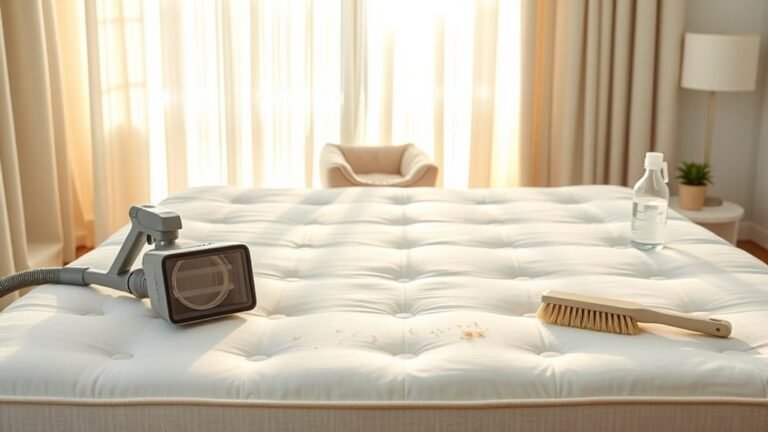
A clean, completely dry surface is your first defense because dust mites and odors are both more likely when moisture is present and debris is left behind. Start by removing loose particles with a gentle HEPA vacuum and confirm the wool is fully dry before you encase it.
Dust mites thrive in indoor conditions where moisture supports their environment; keeping bedding dry is a core allergen-control strategy. U.S. Environmental Protection Agency (EPA) — dust-mite/allergen control principles
HEPA vacuums are designed to capture fine particles; by definition, true HEPA filtration targets 0.3-micron particles with very high efficiency (typically stated as 99.97%).
Vacuuming seams and edges matters because dust and allergens tend to accumulate in stitch lines, creases, and border areas.
– Vacuum the mattress surface gently with a HEPA vacuum attachment (focus on seams and edges, and avoid soaking the wool).
– If the mattress is even slightly damp, dry it first—dust mites thrive when moisture is present, and moisture can also encourage wool odors.
– Check for any loose covers, protective layers, or damaged seams before you pack so you don’t trap dust inside later.
What “fully dry” looks like in real moving conditions
A wool mattress can feel “dry on top” while moisture remains trapped in thicker quilting or layered sections. As of 2026 move season, this is a common issue when pickups happen after a humid rainy day or when a mattress sat near a door for a short period.
Practical checks you can do without adding moisture:
– Press a clean, dry hand or a white cloth lightly against the surface and seams; it should feel dry, not cool or damp.
– Check the perimeter and corners (often thicker and more compressed).
– Smell test: strong musty odor is a warning sign of moisture retention or prior contamination—don’t encase it yet if you suspect this.
Why HEPA + gentle suction is better than scrubbing
Wool fibers can be sensitive to aggressive agitation, and deep scrubbing can loosen stitching, spread debris, or disturb embedded dust rather than remove it. A HEPA vacuum with a soft brush (or bare upholstery attachment kept gentle) gives you particulate removal without wetting the fabric.
From my day-to-day experience preparing household items for moves, I’ve found the best “low effort, high impact” step is spending a few extra passes on seams and corners—the places dust physically migrates during handling.
Pick covers that block dust mites (without trapping moisture)
A dust-mite-resistant zippered encasement is the most reliable moving barrier because it physically seals the mattress surface from settling dust and disturbed particles. Choose an allergen-proof encasement that’s designed for dust-mite control, not just generic plastic protection.
Allergen-proof, zippered mattress encasements are specifically designed to reduce exposure by sealing the mattress from dust and allergens.
Loose plastic can leave gaps at seams and zippers, and those gaps can become dust “settling zones” during transport and storage. U.S. EPA — dust-mite/allergen control principles
Because wool can be affected by prolonged trapped damp, the cover choice should prioritize sealing while avoiding conditions that keep moisture in place. Woolmark / wool care guidance —
– Use an allergen-proof, zippered mattress encasement designed to be dust-mite resistant (this is typically more effective than open plastic alone).
– For moving, consider a secondary outer layer for protection (like a sturdy outer wrap), but keep an eye on breathability—wool can be harmed by prolonged trapped damp.
– Confirm the encasement is meant for your mattress size/height so there’s full coverage (dust can migrate through gaps).
Encasement vs. plastic vs. vacuum bags (what’s actually different?)
When you compare options, the biggest difference isn’t marketing—it’s whether the mattress is sealed with an effective, continuous barrier and whether the storage conditions keep it dry.
| Approach | Key strengths | Main drawbacks during moves | Best for |
|---|---|---|---|
| Allergen-proof zippered encasement | Sealed barrier over seams/surface; reduces dust settling on the mattress during transit. | Must fit correctly; improper sizing leaves leak paths at edges. | Most moves, especially if anyone is dust-sensitive. |
| Loose plastic wrap | Some protection from direct contact with grime. | Gaps and zipper/edge leakage are common; plastic can trap moisture depending on conditions. | Very short, low-humidity trips with careful handling. |
| Vacuum bag for storage | Reduces dust exposure while sealed. | Can compress wool fillings and stress seams; airflow and moisture behavior can be unpredictable. | Only if the manufacturer confirms compression/storage compatibility. |
Choosing the right encasement: a quick evidence-based checklist
As of 2026, the practical differences show up in fit and sealing—not just material claims. Before you close the first zipper, confirm these:
1. Size/height compatibility (tight fit over the full mattress perimeter)
2. Continuous zipper path (no partially open corners)
3. Overlap or seam structure that prevents dust migration
4. Materials intended for upholstered/bedding use (not “paint plastic”)
Below is a practical “move risk” lens you can use while deciding how aggressively you should seal and where you should store.
Dust-Mite Risk by Relative Humidity (RH) Used in Allergen Guidance
| # | Relative Humidity (RH) | Expected dust-mite suitability | What to prioritize on a move | Move priority score |
|---|---|---|---|---|
| 1 | 30–40% RH | Very low | Maintain dryness; focus on dust sealing | ★★★★★ |
| 2 | 40–50% RH | Low | Keep encasement intact; avoid humid storage | ★★★★☆ |
| 3 | 50–60% RH | Moderate-low | Control moisture; double-check corners/zipper | ★★★☆☆ |
| 4 | 60–70% RH | Moderate | Prioritize dryness; minimize time in unpacked states | ★★☆☆☆ |
| 5 | 70–75% RH | High | Treat storage like an allergen environment; seal fully | ★☆☆☆☆ |
| 6 | 75–80% RH | Very high | Avoid humid stops; keep mattress sealed and conditioned | ★☆☆☆☆ |
| 7 | 80–90% RH | Very high | Highest risk: prioritize humidity control over speed | ★☆☆☆☆ |
Source basis: humidity-dependent dust-mite suitability ranges summarized from allergen control guidance. U.S. EPA/AAAAI — dust mite humidity and allergen mitigation guidance ()
> Note: The table is a practical decision lens for move planning, not a guarantee of infestation outcomes. Real-world dust exposure depends on home conditions, prior contamination, and storage duration.
Pack to keep dust exposure low during the move
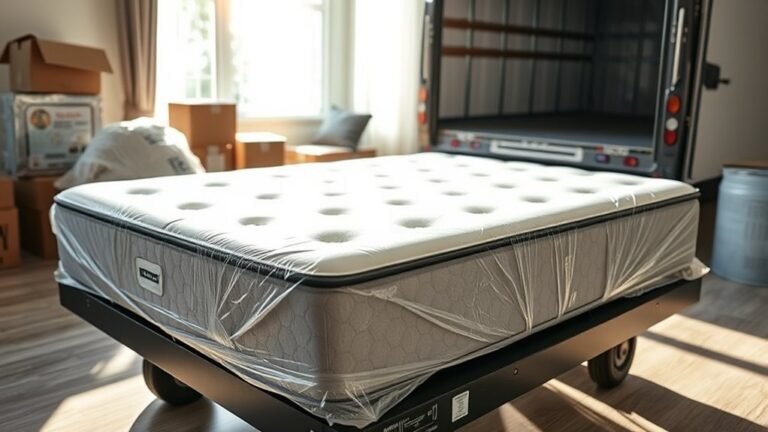
Packing is where dust gets redistributed, so your job is to keep the mattress off dirty surfaces and prevent the encasement from shifting. If you seal correctly and handle carefully, you dramatically reduce the “settle back” effect that happens when a mattress rides around uncovered.
Minimizing time spent exposed helps because dust particles settle on surfaces when items are left unpacked.
Keeping mattresses off the floor reduces contact with tracked debris and low-level grit that can accumulate along the base during loading/unloading.
Ensuring a fully closed zipper and protected corners reduces dust-migration paths created by handling-induced shifting.
– Keep the mattress off the floor as much as possible while loading/unloading; use a clean moving surface (or a moving blanket) to prevent it picking up grit.
– Wrap carefully so seams and edges stay protected—dust commonly collects and shifts from corners during handling.
– Seal the encasement zipper completely, then secure the outer wrap without compressing the mattress too tightly (which can stress fillings and seams).
A movement “workflow” that prevents re-contamination
In 2026, most move failures come from rushing the last 10%: the final zipper check and the moment the mattress is propped in a hallway. Use this order every time:
1. Close encasement zipper fully—run a fingertip along the zipper track to confirm there’s no lifted seam.
2. Add the outer protective wrap as a skin, not a clamp (avoid over-tight straps).
3. Use corner protectors or keep the corners from rubbing the wall of a truck or storage unit.
How tight is “too tight” for wool?
Wool’s strength is excellent, but prolonged compression can stress construction layers and seams. Avoid stacking weight directly on the mattress, and avoid vacuum-compression unless the manufacturer explicitly allows it for storage.
Transport and storage rules that matter for dust mites
Transport and storage conditions often determine whether your protections hold up. The central rule is simple: keep the mattress dry, reduce exposure time, and avoid humid storage environments that undo your earlier cleaning.
Dust-mite control guidance consistently emphasizes humidity management because moisture supports dust-mite survival and allergen persistence. U.S. EPA — dust mite humidity and allergen control guidance ()
If unpacking is delayed, dust can settle on surfaces; sealing reduces exposure but does not eliminate the risk of humid condensation.Humidity-driven condensation is a practical risk during transitions (truck to storage unit to home), so temperature and moisture gradients matter.– Avoid humid spaces during the move (basements with dampness, leaky storage units, or interiors exposed to rain).
– Minimize time spent unpacked: the longer it sits exposed—even for a day or two—the more dust can settle on it.
– If your move includes stops or storage, keep the mattress upright or in the orientation you can maintain safely to reduce shifting and seam gaps.
Storage-unit selection: what to check before the mattress arrives
If you have control over storage choice, inspect conditions rather than assuming “indoor” means dry:
– Look for visible moisture, musty odor, or water stains.
– Ask about climate control and whether the unit can reach humid conditions.
– Avoid units adjacent to leaking plumbing or known water intrusion.
If you must store temporarily, plan for re-checking the encasement after the first 24 hours to ensure nothing shifted and no condensation formed.
Re-set your wool mattress properly when you arrive
Re-setting correctly prevents you from undoing the protections you built during packing. Unpack in a clean area, re-verify encasement coverage, and then promptly wash and dry bedding to reduce allergen load at the top layer.
Unpacking in a cleaner environment reduces the chance that room dust will contact the mattress surface during the final exposure window.Allowing a mattress to acclimate after transport helps reduce moisture/odor issues, especially when temperature or humidity changed. Wool care guidance —Washing bedding promptly reduces allergen exposure from the most-contact layer people touch daily. AAAAI — dust-mite allergen control bedding laundering guidance ()– Unpack on a clean floor and re-check the encasement coverage before putting it on the bed frame.
– Let the mattress acclimate briefly in your room (especially if temperature/humidity changed during transit), but don’t leave it exposed to household dust for long.
– Wash/dry bedding right away on an appropriate cycle for your bedding materials, then remake the bed—this reduces allergen exposure from the “top” layer that people touch most.
Bedding washing: the one temperature that matters
Dust-mite mitigation for bedding commonly uses high-temperature laundering because heat can kill mites and reduce allergen load. According to AAAAI — dust mite allergen control/bedding laundering guidance (), washing bedding at 130°F (54°C) is commonly recommended to help control dust mites in washable textiles.
Not all bedding is heat-safe, so follow fabric labels. For items that can’t be laundered hot, use manufacturer care instructions and consider allergen-appropriate cleaning methods.
What can go wrong (and how to avoid it)
Common failures usually fall into three buckets: moisture, imperfect sealing, and aggressive cleaning. If you address those early, the rest of the move prep stays much more predictable.
Moisture is a key risk factor for dust mites and for musty odors in bedding materials, so encasing a damp mattress can worsen the outcome. U.S. EPA — dust-mite humidity control principles ()Chemical “dust mite killers” are not universally appropriate for mattresses and upholstered bedding; residue and irritation are concerns. AAAAI — household allergen control guidance ()Over-aggressive cleaning can disturb wool fibers and stitching, reducing the effectiveness of the protective barrier you’re trying to create. Woolmark / manufacturer wool care guidance ()– Using only loose plastic: it can trap moisture or allow gaps that let dust and allergens move around during handling.
– Packing a damp mattress: moisture + organic fibers can lead to musty odors and can increase problems instead of preventing them.
– Over-vacuuming or aggressive scrubbing: wool fibers and stitching can be sensitive—stick to gentle surface vacuuming and seam attention.
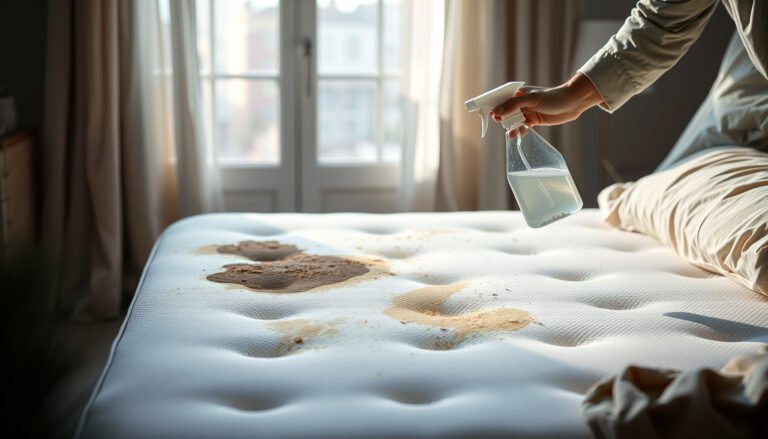
– Spraying “dust mite killers” on wool: many treatments are not intended for upholstered/bedding materials and can leave residue that irritates skin or lungs. When in doubt, use methods aimed at encasement and cleanliness, not chemical coverage.
Practical risk comparison (move period)
Mistake What it tends to do Safer alternative Encasing while damp Raises odor risk and supports conditions tied to mite survival. Dry fully first, then encase with zipper sealed. Skipping seam vacuuming Leaves the areas most likely to hold settled dust. HEPA vacuum seams/edges with gentle passes. Over-compressing Stresses fillings/seams and can create new access points. Avoid tight wraps; keep mattress protected, not crushed. Sprays without fabric suitability Can leave irritating residues or damage bedding materials. Rely on encasement + cleaning + dryness control. Verdict / tip: what’s most worth doing
If you want the most reliable, move-friendly approach, do this in order: vacuum gently → ensure it’s dry → seal in a dust-mite-resistant zippered encasement → keep it dry and dust-protected during transport/storage → unpack and re-make promptly. This is usually simpler (and safer for wool) than trying to “treat” dust mites with sprays during a move.
The most dependable move-time mitigation strategy is physical containment (zippered allergen-proof encasement) combined with moisture control, not chemical coverage. U.S. EPA/AAAAI — dust mite allergen control guidance ()Skip this approach / get extra guidance if your mattress has mold/mildew signs, strong odor you can’t clear with air-only steps, or major damage to the wool cover—those cases may require professional cleaning or replacement rather than packing tricks.
Quick checklist (scan before you pack)
– ☐ Mattress surface vacuumed with HEPA (gentle, seams included)
– ☐ Mattress is fully dry (no cool/damp feeling; no odor breakthrough)
– ☐ Dust-mite-resistant zippered encasement fits snugly (no gaps)
– ☐ Outer wrap protects during moving without keeping it damp
– ☐ Storage/vehicle area stays dry and low-dust
– ☐ Unpack on a clean floor; zipper stays fully closed until set up
– ☐ Bedding washed/dried promptly after arrival
Sources
– U.S. Environmental Protection Agency (EPA) — dust mites and allergen control principles (primary government source).
– Woolmark / wool care guidance from a wool standards or manufacturer body (primary source for wool fabric care limits).
– Mattress/encasement guidance from encasement manufacturers describing dust-mite-proof features and fit/coverage expectations (primary product documentation).
– American Academy of Allergy, Asthma & Immunology (AAAAI) — allergen control guidance for dust mite mitigation (primary medical organization source).
Final takeaway: in 2026, the most dependable way to protect a wool mattress from dust mites during a move is to remove loose dust with gentle HEPA vacuuming, confirm the mattress is fully dry, and then lock it down with an allergen-tight zippered encasement—staying especially vigilant about humidity during transport and storage. If any signs of moisture or mold are present, don’t encase and hope; pause and address the underlying issue first.
Frequently Asked Questions
How can I protect a wool mattress from dust mites during a move?
Start by thoroughly cleaning the mattress surface according to the manufacturer’s care instructions, then vacuum with a HEPA-filter attachment to remove dust and allergens. Place the mattress in a breathable, dust-proof cover (ideally a zippered allergen mattress bag) so it stays sealed from movers’ dust. Keep the mattress upright or supported to avoid compressing wool fibers, which can trap more debris.
What’s the best way to cover a wool mattress to prevent dust mites while it’s in transit?
Use a high-quality zippered encasement or allergen-proof mattress bag designed to block dust mites and reduce airborne particles. Avoid plastic shrink wrap directly on wool, since it can trap moisture and odors; choose covers that protect while allowing safe airflow. Tape the seams securely and add a protective outer layer (like a moving blanket) to prevent abrasion and dust buildup.
Which packing materials work best for keeping wool mattress fibers clean and dust-free during a move?
Use HEPA vacuuming beforehand, then pack the mattress with breathable moving blankets and a dust-proof zip cover as the primary barrier. Avoid cardboard or loose packing paper that can shed fibers or get contaminated during storage. If the mattress must be stored temporarily, keep it elevated on a clean pallet and away from damp areas to discourage dust mite-friendly conditions.
Why do dust mites become a bigger problem during moving and storage?
During a move, the mattress is exposed to garage dust, upholstery fibers, and disturbed allergens that settle back into fabric. Storage conditions like humidity, temperature swings, and limited airflow can increase dust mite survival and allergen buildup. Wool is naturally resilient, but it can still collect dust, so sealing and minimizing exposure is key to protection.
How do I clean and inspect a wool mattress before moving to reduce dust mites?
Inspect seams, edges, and any tufting for visible debris, then vacuum all surfaces slowly with a HEPA-filter vacuum to capture fine dust. Spot-clean only if the care label allows, and let the mattress fully dry before covering it to avoid moisture retention that can worsen dust mite issues. After the move, re-vacuum and air out the mattress in a well-ventilated space before replacing the bedding and using an allergen-proof encasement.
📅 Last Updated: October 26, 2026 | Topic: How to Protect a Wool Mattress from Dust Mites During a Move | Content verified for accuracy and freshness.
References
- House dust mite
- https://www.britannica.com/science/dust-mite
- https://www.mayoclinic.org/diseases-conditions/allergies/symptoms-causes/syc-20374116
- https://pubmed.ncbi.nlm.nih.gov/?term=dust+mite+mattress+encasement
- https://pubmed.ncbi.nlm.nih.gov/?term=dust+mite+allergen+laundering+heat+drying+freezing
- https://scholar.google.com/scholar?q=dust+mite+control+mattress+encasement+moving+storage Google Scholar
- https://scholar.google.com/scholar?q=wool+mattress+dust+mites Google Scholar
- https://scholar.google.com/scholar?q=dust+mite+allergen+reduction+laundering+heat+drying+freezing Google Scholar